
One example, from first answer to next check
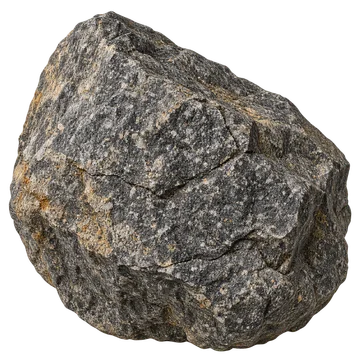
A rock. An egg. Which falls faster?
Does a heavy rock fall faster than an egg? Follow this Class 9 Science example through topic selection, an answer and its confidence, review, practice, and a later check.
01 · CHOOSE A FOCUSED QUESTION
Start with free fall, not the whole chapter.
A parent manages the student account. The student opens an available chapter and selects a concept range. Here, Science → Gravitation → Free fall is already selected. Move the range handles to explore the control.
The public sample stays fixed on free fall. The selector illustrates setup; changing it does not generate a different question bank. Check the published curriculum scope for your child's class.
START WITH WHAT YOU LEARNED TODAY
Choose what you want to check
Gravitation
Drag either handle · or use the arrow keys
02 · ANSWER AND CAPTURE CONFIDENCE
Does heavier mean faster?
Watch the example select an answer and confidence, then move straight to review. Choose an answer yourself at any point to take over.
 Abhranti.aiClass 9 · Science Auto demo
GRAVITATION → FREE FALL → MASS AND ACCELERATION
No sign-in. Answers stay in this page; no student record is created.
Released together. Same height.

Predict
Answer → confidence → reviewIllustrative answer and confidence capture, not a mastery score. The app uses additional evidence and can show feedback after the assessment.
03 · FOLLOW THE ANSWER INTO REVIEW
“The rock” is a starting point for a conversation.
Imagine a student chooses the rock and reports Confident. That pairing is worth investigating: it may reflect “heavier objects fall faster”. It is still one recorded answer, not a diagnosis of how the student thinks.
Follow the worked review below. Even a student who remembers “both together” may still confuse equal acceleration with equal force. The reasoning helps make that distinction clear.
REVIEW ANSWERS · UNDERSTAND THE CONCEPT
Learn from the Mistakes
Science · Gravitation · Free fall
Answer review
In a vacuum, a 5 kg rock and a 50 g egg are released from rest together at the same height. Which lands first?
Explanation and solution
Gravity pulls harder on the rock, but there is also more mass to accelerate. Both objects have the same acceleration and land together.
Step by step
- Keep the conditions fixed: same height, released together from rest, no air resistance.
- The rock has 100 times the mass and 100 times the gravitational force.
- Force divided by mass is the same for both. Their acceleration and fall time are the same.
The possible misunderstanding is “heavier means faster”. Ask: if both the force and the mass increase 100 times, what happens to force divided by mass?
Same objects. A different world.
A follow-up question can move the same rock and egg to the Moon. They are still released together from rest at the same height, without air resistance. The weaker gravity makes the fall slower for both; they still arrive together. The arrows show the direction of falling, not a comparison of speeds; use the explanation to work out what changes.
In air, drag can make their fall times different. “Both together” is not a rule to repeat without reading the conditions. A useful parent prompt is: “What changed in this question, and what stayed the same?”
The sample moves from answer and confidence capture into the worked review. In an assessment, answers can be collected before review. Reviewing a solution leaves the recorded assessment score unchanged. Retry Practice uses another available version; fresh versions are finite.
04 · KEEP THE EVIDENCE, THEN CHECK AGAIN
A correct retry is a next step.
- First response: “The rock” + Confident. Record the response and investigate the possible misunderstanding.
- After review: “Both together” for the rock and egg on the Moon. The student applied the idea with the explanation still fresh.
- A later, independent check: ask a new question before showing an explanation. For example: “In a vacuum, a 10 kg rock and a 50 g egg are released from rest at the same height. How do their accelerations compare? Explain why.”
Open the later-check explanation
Their accelerations are equal. The rock has 200 times the gravitational force and 200 times the mass, so F/m remains g. The time gap and a fresh response add evidence; neither guarantees permanent understanding.
This timeline is illustrative, not a promised schedule. Revision and retention checks are paid session types; timing depends on recorded learning history. Compare plan access.
What the parent can take from this
Ask the student to explain why the heavier rock does not accelerate faster. Use the recorded answer, confidence and later history to choose the next conversation. A later error can bring the same idea back into focus.
The sample does not calculate the app’s −100 to +100 score. That score combines correctness and reported confidence. Accuracy, coverage and repeated checks provide different context; missing confidence or untested concepts are not evidence of zero understanding. Explore report controls and how to read them.
What this example cannot establish
One example about free fall cannot establish mastery of Gravitation. A selected option may reflect a misunderstanding, a guess, a slip or a misread question. The app does not inspect every step of written working, identify every misconception, predict exam marks or replace a teacher's judgement.
These are fictional teaching examples, not independent evidence of learning outcomes. If a question seems wrong, use its report/flag control in the app or contact support with the chapter and question reference. Avoid sending a child's personal details in a public message.