1. Randomness
We know the possibilities, but cannot be certain what comes next.
- Show
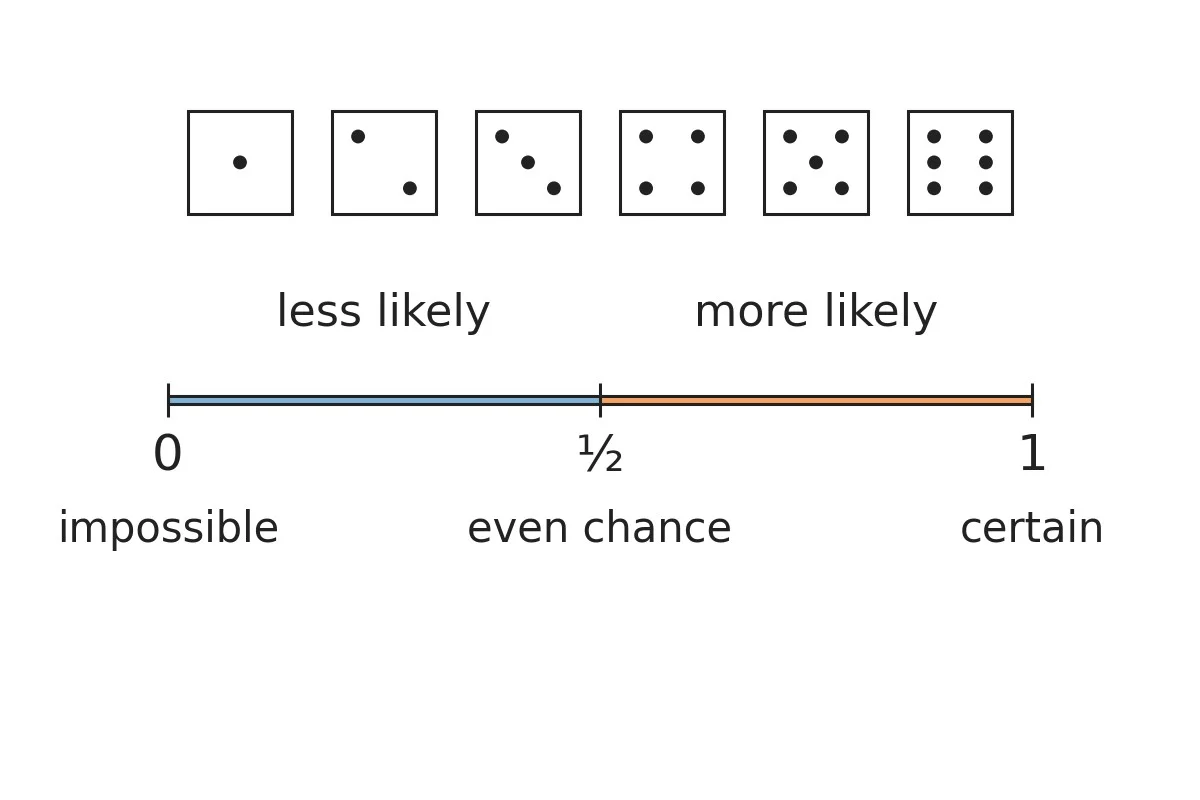
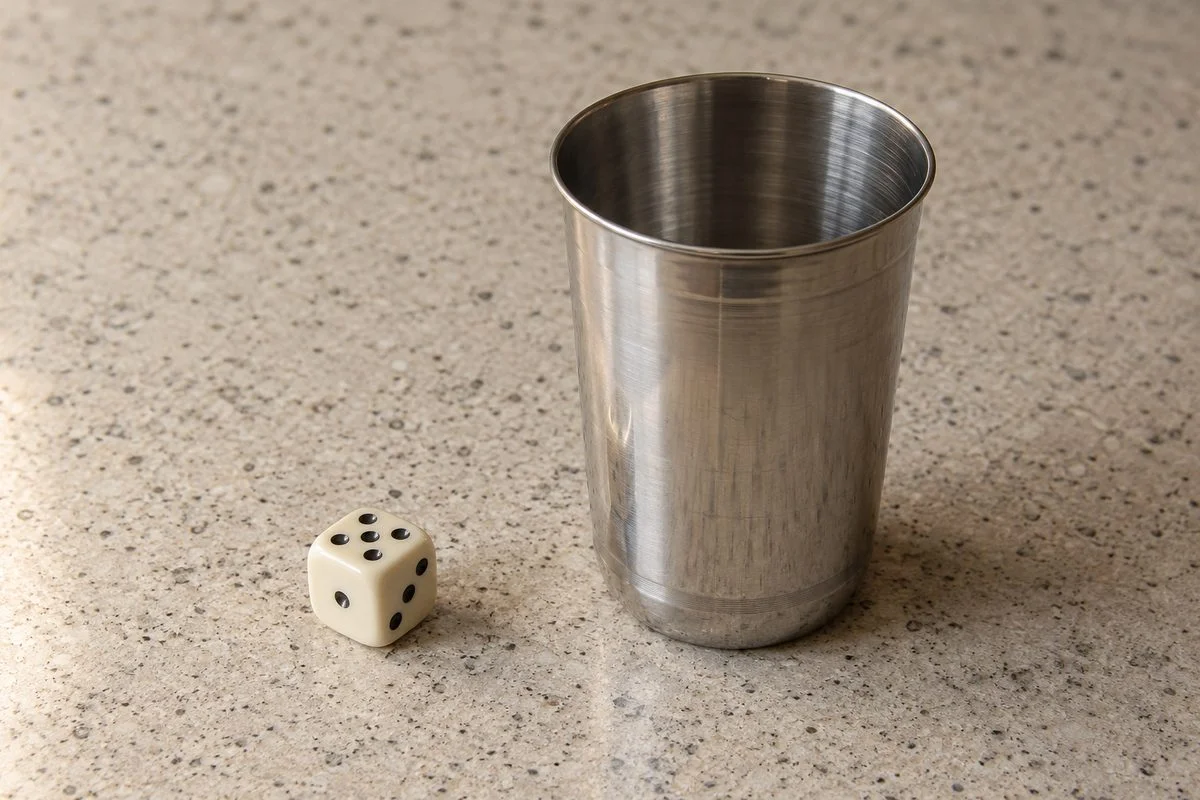
- Inspect a fair die. Group its faces as 1–4 and 5–6. Shake it inside a steel cup. Roll after the prediction.
- Ask
- Which group do you predict will appear on the next roll?
- Say
- The next group stays uncertain, but four faces favour 1–4.
- Used in
- Shuffling playing cards keeps the next card uncertain, making games unpredictable.
If your child says…“There are two groups, so their chances match.”
- Ask
- How many faces belong to each group?
- What’s true
- Uncertain results need not have equal chances.