Skip to content

Teach Alcohols, Phenols and Ethers in six steps.

For each idea: show it, ask before you tell, then say one line.

Gather paper, a pencil and a closed alcohol-based sanitiser bottle with a readable ingredient label.

Keep the bottle closed and away from flames. Taste nothing.

Common misconceptions & worked visual for this chapter · 15 practice questions with answers

How to teach it

Recognise the structures

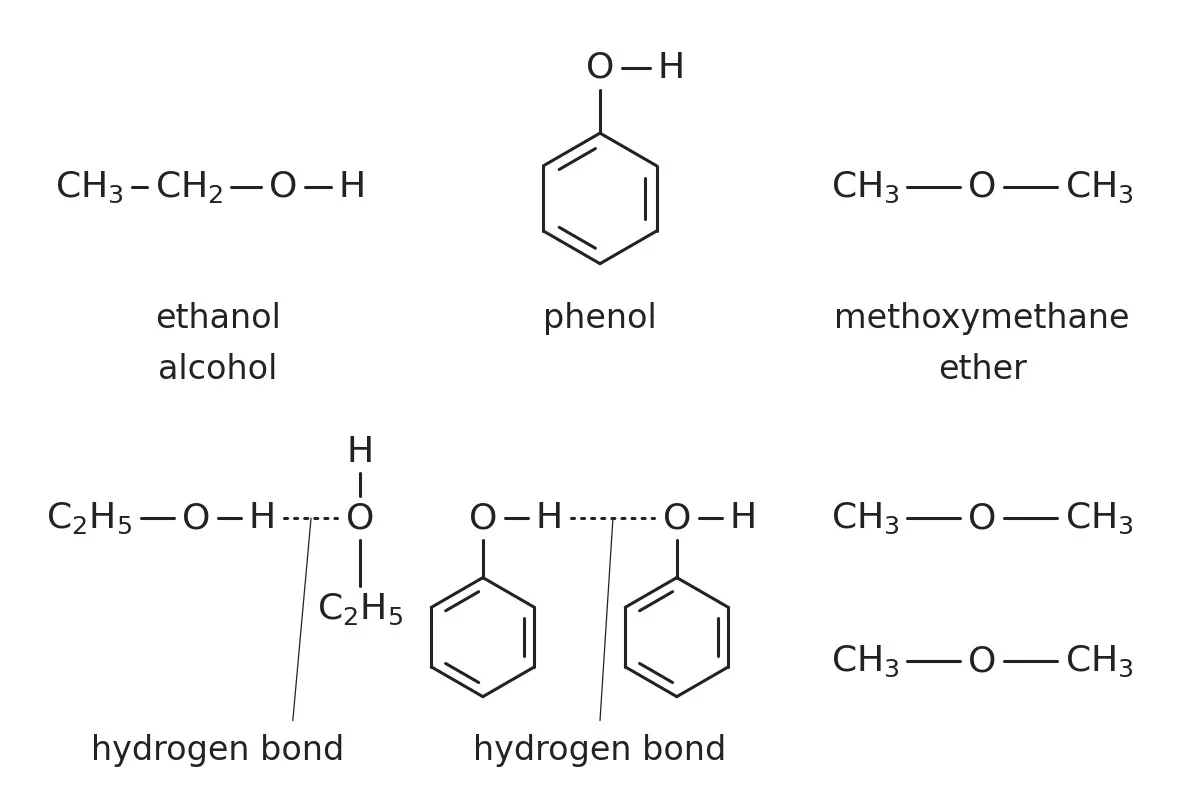
Structures show oxygen’s neighbours and hydrogen bonding in ethanol, phenol and methoxymethane.

1. Classification, Nomenclature and Structures of Functional Groups

Oxygen’s neighbours help identify the family.

Show
Look at the diagram’s three named structures. Find oxygen’s neighbours, including phenol’s ring. Compare the oxygen–hydrogen bonds.
Ask
Will ethanol and methoxymethane hydrogen-bond alike when their atoms match but their bonds differ?
Say
Ethanol and phenol hydrogen-bond with themselves through their oxygen–hydrogen groups. Methoxymethane cannot because its oxygen has no attached hydrogen.
Used in
Ethanol dissolves scented ingredients, helping perfume form an even mixture.
If your child says…“Having oxygen means every molecule can hydrogen-bond with itself.”
Ask
Which hydrogen in methoxymethane is directly attached to oxygen?
What’s true
These ethers lack the oxygen–hydrogen bond needed to donate a hydrogen bond.
Prepare and use alcohols and phenols

CH2=CH2+H3O+⟶CH3CH2++H2O\mathrm{CH_2{=}CH_2 + H_3O^+ \longrightarrow CH_3CH_2^+ + H_2O}

CH3CH2++H2O⟶CH3CH2OH2+\mathrm{CH_3CH_2^+ + H_2O \longrightarrow CH_3CH_2OH_2^+}

2. Preparation of Alcohols

Starting compounds and reagents determine which alcohol forms.

Show
Write these lines. Say: ‘Ethene reacts with hydronium, then water joins the positively charged carbon.’
Ask
What is the next line when water takes a proton from the oxygen?
Say
Water takes a proton from protonated ethanol, leaving ethanol and restoring hydronium: CH3CH2OH2++H2O⟶CH3CH2OH+H3O+\mathrm{CH_3CH_2OH_2^+ + H_2O \longrightarrow CH_3CH_2OH + H_3O^+}.
Used in
Factories turn ethene into ethanol for use as a solvent.
If your child says…“The acid gets used up making the alcohol.”
Ask
Which substance from the first line returns in the final line?
What’s true
The final proton transfer regenerates the acid catalyst.
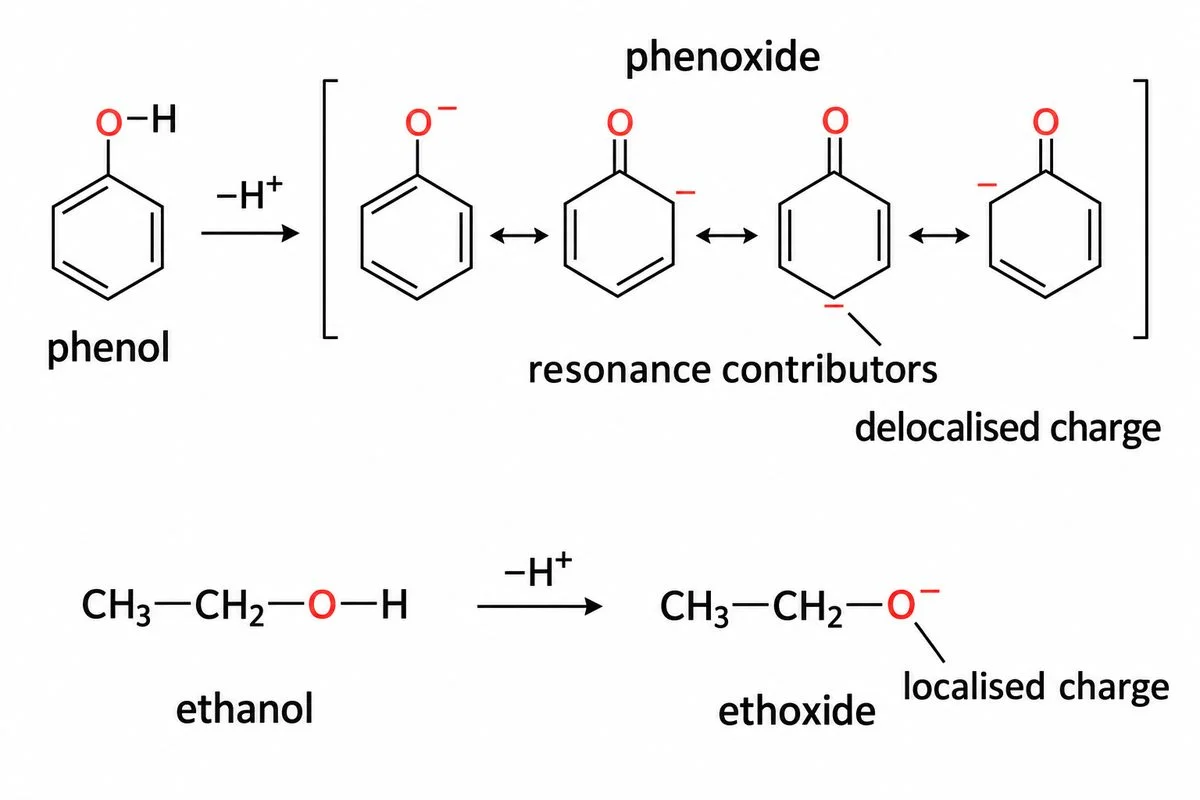
Phenoxide resonance contributors compared with ethoxide after each parent compound loses a proton.

3. Preparation and Chemical Reactions of Phenols

Resonance stabilises phenoxide, making phenol more acidic than ethanol.

Show
Look at the diagram. Follow proton loss from phenol and ethanol. Compare where their ions carry negative charge.
Ask
Which compound should lose its proton more readily when the resulting ion is more stable?
Say
Phenol is more acidic because resonance stabilises its ion by spreading negative charge. The phenoxide drawings describe one ion. Ethoxide lacks this spreading into a ring.
Used in
Phenol helps make resins used in durable household fittings.
If your child says…“The different drawings show different ions.”
Ask
Did any atom move between these drawings?
What’s true
Resonance drawings show different electron arrangements for the same ion.
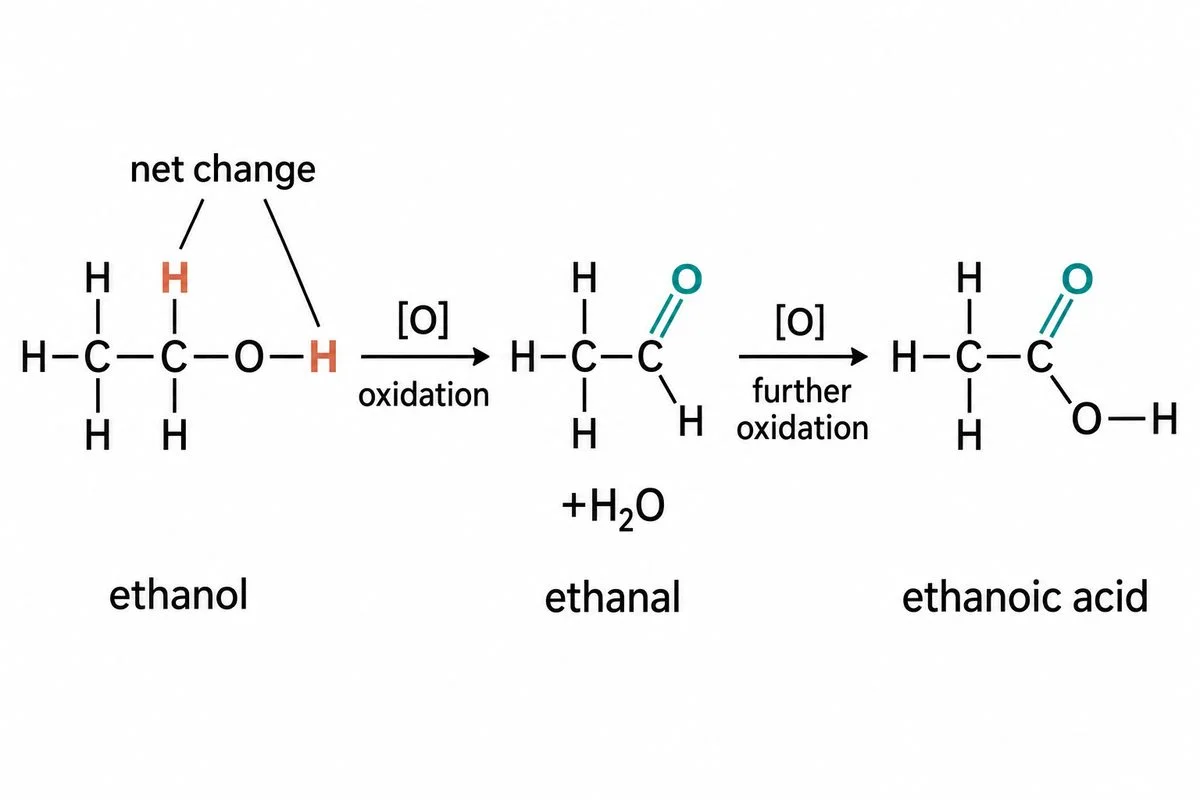
Aligned structures show ethanol becoming ethanal, then ethanoic acid, while retaining its carbon pair.

4. Chemical Reactions of Alcohols: Oxidation

Oxidation changes the alcohol group without necessarily changing the carbon skeleton.

Show
Look at the diagram. Compare ethanol’s highlighted hydrogens with ethanal’s double bond.
Ask
Looking at these structures, will ethanol need another oxygen atom to become ethanal?
Say
No. Ethanol loses two hydrogens overall, forming a carbon–oxygen double bond.
Used in
Vinegar production oxidises ethanol into ethanoic acid, which gives vinegar its sourness.
If your child says…“Oxidation must break the carbon chain.”
Ask
Does the carbon–carbon bond disappear when ethanol becomes ethanal?
What’s true
This change keeps both carbon atoms joined.
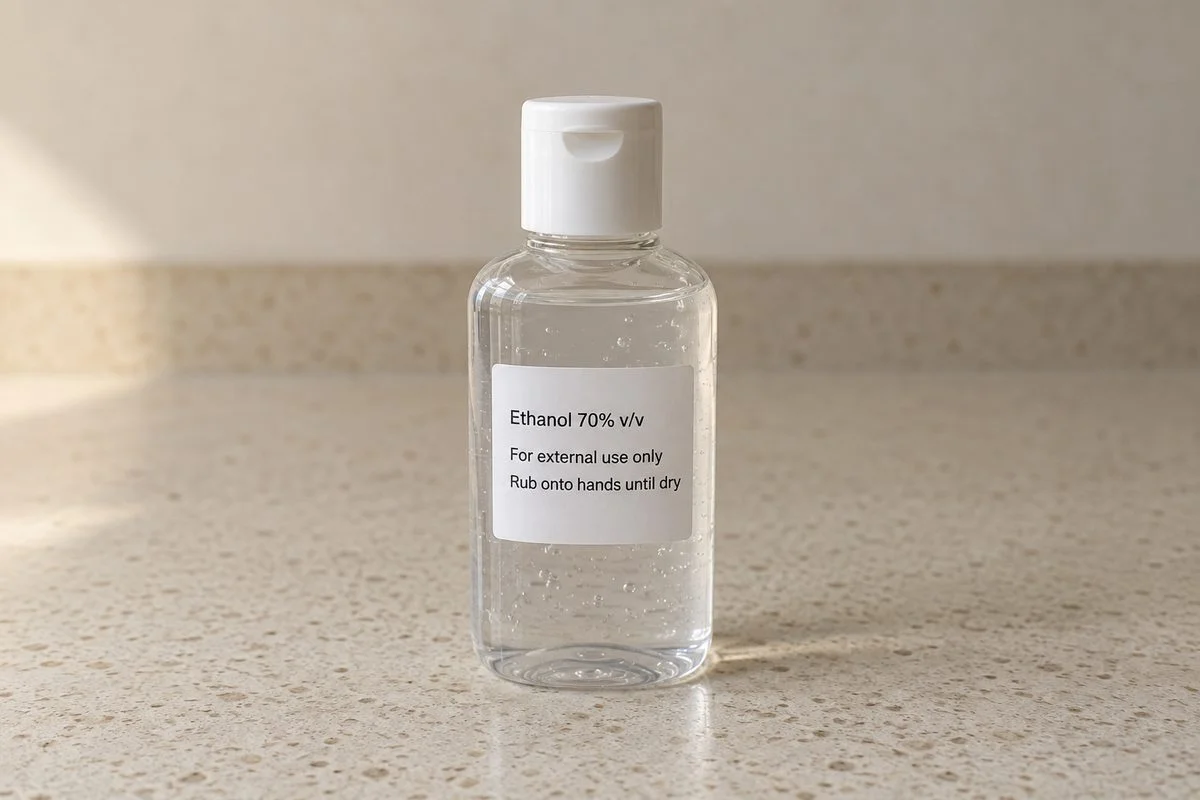
Closed alcohol-based sanitiser bottle with readable ingredient name and external-use directions.

5. Some Commercially Important Alcohols

The exact alcohol and formulation determine its permitted use.

Show
Keep the sanitiser bottle closed. Find ‘alcohol’ on its label. After the prediction, read the ingredient name and external-use directions together.
Ask
Would two bottles labelled ‘alcohol’ necessarily contain the same alcohol?
Say
No, they need not contain the same alcohol. Read the exact ingredient and permitted use.
Used in
Alcohol-based hand sanitisers reduce germs when used as directed.
If your child says…“All alcohols are interchangeable.”
Ask
Why does this label specify an ingredient and a permitted use?
What’s true
A shared chemical family does not mean shared safety or uses.

Make and split ethers

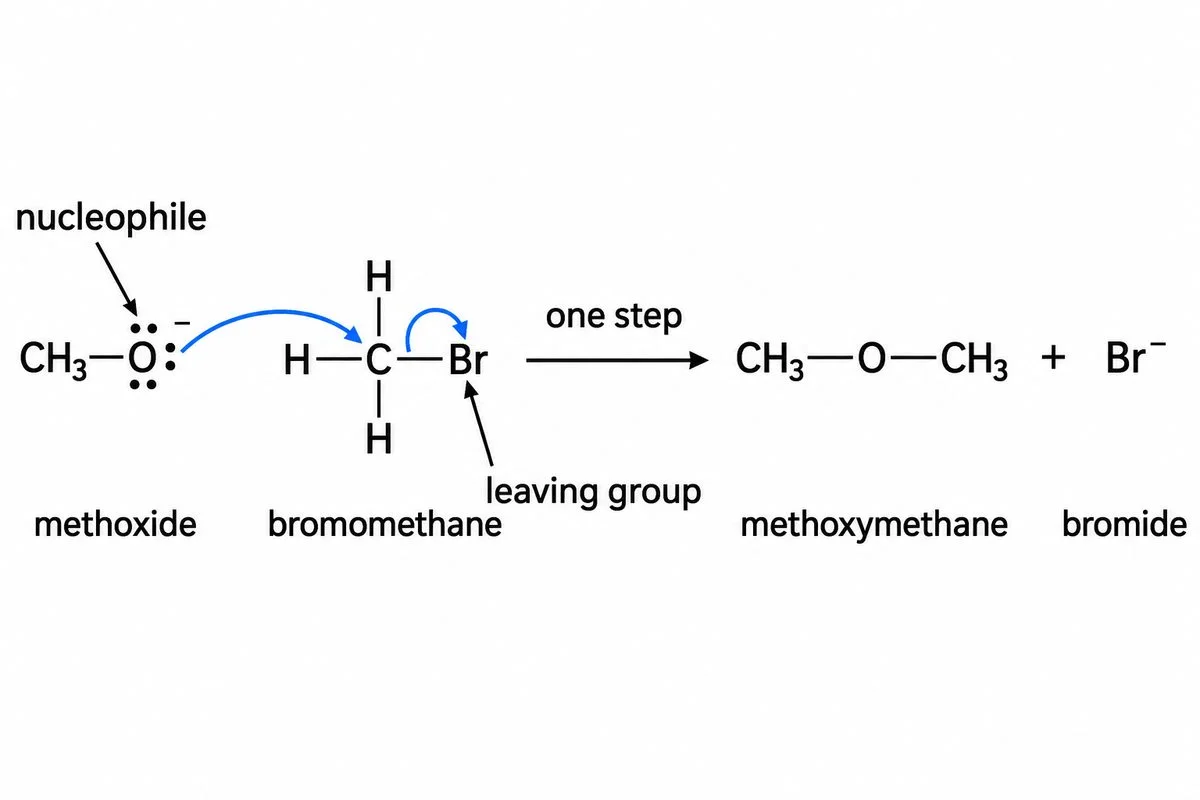
Electron-pair arrows show methoxide forming an ether as bromide leaves.

6. Ethers: Preparation and Chemical Reactions

Substitution can join carbon groups through oxygen.

Show
Look at the diagram. Follow the curved arrow from oxygen to carbon. Follow the carbon–bromine bond’s electron pair towards bromine.
Ask
From these arrows, will oxygen bond to carbon while bromide leaves?
Say
Methoxide’s oxygen bonds to carbon as bromide leaves. Both changes happen together in one substitution step.
Used in
Ethers serve as solvents during medicine manufacture, helping dissolve and separate substances.
If your child says…“Bromide must leave before oxygen can bond.”
Ask
Do these two curved arrows describe separate stages or one substitution step?
What’s true
The carbon–oxygen bond forms as the carbon–bromine bond breaks in this substitution.

A real problem

Phenol helped reduce surgical wound infections.

Joseph Lister announced his antiseptic surgery system in 1867.

He used carbolic acid, now called phenol.

Fewer surgical wounds became infected after he began using it.

Science Museum GroupUniversity of EdinburghScience Museum Group

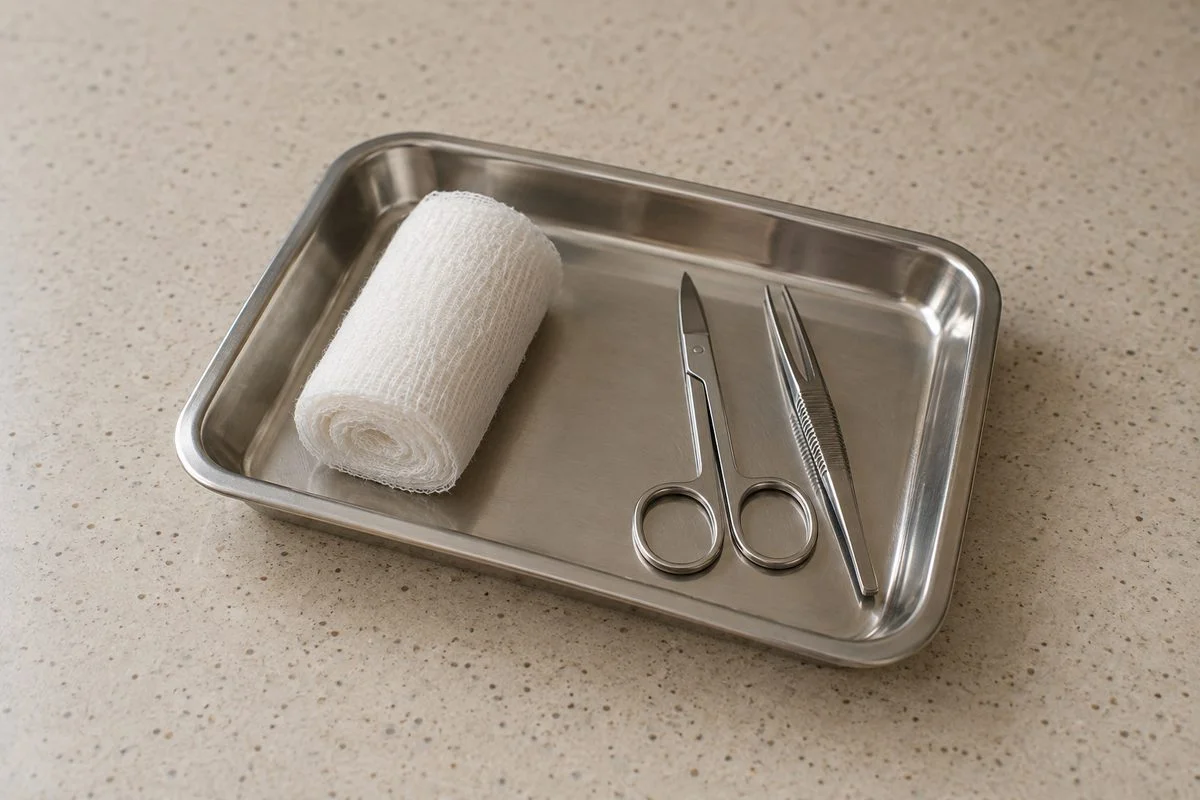
Gauze bandage and surgical instruments on a metal tray.

Concept Lab · Common misconception

The tempting mistake in Alcohols, Phenols and Ethers

Open standalone misconception page →

Is phenol as weak an acid as ethanol?

Wrong

Phenol and ethanol are equally acidic because both contain an –OH group.

Why it feels right. The structures share the group that loses a proton.

Right

The stability of the conjugate base helps determine acidity.

Worked example

Phenol
Loses H⁺→Phenoxide→Charge delocalised
Ethanol
Loses H⁺→Ethoxide→Charge mainly on O
Compare the conjugate bases. Phenoxide can spread negative charge through the ring.
  1. Phenoxide spreads some negative charge through the ring.
  2. Ethoxide lacks this resonance stabilisation, so phenol gives up its proton more readily than ethanol.

Ask your child six quick questions.

One per step. The answer and the reason are given.

  1. Which structure has oxygen bonded directly to two carbon atoms?

    Methoxymethane. Its oxygen joins two carbon groups, with no hydrogen directly attached.

  2. Which substance returns when the charged alcohol intermediate loses a proton to water?

    Hydronium. Water accepts the proton, regenerating the acid catalyst.

  3. How many different ions do the four upper drawings describe?

    One. Only electron placement changes between the drawings; the atoms retain their connections.

  4. What happens to the carbon–carbon bond when ethanol becomes ethanal?

    It stays intact. Oxidation changes bonds around the alcohol group while retaining the two-carbon skeleton.

  5. Which label information identifies the particular alcohol inside?

    The ingredient name. The word alcohol names a family, not one particular compound.

  6. When does the carbon–oxygen bond form relative to the carbon–bromine bond breaking?

    At the same time. Both bond changes occur together in one substitution step.

15 more questions with answers