Skip to content

Teach Biomolecules in six steps.

For each idea: show it, ask before you tell, then say one line.

Gather paper, a pencil, an egg, two dishes, a spoon and a pan.

An adult handles heating. Cool cooked egg completely, taste nothing, and wash hands and utensils.

Common misconceptions & worked visual for this chapter · 15 practice questions with answers

How to teach it

Sugars, proteins and enzymes

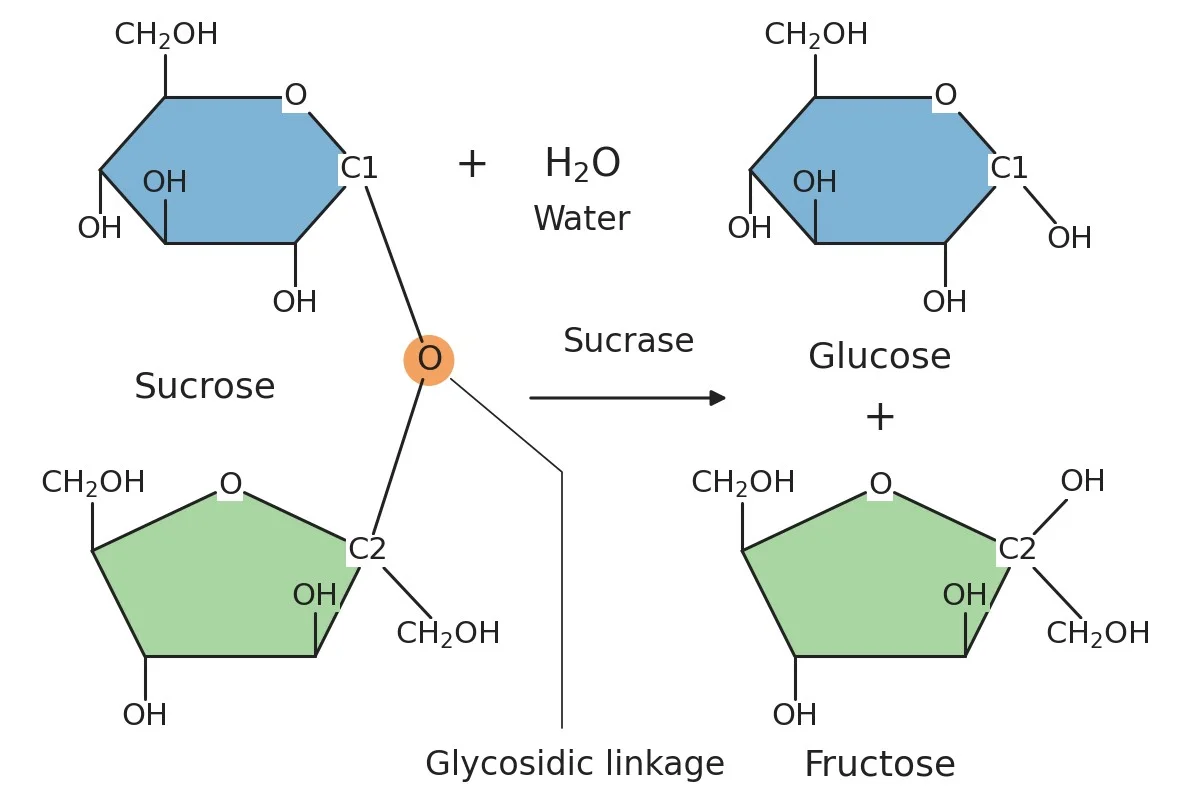
Sucrose’s oxygen linkage and hydrolysis into glucose and fructose.

1. Carbohydrates

Sugar units and their links determine carbohydrate type and behaviour.

Show
Look at the diagram. Find sucrose’s linking oxygen, water and the arrow marked Sucrase. Cover the products.
Ask
Which smaller sugars would this sucrose release before absorption?
Say
Hydrolysis uses water to split sucrose into glucose and fructose. Sucrase speeds this reaction.
Used in
Plants store carbohydrate as starch, providing a reserve for growth.
If your child says…“Water can split every carbohydrate into simpler sugars.”
Ask
Once glucose stands alone, which link between sugar units remains to break?
What’s true
Hydrolysis releases no simpler sugars from monosaccharides, a few from oligosaccharides, and many from polysaccharides.
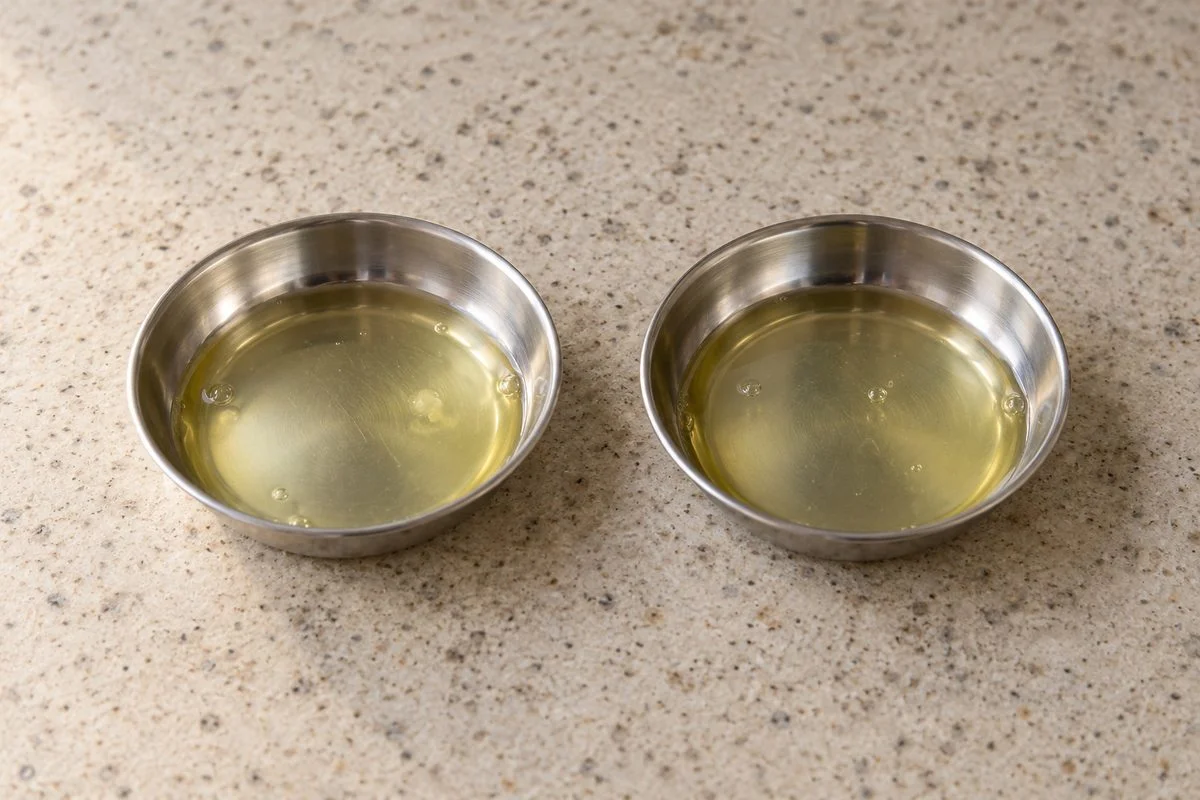
Two steel dishes containing uncooked egg white before heating.

2. Proteins

Amino-acid chains fold into shapes that help them work.

Show
Divide egg white between two dishes. After the prediction, an adult cooks one portion until firm. Cool completely, then tilt both dishes.
Ask
Will the cooked portion flow again after cooling?
Say
The cooled white stays firm: its proteins remain denatured.
Used in
Dietary proteins supply amino acids needed to build and repair tissues.
If your child says…“Cooling puts cooked protein back into its original shape.”
Ask
Both portions are cool now, so why does only one flow?
What’s true
Cooling cooked egg white does not restore its original protein folding.
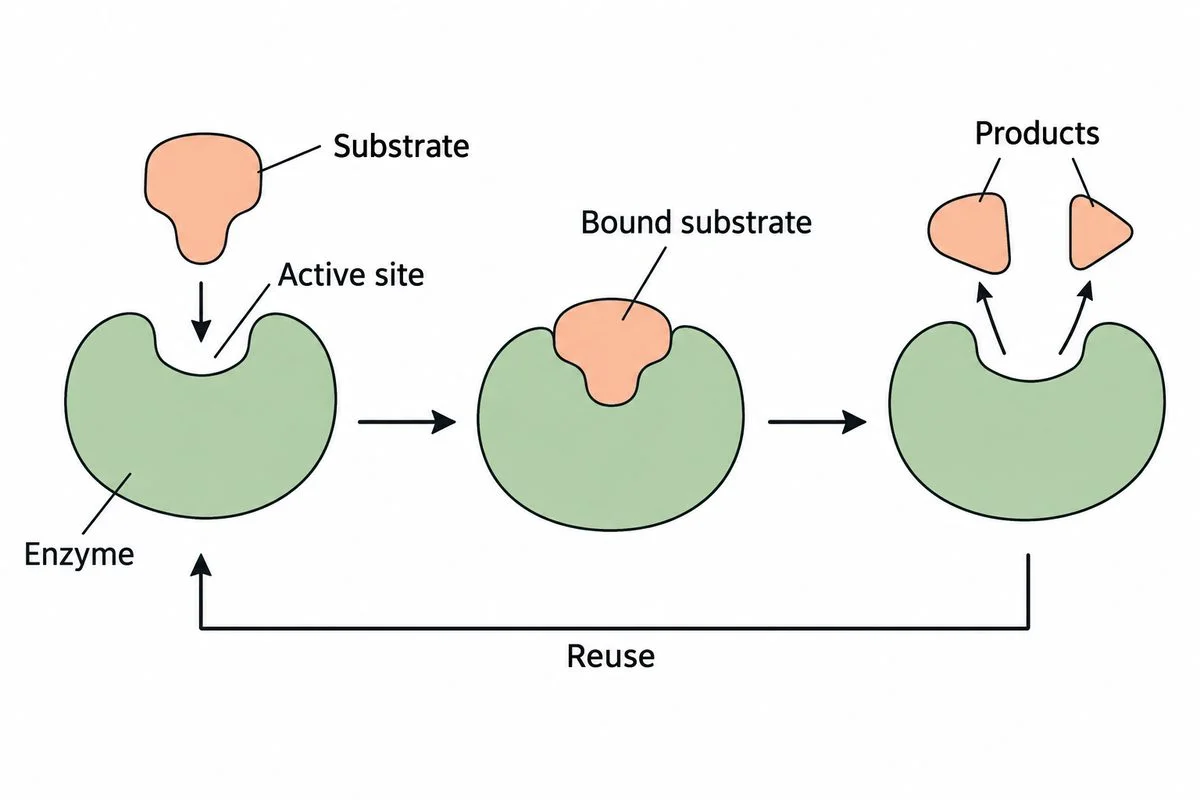
Substrate binds an enzyme, changes into products, and leaves the enzyme available again.

3. Enzymes

Biological catalysts speed particular reactions under suitable conditions.

Show
Look at the diagram. Follow the substrate into the active site, then follow the products out.
Ask
After releasing these products, could this enzyme act on another matching substrate?
Say
The enzyme releases products and can work again.
Used in
Digestive enzymes speed food breakdown so nutrients become available for absorption.
If your child says…“The enzyme works equally fast whatever surrounds it.”
Ask
Could changing pH affect how this active site works?
What’s true
An enzyme’s activity depends on conditions including temperature and pH.

Vitamins, genetic information and signals

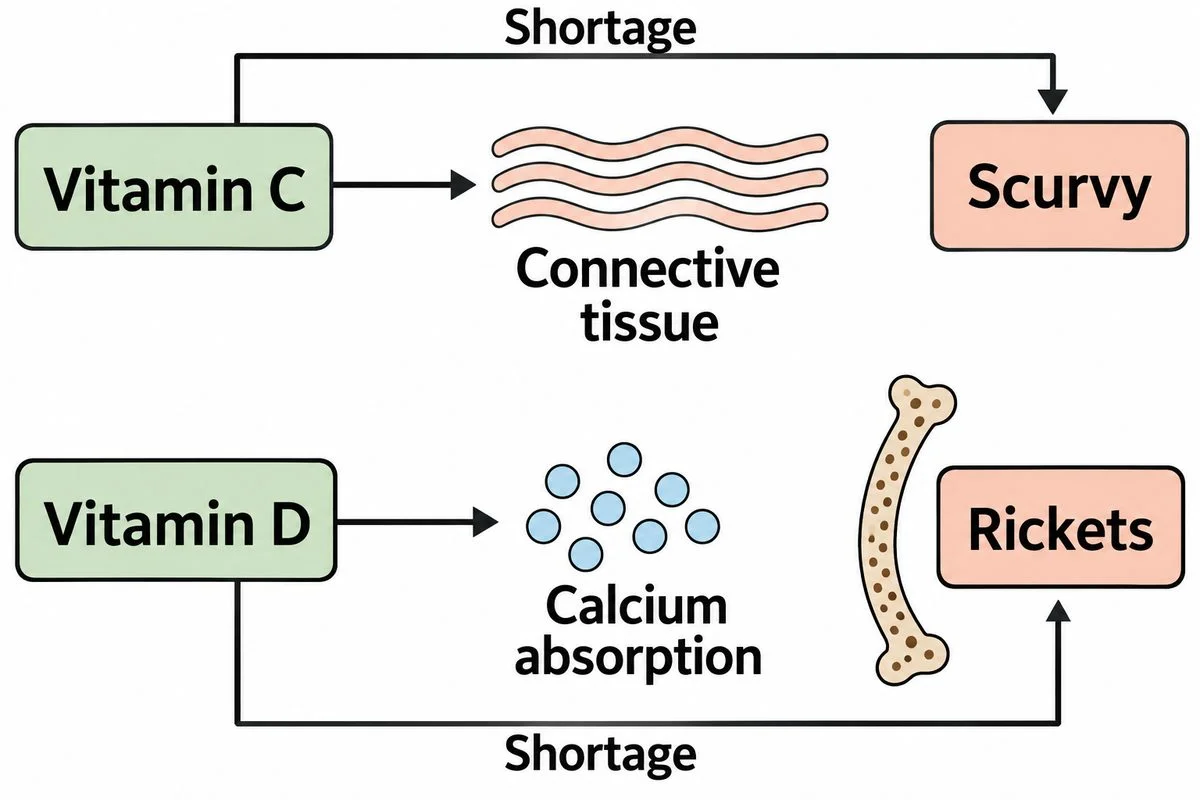
Vitamin C and vitamin D linked to their functions and different deficiency diseases.

4. Vitamins

Small amounts of vitamins support specific functions. Vitamin shortages can cause disease.

Show
Look at the diagram. Follow vitamin C towards connective tissue, then vitamin D towards calcium absorption.
Ask
Could vitamin C fill vitamin D’s role in growing bones?
Say
Vitamin C supports connective tissue. Vitamin D helps calcium absorption. One vitamin cannot replace the other.
Used in
Vitamin A supplementation helps prevent blindness caused by vitamin A deficiency.
If your child says…“Any vitamin can make up for another missing vitamin.”
Ask
Would supplying vitamin A fill a shortage of vitamin C?
What’s true
A vitamin’s identity determines its functions, so vitamins cannot simply replace one another.
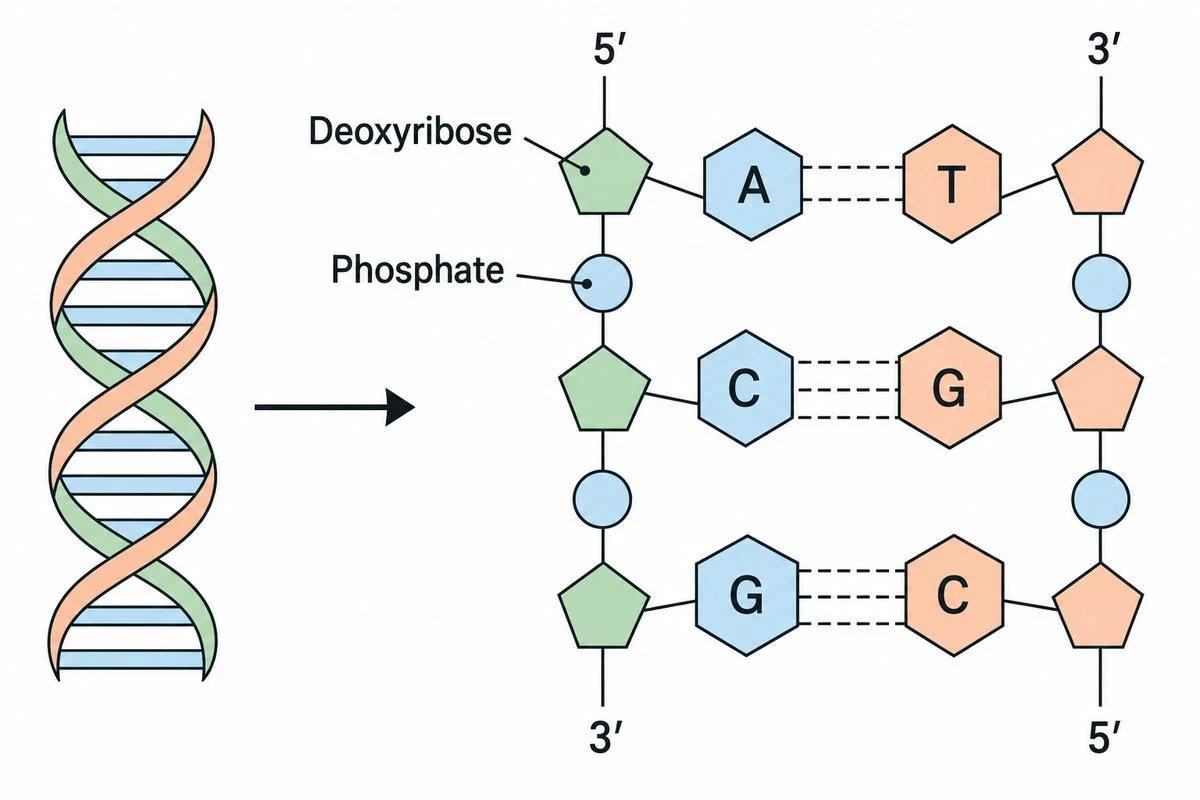
DNA helix beside an enlarged segment showing opposite strand directions and complementary base pairs.

5. Nucleic Acids

DNA stores information; RNA helps make proteins.

Show
Look at the diagram’s enlarged DNA segment. Cover the right-hand bases opposite A–C–G.
Ask
Which bases would rebuild the hidden strand, from top to bottom?
Say
The hidden bases are T–G–C, following DNA’s fixed pairing rules. Pairing lets one strand guide copying of its partner.
Used in
DNA copying supplies new cells with genetic information during growth.
If your child says…“Any base can pair with any other base.”
Ask
If any partner fitted, could the visible strand specify one exact hidden sequence?
What’s true
In DNA, A pairs with T, while C pairs with G.
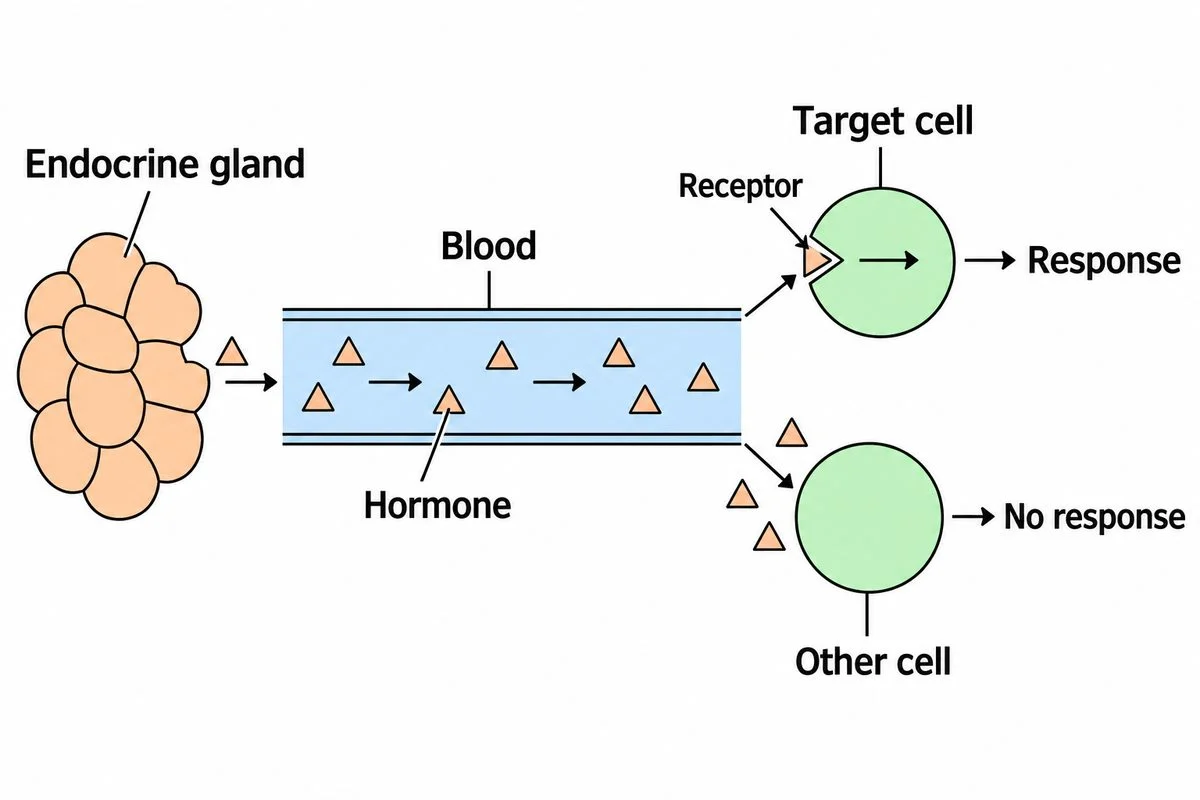
Blood carries a hormone to two cells, but only the matching receptor enables response.

6. Hormones

Chemical messages act on cells with suitable receptors.

Show
Look at the diagram. Follow the hormone through blood to both cells. Cover the outcomes and compare the receptors.
Ask
Which cell will respond when this hormone reaches both?
Say
Only the cell with the suitable receptor responds to this hormone. Blood carries the hormone to both cells. This receptor sits on the surface.
Used in
Insulin helps lower blood glucose, supporting its regulation after meals.
If your child says…“Every cell responds to every hormone.”
Ask
What would a cell need to recognise one hormone’s message?
What’s true
A cell needs a suitable receptor to respond to a particular hormone.

A real problem

India’s vitamin A programme aimed to prevent nutritional blindness.

India launched the programme in 1970 to prevent nutritional blindness.

Vitamin A deficiency is the leading cause of preventable childhood blindness.

Village health workers administered vitamin A solution through the programme.

A later review reported childhood blindness from this deficiency had almost disappeared in India.

Indian Journal of Medical ResearchUNICEFIndian Journal of Medical Research

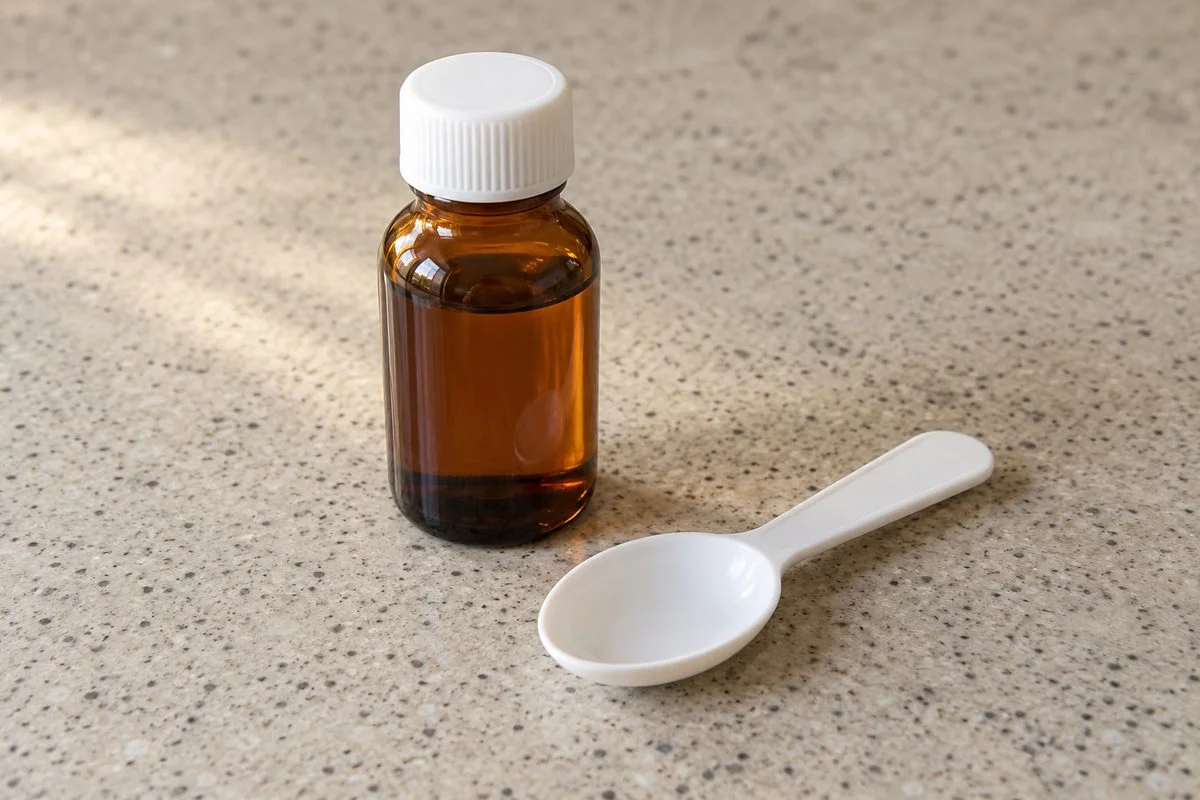
Unbranded vitamin solution bottle beside an empty dosing spoon on a clinic table.

Concept Lab · Common misconception

The tempting mistake in Biomolecules

Open standalone misconception page →

Is every disaccharide made with glucose reducing?

Wrong

Sucrose must be reducing because one of its units is glucose.

Why it feels right. Free glucose is reducing, so I expect its property to carry over unchanged.

Right

A disaccharide needs an available anomeric centre that can open to a reactive form.

Worked example

Maltose
One free anomeric centre→Reducing
Sucrose
Both anomeric centres joined→Nonreducing
The key difference is whether an anomeric centre is available. Both centres participate in sucrose's bond.
  1. In maltose, one anomeric centre is free.
  2. In sucrose, the glycosidic bond joins both anomeric centres.
  3. Maltose is reducing and sucrose is nonreducing.

Ask your child six quick questions.

One per step. The answer and the reason are given.

  1. Can hydrolysis split glucose into simpler sugars?

    No. Glucose is already a monosaccharide.

  2. Why does cooked egg white remain firm after cooling?

    Its proteins remain denatured. Cooling does not restore their original folding.

  3. Why can changing pH change this enzyme’s activity?

    It affects the active site. Changes at the active site can affect binding and catalysis.

  4. Which missing vitamin must be supplied to correct scurvy’s underlying deficiency?

    Vitamin C. Another vitamin cannot perform vitamin C’s specific functions.

  5. Which DNA base must face C when a strand is copied?

    G. Complementary pairing requires C to pair with G.

  6. What allows a target cell to recognise a particular hormone?

    A suitable receptor. Hormone responses depend on specific recognition.

15 more questions with answers