Skip to content

Teach Aldehydes, Ketones and Carboxylic Acids in six steps.

For each idea: show it, ask before you tell, then say one line.

Gather paper, a pencil, food vinegar, baking soda, an open cup, a teaspoon and a tray.

Use only food vinegar and baking soda. Do not taste materials or mix cleaning products.

Common misconceptions & worked visual for this chapter · 15 practice questions with answers

How to teach it

Recognise and make carbonyl compounds

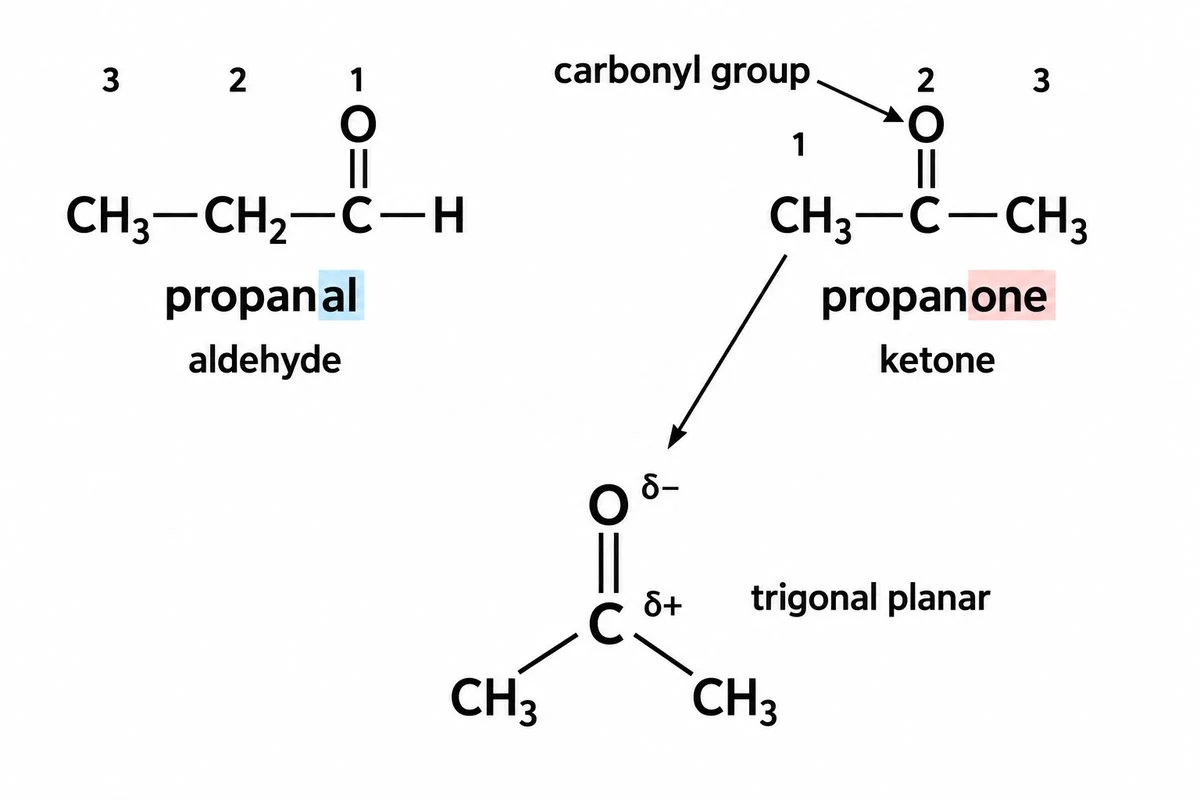
Propanal and propanone structures with an enlarged planar, polar carbonyl centre.

1. Nomenclature and Structure of Carbonyl Group

Atoms attached to the carbonyl carbon help determine names and properties.

Show
Look at the diagram. Compare the atoms attached to each carbonyl carbon. Find the enlarged carbonyl centre below.
Ask
From each carbonyl carbon’s attached atoms, would you predict matching or different name endings?
Say
Propanal’s carbonyl hydrogen makes it an aldehyde, named with -al. Propanone’s two carbon neighbours make it a ketone, named with -one. Both carbonyl centres are planar.
Used in
Propanone dissolves nail polish for removal.
If your child says…“A carbonyl group always makes an aldehyde.”
Ask
Does each carbonyl carbon have a hydrogen attached?
What’s true
The atoms directly attached to carbonyl carbon distinguish aldehydes from ketones.
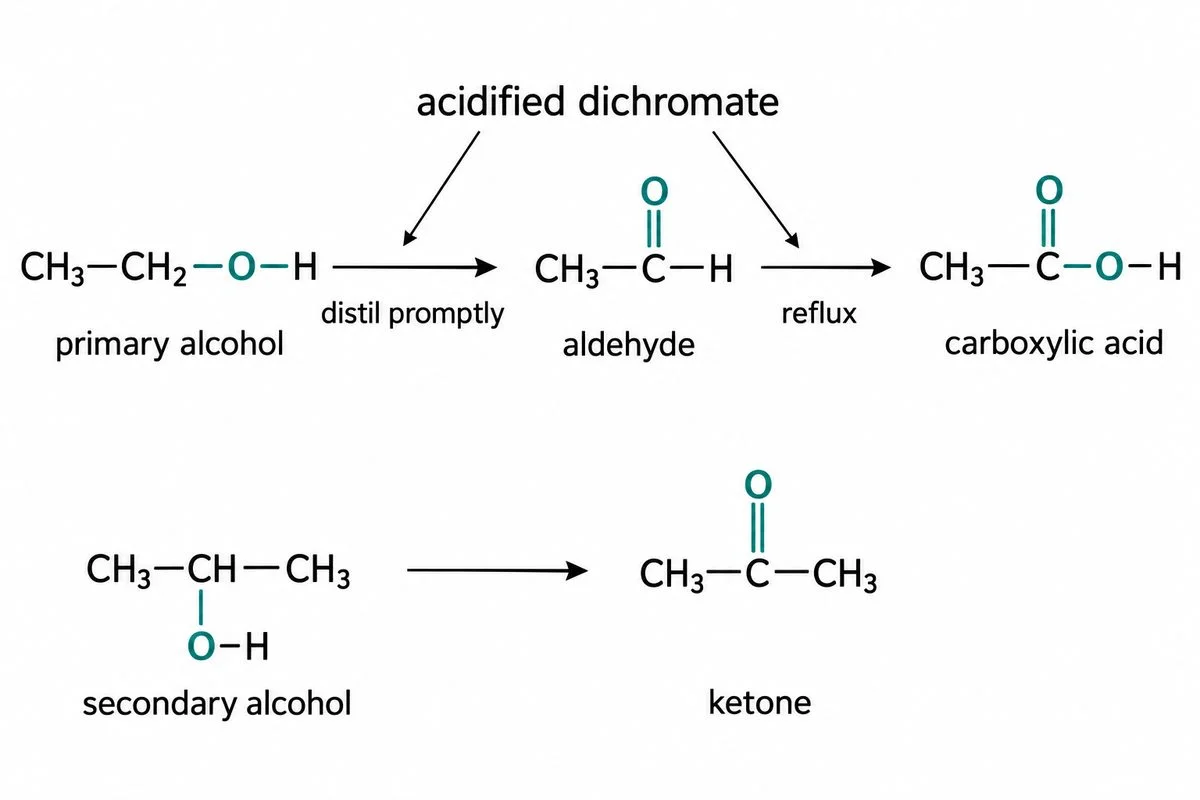
Alcohol oxidation routes showing aldehyde collection, further oxidation and ketone formation.

2. Preparation of Aldehydes and Ketones

Alcohol structure and oxidation conditions determine the product.

Show
Look at the diagram. Follow ethanol through ethanal to ethanoic acid. Compare the lower route from propan-2-ol.
Ask
If ethanal leaves the oxidant as it forms, which product should we collect?
Say
Collect ethanal by distilling it away as it forms, limiting further oxidation. Keeping it with the oxidant produces ethanoic acid. The secondary alcohol instead gives a ketone.
Used in
Alcohol oxidation supplies carbonyl compounds for making other chemicals.
If your child says…“Oxidising ethanol always stops at ethanal.”
Ask
What could happen if the aldehyde stays with an oxidant that can oxidise it further?
What’s true
The oxidation conditions determine whether ethanal remains or reacts further.

Reactions of aldehydes and ketones

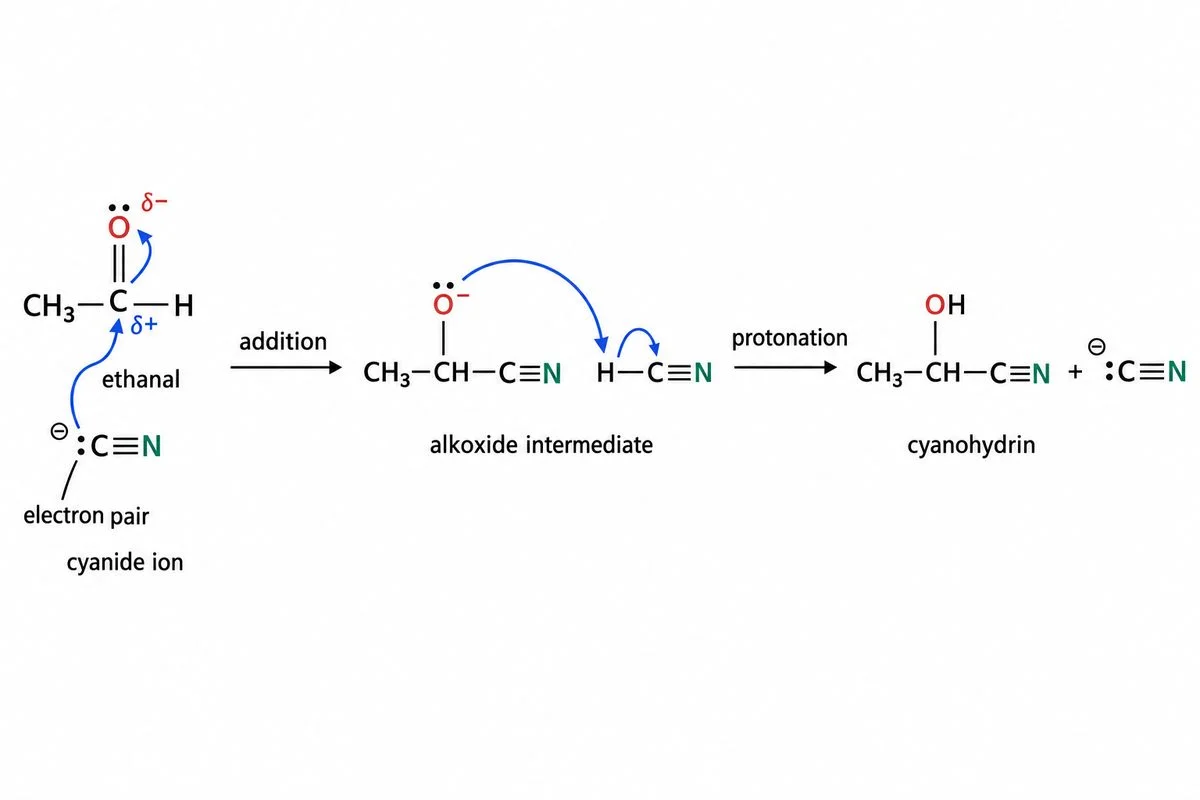
Curved arrows show cyanide addition to ethanal followed by proton transfer.

3. Nucleophilic Addition Reactions

An electron-pair donor bonds to carbonyl carbon.

Show
Look at the diagram. Find cyanide’s electron pair and carbonyl carbon’s partial positive charge. Follow the curved arrows after predicting.
Ask
As cyanide bonds to this carbonyl carbon, what will happen to the carbon–oxygen double bond?
Say
Cyanide donates an electron pair to the slightly positive carbonyl carbon. One electron pair moves from the double bond to oxygen, leaving a single carbon–oxygen bond. Oxygen then takes a proton from hydrogen cyanide, forming the cyanohydrin.
Used in
Cyanohydrins help chemists make other compounds.
If your child says…“Cyanide attaches to the carbonyl oxygen.”
Ask
Which carbonyl atom carries a partial positive charge?
What’s true
The electron-pair donor attacks carbonyl carbon, which becomes tetrahedral.
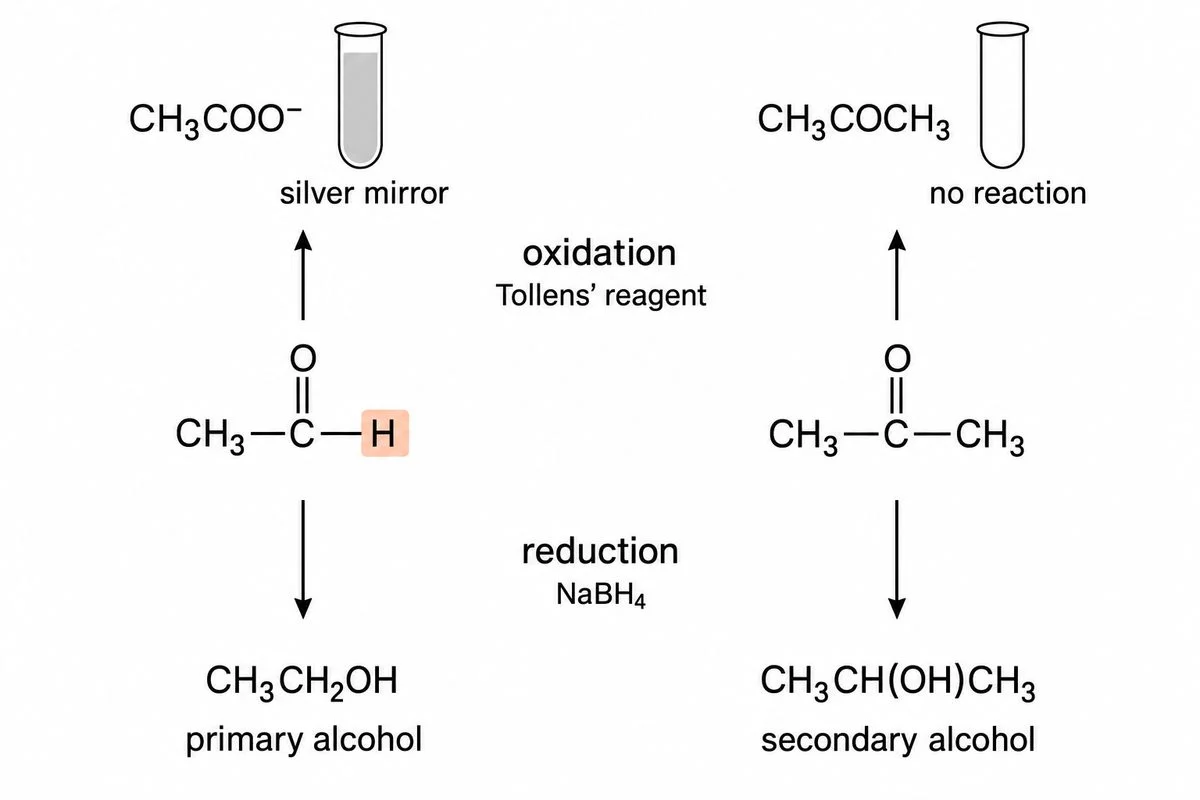
Ethanal and propanone compared under Tollens’ oxidation and sodium borohydride reduction.

4. Oxidation and Reduction

Structure and reagents determine oxidation, reduction and test results.

Show
Cover the diagram’s products with paper until after the prediction. Compare ethanal’s carbonyl hydrogen with propanone’s carbon neighbours.
Ask
Which compound could give a silver mirror with Tollens’ reagent?
Say
Ethanal oxidises readily, while silver forms from the reagent. Propanone resists this mild oxidation.
Used in
Silvering reactions deposit reflective silver on glass, making brighter mirrors.
If your child says…“Every carbonyl compound gives a silver mirror.”
Ask
Do both compounds have a hydrogen attached directly to carbonyl carbon?
What’s true
Tollens’ reagent produces silver with ethanal but not propanone.
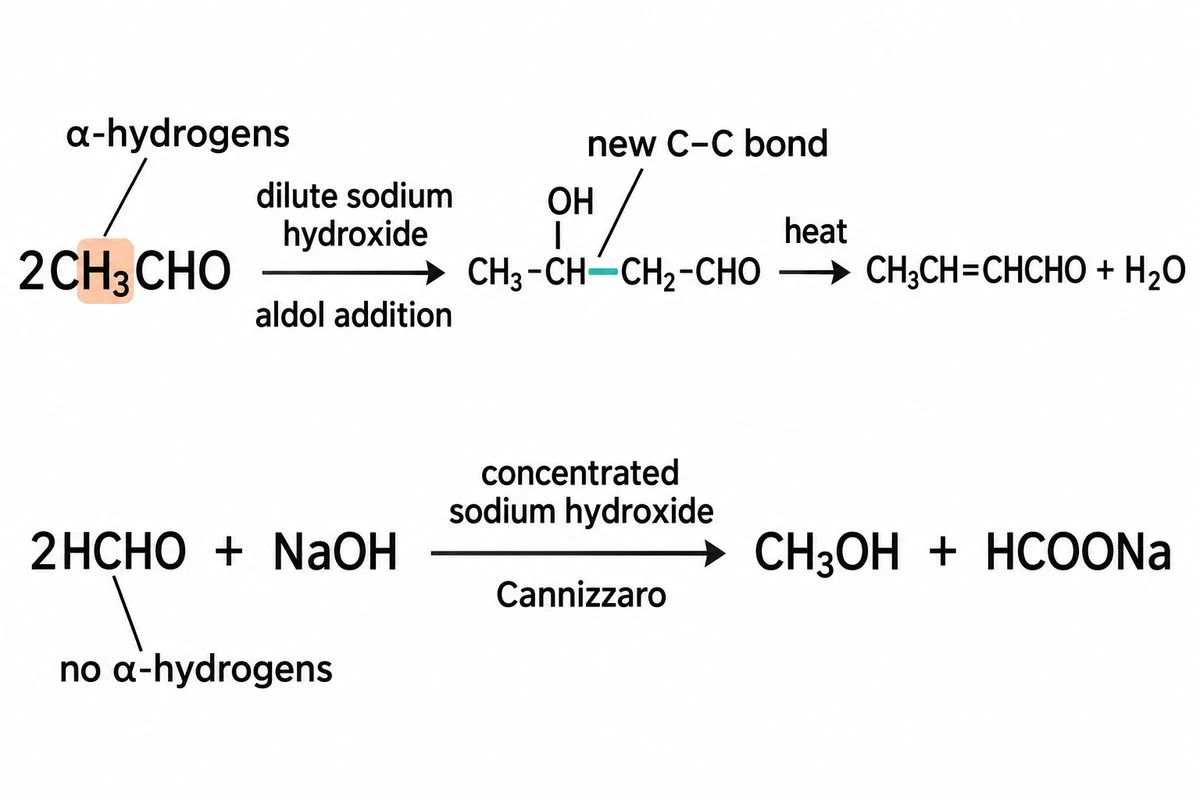
Ethanal undergoes aldol addition and dehydration; methanal forms alcohol and carboxylate.

5. Aldol Condensation and Cannizzaro Reaction

Alpha hydrogens help determine which reactions occur.

Show
Look at the diagram. Find ethanal’s hydrogens on the carbon beside carbonyl carbon. Compare methanal, then follow both routes.
Ask
Which aldehyde shown would you predict undergoes self-aldol addition with dilute sodium hydroxide?
Say
Ethanal’s neighbouring carbon has alpha hydrogens, allowing aldol addition. Methanal lacks alpha hydrogens; concentrated alkali oxidises some molecules and reduces others in the Cannizzaro reaction.
Used in
Aldol reactions build carbon chains for making larger molecules.
If your child says…“The hydrogen attached to carbonyl carbon is an alpha hydrogen.”
Ask
Does methanal have a carbon beside its carbonyl carbon?
What’s true
An alpha hydrogen belongs to the neighbouring carbon, not carbonyl carbon itself.

Carboxylic acids

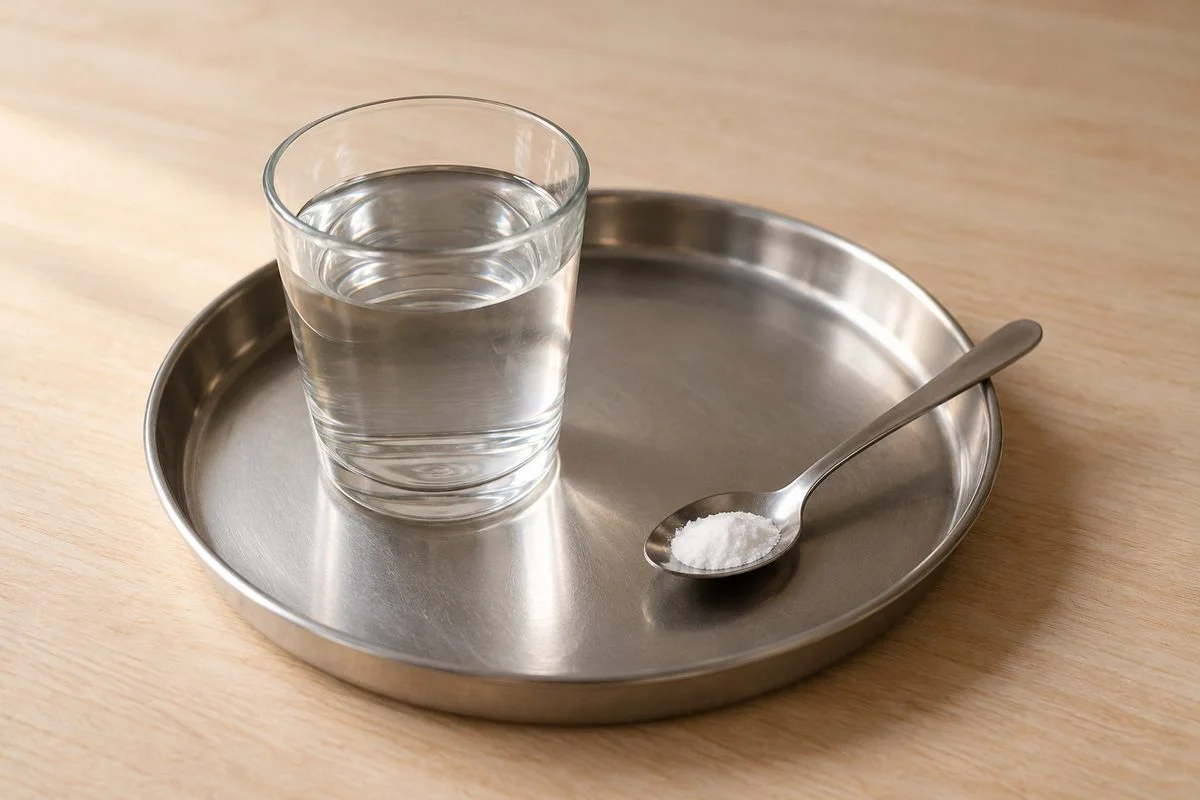
Vinegar in an open cup beside a spoon holding baking soda.

6. Carboxylic Acids

The carboxyl group can donate a proton.

Show
An adult puts two teaspoons of food vinegar into an open cup on a tray. Keep a pinch of baking soda separately. After the prediction, let your child add it and watch.
Ask
What will you see if this mixture releases a gas?
Say
Vinegar’s ethanoic acid donates a proton to bicarbonate in baking soda. This releases carbon dioxide, which forms the bubbles.
Used in
Carboxylic acids react with alcohols to make esters used in perfumes.
If your child says…“The bubbles mean the vinegar is boiling.”
Ask
Did we heat the vinegar before the bubbles appeared?
What’s true
This reaction releases gas without boiling the liquid.

A real problem

Silver backing made mirrors brighter.

Liebig’s silvering technique gained wide acceptance after his improvement in 1856.

The process uses a variation of the aldehyde test with Tollens’ reagent.

The reaction deposits a thin layer of metallic silver that sticks to glass.

Silver backing gave a brighter image, but it cost more.

WikipediaMcGill UniversityMuseum of Fine Arts, Boston

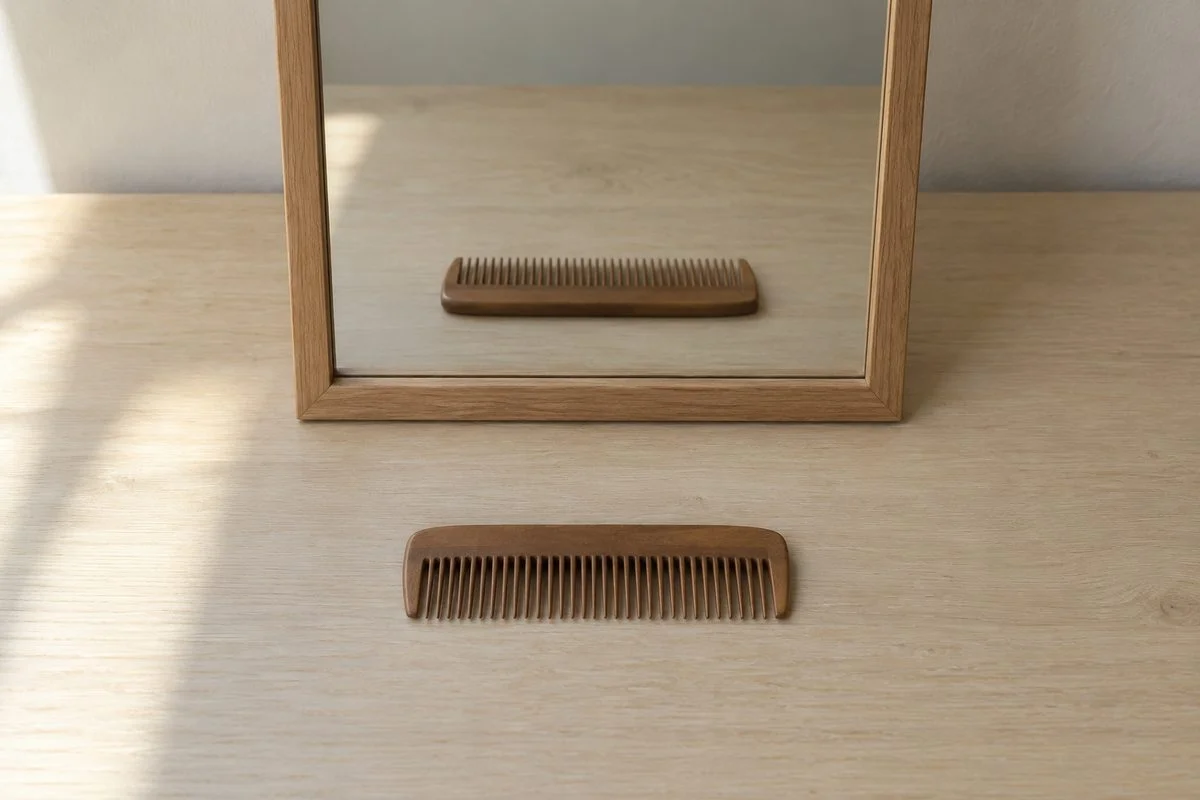
A dressing mirror reflecting a comb on a wooden table.

Concept Lab · Common misconception

The tempting mistake in Aldehydes, Ketones and Carboxylic Acids

Open standalone misconception page →

Will every carbonyl compound give a silver mirror?

Wrong

Both ethanal and propanone give a positive Tollens test because both have C=O.

Why it feels right. I treat all carbonyl groups as having identical chemical behaviour.

Right

Under ordinary Tollens test conditions, an aldehyde such as ethanal can be oxidised. A simple ketone such as propanone does not give the same result.

Worked example

Ethanal
Tollens reagent→Silver mirror can form
Propanone
Same test→No silver mirror
Both contain C=O, but only ethanal gives the silver mirror in this comparison.
  1. Test ethanal and propanone separately.
  2. Ethanal reduces the silver complex and can leave silver on the tube.
  3. Propanone gives no silver mirror in this comparison.

Ask your child six quick questions.

One per step. The answer and the reason are given.

  1. Which compound has hydrogen directly attached to carbonyl carbon?

    Propanal. Propanone’s carbonyl carbon joins two carbons instead.

  2. What can ethanal become if oxidation continues?

    Ethanoic acid. Making an aldehyde does not guarantee that oxidation stops there.

  3. Which atom in ethanal gains a bond to cyanide’s carbon?

    The carbonyl carbon. Its partial positive charge attracts the electron-pair donor.

  4. Which gives silver with Tollens’ reagent: ethanal or propanone?

    Ethanal. Ethanal undergoes the mild oxidation that accompanies silver formation.

  5. Which part of ethanal supplies the alpha hydrogen: CH₃ or CHO?

    CH₃. Its carbon sits beside the carbonyl carbon.

  6. Which gas fills the bubbles here?

    Carbon dioxide. The reaction releases carbon dioxide without heating the vinegar to boiling.

15 more questions with answers