Skip to content

Teach The Other Side of Zero in eight steps.

For each idea: show it, ask before you tell, then say one line.

Gather paper, a pencil, chalk, four ₹1 coins, a bowl and five consecutive dry stairs.

Common misconceptions & worked visual for this chapter · 15 practice questions with answers

How to teach it

Numbers around zero

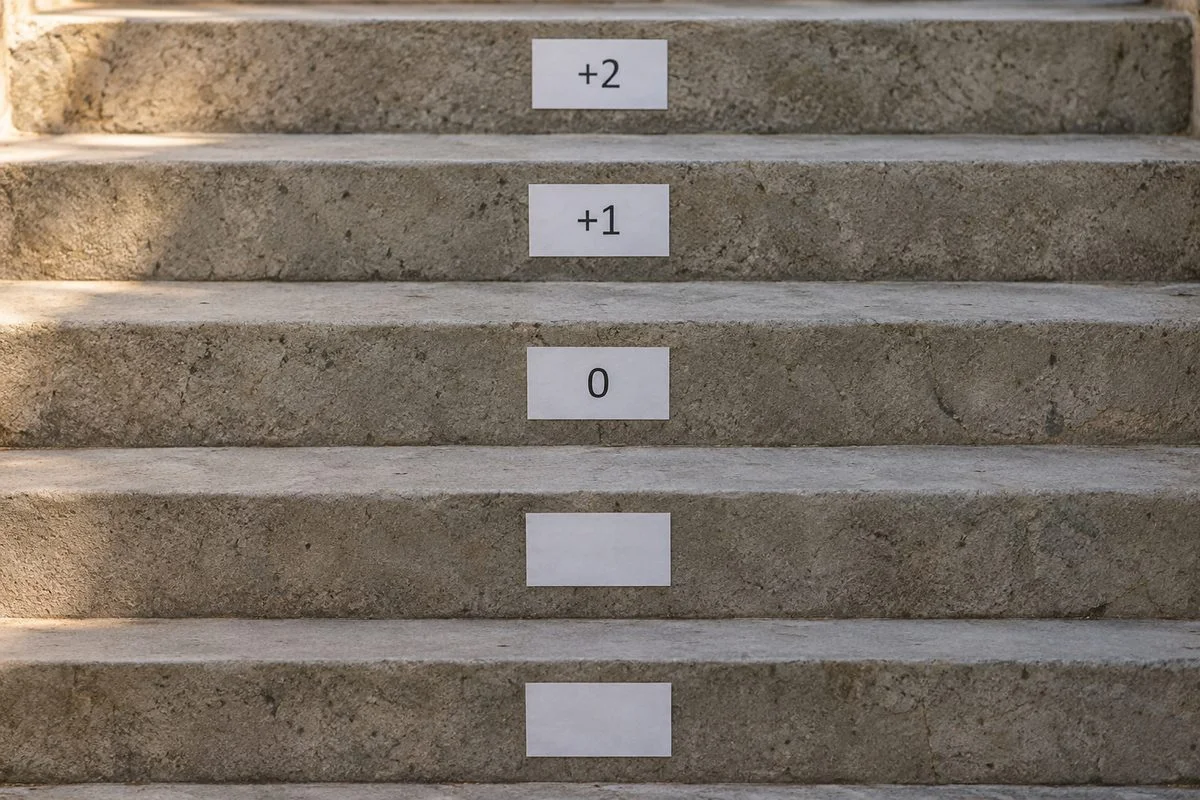
Stairs with zero and positive labels, leaving lower labels blank.

1. Integers

Whole numbers, their negatives, and zero.

Show
Choose five consecutive dry stairs. Label the middle 0 and those above +1 and +2. Leave the lower labels blank.
Ask
What numbers will label the stairs just below zero?
Say
Use −1, then −2.
Used in
Signed floor numbers help visitors find levels below the entrance.
If your child says…“Zero doesn't count as an integer.”
Ask
Which integer labels the middle stair?
What’s true
Zero belongs with the integers even though it is neither positive nor negative.
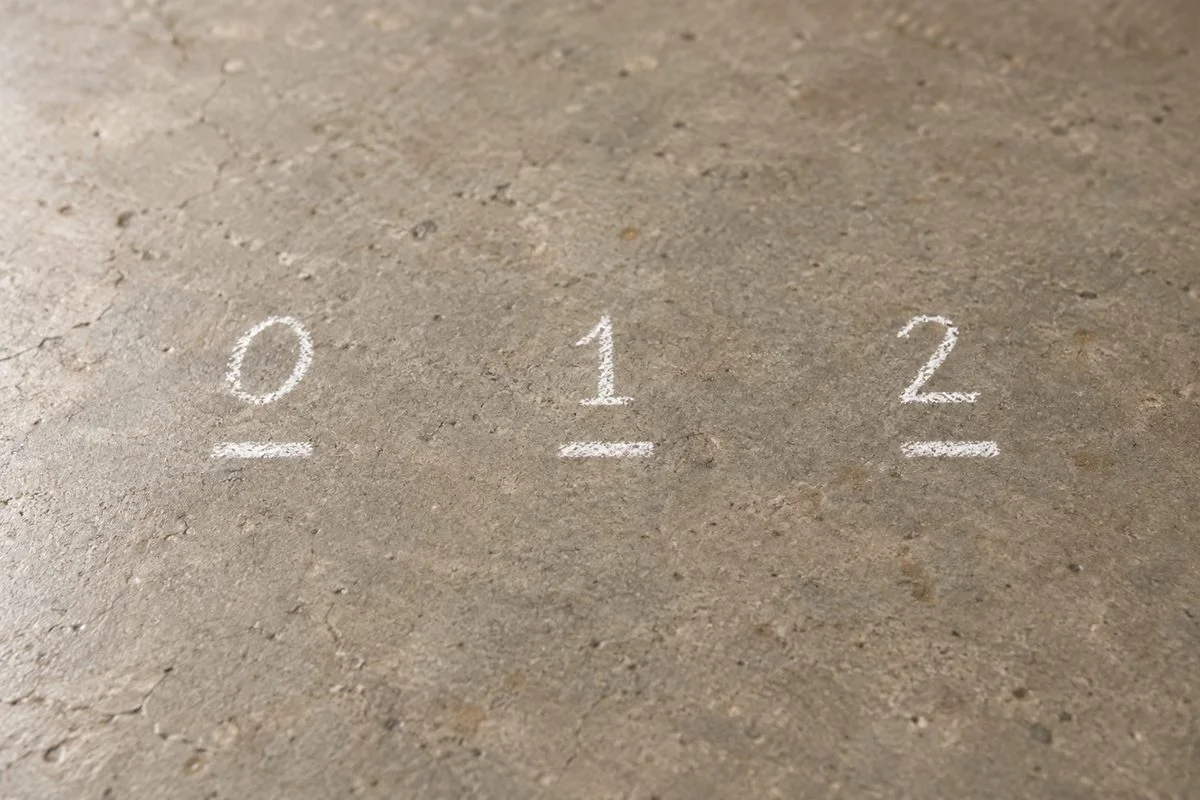
Three equally spaced chalk marks numbered zero, one and two.

2. Adding Integers; Back to Zero!

Addition combines movements. Two numbers adding to zero are additive inverses.

Show
Chalk three equally spaced floor marks: 0, 1, 2. Agree that right is positive. Your child walks from 0 to 2. Pause before returning.
Ask
After two spaces left, what total movement from zero will you have?
Say
The total movement is zero: equal opposite movements cancel.
Used in
A matching refund cancels a payment, restoring the earlier balance.
If your child says…“Two equal movements always cancel.”
Ask
Would another move right bring you back to zero?
What’s true
Equal movements cancel only when their directions oppose each other.
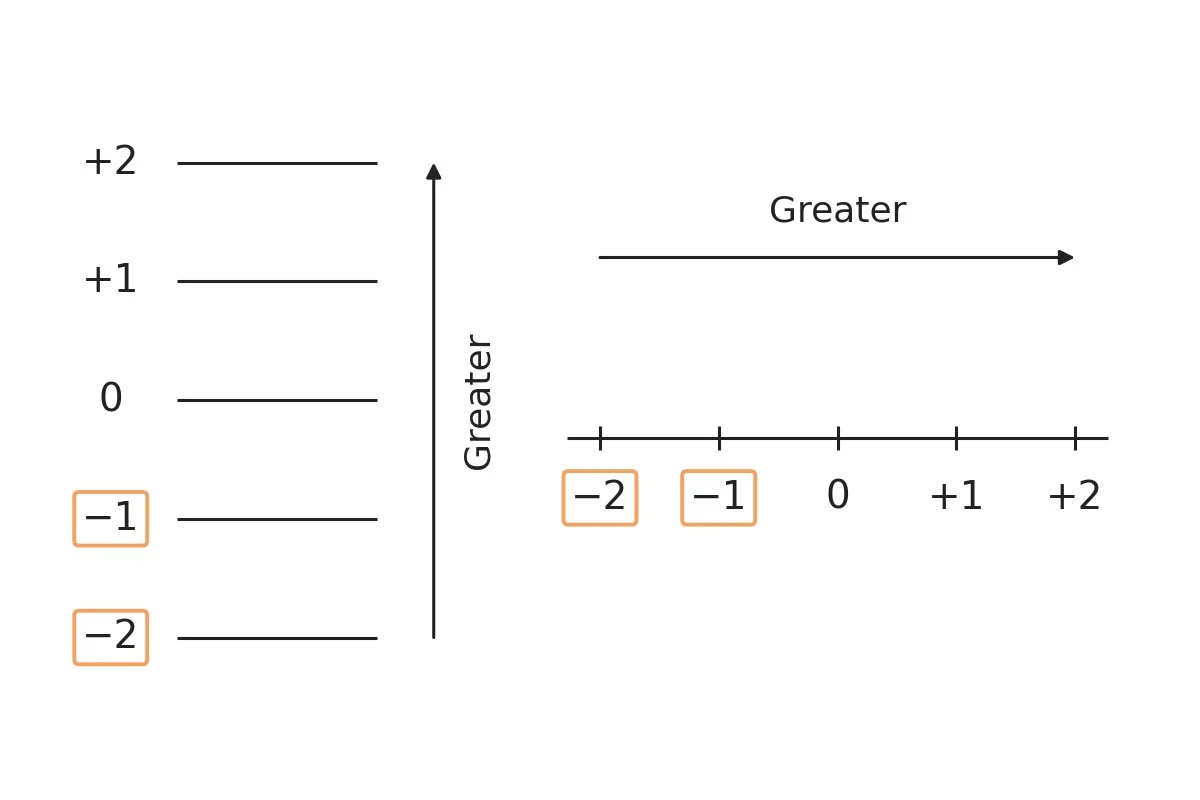
Floor levels and a number line show minus one above and right of minus two.

3. Comparing numbers using floors

Greater numbers lie higher vertically or farther right horizontally.

Show
Find floors −1 and −2 on the diagram's left. Find the same numbers on the number line beside them.
Ask
Which is greater, −1 or −2, judging by their positions?
Say
Minus one is greater than minus two. It sits higher on the floor scale and farther right on the number line.
Used in
Comparing negative temperatures tells us which place is warmer.
If your child says…“Minus two is greater because two is bigger.”
Ask
Which number sits farther right: −1 or −2?
What’s true
Among negative integers, the number closer to zero is greater.

Subtracting and tracking movement

1−(−1)=□1-(-1)=\square

−1+□=1-1+\square=1

□=1+1\square=1+1

4. Subtracting Integers

Subtract the start from the target to find the movement.

Show
Write this line. Say: “Start at minus one and reach plus one. The box holds the missing movement.”
Ask
What number belongs in the box?
Say
The box holds two: one step reaches zero, and another reaches plus one.
Used in
Subtracting earlier temperatures from later readings shows how much the temperature rose or fell.
If your child says…“Subtracting a negative makes the answer smaller.”
Ask
From minus one, must you move up or down to reach plus one?
What’s true
Subtracting a negative increases the starting value.
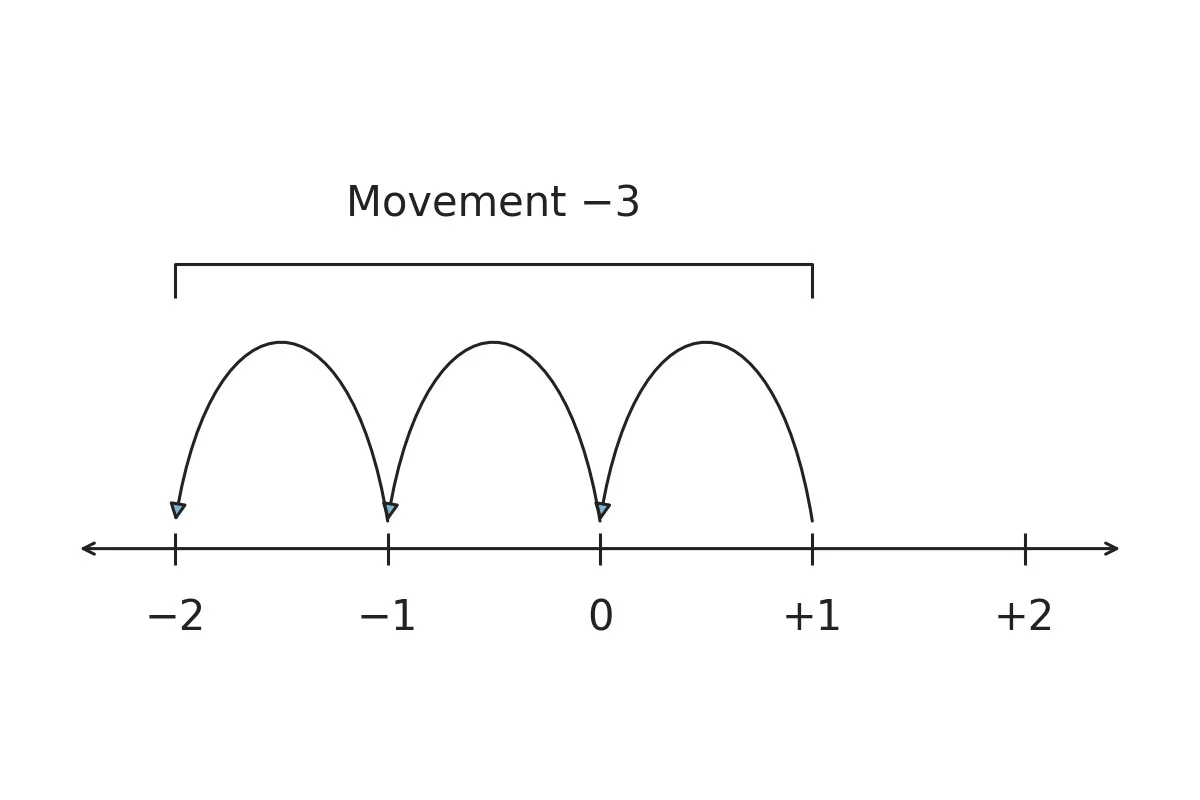
Three leftward jumps connect plus one to minus two on a number line.

5. Back to the Number Line

A movement needs both a distance and a direction.

Show
Find +1 on the diagram's number line. Follow the three leftward jumps through zero to −2.
Ask
What signed movement tells us how far and which way to go from +1 to −2?
Say
The movement is minus three because you cross three spaces to the left. Minus two is where you finish, not how far you move.
Used in
Signed height changes distinguish a climb from a descent on a walking route.
If your child says…“The movement is three; direction doesn't matter.”
Ask
Would moving three spaces right reach the same place?
What’s true
Rightward movement is positive, while leftward movement is negative.
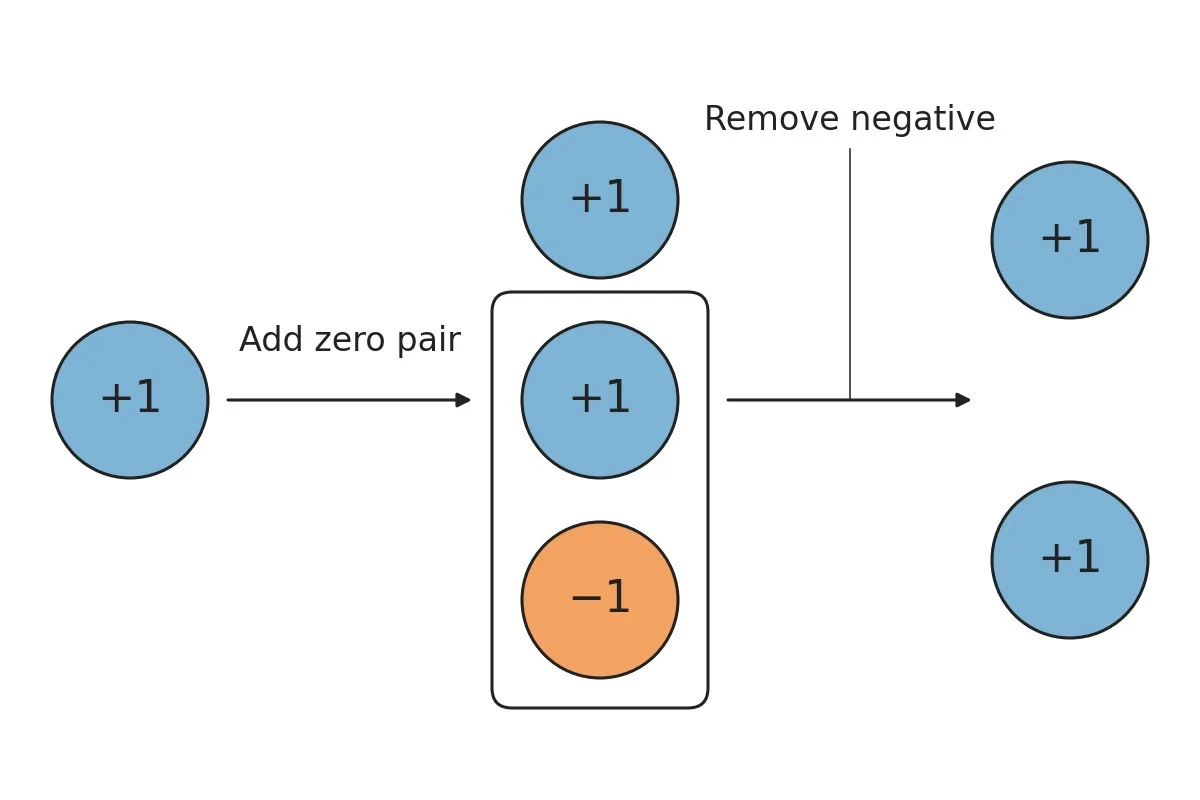
Token panels show a zero pair added, then its negative token removed.

6. The Token Model

Opposite tokens total zero; subtraction removes tokens of the stated sign.

Show
Find the single positive token on the diagram's left. In the middle, find the added positive token and negative token.
Ask
After adding the zero pair and removing its negative token, how many positive tokens remain?
Say
Add a positive and negative token together: their total is zero. Removing the negative token then leaves two positive tokens.
Used in
Cancelling equal money received and spent helps find the amount left over.
If your child says…“Adding a zero pair increases the total.”
Ask
What do the two enclosed tokens add to?
What’s true
An opposite pair adds tokens but adds no value.

Using integers

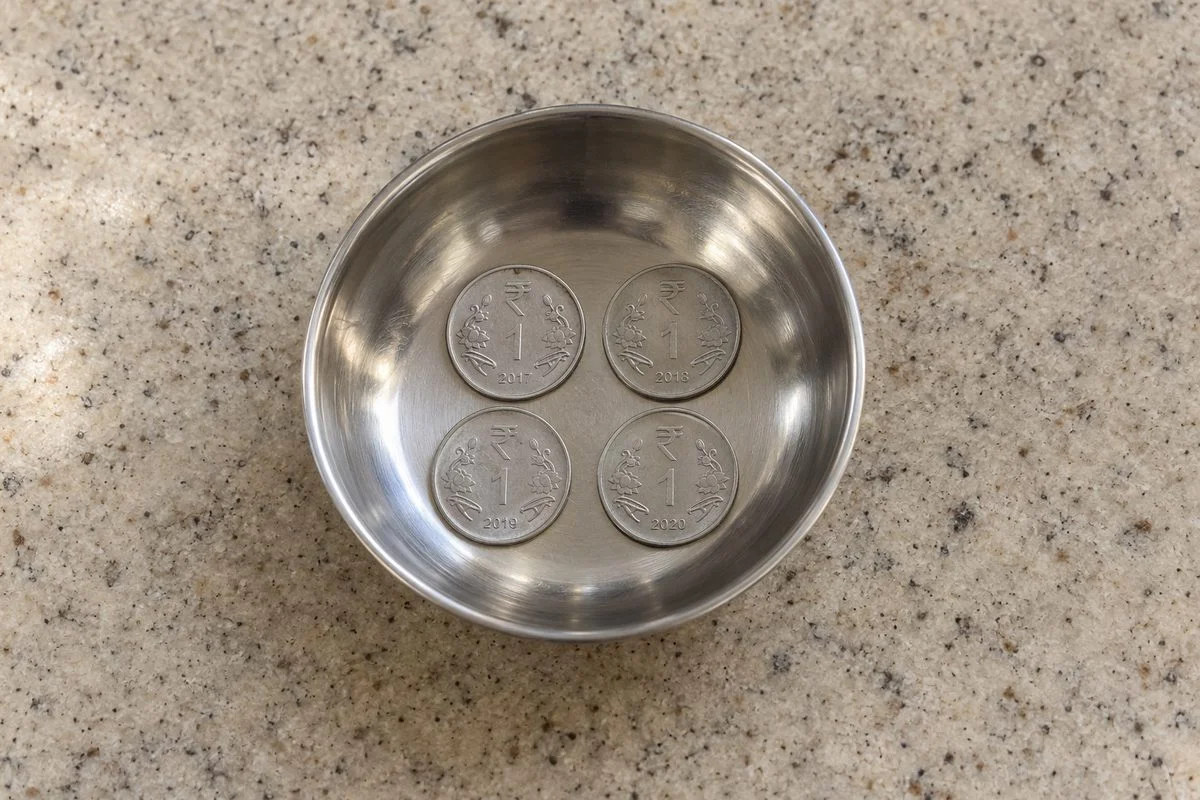
Four one-rupee coins inside a steel bowl.

7. Credits and Debits

Signs distinguish money coming in from money going out.

Show
Put three ₹1 coins in a bowl and record three rupees. Add one; record plus one rupee. Pause before taking two out.
Ask
What sign will record taking two coins out?
Say
Record minus two rupees: the minus describes money leaving, not money remaining.
Used in
Account entries separate deposits from withdrawals, making changes in savings easier to follow.
If your child says…“The change must be positive because money remains.”
Ask
Will taking coins out increase or decrease the amount?
What’s true
A decrease is a negative change even when the remaining amount is positive.
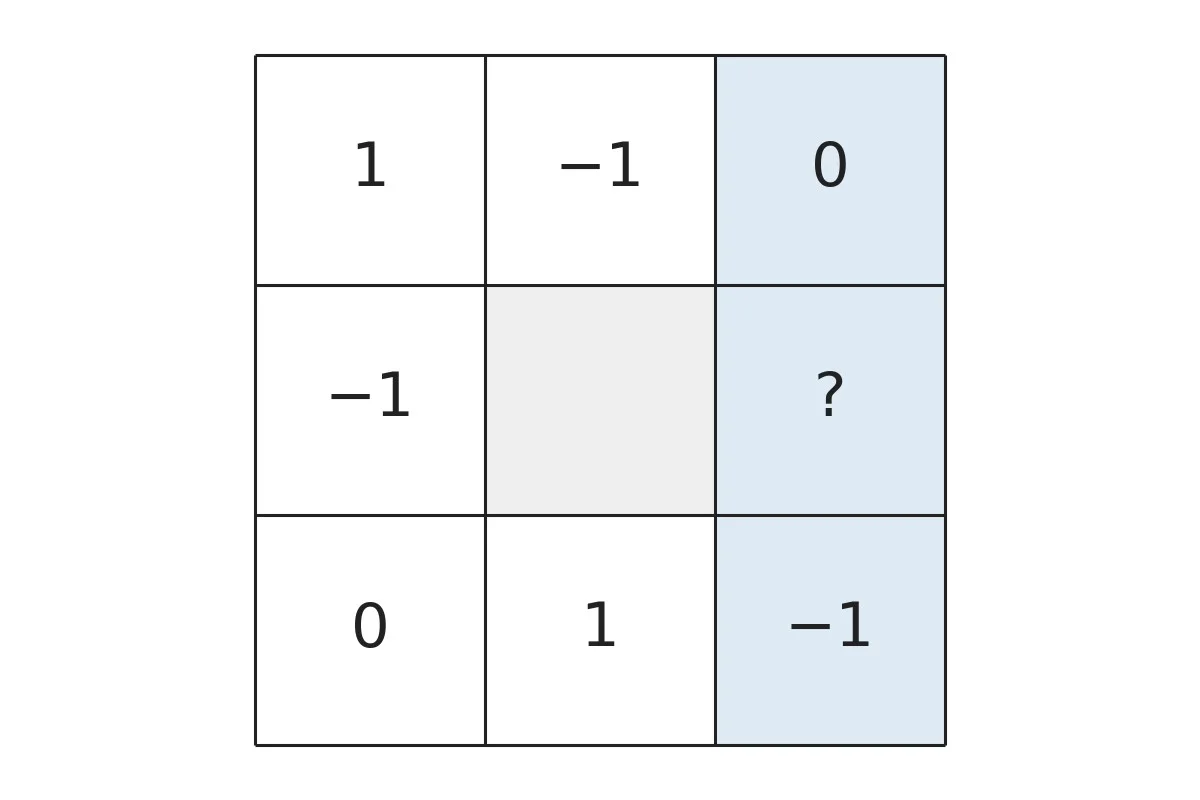
A hollow integer grid has a missing entry on its highlighted right border.

8. A Hollow Integer Grid

Each border side must add to the same total.

Show
Look at the diagram's hollow grid. Add the top, bottom and left borders. Find the question mark on the right border.
Ask
What replaces the question mark so all four border totals agree?
Say
Use plus one: it cancels minus one on the right. All four borders then total zero.
Used in
Checking a known total helps find a missing amount on a shopping bill.
If your child says…“I can ignore the minus signs when adding.”
Ask
Does adding minus one undo adding one, or add another one?
What’s true
A minus sign belongs to its number and changes what that number contributes.

Concept Lab · Common misconception

The tempting mistake in The Other Side of Zero

Open standalone misconception page →

Which is warmer, −3 °C or −8 °C?

Wrong

−8 °C is warmer because 8 is bigger than 3.

Why it feels right. I compare the digits and ignore the sign.

Right

Temperature increases as you move up a thermometer scale.

Worked example

Move up from −8 °C to −3 °C. That is a rise of 5 °C.
  1. On a thermometer, 0 °C is above −3 °C, which is above −8 °C.
  2. Starting at −8 °C, a rise of 5 °C brings the temperature to −3 °C.

Ask your child eight quick questions.

One per step. The answer and the reason are given.

  1. Which integer lies strictly between −1 and +1?

    Zero. Zero is an integer and lies between these two numbers.

  2. Starting at zero, where do two movements of −2 leave you?

    At −4. Both movements go left, so they combine rather than cancel.

  3. Which is greater: −8 or −2?

    −2. Minus two lies farther right, even though eight has the larger digits.

  4. What is one minus negative one?

    2. Adding two to minus one reaches plus one.

  5. What signed movement takes you from 9 to 3?

    −6. The six spaces go left, so the movement is negative.

  6. What total does the middle panel show before removing a token?

    +1. The opposite pair cancels, leaving the original positive unit.

  7. Two rupees leave a bowl holding four rupees. What signed change should you record?

    −2 rupees. The sign describes the decrease, not the money still in the bowl.

  8. What total do 1, −1 and 0 give?

    Zero. One and minus one cancel; adding zero leaves their total unchanged.

15 more questions with answers, 10 with pictures