Skip to content

Teach Fractions in eight steps.

For each idea: show it, ask before you tell, then say one line.

Gather scrap paper, a pencil, a ruler, two equal-sized cooked rotis and a plate.

Common misconceptions & worked visual for this chapter · 15 practice questions with answers

How to teach it

Shares and measures

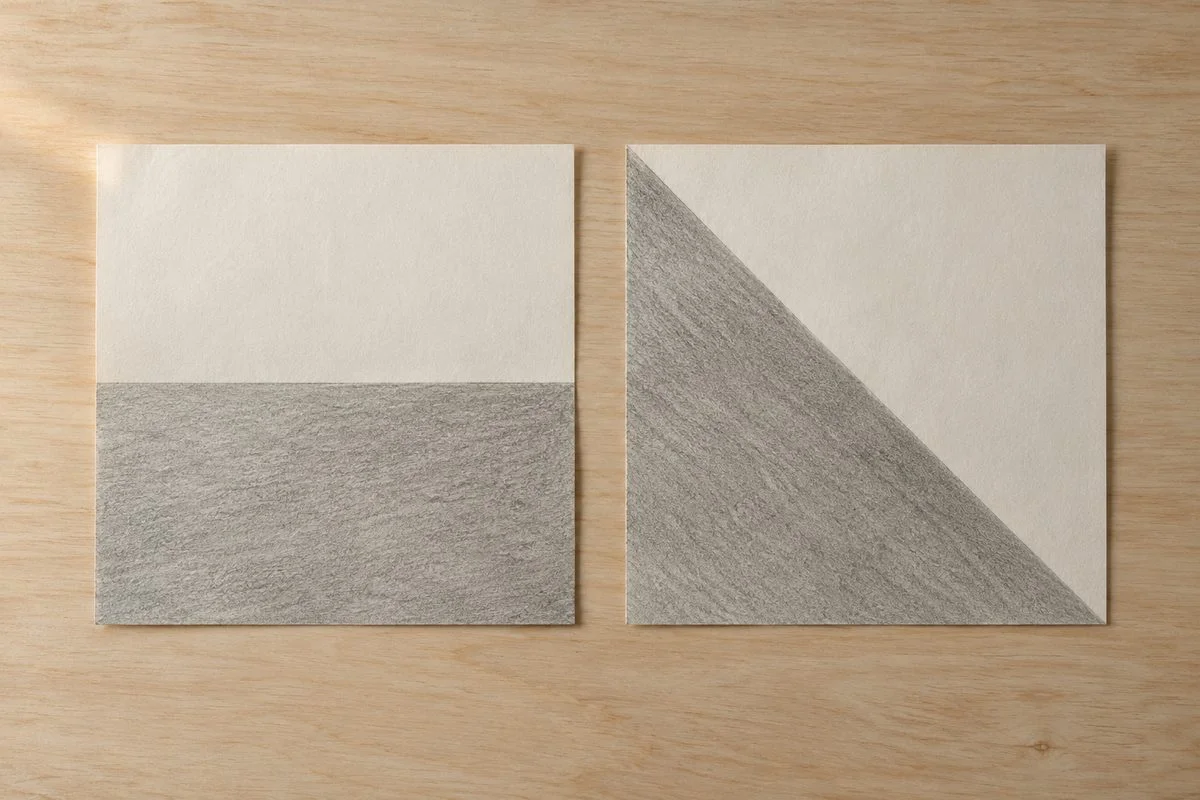
Equal paper squares with differently shaped halves shaded.

1. Fractional Units and Equal Shares; Fractional Units as Parts of a Whole

Equal shares can have different shapes.

Show
Fold equal paper squares into halves: one horizontally, one diagonally. Match the edges. Open and shade one section each.
Ask
Will each shaded section cover its unshaded partner when folded?
Say
Yes. Each share is one-half. The shapes differ, but each occupies half its square.
Used in
Equal portions make food sharing fair, even when pieces have different shapes.
If your child says…“The triangle cannot be a half.”
Ask
Does each shaded section match the unshaded section when folded?
What’s true
The share's size relative to its whole matters, even when its shape changes.
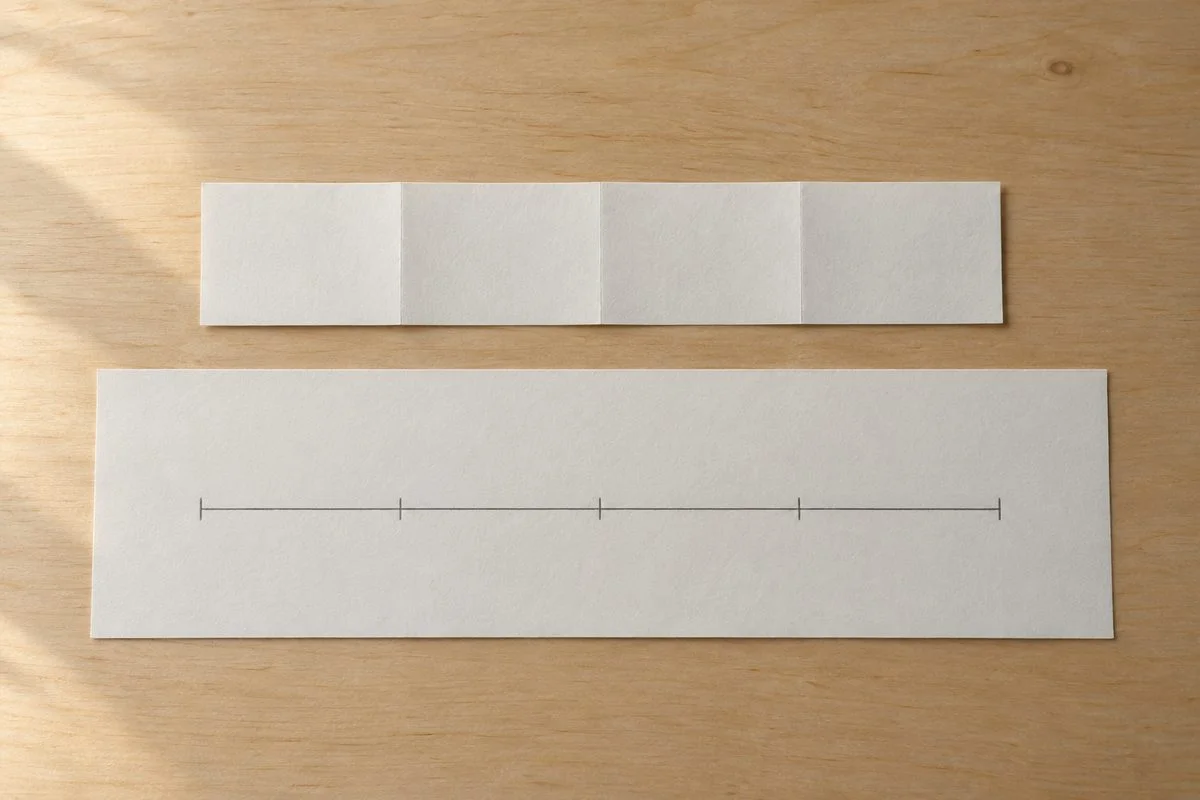
Quarter-folded strip beside a pencil line divided into matching spaces.

2. Measuring Using Fractional Units; Marking Fraction Lengths on the Number Line

Count equal lengths from zero to locate a fraction.

Show
Fold the strip end to end, then fold it end to end again. Open it beside a matching pencil line. Transfer the creases as ticks. Call the ends zero and one.
Ask
Where will three quarter-lengths from zero finish?
Say
Three quarter-lengths reach three-quarters. Count the spaces travelled from zero.
Used in
Ruler divisions measure short lengths accurately when whole units are too large.
If your child says…“Three inside ticks mean thirds.”
Ask
How many equal spaces do those three inside ticks make?
What’s true
The denominator counts equal spaces within a whole unit.
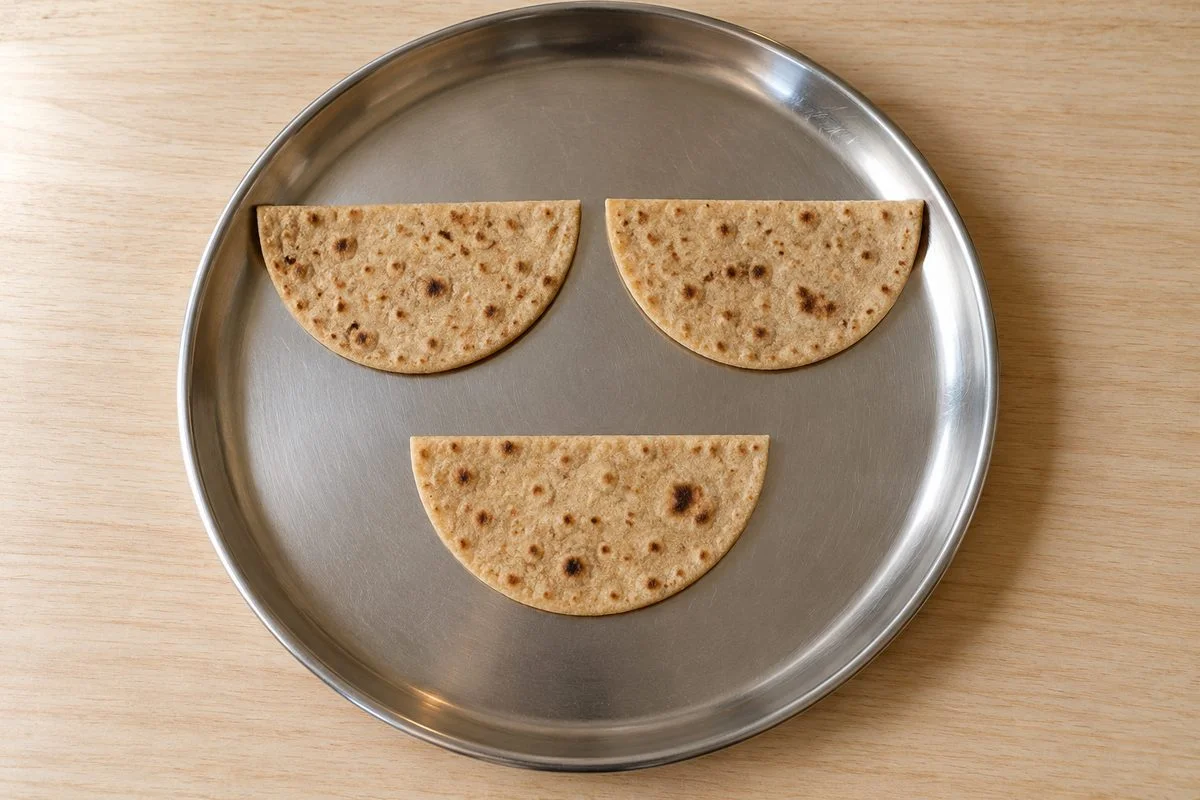
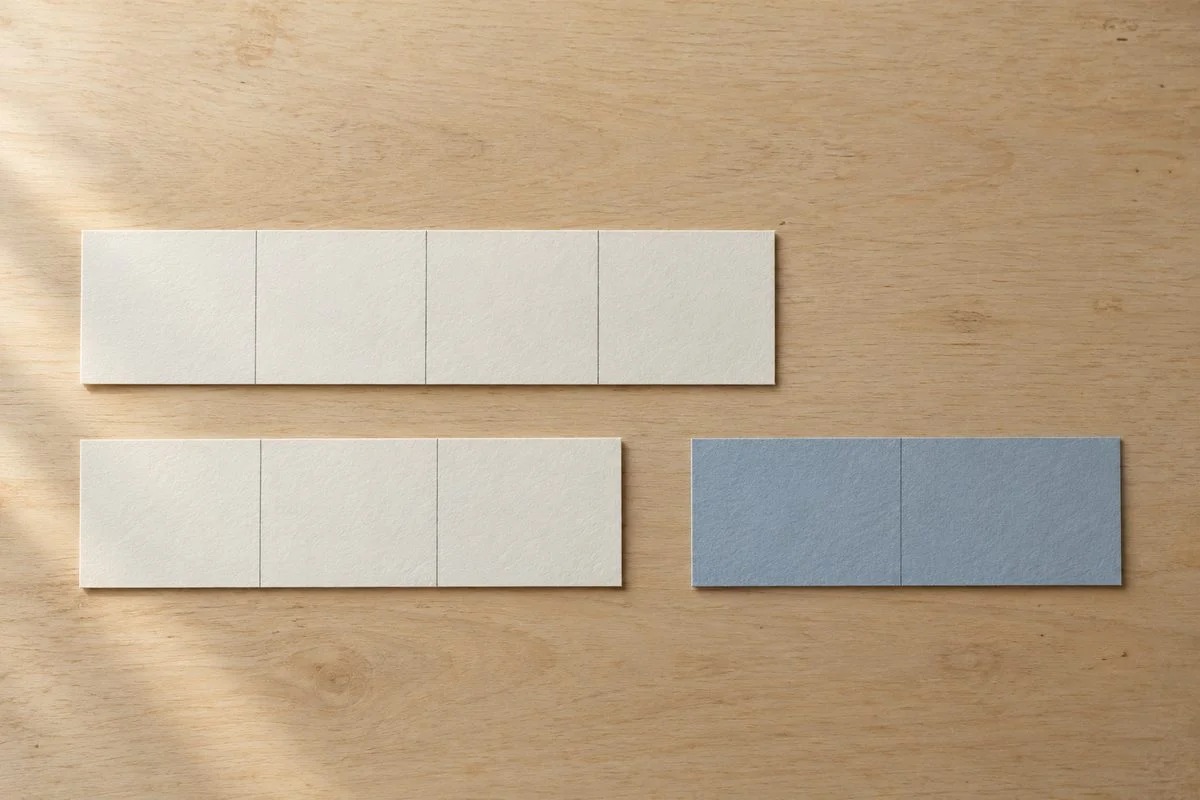
Three separate roti halves on a steel plate.

3. Mixed Fractions

A mixed fraction counts wholes and a remaining fractional part.

Show
Tear two equal-sized cooked rotis into equal halves. Set one half aside. Place the remaining halves separately on a plate.
Ask
How many whole rotis will these halves make, with what left over?
Say
Fit a pair together: three halves make one and a half rotis.
Used in
Mixed fractions describe food portions containing whole items and an extra part.
If your child says…“A fraction cannot be more than one.”
Ask
After making a whole roti, what remains on the plate?
What’s true
Counting fractional units can give an amount larger than a whole.

Equivalent names and comparisons

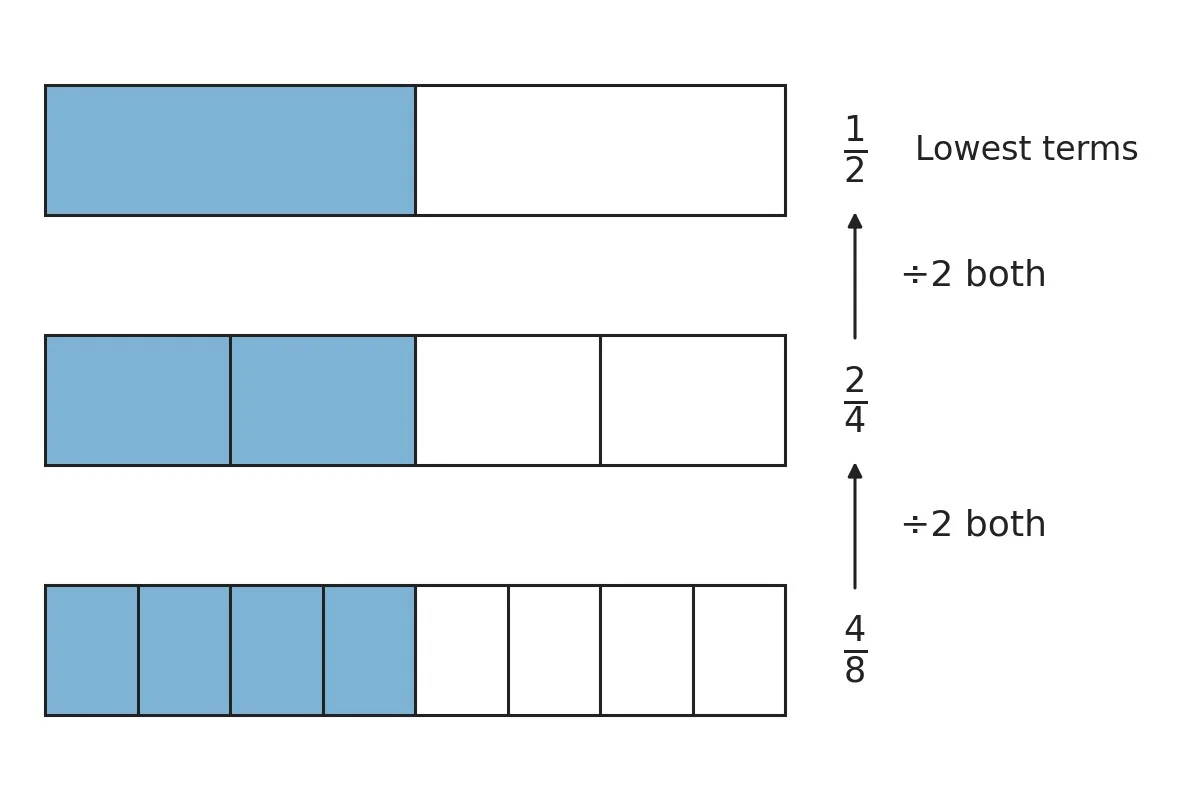
Equal shaded halves named as one-half, two-quarters and four-eighths, with arrows showing simplification.

4. Equivalent Fractions; Expressing a Fraction in Lowest Terms

Different fraction names can describe an unchanged amount.

Show
Look at the diagram. Compare the shaded lengths, then follow the arrows from four-eighths to one-half.
Ask
Can one-half, two-quarters and four-eighths name exactly the same amount?
Say
All three shaded halves cover the same amount.
Used in
Equivalent fractions match recipe quantities to measuring cups.
If your child says…“A smaller top number means the fraction is simplest.”
Ask
Can both numbers in two-quarters still be divided by 2?
What’s true
A fraction can simplify whenever a number greater than 1 divides both its numbers.
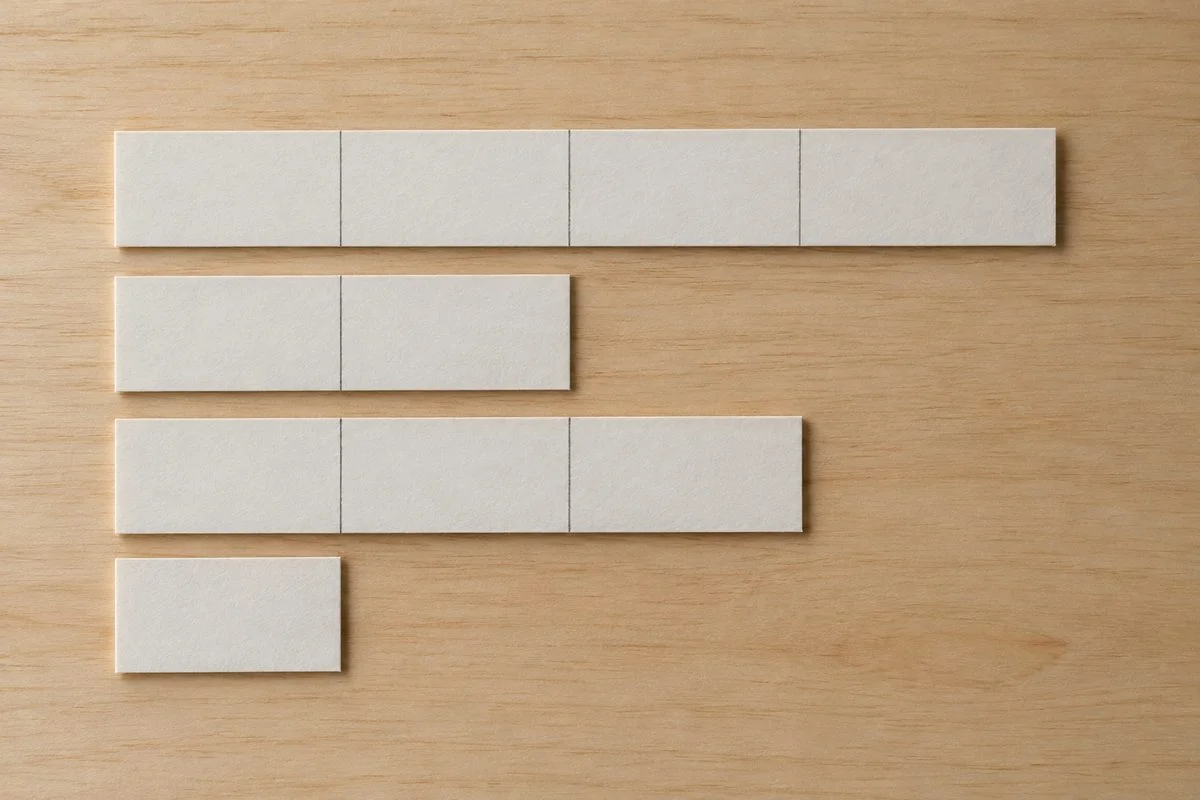
Reference strip and three unequal offcuts aligned at their left edges.

5. Comparing Fractions

Compare amounts by counting parts of the same size.

Show
Prepare a 12 cm reference strip and 3 cm, 6 cm and 9 cm offcuts. Align their left ends. Mark every 3 cm.
Ask
What order will quarter, half and three-quarters take, from shortest to longest?
Say
A quarter comes first, then a half, then three-quarters. Their lengths contain one, two and three equal quarters.
Used in
Comparing fractions helps choose the longer fabric remnant for a repair.
If your child says…“The bigger bottom number means more.”
Ask
Which reaches farther: the half-strip or the quarter-strip?
What’s true
The denominator alone cannot tell which fraction is larger.

Adding, subtracting and a puzzle

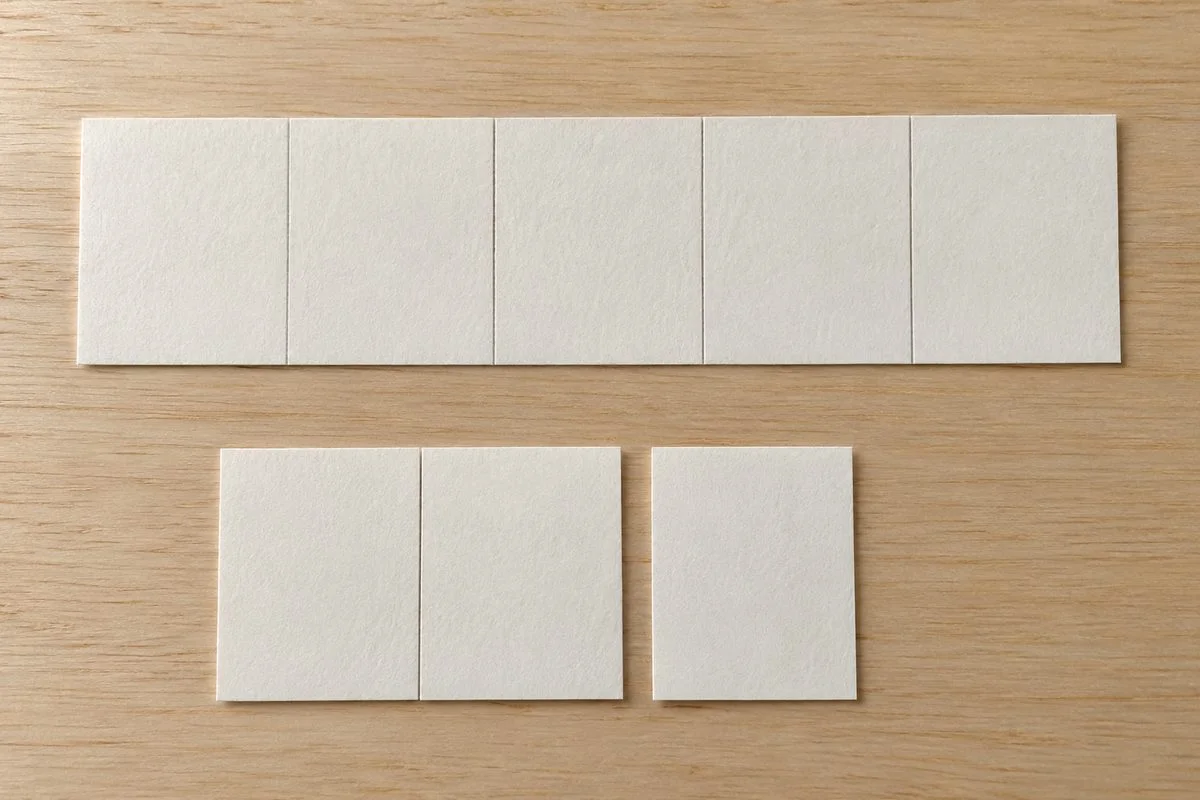
Whole sheet beside two fifth-pieces and a separate third fifth-piece.

6. Addition of Fractions with the Same Fractional Unit or Denominator

Add the counts of equally sized fractional parts.

Show
Keep one sheet whole. Fold an identical sheet into five equal sections using ruler marks. Tear along the folds. Set two pieces beside another piece.
Ask
What fraction of the whole sheet will these pieces cover together?
Say
Two fifths and one fifth make three fifths. Joining pieces leaves each piece a fifth.
Used in
Adding fractions totals liquid quantities before choosing a container.
If your child says…“I add the bottom numbers too.”
Ask
Did joining the pieces make each piece smaller?
What’s true
The denominator stays because the size of each fractional unit stays.
Whole sheet, three-quarter piece and separate half-piece ready for overlapping.

7. Subtraction of Fractions

Count what remains after removing parts measured in matching units.

Show
Keep a whole sheet visible. Prepare matching three-quarter and half-sheet pieces. Mark quarter divisions. Leave the half-piece beside the three-quarter piece, ready to cover it.
Ask
What fraction will remain uncovered when the half-piece covers part of the three-quarter piece?
Say
Align their edges: the half covers two quarters, leaving one quarter.
Used in
Subtracting fractions tells how much ribbon remains after some is used.
If your child says…“I can subtract different bottom numbers directly.”
Ask
How many quarter-sections does the half-piece cover?
What’s true
Express both amounts in matching fractional units before subtracting their counts.
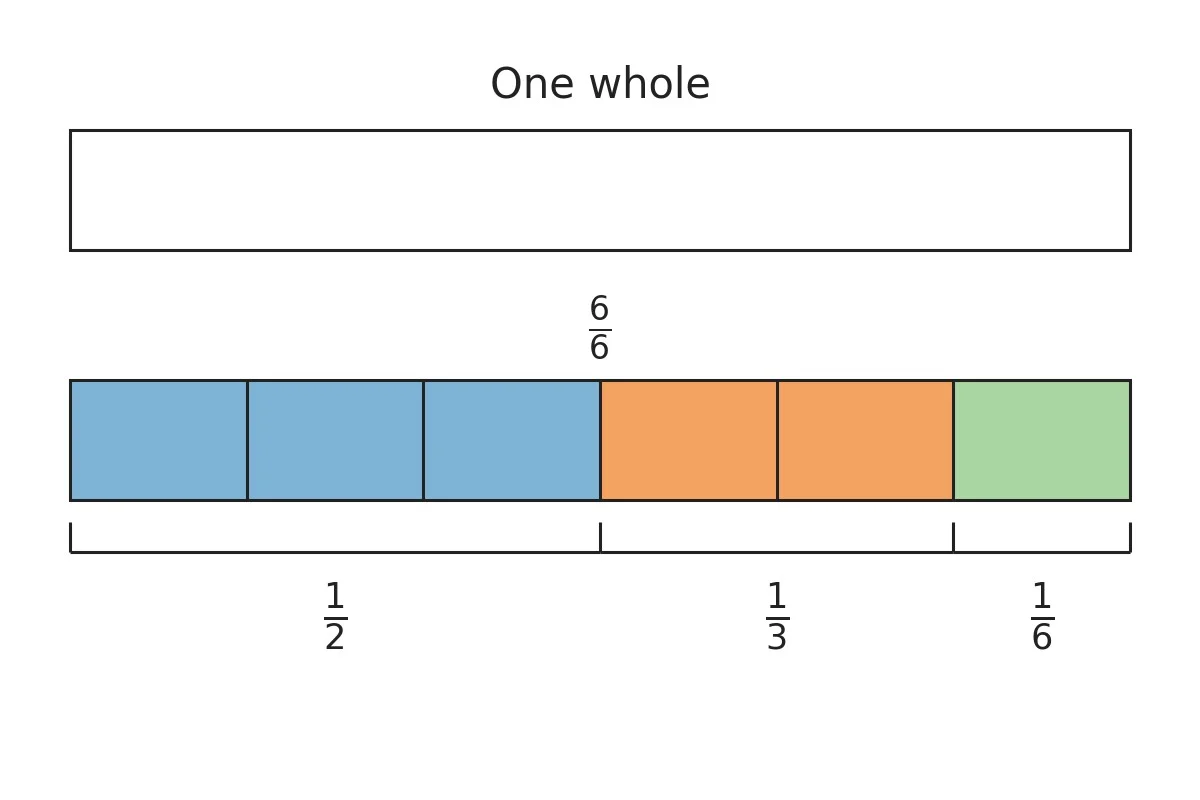
A whole bar above sixths grouped into a half, a third and a sixth.

8. A Pinch of History

Ancient Egyptian writing combined different unit fractions to name amounts.

Show
Look at the diagram. Find the whole bar above. Count the sixths within the half, third and sixth below.
Ask
Can these different unit fractions together fill exactly one whole?
Say
Three sixths, two sixths and one sixth fill the whole.
Used in
Combining fractional lengths helps use leftover material with less waste.
If your child says…“The half and third already make a whole.”
Ask
What part remains unfilled if we use only the half and third?
What’s true
The half and third leave a gap that the sixth fills.

A real problem

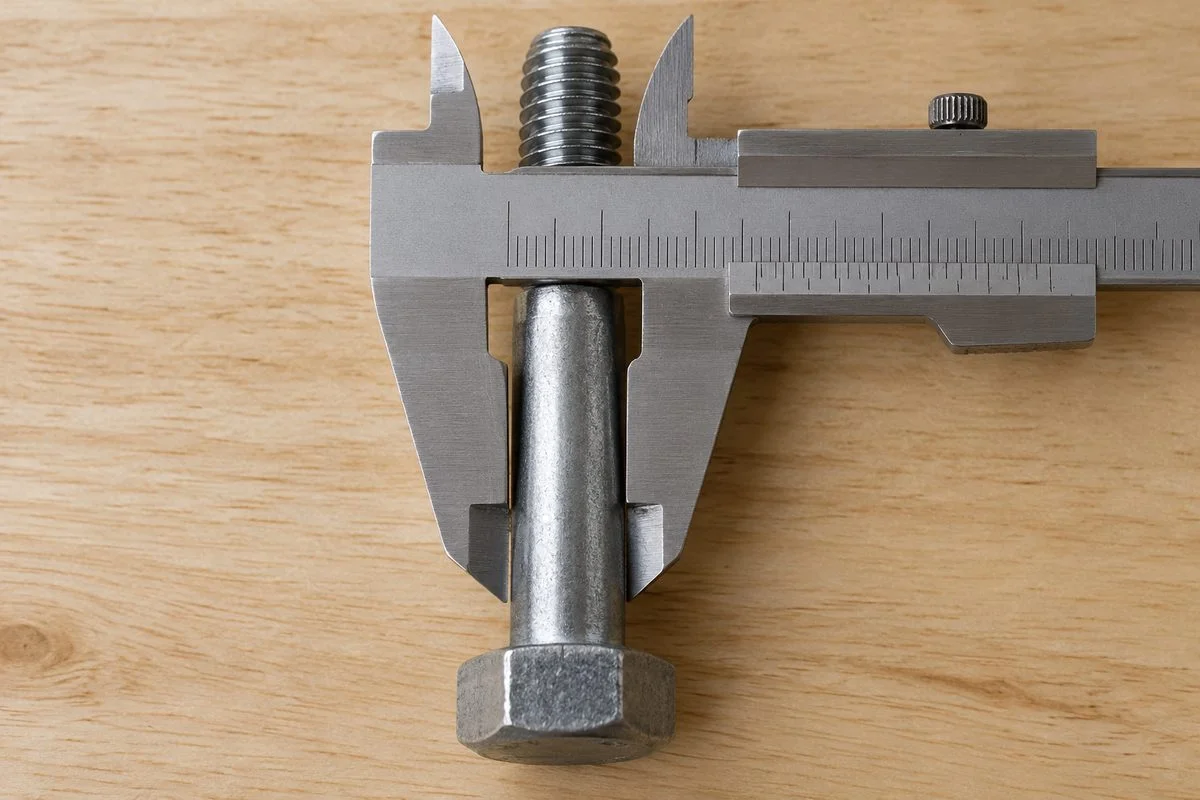
A vernier scale measures fractions between scale marks.

Pierre Vernier published his measuring invention in 1631.

The device measures fractions of divisions on straight or circular scales.

Its reading adds a fractional amount to the main scale's measurement.

Encyclopædia Britannica via WikisourceMuseo GalileoNew International Encyclopædia via Wikisource

Vernier caliper measuring the diameter of a metal bolt.

Concept Lab · Common misconception

The tempting mistake in Fractions

Open standalone misconception page (2 worked examples) →

Can you add the bottom numbers?

Wrong

1/2 + 1/3 = 2/5

Why it feels right. I use the whole-number rule for adding on both rows. One plus one is two. Two plus three is five.

Right

Add equal-sized parts. Here 1/2 + 1/3 = 3/6 + 2/6 = 5/6.

Worked example

The proposed 2/5 is shorter than the 1/2 you started with. The sum fills five sixths.
  1. Split both bars into sixths.
  2. The half fills 3 sixths and the third fills 2 sixths.
  3. Together they fill 5 sixths.
  4. The proposed 2/5 is smaller than 1/2, even though we added a positive amount to 1/2.

Ask your child eight quick questions.

One per step. The answer and the reason are given.

  1. A square folds into two matching triangles. What fraction of the square is each triangle?

    One-half. Each triangle occupies an equal share of the square.

  2. Three inside ticks divide a unit equally. What fraction is the first space?

    One-quarter. Three inside ticks create four equal spaces.

  3. What mixed fraction names three half-rotis?

    One and a half. A pair makes a whole, leaving another half.

  4. What is two-quarters in simplest form?

    One-half. Dividing both numbers by 2 preserves the amount and leaves no further common factor.

  5. Which is longer: half or a quarter of the same strip?

    Half. Half contains two quarters of that whole.

  6. What is two-fifths plus one-fifth?

    Three-fifths. There are three pieces, each still a fifth of the original whole.

  7. What remains when one-half is taken from three-quarters?

    One-quarter. The half removes two of the three quarters.

  8. What fraction completes a whole after a half and a third?

    One-sixth. The half and third together leave one sixth of the whole uncovered.

15 more questions with answers, 15 with pictures