Skip to content

Teach Playing with Constructions in six steps.

For each idea: show it, ask before you tell, then say one line.

Gather paper, square and rectangular paper pieces, a pencil, ruler, school compass and notebook.

An adult handles the sharp compass point and keeps fingers clear.

Common misconceptions & worked visual for this chapter · 15 practice questions with answers

How to teach it

Curves and corners

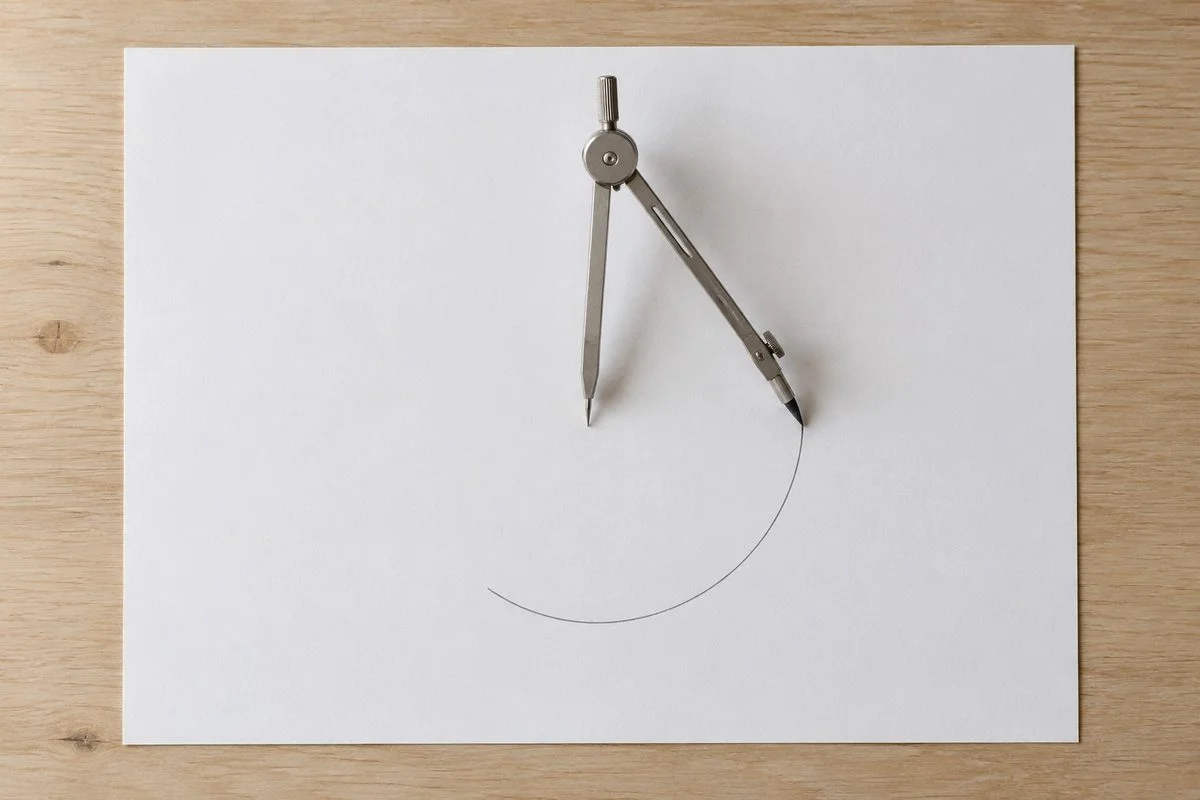
Compass paused partway around an unfinished pencil circle.

1. Artwork

A compass draws circles and arcs with a fixed radius.

Show
An adult sets the compass to 3 cm. Fix its point, draw an arc, and pause. After predicting, continue without changing the opening.
Ask
Will continuing change the pencil’s distance from the centre?
Say
The opening keeps the radius at 3 cm. A partial turn draws an arc.
Used in
Compass arcs help draw matching curves in decorative borders.
If your child says…“A compass has to draw a whole circle.”
Ask
Does stopping the pencil change the compass opening?
What’s true
Stopping the turn early leaves an arc with the same radius.
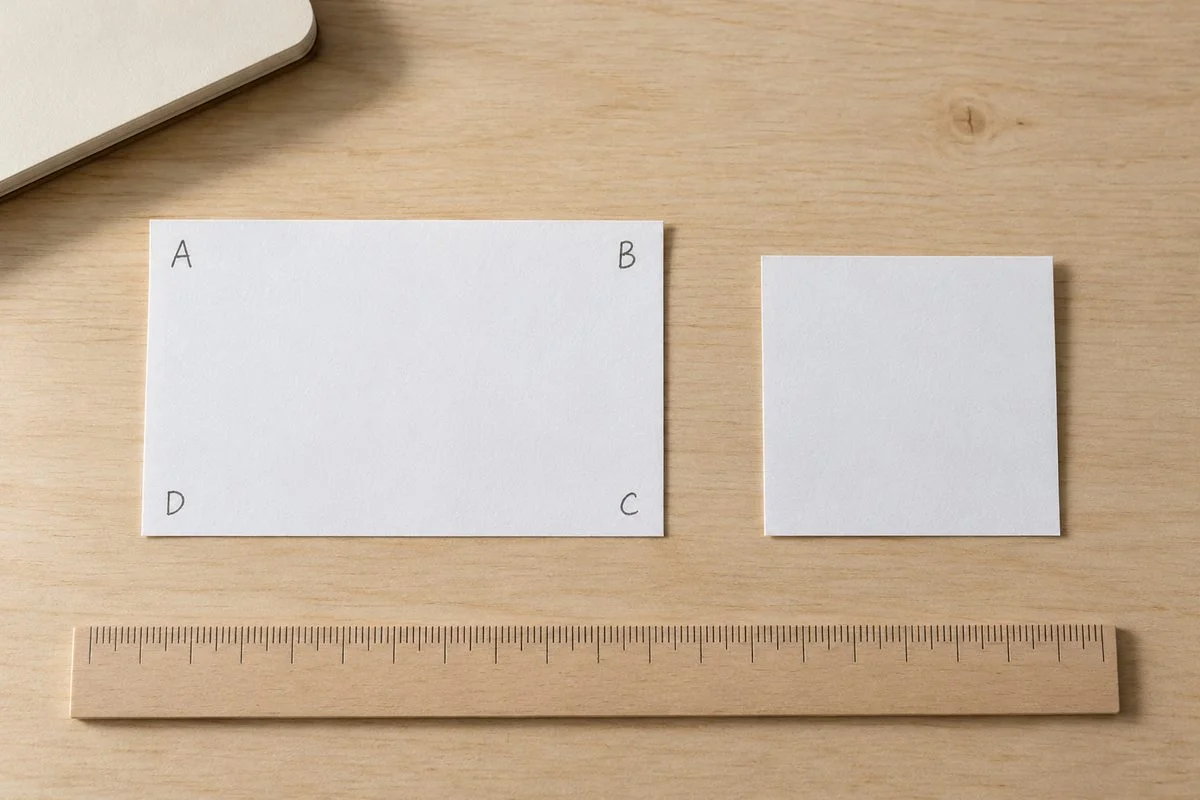
Paper rectangle and square beside a notebook corner and ruler.

2. Squares and Rectangles

Check lengths and corners; name corners in order around the edge.

Show
Label a paper rectangle ABCD around its edge. Measure it and a square. Check corners against a notebook. Predict, then turn both.
Ask
Will turning change their lengths or corners?
Say
Turning keeps lengths and corners unchanged. Rectangles have matching opposite sides and right angles, and squares also have every side equal.
Used in
Rectangular covers match the shape of book pages, protecting their edges.
If your child says…“A tilted square is no longer a square.”
Ask
Which length or corner changed when we turned the paper?
What’s true
A shape keeps its identity when its lengths and angles stay unchanged.
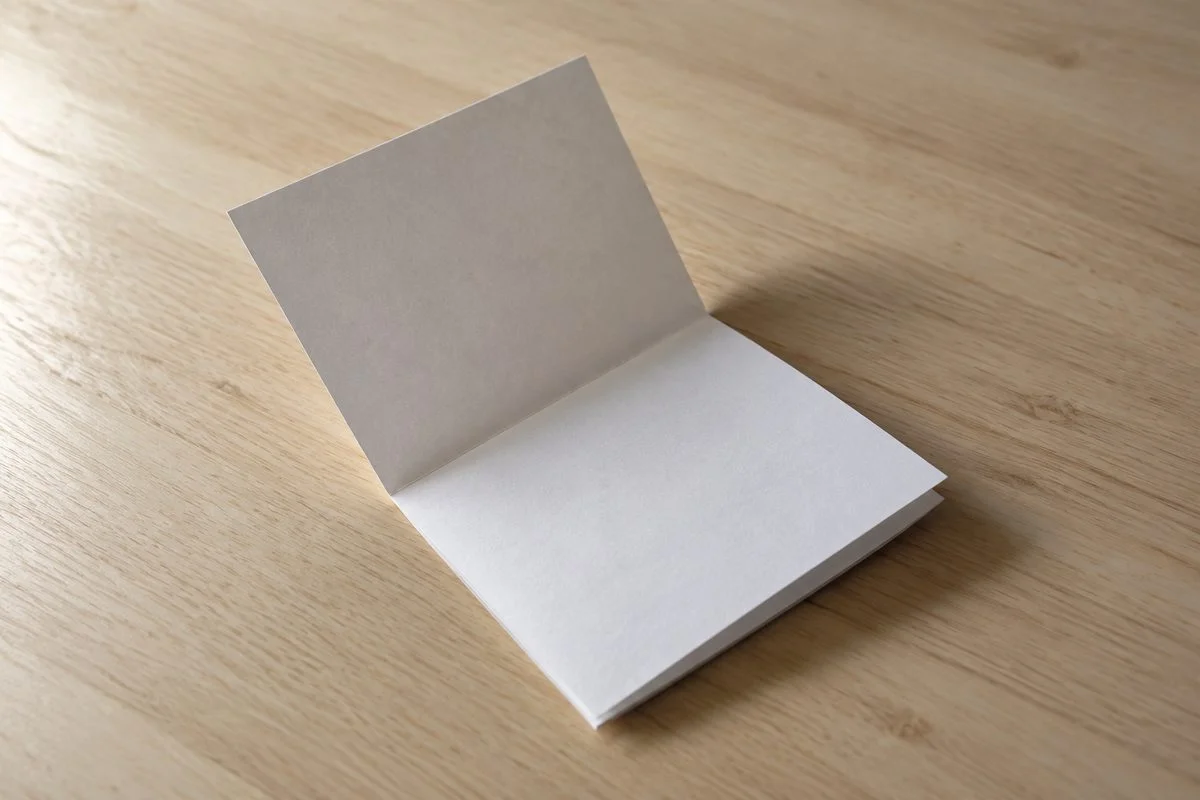
Paper folded twice with its first folded edge aligned onto itself.

3. Perpendiculars

Lines that meet at a right angle.

Show
Fold paper once. Fold again, bringing the first folded edge exactly onto itself. Predict, then open the sheet to see the crossing creases. Refold along both creases to restore the corner for later checks.
Ask
What angles will appear where the creases cross?
Say
The second fold divides a straight angle into two equal angles. Each is a right angle, so the creases are perpendicular.
Used in
Perpendicular frame edges make corners that fit rectangular windowpanes.
If your child says…“Any crossing lines are perpendicular.”
Ask
Would the folded corner fit a narrow, slanting crossing?
What’s true
Crossing lines are perpendicular only when they form right angles.

Building and checking shapes

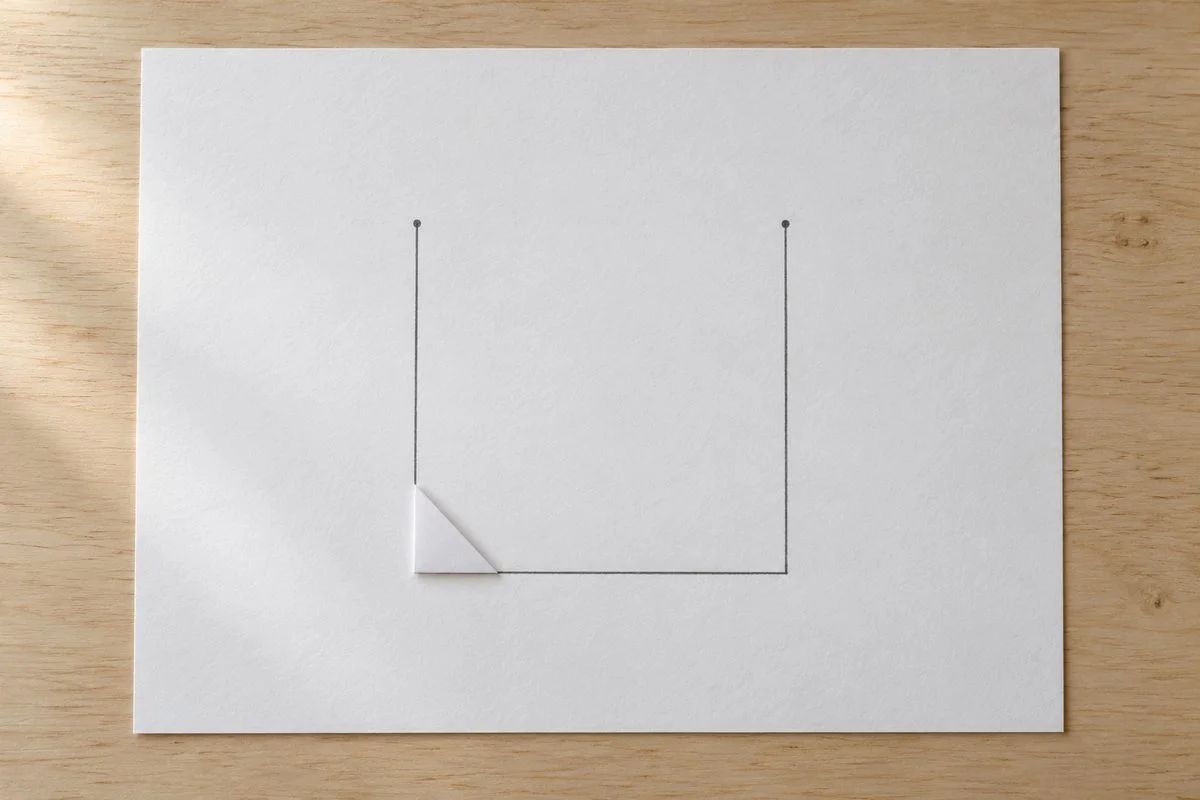
Unfinished square with a folded paper corner checking its base angle.

4. Constructing Squares and Rectangles

Build shapes using measured sides and right angles.

Show
Draw a 4 cm base. Use the folded corner to draw perpendiculars at both ends, on the same side. Mark each at 4 cm. Predict, then join and check.
Ask
Will the completed shape have right-angled corners?
Say
Yes; equal sides and right angles make a square.
Used in
Measured square outlines help make matching paper labels.
If your child says…“Matching side lengths are enough to make a square.”
Ask
What does our folded guide check that the ruler’s length measurements cannot?
What’s true
Equal sides can form a slanted shape, so the corners need checking too.
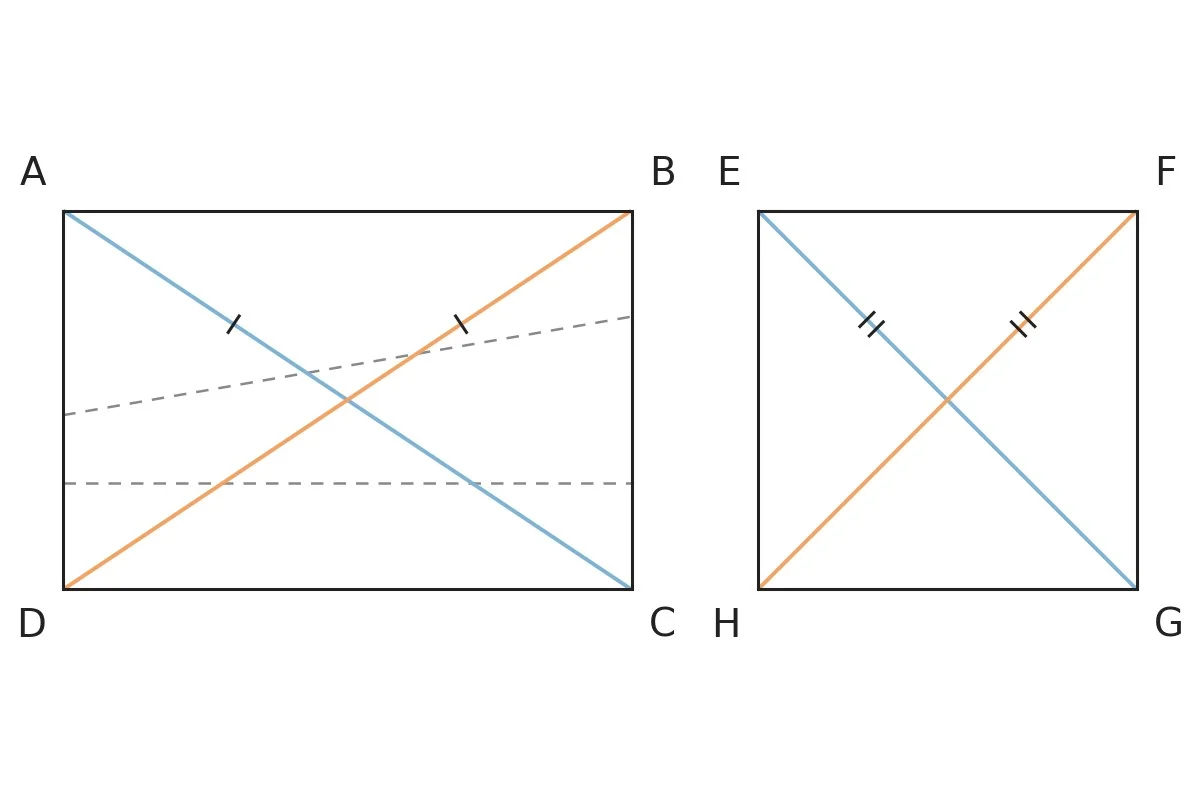
Rectangle and square with matching diagonals; shorter joins cross the rectangle.

5. An Exploration in Rectangles; Exploring Diagonals of Rectangles and Squares

Diagonals join opposite corners; each rectangle or square has matching diagonals.

Show
Look at the diagram. Trace the boundaries, diagonals, then faint joins.
Ask
Are the rectangle’s diagonals equally long?
Say
Each diagonal joins opposite corners. The two diagonals match in length within each shape. In the rectangle, these are the longest joins between its left and right sides.
Used in
A diagonal gate brace helps the frame keep its shape.
If your child says…“The boundary sides are the diagonals.”
Ask
Does AC follow the boundary or cross the rectangle?
What’s true
A diagonal crosses the shape between opposite corners.
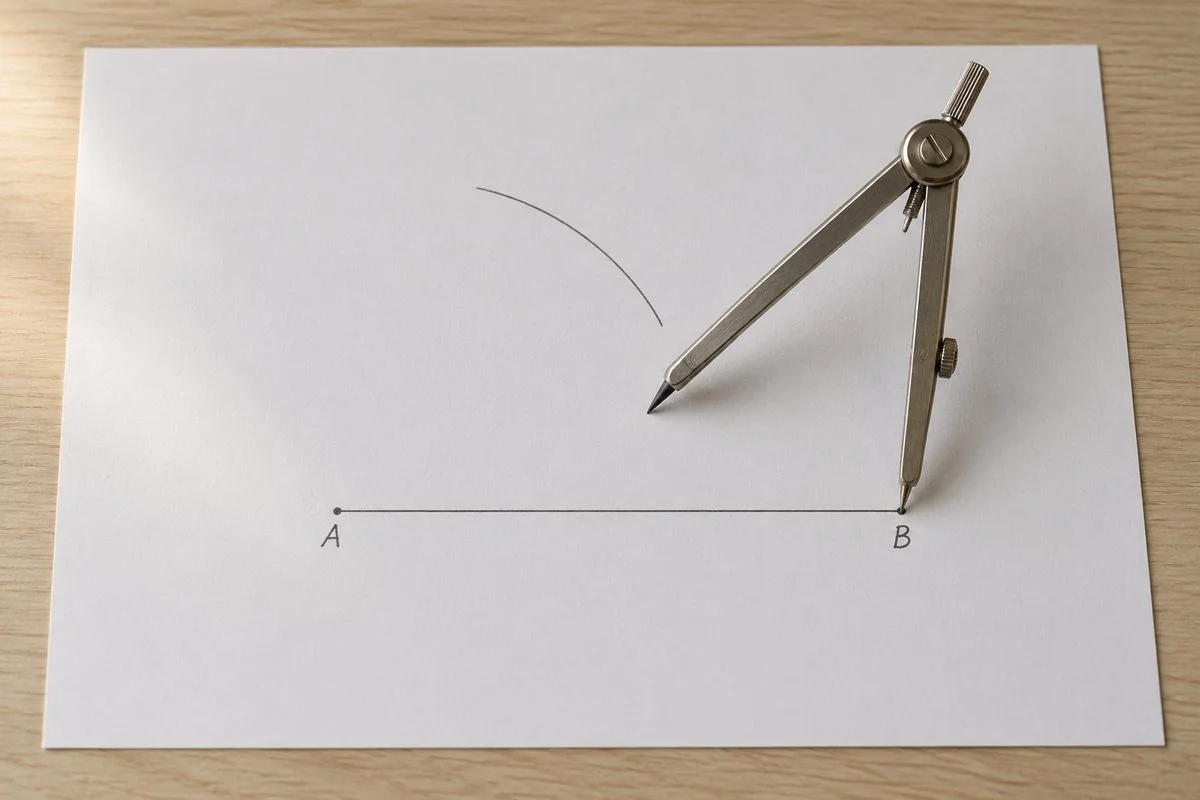
One arc above a segment, with a compass ready at the other endpoint.

6. Points Equidistant from Two Given Points

Arcs of equal radius meet equally far from both centres.

Show
Mark A and B 6 cm apart. An adult draws a 4 cm arc above AB, centred at A. Predict, then draw from B with the same opening so the arcs cross. Join their crossing P to both endpoints.
Ask
Which point will be 4 cm from both A and B?
Say
The crossing meets both distances because it lies on both arcs.
Used in
Intersecting arcs locate a roof drawing’s peak with equal sloping sides.
If your child says…“Any point on the first arc works for both distances.”
Ask
What checks that your chosen point is also 4 cm from the other endpoint?
What’s true
The first arc fixes only the distance from its own centre.

A real problem

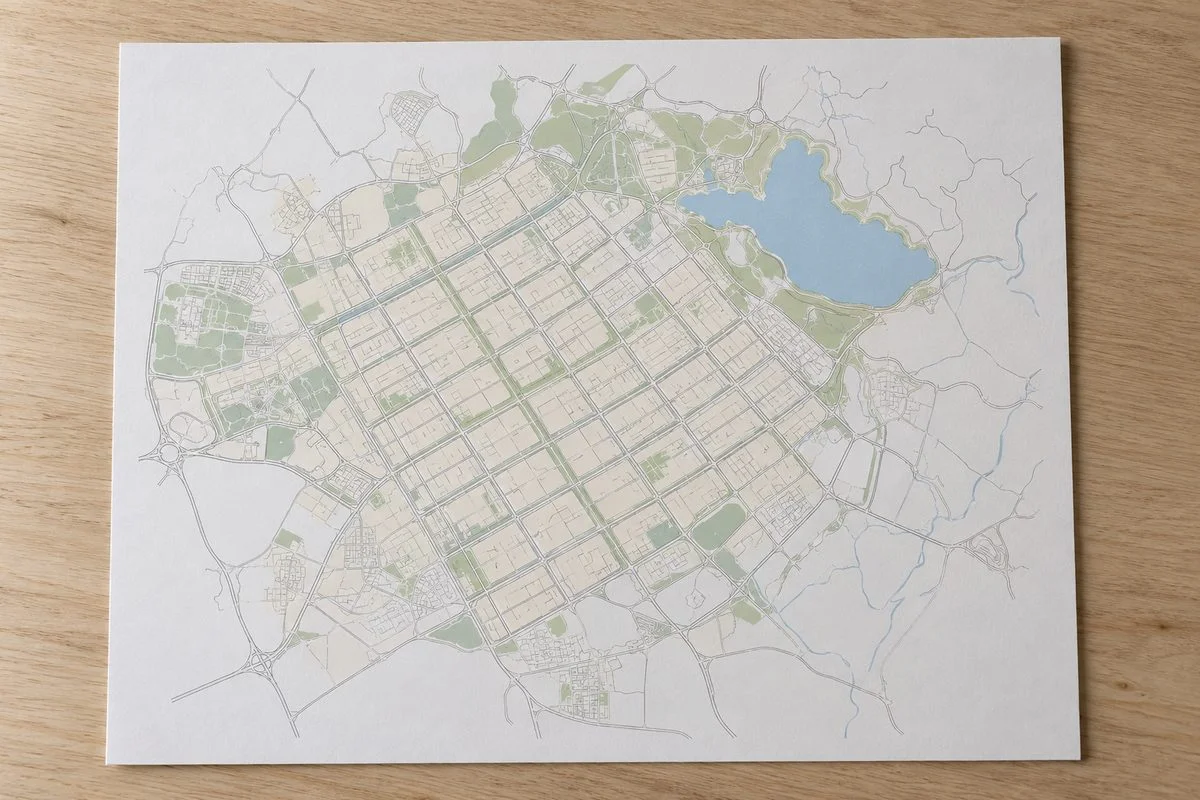
Chandigarh’s master plan

Punjab needed a new capital after losing Lahore.

The master plan was finalised in early 1951.

Rectangular sectors formed an overall rectangular city plan.

ArchDailyFondation Le CorbusierNational Heritage Institute

Printed Chandigarh street map showing rectangular sectors.

Concept Lab · Common misconception

The tempting mistake in Playing with Constructions

Open standalone misconception page →

Do equal sides guarantee a square?

Wrong

Four equal sides always make a square.

Why it feels right. Equal sides are the first feature I remember about squares.

Right

A square also has four right angles.

Worked example

Both shapes have equal sides. Only the square has right-angle corners.
  1. Hinge four equal sticks into a diamond shape.
  2. The sides stay equal as the angles change.
  3. The shape becomes a square when each corner reaches 90°.

Ask your child six quick questions.

One per step. The answer and the reason are given.

  1. What happens to the radius when you stop drawing halfway round?

    It stays the same. Stopping the turn does not change the compass opening.

  2. What shape is a square after you turn it onto a corner?

    A square. Turning changes neither its equal sides nor its right angles.

  3. The folded corner fits between two crossing lines exactly. What does this tell you?

    The lines are perpendicular. Meeting alone does not make lines perpendicular.

  4. A four-sided shape has equal sides and one 60° corner. Why isn't it a square?

    Its corners aren't right angles. A square needs both equal sides and right angles.

  5. Which corner joins A to make a diagonal?

    C. C is opposite A; B and D are neighbouring corners.

  6. Where must P lie to meet both 4 cm distance requirements?

    At the arcs’ crossing. The crossing belongs to both arcs, satisfying both distances.

15 more questions with answers, 15 with pictures