Skip to content

Teach Number Play in eight steps.

For each idea: show it, ask before you tell, then say one line.

Gather scrap paper, a pencil, dry chickpeas, a small bowl, a spoon and a plate.

Common misconceptions & worked visual for this chapter · 15 practice questions with answers

How to teach it

Compare and arrange numbers

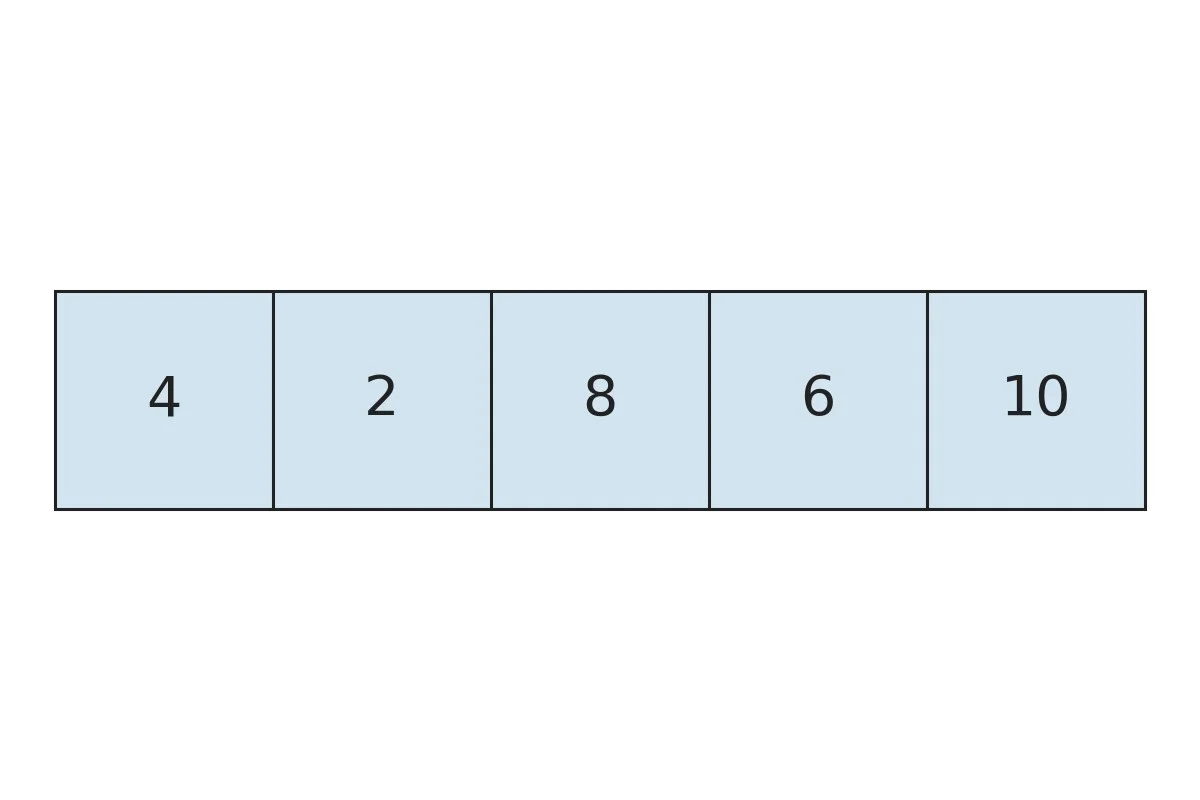
Five touching boxes containing 4, 2, 8, 6 and 10 from left to right.

1. Numbers can Tell us Things; Supercells

Neighbour counts give local information; supercells exceed every immediate neighbour.

Show
Look at the diagram’s row from left to right. Find 4 and its only neighbour, 2. Then count each cell’s immediate neighbours with larger numbers.
Ask
Can 4 beat its neighbours without being the largest number in this row?
Say
Yes, 4 beats its only neighbour, 2. Counting larger neighbours gives 0, 2, 0, 2 and 0. The supercells are 4, 8 and 10 because each beats every immediate neighbour.
Used in
PIN digits identify delivery areas, helping post offices sort mail.
If your child says…“Only 10 can be a supercell.”
Ask
Which numbers sit immediately beside 8?
What’s true
A supercell needs to exceed its immediate neighbours, wherever larger numbers appear elsewhere.
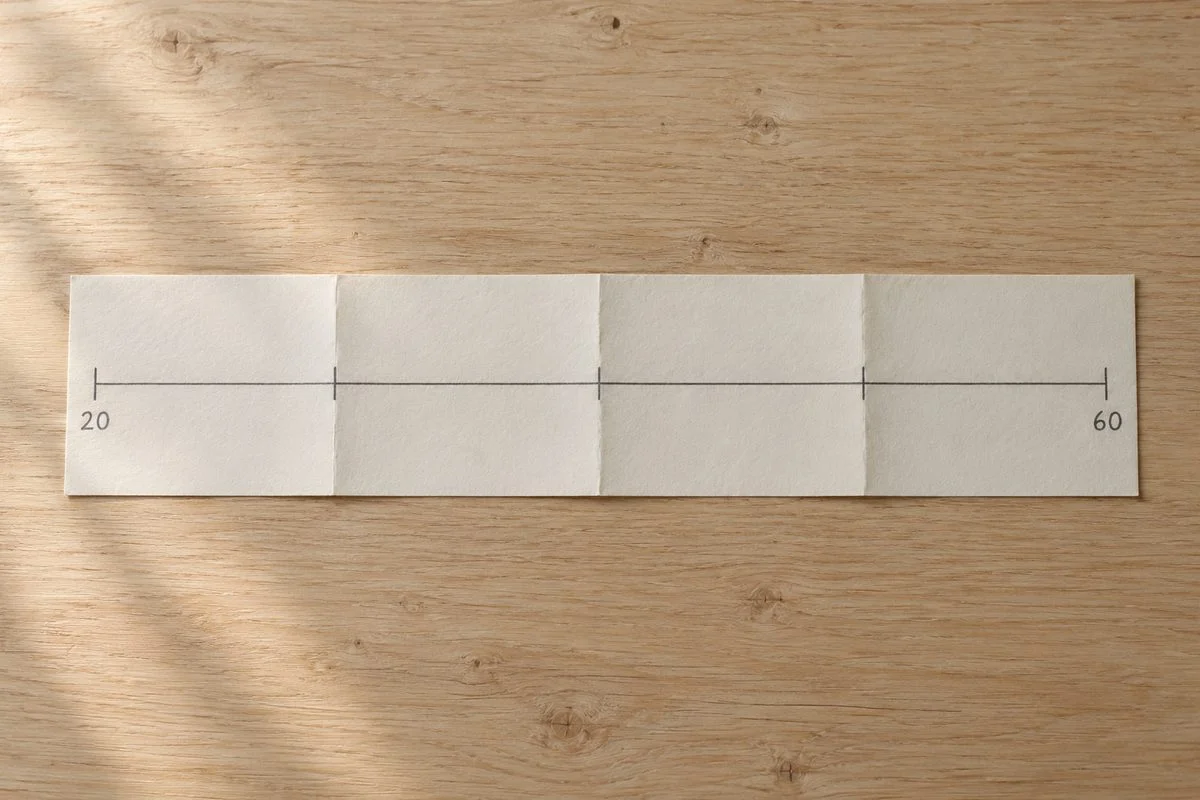
An unfolded paper number line has endpoints 20 and 60 and three unlabelled ticks at the creases.

2. Patterns of Numbers on the Number Line

Equal spaces represent equal increases; labels tell us their size.

Show
Fold a paper strip in half twice, then unfold it. Draw a line and mark each crease and end. Label only the ends 20 and 60.
Ask
What numbers do you predict will go at the three creases?
Say
The increase of 40 fills four equal gaps, so each gap adds 10. The missing numbers are 30, 40 and 50.
Used in
Reading a measuring scale’s intervals gives the correct measurement.
If your child says…“The next tick always adds one.”
Ask
Would adding one across each gap take us from 20 to 60?
What’s true
The labelled values and equal gaps determine the increase between ticks.
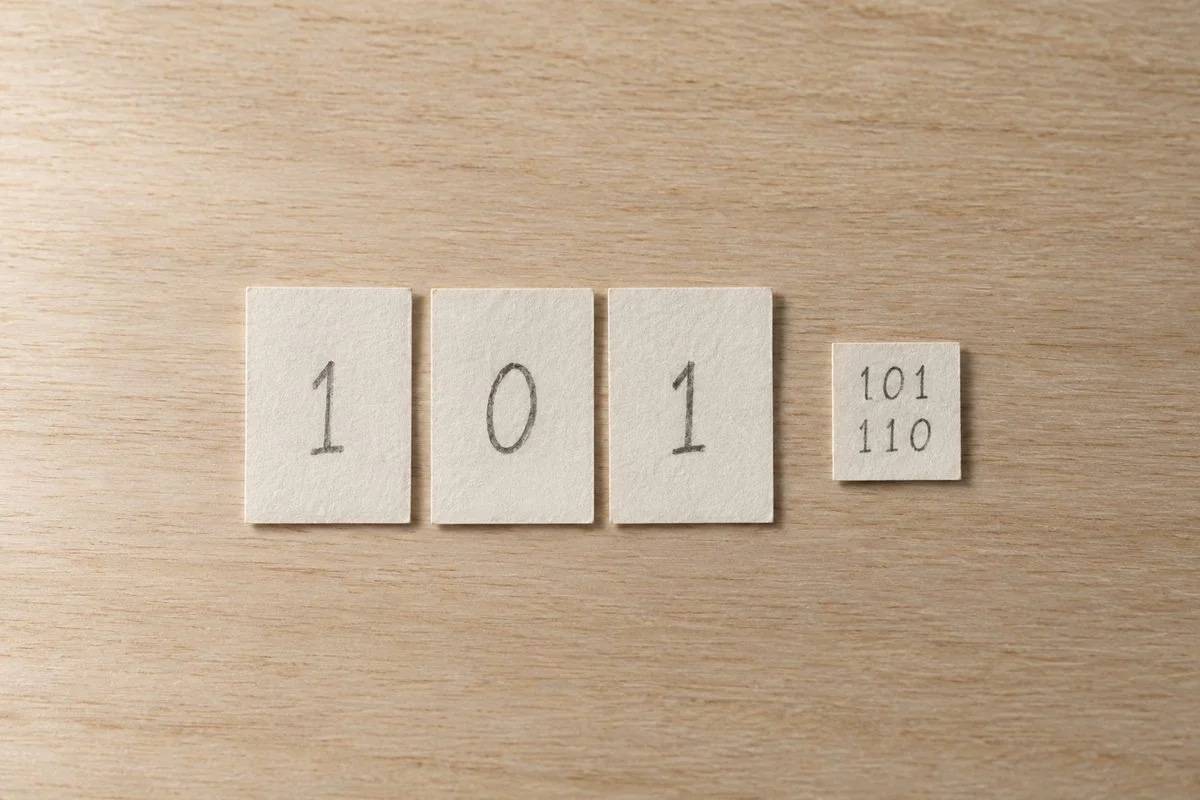
Digit slips arranged as 101 beside a written record of 101 and 110.

3. Playing with Digits; Pretty Palindromic Patterns

Positions change value. Digit sums add digits. Palindromes match when reversed.

Show
Label slips 1, 0, 1. Arrange all three into numbers without a leading zero. Record them smallest first. Add each number’s digits. Count how many times the digit 1 appears in each number.
Ask
Which arrangement will read unchanged backwards?
Say
101 is smaller than 110; both have digit sum 2 and two ones. Only 101 reads unchanged backwards.
Used in
Checking ticket digits helps avoid copying errors.
If your child says…“A palindrome needs every digit to be the same.”
Ask
What changes when you read 101 backwards?
What’s true
Only positions equally far from either end need matching digits.

Follow rules and find patterns

2100−0012=20882100 - 0012 = 2088

8820−0288=85328820 - 0288 = 8532

8532−2358=61748532 - 2358 = 6174

4. The Magic Number of Kaprekar

Rearrange four digits and subtract repeatedly until the result repeats.

Show
Write these lines from 1002. Say, ‘Arrange the digits greatest-first and smallest-first, then subtract. Keep four positions, including zeros.’
Ask
What subtraction comes next?
Say
The result repeats: 7641−1467=61747641 - 1467 = 6174.
Used in
Calculators may omit leading zeros because those zeros do not change a number’s value.
If your child says…“I can leave out the zeros.”
Ask
Where did each zero from 1002 go in the first subtraction?
What’s true
Keep four digit positions throughout, starting with at least two different digits.
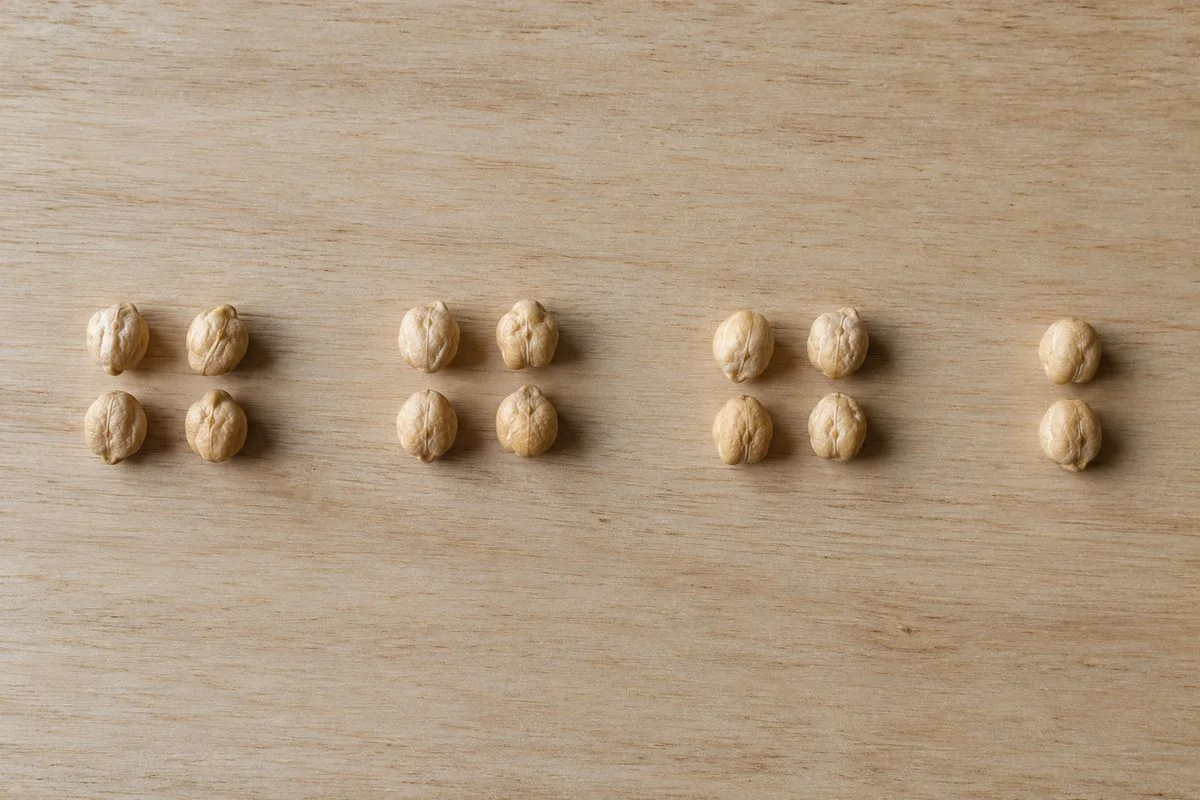
Three groups of four chickpeas and one pair, with every chickpea visibly paired.

5. Mental Math; Playing with Number Patterns

Equal groups speed counting and limit the totals we can make.

Show
Arrange chickpeas into three groups of four and one group of two. Separate each group of four into visible pairs.
Ask
What total will the groups give without counting every chickpea?
Say
Three fours give 12; the remaining pair makes 14.
Used in
Counting equal packs quickly gives the total number of items available.
If your child says…“Reusing these groups lets me make any total.”
Ask
Which allowed group could leave a chickpea without a partner?
What’s true
Adding groups made entirely of pairs can produce only even totals.
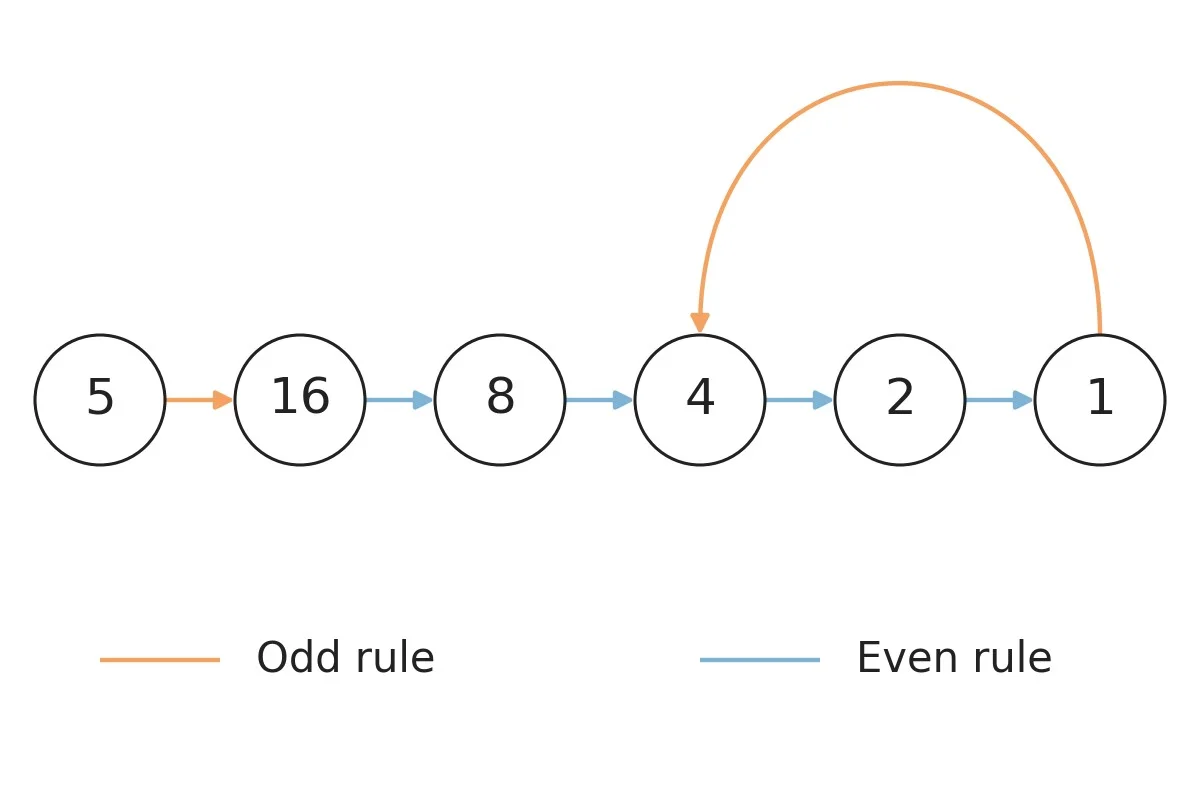
Coloured arrows trace 5 to 1, with a return arrow from 1 to 4.

6. An Unsolved Mystery — the Collatz Conjecture!

Examples suggest every positive start reaches 1, but cannot prove it.

Show
Follow the diagram from 5 to 1, then back to 4.
Ask
Will every positive starting number reach 1?
Say
This route reaches 1, but cannot prove every start does.
Used in
Testing a game rule can reveal failures before everyone plays.
If your child says…“It worked here, so we’ve proved it always works.”
Ask
Which starting number did we follow in this diagram?
What’s true
Checking examples cannot establish the claim for every positive starting number.

Estimate and plan

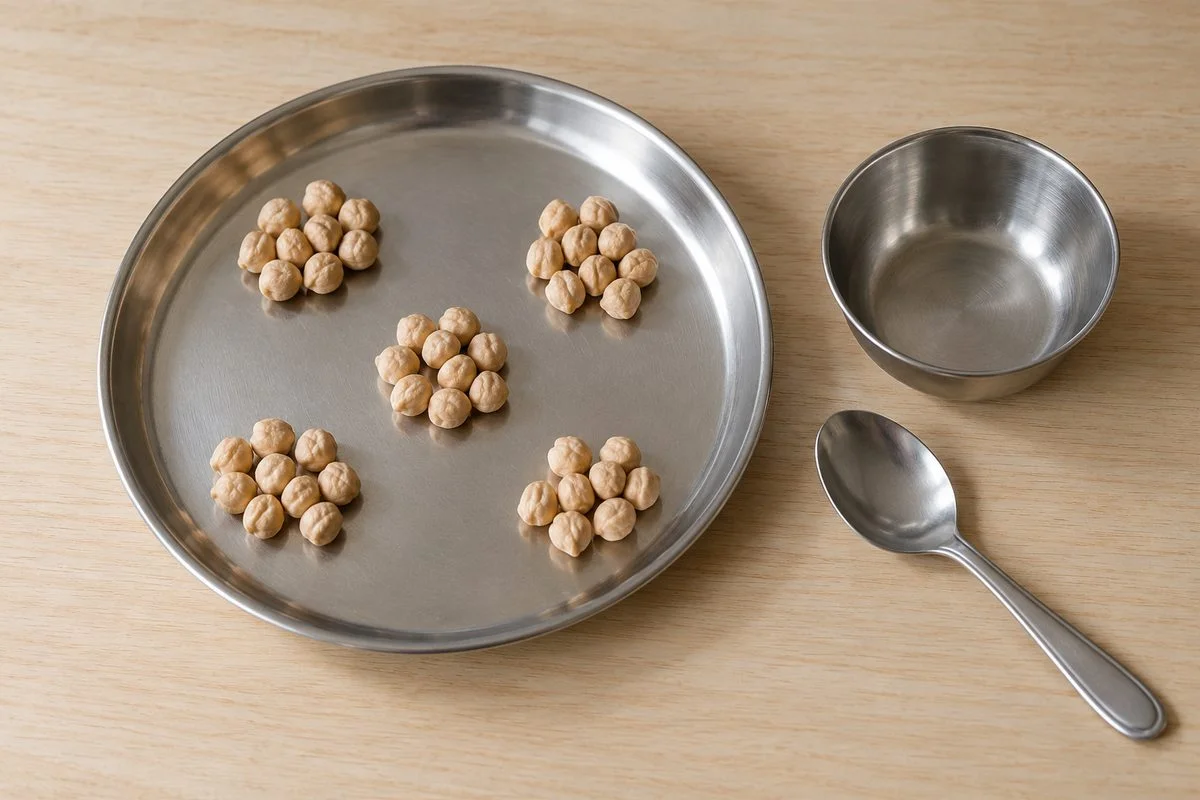
Separate chickpea heaps on a plate beside an empty bowl and spoon.

7. Simple Estimation

Use a counted sample to find a useful approximate total.

Show
Count the chickpeas in a level spoonful, then return them to the bowl. Transfer the contents onto a plate in separate, similarly filled spoonfuls. Count spoonfuls, noting any partly filled last spoon.
Ask
How many chickpeas do you predict a full count would give?
Say
Multiply the sample count by the full spoonfuls, then allow for the partly filled spoon. The total is approximate because spoonfuls can contain different counts.
Used in
Estimating ingredients helps a cook judge whether there is enough for a meal.
If your child says…“An estimate is just any guess.”
Ask
What counted amount supports your estimate?
What’s true
A useful estimate rests on a counted amount and a sensible assumption.

17+1+3=2117 + 1 + 3 = 21

17+2+2=2117 + 2 + 2 = 21

8. Number Games

Work backwards from the target to choose moves that secure victory.

Show
Write these lines. Say, ‘From zero, add one, two or three; first to 21 wins.’
Ask
After 17, your opponent adds three. What reply wins?
Say
Add one.
Used in
Working backwards from a deadline helps set earlier finishing targets.
If your child says…“Adding three every time will make me win.”
Ask
If the opponent adds three after 17, how many remain?
What’s true
The winning reply depends on the opponent’s addition, so each pair of turns adds four.

A real problem

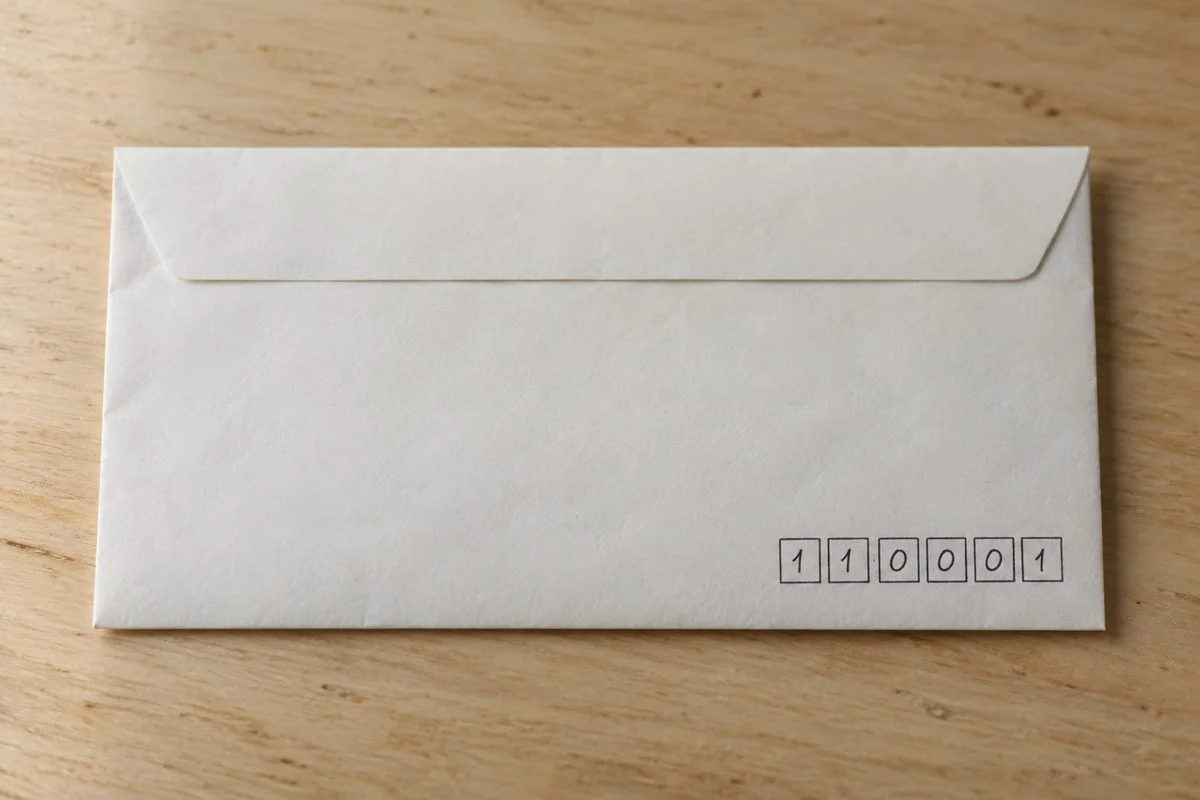
PIN digits help mail reach the right delivery office.

India introduced the PIN system in 1972.

It helped reduce confusion from incorrect addresses, similar place names and different languages.

Its digits narrow the location down to the post office responsible for delivery.

Press Information BureauWikipediaThe Indian Express

A sealed envelope with a six-digit PIN written in boxes.

Concept Lab · Common misconception

The tempting mistake in Number Play

Open standalone misconception page →

Do the same digits make the same number?

Wrong

352 and 523 have the same value because they use the same digits.

Why it feels right. I notice the three cards and ignore their positions.

Right

Each digit's position determines its contribution to the number.

Worked example

The same three cards make different numbers. Read hundreds first.
  1. 352 uses three hundreds, five tens and two ones.
  2. Rearrange the same cards to make 523 and you have five hundreds, two tens and three ones.
  3. The hundreds alone show which number is larger.

Ask your child eight quick questions.

One per step. The answer and the reason are given.

  1. Which two numbers must 8 beat in this row?

    2 and 6. Its immediate neighbours are 2 and 6.

  2. What number belongs at the first crease after 20?

    30. The increase of 40 is shared across four gaps, giving 10 per gap.

  3. Which is a palindrome: 101 or 110?

    101. Its digits match when read backwards, although they are not all identical.

  4. Which largest arrangement uses every digit of 1002?

    2100. Both zeros must remain in the four positions.

  5. Can adding whole groups of two and four make an odd total?

    No. Every allowed group contains complete pairs.

  6. What claim remains unproved after this example reaches 1?

    Every positive start reaches 1. This route checks the sequence starting at 5.

  7. Why might your estimate differ from the exact count?

    Spoonful counts can vary. Similarly filled spoonfuls may contain different numbers of chickpeas.

  8. After you leave 17, your opponent adds one. How many should you add?

    Three. Their one and your three complete the remaining four.

15 more questions with answers, 15 with pictures