1. Theoretical probability and complementary events
Count matching outcomes out of all equally likely outcomes.
Show
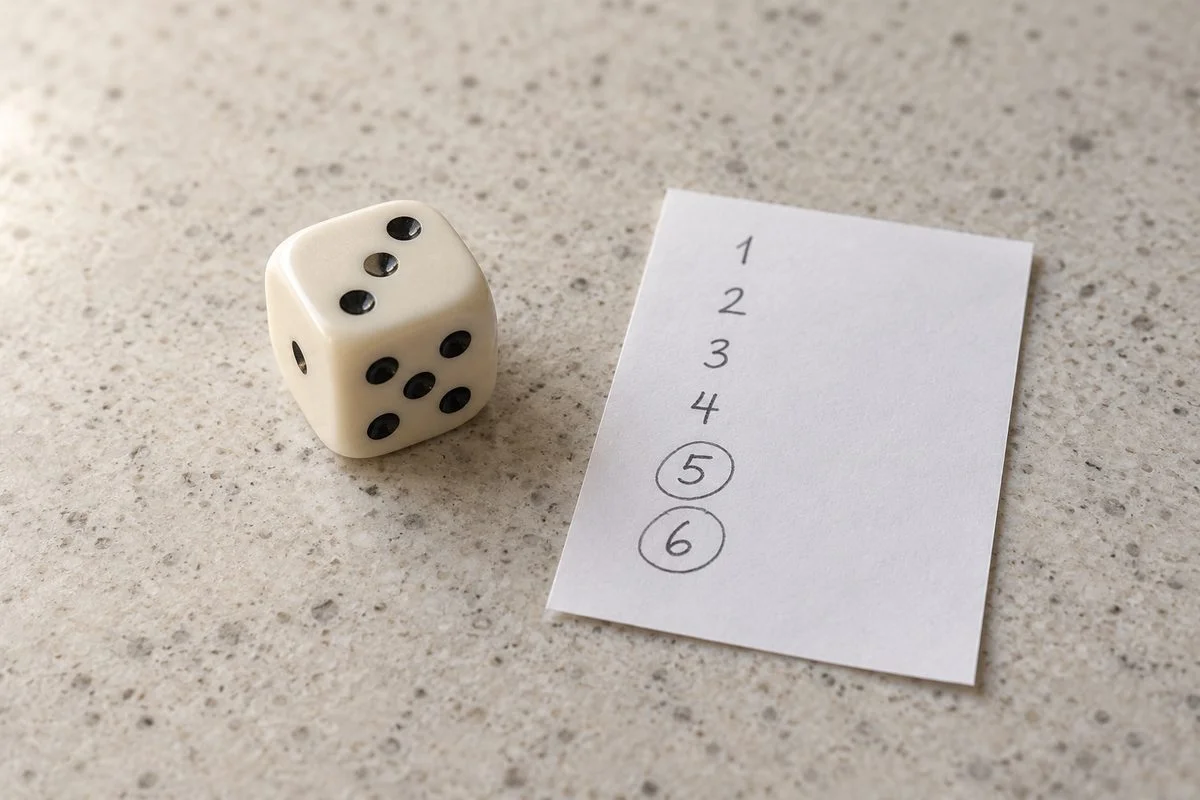
Turn a die to list its six faces. Circle 5 and 6: these win. Point to the uncircled numbers.
Ask
For a fair die, what is the chance of not winning?
Say
Four of six faces lose, so not winning has probability .
Used in
Board-game players compare winning chances to choose between moves.
If your child says…“For not winning, I turn the winning fraction upside down.”
Ask
Do the winning and losing faces together fill the whole list?
What’s true
An event and its complement have probabilities that add to 1.
2. Probability of drawing a card
Count qualifying cards out of all cards available to draw.
Show
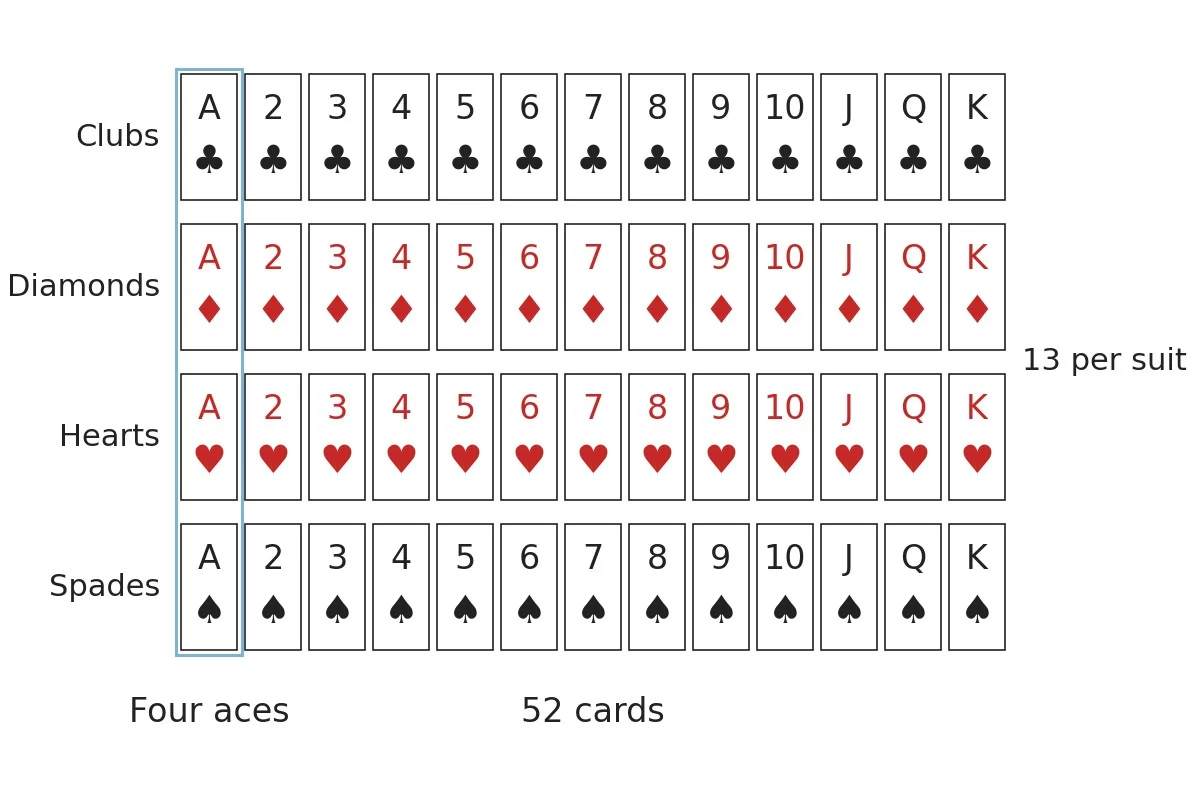
Look at the diagram’s suit rows. Count each row, then find the aces, jacks, queens and kings.
Ask
What is the chance of drawing an ace from this shuffled deck?
Say
Four of 52 equally likely cards are aces, so the chance is .
Used in
Card players use the cards still available to judge their chances of a useful draw.
If your child says…“Aces are face cards too.”
Ask
Are the aces in the jack, queen or king columns?
What’s true
Each suit has three face cards: jack, queen and king.
3. Drawing an object at random
Each individual object has an equal chance of selection.
Show
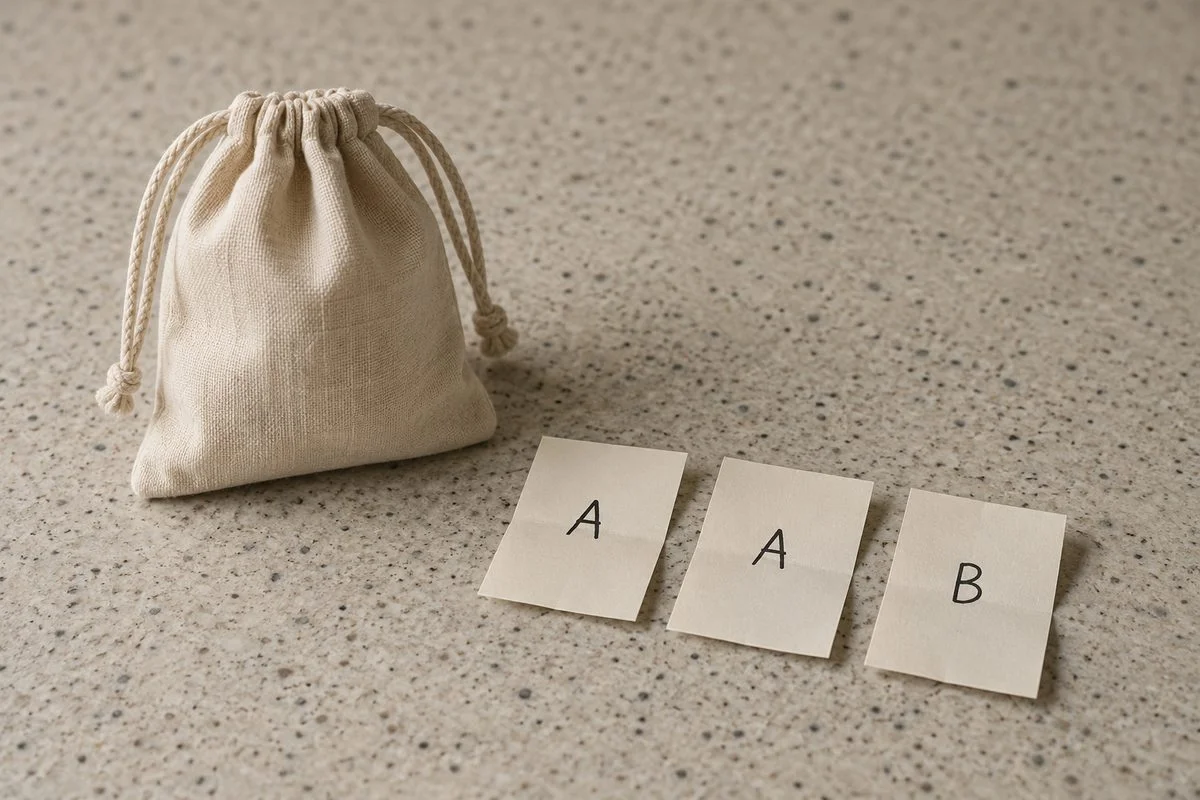
Mark matching paper tickets A, A and B. Fold them alike and mix thoroughly in an opaque bag. After the prediction, draw without looking and open all tickets.
Ask
What is the chance of drawing A?
Say
Two of the three equally likely tickets carry A, so its probability is .
Used in
With one matching ticket per person, mixing and drawing without looking gives everyone equal chances.
If your child says…“There are two letters, so each has half the chance.”
Ask
How many separate tickets could give you A?
What’s true
Tickets have equal chances, but letters repeated on more tickets have greater chances.
4. Equally likely outcomes
Each outcome has the same chance of happening.
Show
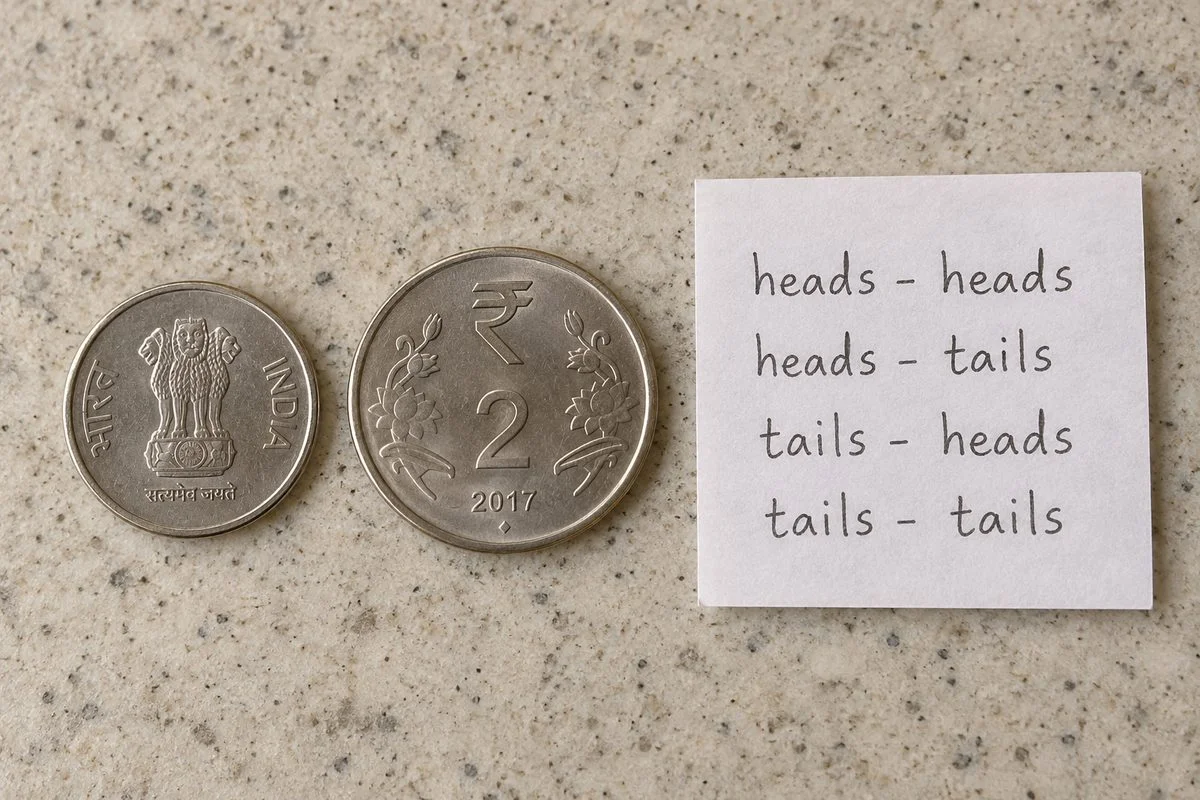
Place ₹1 left and ₹2 right. Keep ₹1 heads-up while turning ₹2 through heads and tails. Repeat with ₹1 tails-up. Record each pair in words, left coin first.
Ask
For fair coins tossed independently, what is the chance of exactly one head?
Say
Two of four equally likely outcomes give exactly one head, so its probability is . Heads-tails and tails-heads count separately.
Used in
Games using several dice need complete outcome lists to compare winning rules fairly.
If your child says…“There are only three outcomes: two heads, one of each, or two tails.”
Ask
Can either coin supply the head when you get one of each?
What’s true
One of each includes two separate outcomes, depending on which coin shows heads.
We use cookies, including Meta’s and, if a ChatGPT advert brought
you, OpenAI’s, to see how visitors find us.
They are never used on your child’s screens in the app. You can turn them
off here, and change your mind any time.
Privacy policy