1. Line of sight, angle of elevation and angle of depression
Sight angles start from the horizontal through your eyes.
Show
Face a doorway with a ruler horizontal beside your eye. Sight its top, then bottom. Sketch sights and parallel horizontals.
Ask
Where will each angle start?
Say
Your line of sight joins your eye to the point you view. Measure elevation above your horizontal. Measure depression below it.
Used in
Ladder length and ground angle determine its reach to a window.
If your child says…“I measure the viewing angle from the vertical doorframe.”
Ask
Does your level ruler point along the floor or up the frame?
What’s true
Elevation and depression match when viewing the same line from opposite ends, using parallel horizontals.
2. Height of an object above the observer’s eye
Whole height includes the section below your eyes.
Show
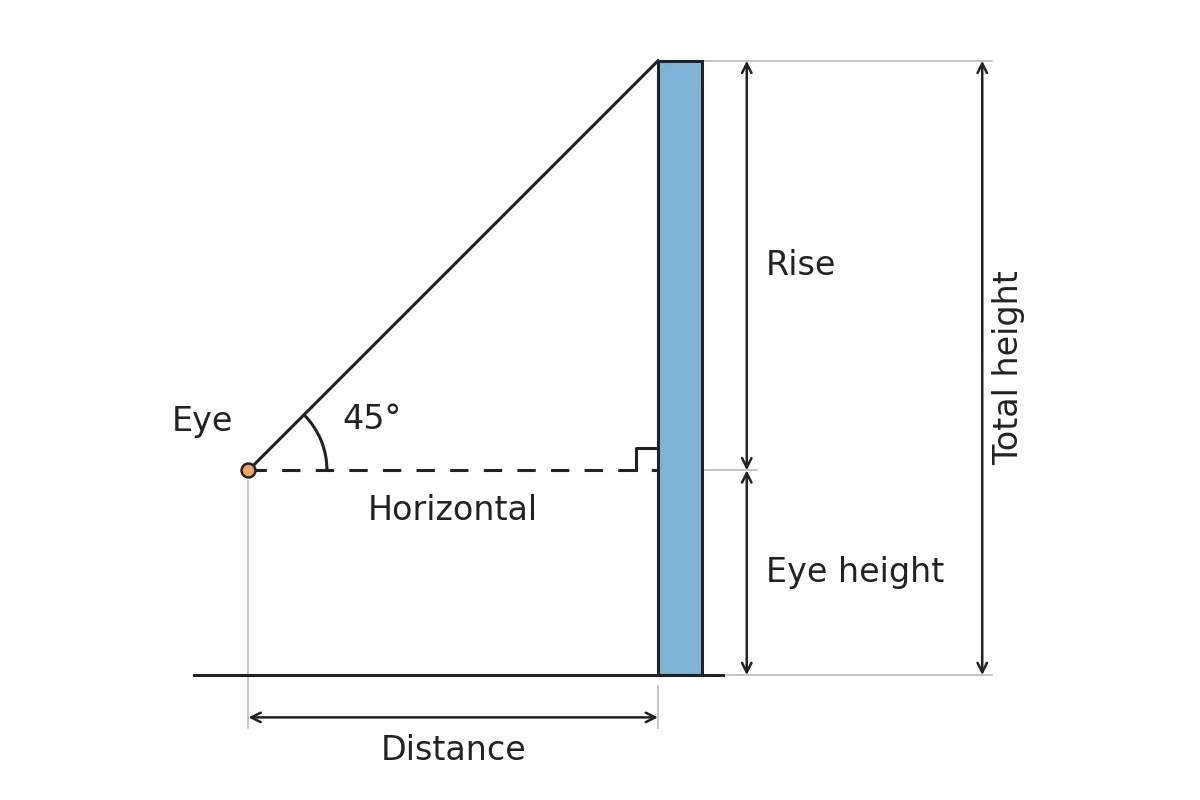
Find the eye point in the diagram. Follow the horizontal to the building. Point to the sections above and below it.
Ask
Will adding the section below eye level give a height greater than the rise alone?
Say
It will, because the building also extends below eye level. Add eye height to find the whole height.
Used in
Ground measurements give tree heights without climbing.
If your child says…“The rise above my eyes is the whole height.”
Ask
Which section lies below the horizontal line?
What’s true
On level ground, the building extends both above and below your eyes.
Use two triangles
3. Height of a flagstaff
Subtract the building’s height from the combined height.
Show
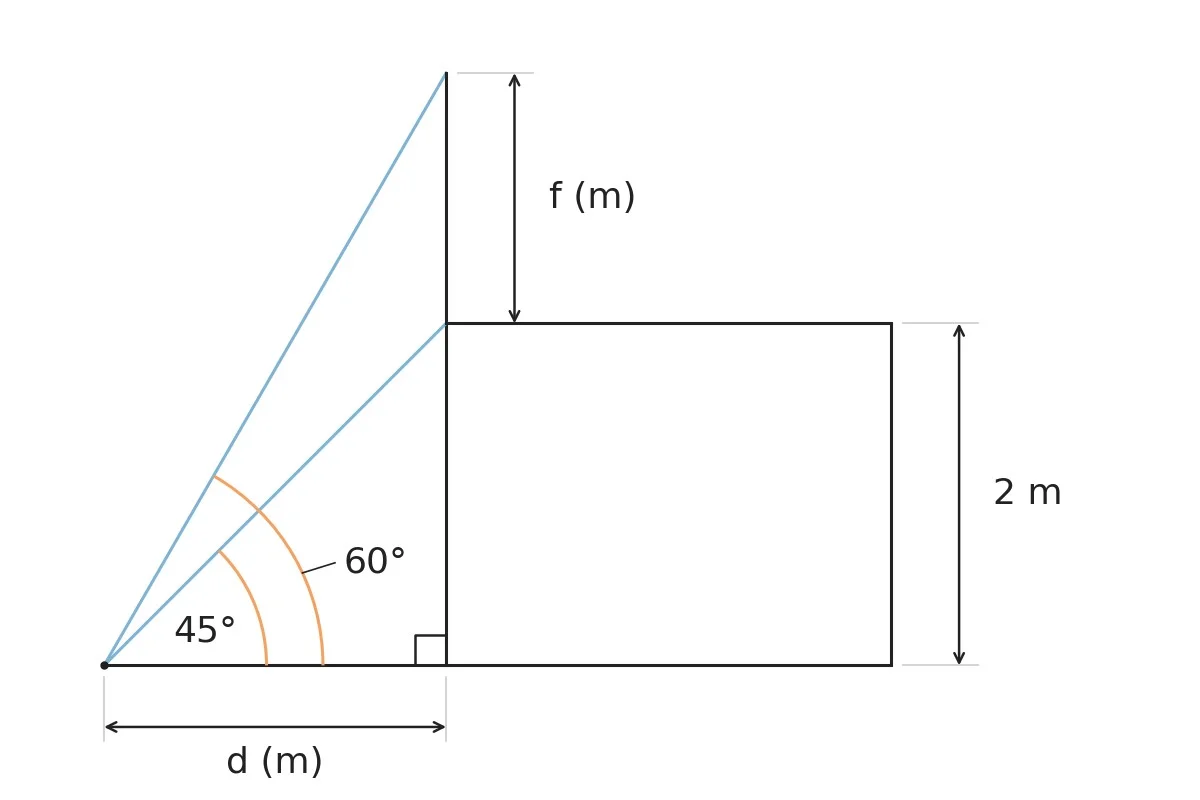
Find the building in the diagram. Trace both sight lines and shared base d. Flagstaff height f uses metres.
Ask
How can we find the flagstaff’s height alone?
Say
The 45° roof angle gives a 2 m base. Subtract the building’s height: .
Used in
A rooftop aerial’s height can be calculated from the ground, avoiding roof access.
If your child says…“The taller triangle gives the flagstaff’s height.”
Ask
Does the taller triangle start at the roof or at the ground?
What’s true
The taller triangle includes the building underneath the flagstaff.
4. Height of a tower
Same-side distances are subtracted.
Show
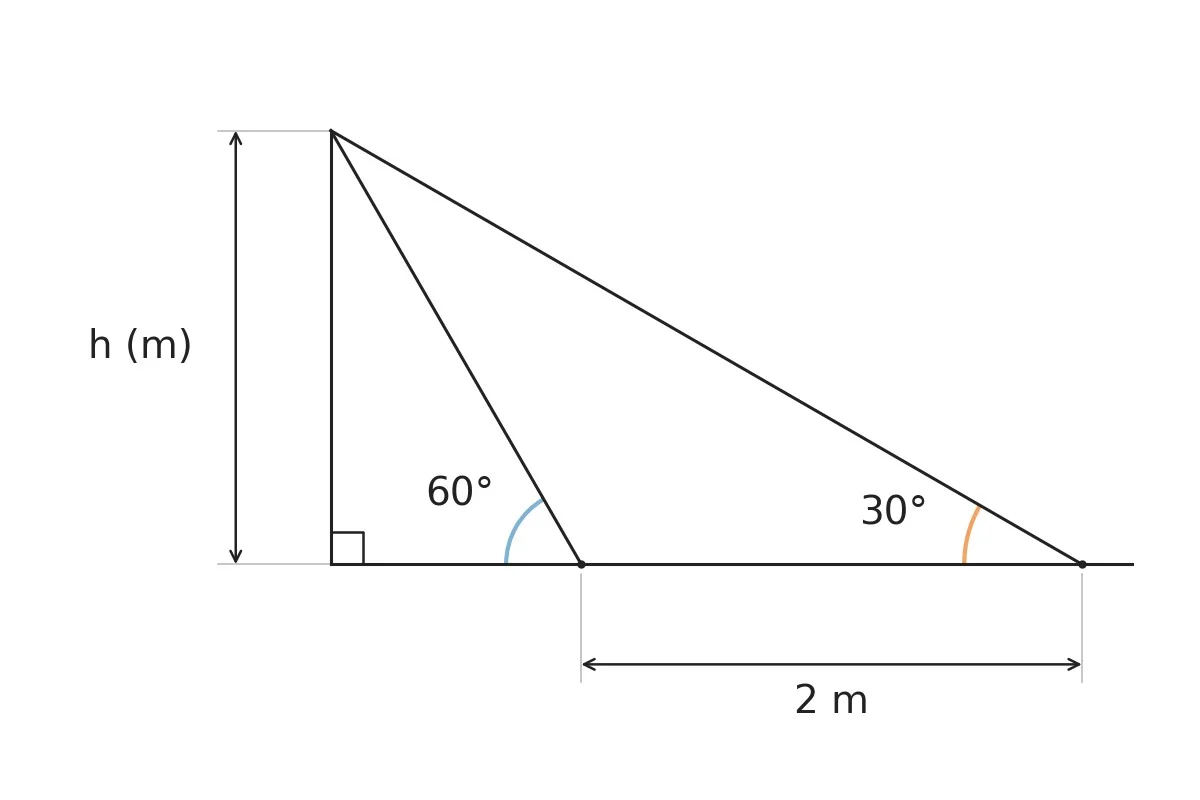
Find the shared tower height h, in metres, in the diagram. Trace both complete shadows from the tower’s foot. Find the extra 2 m beyond the shorter shadow.
Ask
Will raising the Sun’s angle from 30° to 60° shorten or lengthen this tower’s shadow?
Say
It shortens the shadow because the same height is reached more steeply. Subtract the shorter shadow from the longer: . Solving gives a tower height of root three metres.
Used in
Distance differences give travel distances for calculating speed.
If your child says…“The extra 2 m is the whole shadow.”
Ask
Where does each complete shadow start?
What’s true
The extra length starts where the shorter shadow ends, rather than at the tower.
5. Distance between two objects
Opposite-side distances add to give the whole width.
Show
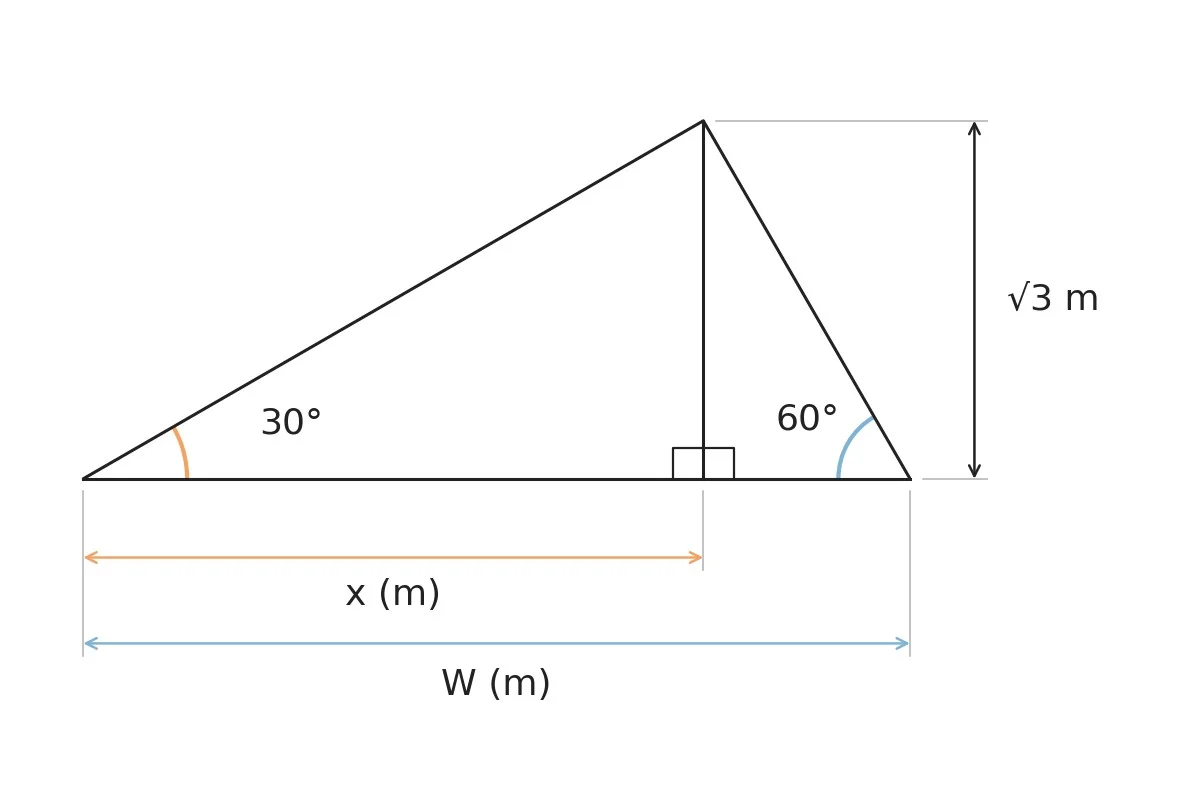
Find the pole between the endpoints in the diagram. Trace both horizontal bases and the whole width. Call the left distance x and the whole width W, both in metres.
Ask
Will the whole width be greater than either horizontal base?
Say
Yes, because the bases meet end to end. Add their lengths: . The bases measure three metres and one metre, giving a total width of four metres.
Used in
Angles measured from a bridge give a river’s width without crossing the water.
If your child says…“I subtract the distances to get the width.”
Ask
Tracing from left to right, do you cross one stretch or both?
What’s true
The pole stands between the endpoints, so the width includes both horizontal stretches.
A real problem
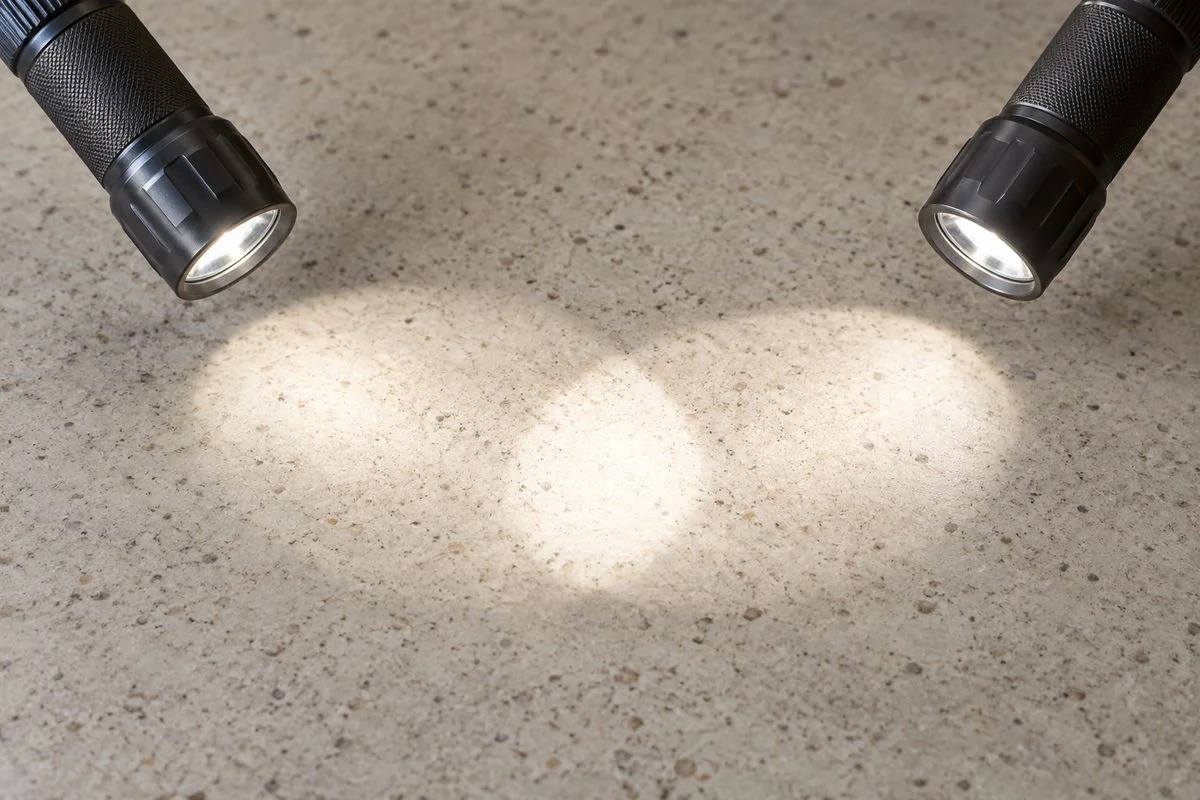
Angled lights signalled the required flight height.
The Dambusters raid happened in 1943.
Barometric altimeters lacked the accuracy crews needed to determine altitude.
The light spots met on the water at the required release height.
We use cookies, including Meta’s and, if a ChatGPT advert brought
you, OpenAI’s, to see how visitors find us.
They are never used on your child’s screens in the app. You can turn them
off here, and change your mind any time.
Privacy policy