One per step. The answer and the reason are given.
-
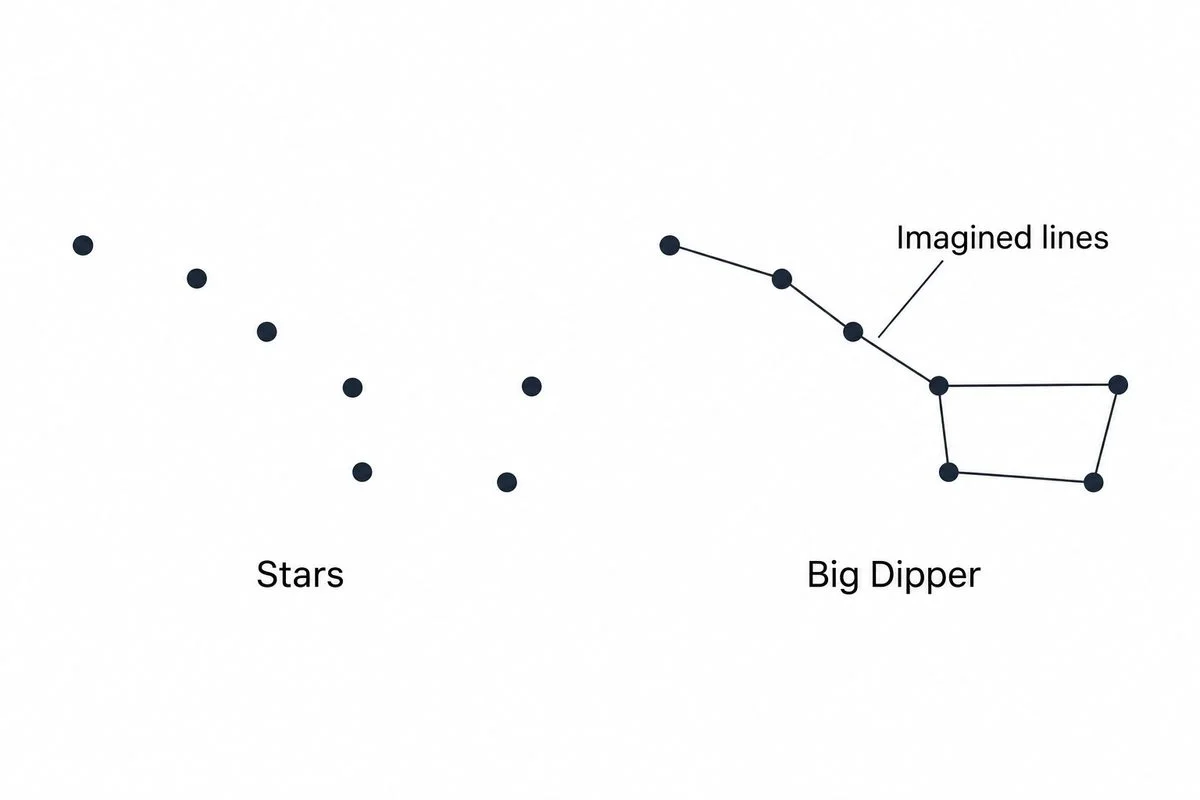
Two people imagine different shapes among the same stars. Who must change their shape?
Neither person. Imagining a pattern allows different answers.
-
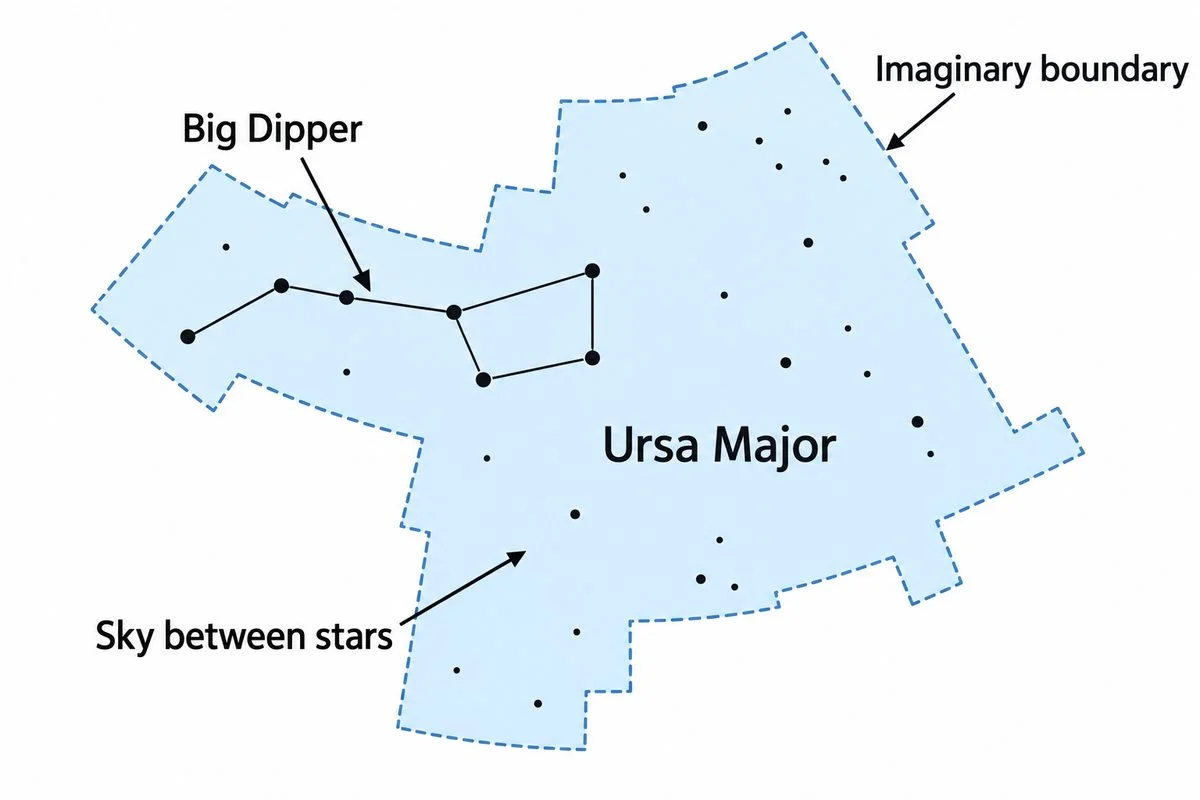
What belongs to Ursa Major besides its familiar pattern’s stars?
The remaining enclosed sky. A constellation includes its whole region, even gaps between stars.
-
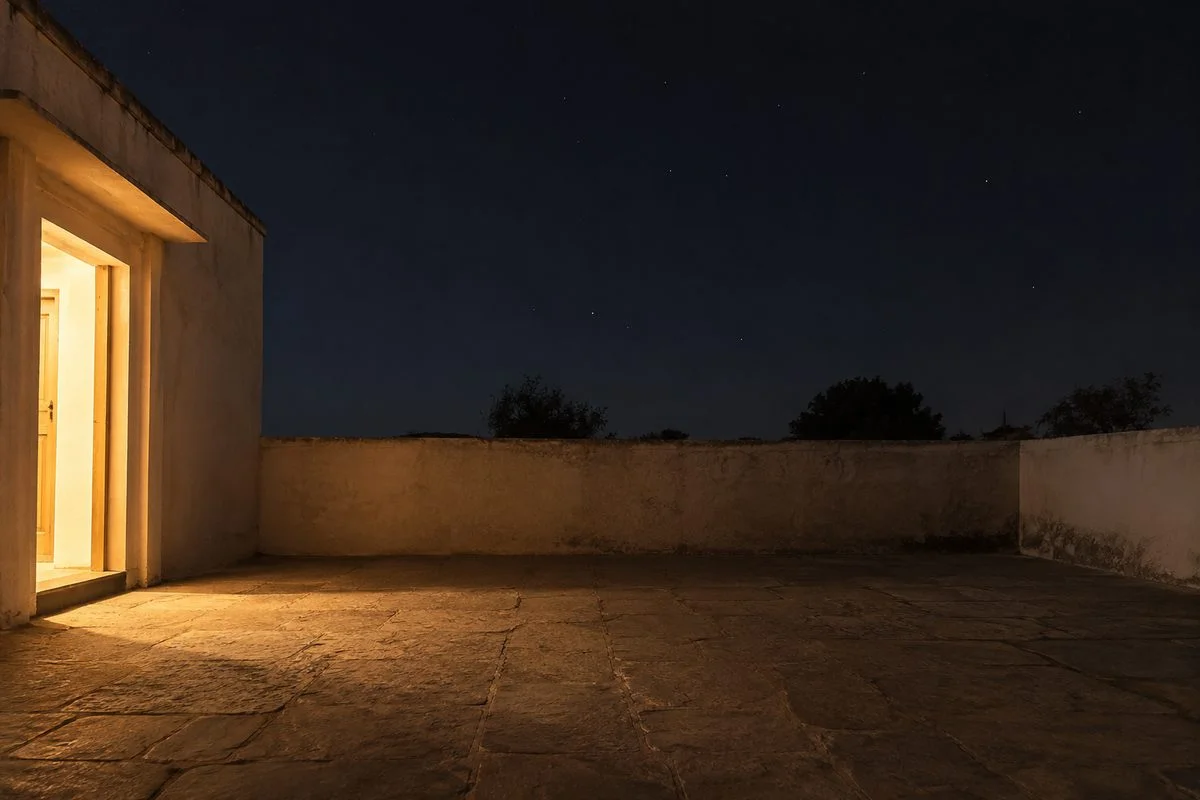
You see more stars after moving away from a lamp. What changed: their number in space or how many you could see?
How many we could see. Hidden stars still exist.
-
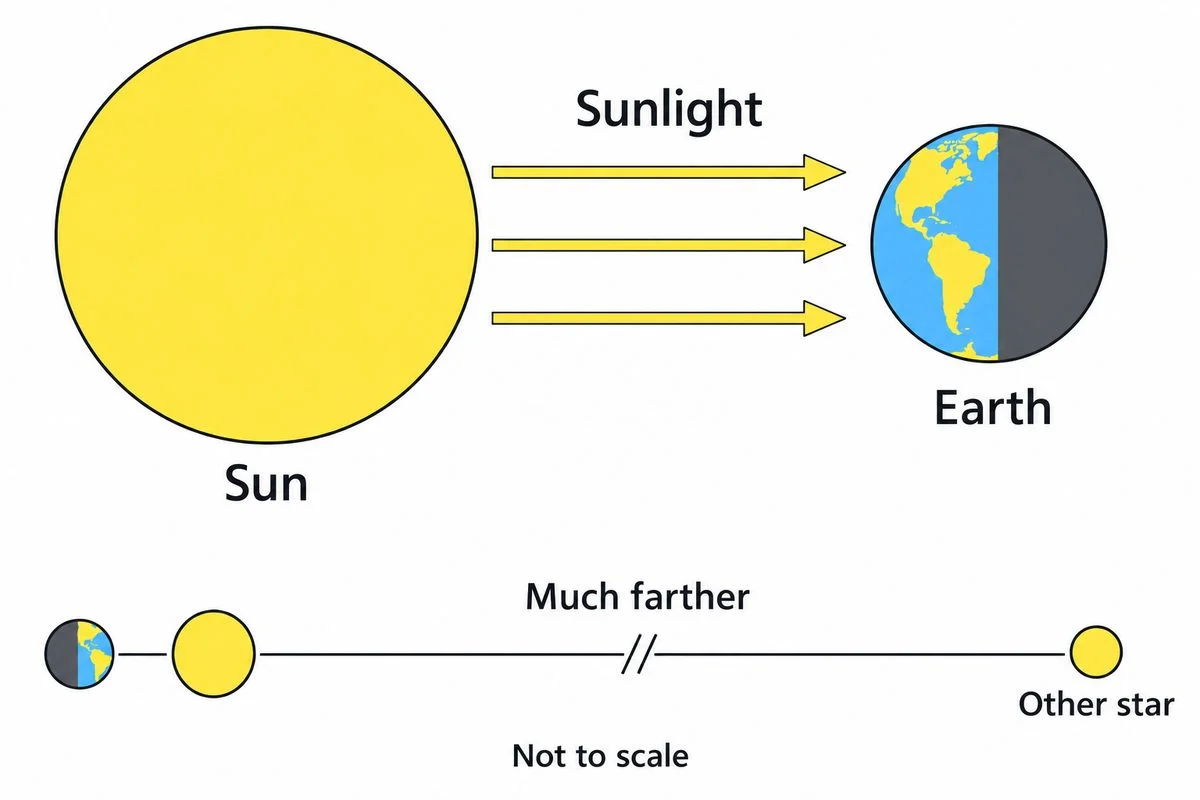
What kind of object is the Sun?
A star. It produces its own light and heat, like other stars.
-
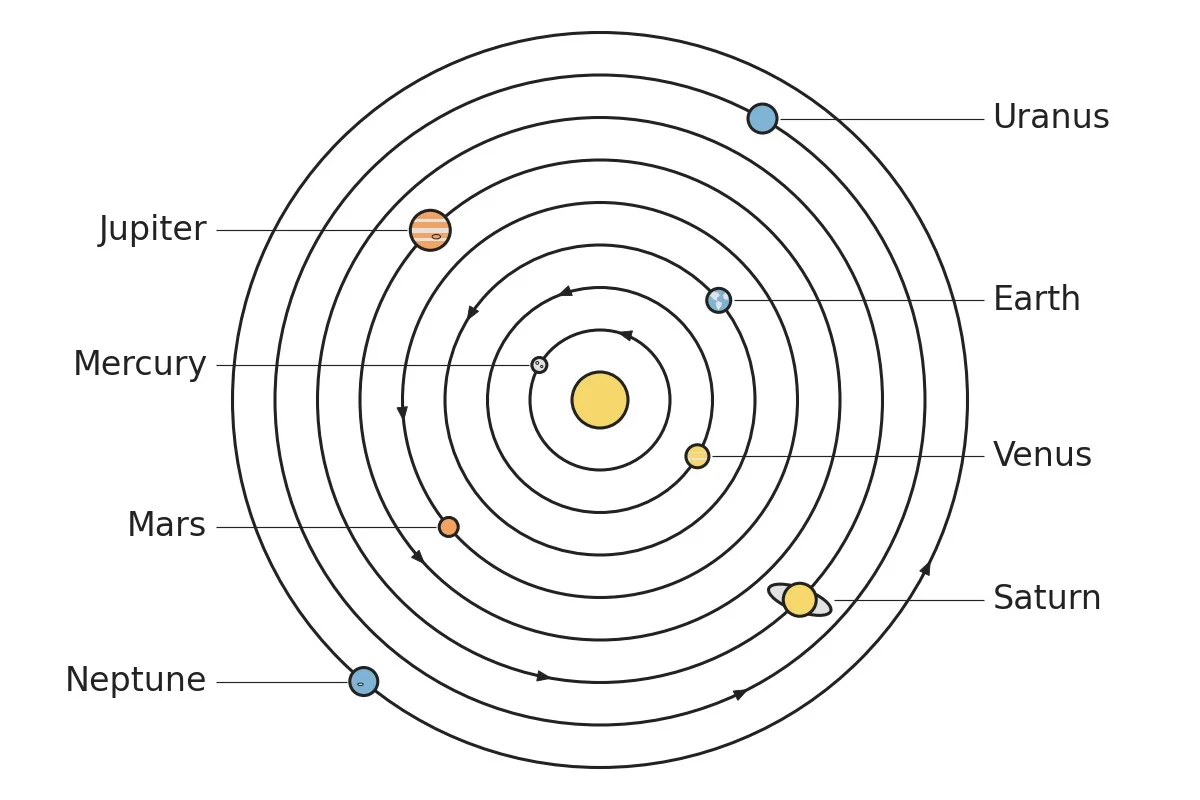
When listing planets from nearest to farthest from the Sun, which starts: Mercury or Neptune?
Mercury. Mercury lies nearest the Sun; Neptune ends the outward list.
-
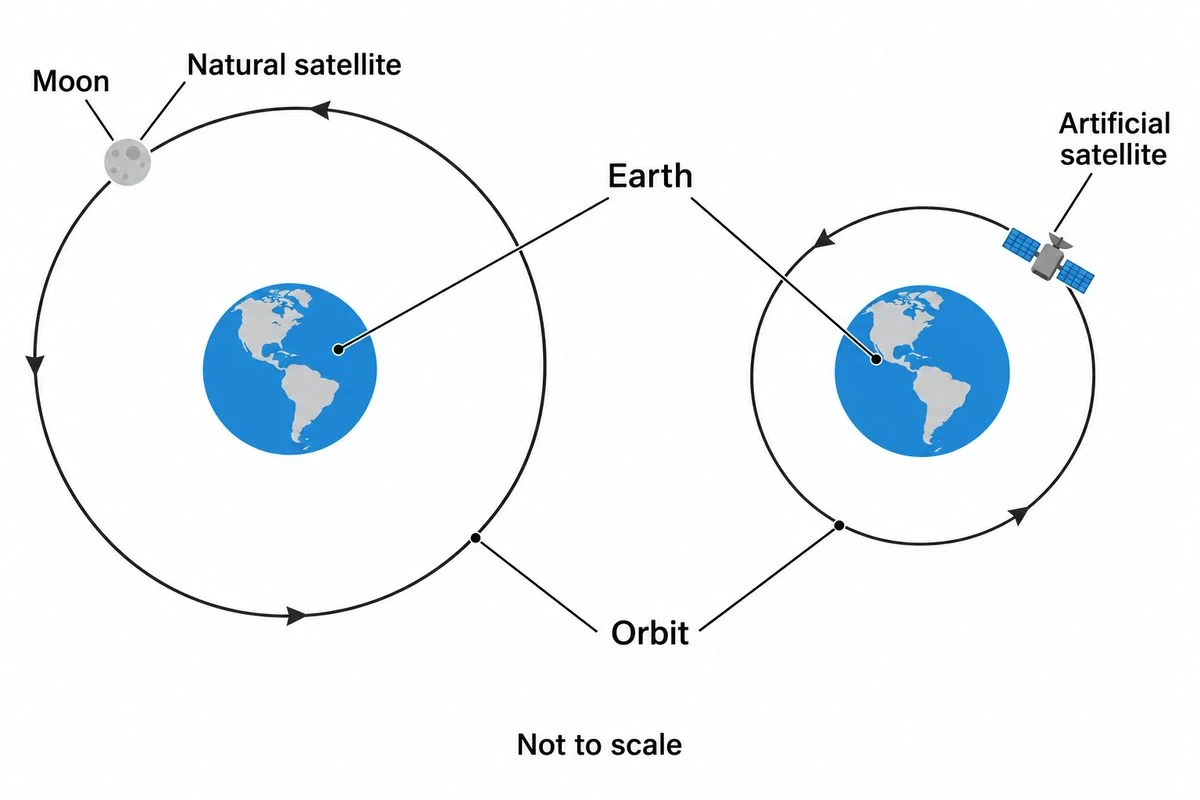
Is the Moon a planet or Earth’s natural satellite?
Earth’s natural satellite. Its classification depends on what it orbits, rather than its size.
-
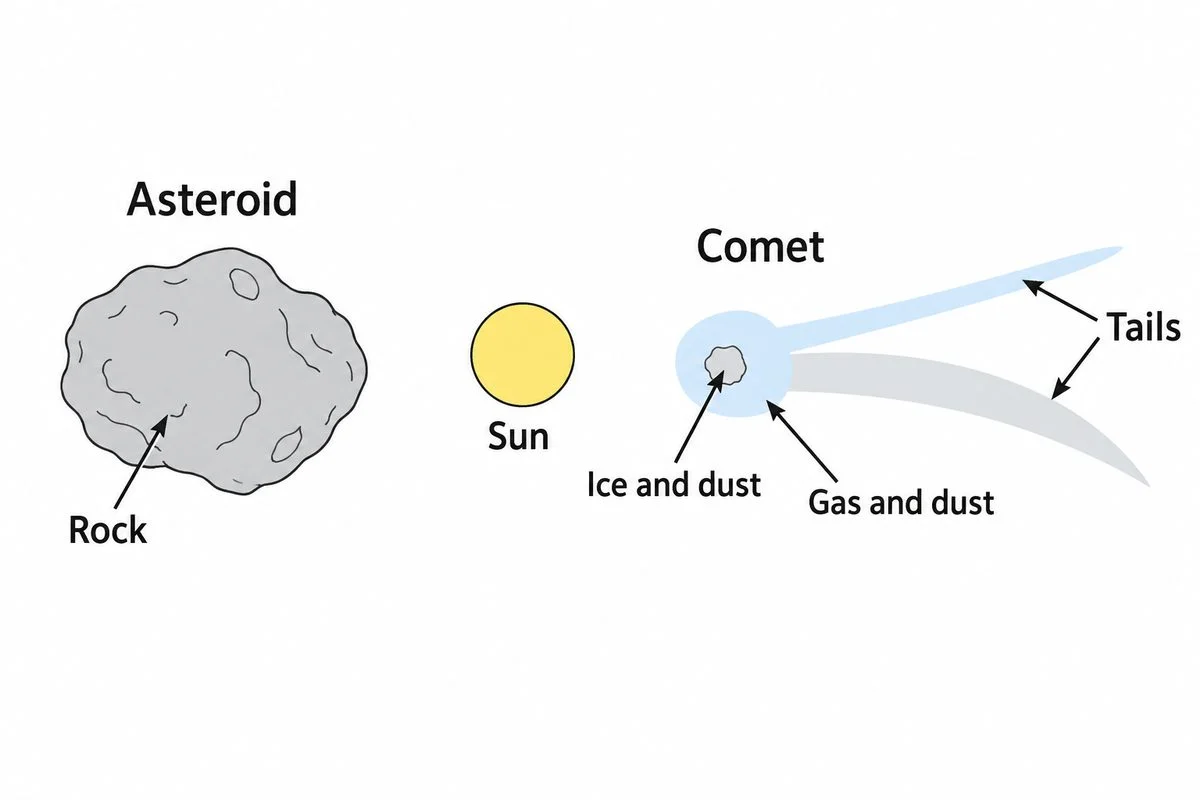
What shape do most asteroids have: nearly round or irregular?
An irregular shape. Their gravity is too weak to pull them into nearly round shapes.
-
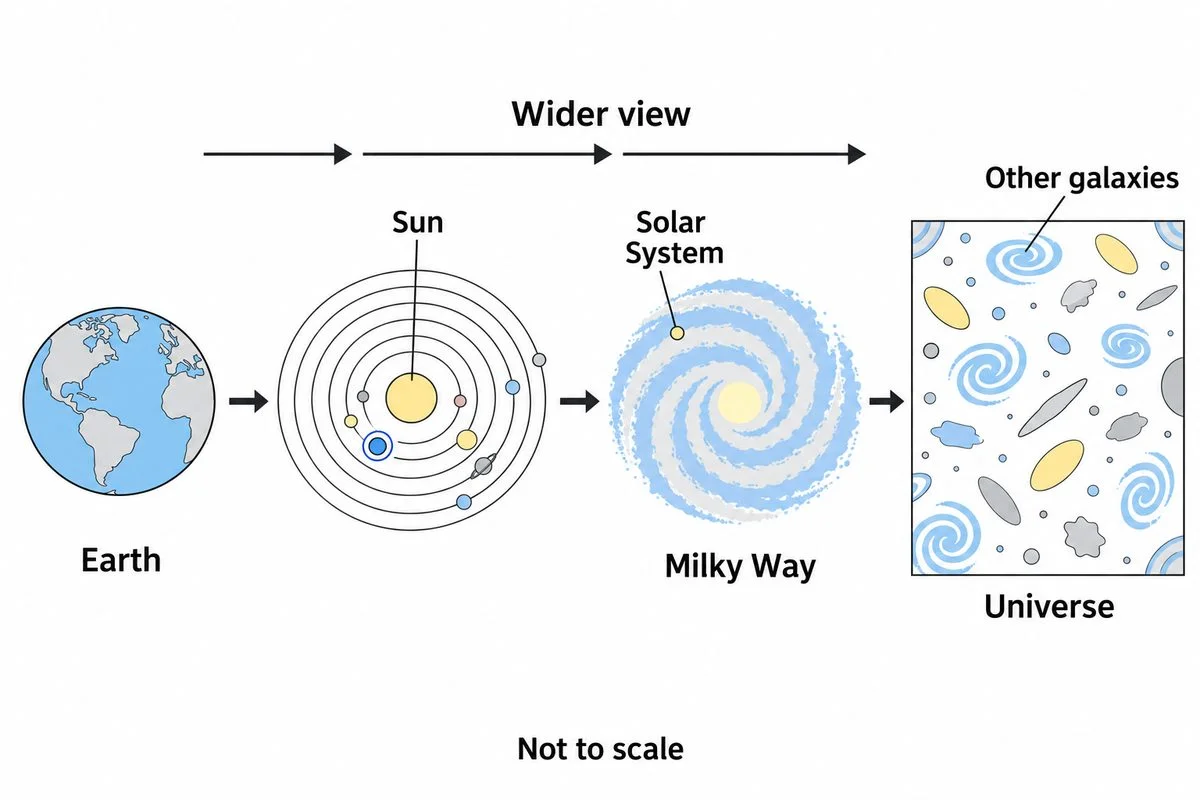
Is our Solar System the whole Milky Way, or a small part of it?
A small part. Our Solar System forms only a small part of our galaxy.