Skip to content

Teach Measurement of Length and Motion in eight steps.

For each idea: show it, ask before you tell, then say one line.

Gather a ruler, thread, spoon, coin, eraser, book, tray, cup, pen, chair and table.

Common misconceptions & worked visual for this chapter · 15 practice questions with answers

How to teach it

Measuring length

A bare table with one straight edge and both of its ends in view.

1. Units for Measuring Length

Standard units give everyone the same size to measure with.

Show
Place your spread hand beside your child’s spread hand on a table. After the prediction, measure the table edge with each handspan.
Ask
Will our handspans give matching counts along this table?
Say
Our handspans will give different counts because they are different sizes.
Used in
Measuring school grounds in metres lets people compare their measurements.
If your child says…“Everyone’s own handspan will give the same count for this table.”
Ask
If our measuring units differ, why should our counts match?
What’s true
Different handspan sizes can give different counts along the same table.
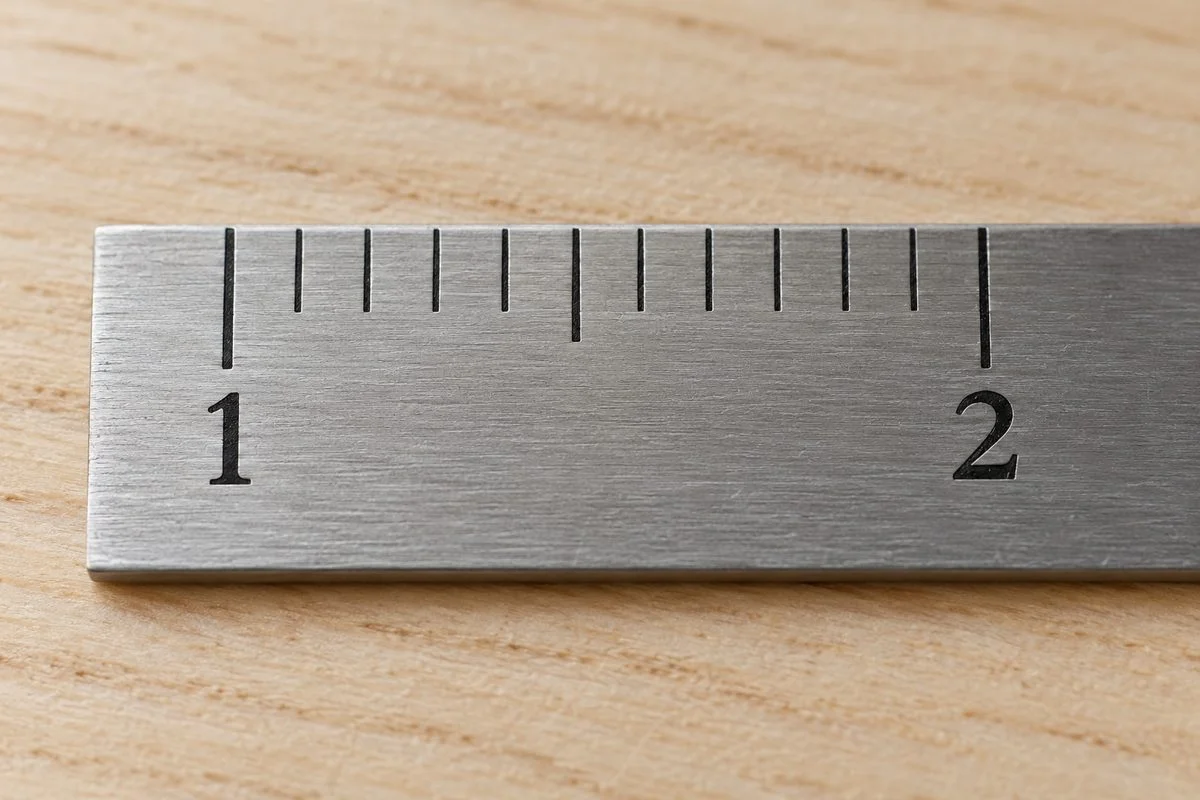
A ruler’s centimetre interval with ten millimetre spaces clearly visible.

2. Centimetres to millimetres

The same length needs more smaller units.

Show
Point to the space between 1 cm and 2 cm on the ruler. After the prediction, count the small spaces between these marks.
Ask
How many millimetres will fit inside this centimetre?
Say
Each centimetre contains ten millimetres. Changing the unit changes the count, while the length stays unchanged.
Used in
Millimetres suit a coin’s thickness, keeping the measurement easy to express.
If your child says…“One big unit equals one small unit.”
Ask
How many millimetre spaces can you count inside one centimetre?
What’s true
One centimetre contains ten millimetres, as the ten small spaces on the ruler show.
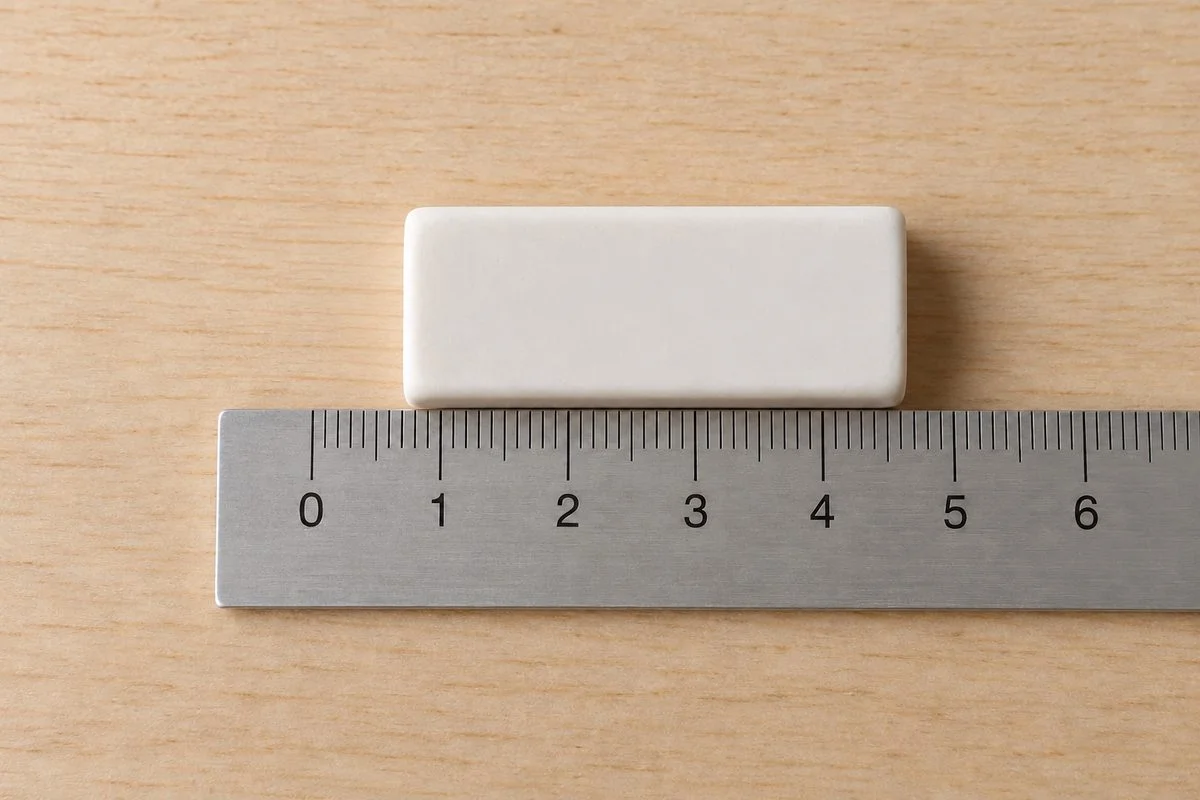
Eraser beside a ruler, with its starting edge at the 1 cm mark.

3. Correct Measurement With Scales

Length is the difference between the end and start readings.

Show
Lay an eraser against the ruler, starting at the 1 cm mark.
Ask
Will the far-end reading alone give its length?
Say
No; subtract the start reading from the end reading.
Used in
A measuring tape suits room height because it can span longer lengths.
If your child says…“The number at the far end is the length.”
Ask
Which part of the ruler before the eraser have you also counted?
What’s true
The far-end reading includes the unused distance before the object’s starting point.
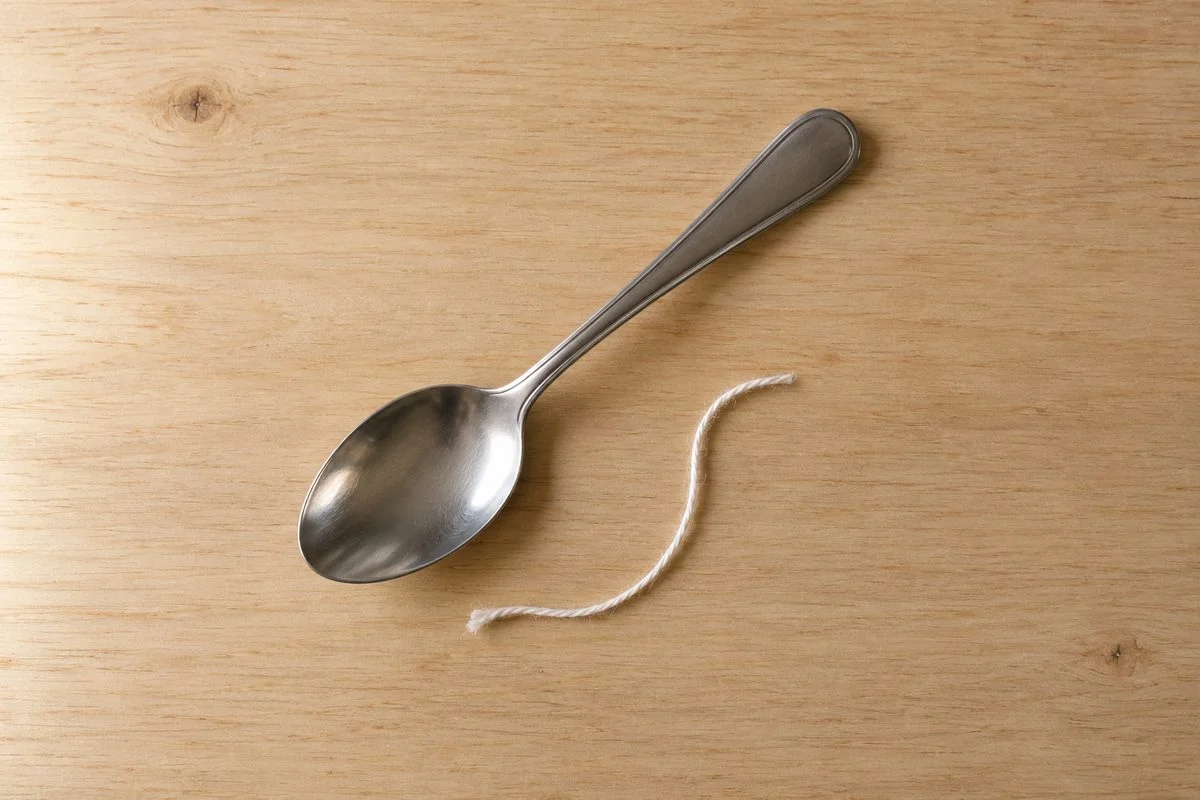
Steel spoon with loose thread beside its curved bowl.

4. Measuring Curved Lengths

Follow the curve before measuring its length.

Show
Place a spoon on the table with thread beside its curved bowl.
Ask
Will measuring straight across give the curved edge’s length?
Say
No; fit thread along the curved edge and mark its two endpoints on the thread. Straighten and measure only that section.
Used in
A flexible tape follows a tree’s girth, allowing its curved boundary to be measured.
If your child says…“The straight gap measures the curve.”
Ask
Does a straight line across the bowl follow its edge?
What’s true
The straight gap between the ends is shorter than the curved path.

Position and movement

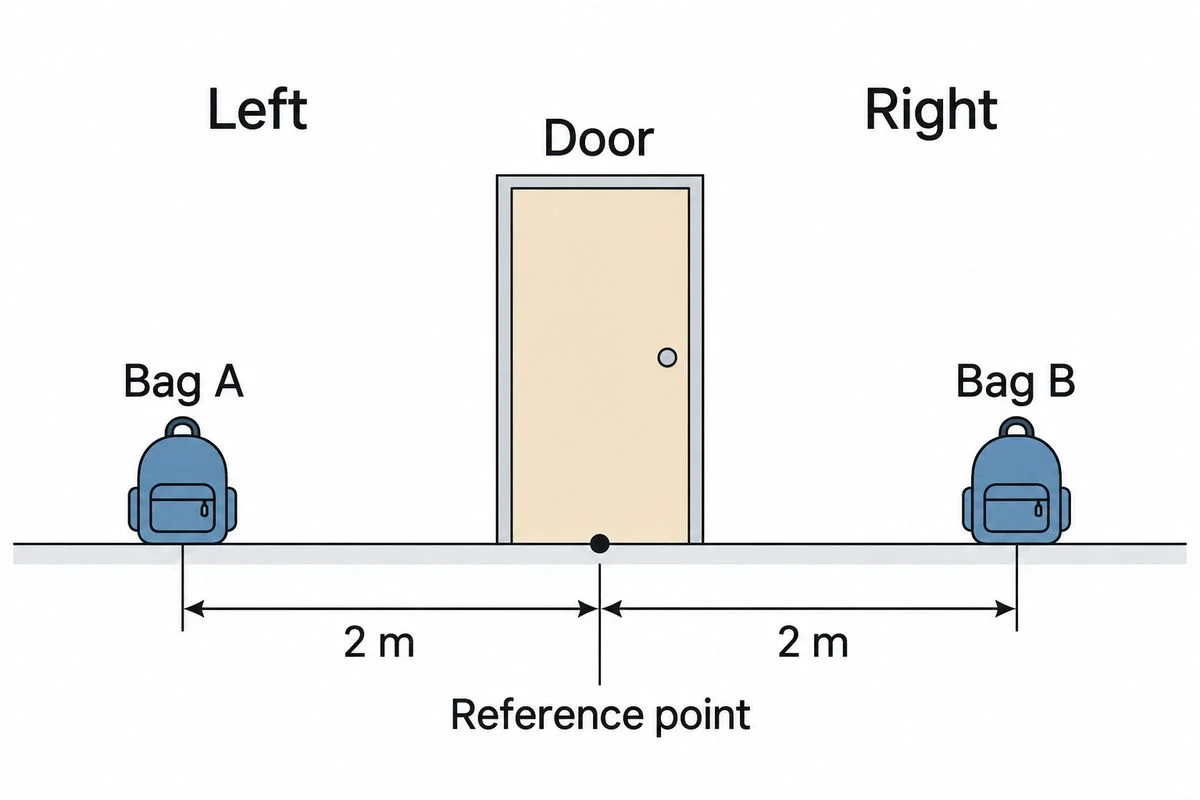
Two bags equally far from a central door, one left and one right.

5. Reference Point and Position

Describe position using a fixed reference point, distance and direction.

Show
Look at the diagram and find the door in the middle. Find each bag, then follow its distance arrow back to the door.
Ask
Will saying ‘2 m from this door’ tell us which bag to fetch?
Say
Both bags are 2 m from the door. Name the door as your reference point, then say left or right.
Used in
Kilometre stones give distances from named places, helping travellers locate their position.
If your child says…“The reference point is always where measuring ends.”
Ask
When we say ‘from the door’, where does measuring begin?
What’s true
The reference point is the fixed place used to describe another position.
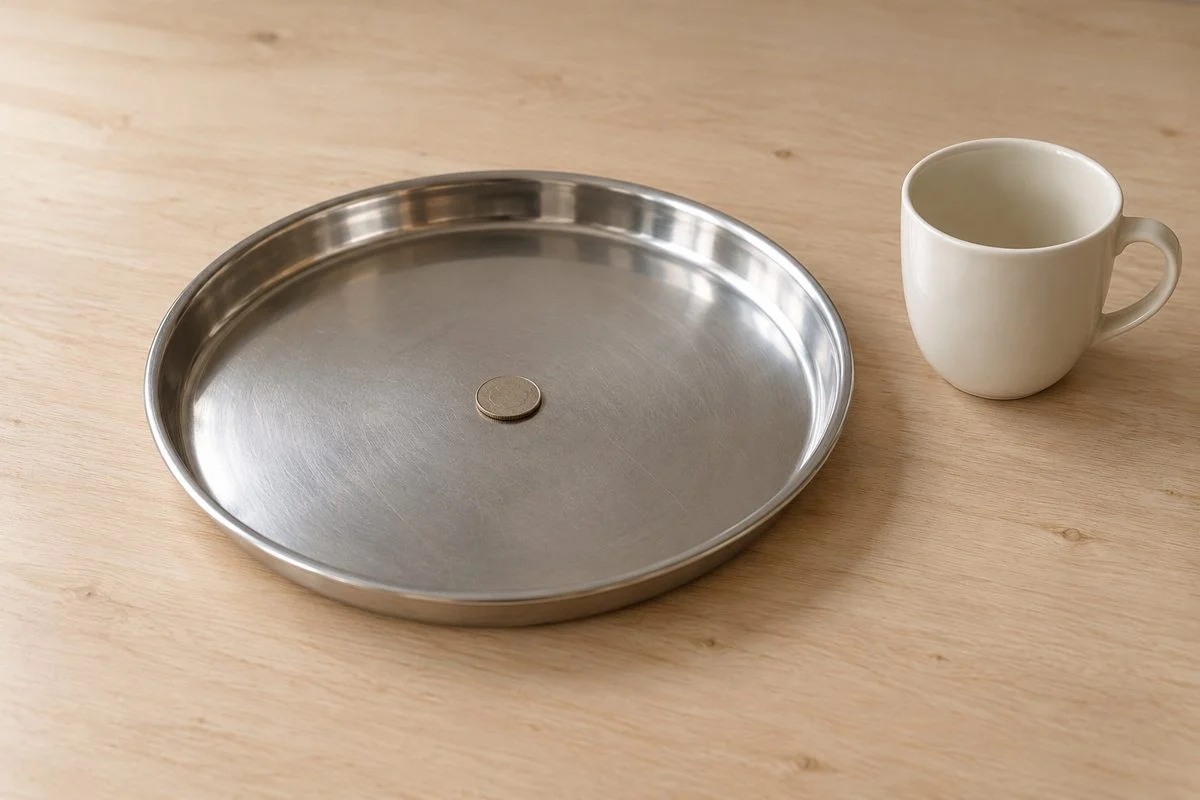
Coin resting on a steel tray beside a cup.

6. Motion and Rest

Movement depends on what you compare the object with.

Show
Put a coin on a tray beside a cup. Keep the cup on the table. After the prediction, slide the tray slowly so the coin travels without slipping.
Ask
If the coin travels with the tray, will it move compared with both tray and cup?
Say
The coin moves compared with the cup, but rests compared with the tray.
Used in
Roadside trees provide reference points for recognising a seated bus passenger’s movement.
If your child says…“Something moving must be moving compared with everything.”
Ask
Does the coin change place on the tray?
What’s true
An object can move compared with one reference point and rest compared with another.

Describing motion

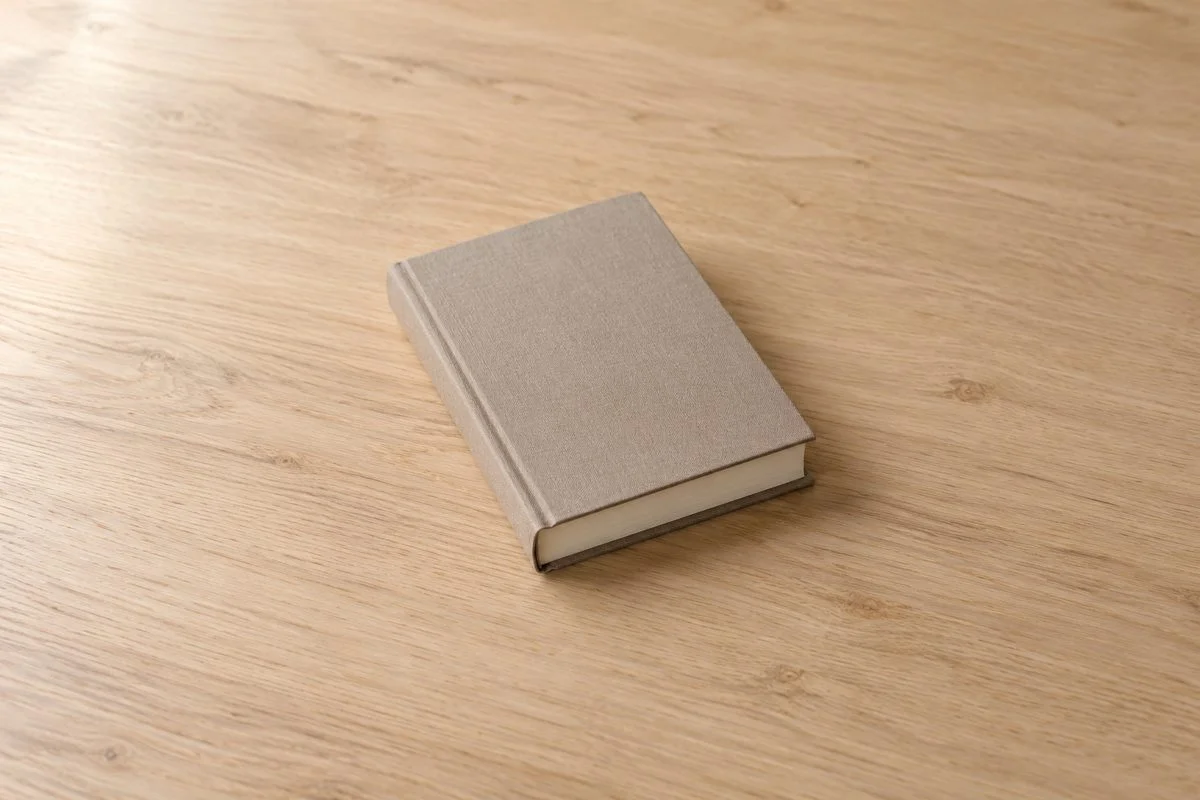
Closed book on a clear table with space around it.

7. Linear, circular and oscillatory motion

Paths can be straight, circular, or to and fro.

Show
Place a book on a clear table. After the prediction, slide it straight, around a circle, then to and fro.
Ask
Will the book follow the same path and change direction in the same way each time?
Say
Straight travel is linear, and travel around a circle is circular. To-and-fro motion is oscillatory.
Used in
A drawer sliding along straight runners shows linear motion.
If your child says…“A swing moves in a circle because its path curves.”
Ask
Does the book complete a circle when it moves to and fro?
What’s true
A swing reverses direction instead of continuing around a circle.
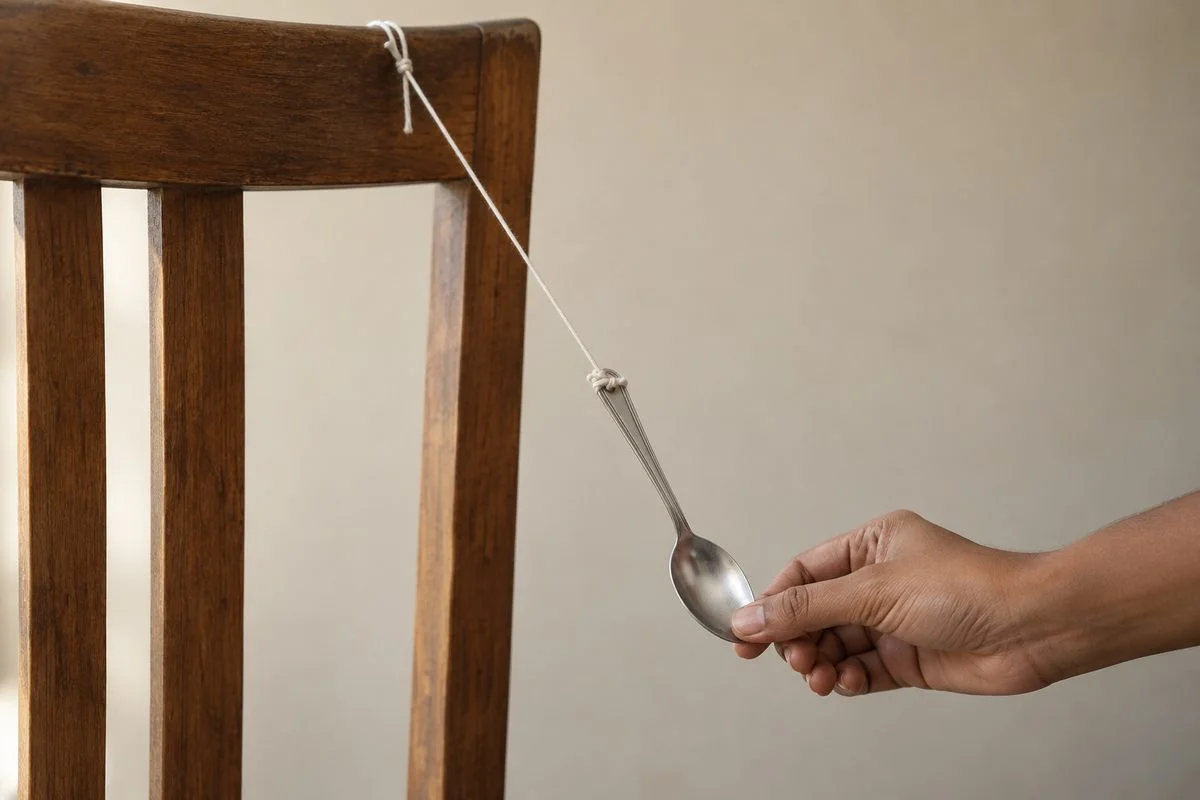
One hand holds a hanging spoon slightly aside before release.

8. Periodic motion

Motion that repeats after equal amounts of time.

Show
Hang a spoon from thread tied to a chair. Pull it slightly aside before releasing it.
Ask
Will each complete to-and-fro movement take about the same time?
Say
Each complete to-and-fro movement takes about the same time. Motion is periodic when repeats take equal times.
Used in
A pendulum clock uses regular swings to keep time.
If your child says…“Only circular motion can be periodic.”
Ask
Does the spoon need to go around a circle to repeat after equal times?
What’s true
Equal repeat times determine whether motion is periodic.

A real problem

Great Trigonometrical Survey of India

The survey began in 1802.

Surveyors carefully measured starting distances for their wider mapping work.

They linked triangles through reference points to extend the survey.

Their measurements corrected earlier estimates of the Indian peninsula’s width.

IISc — historical account by F. C. DanversWikipediaIndian National Science Academy

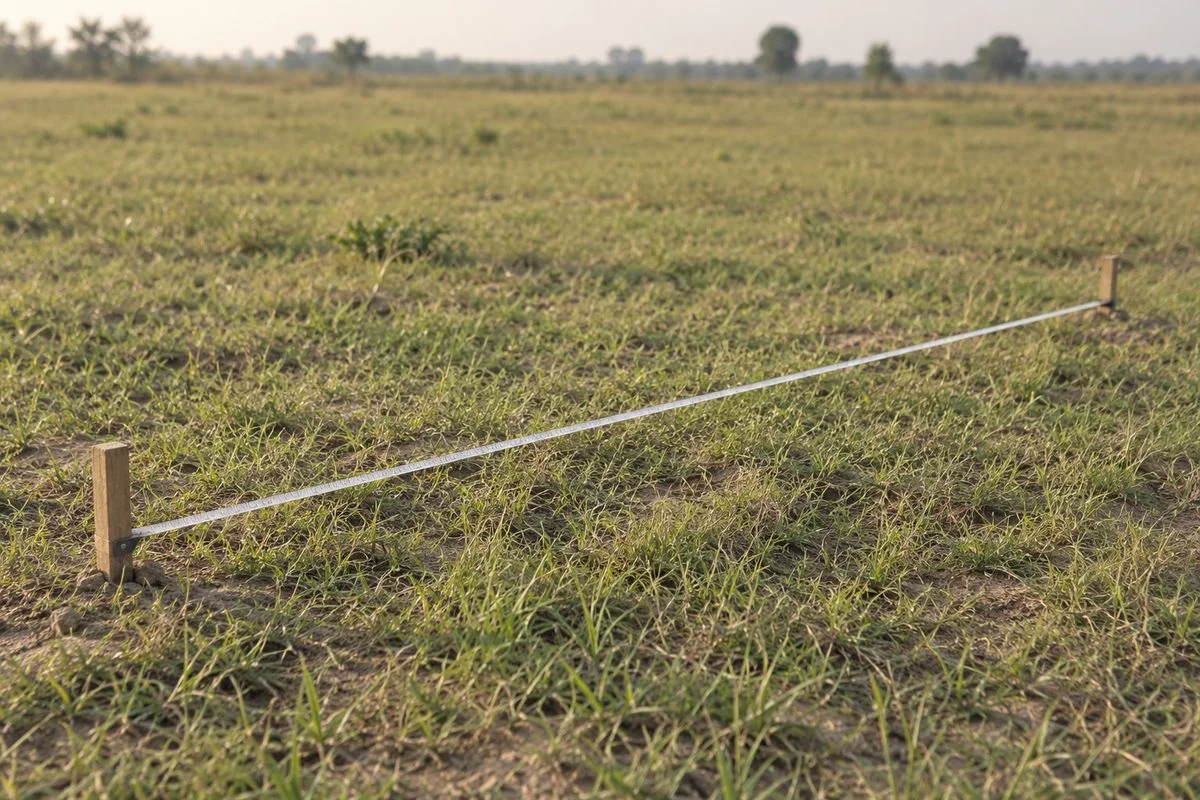
Measuring tape stretched between marker pegs across an open field.

Concept Lab · Common misconception

The tempting mistake in Measurement of Length and Motion

Open standalone misconception page →

What if the ruler starts at 2 cm?

Wrong

A pencil from 2 cm to 9 cm is 9 cm long.

Why it feels right. I read the mark at the tip as the length.

Right

Length is the gap between the two end readings.

Worked example

Count the seven centimetre intervals from the pencil's start to its tip.
  1. The pencil spans the interval from 2 to 9.
  2. Subtract 2 from 9 to get 7 cm.

Ask your child eight quick questions.

One per step. The answer and the reason are given.

  1. Two people carefully measure the same table using different-sized handspans. Must their counts match?

    No. The table stays the same length, but their measuring units differ.

  2. What length in millimetres equals one centimetre?

    Ten millimetres. Ten millimetre intervals together span one centimetre.

  3. An object starts at 1 cm and ends at 7.5 cm. What is its length?

    6.5 cm. Subtracting the starting reading removes the unused centimetre before the object.

  4. How should you place thread to measure a curved edge?

    Along the whole curved edge. The straight gap is shorter than the curve.

  5. Bag A is 2 m left of the door. What is the reference point?

    The door. The bag’s position is described from the door.

  6. A passenger stays seated in a moving bus. Compared with the seat, then a roadside tree, is the passenger resting or moving?

    At rest; in motion. The passenger’s position stays unchanged beside the seat but changes compared with the tree.

  7. A swing follows a curved path, reversing at each end. What type of motion is this?

    Oscillatory motion. It moves to and fro rather than completing a circle.

  8. A swing takes two seconds for each full to-and-fro movement. A ball takes two seconds for each circle. Which motion is periodic?

    Both motions. Both repeat after equal times, though their paths differ.

15 more questions with answers, 14 with pictures