Skip to content

Teach Mindful Eating: A Path to a Healthy Body in eight steps.

For each idea: show it, ask before you tell, then say one line.

Gather a familiar meal, a shelled peanut, paper, spoon, glasses, water, whole fruit, its strained juice and a closed, unplugged grinder.

Common misconceptions & worked visual for this chapter · 15 practice questions with answers

How to teach it

Food and cooking

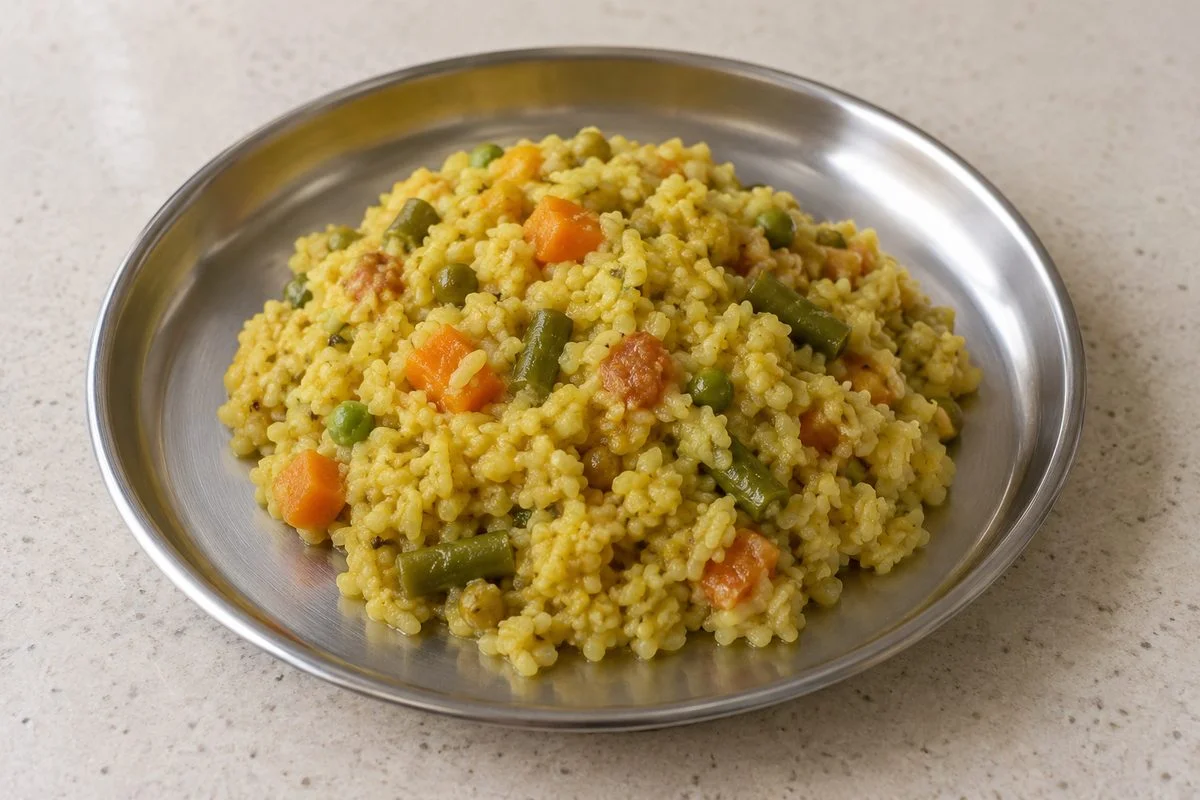
A familiar grain-based meal on a steel plate.

1. Food diversity

Local crops, tastes and traditions help shape meals.

Show
Point to the grain in a familiar family meal.
Ask
Would growing this grain nearby make it more likely to appear in family meals?
Say
Nearby crops influence meals.
Used in
Traditional meals often use local crops because they are available nearby.
If your child says…“Local crops have nothing to do with traditional meals.”
Ask
Why might families regularly cook a grain grown around them?
What’s true
What grows nearby can influence what families cook.
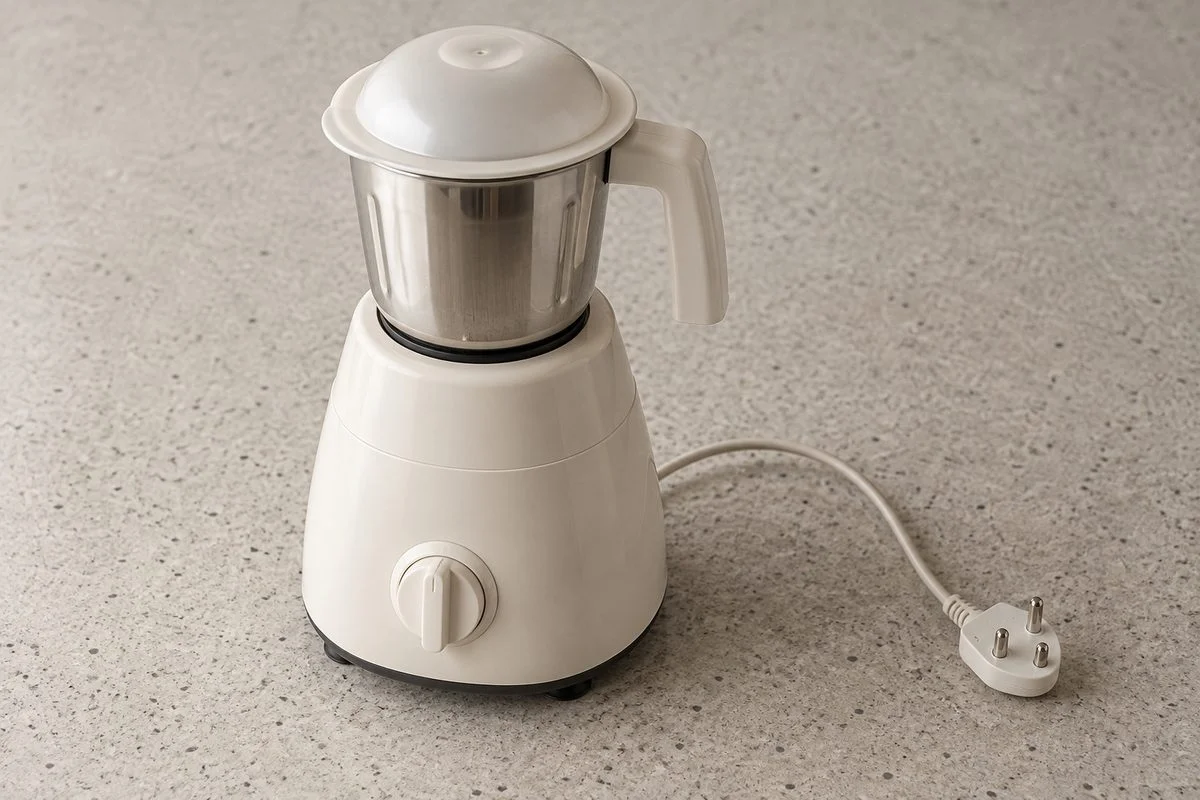
Closed electrical grinder with its unplugged cord beside it.

2. Changing culinary practices

Tools, ingredients and cooking methods change over time.

Show
Point to a closed, unplugged grinder. Mime moving a grinding stone by hand.
Ask
What could become easier when an electrical grinder replaces grinding stones?
Say
This grinder shows how technology can make grinding easier.
Used in
Electrical grinders make grinding easier.
If your child says…“Cooking changed only because people wanted different tastes.”
Ask
Could an easier tool help a family prepare its usual food?
What’s true
New tools can change cooking even when tastes stay the same.

What food provides

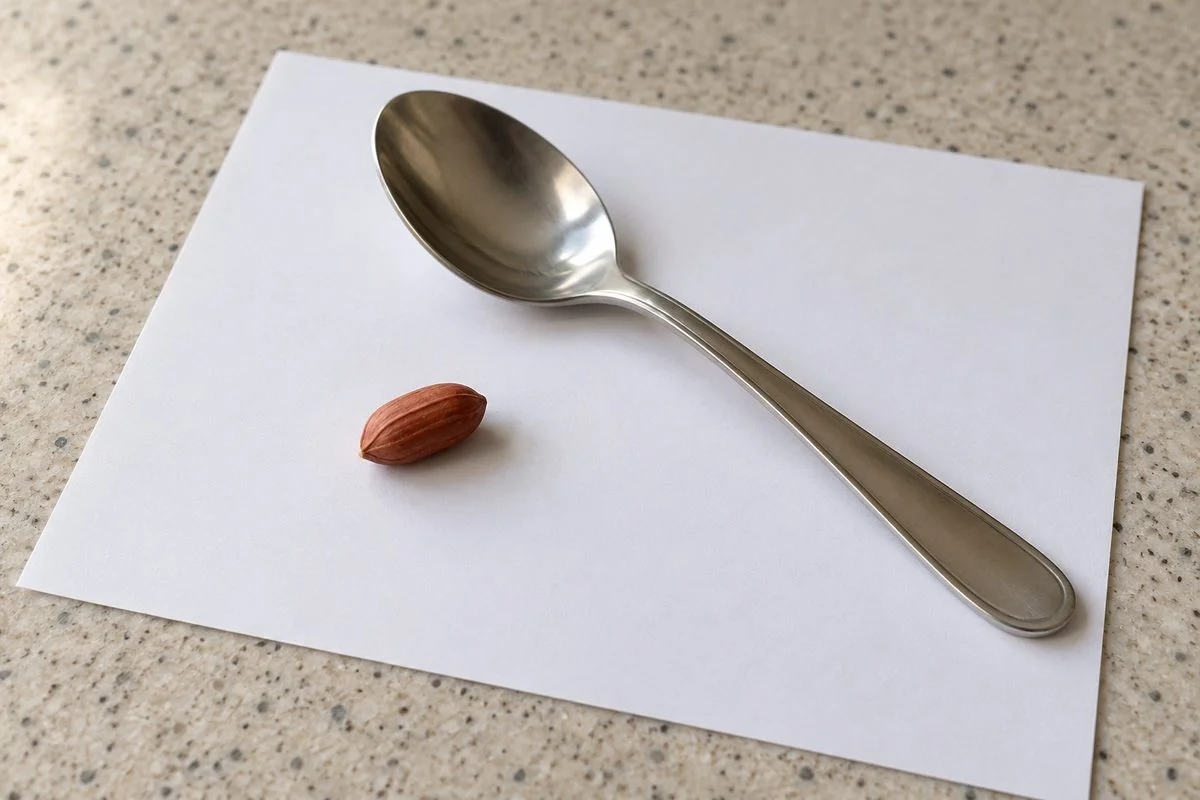
Peanut on plain paper beside a steel spoon, ready for crushing.

3. Energy-giving foods, body-building foods and food tests

Nutrients have different jobs. Tests find some nutrients in foods.

Show
Set a peanut on paper beside a spoon. After predicting, crush it and let the paper dry.
Ask
Peanuts contain protein. Could they leave a lasting oily patch too?
Say
The lasting oily patch shows this peanut contains fat as well as protein.
Used in
Pulses supply protein that helps the body grow and repair itself.
If your child says…“One food can contain only one nutrient.”
Ask
How can the same peanut contain both protein and fat?
What’s true
Peanuts contain protein and fat; an oily patch remaining after drying indicates fat.
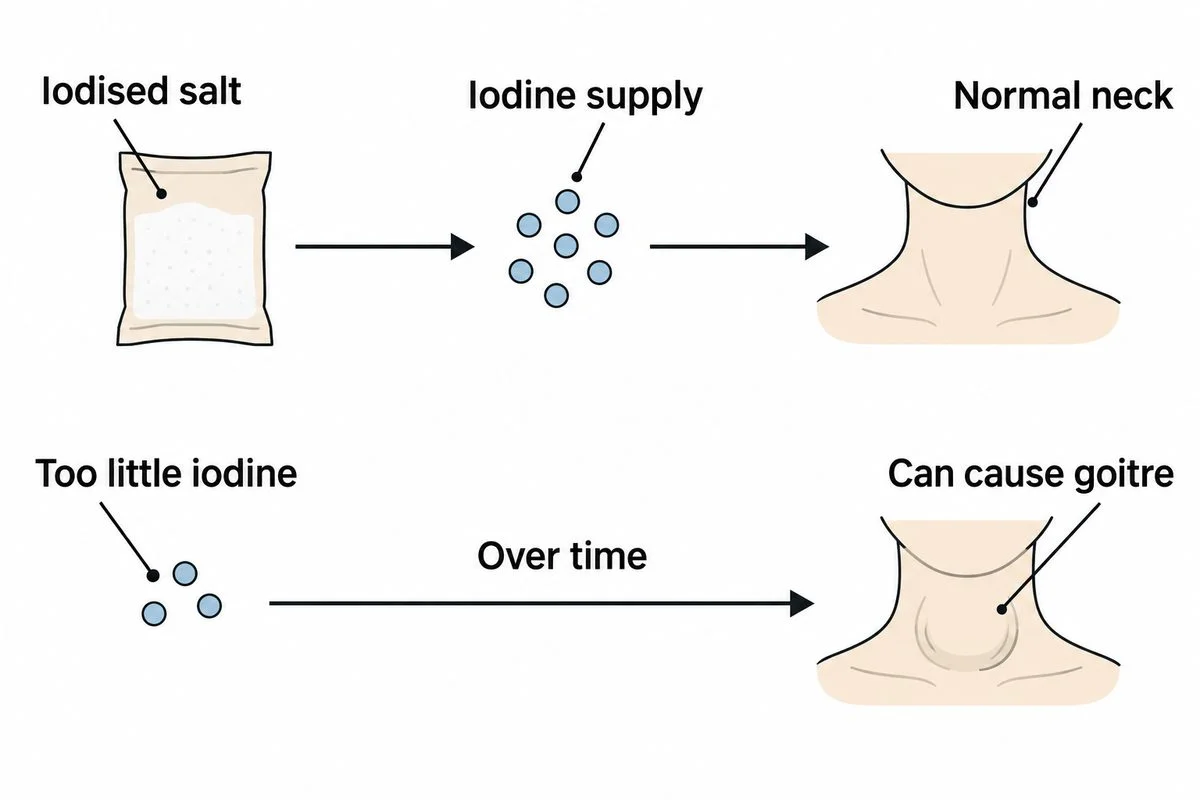
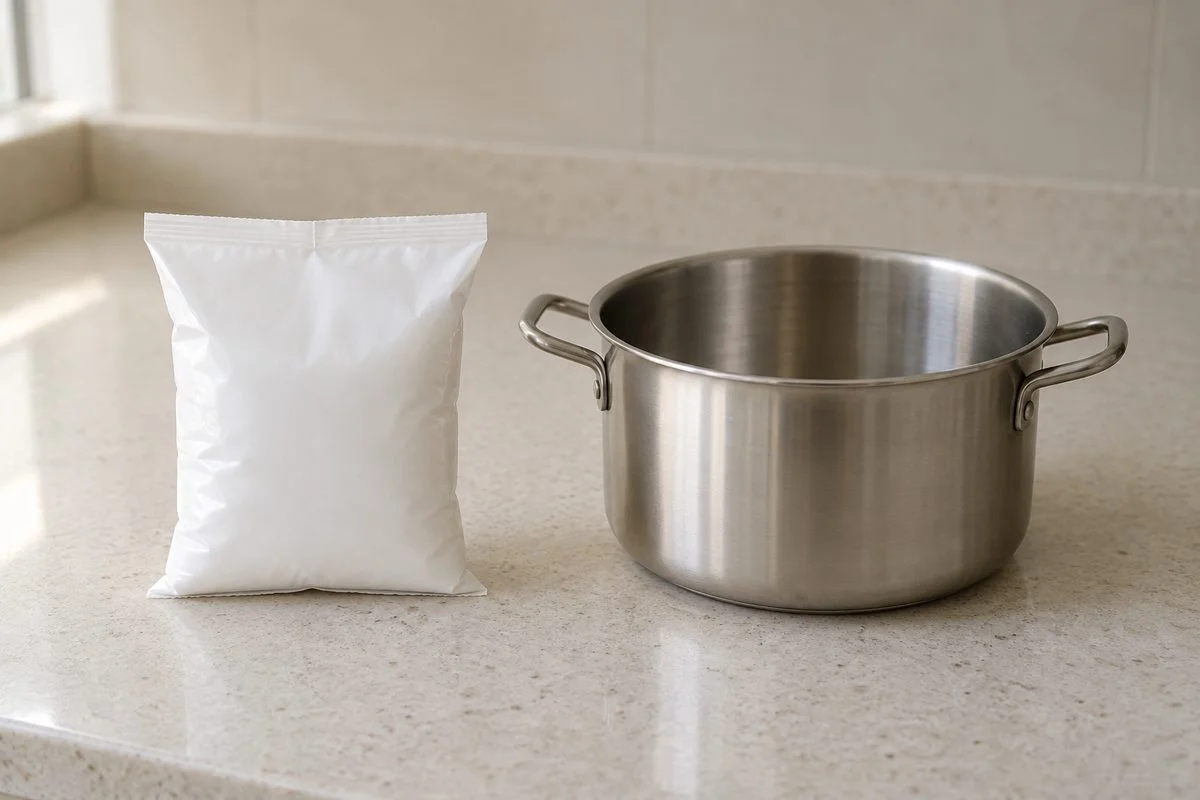
Iodised salt supplies iodine; prolonged iodine shortage can cause neck swelling.

4. Protective nutrients and deficiency diseases

Small amounts of vitamins and minerals help prevent deficiency diseases.

Show
Follow the diagram from salt to iodine supply, then from shortage to goitre.
Ask
What can a lasting iodine shortage cause?
Say
Lasting iodine shortage can cause goitre: neck swelling.
Used in
Iodised salt supplies added iodine to help prevent iodine deficiency disorders.
If your child says…“Essential vitamins must be eaten in large amounts.”
Ask
Does needing a vitamin mean we need a large amount?
What’s true
A nutrient can be essential even when the body needs very little.
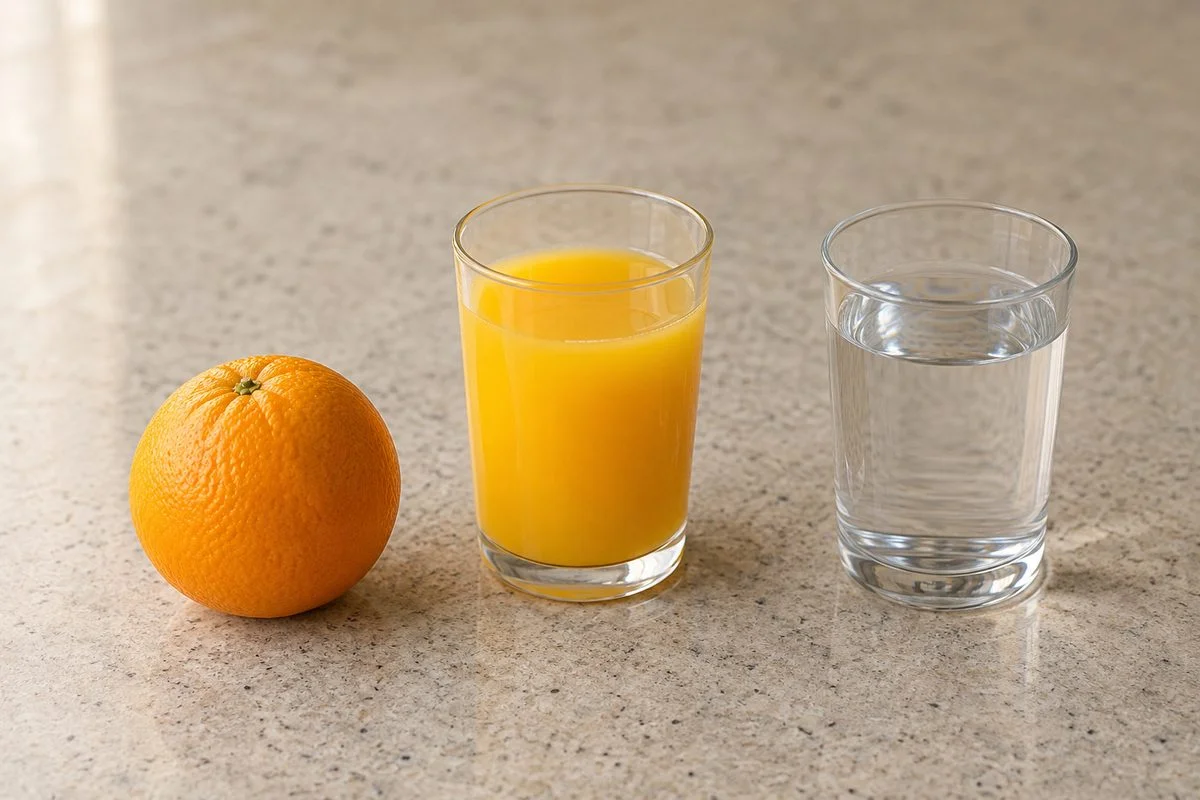
Whole fruit beside glasses of strained juice and water.

5. Roughage and water

Fibre helps stools pass, while water supports absorption and waste removal.

Show
Set a whole fruit beside juice strained of pulp and a glass of water.
Ask
Which will supply more fibre: the whole fruit or the strained juice?
Say
Whole fruit usually supplies more fibre than juice.
Used in
Food fibre helps undigested food move along, making stools easier to pass.
If your child says…“Juice gives me just as much fibre as fruit.”
Ask
Where does the removed pulp go when only the juice is drunk?
What’s true
Juicing removes much of the pulp that contains fibre.

Planning meals and respecting food

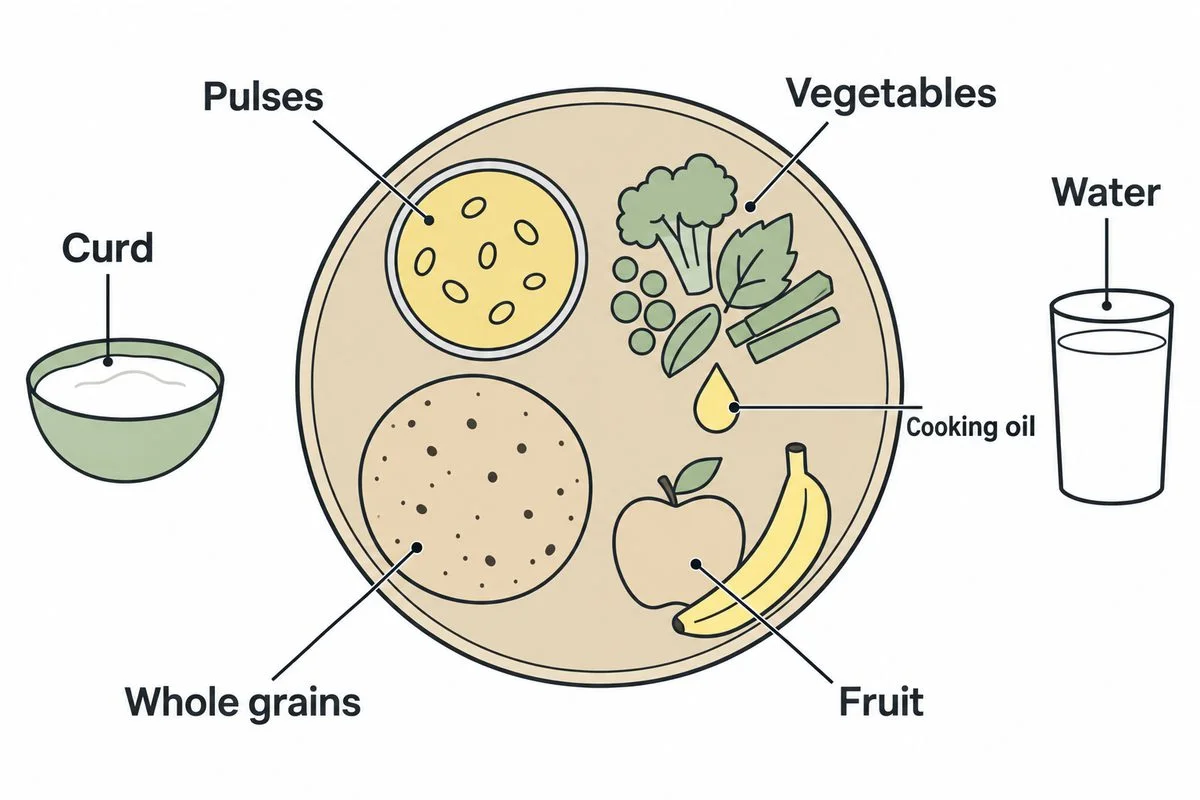
Varied thali with roti, dal, vegetables, fruit, curd, cooking oil and water.

6. Balanced diet

Nutrients, fibre and water must meet the person's needs.

Show
Look at the diagram's roti, dal, vegetables and fruit. Find the curd, cooking oil and water beside them.
Ask
What would a day of only roti and water miss from this varied meal?
Say
Roti and water alone cannot supply every nutrient in suitable amounts. Varied foods help supply nutrients and fibre, alongside water, across the day.
Used in
Meals suited to age and activity help meet different people's nutrient needs.
If your child says…“All the nutrients and fibre are enough without water.”
Ask
Can nutrients and fibre do all the jobs water does?
What’s true
Water belongs in a balanced diet because it supports nutrient absorption and waste removal.
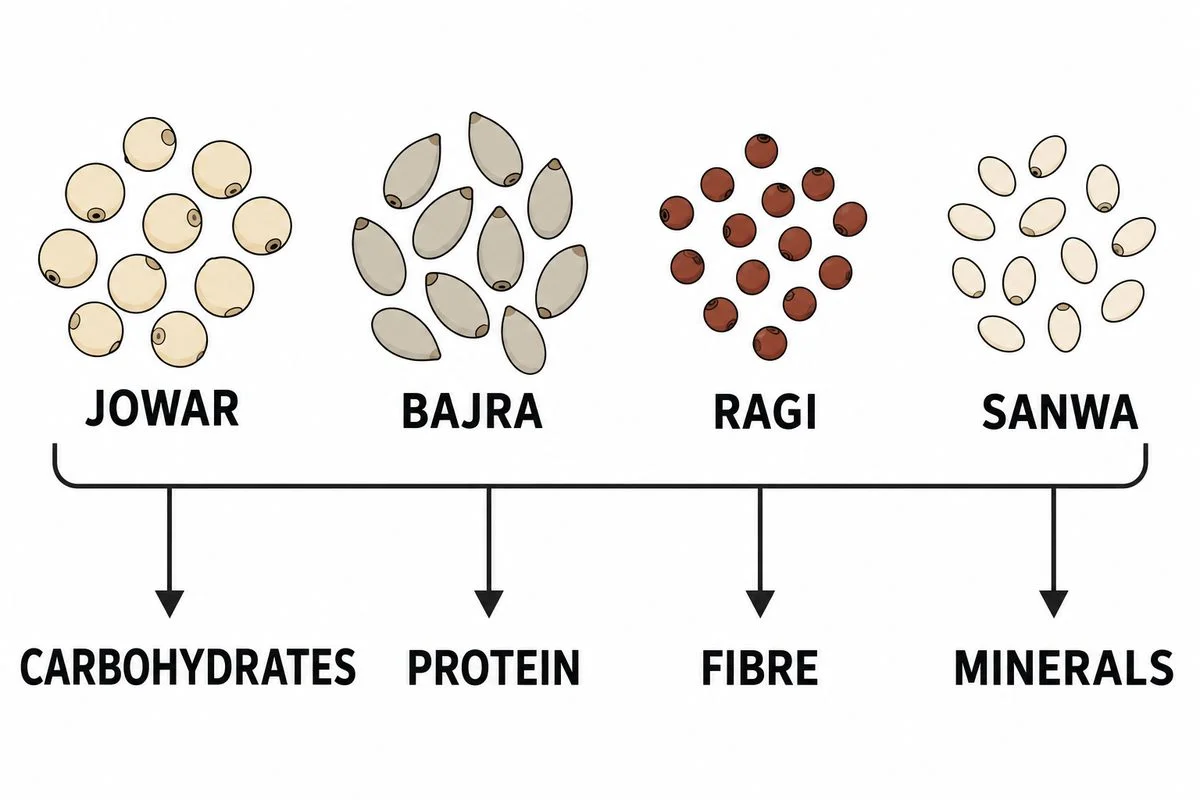
Four millet grains linked to carbohydrates, protein, fibre and minerals.

7. Millets as nutri-cereals

Millets are nutritious grains that contribute to a varied diet.

Show
Find jowar, bajra, ragi and sanwa across the diagram's top. Follow their arrows down to carbohydrates, protein, fibre and minerals.
Ask
What would these grains add to a meal besides carbohydrates?
Say
These millets supply carbohydrates, protein and minerals; whole grains also supply fibre.
Used in
Millets add vitamins, minerals and fibre to a varied diet.
If your child says…“Millets give us no useful nutrients.”
Ask
What do the arrows show these grains contributing to meals?
What’s true
Millets supply several nutrients that help meet our food needs.
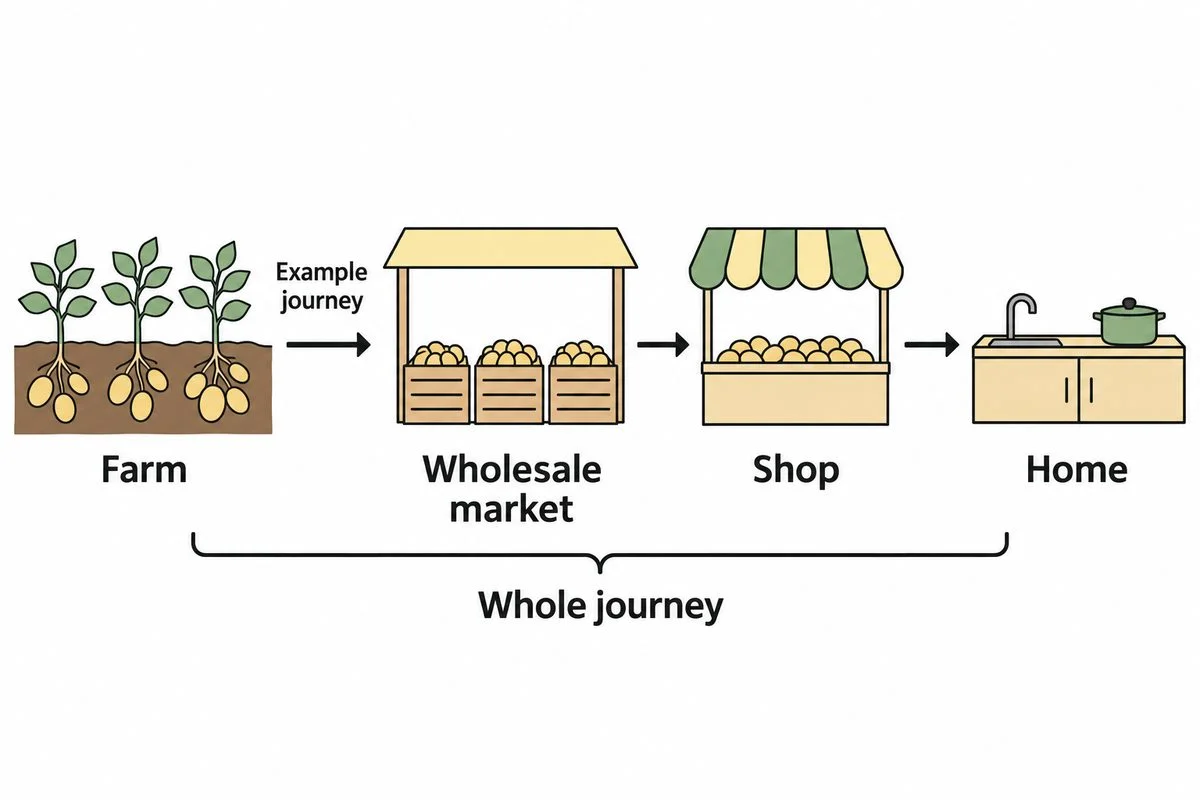
Example potato route from farm through wholesale market and shop to home.

8. Food miles and respecting food

Food miles measure food's whole travel distance from producer to consumer.

Show
Follow the diagram's example potato route from farm to wholesale market, shop and home. Trace every arrow, then the bracket beneath the whole route.
Ask
Would counting only the last arrow include this potato's whole route?
Say
Every part of this example route counts, starting at the farm. Food miles measure the whole distance travelled.
Used in
Shorter food journeys can reduce transport costs and pollution.
If your child says…“Food miles start at the shop.”
Ask
How did the shop get the food?
What’s true
Transport before food reaches a shop also counts.

A real problem

India's goitre-control programme used iodised salt to prevent deficiency.

India started its National Goitre Control Programme in 1962.

The programme supplied iodised salt where goitre was common.

In the Kangra Valley experiment, iodine-fortified salt sharply reduced goitre.

Adding iodine to salt helps prevent iodine deficiency disorders.

International Council for Control of Iodine Deficiency DisordersBulletin of the World Health OrganizationIndian Journal of Medical Research

Unbranded salt packet beside a cooking pot in an Indian kitchen.

Concept Lab · Common misconception

The tempting mistake in Mindful Eating: A Path to a Healthy Body

Open standalone misconception page →

Does filling food supply everything the body needs?

Wrong

A diet that provides enough energy gives all needed nutrients.

Why it feels right. If I feel full, I must have eaten what I need.

Right

The body needs a range of nutrients as well as energy.

Worked example

Rice plate
RiceEnergy
Mixed plate
RiceEnergy
DalProtein
VegetablesVitamins and minerals
The foods contribute different nutrients. The mixed plate gives a wider range.
  1. Rice supplies energy.
  2. A meal with rice, dal and vegetables also supplies more varied sources of protein, vitamins and minerals.

Ask your child eight quick questions.

One per step. The answer and the reason are given.

  1. Can locally grown bajra influence a family's traditional meals?

    Yes, through local availability. Local availability helps shape food traditions.

  2. How does an electrical grinder usually change the effort needed compared with grinding stones?

    It reduces effort. Convenience can change cooking tools without changing tastes.

  3. A peanut contains protein and leaves an oily patch after drying. Which nutrients do these findings show?

    Protein and fat. The lasting oily patch shows another nutrient in the same food.

  4. Does being essential mean vitamins must be eaten in large amounts?

    No. The body needs vitamins in small amounts.

  5. Compare a whole fruit with strained juice made from it. Which usually supplies more fibre?

    The whole fruit. Straining removes pulp containing much of the fruit's fibre.

  6. How does leaving out water affect an otherwise balanced diet?

    It becomes incomplete. Nutrients and fibre cannot replace water's roles.

  7. Which three components besides carbohydrates are named beneath the millet grains in the diagram?

    Protein, minerals and fibre. Millets contribute more than energy to a varied diet.

  8. Rice travels from farmer to storage, then shop, then home. Which stages count?

    All the stages. Food miles include travel before the shop.

15 more questions with answers, 4 with pictures