Skip to content

Teach Living Creatures: Exploring their Characteristics in six steps.

For each idea: show it, ask before you tell, then say one line.

Gather a toy car, young potted plant with a leaning green shoot, whole uncooked beans, two saucers, cloth and water.

Common misconceptions & worked visual for this chapter · 15 practice questions with answers

How to teach it

Recognising life

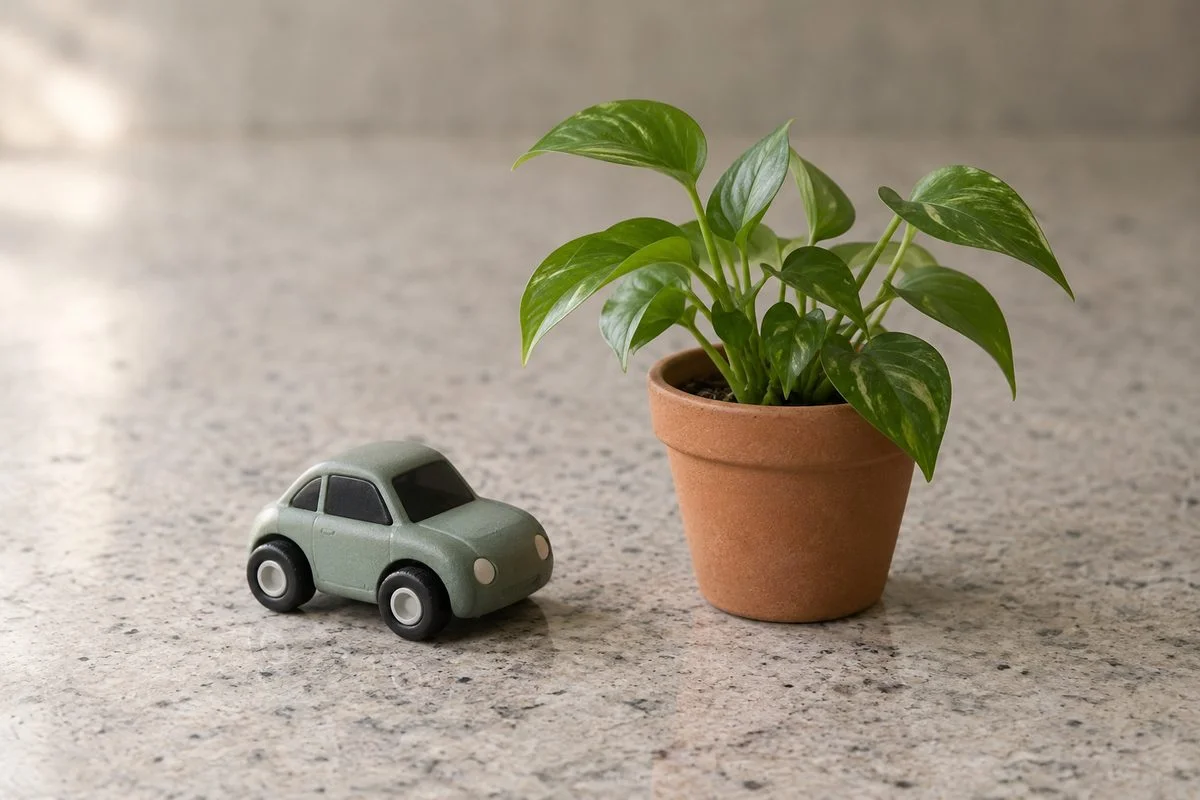
Toy car beside a potted plant on grey stone.

1. Living and non-living things

Living things carry out several life activities.

Show
Place a toy car beside a plant. After predicting, roll the car.
Ask
Will rolling make the car living?
Say
No, rolling will not make the car living.
Used in
Water may help a thirsty plant recover and grow again.
If your child says…“Anything moving is alive.”
Ask
The car moves when pushed. Does that alone show that it is living?
What’s true
Non-living things can move too.

How plants grow

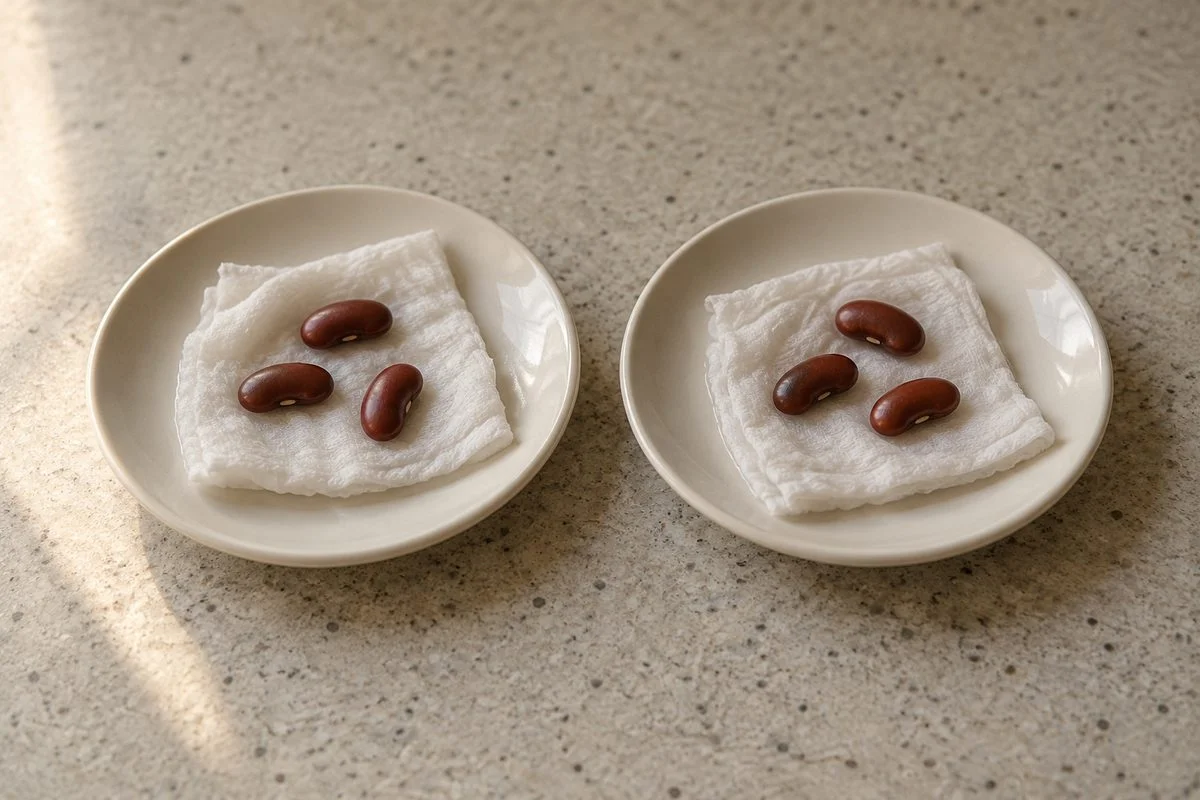
Unsprouted beans resting on damp cloth in two saucers.

2. Seed germination

A seed begins growing into a sprout.

Show
Place beans on damp cloth in two saucers. After predicting, keep one dark and one light. Keep both open to air and similarly warm. Keep the cloth damp and check daily for several days.
Ask
Which beans will sprout if both batches have air and suitable warmth?
Say
Both can sprout using stored food.
Used in
Air in soil gaps helps buried seeds release energy for sprouting.
If your child says…“Seeds cannot sprout without sunlight.”
Ask
What food does a bean already hold inside?
What’s true
A bean can start growing without light.
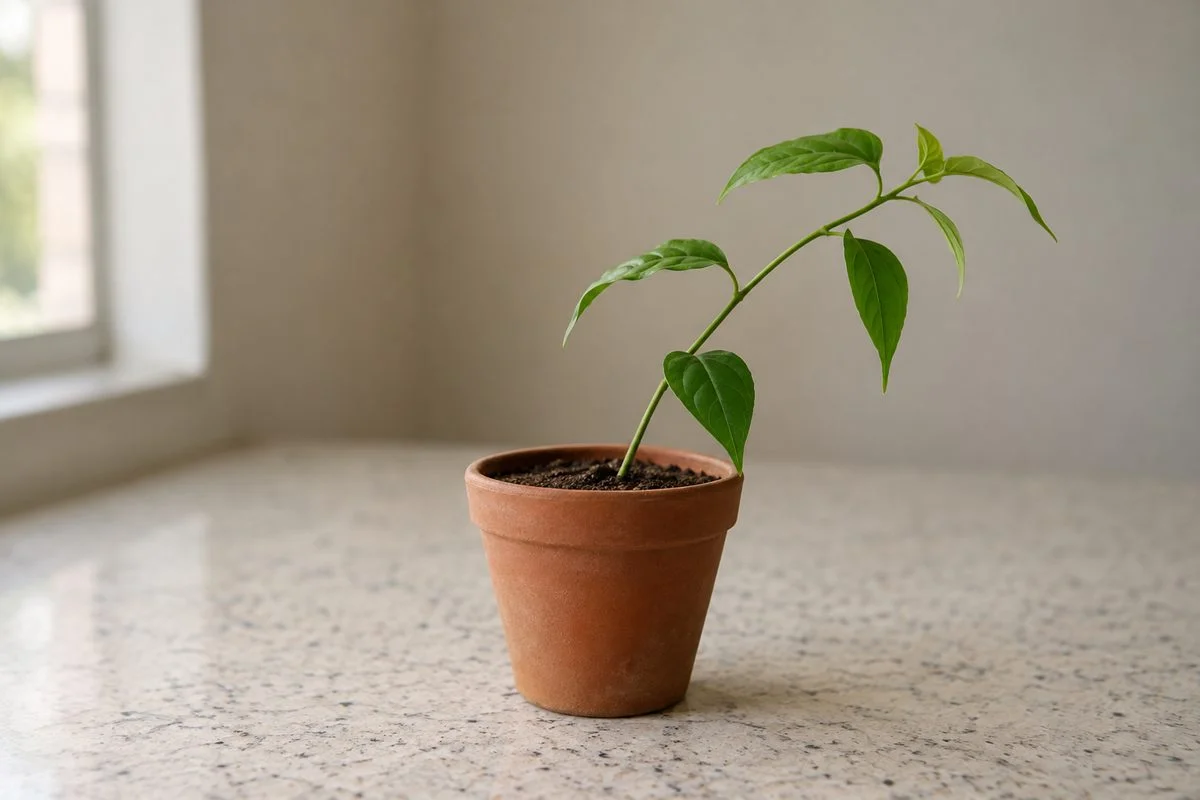
Potted plant with its green shoot leaning away from the window on the left.

3. Growth direction and movement in plants

Plant parts can change direction while the plant stays rooted.

Show
Turn a young plant's pot so its leaning green shoot points away from the window. Keep it there and water normally. Check the same shoot daily for several days.
Ask
Which way will this shoot bend as it grows?
Say
The growing shoot usually bends towards light while the plant stays rooted.
Used in
Bending towards light helps shoots receive light for continued growth.
If your child says…“It cannot move because it stays in its pot.”
Ask
What changed when the shoot bent back towards the window?
What’s true
A plant's parts can move while the whole plant stays in place.
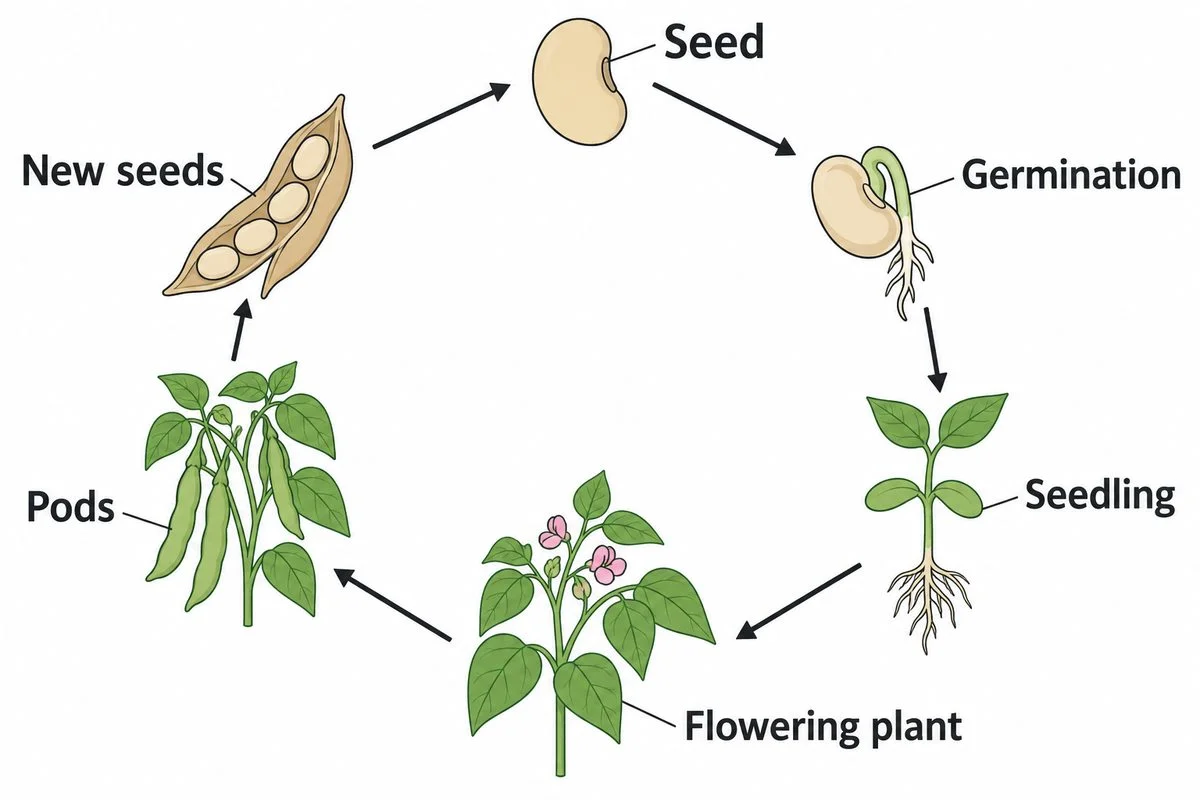
Bean life cycle from seed through flowering and pods to new seeds.

4. Life cycle of a bean plant

Seeds become plants that produce seeds for another generation.

Show
Follow the diagram from seed through seedling and flowering plant to pods and new seeds.
Ask
What could start another generation after this plant flowers?
Say
The plant flowers, then forms pods holding new seeds. Those seeds can produce new plants.
Used in
Seeds from mature bean pods can grow into the next crop.
If your child says…“The cycle ends when flowers appear.”
Ask
What could happen if these seeds sprout?
What’s true
Flowering is followed by pods and seeds.

How animals change as they grow

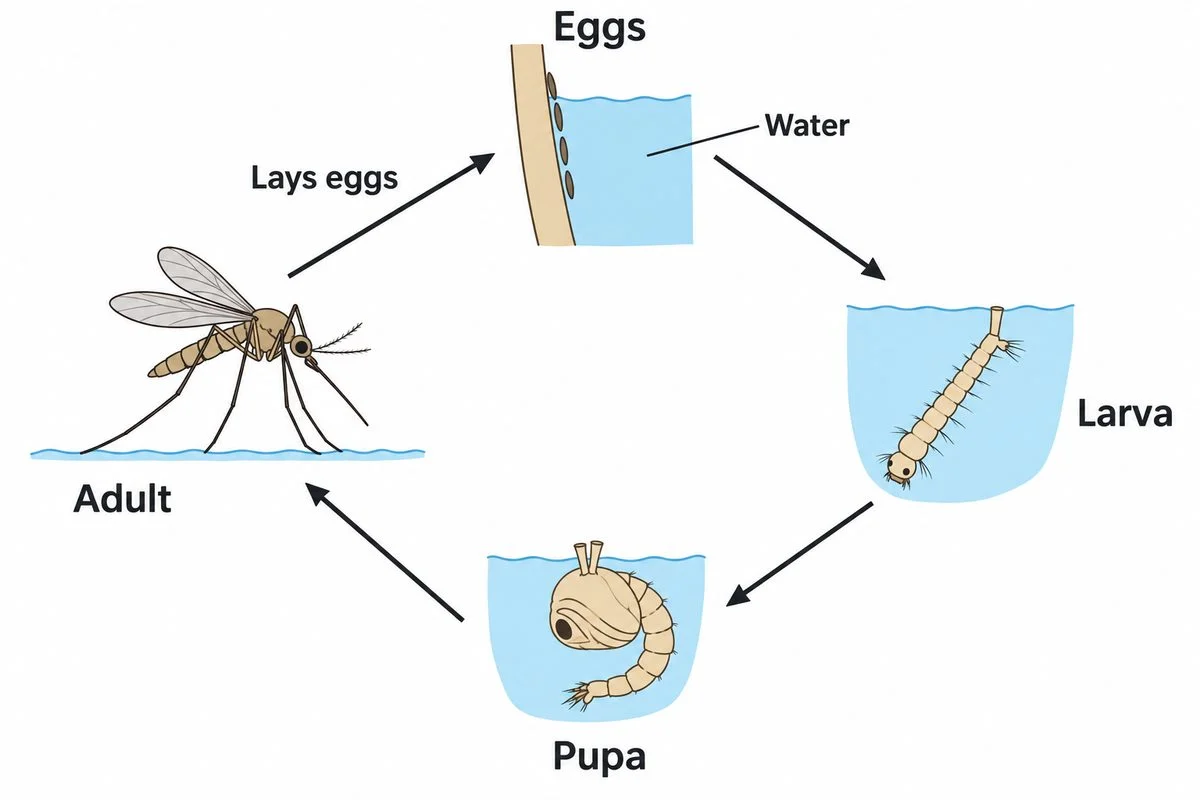
Mosquito cycle connects eggs, aquatic larva and pupa, and winged adult.

5. Life cycle of a mosquito

A mosquito's body changes shape as it develops.

Show
Follow the diagram from eggs through larva and pupa to adult. Trace the arrow back to eggs.
Ask
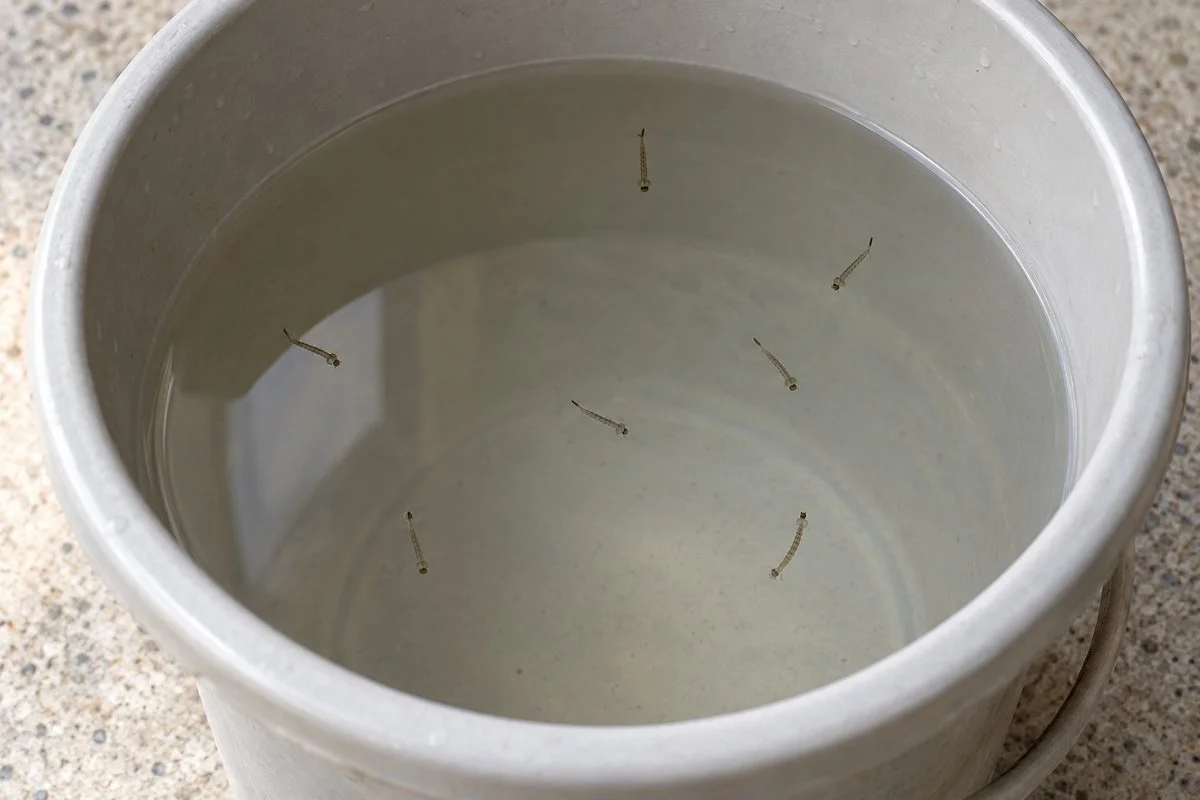
What will these young mosquitoes in the water become as they develop?
Say
Eggs hatch into larvae, which become pupae in water. Pupae become winged adults, and adult females lay eggs.
Used in
Piped water can reduce the need for household containers where mosquitoes breed.
If your child says…“Young mosquitoes are tiny copies of adults.”
Ask
Does the larva only grow bigger, or does its body shape change too?
What’s true
Their bodies change shape as they develop.
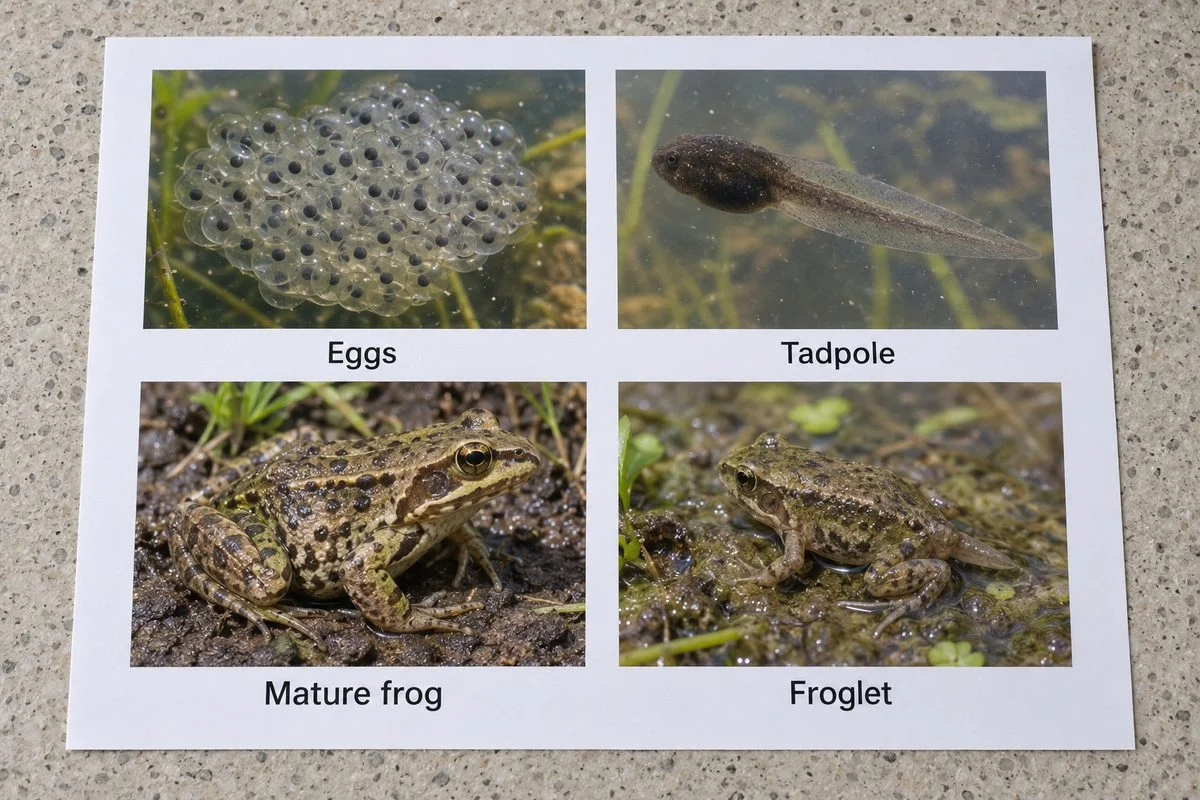
Four photographs show frog eggs, a tadpole, a froglet and an adult on land.

6. Life cycle of a frog

A frog's body and surroundings change as it develops.

Show
Follow the photos clockwise from the eggs at the top left. Compare the tadpole's tail, the froglet's legs and the adult on land.
Ask
Where could this tadpole live after becoming an adult?
Say
The photos show eggs, a tadpole, a froglet and an adult. Legs develop and the tail disappears; the adult can use water and land.
Used in
A tadpole's tail helps it swim before its legs develop.
If your child says…“Frogs live only in water at every age.”
Ask
What could legs help a frog do beyond swimming?
What’s true
Adult frogs also use land.

A real problem

Mosquito control helped the Panama Canal project fight disease.

Gorgas became the project's chief sanitation officer in 1904.

Aedes mosquito larvae hatch from eggs and live in water.

Running water replaced household containers that had provided mosquito breeding sites.

The campaign nearly eliminated yellow fever and greatly reduced malaria's toll.

CDCCDCPanama Canal Authority

Mosquito larvae in a bucket of standing water.

Concept Lab · Common misconception

The tempting mistake in Living Creatures: Exploring their Characteristics

Open standalone misconception page →

Is everything that moves alive?

Wrong

A moving toy car is alive.

Why it feels right. Movement is the easiest sign to spot.

Right

Living things show several life processes.

Worked example

Toy car
Battery powers motor→Wheels turn
Germinating seed
Stored food is used→Root grows
A toy moves when powered. A seed uses its reserves to grow new tissue.
  1. A battery makes a toy car move.
  2. A germinating seed uses stored food, grows roots and responds to its surroundings.

Ask your child six quick questions.

One per step. The answer and the reason are given.

  1. Why can't movement alone tell us whether something is living?

    Non-living things move too. A moving object need not carry out life activities.

  2. Can a bean sprout in darkness with water, air and suitable warmth?

    Yes. With water, air and suitable warmth, beans can begin growing without light.

  3. The shoot bends towards light while the pot stays still. Has the plant shown movement?

    Yes. A plant can move its parts without moving from place to place.

  4. Which parts inside a bean pod can grow into new bean plants?

    Seeds from its pods. Pods contain seeds that can become new plants.

  5. What does a newly hatched mosquito look like?

    A wormlike larva without wings. Wings appear in adults, not newly hatched larvae.

  6. Where does an adult frog live?

    In water and on land. Its changed body supports movement and breathing on land.

15 more questions with answers, 15 with pictures