Skip to content

Teach Temperature and its Measurement in seven steps.

For each idea: show it, ask before you tell, then say one line.

Gather three bowls, water, ice, cleaning supplies, a cloth, a digital armpit thermometer and a room thermometer.

An adult prepares comfortably warm water. Stop the water activity if either hand feels uncomfortable.

Common misconceptions & worked visual for this chapter · 15 practice questions with answers

How to teach it

What temperature tells us

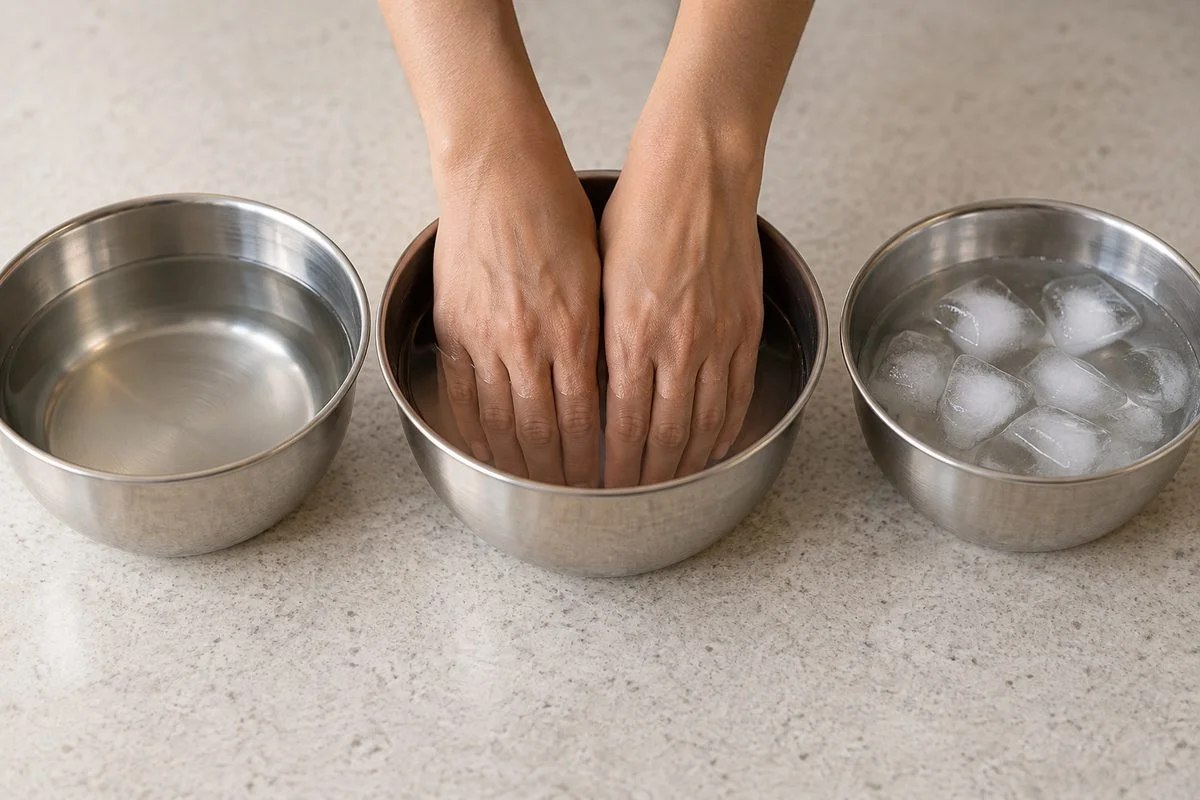
Both hands in the centre bowl, with warm and ice-cold water bowls beside it.

1. Temperature

Temperature measures how hot or cold something is.

Show
An adult arranges comfortably warm water left, tap water centre, and ice-cold water right. Keep one hand in each outer bowl for one to two minutes, stopping if uncomfortable. After predicting, move both into the centre bowl.
Ask
Will both hands feel the same when you move them into the tap water?
Say
No; touch can mislead.
Used in
A body-temperature check gives a measurement instead of relying on how warm skin feels.
If your child says…“My hands always tell me how hot something is.”
Ask
If your hands disagree about this water, can touch tell us its temperature reliably?
What’s true
The same water can feel different to hands coming from warmer and colder water.
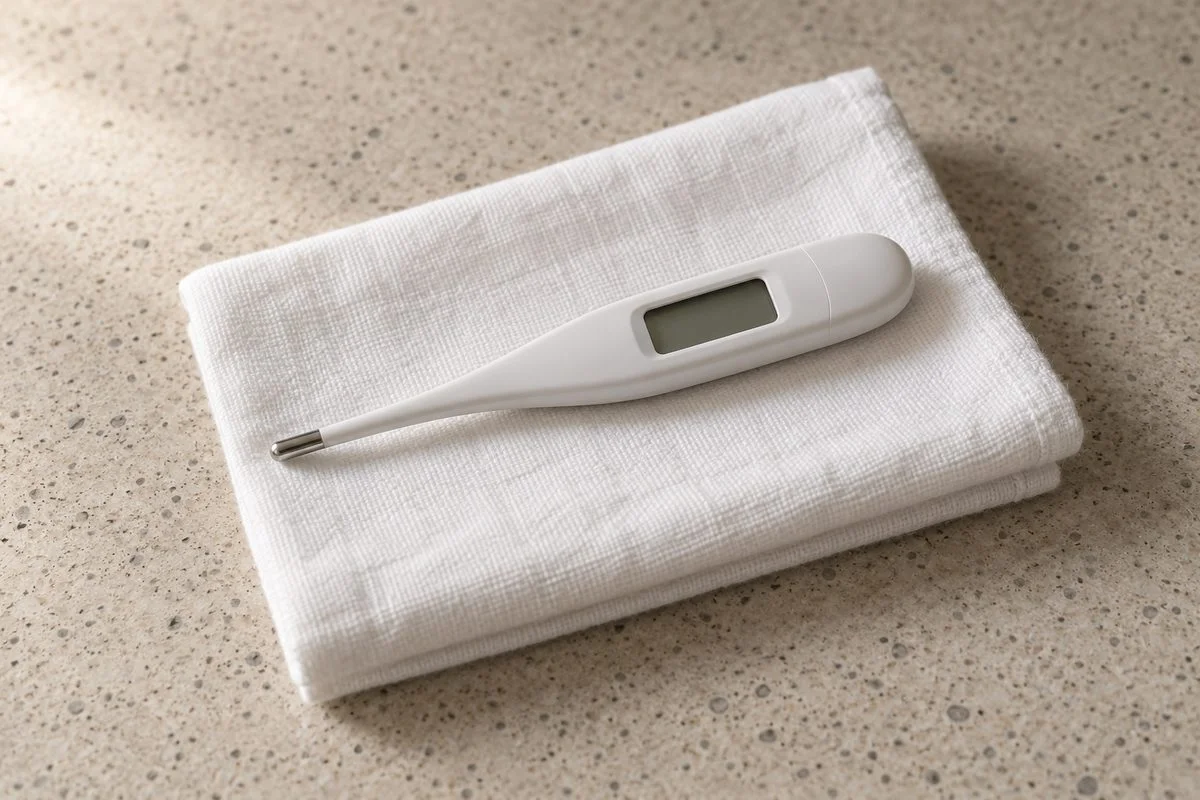
A digital clinical thermometer lying on a folded white cloth, its display blank.

2. Clinical thermometer

A clinical thermometer measures body temperature.

Show
Clean the tip as its instructions say, then switch it on. An adult holds the tip in their armpit, with their arm pressed against their body. Wait for its signal, then read the display together. Clean the tip again.
Ask
Will my reading have to be exactly 37.0 °C?
Say
No. This thermometer measures body temperature. Healthy people's temperatures vary slightly.
Used in
Non-contact thermometers measure body temperature from nearby, reducing the risk of spreading disease through contact.
If your child says…“Anything except 37.0 °C means illness.”
Ask
If healthy people's temperatures vary, must every reading match?
What’s true
A reading slightly different from 37.0 °C does not always mean someone is ill.
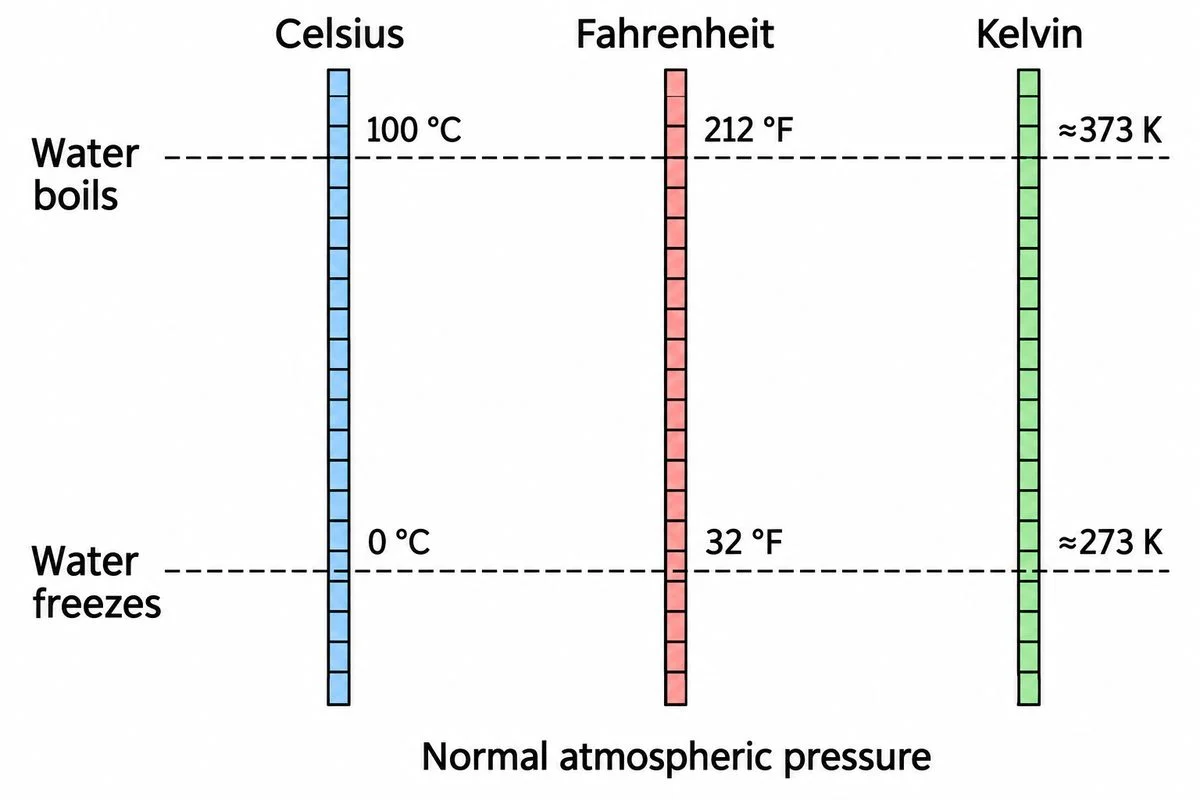
Three temperature scales align matching freezing and boiling temperatures.

3. Temperature scales

Celsius, Fahrenheit and Kelvin are different scales for expressing temperature.

Show
Follow the diagram's dashed lines across the three scales.
Ask
Can different numbers here describe the same temperature?
Say
Yes, because the scales differ.
Used in
Units let people interpret body-temperature readings taken on different scales.
If your child says…“The same number means the same temperature.”
Ask
If one temperature has different numbers on these scales, is the number alone enough?
What’s true
37.0 °C equals 98.6 °F, rather than 37.0 °F.

Measuring water temperature

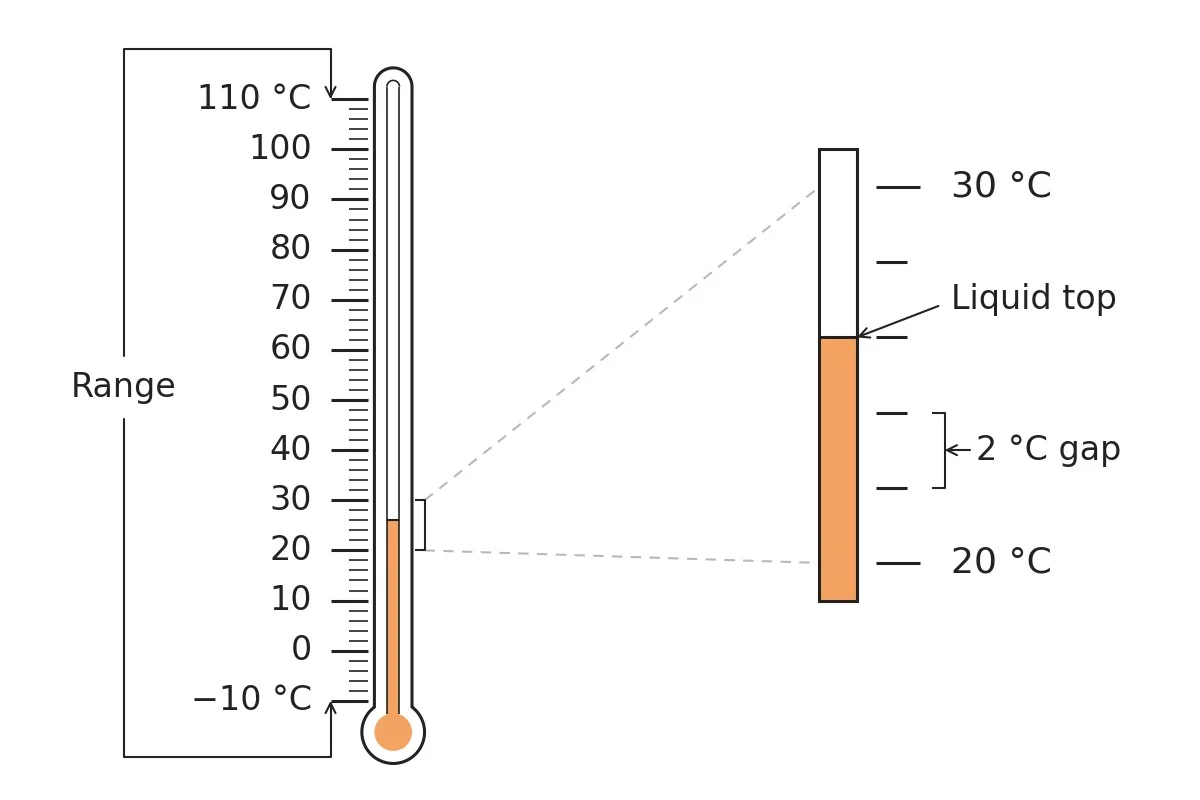
Laboratory thermometer beside an enlarged scale with five gaps between 20 and 30 °C.

4. Laboratory thermometer scale

The scale shows the measuring range and each division's value.

Show
Find the diagram's lowest and highest marks. Count the enlarged gaps between 20 °C and 30 °C. Follow the liquid to its top.
Ask
If this liquid rises by one small gap, how much will the reading increase?
Say
Five equal gaps span 10 °C, so each gap means 2 °C. The liquid ends three gaps above 20 °C, giving 26 °C.
Used in
Checking a thermometer's range shows whether it can measure boiling water.
If your child says…“Every little gap means 1 °C.”
Ask
How much temperature does each equal gap represent?
What’s true
The value of a small division depends on that thermometer's scale.
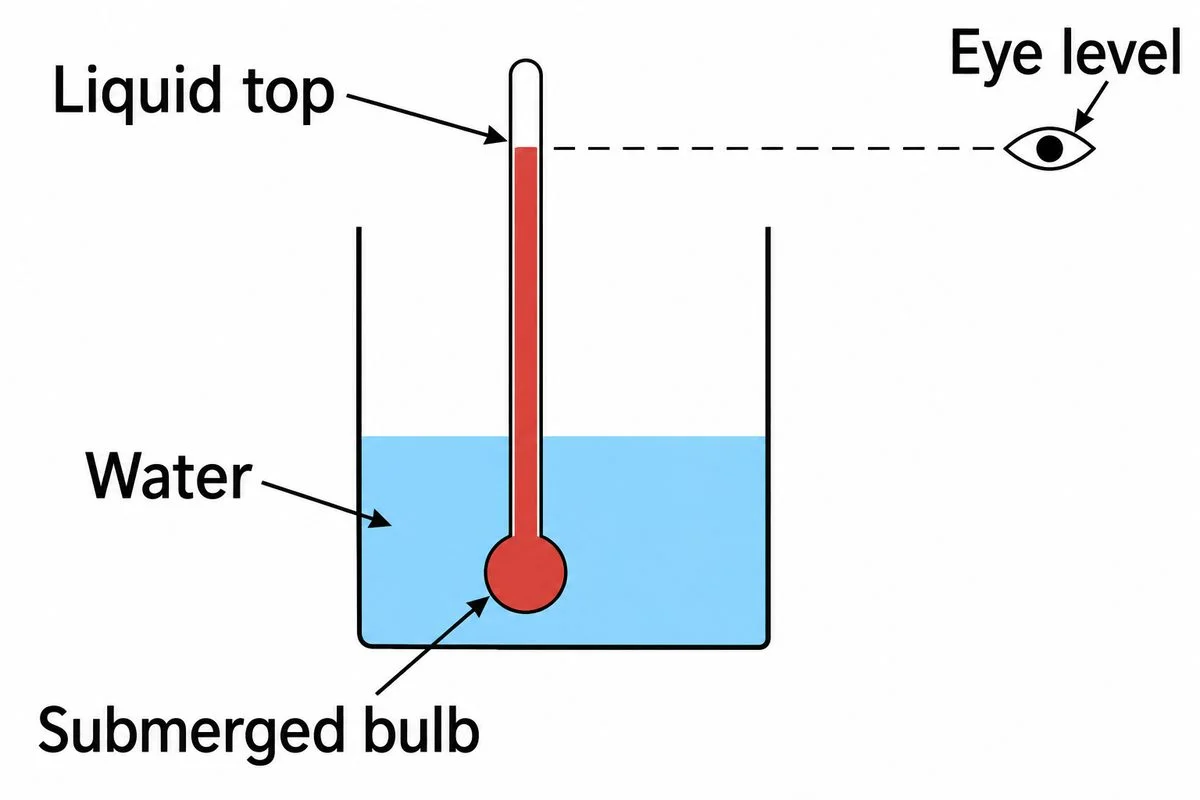
Submerged thermometer bulb clear of the beaker, with an eye-level sight line.

5. Using a laboratory thermometer

Measure with the bulb submerged, clear of the container.

Show
Find the diagram's upright thermometer. Follow the sight line from the liquid top to the eye.
Ask
Will lifting it out help us read accurately?
Say
No, surrounding air changes the reading. Read its top at eye level.
Used in
Keeping the bulb clear of a vessel helps measure the water rather than the vessel.
If your child says…“I'll lift it out to read it.”
Ask
Once the bulb leaves the water, what is touching it?
What’s true
Outside the water, the column starts changing, so it no longer reliably shows that water's temperature.
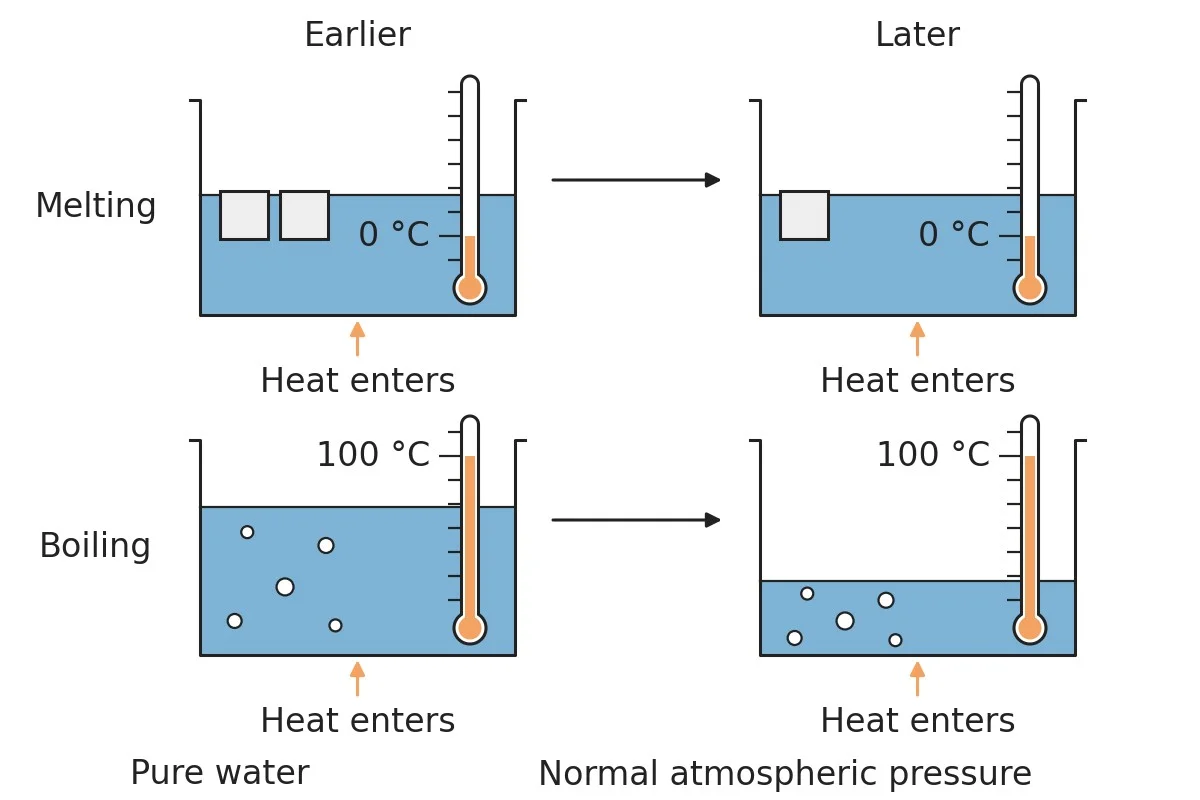
Melting ice and boiling water decrease in amount while their thermometer readings stay steady.

6. Temperature during melting and boiling

Melting and boiling can continue without a temperature rise.

Show
Look at the diagram's earlier and later melting panels. Compare the ice amounts and thermometer readings. Below, compare the boiling water amounts and readings.
Ask
Will continued heating raise the readings while some ice or boiling water remains?
Say
Both readings stay steady while heat changes ice into water or water into steam.
Used in
Melting ice keeps drinks cool while it takes in heat.
If your child says…“Heating always makes the temperature rise.”
Ask
While the reading stays steady, what happens to the ice?
What’s true
At constant pressure, pure water keeps a steady temperature during melting or boiling.

Measuring air temperature

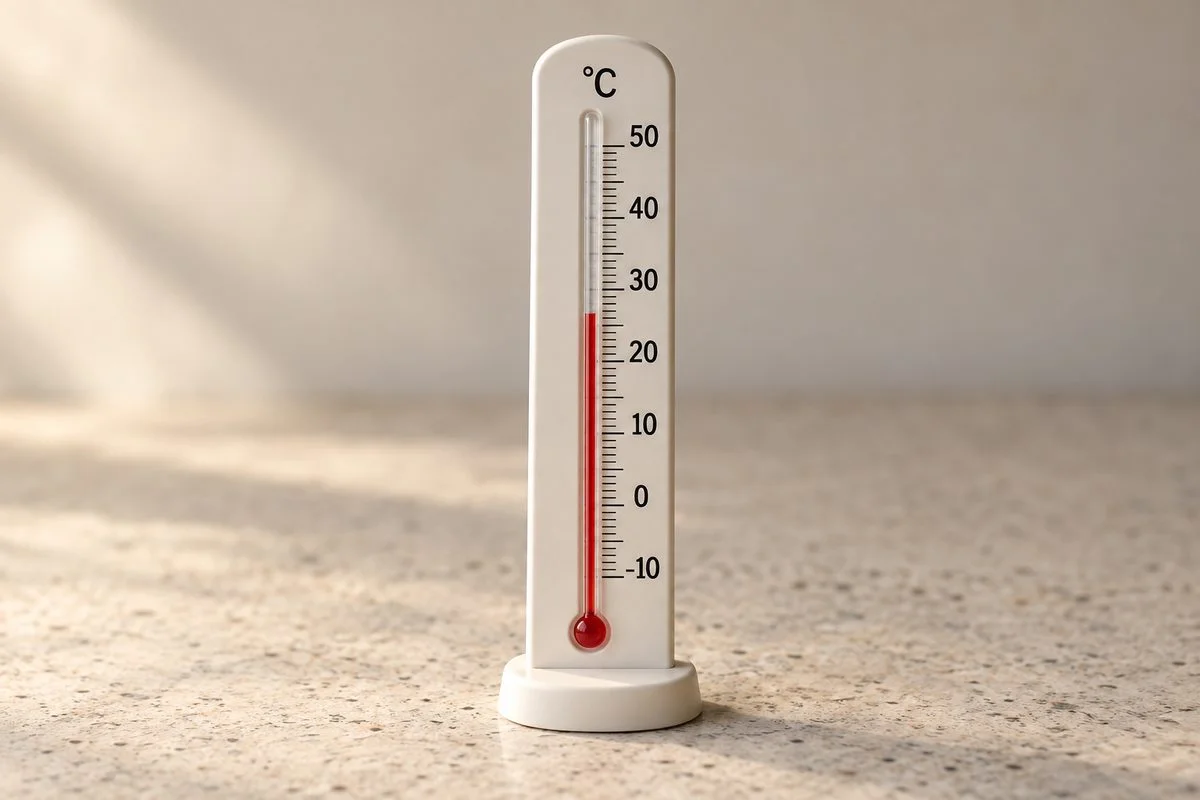
A room thermometer with a readable scale standing alone on a pale stone surface.

7. Air temperature

Air temperature helps describe weather and contributes to forecasts.

Show
Read a room thermometer together.
Ask
Would this reading alone let you predict tomorrow's weather?
Say
No. This thermometer gives a rough reading of the room's temperature.
Used in
Weather stations combine air-temperature readings with other measurements to make forecasts.
If your child says…“Temperature alone tells us the weather forecast.”
Ask
What other information would a weather station still need?
What’s true
Air temperature is only one measurement used for forecasting.

A real problem

Anna Mani's programme helped India make its own weather instruments.

Anna Mani began working at the India Meteorological Department in 1948.

Her programme made India self-sufficient in producing weather instruments.

She developed measurement standards for temperature, pressure and wind.

World Meteorological OrganizationIndian National Science Academy

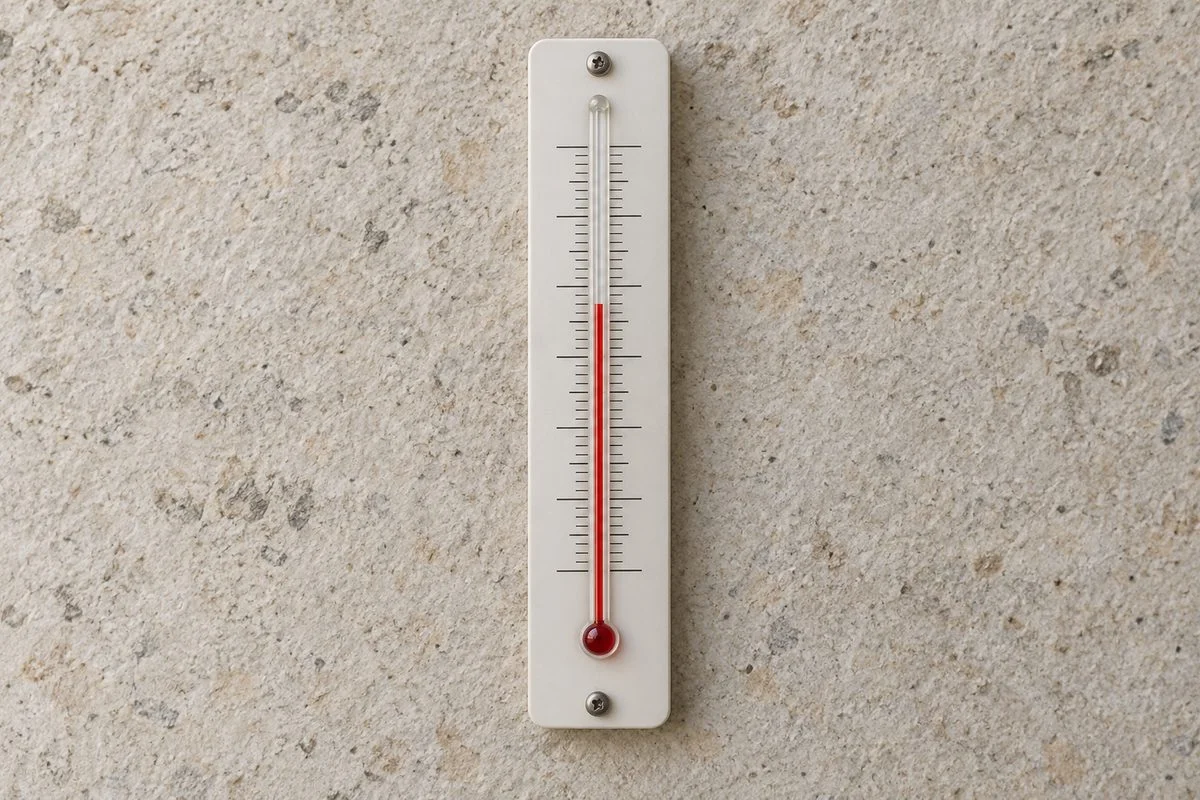
An outdoor air thermometer in shade, viewed straight toward its scale.

Concept Lab · Common misconception

The tempting mistake in Temperature and its Measurement

Open standalone misconception page →

Does touch measure temperature reliably?

Wrong

Metal feels colder than wood, so the metal must have a lower temperature.

Why it feels right. The colder sensation seems like a direct reading.

Right

Touch also responds to how quickly heat leaves your hand.

Worked example

Metal spoon
22 °C→Heat leaves hand faster→Feels colder
Wooden spoon
22 °C→Heat leaves hand more slowly→Feels less cold
Both spoons start at the same temperature. The rate of heat transfer differs.
  1. Two spoons have been in the same room long enough for thermometers on both to read 22 °C.
  2. The metal spoon still feels colder than the wooden one because it draws heat from your warm hand faster.

Ask your child seven quick questions.

One per step. The answer and the reason are given.

  1. Your hands disagree about the same water. What could give a reliable measurement?

    A thermometer. Touch depends on what each hand felt before.

  2. What exact temperature must every healthy person have?

    There is no exact requirement. Healthy body temperatures differ slightly between people and through the day.

  3. Do 37.0 °C and 37.0 °F represent the same temperature?

    No. The same number on different scales can represent different temperatures.

  4. A scale has 50 equal gaps from 0 °C to 100 °C. What does each represent?

    2 °C. Dividing the temperature difference by the gap count gives each division's value.

  5. Where must the bulb remain while you read the water's temperature?

    In the water. Removing the bulb lets the reading change.

  6. What happens to boiling water's temperature when heating continues?

    It stays steady. The added heat turns water into steam instead of raising its temperature.

  7. What must weather stations combine with air temperature to make forecasts?

    Other weather measurements. Temperature alone does not provide all the information a forecast needs.

15 more questions with answers, 11 with pictures