Skip to content

Teach Materials Around Us in eight steps.

For each idea: show it, ask before you tell, then say one line.

Gather steel spoons, steel and clear tumblers, polished wooden box, sponge, eraser, iron pan, butter paper, cardboard, pencil, paper, bowls, salt, sand and water.

Do not taste the mixtures.

Common misconceptions & worked visual for this chapter · 15 practice questions with answers

How to teach it

Objects and their materials

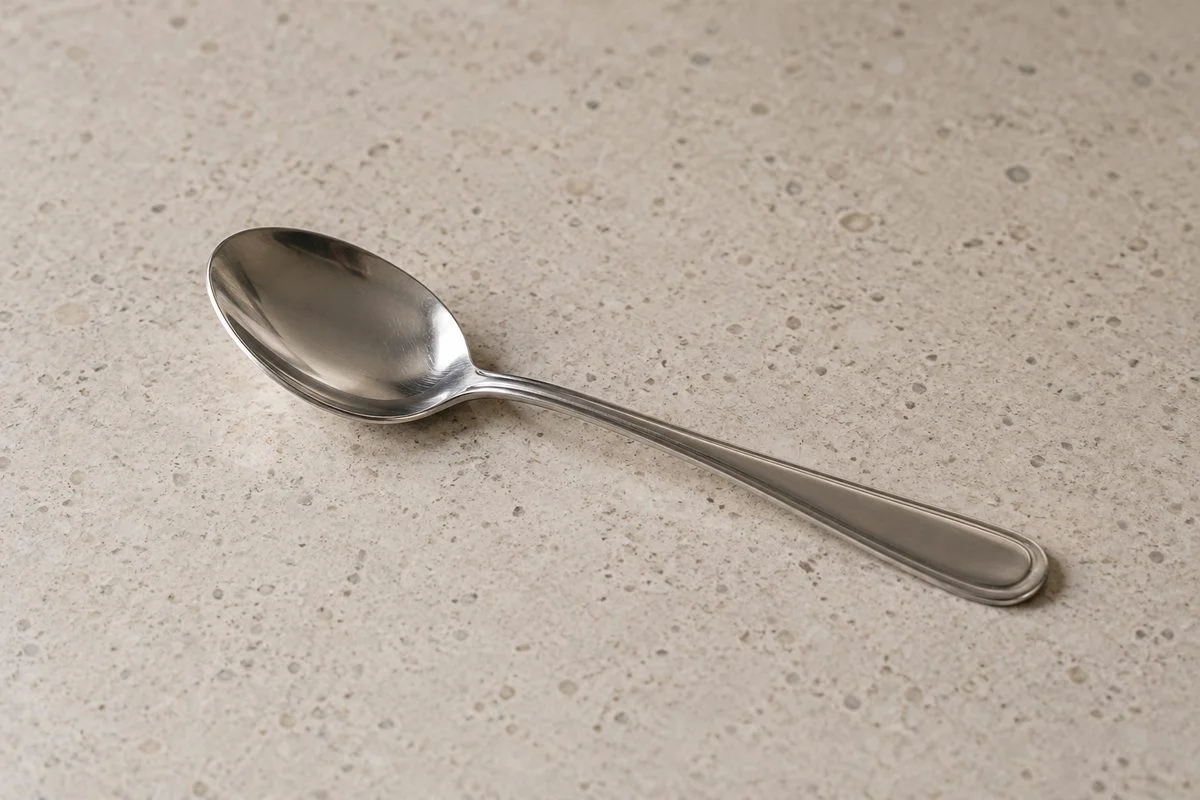
A steel spoon on a pale stone surface.

1. Objects Are Made of Materials

An object is a thing made from one or more materials.

Show
Set a steel spoon on the table.
Ask
Will naming its shine tell us what it is made from?
Say
Steel names the material. Shiny describes a property.
Used in
Some cloth bags have metal zips that help keep their contents inside.
If your child says…“The spoon is made of shiny.”
Ask
What would you need to make this spoon: steel or shine?
What’s true
A property describes a material but does not name it.
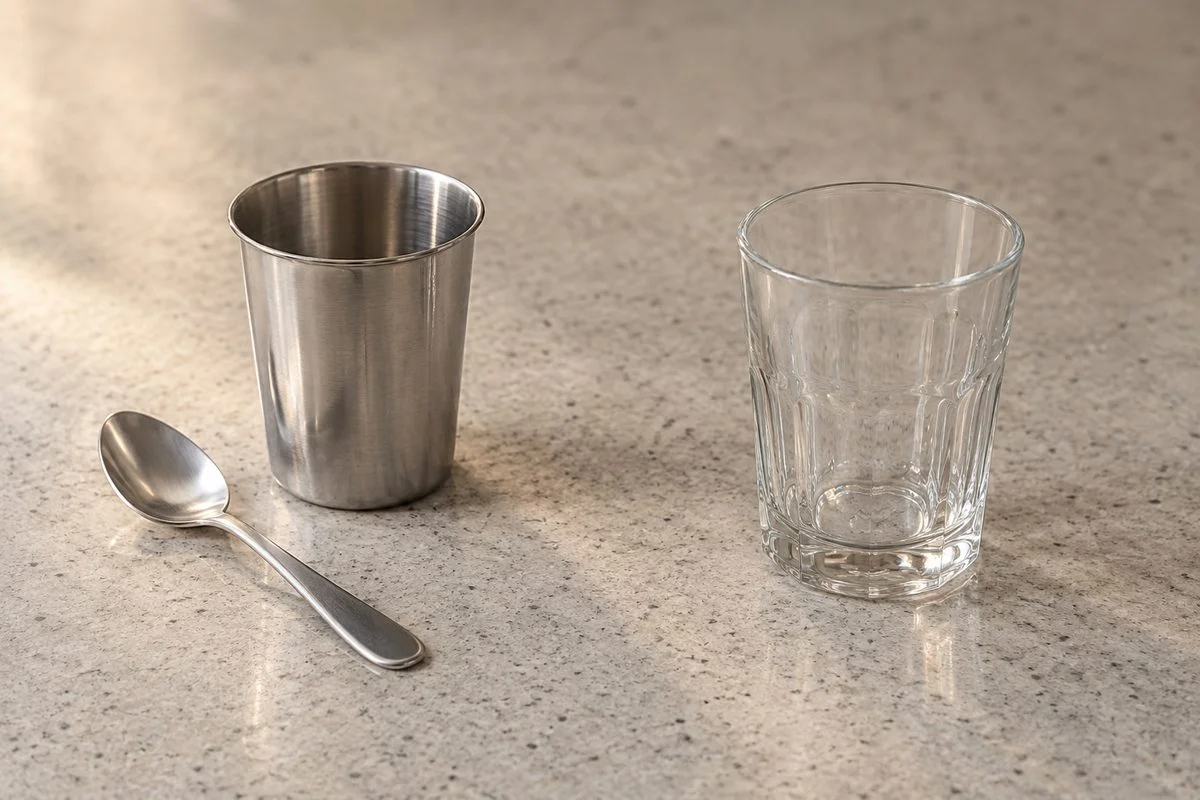
A steel spoon and steel tumbler beside a clear glass tumbler.

2. Classification and Choosing Materials

Group by shared features. Pick materials that suit the job.

Show
Set out both tumblers and the steel spoon. Group them by whether they allow clear viewing.
Ask
Which tumbler would suit a young child who might drop it?
Say
The spoon and steel tumbler block our view, so they share this group. Choose steel because it resists breakage when dropped. Glass lets us see the contents.
Used in
Steel lunch boxes resist breakage, helping protect food during travel.
If your child says…“We already grouped them. We cannot change it.”
Ask
Which two objects block the view through them?
What’s true
Different properties allow different groupings.

Comparing properties

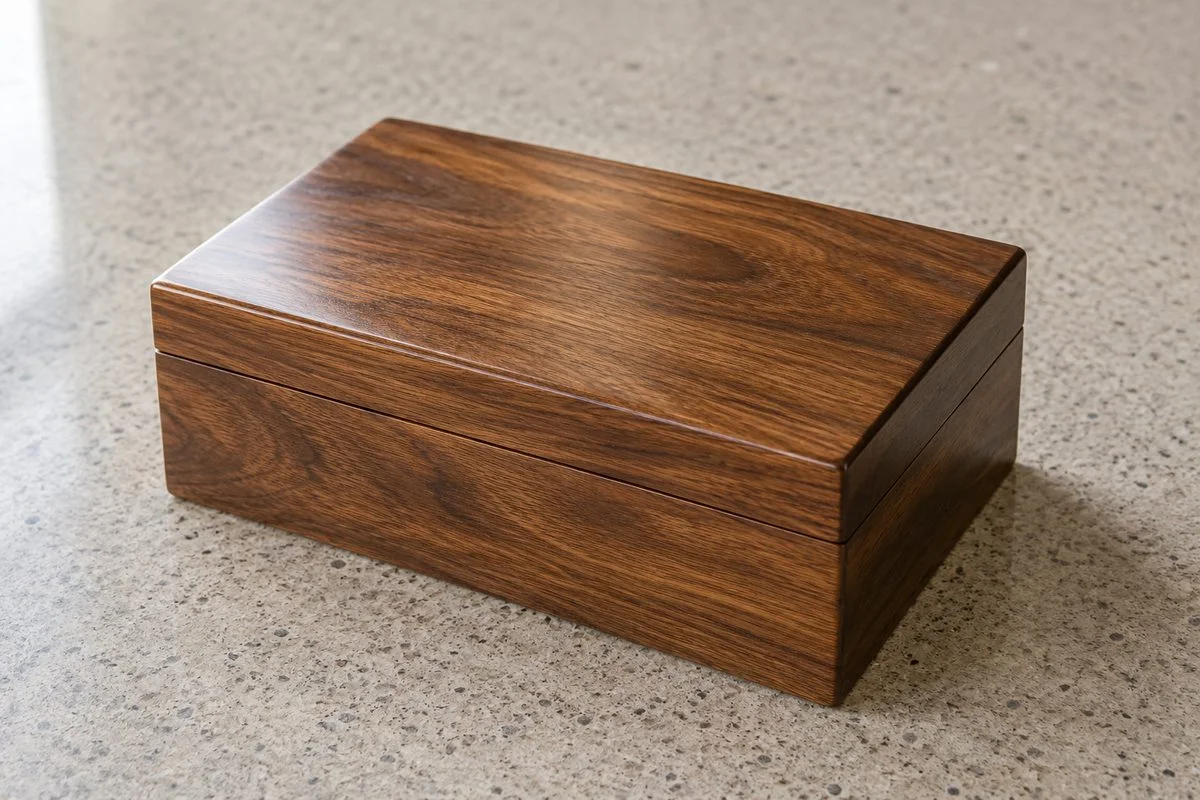
A polished wooden box with visible wood grain.

3. Lustre

Lustre means a shiny appearance.

Show
Set out a polished wooden box. Turn it towards the light after predicting.
Ask
Will this wood shine in the light?
Say
Yes, this polished wood shines in the light.
Used in
Shiny beads catch the light, making decorations stand out.
If your child says…“Everything shiny is metal.”
Ask
What is this shiny box made from?
What’s true
Polishing can make wood shine.
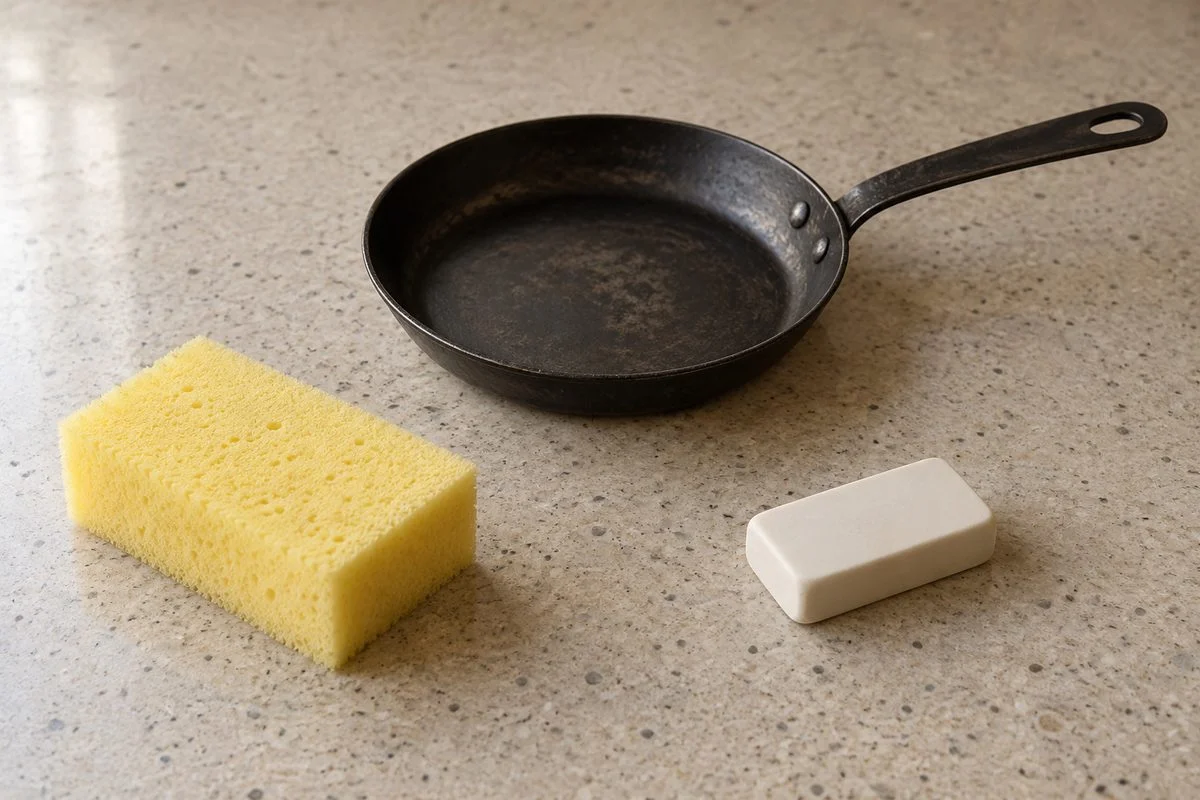
A sponge and rubber eraser beside an iron pan.

4. Hardness and Softness

Compare how easily materials squash or scratch.

Show
Set out a sponge, rubber eraser and iron pan. Press each gently after predicting.
Ask
Will the eraser squash more easily than both other materials?
Say
Here, rubber squashes less easily than sponge but more easily than iron.
Used in
Soft cushion fillings compress under us, making seats comfortable.
If your child says…“Rubber is always soft.”
Ask
Where does rubber fit between sponge and iron?
What’s true
Rubber is harder than sponge but softer than iron.
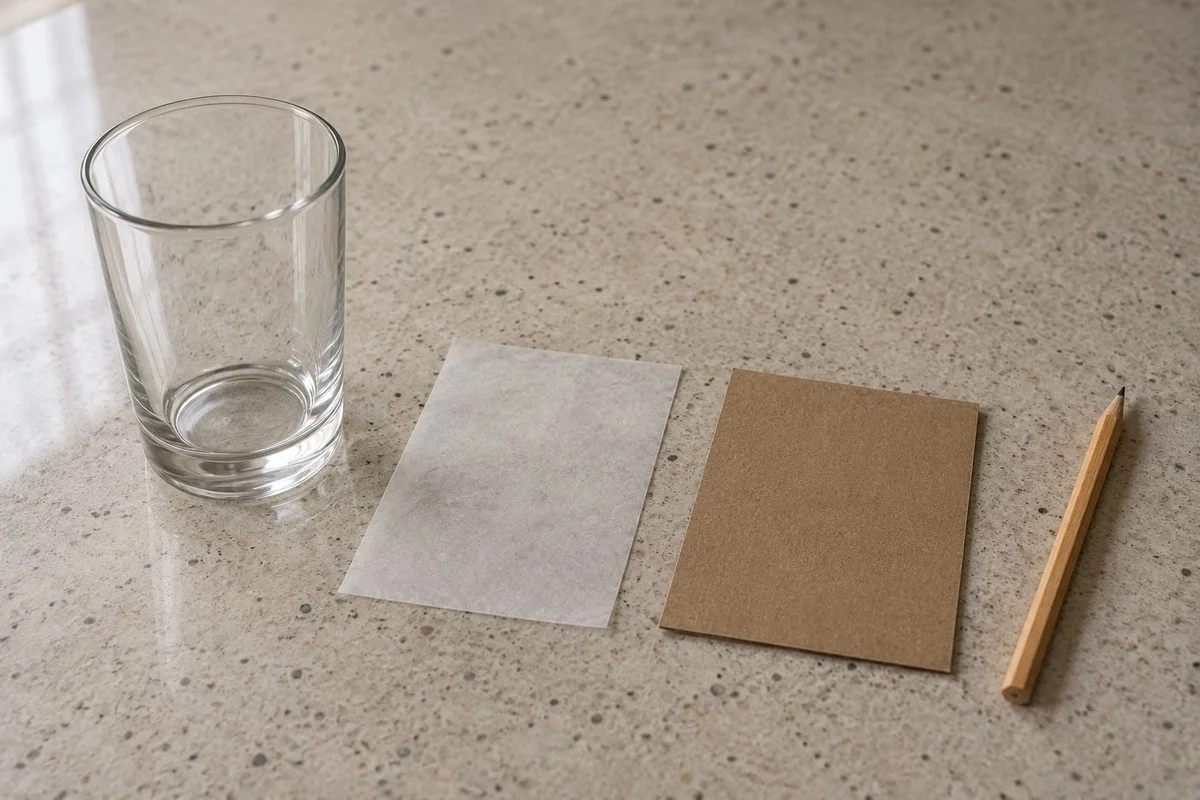
A clear tumbler, butter paper and cardboard beside a pencil.

5. Transparent, Translucent, and Opaque Materials

These describe a clear view, a blurred view, or no view.

Show
Lay a clear tumbler, butter paper and cardboard beside a pencil. After predicting, hold each between your eyes and the pencil, leaving a small gap.
Ask
Through which will the pencil look clear, blurred or hidden?
Say
Transparent gives clear viewing, translucent gives blurred viewing, and opaque blocks viewing.
Used in
Clear glass tumblers let us see their contents.
If your child says…“A blurred view means transparent.”
Ask
Does butter paper show the pencil clearly?
What’s true
A blurred view means translucent.
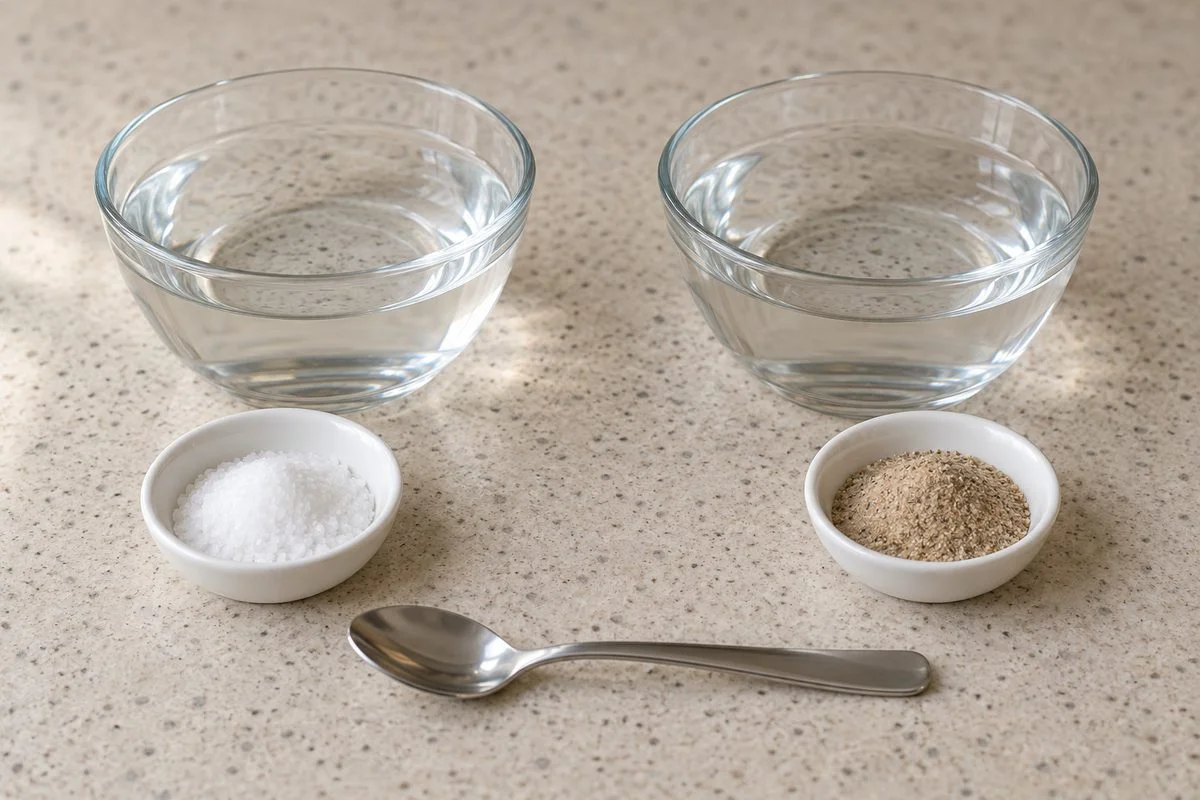
Salt and sand beside separate bowls of water before mixing.

6. Soluble and Insoluble Materials

Soluble materials dissolve in water. Insoluble materials remain undissolved.

Show
Set salt and sand beside separate bowls of water. Stir a pinch into each after predicting.
Ask
Will both dissolve if we keep stirring?
Say
Salt dissolves here. Sand remains undissolved.
Used in
Dissolved oxygen lets fish breathe underwater.
If your child says…“Everything dissolves with enough stirring.”
Ask
Where is the sand after stirring?
What’s true
Stirring alone cannot make sand soluble.

Mass, space and units

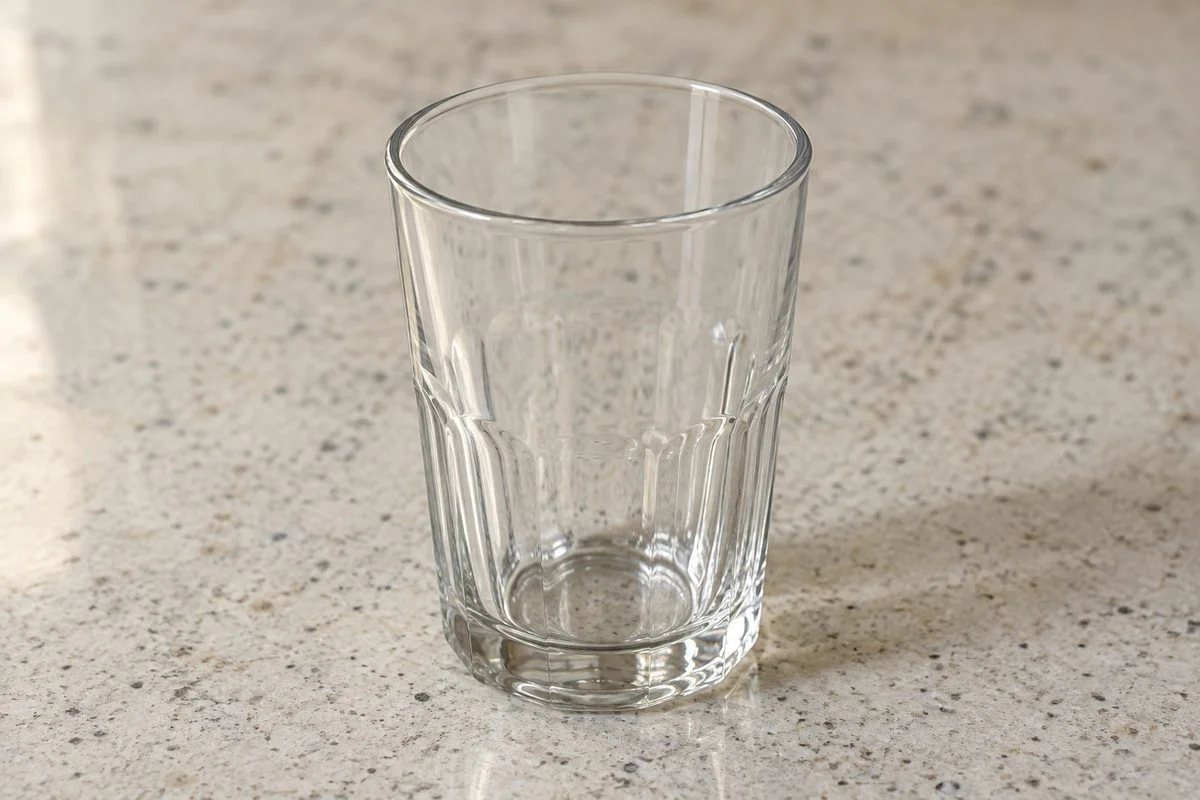
An empty clear tumbler before adding water.

7. Mass, Volume, and Matter

Mass measures matter's quantity. Volume measures the space it occupies.

Show
Lift an empty clear tumbler, then put it down. After predicting, partly fill it with water and lift it again.
Ask
Will adding water make the tumbler heavier and make water occupy more space inside?
Say
Water has mass and takes up space, so it is matter. The space the water fills is its volume.
Used in
Measuring jugs show liquid volume, helping cooks add the amount a recipe needs.
If your child says…“The water's volume is the whole tumbler.”
Ask
Does the water fill all the space inside this tumbler?
What’s true
Water volume depends on the filling, not just the container.

1 kg=1000 g1\,\mathrm{kg}=1000\,\mathrm{g}

2 kg=2×1000 g2\,\mathrm{kg}=2\times1000\,\mathrm{g}

8. Kilograms to grams

Express the same mass using grams instead of kilograms.

Show
Describe a rice bag weighing two kilograms. Say that kilograms and grams measure mass: each kilogram equals one thousand grams. Write the conversion after predicting.
Ask
What number will we get when we express this mass in grams?
Say
Two kilograms is 2,000 grams because each kilogram contains 1,000 grams. The bag's mass stays unchanged.
Used in
Converting packet masses to grams helps shoppers compare quantities.
If your child says…“The number changed to 2,000, so the rice got heavier.”
Ask
Did writing grams add any rice?
What’s true
The larger number counts smaller units.

A real problem

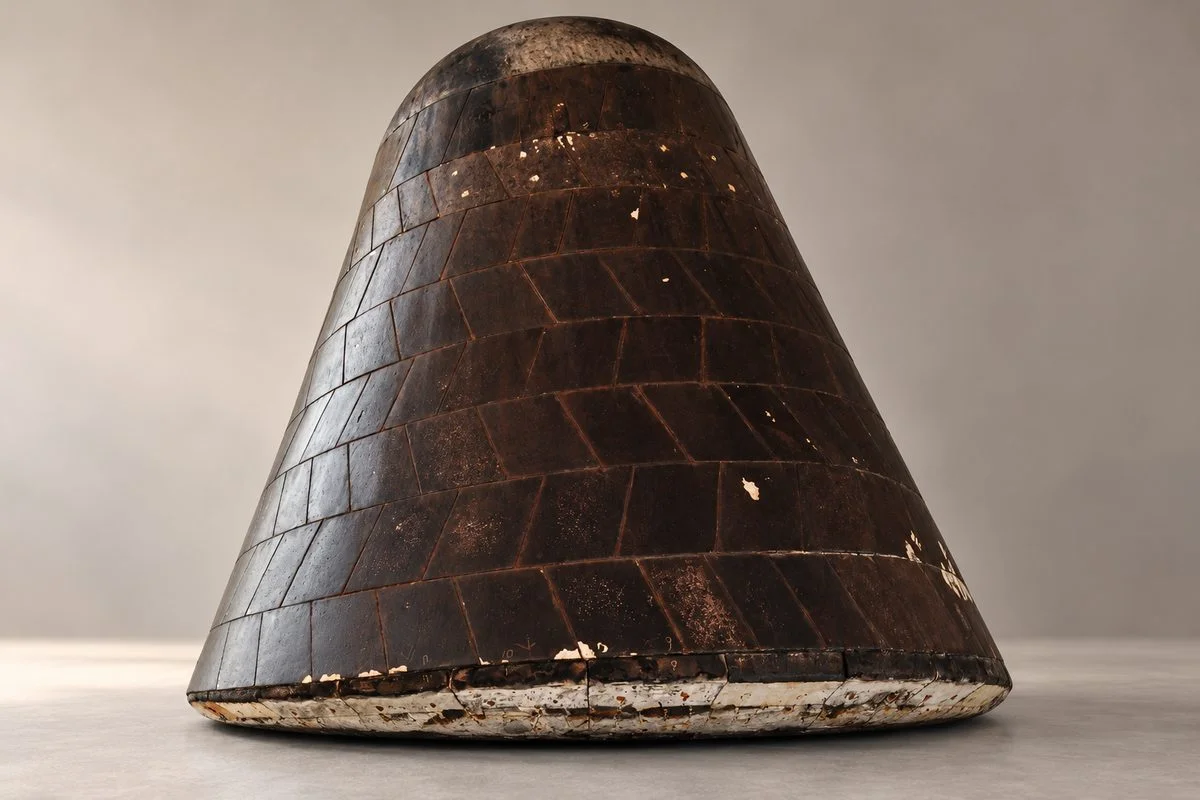
Suitable materials protected a returning space capsule.

Silica tiles and carbon phenolic material protected the capsule from intense heat during its return.

The capsule was successfully recovered on 22 January 2007.

This was India's first successful recovery of a space capsule.

ISROWikipediaHindustan Times

The Space Capsule Recovery Experiment capsule.

Concept Lab · Common misconception

The tempting mistake in Materials Around Us

Open standalone misconception page →

Does a powder count as a liquid because it pours?

Wrong

Dry sand is a liquid because it pours and takes the shape of a cup.

Why it feels right. The whole pile seems to behave like water.

Right

A pile of small solid grains can flow. Each grain stays a solid with its own shape.

Worked example

The same eight grains occupy different arrangements. Each dot represents a grain that keeps its shape.
  1. Pour dry sand from a wide cup into a narrow one.
  2. The pile changes shape.
  3. Look closely at a single grain before and after.
  4. Its shape stays the same while the grains rearrange.

Ask your child eight quick questions.

One per step. The answer and the reason are given.

  1. What names the material in a shiny steel spoon?

    Steel. Shiny describes its appearance.

  2. After grouping by shape, which two objects can share a group that blocks the view?

    The spoon and steel tumbler. The same objects can share another property.

  3. Does a shiny surface prove that an object is metal?

    No. Other materials can also shine after polishing or coating.

  4. How does the eraser's hardness compare with the sponge and the iron pan?

    Between sponge and iron. It resists pressing more than sponge but less than iron.

  5. Through butter paper, you see the pencil's outline but cannot make out details. Which label fits?

    Translucent. Seeing an unclear shape through something does not make it transparent.

  6. Why does sand remain after long stirring in water?

    Stirring cannot dissolve sand. Sand is insoluble, even when stirring spreads it through water.

  7. What happens to the water's volume when we add more without spilling?

    It increases. The water takes up more space inside the same tumbler.

  8. A label changes from one kilogram to 1,000 grams. What happens to the packet's mass?

    It stays the same. The unit changes, but the amount of matter stays the same.

15 more questions with answers, 7 with pictures