Skip to content

Teach Methods of Separation in Everyday Life in eight steps.

For each idea: show it, ask before you tell, then say one line.

Gather rice, chickpeas, flour, stones, salt, water, sand, cooled leafy tea, sieve, strainer, plates, bowls, cup, glass, spoon, iron nails and magnet.

An adult handles the nails.

Common misconceptions & worked visual for this chapter · 15 practice questions with answers

How to teach it

Separating solids

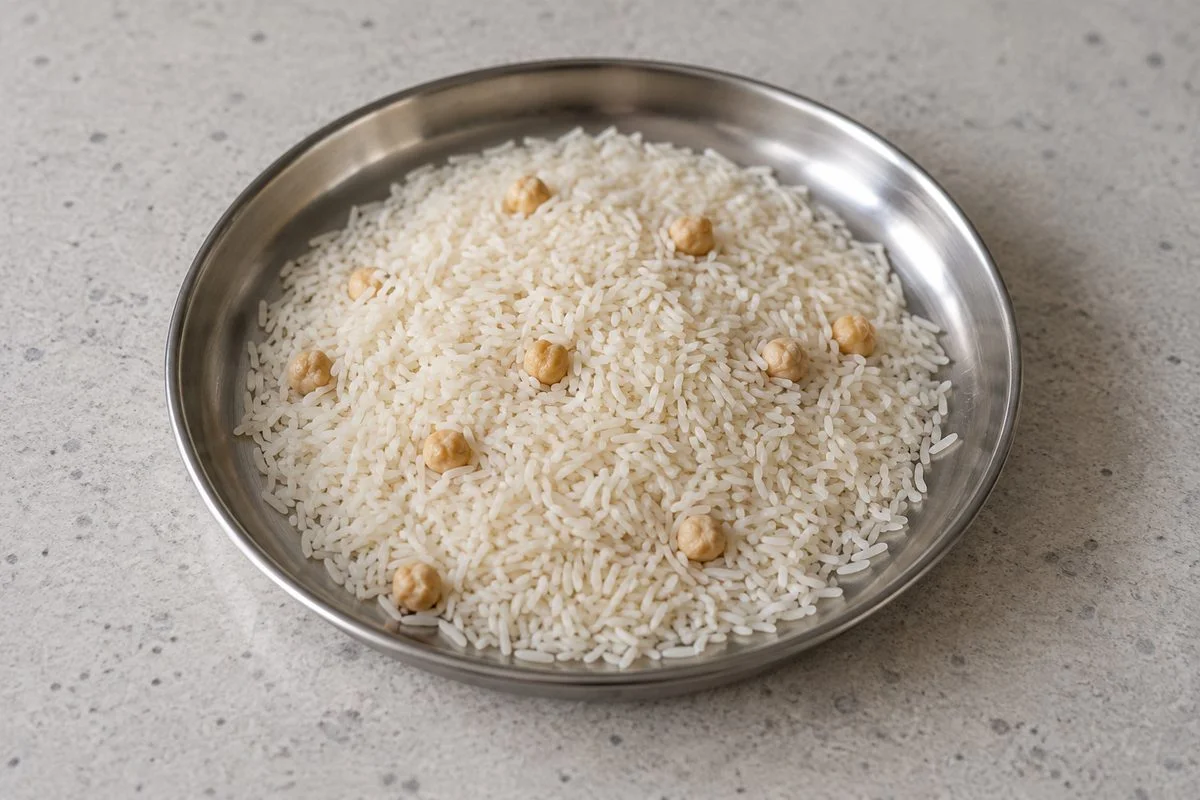
A few chickpeas mixed into rice on a steel plate.

1. Mixtures and handpicking

Pick a few easily grasped pieces out of mixed substances.

Show
Mix a few chickpeas into rice on a plate. After predicting, pick the chickpeas out individually.
Ask
Would handpicking still be convenient if there were thousands of chickpeas to remove?
Say
No; picking thousands of chickpeas out individually would not be convenient.
Used in
Handpicking removes a few visible stones from grain before cooking.
If your child says…“If I can see different colours, handpicking is always convenient.”
Ask
How many separate picks would a huge heap need?
What’s true
The pieces must also be few and easy to grasp.
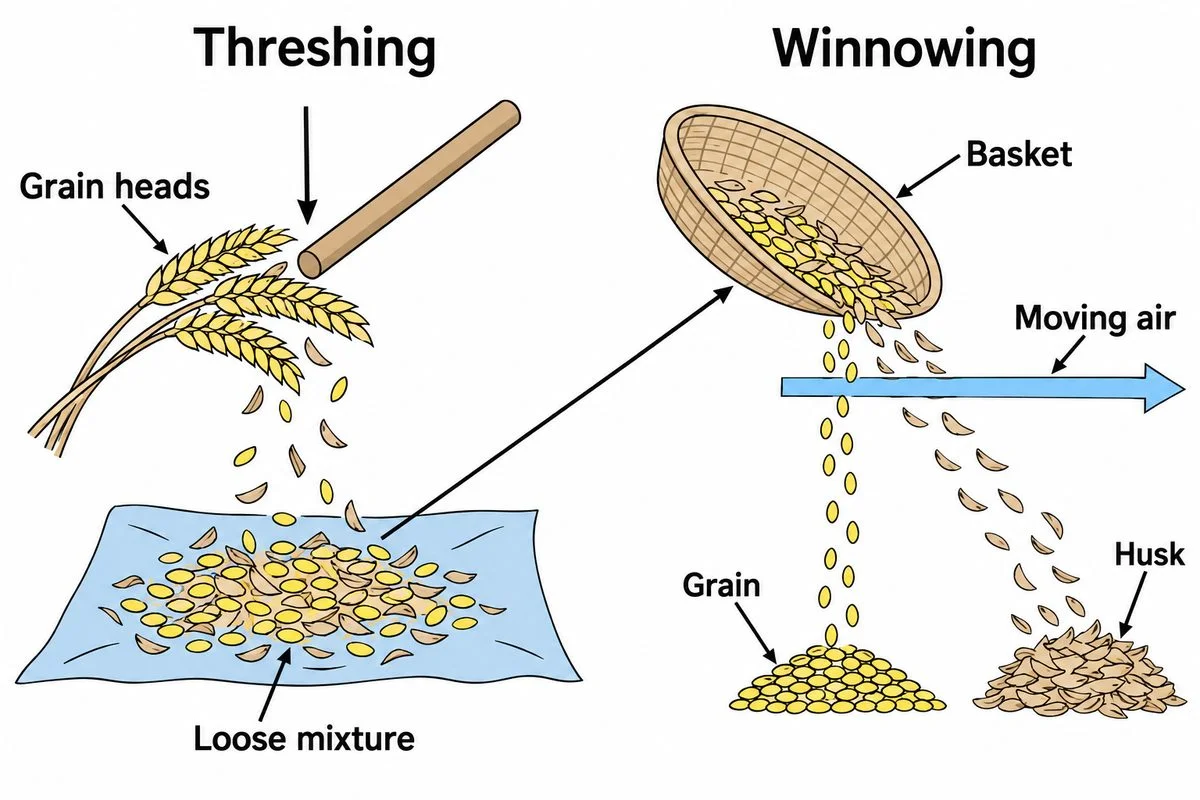
Diagram showing beating freeing grain, followed by moving air separating husk.

2. Threshing and winnowing

Beat grains free, then use air to separate loose husk.

Show
Look at the diagram’s grain heads and beating arrow on the left. Follow the loose mixture to the basket on the right. Trace where grain and husk fall as air crosses the mixture.
Ask
What will happen when these grain heads are beaten and loose husk meets moving air?
Say
Beating frees grains from stalks in threshing. In winnowing, moving air carries lighter husk farther than heavier grain.
Used in
Farmers separate grain from stalks and husk to collect the grain.
If your child says…“Beating gets rid of the loose husk too.”
Ask
After beating, what will carry the loose husk away?
What’s true
Freeing grains and carrying loose husk away need different actions.
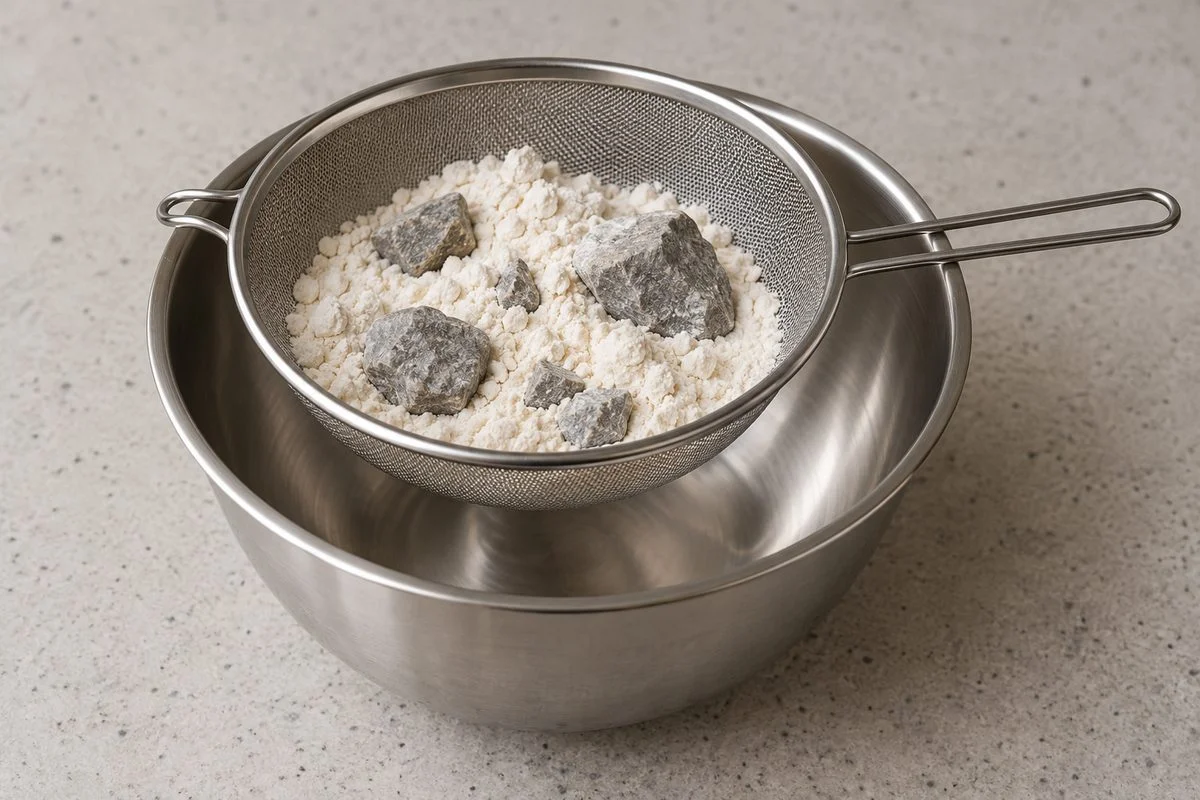
Flour and large stones in a sieve above an empty bowl.

3. Sieving

Holes let smaller particles through while retaining larger pieces.

Show
Put flour and a few large stones in a kitchen sieve above a bowl. After predicting, shake gently.
Ask
Will shaking push these stones through holes smaller than the stones?
Say
Flour passes through these holes. The larger stones stay in the sieve.
Used in
Sieving ground grain removes larger bran pieces from fine flour.
If your child says…“Shake harder and everything will pass through.”
Ask
Can this whole stone fit through that opening?
What’s true
Shaking cannot make a whole stone fit through a smaller hole.

Separating mixtures with liquids

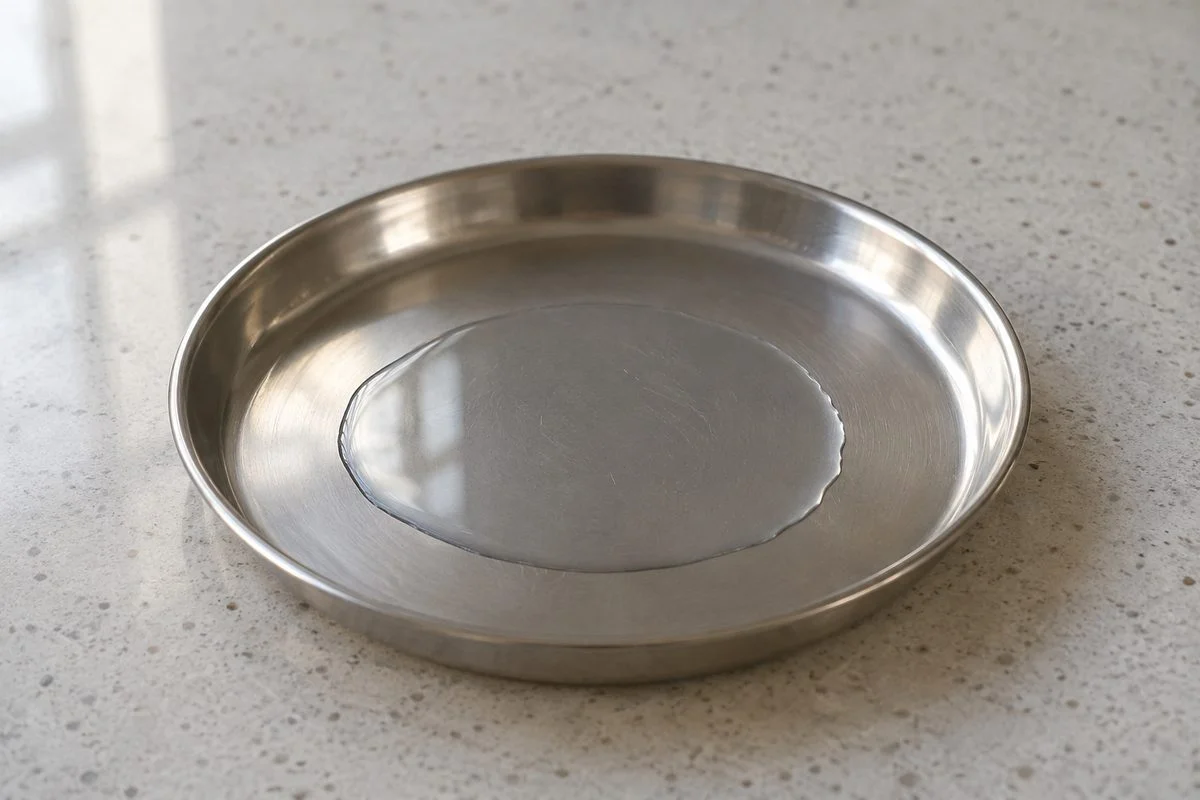
A shallow pool of salt water on a steel plate before drying.

4. Evaporation

Liquid water becomes vapour, leaving dissolved salt behind.

Show
Spread a spoonful of salt water thinly on a steel plate. After predicting, leave it to dry. Return when completely dry, which may take longer than five minutes.
Ask
What will remain when this salt water dries?
Say
Evaporation turns liquid water into vapour. Dissolved salt stays behind when salt water dries.
Used in
Evaporation allows dissolved salt to be recovered from salt water.
If your child says…“The salt would disappear with the water.”
Ask
If salt stayed behind, what would you find on the dry plate?
What’s true
Salt does not evaporate with water under these conditions.
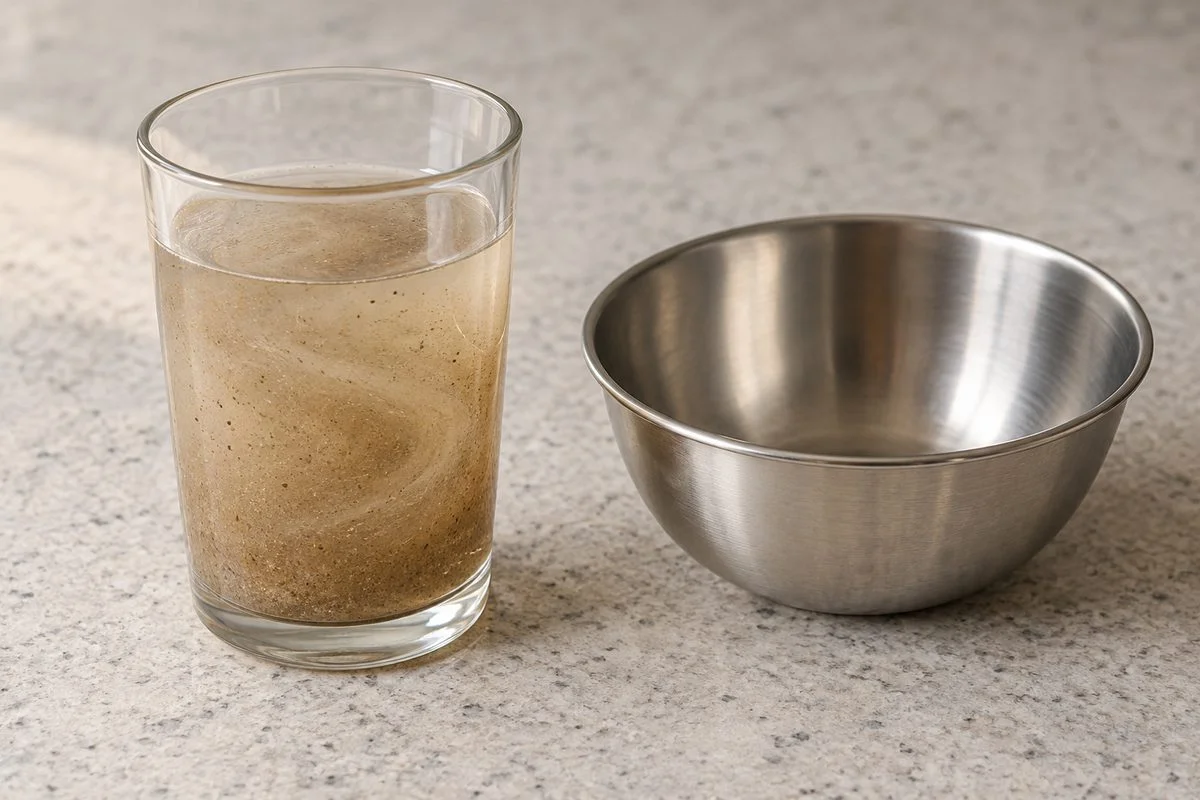
Freshly stirred sand and water in a glass beside an empty bowl.

5. Sedimentation and decantation

Let solids settle, then gently pour off the liquid.

Show
Stir sand into water in a glass. After predicting, let it settle, then pour gently into a bowl.
Ask
Will pouring without a filter guarantee that every sand grain stays behind?
Say
Sedimentation lets sand settle. Decantation pours off the water, though some sand may come along.
Used in
Decantation pours tea away from settled leaves, leaving most leaves behind.
If your child says…“Pouring off must remove every solid.”
Ask
What blocks a grain that starts moving with the water?
What’s true
Some particles can travel with the poured water.
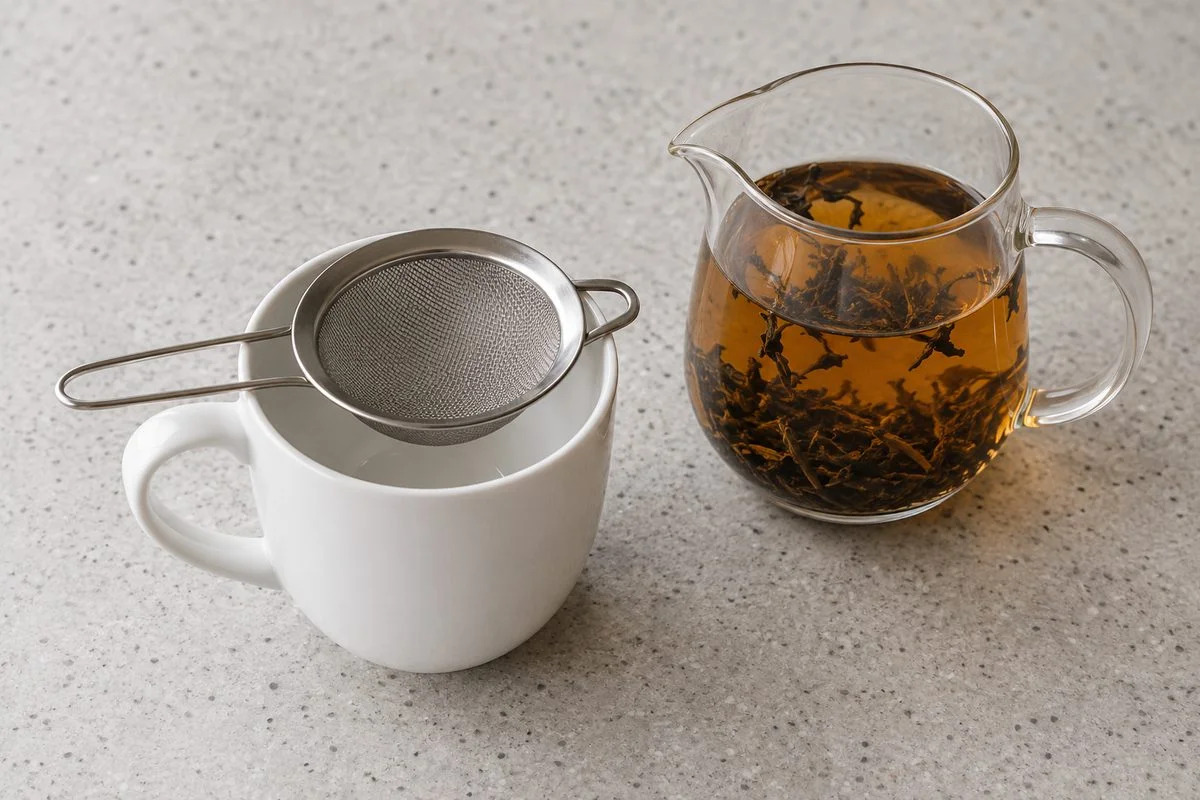
Tea strainer above an empty cup beside cooled tea containing leaves.

6. Filtration, residue and filtrate

A filter retains residue; the liquid passing through is filtrate.

Show
Set a tea strainer above a cup. Put cooled tea containing leaves beside it. Pour after predicting.
Ask
Could undissolved particles smaller than these openings pass through?
Say
Yes; solids that fit through the filter can pass through. Residue stays behind, while filtrate passes through.
Used in
Sand filters helped clean polluted river water drawn from the Thames.
If your child says…“Every filter catches the same bits.”
Ask
Would smaller openings catch some particles these openings let through?
What’s true
Particles smaller than a filter’s openings can pass through.
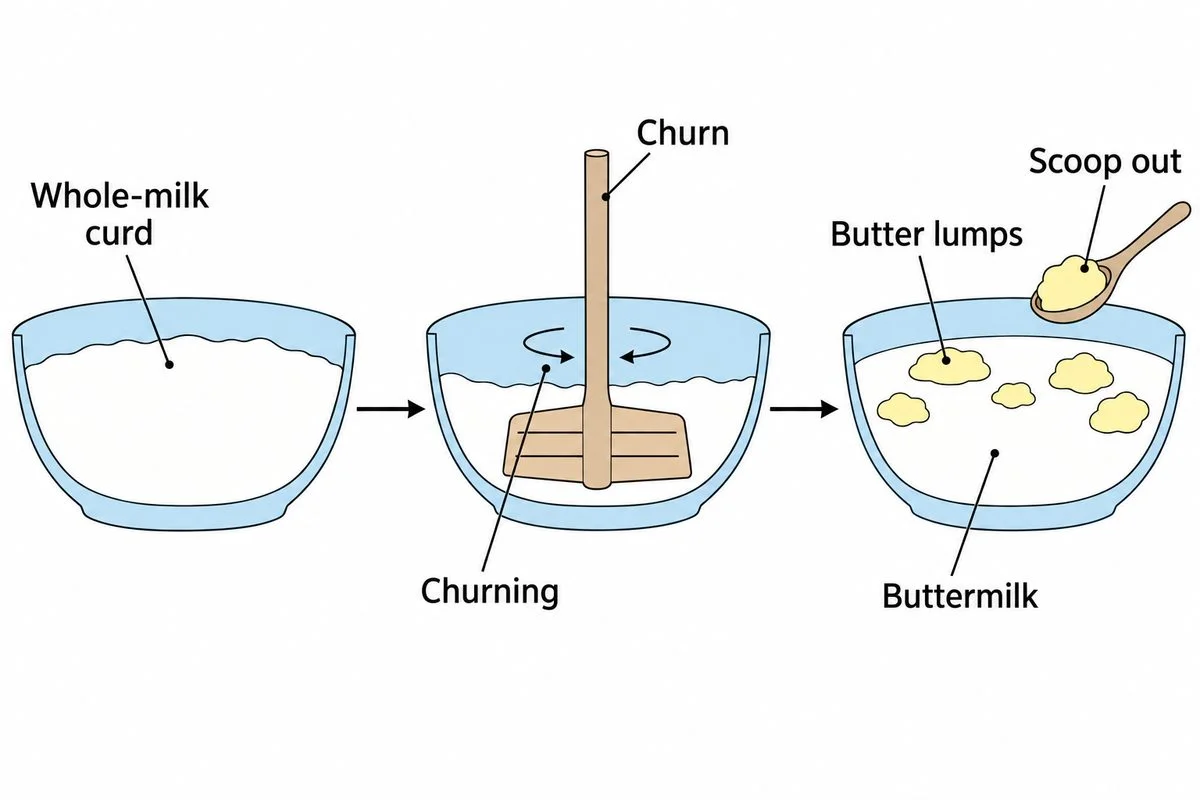
Diagram showing curd being churned, then floating butter scooped from buttermilk.

7. Churning

Churning curd gathers its fat into removable butter lumps.

Show
Look at the diagram’s curd on the left. Follow the churn’s movement in the middle. Find the floating lumps and the liquid beneath them on the right.
Ask
What will happen to the fat in this curd when it is churned?
Say
Churning gathers the fat in curd into butter lumps. These float on the buttermilk.
Used in
Churning separates useful butter from curd so it can be collected.
If your child says…“The floating part is buttermilk.”
Ask
Are the floating lumps butter or buttermilk?
What’s true
The floating lumps are butter, with buttermilk beneath.

Separating with a magnet

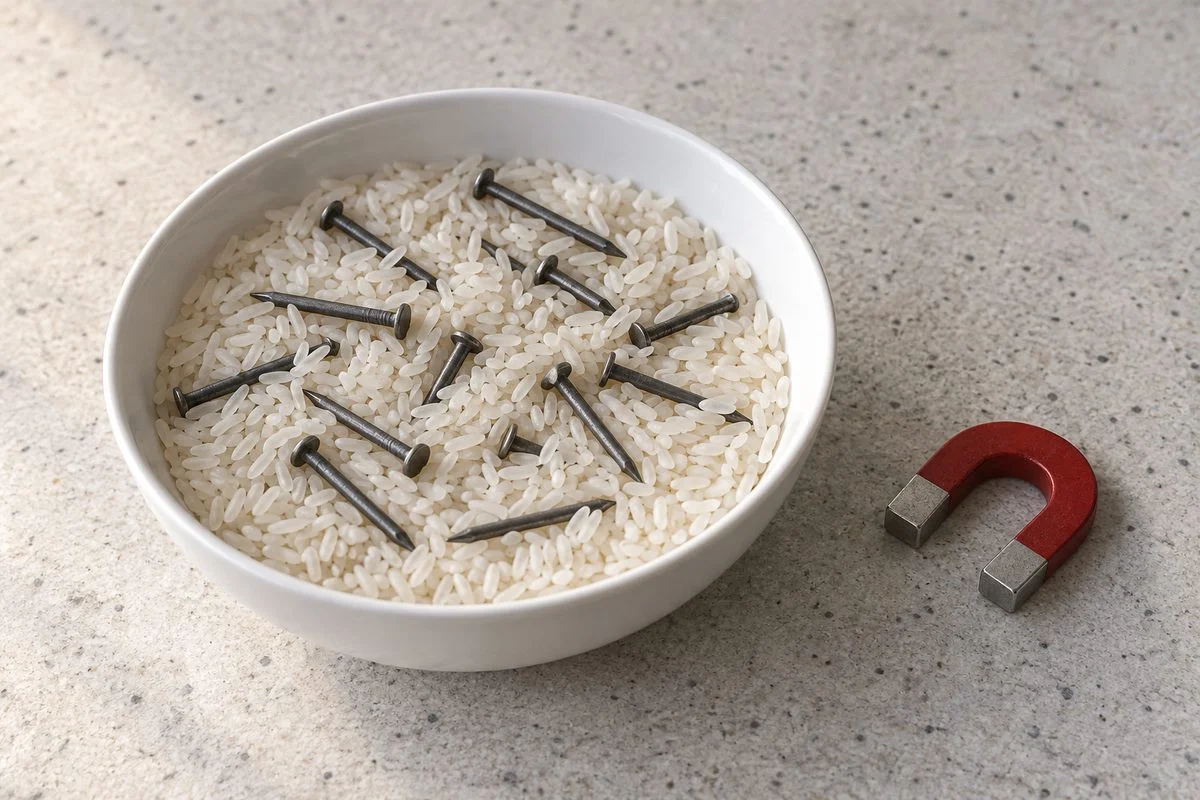
Iron nails mixed with rice in a bowl beside a magnet.

8. Magnetic separation

A magnet removes attracted materials from materials it does not attract.

Show
An adult puts iron nails among rice in a bowl. Put a magnet beside the bowl. After predicting, the adult brings the magnet close and lifts out the nails it attracts.
Ask
What will the magnet lift from this mixture?
Say
The magnet attracts iron nails but leaves the rice. Magnetic separation needs this difference in attraction.
Used in
A magnet removes iron nails from sawdust without picking each nail out individually.
If your child says…“Magnets can separate any two solids.”
Ask
If neither material moves towards the magnet, what could it remove?
What’s true
A magnet cannot separate materials that it attracts equally.

A real problem

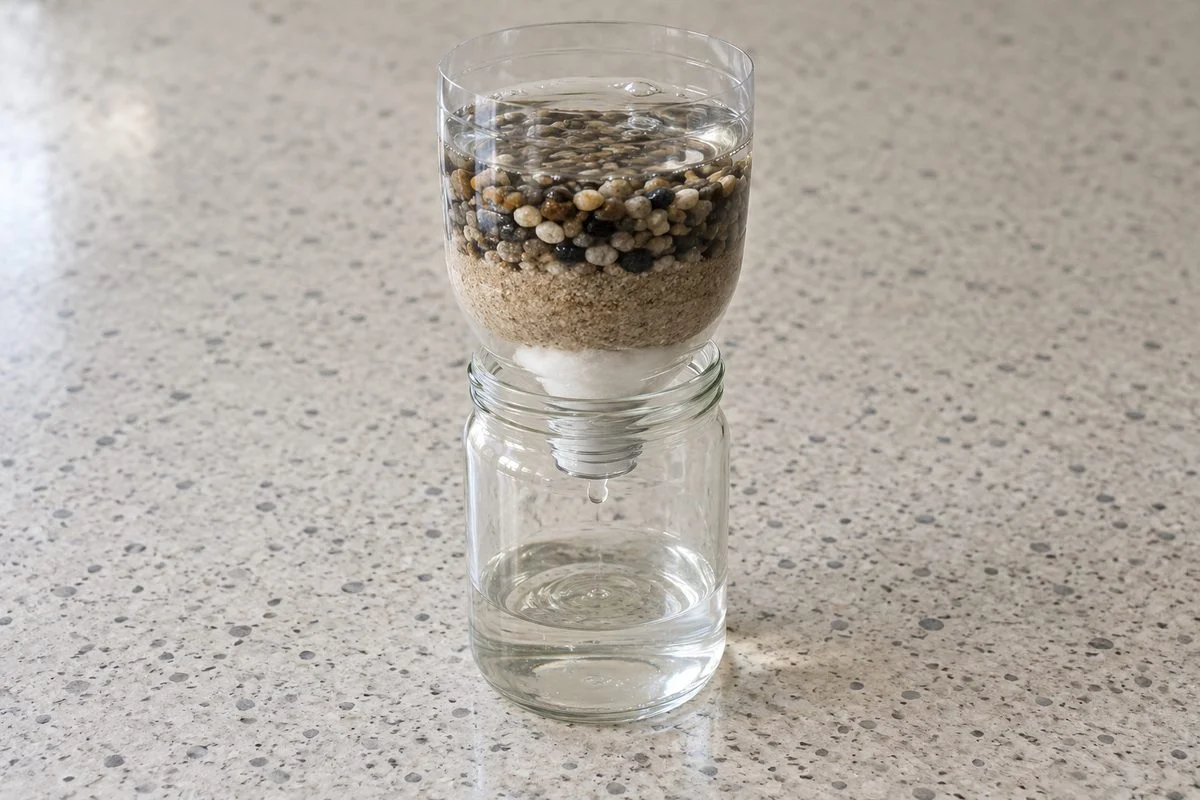
Sand filters tackled polluted river water.

James Simpson completed a trial sand filter at Chelsea by 1829.

The scheme addressed pollution in water drawn from the Thames.

Layers of brick, gravel and sand helped clean the river water.

Institution of Civil EngineersScience Museum Group

Transparent sand and gravel filter with water collecting beneath it.

Concept Lab · Common misconception

The tempting mistake in Methods of Separation in Everyday Life

Open standalone misconception page →

Can a filter catch dissolved salt?

Wrong

Filter paper separates salt from clear salt water.

Why it feels right. The filter traps sand, so it should trap salt as well.

Right

Dissolved salt passes through ordinary filter paper with the water.

Worked example

Sand + water
Filter paper→Sand stays on paper
Salt + water
Filter paper→Salt solution passes through→Evaporate water→Salt crystals
Filter paper traps sand. Dissolved salt passes through and can be recovered by evaporating water.
  1. Filter a sand–water mixture and a salt solution.
  2. Sand stays behind.
  3. Evaporating some of the clear salt filtrate leaves salt crystals.

Ask your child eight quick questions.

One per step. The answer and the reason are given.

  1. How convenient is handpicking thousands of visible, easily grasped pieces, and why?

    Inconvenient; each needs separate picking. Visible differences help, but removing many individual pieces takes too much work.

  2. What carries loose husk away after grains have been beaten free?

    Moving air. Beating frees attached grains; air carries the lighter husk farther.

  3. Where will whole stones remain if every sieve hole is smaller than them?

    In the sieve. Only pieces that fit through the openings can pass.

  4. What remains when water evaporates completely from a salt solution?

    Salt. The water becomes vapour, but the dissolved salt stays behind.

  5. Will gently pouring water off settled sand always leave every grain behind, and why?

    No; water can carry sand. No filter blocks particles that move with the poured water.

  6. What kind of filter could catch undissolved particles slipping through this strainer?

    One with small enough openings. The openings must be smaller than the particles being trapped.

  7. Which part should you lift out to collect butter after churning curd?

    The floating lumps. Butter gathers into lumps that float on the buttermilk.

  8. Can a magnet separate rice from chickpeas?

    No. Neither rice nor chickpeas are attracted to the magnet.

15 more questions with answers, 10 with pictures