Skip to content

Teach Nature's Treasures in eight steps.

For each idea: show it, ask before you tell, then say one line.

Gather paper, plates, rooted grass, garden soil with stones and decaying leaves, a spoon, water, a stone, bowl, jug and soap.

An adult checks paving for safe touching. Wash hands after handling soil.

Common misconceptions & worked visual for this chapter · 15 practice questions with answers

How to teach it

Air, water and sunlight

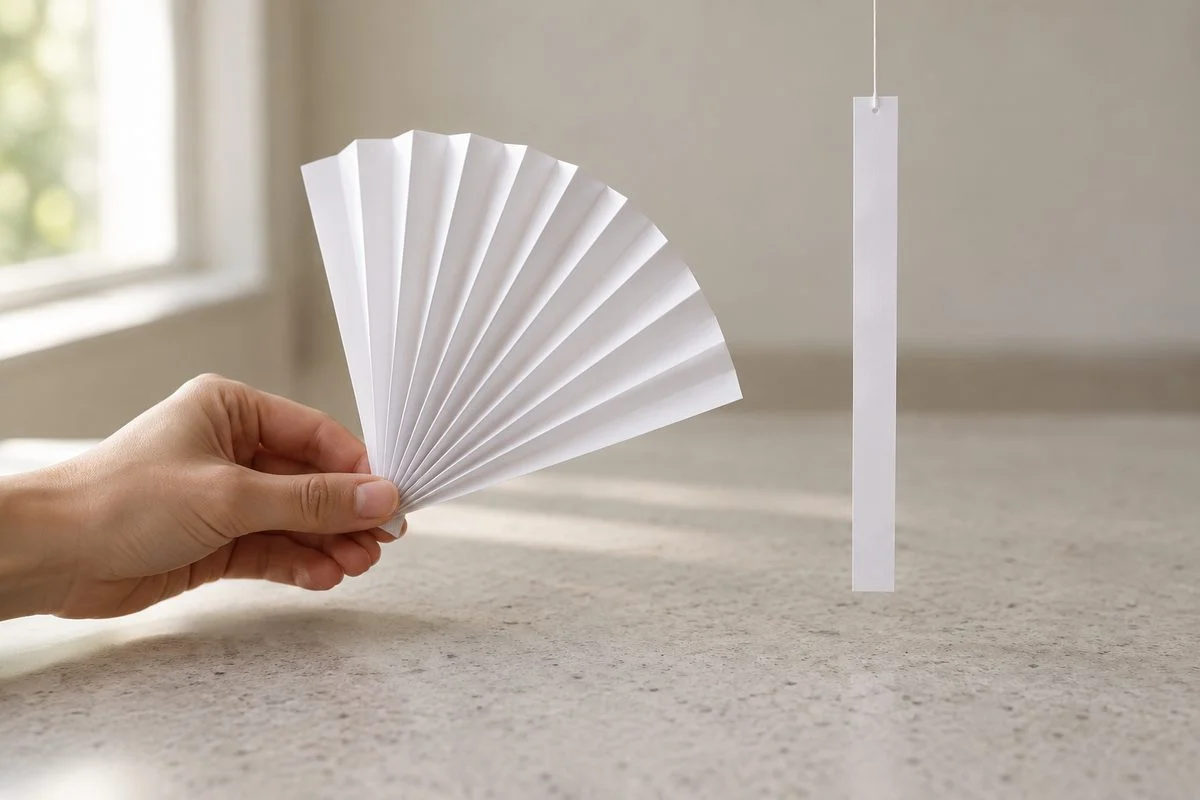
A still paper fan beside a hanging paper strip.

1. Air, Oxygen and Wind

Air contains different gases. Wind is moving air.

Show
Tear off a paper strip. Hold its top so it hangs freely. Fold another sheet into a fan. After the prediction, fan gently towards the strip and watch it move.
Ask
Will very gentle fanning make wind?
Say
Moving air counts as wind at any speed.
Used in
Windmills use moving air to pump water.
If your child says…“It is only wind when air moves fast.”
Ask
When gentle fanning moves the strip, what pushes it?
What’s true
A gentle breeze and storm winds both involve moving air.
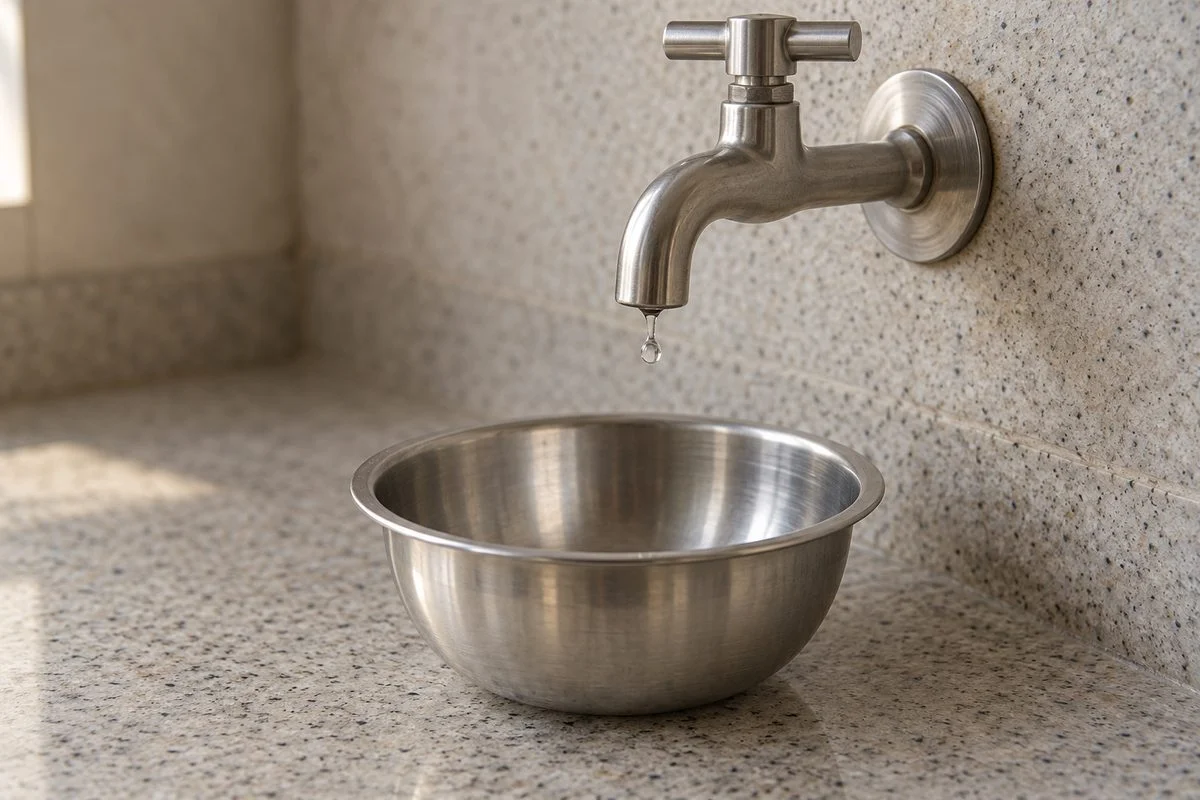
An empty steel bowl beneath a dripping tap.

2. Water Use, Conservation and Pollution

Protect usable water by reducing waste, reusing it and preventing pollution.

Show
Place a bowl beneath a dripping tap.
Ask
Will collecting the drips fix the waste if this bowl eventually overflows?
Say
Saving water includes fixing leaks. Collecting more water does not fix leaks.
Used in
Rainwater collection improves water supplies for villages.
If your child says…“Saving water just means storing more.”
Ask
Once the bowl fills, where will further drips go?
What’s true
Saving water helps keep enough water available and fit to use.
Dry paving with sunlight on the left and shade on the right.

3. Energy from the Sun

The Sun supplies light and heat, and helps plants make food.

Show
Find dry paving with sunny parts and parts that have stayed shaded. An adult checks both are safe to touch. After the prediction, briefly feel each part.
Ask
Which part will feel warmer?
Say
The sunny part usually feels warmer. Sunlight warms the things it falls on.
Used in
Solar panels use sunlight to supply electricity.
If your child says…“The Sun only helps us see.”
Ask
Which part felt warmer even though both parts were made of the same material?
What’s true
The Sun's energy can also heat water and cook food in suitable devices.

Forests and resources from the ground

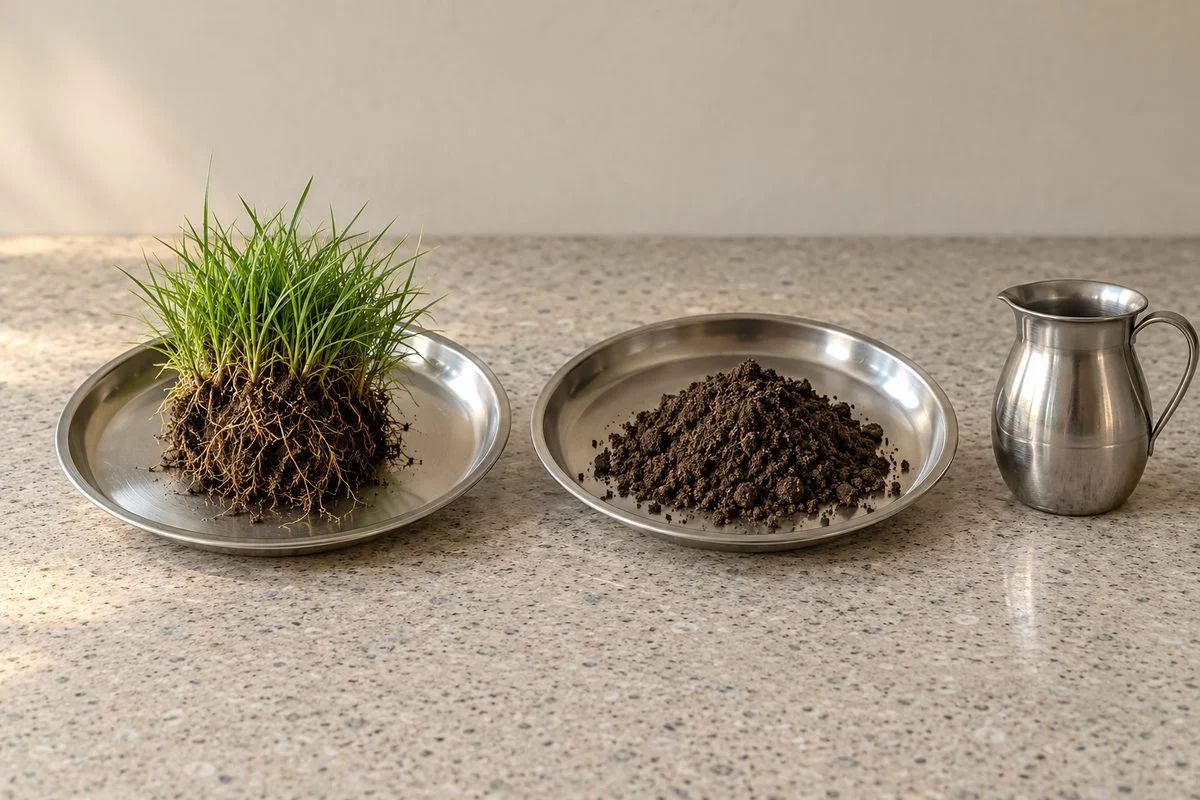
Rooted grass and loose soil on tilted plates beside a water jug.

4. Forests, Biodiversity and Soil Protection

Forests shelter many living things and help protect soil.

Show
Put rooted grass and loose soil on equally tilted plates. After the prediction, pour equal water over each.
Ask
Which soil will resist washing away better when we pour water gently over both?
Say
The soil with grass will resist washing away better. Like these grass roots, tree roots help hold soil against washing away.
Used in
Forests provide food and shelter for wild animals, birds and insects.
If your child says…“Removing trees and roots leaves the soil just the same.”
Ask
Which sample has roots holding its soil together?
What’s true
Removing roots takes away support that helps keep soil in place.
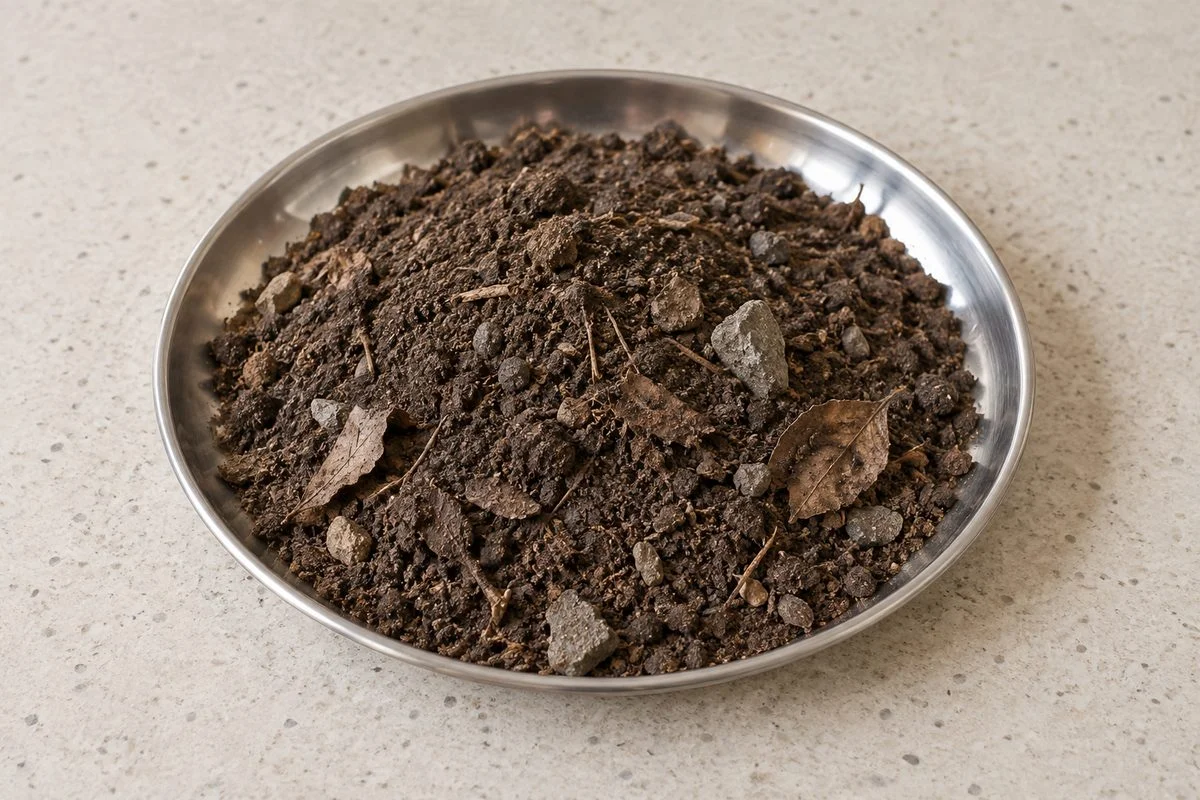
Garden soil with small stones and old leaf pieces on a steel plate.

5. Soil, Rocks and Minerals

Soil contains mineral particles and decayed remains, and can house life.

Show
Spread garden soil on a plate. After the prediction, separate its small stones and partly decayed leaves. Afterwards, return everything outdoors and wash your hands.
Ask
What might you find besides crumbly soil when you sort this handful?
Say
This soil contains stone pieces and old leaves.
Used in
Rocks provide material for buildings and tools.
If your child says…“Soil is only dirt and sand.”
Ask
Are these old leaf pieces sand?
What’s true
Soil includes mineral particles and decayed remains, and may contain tiny living things.
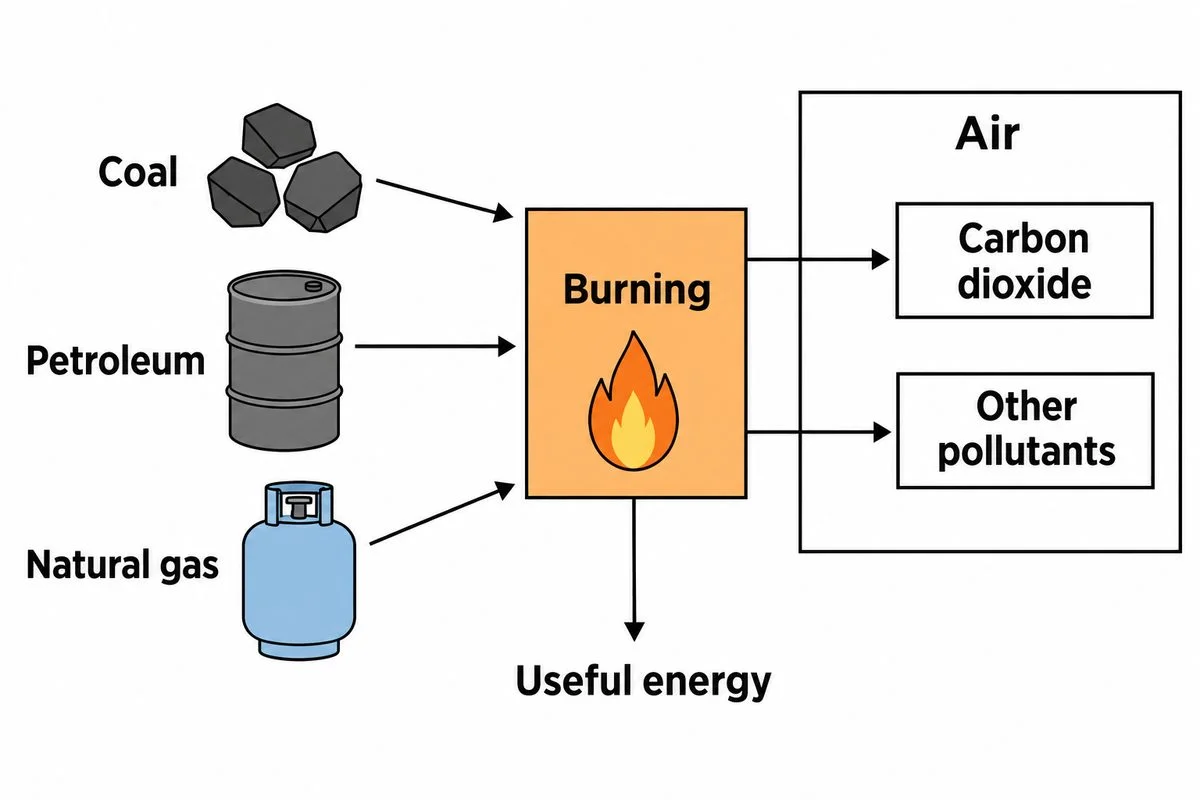
Fuel burning produces useful energy and releases carbon dioxide and other pollutants into air.

6. Fossil Fuels and Air Pollution

Coal, petroleum and natural gas are fuels whose burning releases gases.

Show
Look at the diagram. Follow the fuels into burning. Trace the arrows towards useful energy and the air.
Ask
What will enter the air when these fuels burn, even without dark smoke?
Say
Burning these fuels gives useful energy and releases carbon dioxide. It can also release harmful gases and tiny particles. Many of these releases are invisible.
Used in
Petrol and diesel power vehicles that carry people.
If your child says…“If I cannot see smoke, the fuel is not polluting the air.”
Ask
Which gas shown entering the air would be invisible?
What’s true
Burning fossil fuels releases carbon dioxide even when no smoke is visible.

Sorting resources and using them carefully

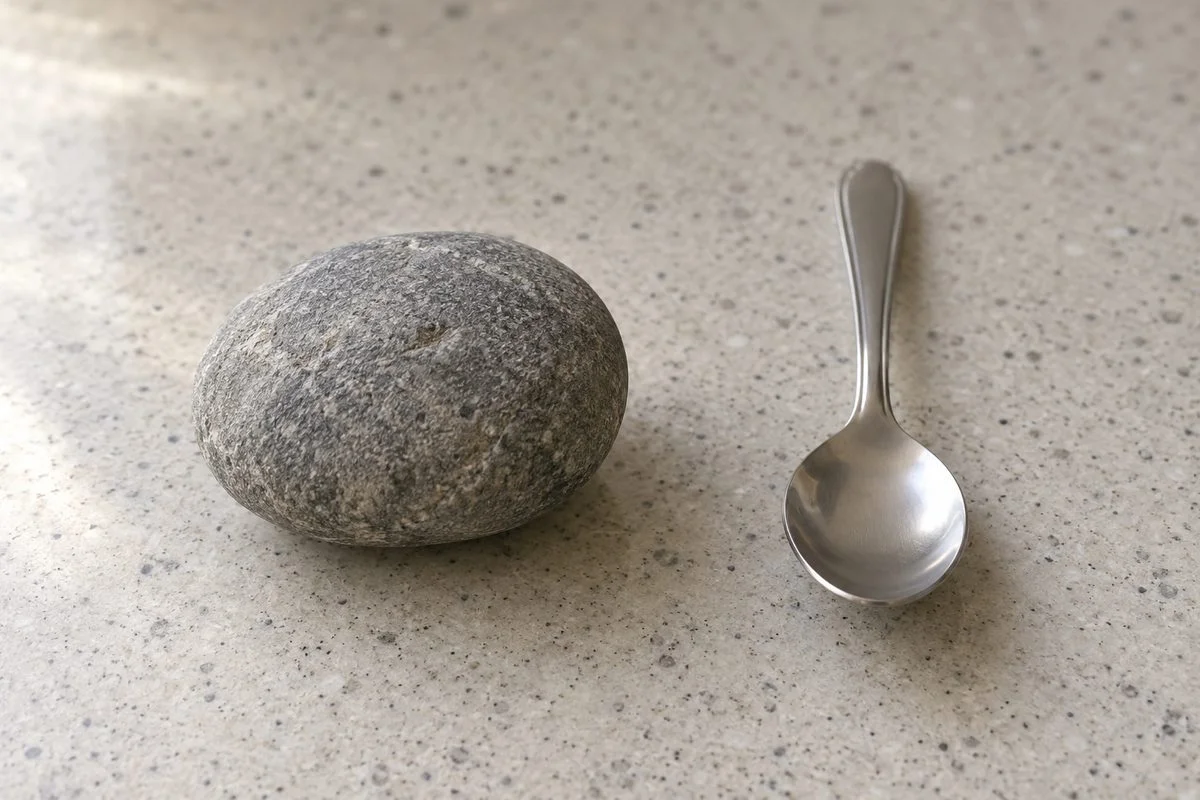
A stone beside a steel spoon.

7. Natural and Human-Made Resources

Nature supplies natural resources. People make human-made resources.

Show
Place a stone beside a steel spoon.
Ask
Will both belong together if we sort things by whether people made them?
Say
The stone is natural. People made the spoon using materials obtained from nature.
Used in
People make bicycles with materials originally obtained from nature, providing transport.
If your child says…“Anything useful is a natural resource.”
Ask
Did nature produce this finished spoon, or did people shape it?
What’s true
Usefulness alone does not tell us whether a resource is natural or human-made.
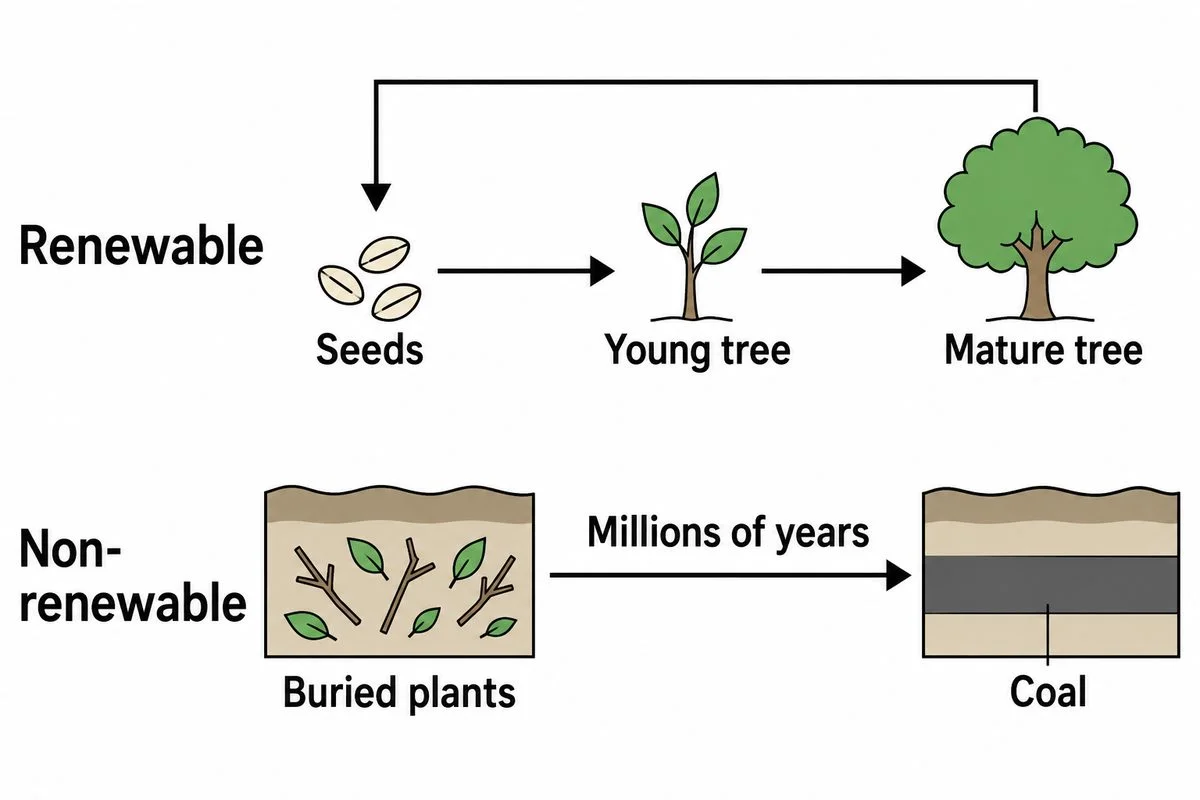
Tree regrowth compared with coal formation from buried plants over millions of years.

8. Renewable and Non-Renewable Resources

Nature replaces renewable resources reasonably quickly. Non-renewable resources take too long.

Show
Look at the diagram. Follow the top arrows from seeds to a mature tree. Follow the bottom arrow from buried plants to coal.
Ask
Which could we replace within a lifetime after using it: a tree or coal?
Say
Trees can regrow within a lifetime, but coal takes millions of years to form.
Used in
Careful use of forest products allows time for regrowth.
If your child says…“Renewable resources can never run short.”
Ask
What happens if trees are cut faster than new ones grow?
What’s true
Natural replacement does not guarantee enough supply when people waste or damage resources.

A real problem

Sukhomajri collected rainwater to improve village water supplies.

Soil washing away was reducing Sukhomajri's farmland.

The research project began in 1975.

Dams collected rainwater and improved the village's water supply.

The project reduced sediment buildup and increased tree cover.

FAOICAR–NCAPIIED

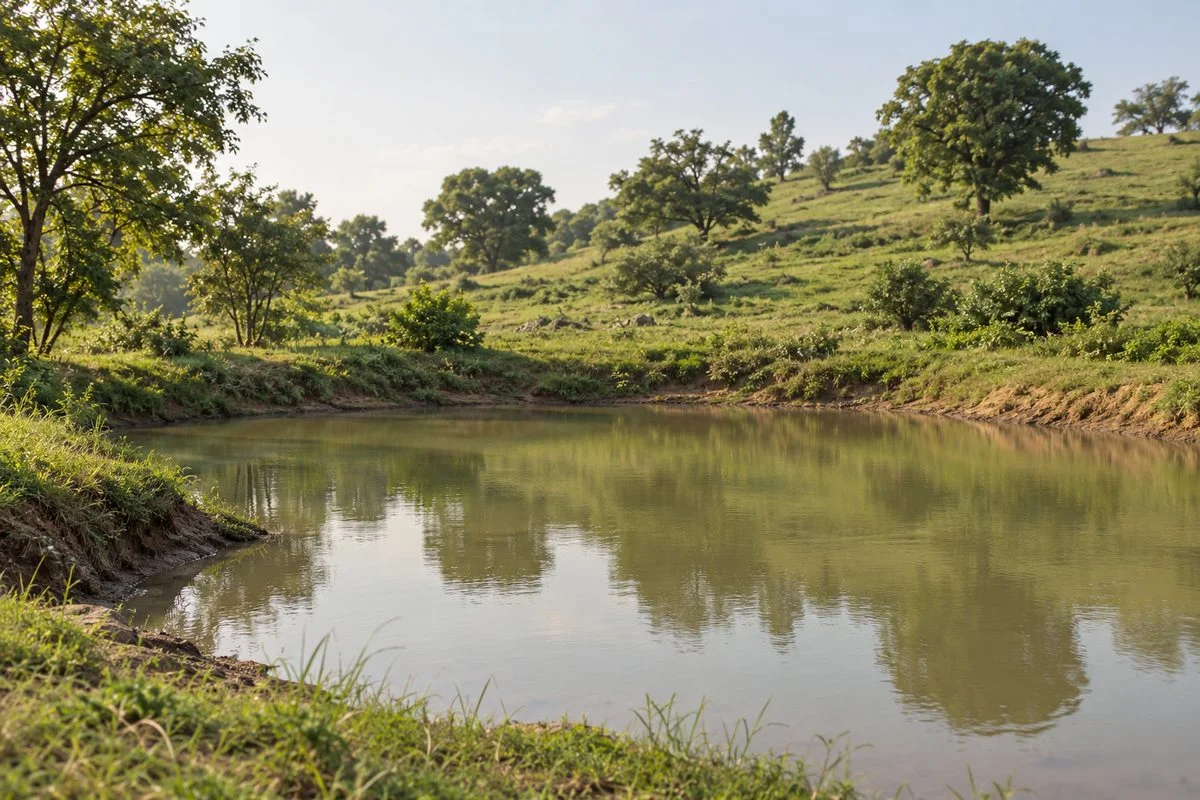
Illustrative village pond below a grassy, wooded hillside, not a photograph of Sukhomajri.

Concept Lab · Common misconception

The tempting mistake in Nature's Treasures

Open standalone misconception page →

Can renewable resources run out locally?

Wrong

Groundwater can never run low because rain renews it.

Why it feels right. The water cycle keeps returning water.

Right

A supply can fall when use exceeds replenishment.

Worked example

Water in10 units
Water out15 units
Wells remove five more units than recharge adds in the same period.

If a local aquifer receives 10 units of water and wells draw 15 in the same period, its storage falls by 5 units.

Ask your child eight quick questions.

One per step. The answer and the reason are given.

  1. A breeze barely stirs a leaf. Does it count as wind?

    Yes, even at low speed. Speed changes how strong wind feels, not whether it is wind.

  2. A school adds a tank but leaves taps leaking. Why isn't storing more water enough?

    The taps still waste water. Saving water also means stopping waste.

  3. What does sunlight supply that allows a solar cooker to cook?

    Energy for heating. Sunlight can heat things as well as make them visible.

  4. Why can removing tree roots increase soil loss during rain?

    Roots helped hold soil. Without those roots, flowing water can carry soil away more easily.

  5. Does finding no visible animals prove that soil contains no living things?

    No. Some soil life is too small to see without magnification.

  6. Why can burning petrol release carbon dioxide without visible smoke?

    Carbon dioxide is invisible. Burning petrol releases invisible carbon dioxide, even without visible smoke.

  7. A bicycle is useful. Which resource group does the finished bicycle belong to?

    Human-made resources. People manufacture the finished bicycle; usefulness alone does not make something a natural resource.

  8. Mature trees are cut faster than young trees mature. What happens to mature tree numbers?

    They decrease. Young trees need time to replace the mature trees being cut.

15 more questions with answers, 11 with pictures