If your child says…“Stars actually travel around the Pole Star.”
Ask
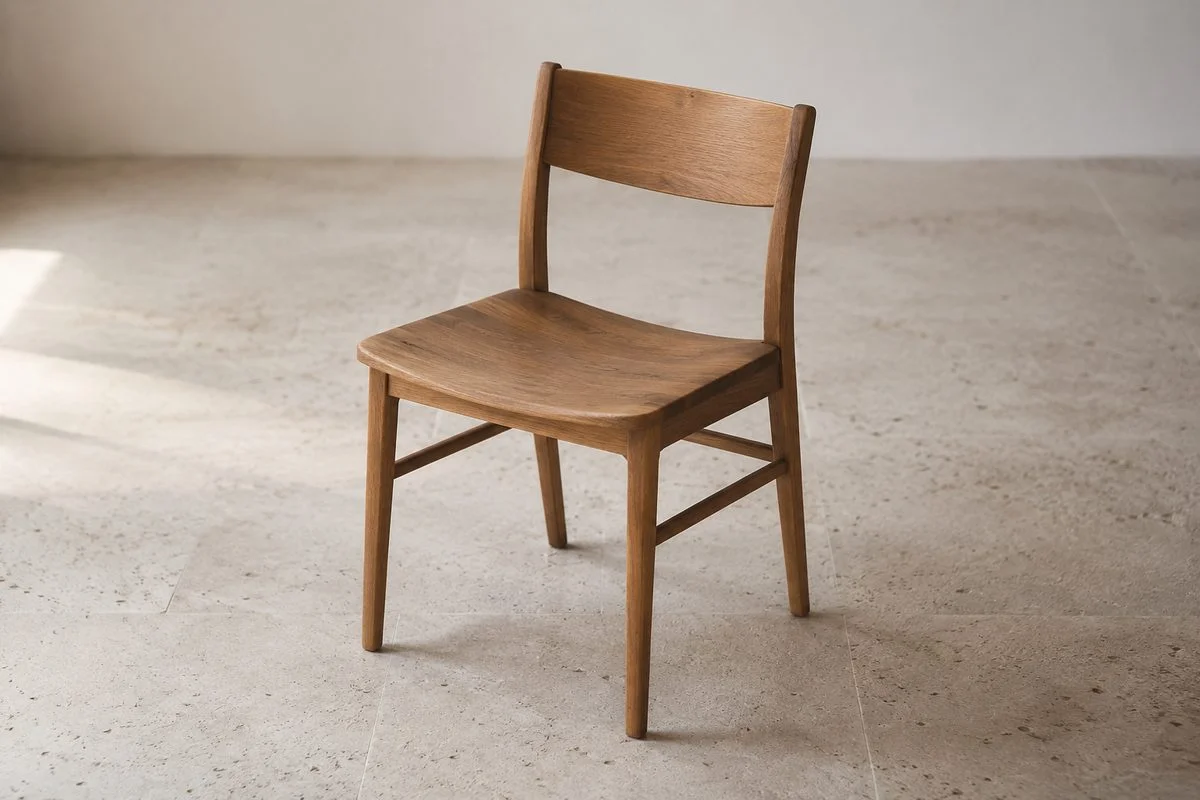
Did the chair move when you turned?
What’s true
Stars seem to circle near the Pole Star because Earth turns with its axis pointing thereabouts.
2. Rotation
Earth’s spin brings places into daylight and then darkness.
Show
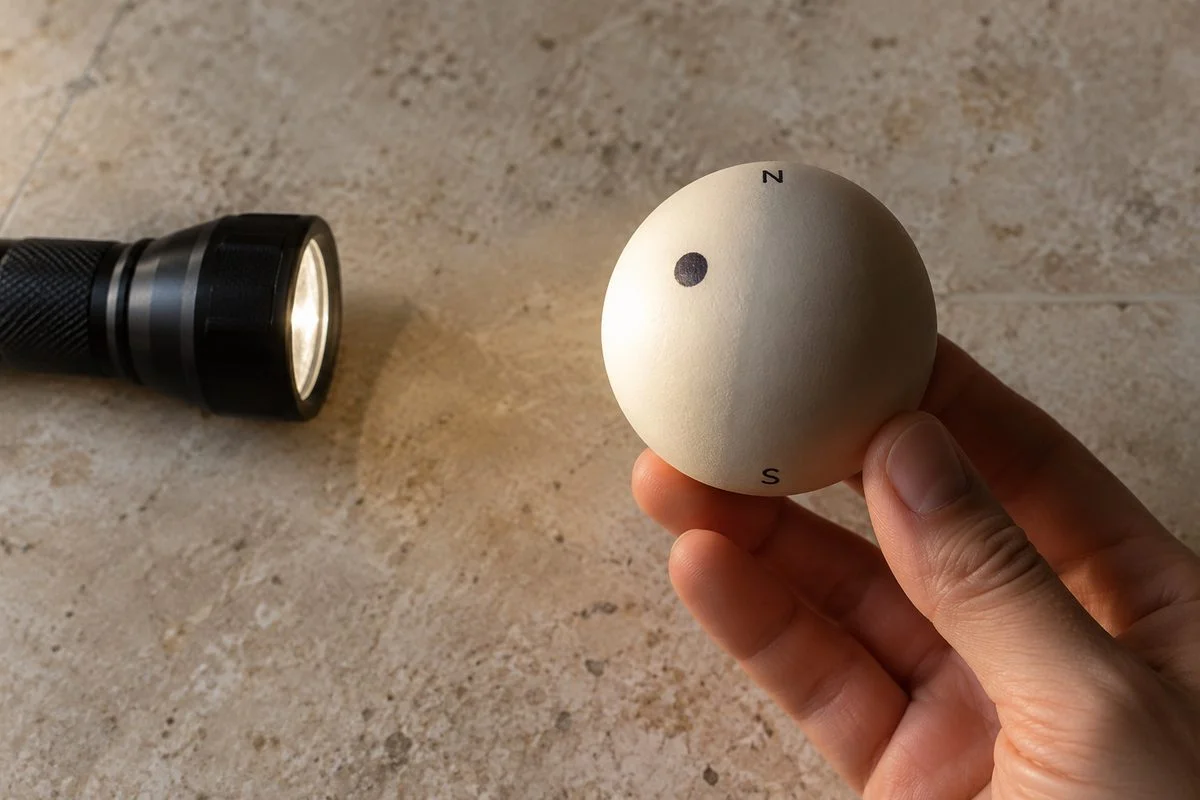
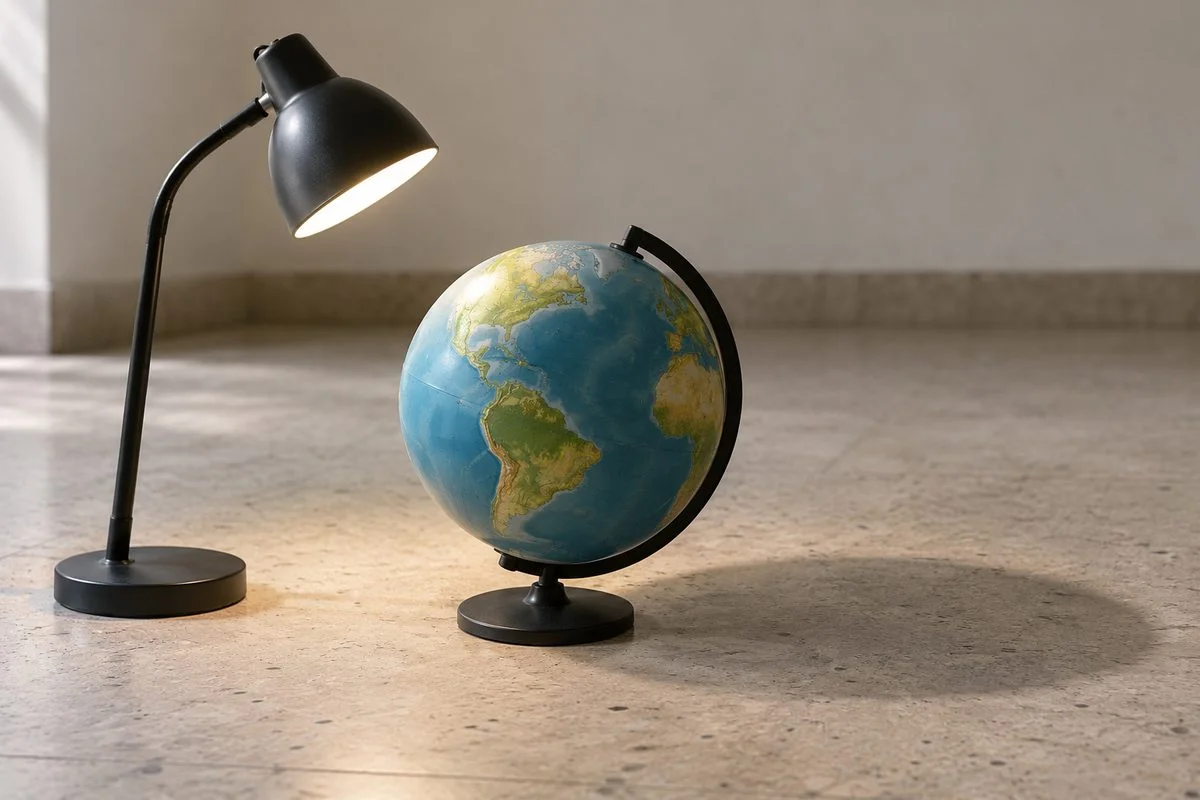
The ball represents Earth; the torch represents the Sun. Mark opposite poles N (north) and S (south). The equator runs halfway between the poles. Add a dot halfway between N and the equator. Light one side, making sure the dot starts in the light. After predicting, turn anticlockwise around N–S, viewed from N.
Ask
Can turning move the dot into shade?
Say
The dot enters shade. Earth’s spin brings night.
Used in
Earth’s shaded side explains night elsewhere during our daytime.
If your child says…“Earth must travel around the Sun to make night.”
Ask
Did you carry the ball around the torch to darken the dot?
What’s true
Rotation causes day and night without Earth completing its orbit around the Sun.
Earth travels around the Sun
3. Revolution
Earth circles the Sun, changing the stars visible after sunset.
Show
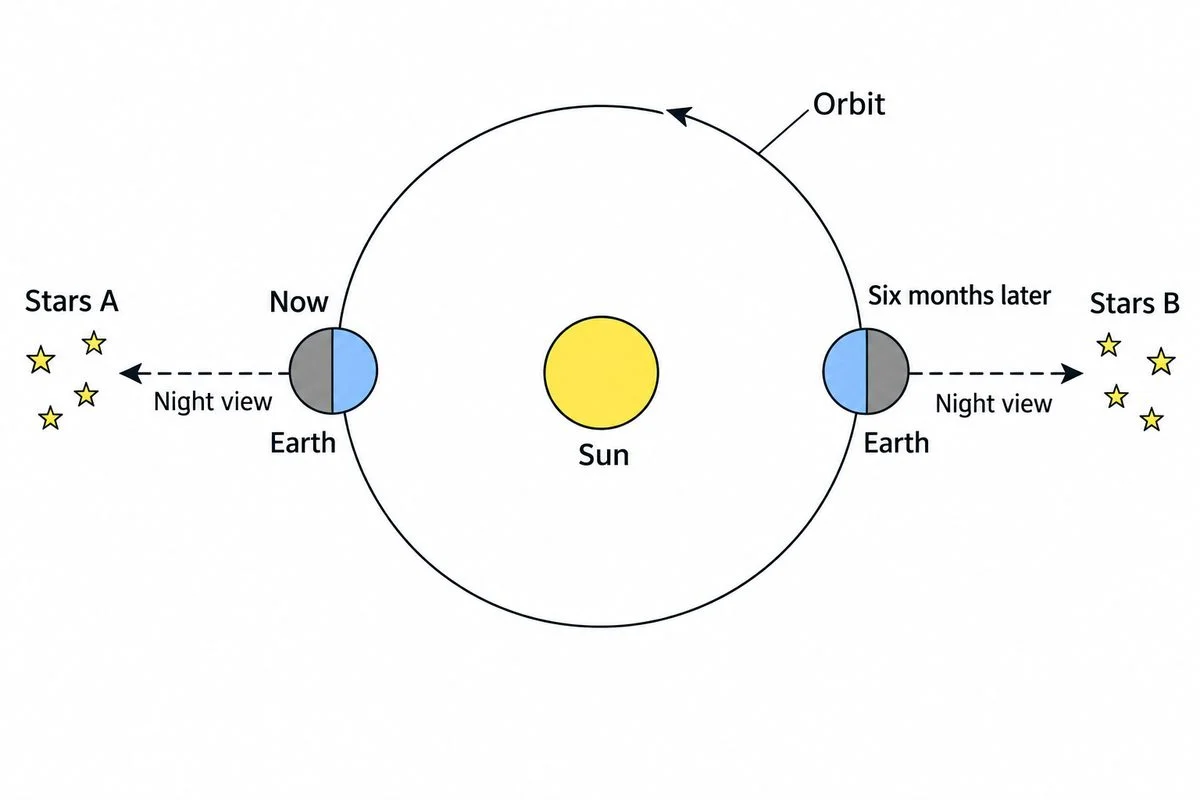
Find Earth’s two positions in the diagram. Follow each night-view arrow towards the stars.
Ask
Which stars will face Earth’s night side six months later?
Say
Stars B will face the night side. Earth’s yearly trip around the Sun changes our night view.
Used in
Earth’s changing position explains why familiar star groups disappear from the evening sky across months.
If your child says…“Those stars have travelled away.”
Ask
Have the stars moved, or does Earth’s night side now face another direction?
What’s true
Different evening stars become visible because Earth changes position around the Sun.
4. Tilt of the axis and seasons
Earth’s tilt changes day length and sunlight.
Show
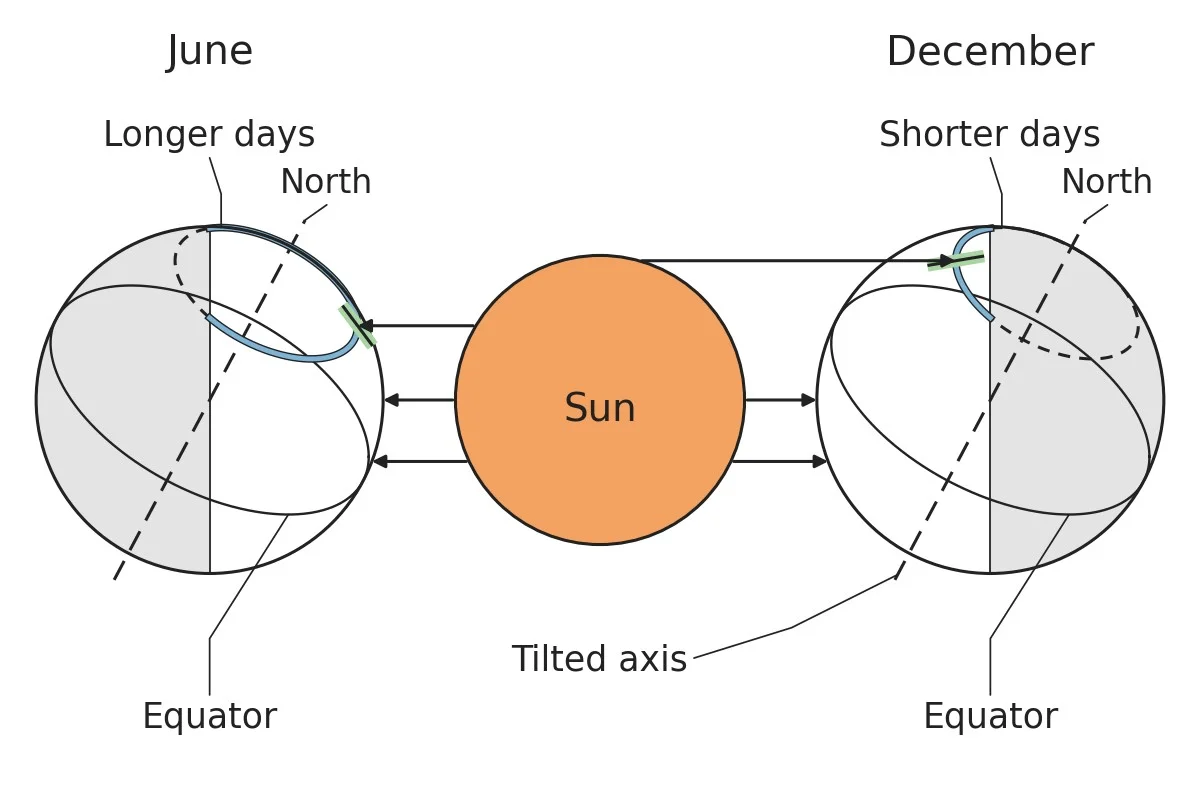
Find June and December in the diagram. Compare the northern circle’s daylight portions and incoming sunlight.
Ask
Which position gives the northern half longer days and more direct sunlight?
Say
June brings both, warming the northern half into summer.
Used in
Opposite seasons explain Australia’s summer during India’s winter.
If your child says…“Summer happens because Earth gets closer to the Sun.”
Ask
The distances match here, so what gives the northern half more warmth in June?
What’s true
Seasons depend on tilt changing sunlight and day length, rather than Earth’s distance from the Sun.
Eclipses
5. Solar eclipse
The Moon blocks our view of the Sun.
Show
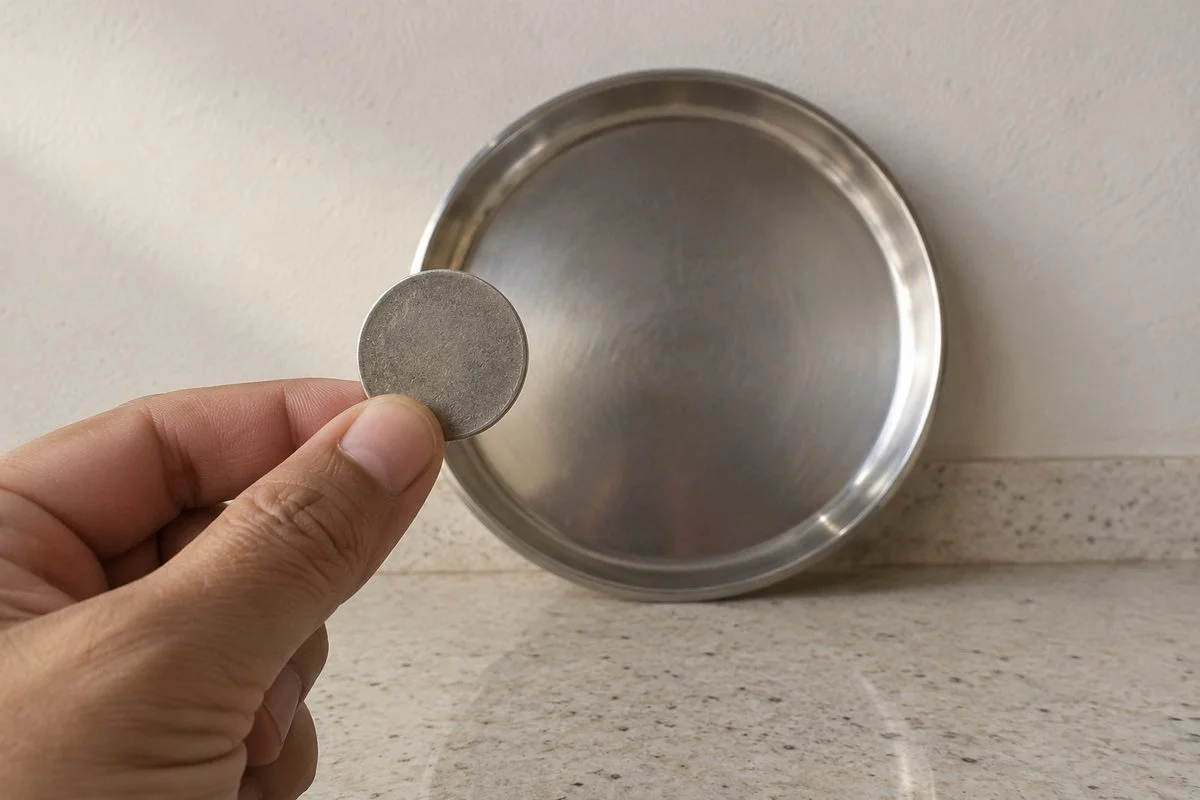
Stand the plate upright against a wall. Close one eye and hold the coin in front of the other. After predicting, move the coin closer until it hides the plate.
Ask
Could this coin hide the whole plate?
Say
The coin can hide the plate, just as the nearer Moon can hide the larger Sun.
Used in
A pinhole image allows eclipse viewing without looking directly at the Sun.
If your child says…“The Moon must be as big as the Sun.”
Ask
Does the coin grow when moving it closer hides more of the plate?
What’s true
How large something looks depends on both its size and its distance.
6. Lunar eclipse
Earth’s shadow darkens the Moon.
Show
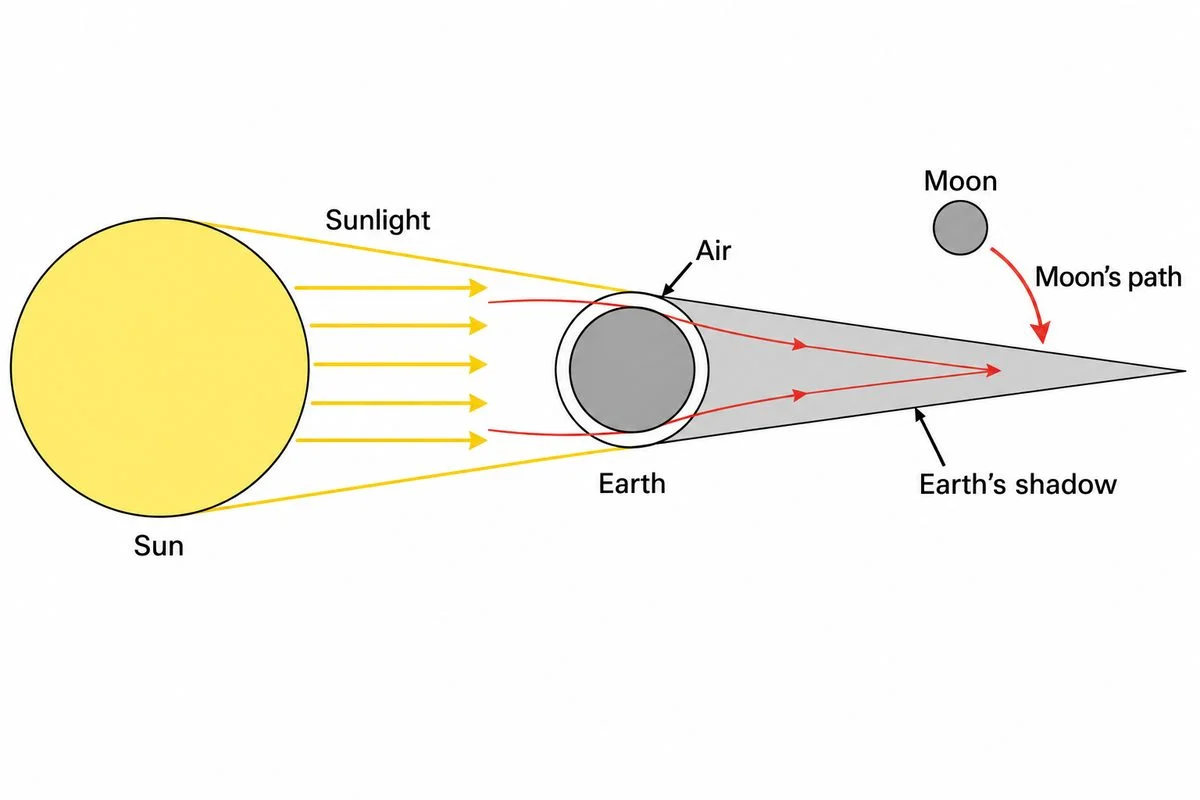
Find Earth between the Sun and Moon in the diagram. Follow the Moon’s path into Earth’s shadow.
Ask
What will darken the full Moon as it follows this path?
Say
Earth blocks the sunlight, so its shadow darkens the Moon.
Used in
Lunar eclipses can be watched with bare eyes, so protective eclipse glasses are unnecessary.
If your child says…“The Moon’s own shadow darkens it.”
Ask
Which object blocks sunlight before it reaches the Moon?
What’s true
Earth casts the shadow that reaches the Moon during a lunar eclipse.
A real problem
An unobstructed view helps Aditya-L1 study the Sun.
Aditya-L1 launched on 2 September 2023.
Its observing location keeps Earth from blocking its view of the Sun.
This uninterrupted view allows real-time observation of solar activity and its effects on space weather.
We use cookies, including Meta’s and, if a ChatGPT advert brought
you, OpenAI’s, to see how visitors find us.
They are never used on your child’s screens in the app. You can turn them
off here, and change your mind any time.
Privacy policy