One per step. The answer and the reason are given.
-
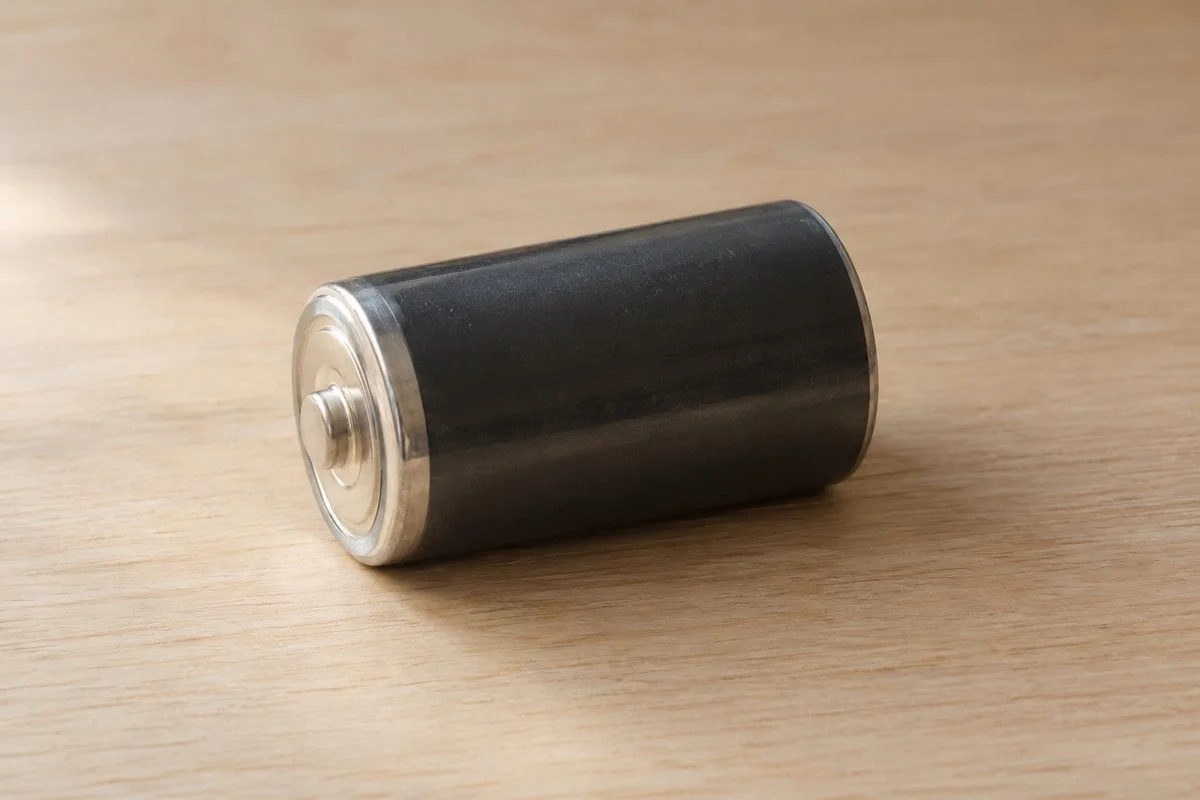
After turning this cell, how many of its metal ends may be called positive?
One: the raised cap. Turning the cell does not change which terminal is positive.
-
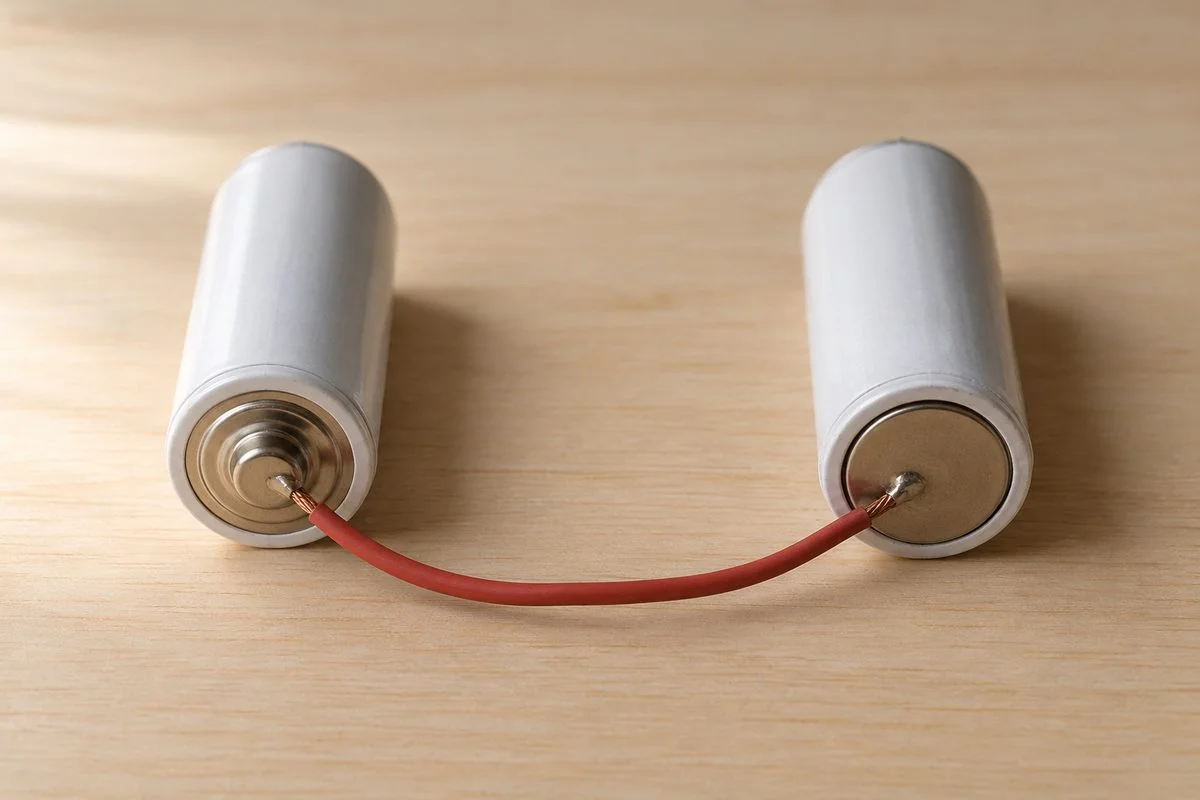
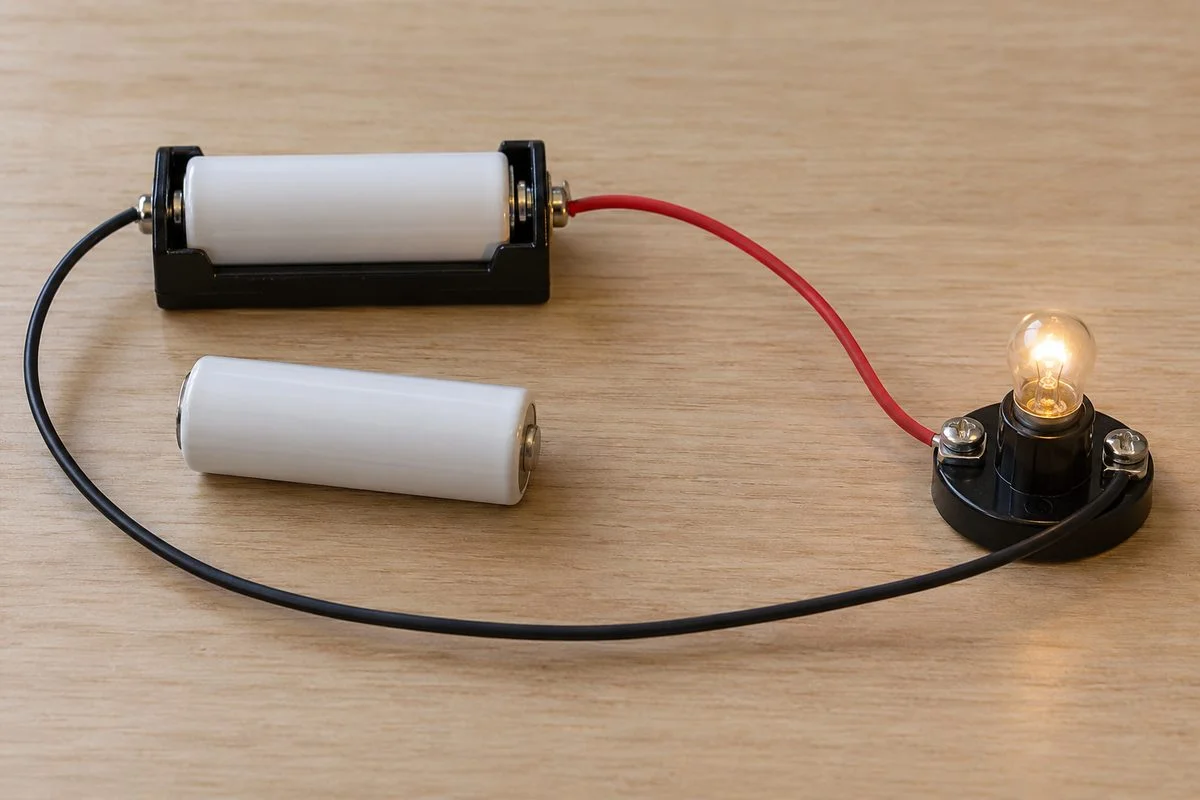
Two cells power a lamp. Their positions change, but their connections stay unchanged. What happens to the light?
The lamp stays lit. The connecting path determines how cells work together, regardless of their positions.
-
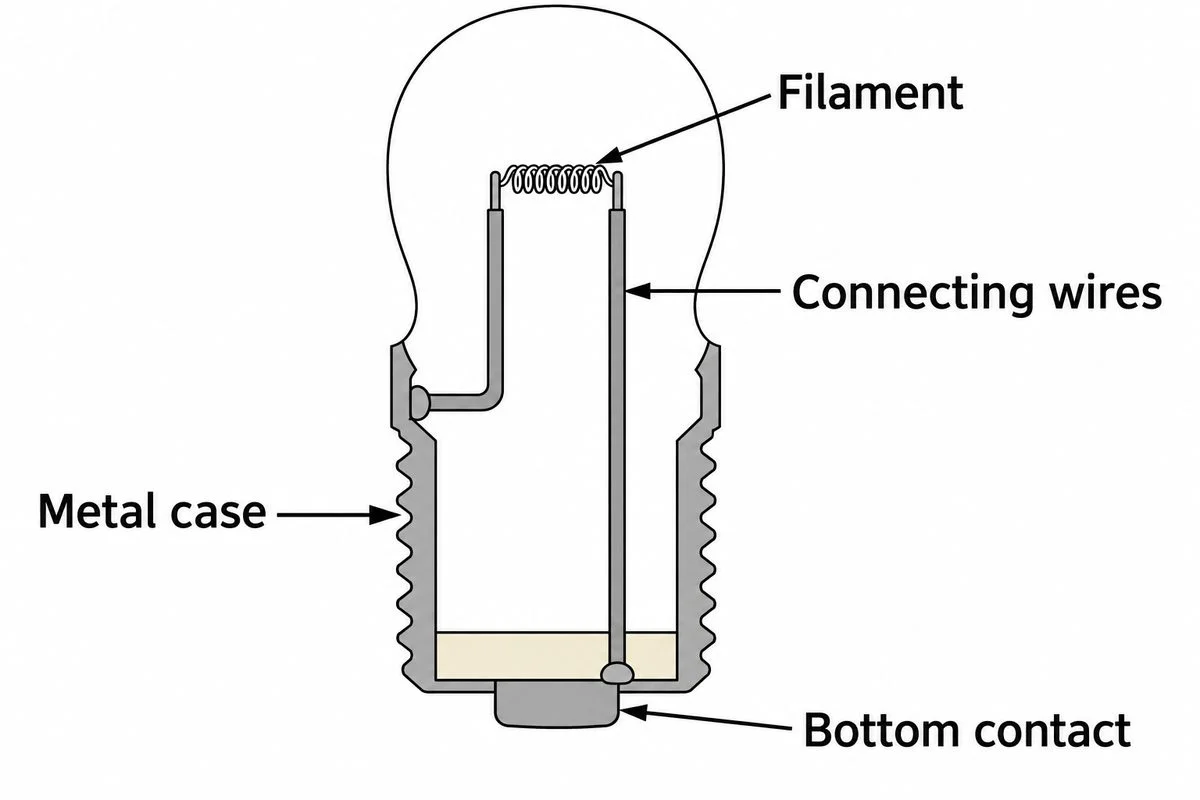
What needs replacing when a torch bulb’s filament breaks?
The bulb. Fresh cells cannot restore the path through a broken filament.
-
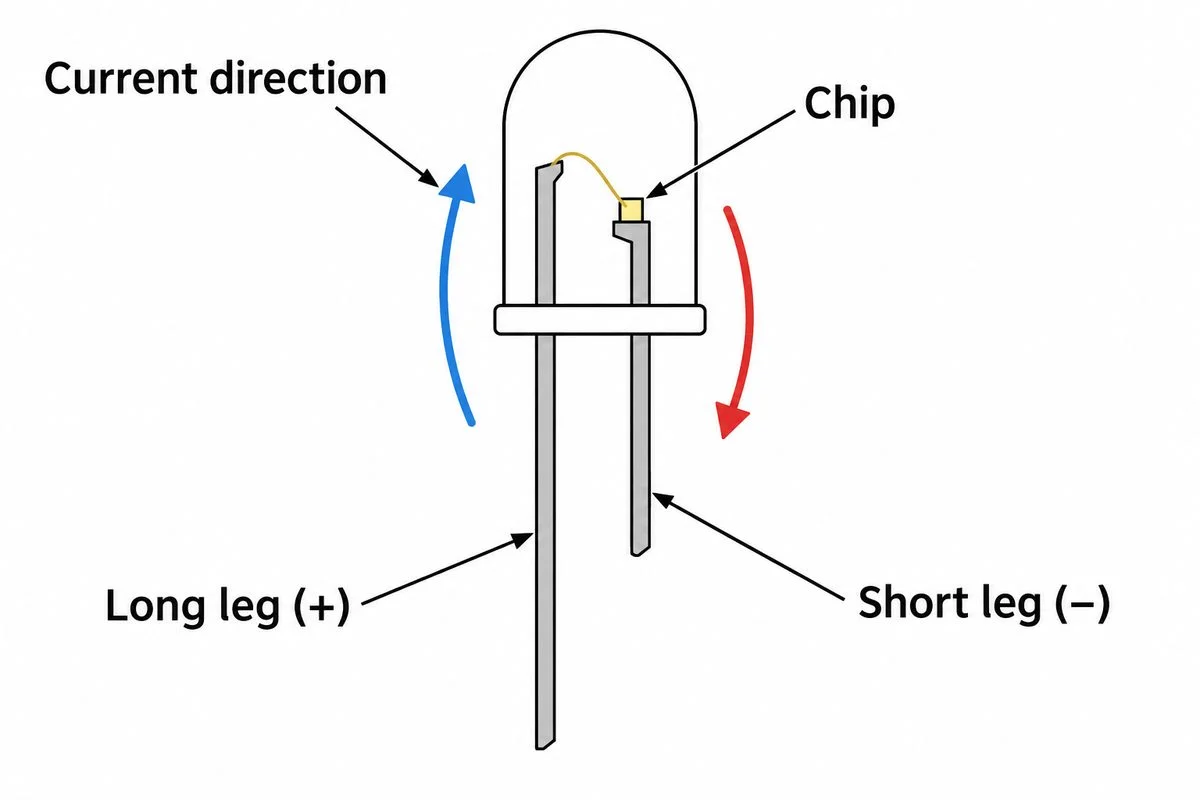
Why can reversed connections keep a working LED dark in a suitable cell circuit?
Current passes only one way. Reversed connections can keep a working LED dark.
-
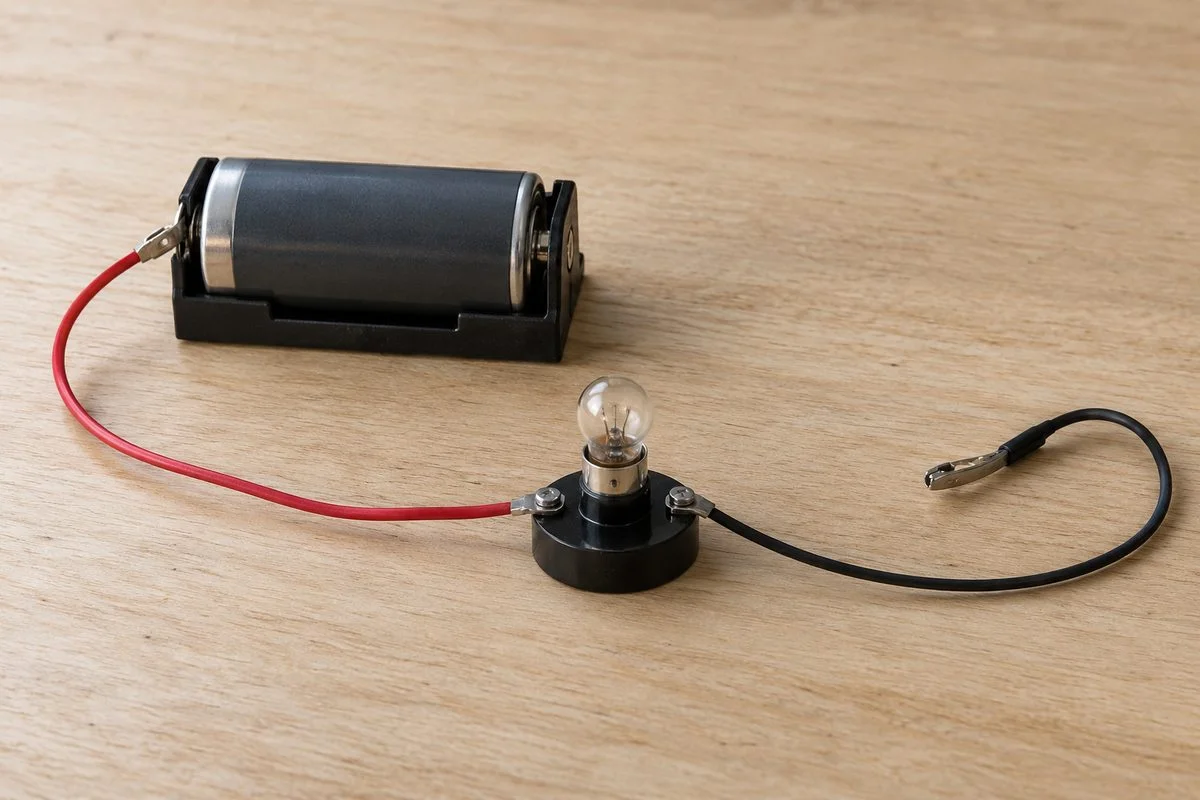
The switch contacts move far apart. What happens to current in this small-cell circuit?
There is no current. The separated contacts leave no complete path through the lamp.
-
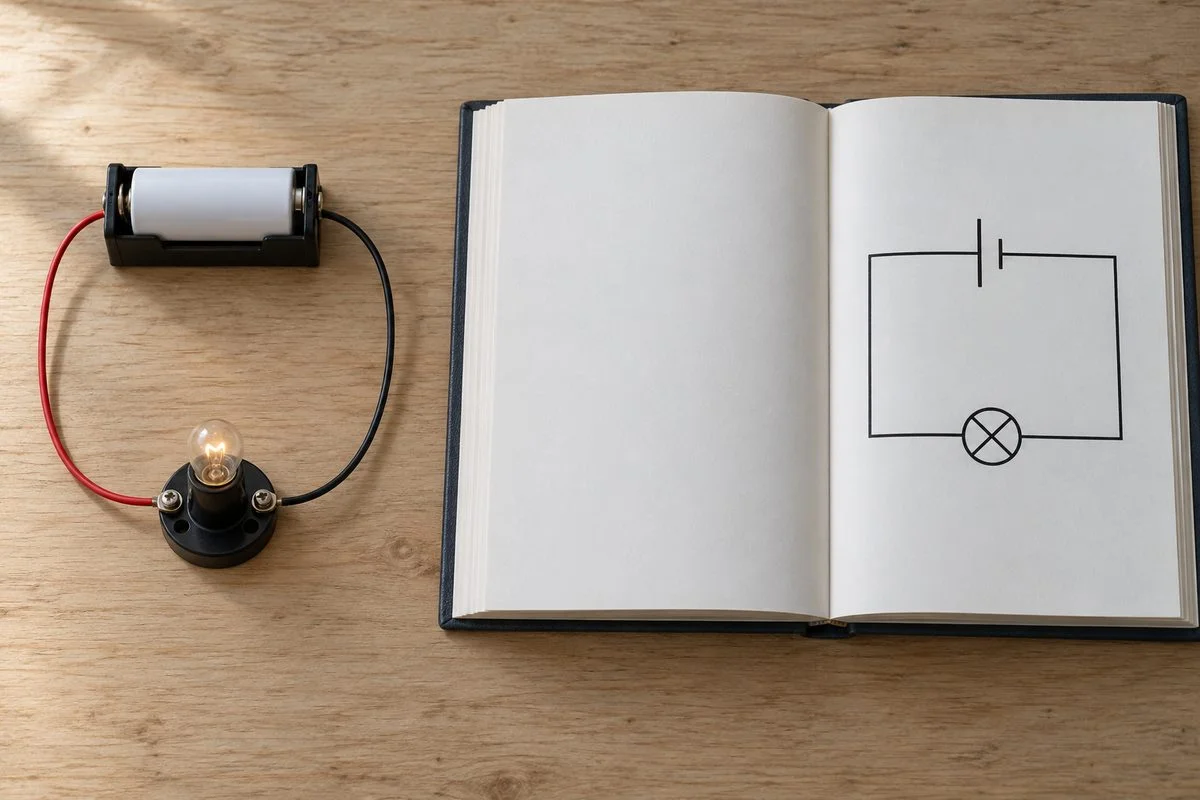
Which line in the cell symbol represents its positive end?
The longer line. Line length identifies the terminal.
-
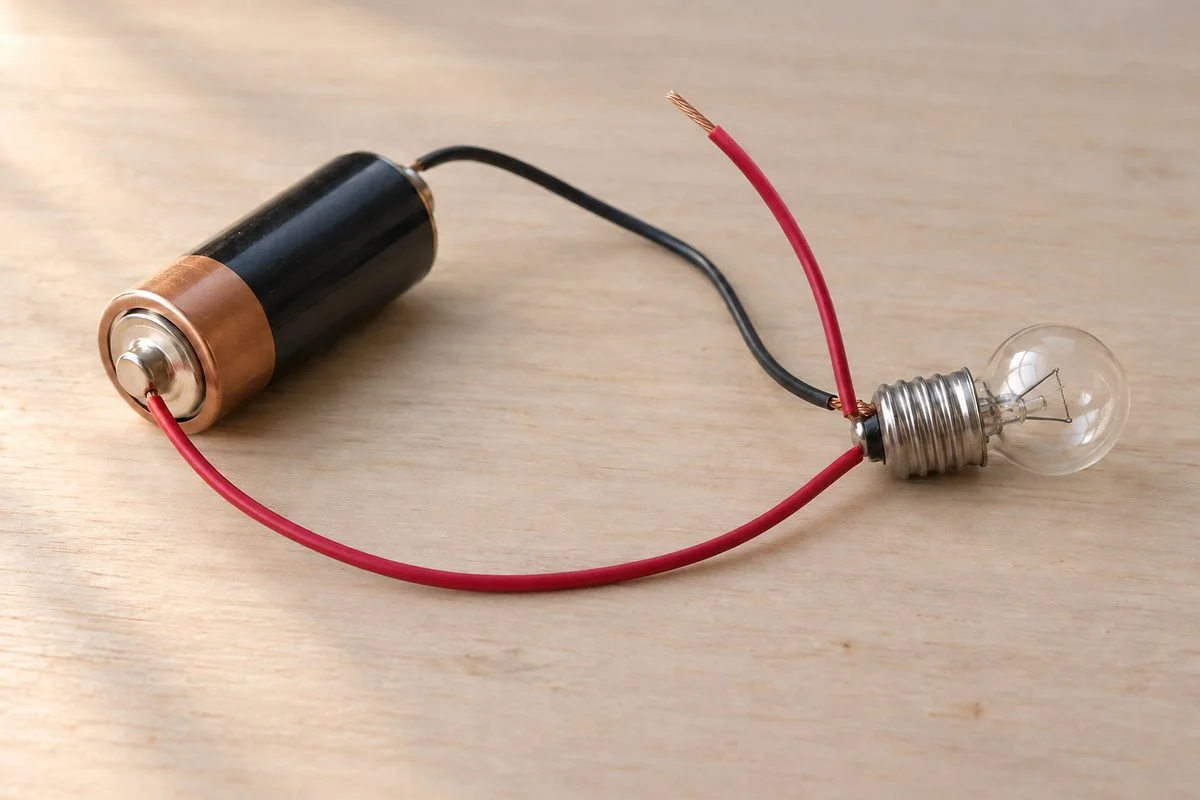
Which part of a covered wire must touch the bulb’s contact?
The exposed metal. Plastic between the metal surfaces prevents electrical contact in this circuit.
-
Can this glowing bulb show that the cell supplies current without using a special meter?
Yes. The known working bulb and wires let you test the cell.