Skip to content

Teach Light: Shadows and Reflections in eight steps.

For each idea: show it, ask before you tell, then say one line.

Gather a battery torch, mirror, cards, pencil, dough, clear glass, thick cloth, tracing paper and a stiff coloured-paper arrow.

An adult makes the holes. Use glass and mirrors with protected edges.

Common misconceptions & worked visual for this chapter · 15 practice questions with answers

How to teach it

Light and materials

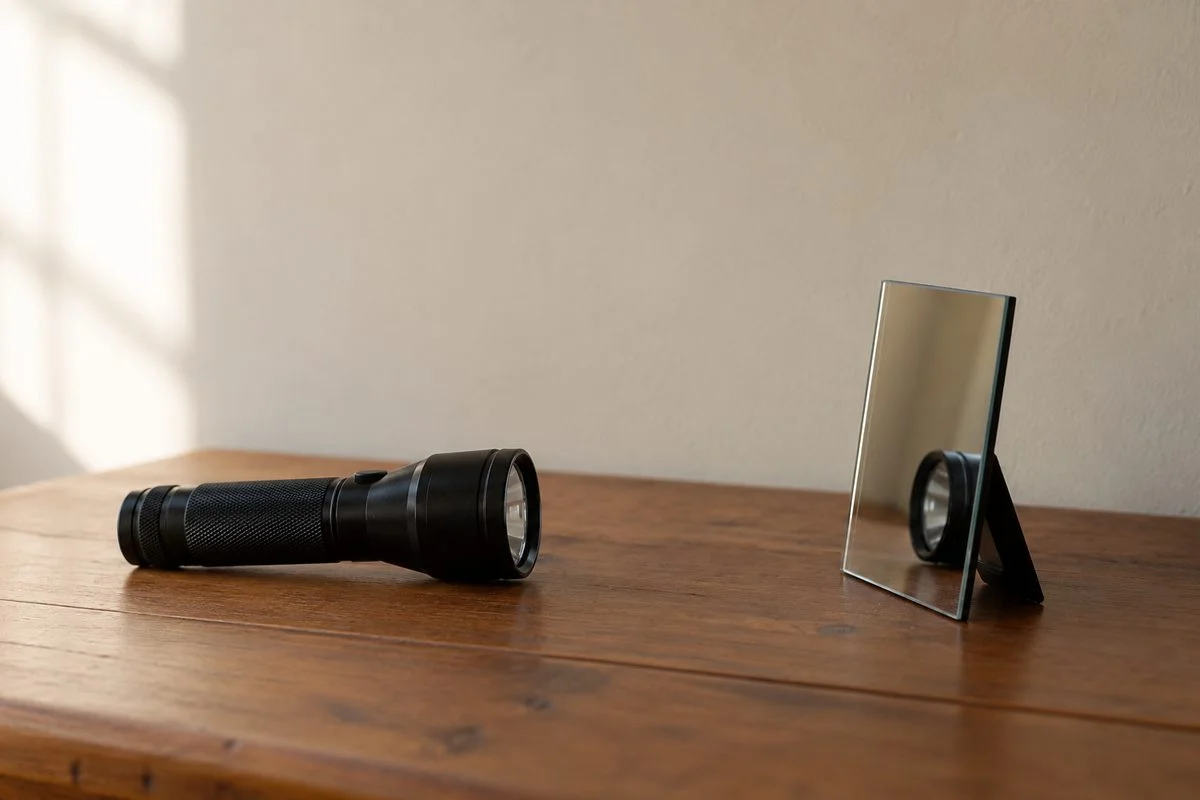
Unlit torch aimed at a mirror facing a wall.

1. Luminous and Non-Luminous Objects

Some objects produce light; others reflect light reaching them.

Show
Aim an unlit torch at a mirror facing a wall. Switch on after asking.
Ask
Which will produce light: the bulb, the mirror, or both?
Say
The glowing bulb is luminous. The mirror reflects arriving light and is non-luminous.
Used in
A glowing LED supplies light without needing sunlight.
If your child says…“Shiny things make light.”
Ask
What happens to the spot when we switch off the torch?
What’s true
A mirror needs incoming light to make a bright spot.
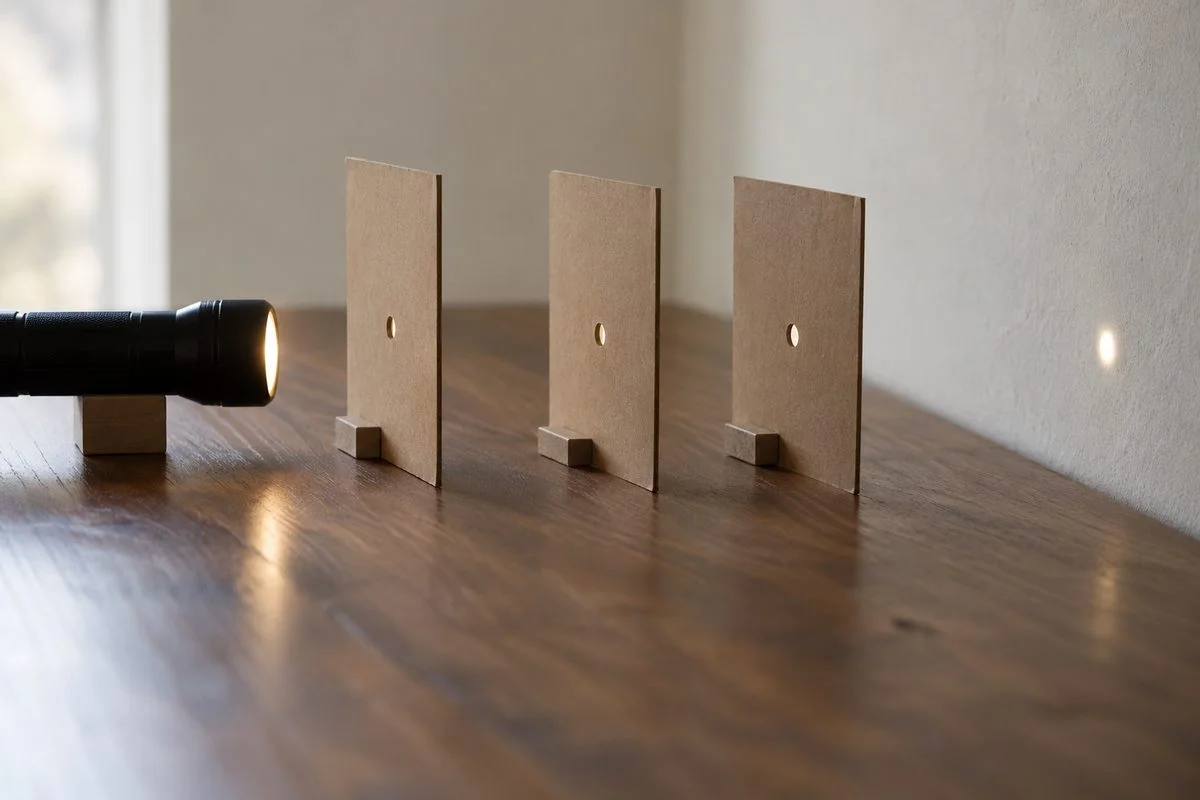
A lit torch shines through aligned holes in three cards, making a bright spot on the wall.

2. Light Travels in a Straight Line

A direct beam follows a straight path.

Show
An adult pierces three cards with a pencil, keeping fingers clear. Align their holes between lit torch and wall using dough. After asking, slide the middle card sideways.
Ask
What will happen to the bright spot if we slide the middle card sideways?
Say
Moving the card blocks the light's straight path.
Used in
A pinhole camera uses straight light paths to form an image.
If your child says…“Light will go around the card.”
Ask
Where does the spot return as we slide the card back?
What’s true
The direct beam cannot bend around the card.
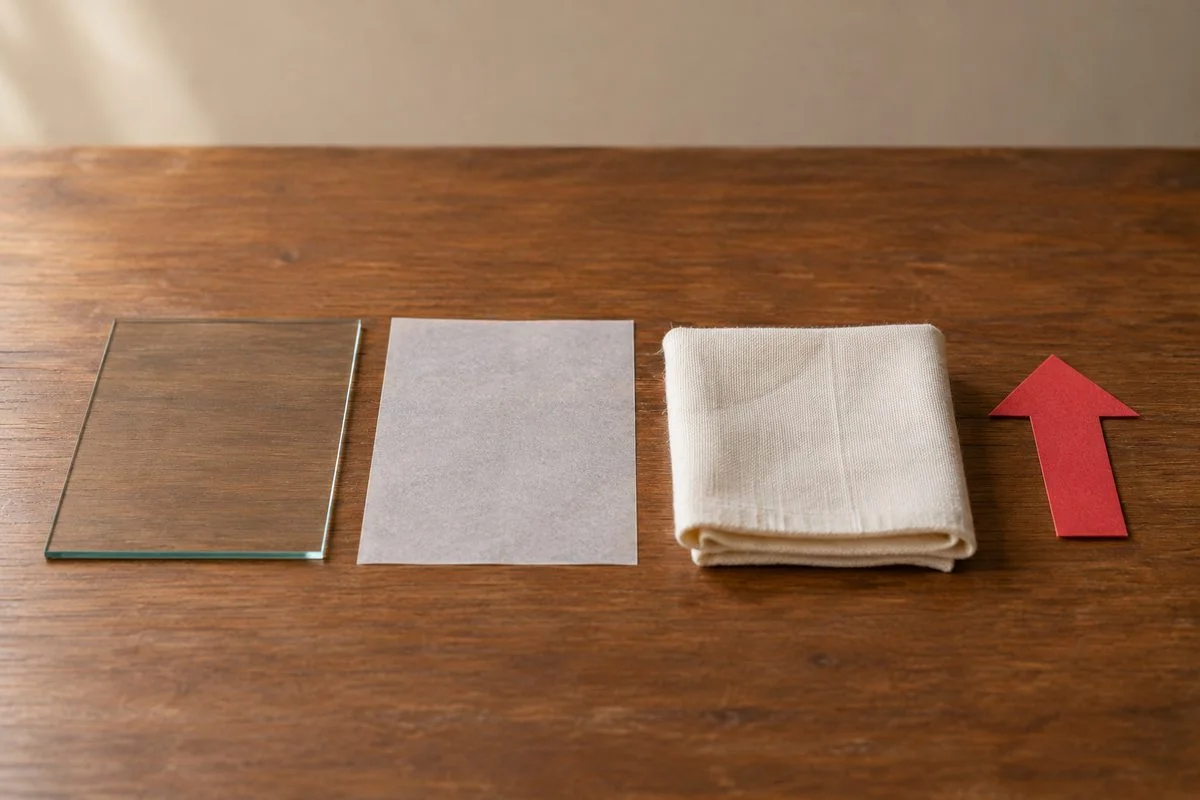
Glass, tracing paper and thick cloth beside a stiff coloured-paper arrow.

3. Transparent, Translucent and Opaque Materials

Materials allow clear views, blurred views, or no view through them.

Show
Set clear glass, tracing paper and thick cloth beside a stiff coloured-paper arrow. After asking, look at the arrow through each material. Leave a small gap between the material and the arrow.
Ask
Which will let you see the shape clearly when held in front?
Say
Glass is transparent: the view stays clear. Tracing paper is translucent; thick cloth is opaque.
Used in
Clear glass allows light through, letting us see objects beyond it.
If your child says…“Tracing paper is transparent too.”
Ask
Through which material can you see the shape's edges clearly?
What’s true
Tracing paper scatters passing light, blurring the view.

Shadows and mirror images

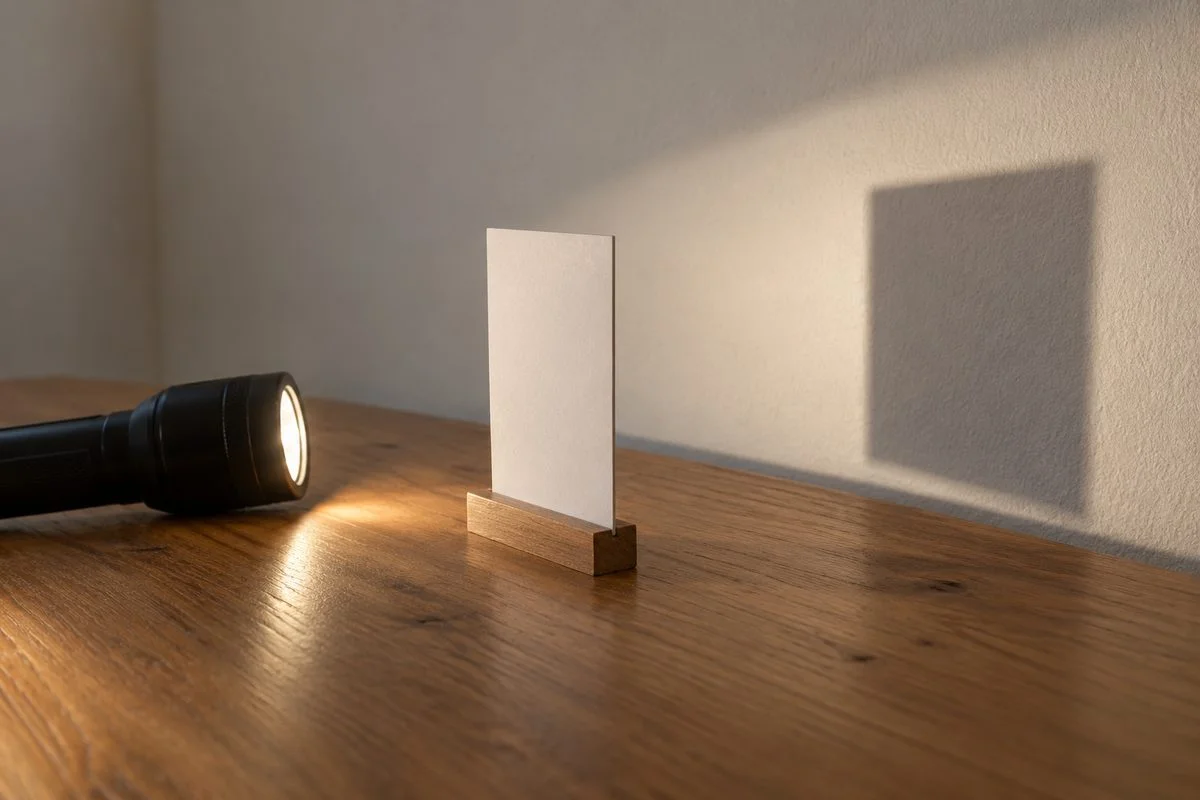
A lit torch shines on an upright opaque card, casting a shadow on the wall.

4. Shadow Formation

An object blocks light, leaving a darker area behind it.

Show
Hold an opaque card between a lit torch and wall. Keep the torch and wall fixed. After asking, move the card towards the torch and watch its shadow grow.
Ask
Will the shadow grow or shrink if we move the card towards the torch?
Say
The card blocks light from reaching part of the wall. Moving it towards this torch enlarges its shadow.
Used in
Thick cloth blocks light, creating shade on a surface behind it.
If your child says…“Nearer the torch means a smaller shadow.”
Ask
Which way do the shadow's edges move as the card approaches the torch?
What’s true
Here, moving the card towards the torch makes its shadow larger.
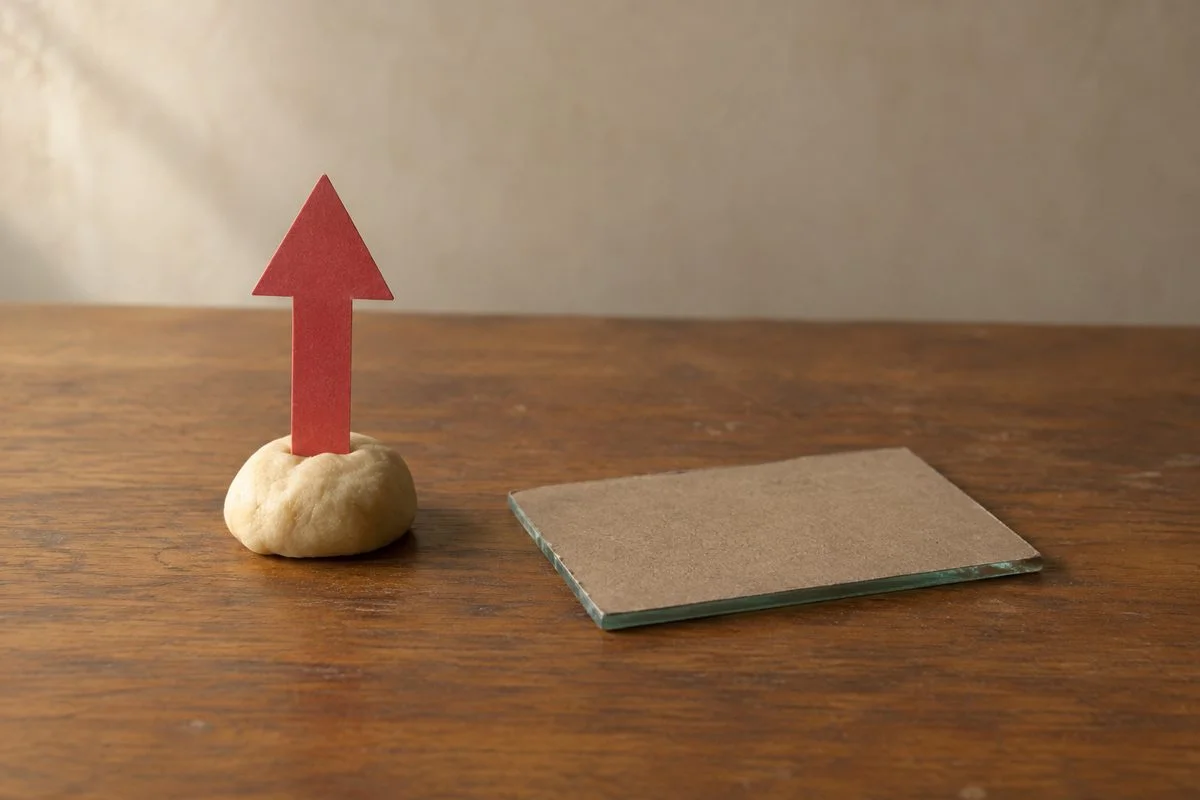
Paper arrow standing in dough, tip upwards, beside a face-down mirror.

5. Reflection and the Image in a Plane Mirror

A flat mirror redirects light and shows an upright image.

Show
Stand the stiff paper arrow in dough, tip upwards, beside the face-down mirror. After asking, stand the mirror facing it.
Ask
Will the arrow's image point up or down?
Say
Reflected light reaches your eyes from the mirror. The image stays upright and matches the object's size.
Used in
A plane mirror lets us view an upright image of an object.
If your child says…“The mirror turns things upside down.”
Ask
Where is the arrow's tip in its image?
What’s true
A plane mirror keeps top and bottom the same way up.

Devices that use light

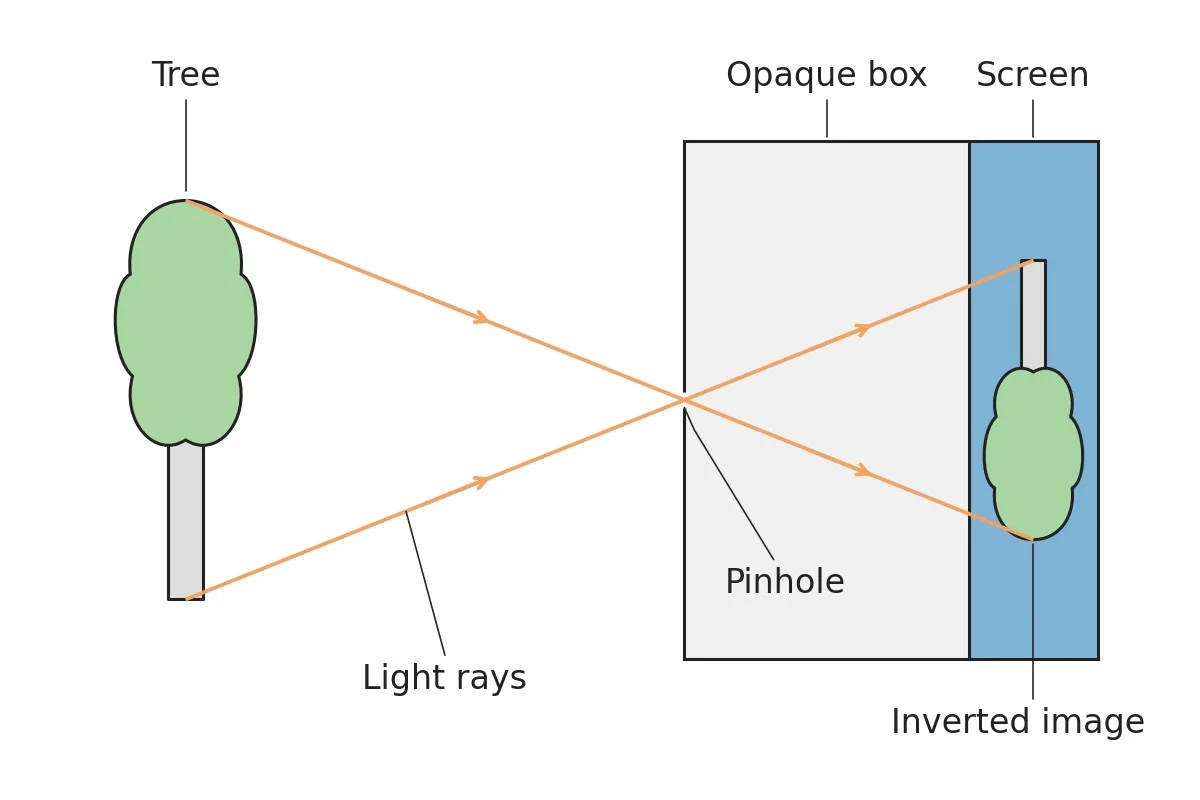
Straight rays cross at a pinhole, forming an inverted tree image on a screen.

6. Pinhole Camera

Light crossing a tiny hole makes an upside-down image.

Show
Find the tree, pinhole and screen in the diagram. After asking, trace both rays through the hole to the screen.
Ask
Where will light from the tree's top land after passing straight through this tiny hole?
Say
It reaches the screen's bottom, making the image upside down. The rays cross at the hole without bending.
Used in
A pinhole camera shows an object's colours as well as its shape.
If your child says…“The image will stand upright.”
Ask
After crossing the hole, where does light travelling downwards continue?
What’s true
Light from the tree's top crosses the hole and reaches the screen's lower part.
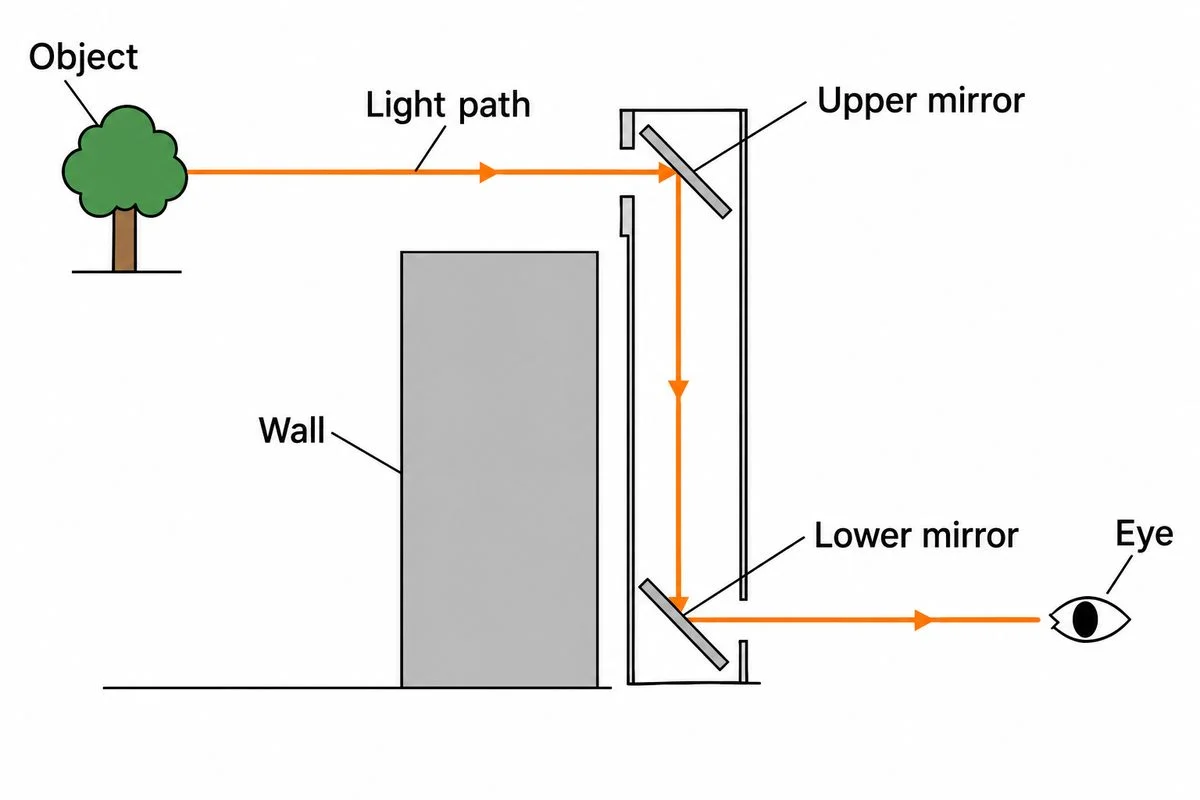
Two mirrors turn light over a wall and down towards an eye.

7. Periscope

Two mirrors turn light towards an eye behind an obstacle.

Show
Find the wall and both mirrors in the diagram. After asking, follow the arrows from the object, past both mirrors, to the eye.
Ask
How will light from this object reach an eye below the wall's top?
Say
The upper mirror sends light down to the lower mirror. The lower mirror turns it towards the eye, allowing a view over the wall.
Used in
A periscope lets someone see over a wall.
If your child says…“One mirror is enough.”
Ask
After the upper mirror sends light downwards, which mirror turns it towards your eye?
What’s true
This periscope needs both mirrors to guide light to the eye.
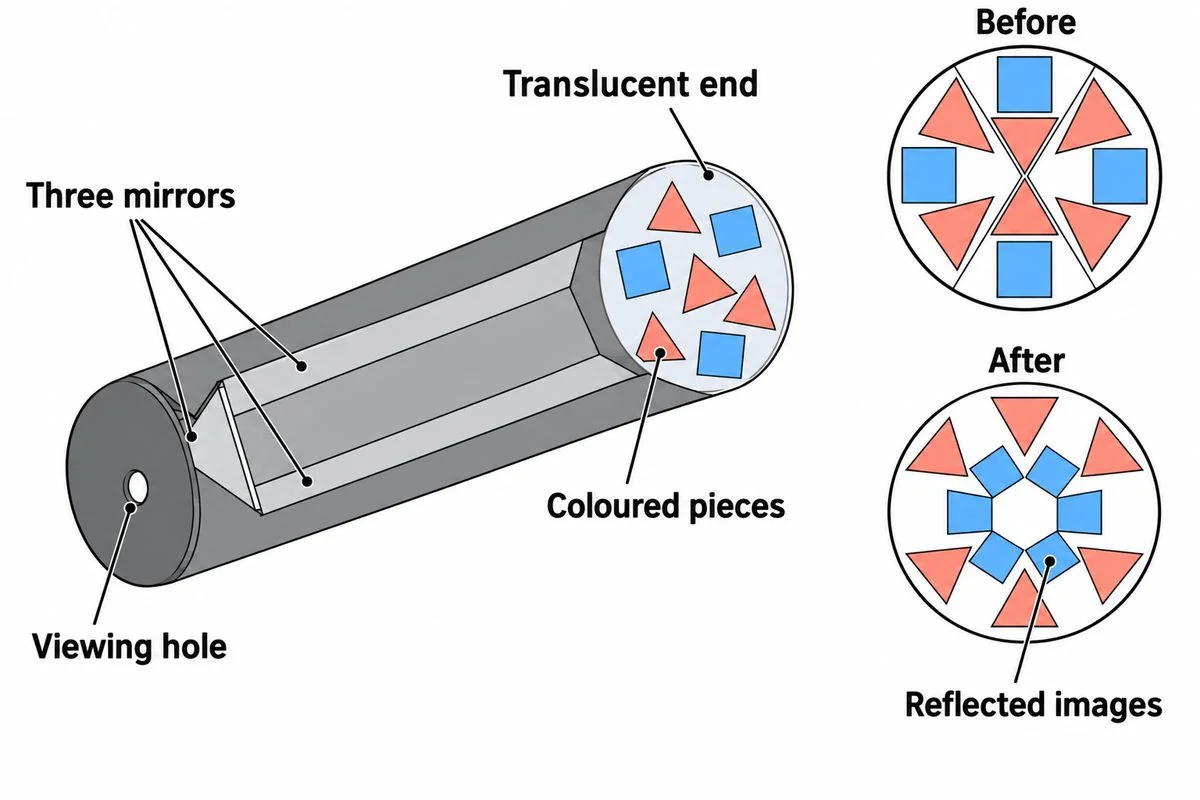
Three mirrors repeat coloured pieces into patterns that change when the pieces move.

8. Kaleidoscope

Mirrors repeat reflections of loose coloured pieces to make patterns.

Show
Find the mirrors and coloured pieces in the diagram. Compare the pieces with their reflected images. After asking, compare the before and after patterns.
Ask
How will moving these few pieces change the many shapes seen through the viewing hole?
Say
The mirrors reflect the pieces and each other's images, making many shapes. Moving the pieces changes their reflected positions, so the pattern changes.
Used in
A kaleidoscope uses repeated reflections to produce changing coloured patterns.
If your child says…“The pattern always stays the same.”
Ask
What changes in the reflections when you shift one piece?
What’s true
The pattern changes when the loose pieces change position.

A real problem

A safer view from the trenches

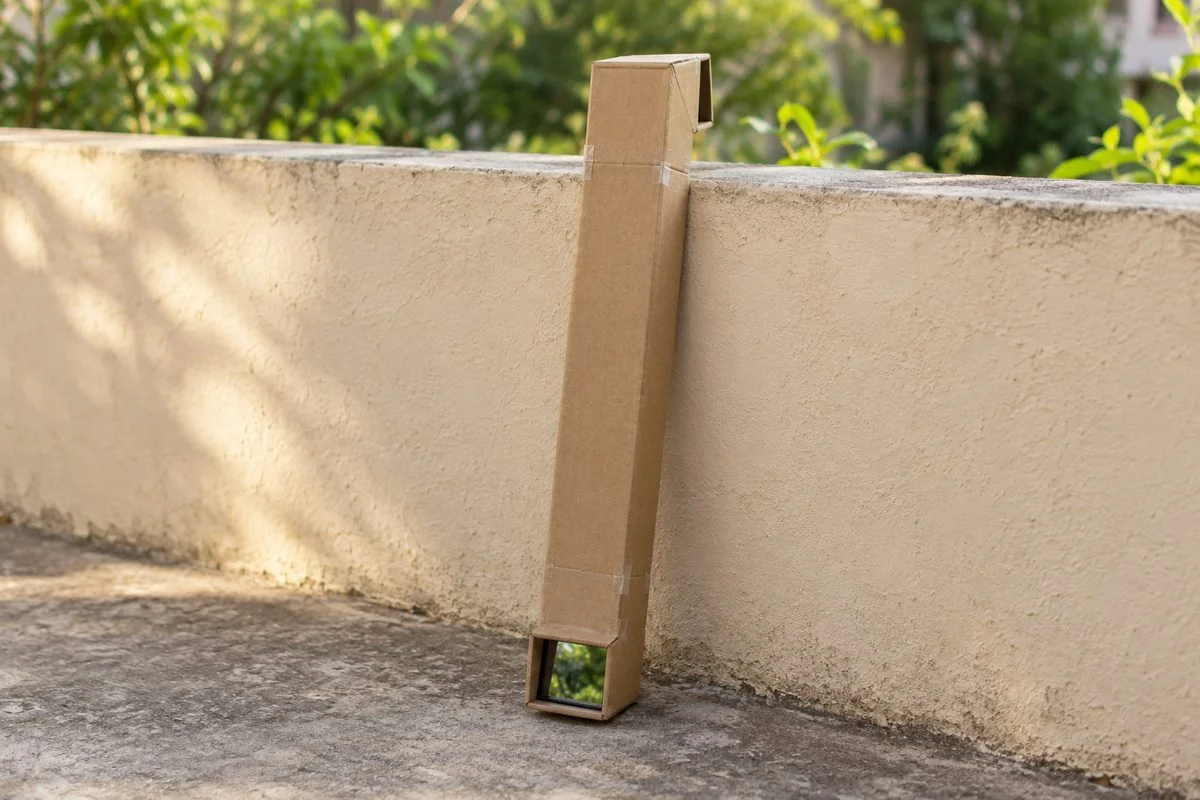
British and Australian forces received folding trench periscopes in 1917.

A trench periscope reduces the danger of watching enemy positions.

Its upper mirror sends light down; its lower mirror sends that light towards the observer.

Australian War MemorialNational Army Museum48th Highlanders Museum

Homemade cardboard periscope with its upper opening above a garden wall.

Concept Lab · Common misconception

The tempting mistake in Light: Shadows and Reflections

Open standalone misconception page →

Is a shadow a reflection?

Wrong

A shadow is a dark image reflected by the object.

Why it feels right. Both appear when light reaches an object.

Right

A shadow forms where an object blocks light. A mirror image forms when reflected rays reach your eye.

Worked example

Opaque card
Torchlight→Card blocks rays→Dark patch on wall
Mirror
Rays from card→Mirror redirects rays→Eye sees image
A shadow marks blocked rays. Seeing a mirror image requires reflected rays reaching the eye.
  1. An opaque card casts a dark silhouette onto a wall by blocking the torch beam.
  2. A mirror can send rays from the same card toward you so you see its colour and detail.

Ask your child eight quick questions.

One per step. The answer and the reason are given.

  1. When this torch switches on, what supplies the light for the mirror's new spot?

    The torch. The mirror reflects incoming light; it produces none.

  2. Where must the middle hole move for the bright spot to return?

    Aligned with both other holes. The holes must leave a straight path for the direct beam.

  3. Light passes through a sheet, but the shape looks blurred. Which material class fits?

    Translucent. Passing some light does not guarantee a clear view.

  4. With torch and wall fixed, where should the card move to shrink its shadow?

    Towards the wall. Moving away from the torch reduces the spread of light the card blocks.

  5. A paper shape has a pointed top and flat bottom. Where is its mirror-image point?

    At the top. A plane mirror produces an upright image.

  6. Where does light from the tree's top reach the pinhole camera's screen?

    At the bottom. Straight paths from the top and bottom cross at the hole.

  7. What does each mirror do to guide light into your eye?

    Downwards, then towards your eye. The upper mirror turns light down; the lower mirror turns it towards your eye.

  8. When a visible piece moves within the tube, what happens to its reflected copies?

    They move too. The mirrors reflect the piece in its new position.

15 more questions with answers, 3 with pictures