Skip to content

Teach Changes Around Us: Physical and Chemical in eight steps.

For each idea: show it, ask before you tell, then say one line.

Gather paper, a cold water bottle, an uncoated iron nail, a clear jar, water, soil, a tray and a glass.

An adult handles the sharp nail.

Common misconceptions & worked visual for this chapter · 15 practice questions with answers

How to teach it

Notice and identify changes

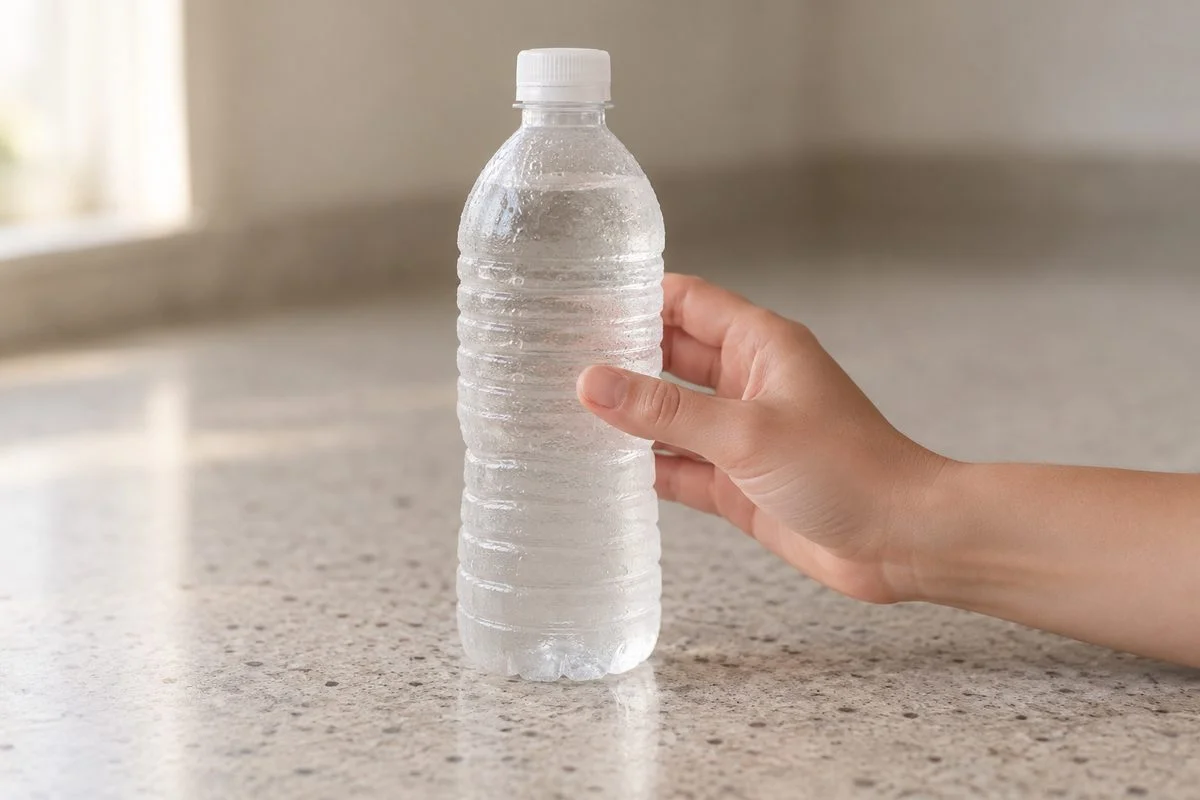
A hand touches a capped water bottle on a stone surface.

1. Noticing changes

Changes can affect more than what we see.

Show
Touch a cold water bottle. After predicting, leave it in a warm room and compare its feel later.
Ask
Will the bottle feel different even if it looks unchanged?
Say
A change in temperature counts too. Our senses help us compare before and after.
Used in
Changes in a stored banana’s smell help us notice its condition.
If your child says…“It looks the same, so nothing changed.”
Ask
What does touching the bottle tell you that looking misses?
What’s true
Sight alone cannot reveal every change.
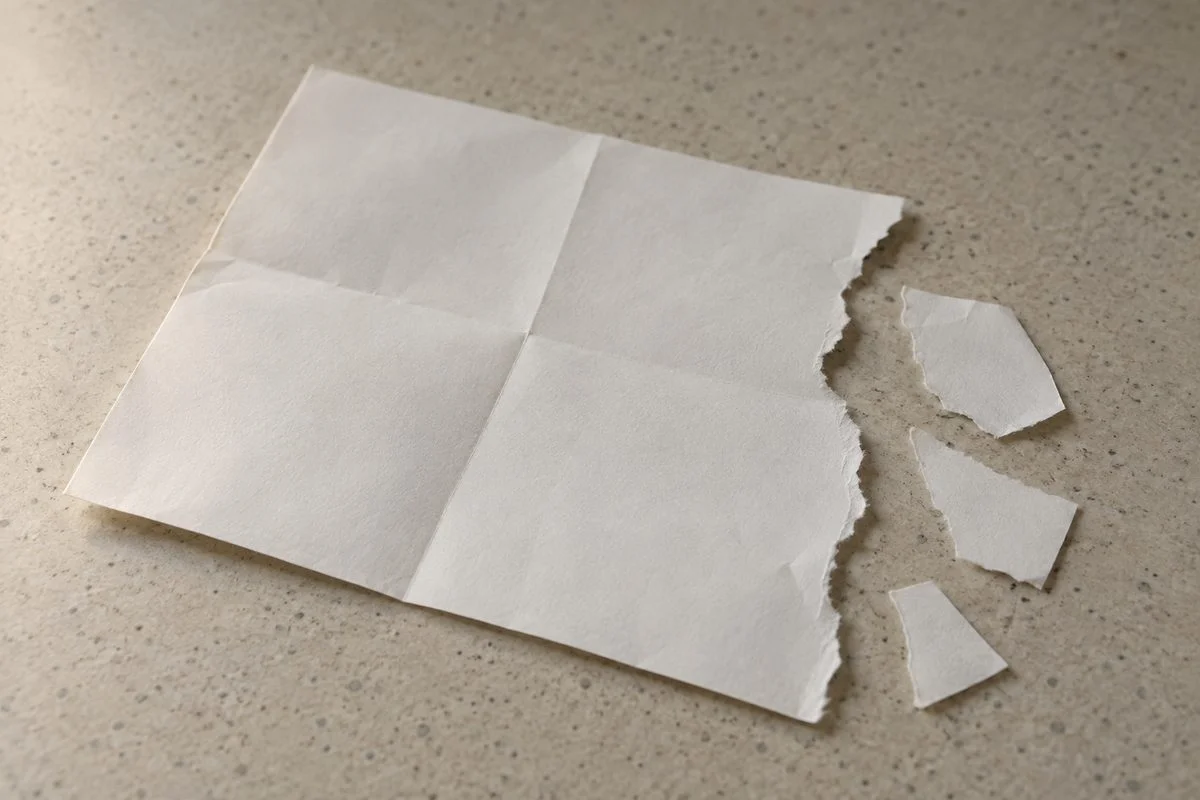
An unfolded, creased sheet beside torn pieces of paper.

2. Physical changes and reversibility

The substance stays unchanged, but the original form may be lost.

Show
Set out paper. After predicting, fold it, unfold it, then tear it.
Ask
Which action will be easier to undo: folding or tearing?
Say
Unfolding reverses the fold. Tearing still leaves paper, although pressing the pieces together cannot restore the sheet.
Used in
Freezing melted ice lets us recover water in its solid form.
If your child says…“If I cannot undo it, it must be chemical.”
Ask
Did tearing make another substance, or smaller pieces of paper?
What’s true
A physical change need not be reversible.
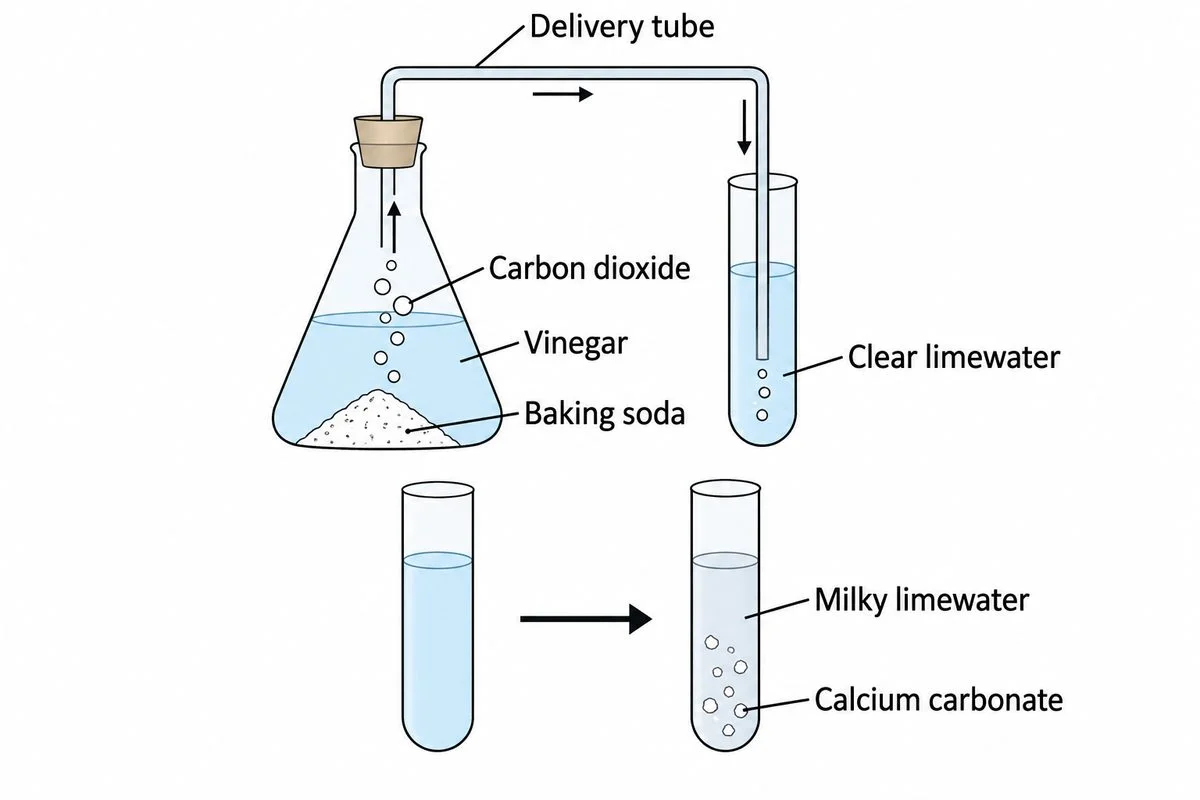
Diagram tracing gas from vinegar and baking soda into limewater, which becomes milky.

3. Chemical changes and the carbon dioxide test

Chemical changes produce new substances.

Show
Follow the diagram’s gas tube into lime water. Compare the tubes below.
Ask
How could lime water identify this gas?
Say
Carbon dioxide makes lime water milky by forming calcium carbonate, a solid that cannot dissolve.
Used in
Lime water identifies carbon dioxide when bubbles alone cannot.
If your child says…“Nothing new can form without heating.”
Ask
Does the diagram show heating before the new white solid forms?
What’s true
Chemical reactions can happen at room temperature.
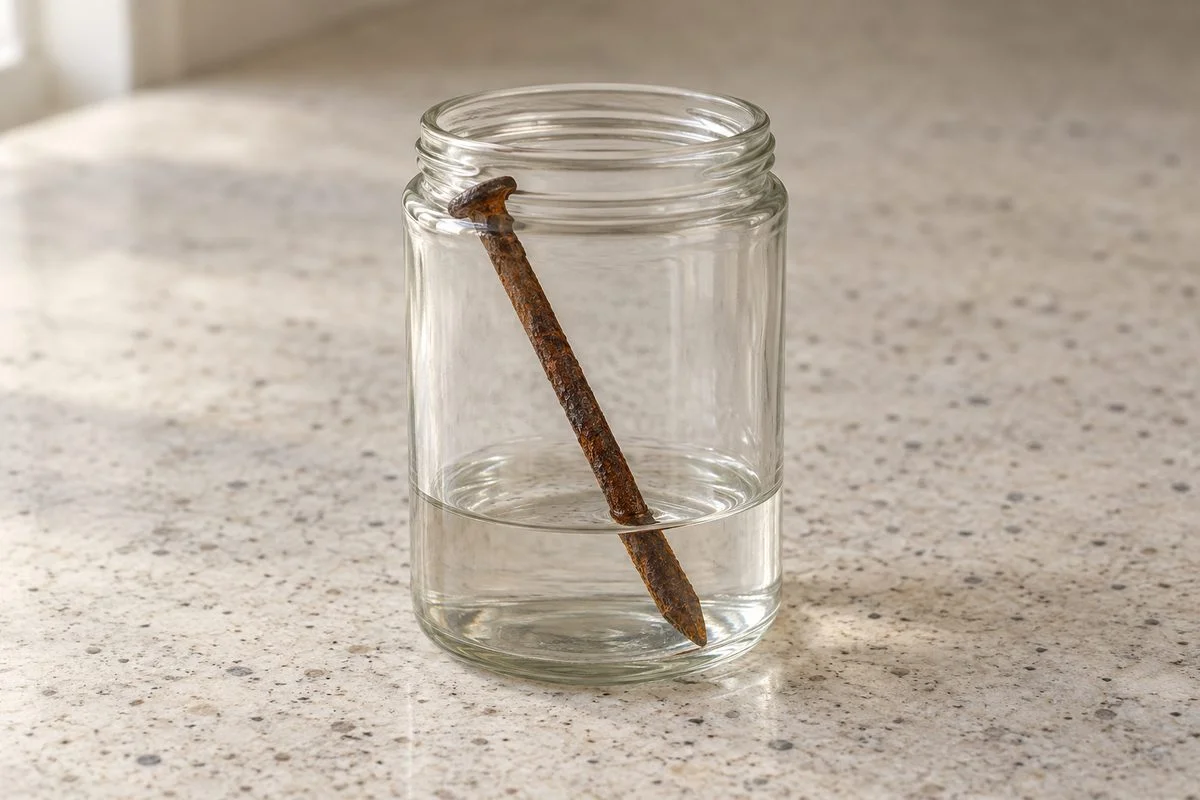
A rusty iron nail in a clear jar with its tip under water.

4. Rusting

Iron reacts with oxygen and moisture, producing rust.

Show
Several days beforehand, look at the clean, uncoated nail together. After predicting, an adult places it in a clear jar with water covering its tip. During the lesson, compare its surface with what you saw before.
Ask
What might happen to the damp nail over several days?
Say
Rust is a different substance made through a chemical change.
Used in
Oil helps protect iron by reducing contact with oxygen and moisture.
If your child says…“Rust is just dirt.”
Ask
Where could rust on this clean nail have come from?
What’s true
Rust contains iron that came from the object.

Understand burning

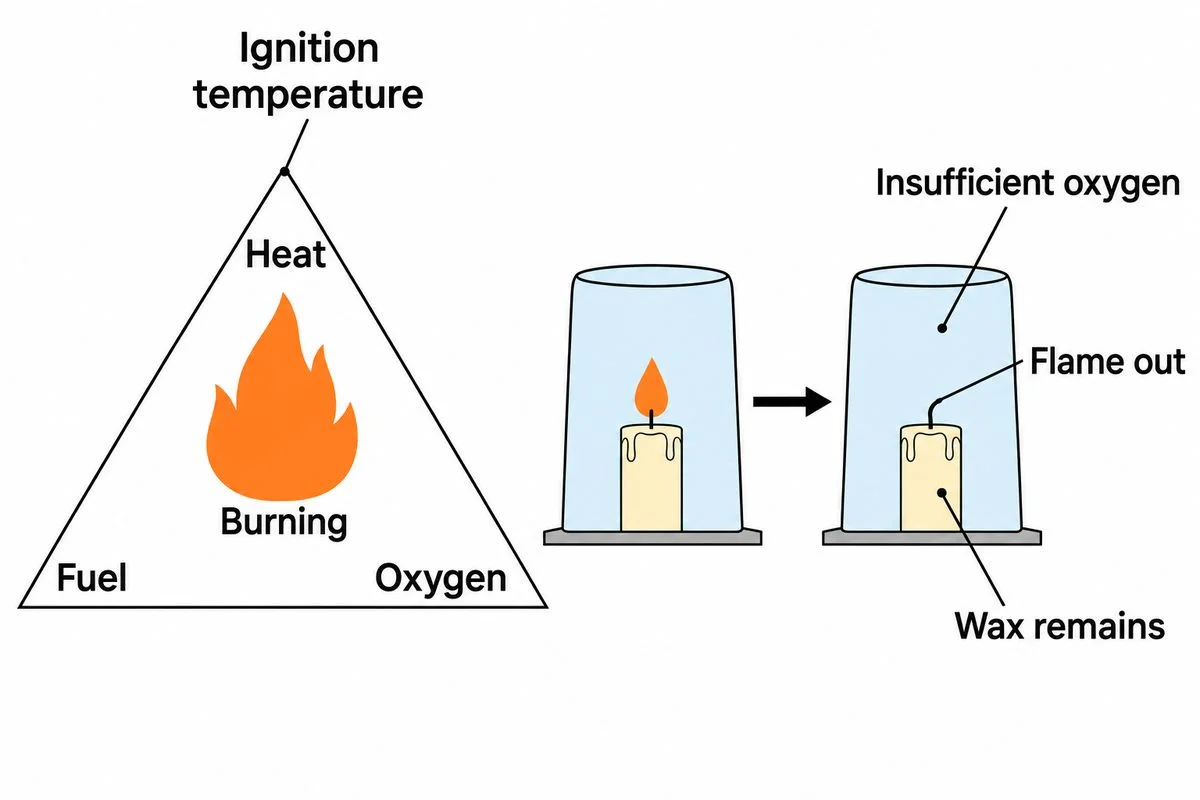
Fire triangle beside a covered candle whose flame goes out while wax remains.

5. Combustion and ignition temperature

Burning reacts with oxygen, releasing heat and sometimes visible light.

Show
Find the diagram’s triangle labels. Compare the covered candles.
Ask
Why aren't fuel and air enough?
Say
Fuel must reach its ignition temperature to burn: its minimum temperature for catching fire. The covered flame loses its oxygen supply and goes out.
Used in
Burning cooking gas supplies heat for preparing food.
If your child says…“The cover makes all the wax run out.”
Ask
What fuel remains after the flame goes out?
What’s true
The flame goes out when too little oxygen remains to keep it burning.
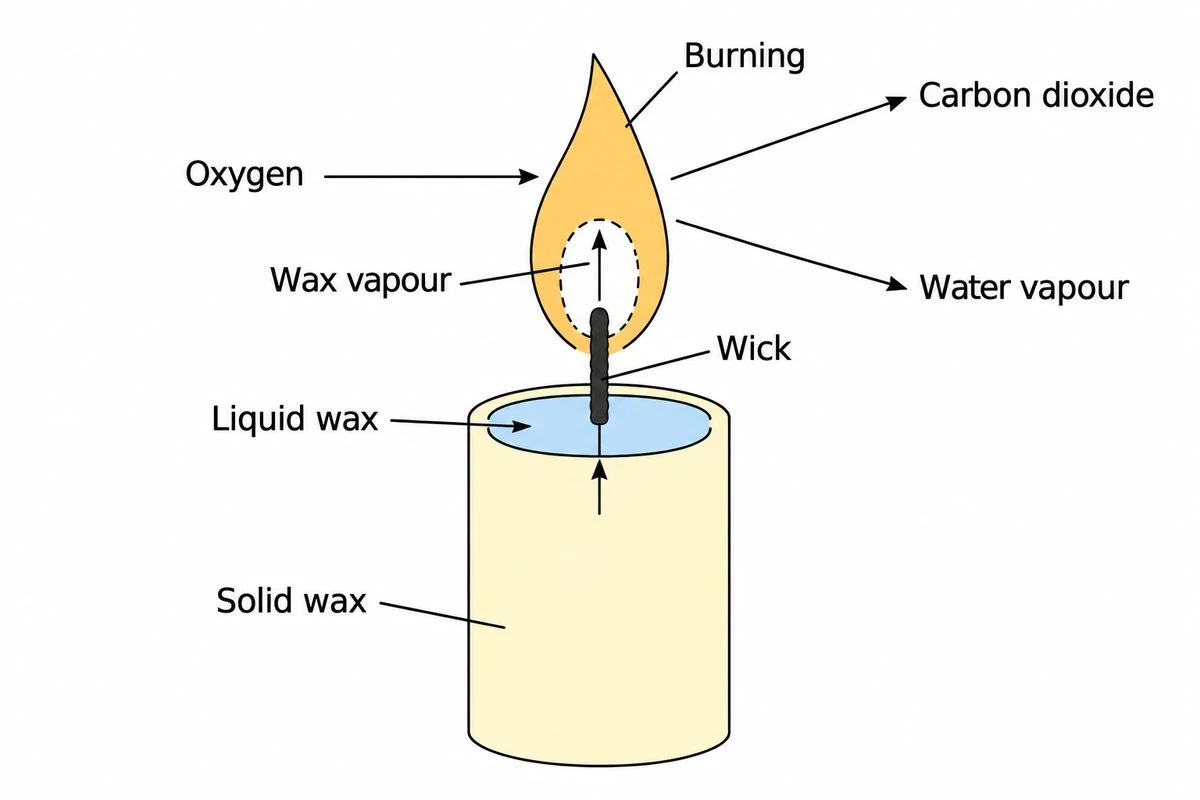
Candle diagram showing wax melting, rising through the wick, vaporising and burning.

6. Physical and chemical changes in a candle

Wax changes state before its vapour burns.

Show
Follow the diagram’s wax arrows, then oxygen and the products.
Ask
Does this wax merely melt away?
Say
Wax melts, climbs the wick and vaporises: physical changes. Its vapour then reacts with oxygen, making carbon dioxide and water vapour: a chemical change.
Used in
Candles provide light as wax vapour burns.
If your child says…“Everything happening beside a flame must be chemical.”
Ask
Does melted wax become another substance just because a flame is nearby?
What’s true
Each part of a process needs judging separately.

Changes over time

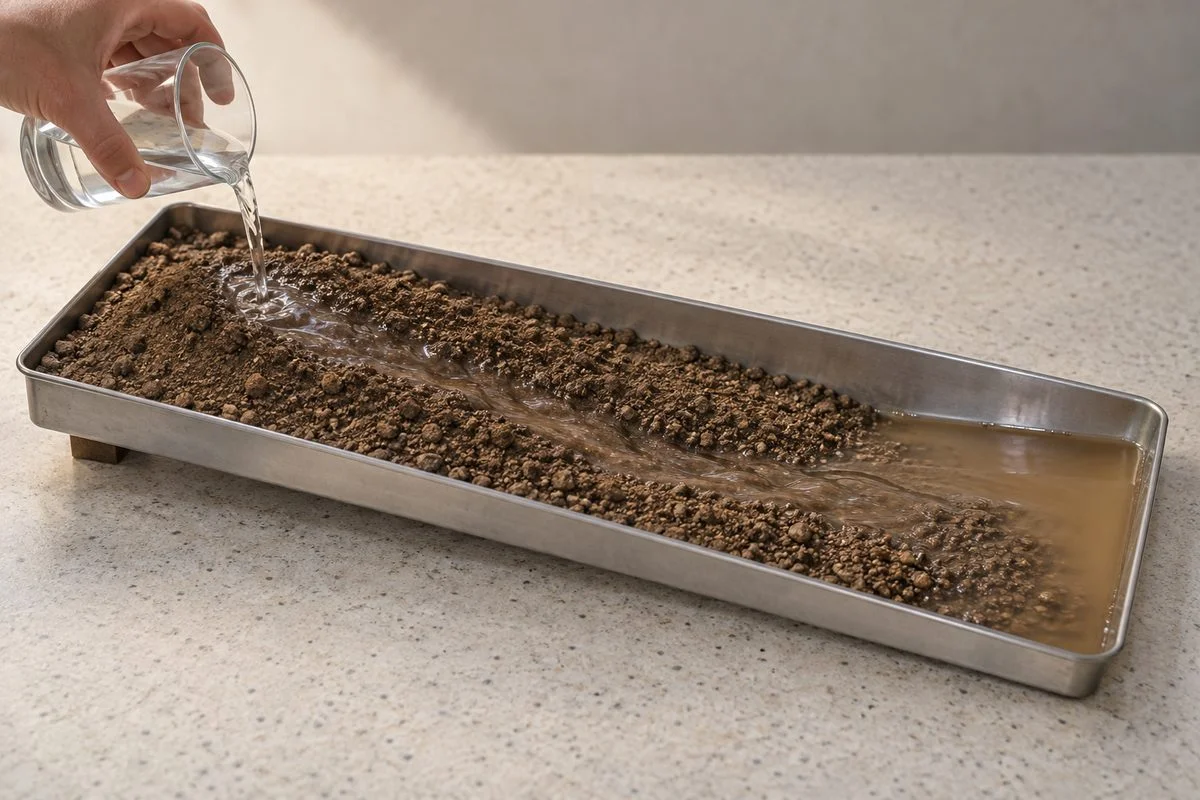
Water carries soil from the tray’s raised left end towards its lower right end.

7. Weathering and erosion

Weathering changes rock in place. Erosion carries material elsewhere.

Show
Put soil in a tray and tilt it. After predicting, pour water gently from its higher end.
Ask
What will happen to the soil when water runs downhill?
Say
Water carrying soil downhill is erosion.
Used in
Weathering produces material that helps form soil.
If your child says…“Weathering and erosion mean the same thing.”
Ask
Did our tray show rock breaking down, or soil moving elsewhere?
What’s true
Breaking down rock and carrying material away are different changes.
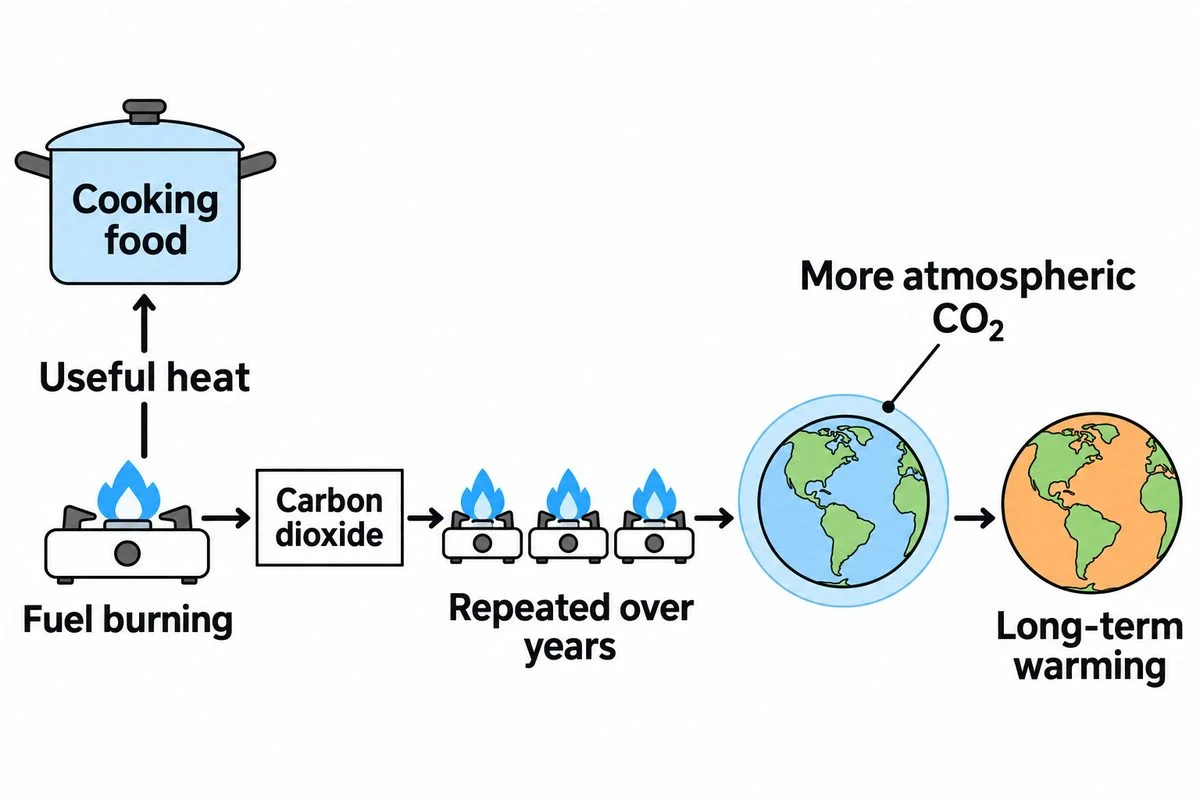
Burning fuel provides cooking heat while repeated use adds carbon dioxide and contributes to warming.

8. Desirable, undesirable and long-term changes

Useful changes can also cause harm over time.

Show
Follow the diagram’s branches from the burner to cooking and warming.
Ask
Could this useful fuel also cause harm?
Say
Burning gas heats food but adds carbon dioxide to the atmosphere. Over years, rising carbon dioxide reduces heat loss to space, contributing to warming.
Used in
Cooking makes useful food, even though it forms different substances.
If your child says…“If burning fuel is useful, it cannot cause harm.”
Ask
Where does the carbon dioxide go after the cooking is finished?
What’s true
A wanted change can also have harmful effects over time.

A real problem

Stainless steel reduces rust in cutlery

Harry Brearley discovered stainless steel in 1913.

Cutlery making was the first practical use to benefit from his rust-resistant steel.

An oxide film rich in chromium forms naturally on stainless steel and reduces corrosion.

Sheffield MuseumsSheffield City CouncilBritish Stainless Steel Association

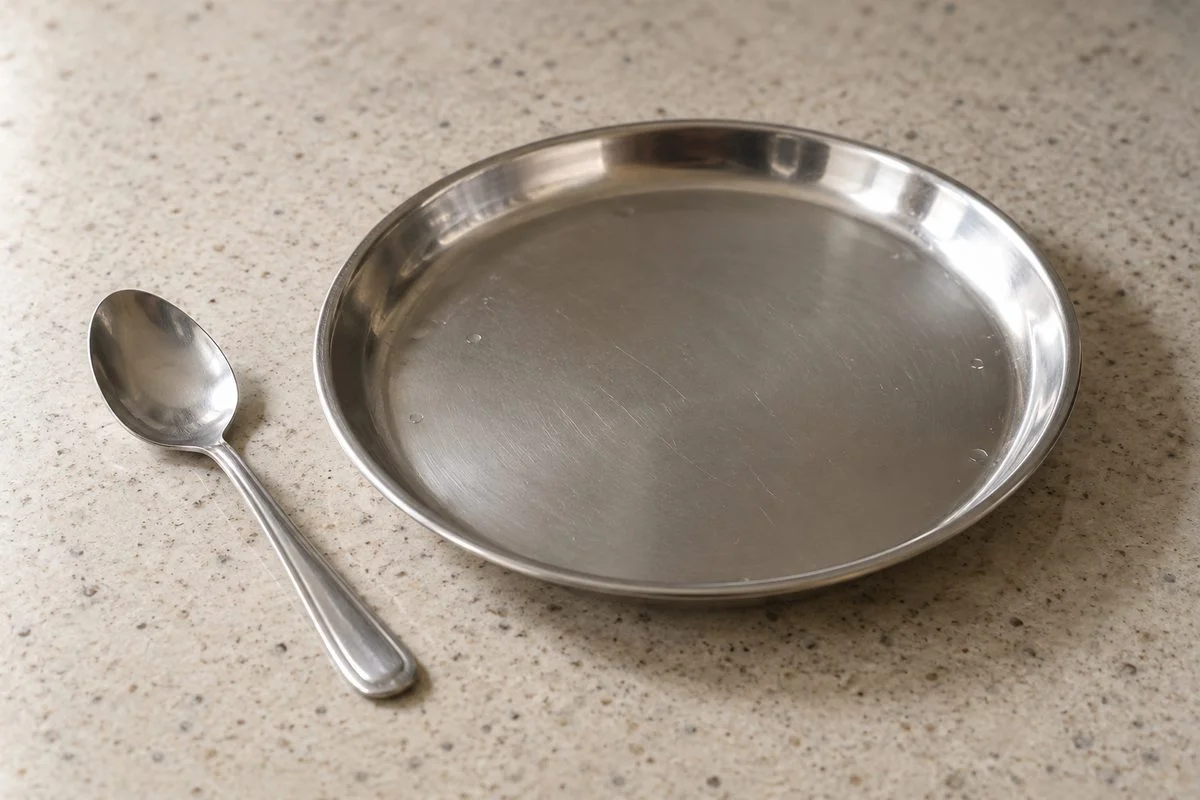
A stainless steel spoon beside a washed plate on a kitchen counter.

Concept Lab · Common misconception

The tempting mistake in Changes Around Us: Physical and Chemical

Open standalone misconception page →

Does melting make a new substance?

Wrong

Melted ice has turned into a new substance.

Why it feels right. It looks and flows differently.

Right

Melting changes physical state and preserves chemical identity.

Worked example

Ice · fixed positions
H₂OH₂OH₂O
H₂OH₂OH₂O
Liquid · rearranging
H₂OH₂O
H₂OH₂OH₂OH₂O
Each tile is one water molecule. Melting changes how molecules are arranged and move.
  1. Ice and the liquid formed as it melts both consist of H₂O molecules.
  2. The molecules can move past one another in the liquid instead of holding positions in the solid structure.

Ask your child eight quick questions.

One per step. The answer and the reason are given.

  1. The bottle looks unchanged but feels warmer. Has a change happened?

    Yes. Its temperature has changed even though it looks the same.

  2. Crushing chalk leaves chalk powder, but the original stick cannot simply be recovered. Is this physical or chemical?

    Physical. No new substance forms, even though the original stick cannot simply be recovered.

  3. Must vinegar and baking soda be heated before they can make new substances?

    No. New substances can form at room temperature.

  4. Why is rust on a clean nail more than a coating of dirt?

    The nail’s iron has reacted. Rust forms through a reaction, rather than dirt settling.

  5. Why does the covered candle go out while wax remains?

    Too little oxygen remains. Wax remains, but oxygen cannot keep entering.

  6. Wax melts beside burning wax vapour. Which of these changes forms new substances?

    Only wax vapour burning. Melting changes wax’s state, while burning changes its substances.

  7. Soil slides downhill without rocks breaking down. What process does this show?

    Erosion. Material moves elsewhere rather than rock breaking down where it lies.

  8. Which gas in this diagram contributes to warming when it builds up in the atmosphere?

    Carbon dioxide. More carbon dioxide reduces heat loss to space and contributes to warming.

15 more questions with answers, 4 with pictures