Skip to content

Teach Life Processes in Plants in eight steps.

For each idea: show it, ask before you tell, then say one line.

Gather a potted plant, ruler, paper and pencil.

Common misconceptions & worked visual for this chapter · 15 practice questions with answers

How to teach it

Growth and food-making

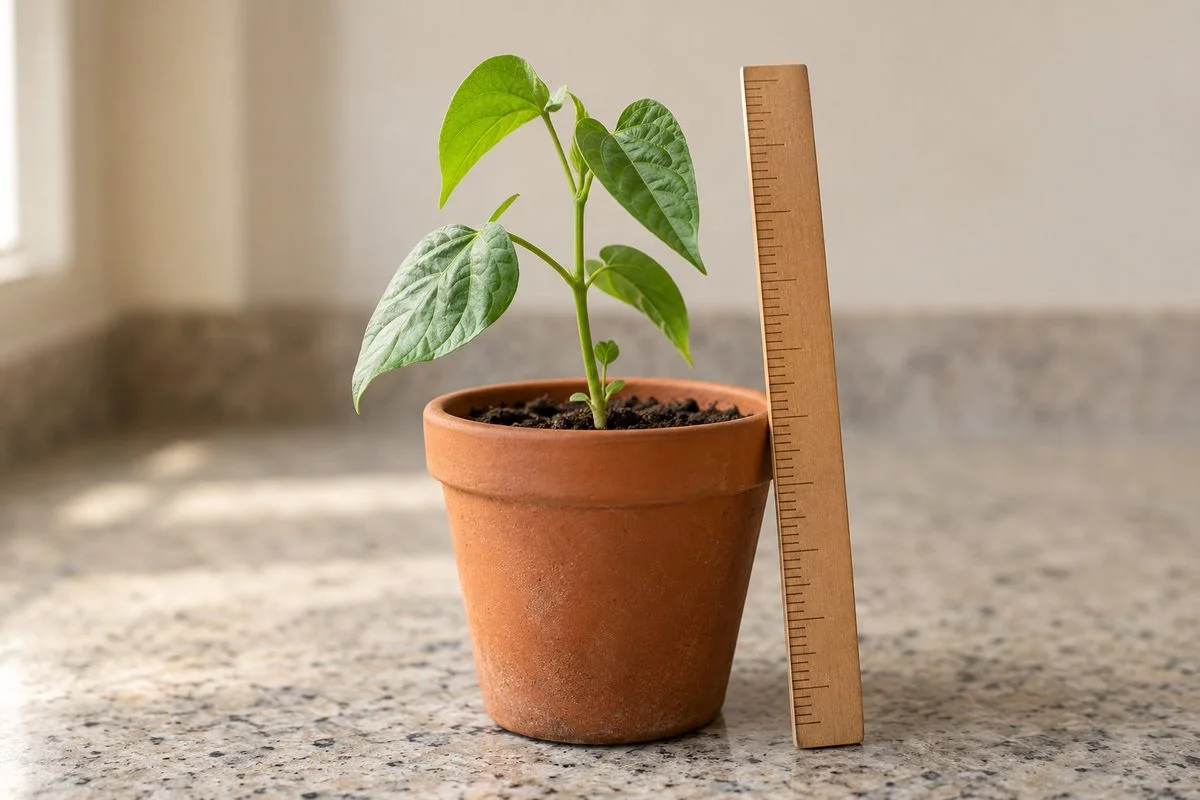
Potted plant with a ruler standing beside it.

1. Plant growth

Growth includes new parts and increases in size.

Show
Measure the plant’s height and count its leaves. Record both with today’s date. Repeat later to look for changes.
Ask
If more leaves appear without extra height, will this plant have grown?
Say
New leaves also show growth.
Used in
Wardian cases preserved water and admitted sunlight, helping plants survive transport.
If your child says…“It only grows if it gets taller.”
Ask
What would counting leaves reveal that measuring height misses?
What’s true
Height measures only one part of growth.
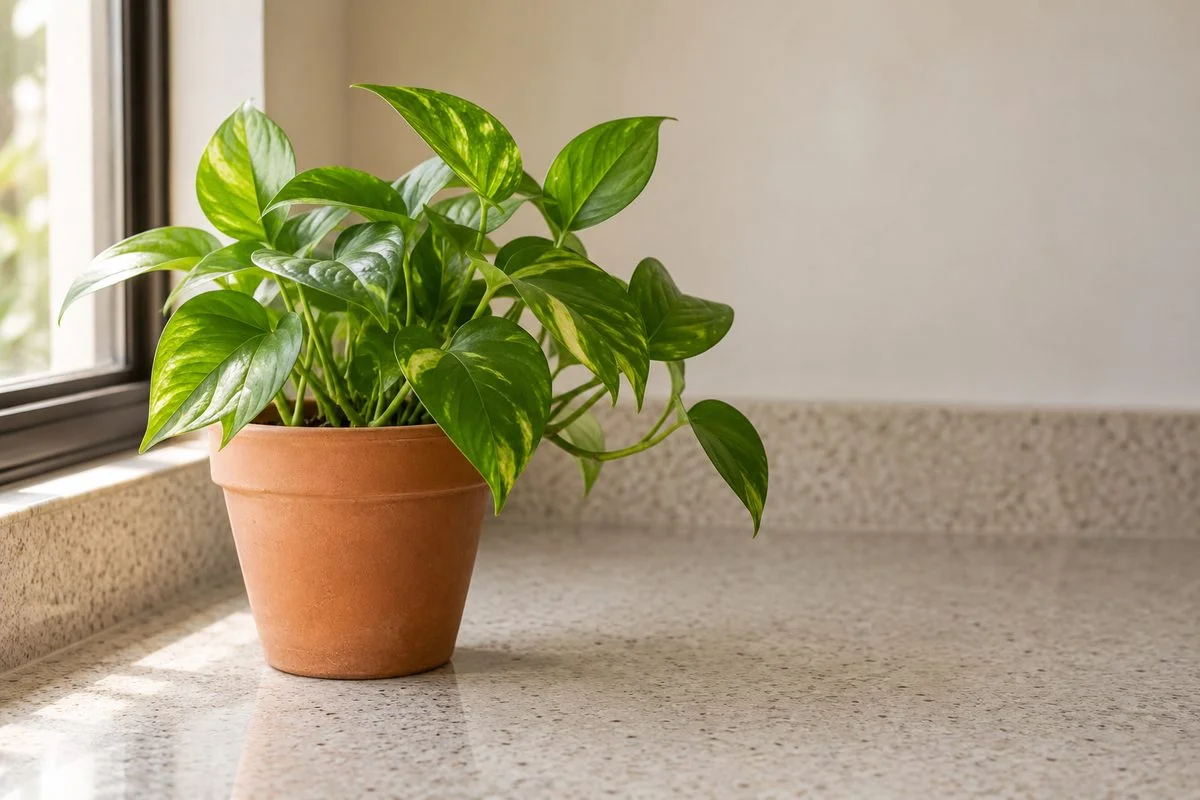
Green potted plant beside a window.

2. Chlorophyll

The green pigment that captures light energy for food-making.

Show
Point to a green leaf on the plant beside a window.
Ask
Could this leaf make new food inside a completely dark cupboard?
Say
Chlorophyll captures light energy. Green colour alone cannot power food-making.
Used in
Red or violet leaves containing chlorophyll can also make food for the plant.
If your child says…“Green leaves make food even in darkness.”
Ask
What energy could chlorophyll capture inside that dark cupboard?
What’s true
Food found after darkness may have been made earlier.
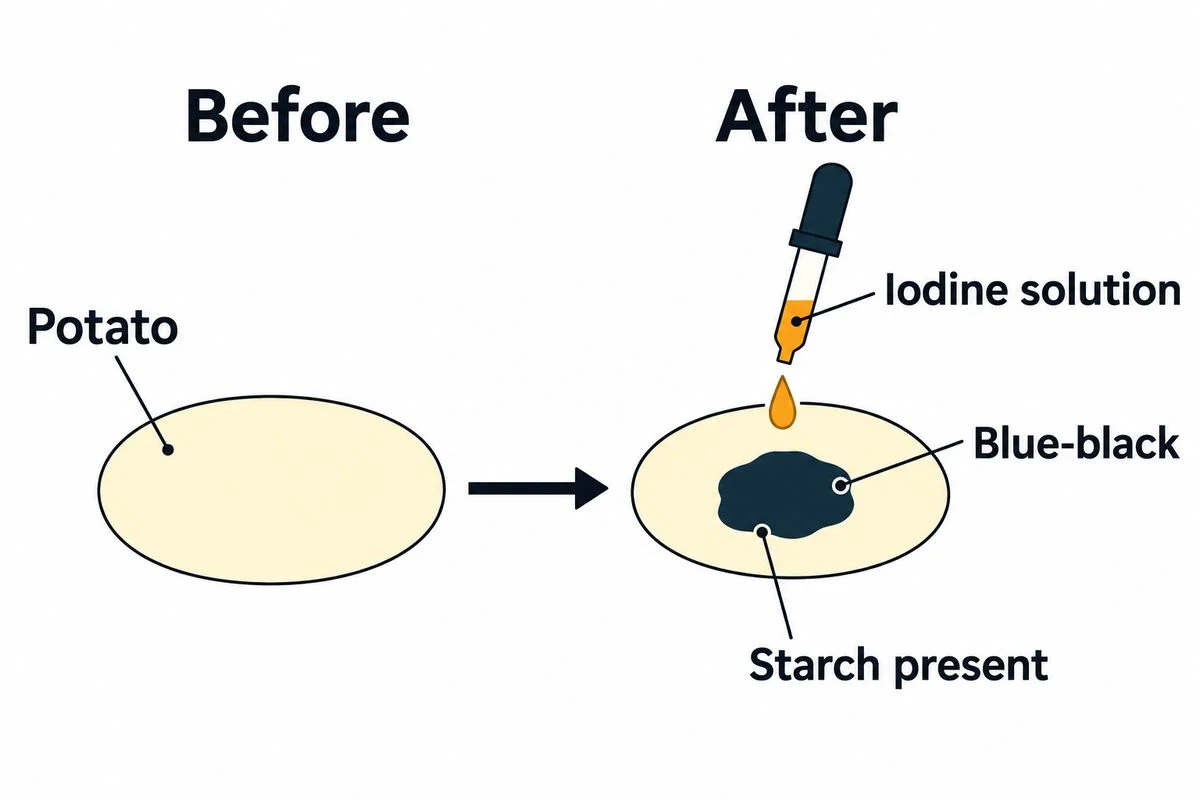
Potato slice before iodine treatment and after, showing a blue-black starch result.

3. Starch test

Iodine turns blue-black where starch is present.

Show
Look at the diagram’s potato slice on the left. Follow the arrow to the slice treated with iodine.
Ask
What colour will the potato’s iodine-treated patch become if it contains starch?
Say
Iodine turns blue-black where starch is present. This reveals starch already stored in the potato.
Used in
Starch tests help check whether a leaf stored food after receiving light.
If your child says…“Iodine finds the green pigment.”
Ask
What did iodine find in the potato?
What’s true
Blue-black colour indicates starch, not chlorophyll.
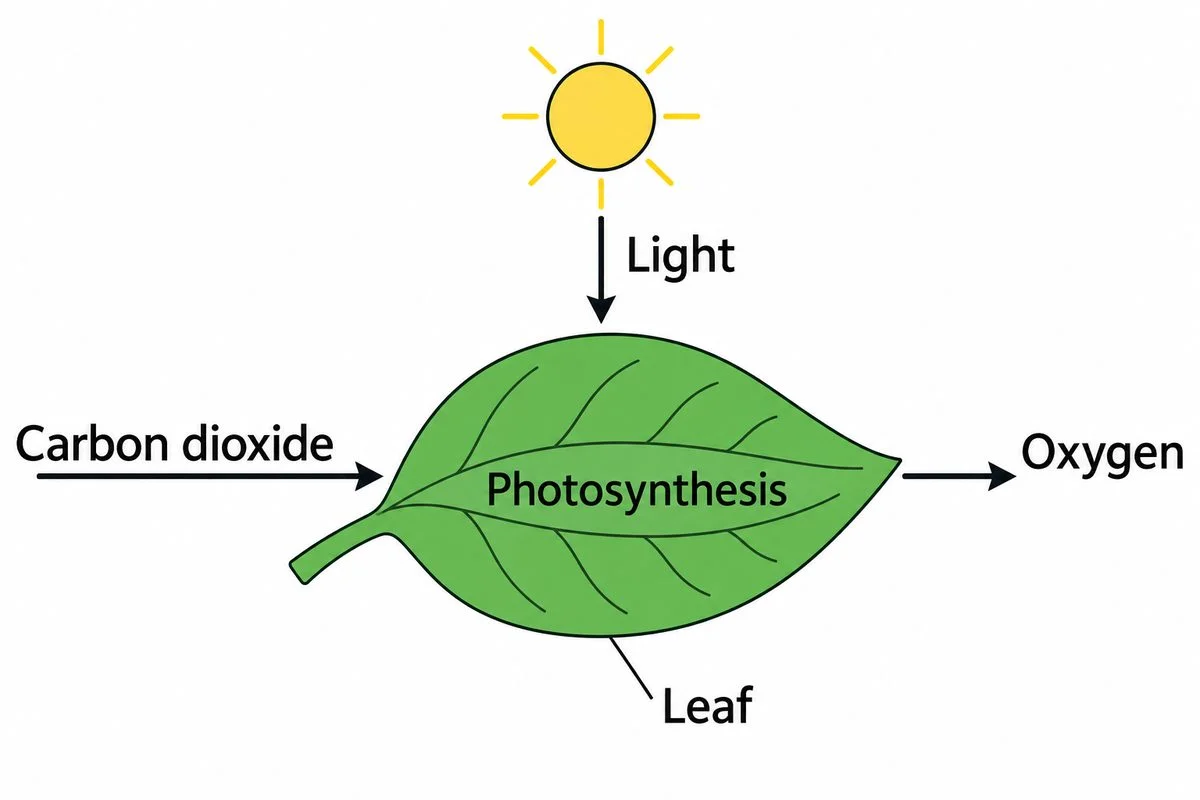
Sunlit leaf using carbon dioxide and releasing oxygen during food-making.

4. Gases in food-making

Plants use carbon dioxide and release oxygen while making food.

Show
Find the sunlit leaf in the diagram. Follow the gas arrow entering it, then the arrow leaving it.
Ask
Which gas will this leaf use for food-making, and which will it release?
Say
During food-making, the leaf uses carbon dioxide and releases oxygen.
Used in
Carbon dioxide from air supplies carbon for plant food.
If your child says…“Plants give out carbon dioxide when making food.”
Ask
Which gas supplies carbon that becomes part of the food?
What’s true
The arrows describe food-making, not every gas movement in a plant.
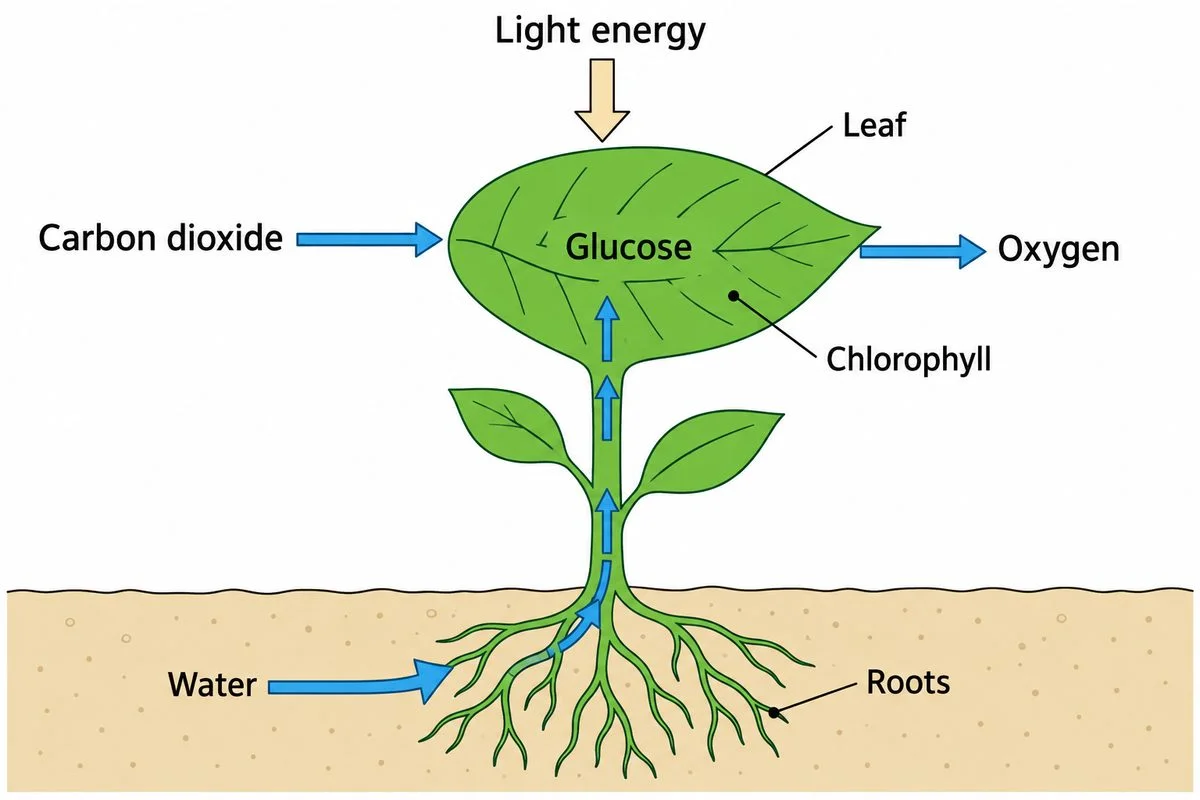
Plant diagram showing materials, light energy and products of photosynthesis.

5. Photosynthesis

Plants use light energy to make glucose from water and carbon dioxide.

Show
In the diagram, follow water from the roots to a leaf. Find the carbon dioxide and light arrows. Then find the green stem.
Ask
Could this green stem make food if it receives light, water and carbon dioxide?
Say
Chlorophyll captures light energy. Plants use this energy to make food from water and carbon dioxide. Green stems can do this too.
Used in
Green stems can help supply a plant’s food.
If your child says…“Only leaves can make food.”
Ask
What does a green stem have that helps leaves capture light?
What’s true
Other parts containing chlorophyll can also photosynthesise under suitable conditions.

Moving materials and releasing energy

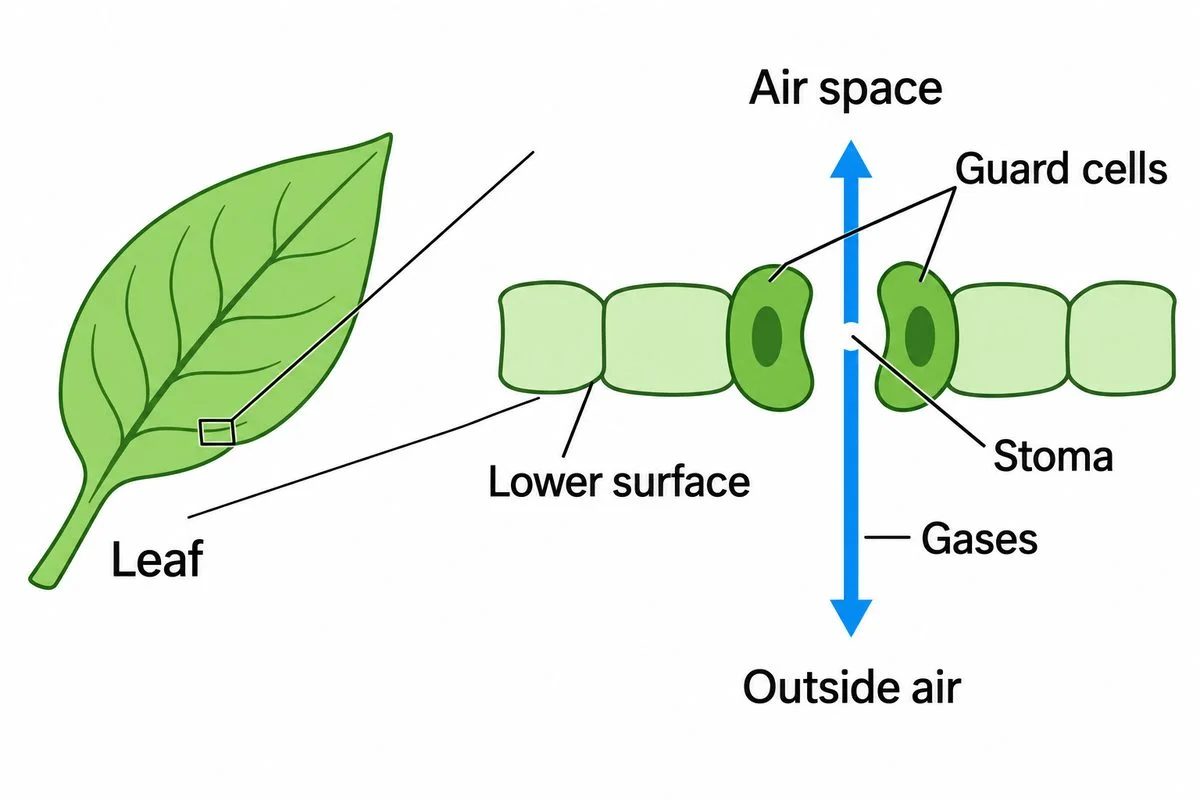
Enlarged leaf opening with guard cells and gas arrows passing both ways.

6. Stomata

Tiny leaf openings through which gases move.

Show
Find the leaf in the diagram, then its enlarged lower surface. Follow both arrows through the opening between the guard cells.
Ask
If this leaf needs oxygen for respiration, can oxygen pass inward through the open pore?
Say
Gases pass both ways through tiny openings called stomata. Oxygen can enter through them for respiration.
Used in
Leaf pores admit oxygen that helps leaves release energy from food.
If your child says…“Leaf pores only let carbon dioxide in.”
Ask
How could oxygen enter a leaf that needs to release food energy?
What’s true
Stomata allow gas exchange for both food-making and respiration.
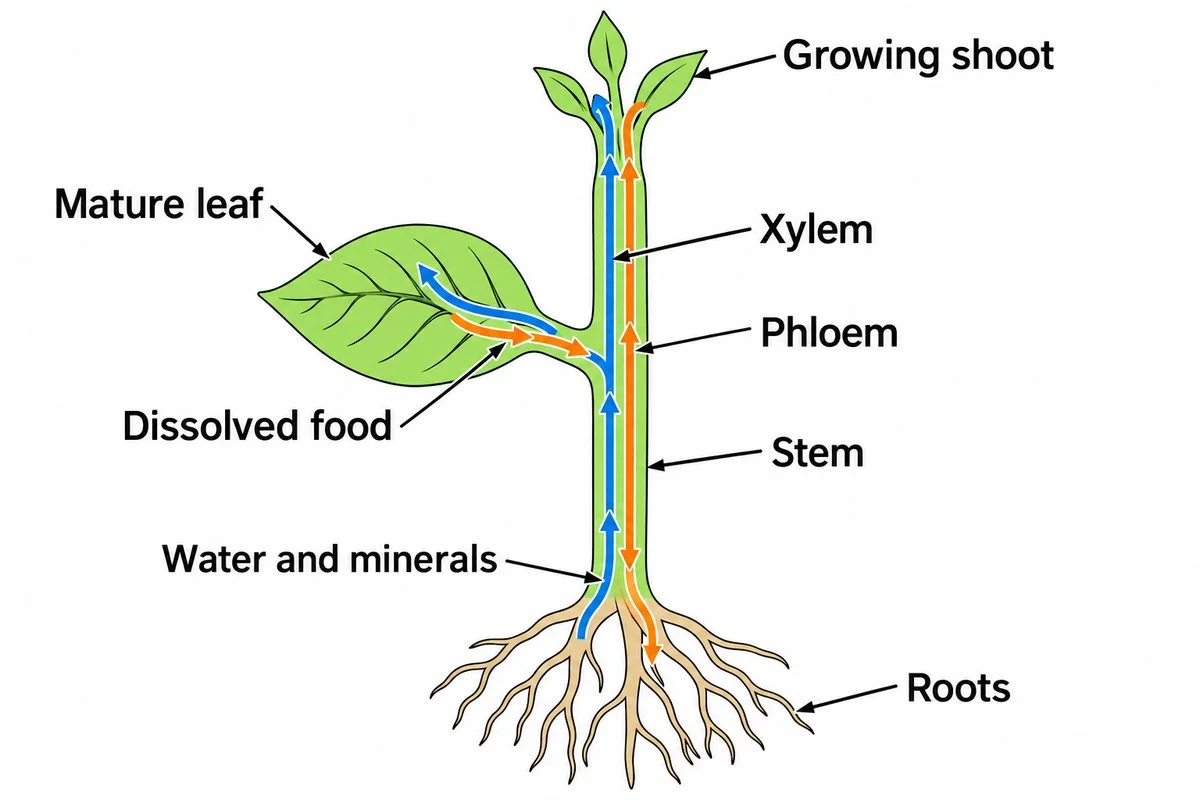
Separate plant routes carry water upwards and leaf-made food towards roots and shoots.

7. Xylem and phloem

Xylem carries water and minerals; phloem carries food.

Show
In the diagram, follow blue arrows from roots to leaves. Follow orange arrows from the mature leaf to roots and the growing shoot.
Ask
Which directions will food travel from this mature leaf to the roots and growing shoot?
Say
Xylem usually carries water and minerals upwards from roots. Phloem carries dissolved food from leaves to parts needing it, above or below.
Used in
Food delivered to growing shoots supports their growth.
If your child says…“Everything inside plants travels upwards.”
Ask
How would roots get leaf-made food if nothing could travel down?
What’s true
Roots receive food made in leaves.
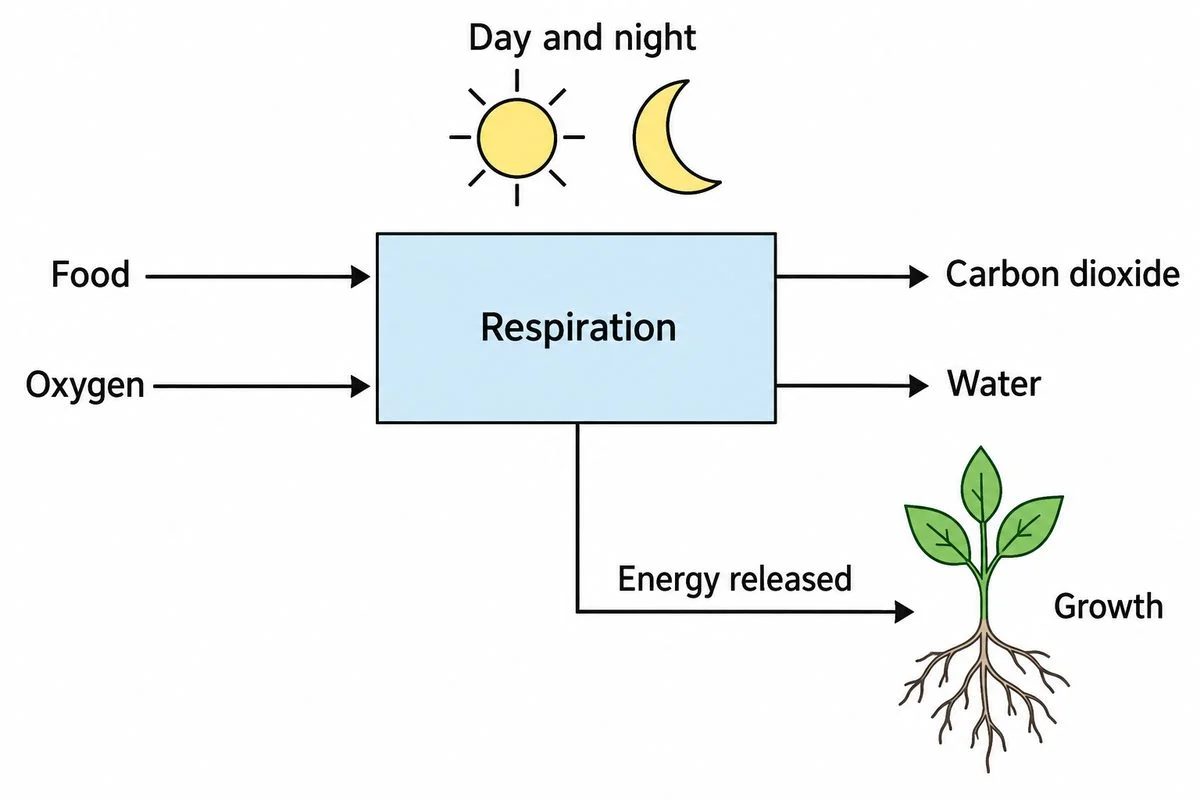
Respiration uses food and oxygen, releasing energy for plant growth day and night.

8. Respiration

Breaking down food to release energy.

Show
Find food and oxygen entering the respiration box in the diagram. Follow the outgoing arrows, then the energy arrow towards growth.
Ask
Will this plant still release energy for growth from food after daylight ends?
Say
Living plant parts break down food using oxygen, releasing energy, carbon dioxide and water. This respiration continues day and night.
Used in
Respiration supplies energy for a seed’s growth.
If your child says…“Only green leaves release energy from food.”
Ask
Where could a sprouting seed get energy before green leaves appear?
What’s true
Living roots and germinating seeds also break down food for energy.

A real problem

Ward’s glass case helped plants survive transport.

Live plants often died during transport before Wardian cases were used.

Ward tested his case on a voyage from London to Sydney in 1833.

The glass admitted sunlight, and condensed water returned to the plants.

Robert Fortune successfully transported tea plants from China to India using Wardian cases.

Royal Botanic Gardens, KewRoyal Botanic Gardens, KewHarvard Arnold Arboretum

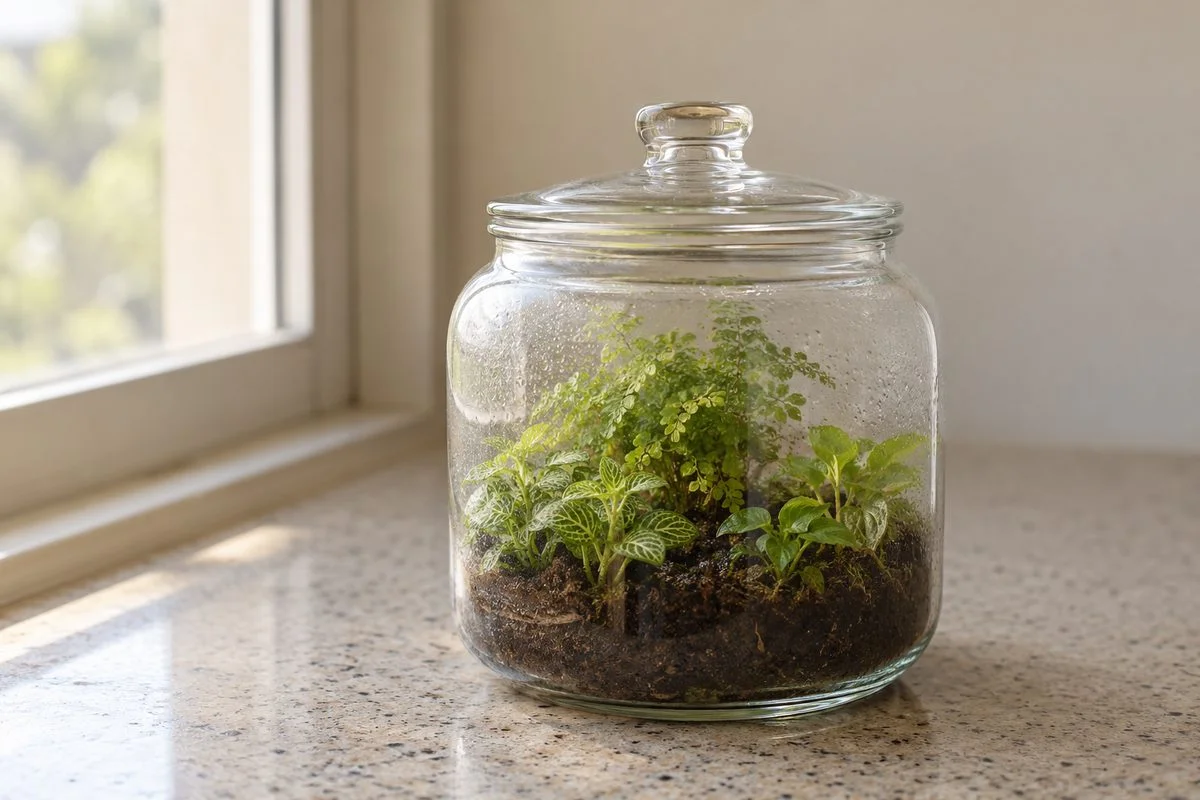
Glass terrarium with green plants and condensation beside a sunlit window.

Concept Lab · Common misconception

The tempting mistake in Life Processes in Plants

Open standalone misconception page →

Do plants get their food from the soil?

Wrong

Roots absorb the plant’s food from the soil.

Why it feels right. Water and nutrients enter through the roots, so food seems to come from there too.

Right

Plants use light energy to make sugars from carbon dioxide and water.

Worked example

Root pathway
Soil→Water and mineral ions→Roots
Sugar pathway
Light + CO₂ + water→Leaves→Sugars
Roots deliver water and mineral ions. Leaves make sugars using light, water and carbon dioxide.
  1. In a typical green plant, roots take up water and mineral ions.
  2. Leaves use water and carbon dioxide to make sugars in the light.

Ask your child eight quick questions.

One per step. The answer and the reason are given.

  1. A plant stays the same height but gains leaves. What shows its growth?

    The new leaves. Growth includes adding parts, so height alone cannot show every change.

  2. What does a green leaf lack in complete darkness for making new food?

    Light energy. Chlorophyll captures light energy; it does not supply energy by itself.

  3. A potato turns blue-black with iodine. What substance has the test found?

    Starch. Iodine detects starch even when green pigment is absent.

  4. Which gas must be available for a sunlit green leaf to make new food?

    Carbon dioxide. Light and water cannot replace the carbon dioxide needed for food-making.

  5. Can a green stem make food when light, water and carbon dioxide are available?

    Yes. Green stems contain chlorophyll, which captures energy for food-making.

  6. Which gas do leaves take in to release energy from food?

    Oxygen. Leaf pores also serve respiration, which releases energy from food.

  7. Which tissue carries food from leaves to roots?

    Phloem. Food travels through phloem to parts needing it.

  8. Green leaves break down food to release energy. Do living roots do this too?

    Yes. All living plant parts need energy, including parts without chlorophyll.

15 more questions with answers