Skip to content

Teach Exploring Substances: Acidic, Basic and Neutral in eight steps.

For each idea: show it, ask before you tell, then say one line.

Gather lemon, karela, soap, vinegar, fallen rose petals, turmeric, paper, cups, heatproof bowl, spoon, strainer, brushes, water and a limescaled glass.

An adult handles hot water and vinegar. Never taste samples or mix cleaning products.

Common misconceptions & worked visual for this chapter · 15 practice questions with answers

How to teach it

Recognising acidic, basic and neutral substances

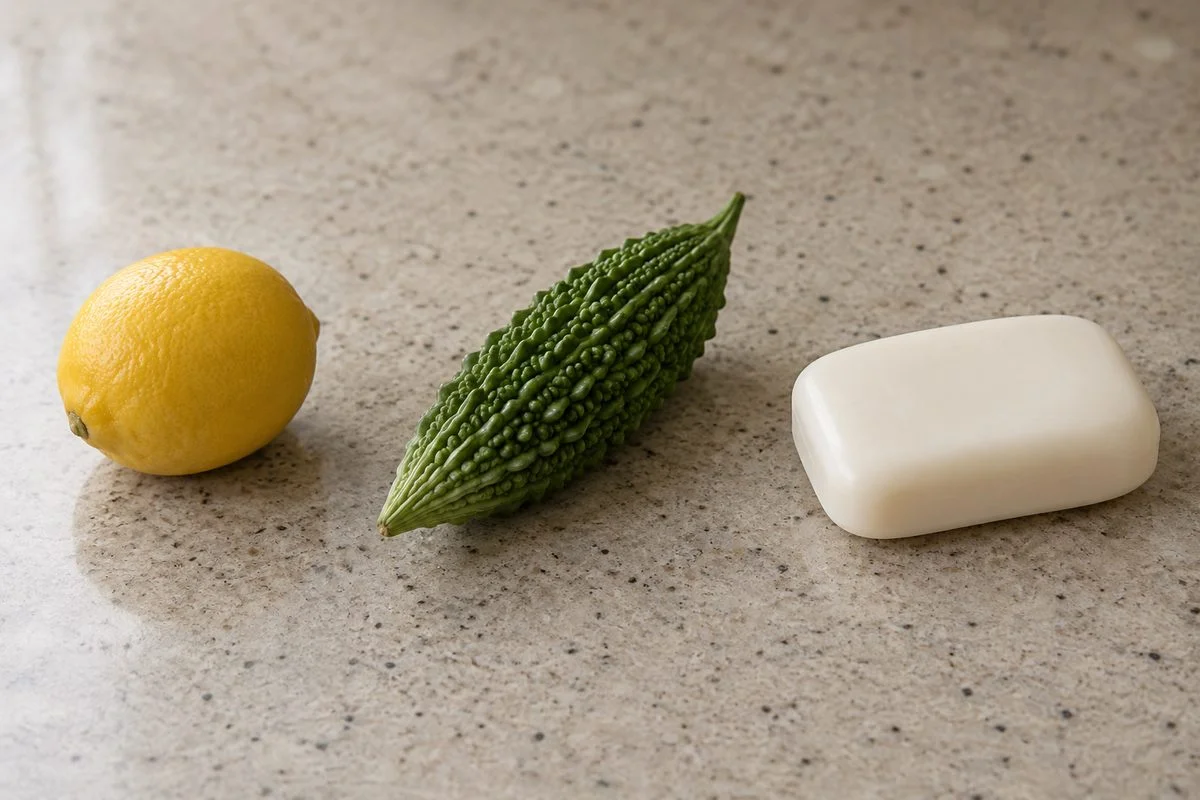
Lemon, karela and plain soap arranged separately on a kitchen counter.

1. Acidic and basic substances

Taste and feel offer clues, but cannot safely identify unknown substances.

Show
Set out lemon, karela and soap. Recall familiar tastes and feel without testing anything.
Ask
Looking at the karela, would you predict that its bitterness proves it is basic?
Say
Bitterness isn't proof; bases are usually bitter and slippery.
Used in
Indicators help identify household liquids without tasting potentially harmful samples.
If your child says…“Every bitter food is basic.”
Ask
Does karela fit your rule?
What’s true
Karela is bitter but not basic.
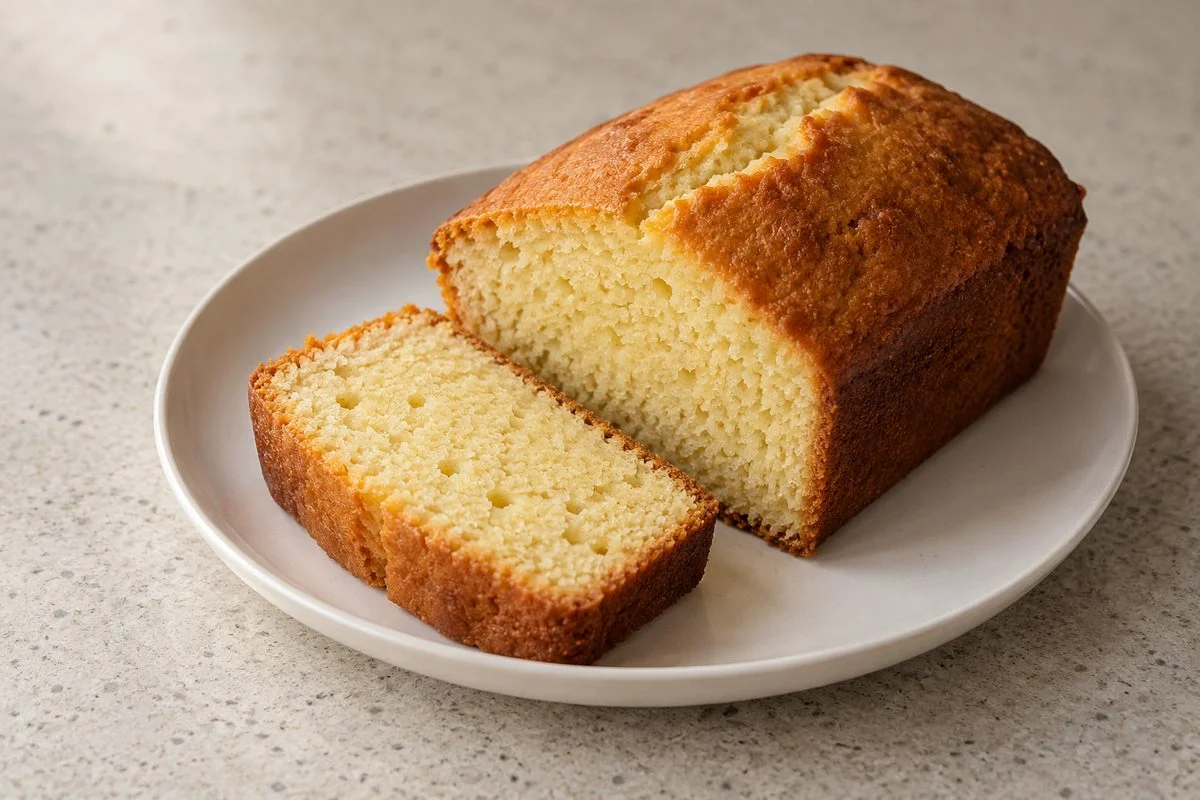
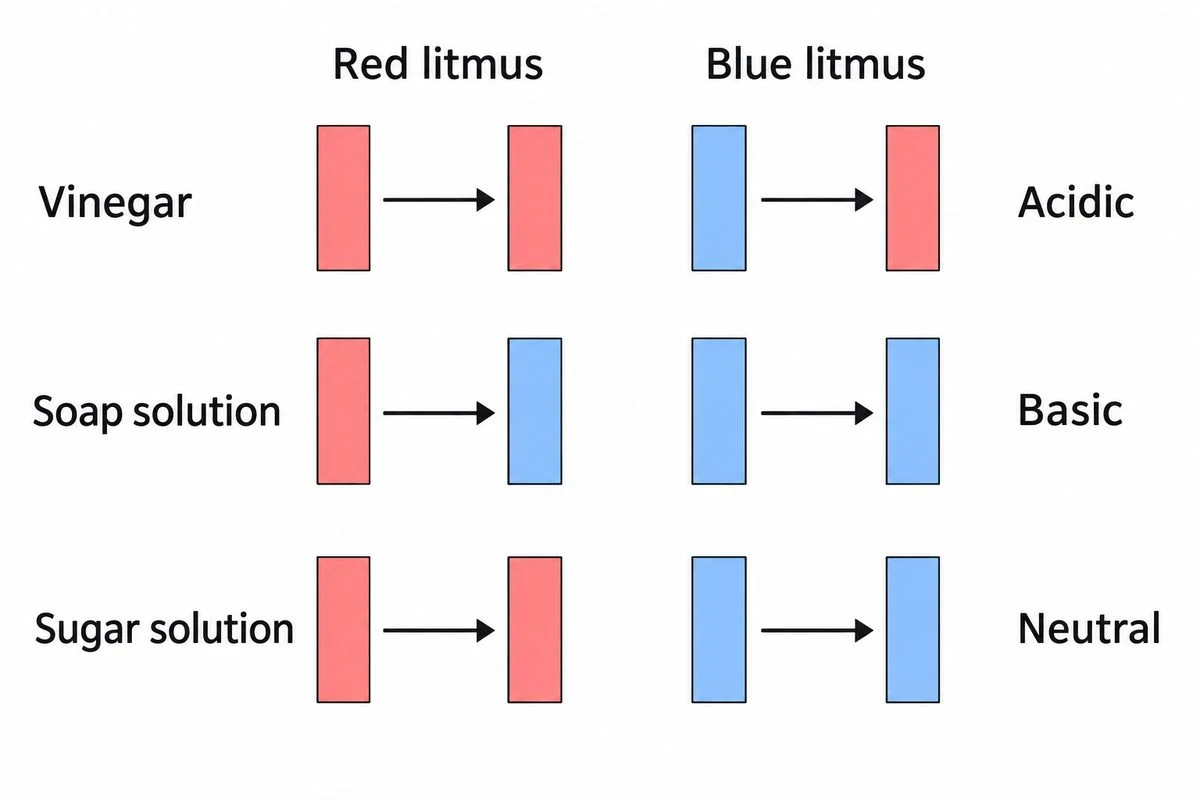
Diagram comparing both litmus colours before and after testing vinegar, soap and sugar solutions.

2. Litmus and neutral substances

Litmus helps separate acidic, basic and neutral samples.

Show
Look at the diagram’s three rows. Cover the strip colours after the arrows and the classification labels. Compare the starting strips, then uncover after predicting.
Ask
Will blue litmus alone tell soap solution and sugar solution apart?
Say
Basic soap and neutral sugar both leave blue litmus blue. Only soap turns red litmus blue. Acidic vinegar turns blue litmus red.
Used in
Soil tests help match treatments to the soil’s nature.
If your child says…“Everything must be acidic or basic.”
Ask
Which group fits sugar when neither strip changes?
What’s true
Sugar solution is neither.

Using different indicators

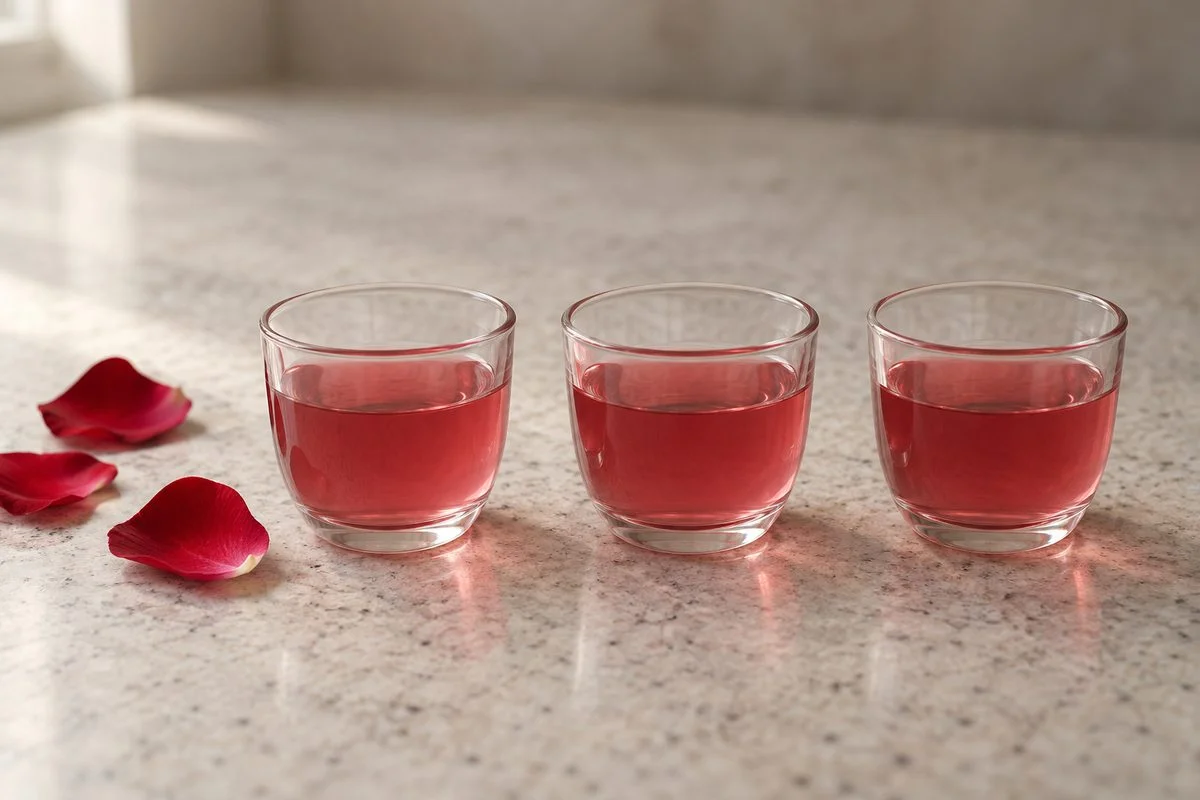
Three cups of identical rose extract beside fallen petals, before adding test liquids.

3. Red rose indicator

Fallen petals supply colour that responds to acids and bases.

Show
An adult soaks crushed petals in hot water for 5–10 minutes. Cool, strain into three cups. After predicting, add vinegar, soap solution and water separately.
Ask
Will vinegar and soap produce different colours?
Say
Vinegar usually gives pink or red. Soap may give green; shades vary. Water provides the comparison.
Used in
Hydrangea flower colour can give clues about soil conditions.
If your child says…“Vinegar will turn it green.”
Ask
Which cup shows the acidic sample’s colour?
What’s true
Vinegar is acidic, so expect a pink or red shade.
Apparently blank paper beside turmeric water and a brush, before brushing.

4. Turmeric

Turmeric detects bases; yellow alone cannot identify acids.

Show
Beforehand, brush a short message onto paper using soap solution and let it dry. Mix turmeric powder with a little water until the mixture looks yellow. After predicting, brush it gently over the writing.
Ask
What will brushing turmeric over the writing reveal?
Say
Soap makes yellow turmeric red.
Used in
Turmeric paper detects basic substances without tasting them.
If your child says…“Yellow means it’s an acid.”
Ask
What colour would sugar solution leave?
What’s true
Neutral liquids also leave turmeric yellow.
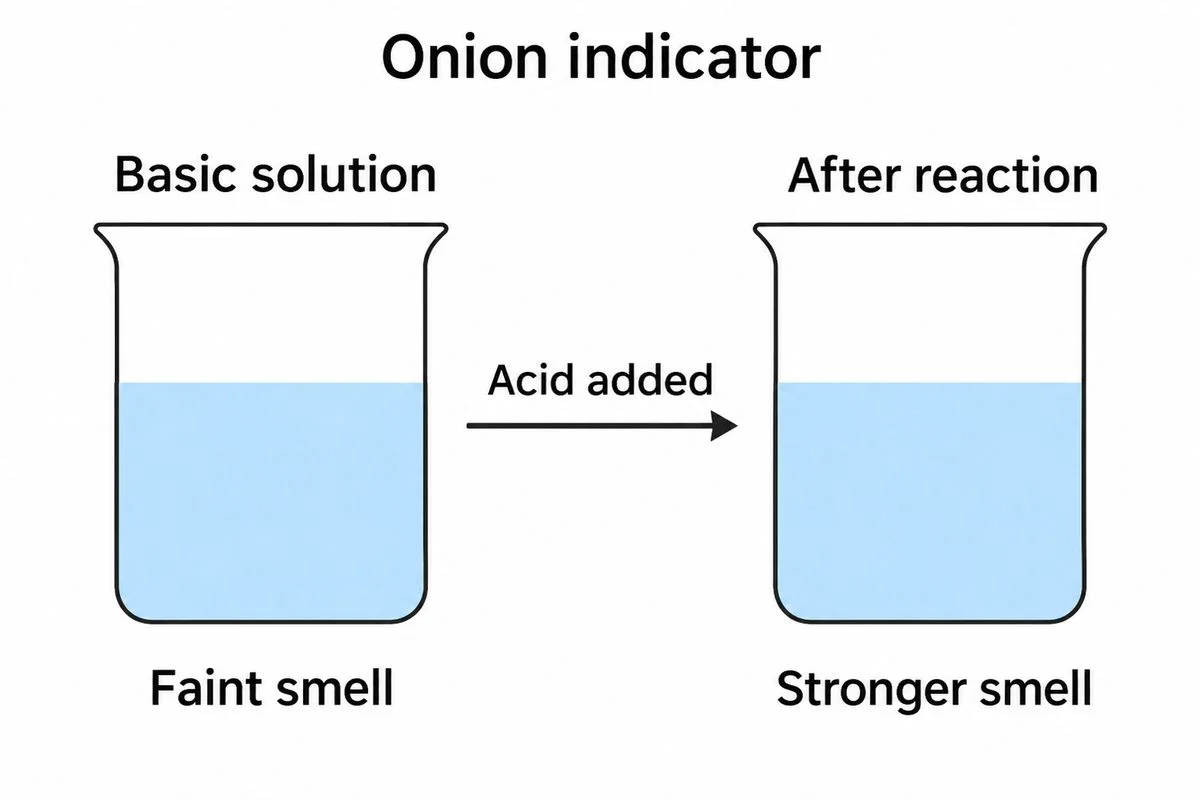
Diagram recording faint onion smell before acid addition and stronger smell after reaction.

5. Olfactory indicators

Some indicators signal through changes in smell.

Show
Look at the diagram of a recorded laboratory test. Find the faint onion smell on the left. Follow the acid-addition arrow, covering the right-hand smell label until after predicting.
Ask
What do you predict will happen to the faint onion smell after acid is added?
Say
The onion smell becomes stronger after acid is added in this laboratory test.
Used in
Smell indicators allow tests without relying on sight.
If your child says…“Every indicator must change colour.”
Ask
Which sense could notice that change?
What’s true
A change in smell can provide the signal.

Reactions, uses and history

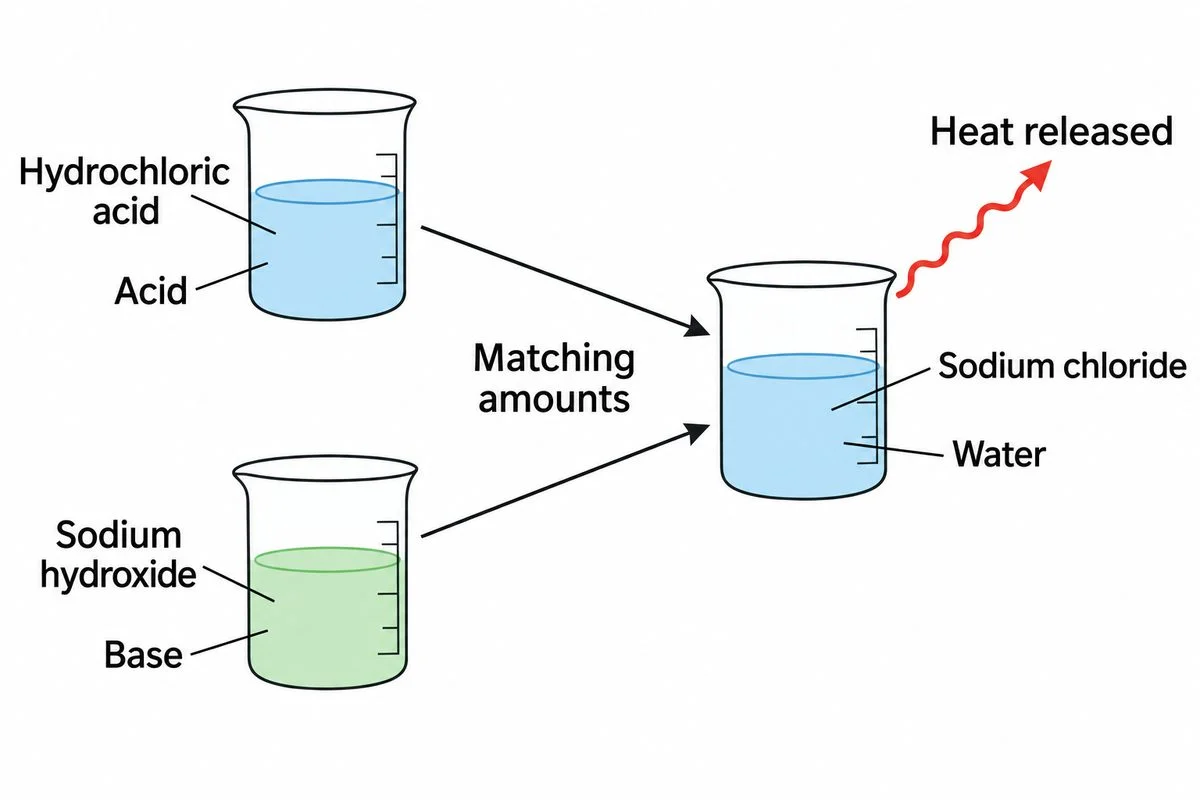
Diagram showing matching acid and base amounts forming dissolved salt and water, releasing heat.

6. Neutralisation

An acid and a base react.

Show
Look at the diagram’s acid and base on the left. Follow their arrows to the liquid on the right. Cover its labels and the outward arrow’s label until after predicting.
Ask
What will form when these matching amounts react, and what will make the mixture warmer?
Say
This reaction forms salt and water and releases heat. Dissolved salt means the final liquid is not pure water. Matching amounts react completely.
Used in
An antacid neutralises excess stomach acid, relieving acidity.
If your child says…“One drop makes it neutral.”
Ask
What would remain if there were too little base?
What’s true
Too little base leaves acid; excess base makes the mixture basic.
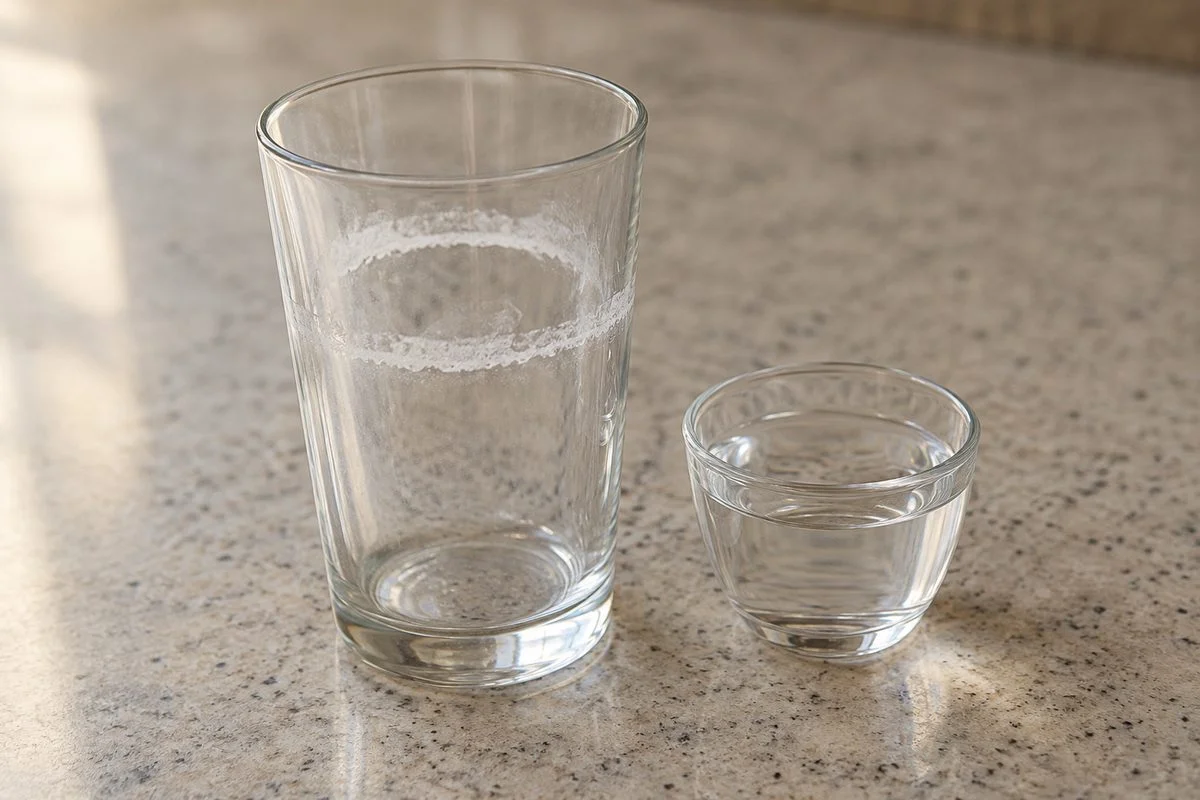
Drinking glass with a white limescale ring before treatment, beside a cup of vinegar.

7. Uses of neutralisation

A suitable treatment reacts with excess acid or base.

Show
Find a drinking glass with an existing white limescale ring. After predicting, an adult adds vinegar to cover the ring. Watch for five minutes, then leave any remaining deposit soaking for later. Rinse after the deposit loosens.
Ask
What will happen to the white ring when vinegar touches it?
Say
Acidic vinegar reacts with the basic limescale, helping loosen and remove it.
Used in
Bases treat acidic factory waste before release, reducing its acidity.
If your child says…“An acid needs another acid to cancel it.”
Ask
Did vinegar react with another acid here, or with a basic deposit?
What’s true
A suitable base reacts with excess acid.
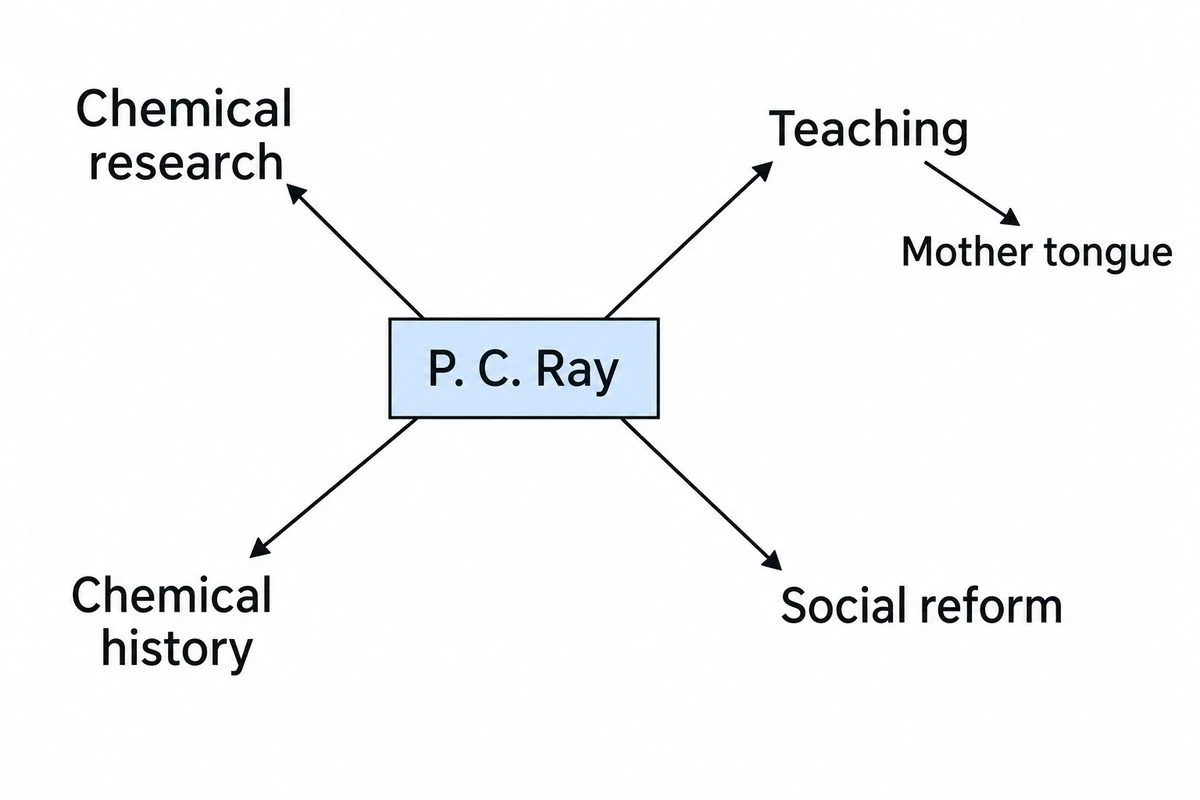
Diagram linking Ray to research, teaching, chemical history, social reform and mother-tongue education.

8. P.C. Ray

A chemist who also wrote about India’s earlier chemistry.

Show
Find Ray’s name at the centre of the diagram. Follow the research branch, then the teaching, history and social reform branches. Follow teaching’s smaller branch to mother tongue.
Ask
How might Ray’s work beyond research help people learn science?
Say
Ray’s histories brought earlier Indian chemistry to readers. Ray supported teaching in the mother tongue, helping people learn in a familiar language. Ray also worked for social reform.
Used in
Ray’s histories brought ancient Indian scientists’ work to readers.
If your child says…“Indian chemistry started with Ray.”
Ask
Could ancient chemistry begin with Ray?
What’s true
Ray’s histories describe chemistry before Ray’s lifetime.

A real problem

Horsford’s baking powder cuts baking time

Eben Norton Horsford developed modern baking powder in 1856.

In water, baking powder’s acid reacts with its bicarbonate base, releasing gas.

His invention made baking easier and its results more dependable.

SmithsonianAmerican Society of BakingAmerican Chemical Society

A sliced homemade cake with small air pockets visible inside.

Concept Lab · Common misconception

The tempting mistake in Exploring Substances: Acidic, Basic and Neutral

Open standalone misconception page →

Does one unchanged litmus strip prove neutrality?

Wrong

If blue litmus stays blue, the liquid must be neutral.

Why it feels right. I know how an acid changes blue litmus and assume every nonacid is neutral.

Right

Use both colours of litmus to distinguish acidic, basic and neutral samples in this test.

Worked example

Basic soap
Blue stays blue→Red turns blue
Neutral water
Blue stays blue→Red stays red
Blue litmus alone looks the same in both samples. Red litmus separates the cases.
  1. In a basic soap solution, blue litmus stays blue but red litmus turns blue.
  2. In a neutral water sample both strips keep their original colours.

Ask your child eight quick questions.

One per step. The answer and the reason are given.

  1. What can bitterness alone tell you about whether a food is basic?

    It cannot establish that. Karela is bitter without being basic.

  2. Sugar solution leaves both working litmus papers unchanged. How would you classify it, and why?

    Neutral. Neither colour changes because this sample is neither acidic nor basic.

  3. Lemon juice is acidic. What colour should rose extract give in it?

    A shade of red. Rose extract gives red under acidic conditions.

  4. Turmeric stays yellow in a sample. What does this tell you about its nature, and why?

    Acidic or neutral. Both leave turmeric yellow, so this result cannot distinguish them.

  5. What change provides the signal in this onion-indicator experiment?

    A stronger onion smell. The indicator responds through smell, without needing a colour change.

  6. Does one drop of base always make an acid neutral, and why?

    No. The amounts must match for the mixture to become neutral.

  7. What kind of substance can neutralise acidic factory waste?

    A suitable base. A base reacts with excess acid rather than adding more acid.

  8. When did Indian chemistry begin, compared with Ray’s lifetime?

    Before Ray’s lifetime. Chemistry in India existed before Ray’s generation.

15 more questions with answers