Skip to content

Teach Acids, Bases and Salts in eight steps.

For each idea: show it, ask before you tell, then say one line.

Gather turmeric, water, ordinary soap, a white saucer, baking soda, kitchen vinegar, an open cup and a teaspoon.

An adult handles vinegar. Never taste samples or mix cleaning products.

Common misconceptions & worked visual for this chapter · 15 practice questions with answers

How to teach it

Identify acids and bases

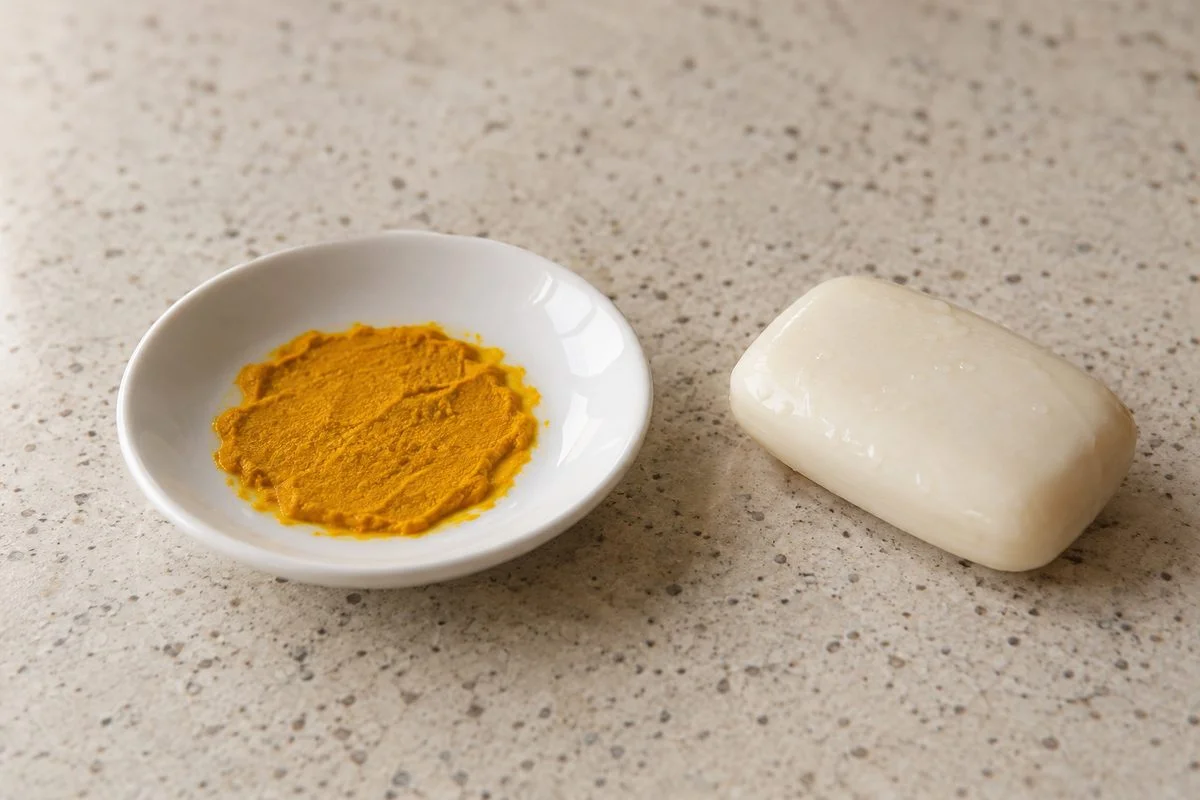
Yellow turmeric patch on a white saucer beside a wet soap bar.

1. Indicators

An indicator's response helps identify an acid or a base.

Show
Mix a pinch of turmeric with water on a white saucer. After predicting, rub wet ordinary soap across half the patch.
Ask
Will the soapy half stay the same colour as the untouched half?
Say
The soapy half turns reddish-brown. Turmeric acts as an indicator because its colour changes in this basic mixture.
Used in
Laboratories use indicators to identify unknown solutions without dangerous tasting.
If your child says…“I can taste an unknown liquid to test it.”
Ask
How could you test it without putting it in your mouth?
What’s true
Unknown solutions may be poisonous or corrosive.
Compare reactions

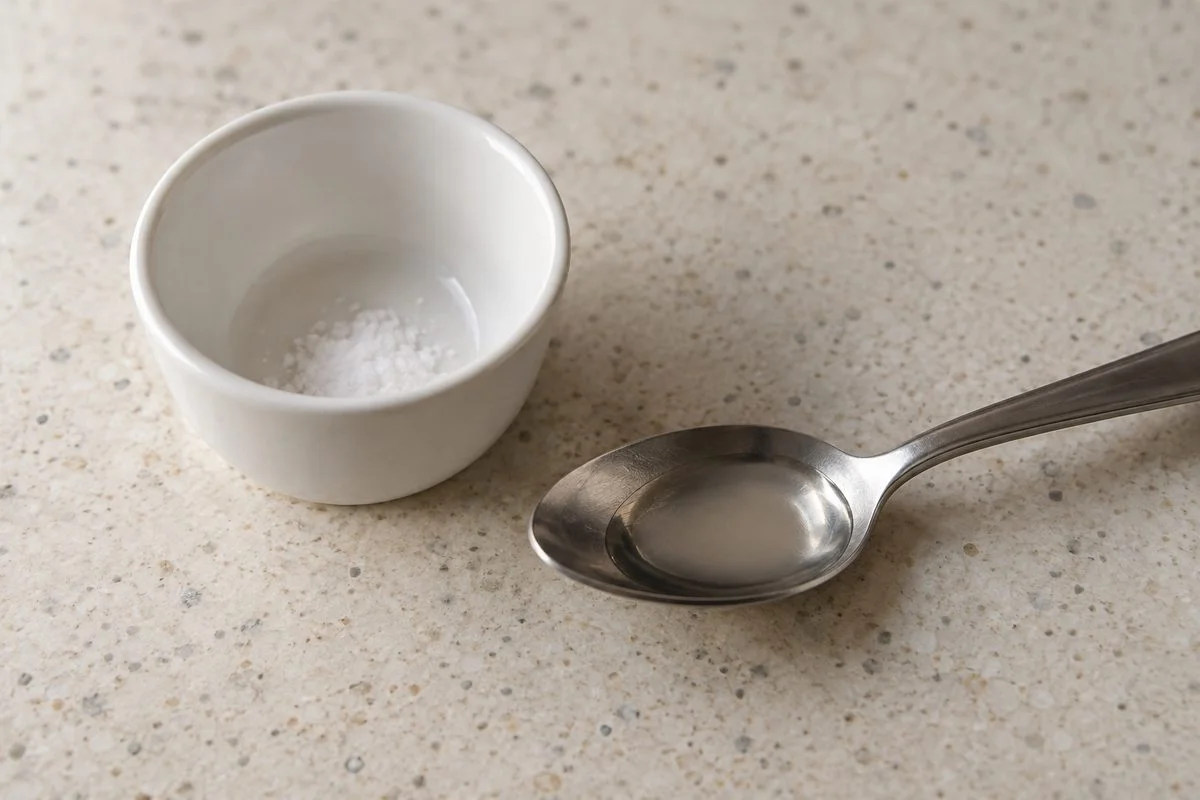
Baking soda in an open cup beside a teaspoon of vinegar, before mixing.

2. Acids with metals and carbonates

With dilute hydrochloric acid, magnesium and baking soda release different gases.

Show
Put a pinch of baking soda in an open cup. After predicting, an adult adds a teaspoon of kitchen vinegar. Watch for bubbles.
Ask
What will happen when the vinegar touches the baking soda?
Say
The bubbles show gas forming, but cannot tell us which gas. This reaction forms carbon dioxide, salt and water.
Used in
Carbon dioxide released by baking soda helps dough rise.
If your child says…“Acids always release hydrogen when something fizzes.”
Ask
Does fizzing alone tell us which gas has formed?
What’s true
Carbonates and hydrogencarbonates release carbon dioxide when reacting with acids.
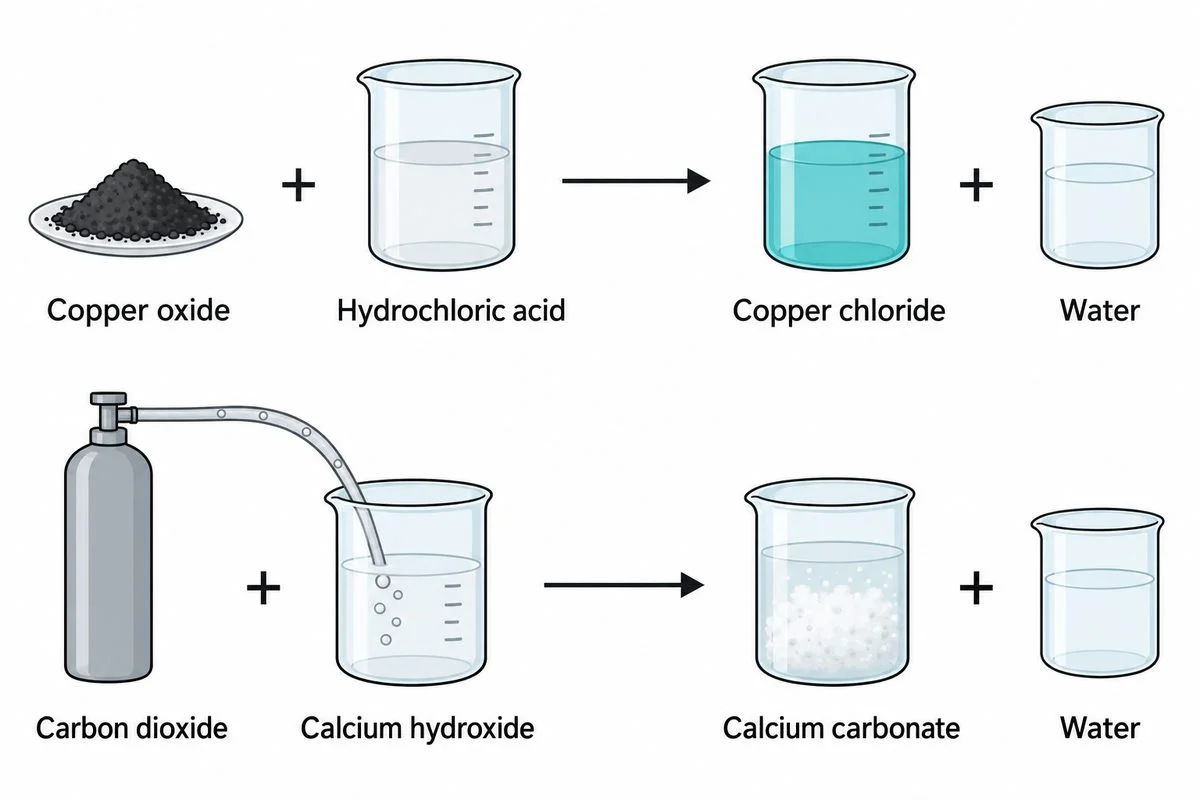
Copper oxide reacts with acid above; carbon dioxide reacts with limewater below.

3. Neutralisation and oxides

Acids react with bases to produce salts and water.

Show
In the diagram, follow copper oxide's reaction above. Follow carbon dioxide's reaction with limewater below.
Ask
Will these two oxides both behave as bases?
Say
Copper oxide reacts with acid, acting as a base. Carbon dioxide reacts with limewater, acting as an acidic oxide. Both reactions form a salt and water.
Used in
An antacid's mild base neutralises excess stomach acid to relieve discomfort.
If your child says…“Every oxide acts as a base.”
Ask
Which reacts with a base: copper oxide or carbon dioxide?
What’s true
Many metal oxides are basic, while many non-metal oxides are acidic.

Explain solutions and salts

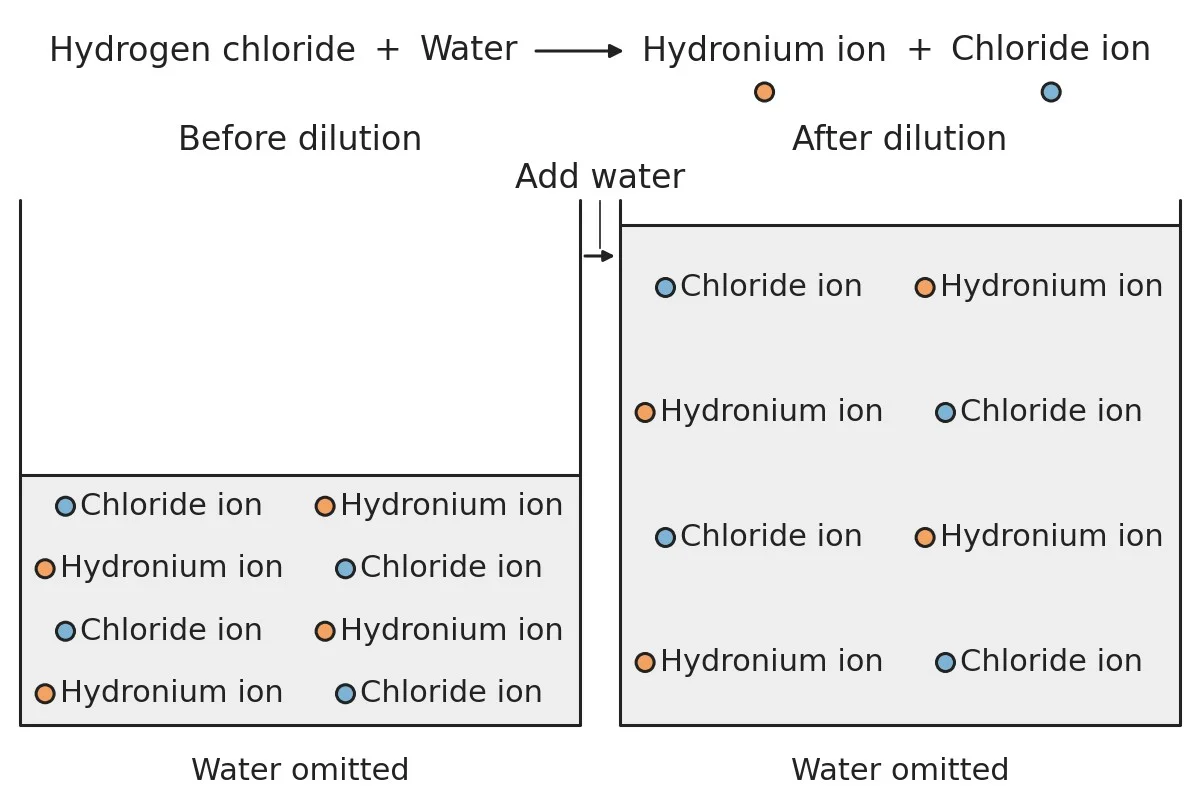
Hydrogen chloride forms ions above; dilution spreads equal numbers of ions through more liquid.

4. Ions in water and dilution

Water enables acidic ions to form; dilution lowers their concentration.

Show
Look at the diagram's ion formation above. Compare the ions and liquid volumes in the vessels below.
Ask
Will more water remove these acid ions or spread them through more liquid?
Say
Hydrogen chloride forms hydronium ions in water. More water lowers their concentration without neutralising the acid.
Used in
Laboratory dilution adds concentrated acid slowly into water with stirring, reducing dangerous splashing.
If your child says…“Water neutralises acid.”
Ask
Which hydronium ions disappear between the two vessels?
What’s true
Dilution lowers ion concentration without the acid reacting with a base.
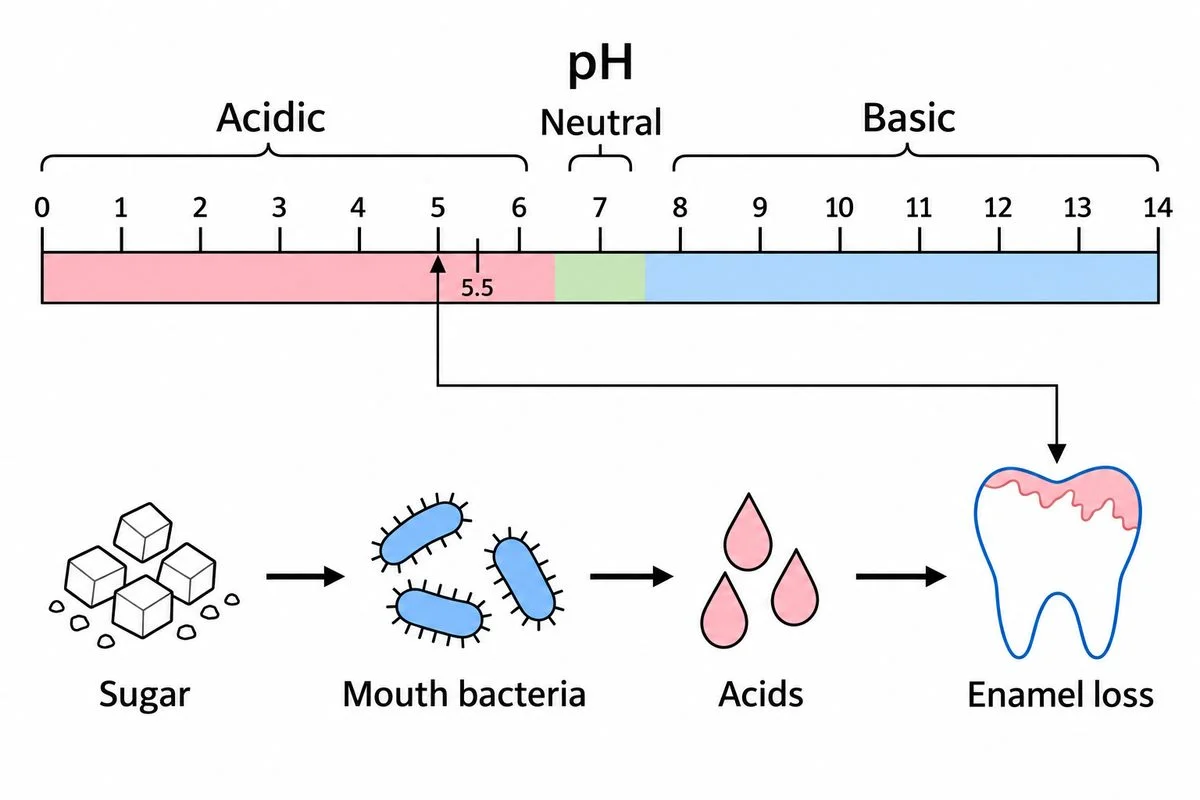
A pH scale connects bacterial acid production with enamel damage below about 5.5.

5. pH and everyday life

pH compares acidity and basicity, helping explain effects on living things.

Show
In the diagram, find neutral pH 7. Follow sugar through bacteria to enamel loss.
Ask
Will acids made by mouth bacteria raise or lower mouth pH?
Say
Mouth bacteria turn sugar into acids, lowering mouth pH, with enamel damage possible below about 5.5.
Used in
Basic toothpaste neutralises mouth acids, helping protect enamel.
If your child says…“A higher pH means more acid.”
Ask
Is the enamel-damaging value above or below the neutral value?
What’s true
Acid damage to enamel begins below about pH 5.5.
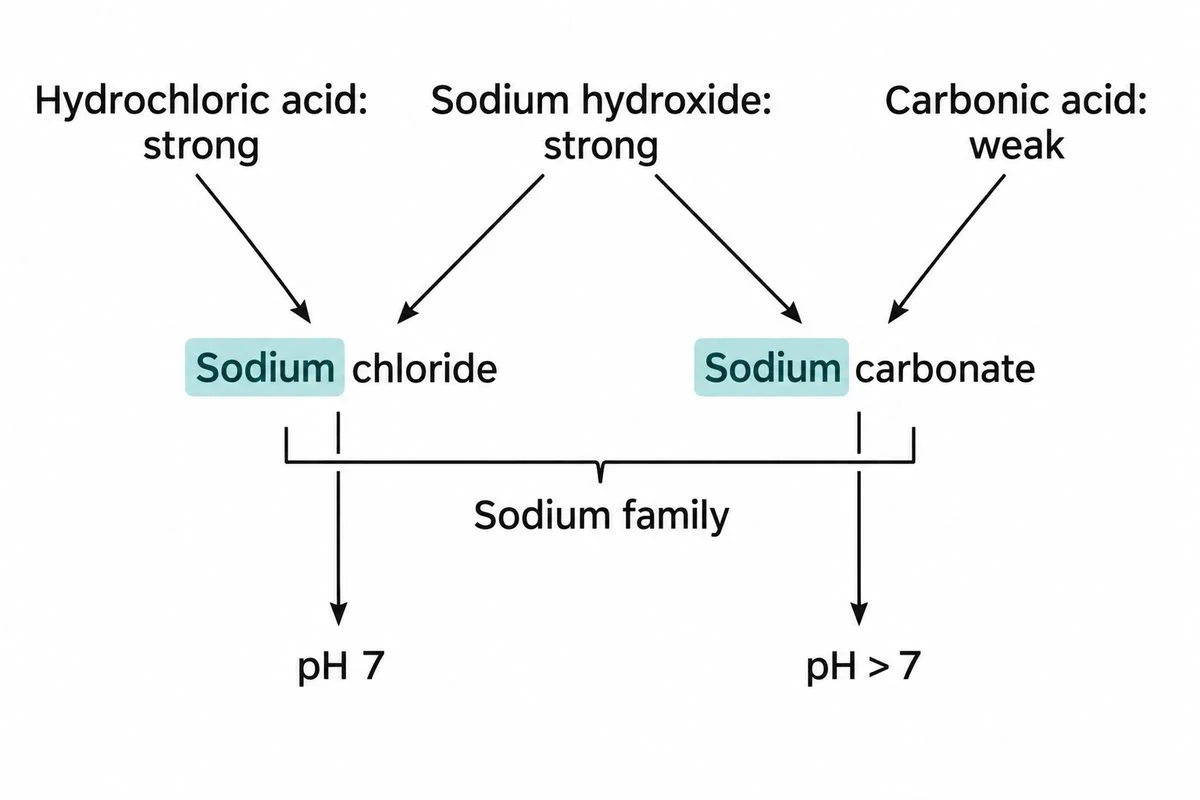
Shared sodium ions group two salts whose different parent acids give different solution pH.

6. Salt families and salt pH

Salt families share ions. Their original acid and base affect pH.

Show
Look at the diagram. Follow each acid and the shared base to its salt and pH.
Ask
Will both salts give neutral solutions?
Say
Both salts share sodium ions, placing them in the same family. With a strong base, the strong acid gives neutral sodium chloride. The weak acid gives basic sodium carbonate.
Used in
Washing soda softens hard water for washing.
If your child says…“Every salt solution is neutral.”
Ask
Do both salts have the same parents?
What’s true
Sodium carbonate has weak acid and strong base parents, so its solution is basic.
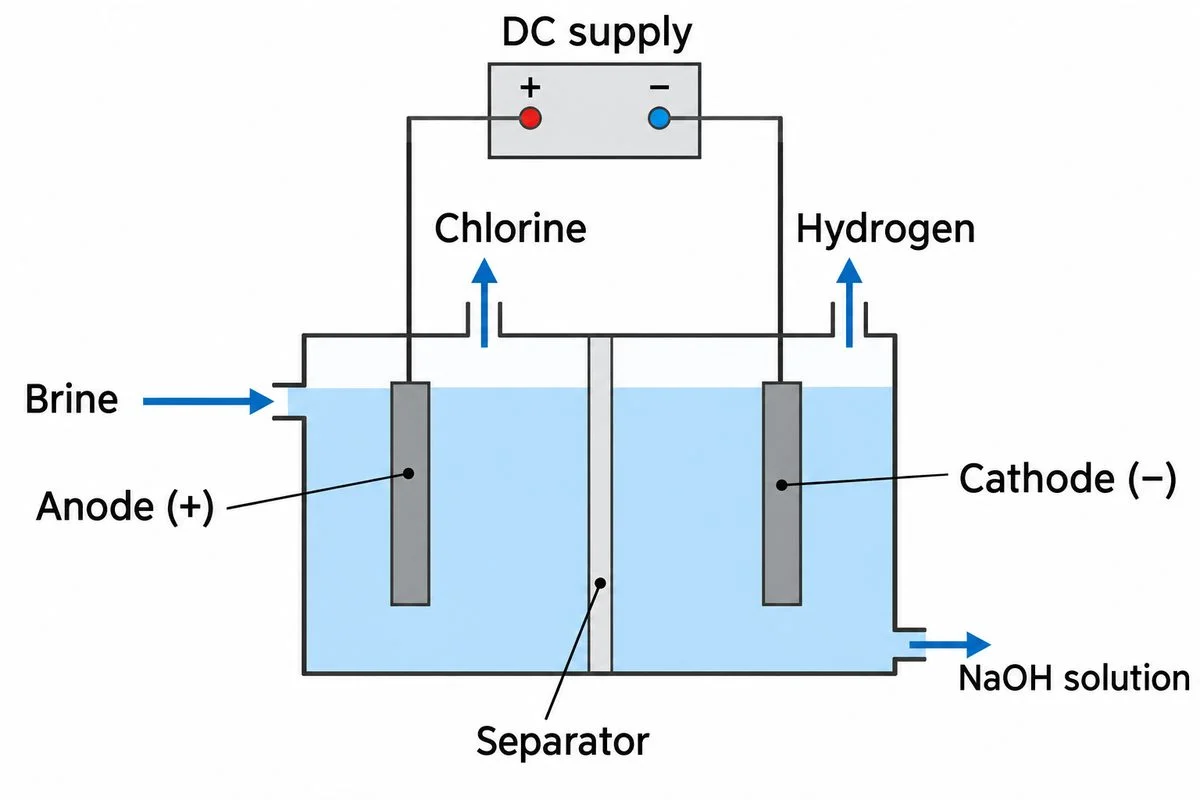
A divided brine cell produces chlorine left, hydrogen right and sodium hydroxide solution.

7. Chemicals from common salt

Common salt supplies raw material for several useful chemicals.

Show
Look at the diagram. Follow brine, concentrated salt solution, into the cell. Find each product outlet beside its electrode.
Ask
Will electricity turn this salt solution into only sodium hydroxide?
Say
Electricity produces chlorine at the positive electrode and hydrogen at the negative electrode. Sodium hydroxide solution forms on the hydrogen side. The separator keeps the products apart.
Used in
Chlorine from brine helps make bleaching powder for disinfecting water.
If your child says…“Only sodium hydroxide forms.”
Ask
Which gases leave the two electrodes?
What’s true
Electrolysis also produces chlorine and hydrogen.
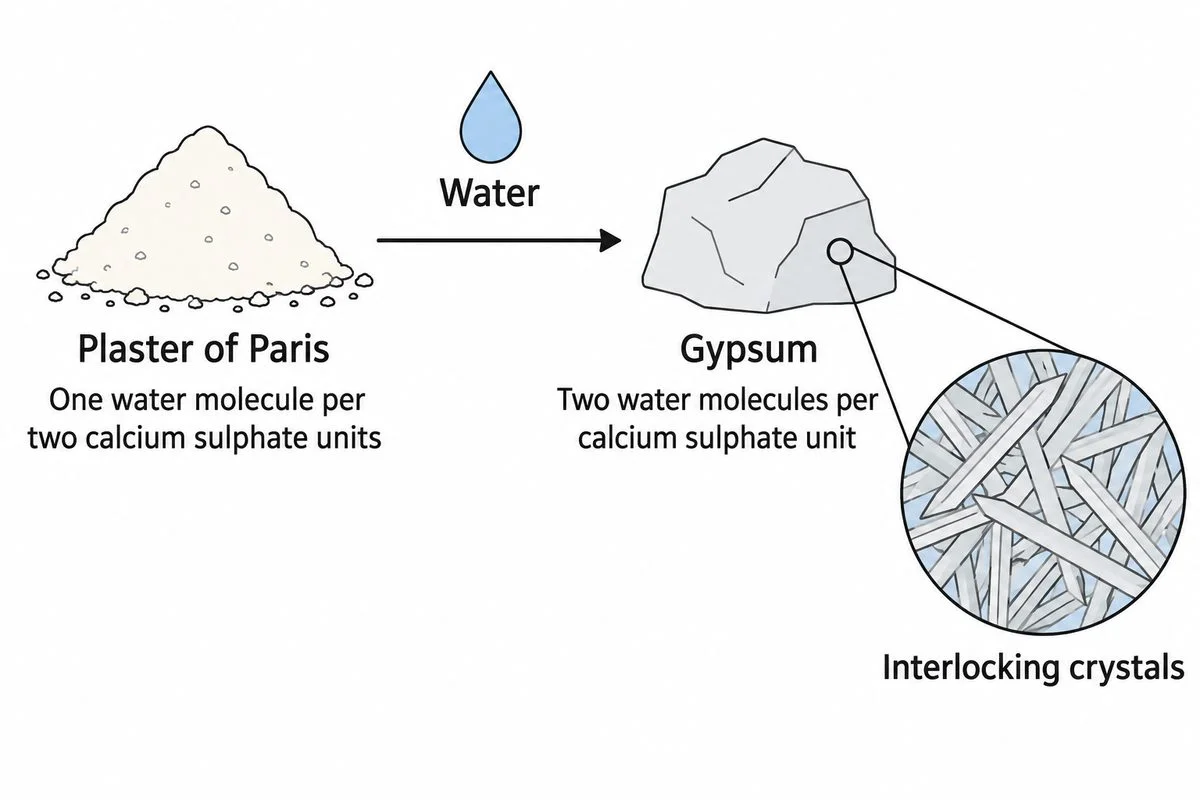
Plaster and water form solid gypsum, with an inset showing interlocking crystals.

8. Water of crystallisation and Plaster of Paris

Some crystals contain water in a fixed proportion within their structure.

Show
Look at the diagram. Compare the water amounts in plaster and gypsum, then follow the setting arrow.
Ask
Will added water simply dry away, or become part of the hard solid?
Say
Plaster reacts with water to form hard gypsum, with water built into its crystals. Plaster contains one water molecule per two calcium sulphate units. Gypsum contains two water molecules per unit.
Used in
Dry storage prevents plaster reacting with moisture and setting before use.
If your child says…“Plaster hardens by drying.”
Ask
Does the arrow show water leaving the crystals or becoming part of them?
What’s true
Setting forms gypsum with water in its crystal structure.

A real problem

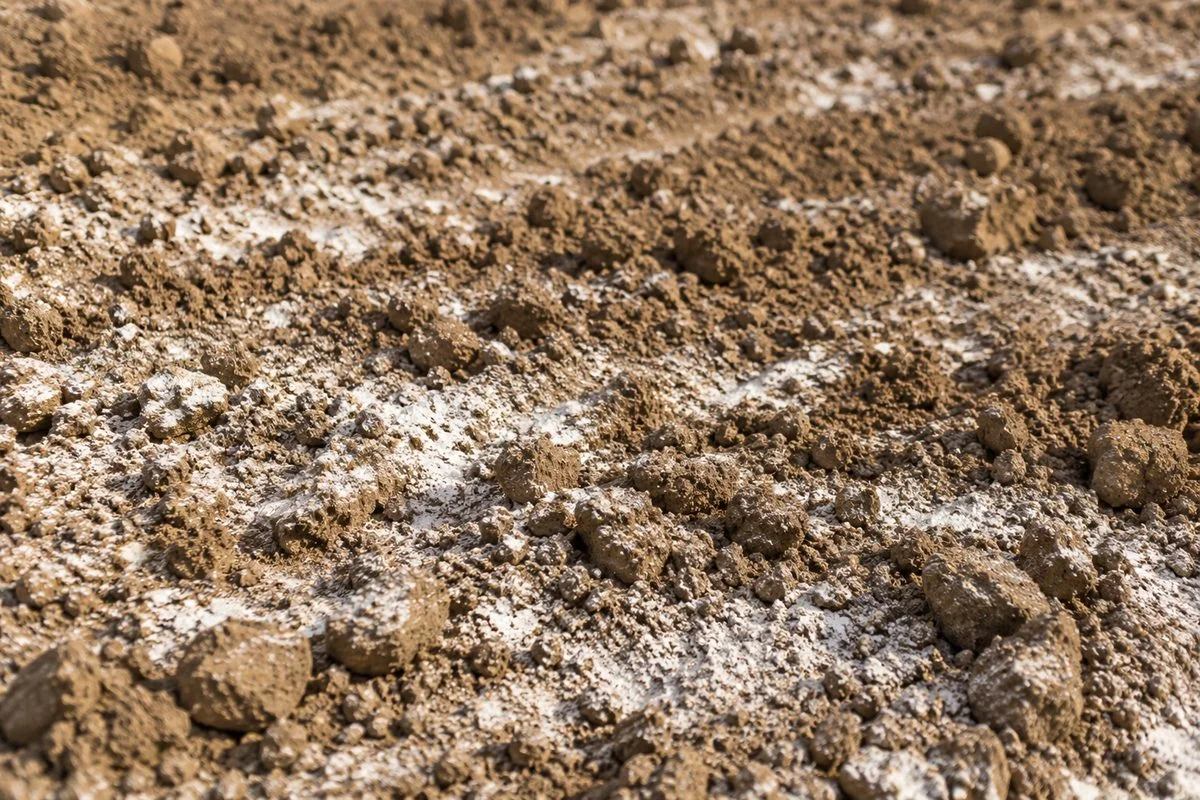
Gypsum helped reclaim alkaline farmland in Uttar Pradesh.

The Uttar Pradesh Sodic Lands Reclamation Project began in 1993.

The project used gypsum to reduce soil alkalinity.

The reclamation practices considerably lowered soil pH.

The work improved crop yields and agricultural productivity.

World BankJournal of Soil and Water ConservationJournal of Soil Salinity and Water Quality

Powdered gypsum spread over bare agricultural soil.

Concept Lab · Common misconception

The tempting mistake in Acids, Bases and Salts

Open standalone misconception page →

Does one pH step mean one equal unit of acidity?

Wrong

A solution at pH 3 has twice the hydrogen ion concentration of pH 6.

Why it feels right. I compare 3 and 6 by division.

Right

Each pH step represents a factor of ten in hydrogen ion activity.

Worked example

pH steps
6→5→4→3
Relative activity
1×→10×→100×→1,000×
Each step down the pH scale multiplies hydrogen ion activity by 10.

From pH 6 to pH 3, the hydrogen ion activity increases by 10 × 10 × 10 = 1,000.

Ask your child eight quick questions.

One per step. The answer and the reason are given.

  1. Is tasting one drop of an unknown laboratory solution safe?

    No. Even a drop may be harmful; use a suitable indicator.

  2. Which gas forms when vinegar reacts with baking soda?

    Carbon dioxide. This reaction releases carbon dioxide; fizzing does not always mean hydrogen.

  3. What character does carbon dioxide show when it reacts with a base?

    Acidic. Carbon dioxide acts as an acidic oxide, so every oxide cannot be basic.

  4. Does adding only water neutralise an acidic solution?

    No; it dilutes the acid. Adding water lowers hydronium ion concentration; it does not neutralise the acid.

  5. Which acidic solution has higher hydrogen ion concentration: pH 2 or pH 5?

    The pH 2 solution. Lower pH means a higher hydrogen ion concentration.

  6. Where does sodium carbonate solution's pH lie relative to 7?

    Above 7. Its weak acid and strong base parents give a basic salt solution.

  7. What does the chlor-alkali process produce?

    Sodium hydroxide, chlorine and hydrogen. Electricity drives reactions producing both gases alongside sodium hydroxide.

  8. Why does Plaster of Paris set after water is added?

    It reacts with water. Added water becomes part of gypsum's crystal structure as the plaster sets.

15 more questions with answers