Skip to content

Teach How Do Organisms Reproduce? in eight steps.

For each idea: show it, ask before you tell, then say one line.

Gather paper, a pencil, a potato, whole moong, cloth, a bowl, water and an opaque cup.

Common misconceptions & worked visual for this chapter · 15 practice questions with answers

How to teach it

Reproduction without gamete fusion

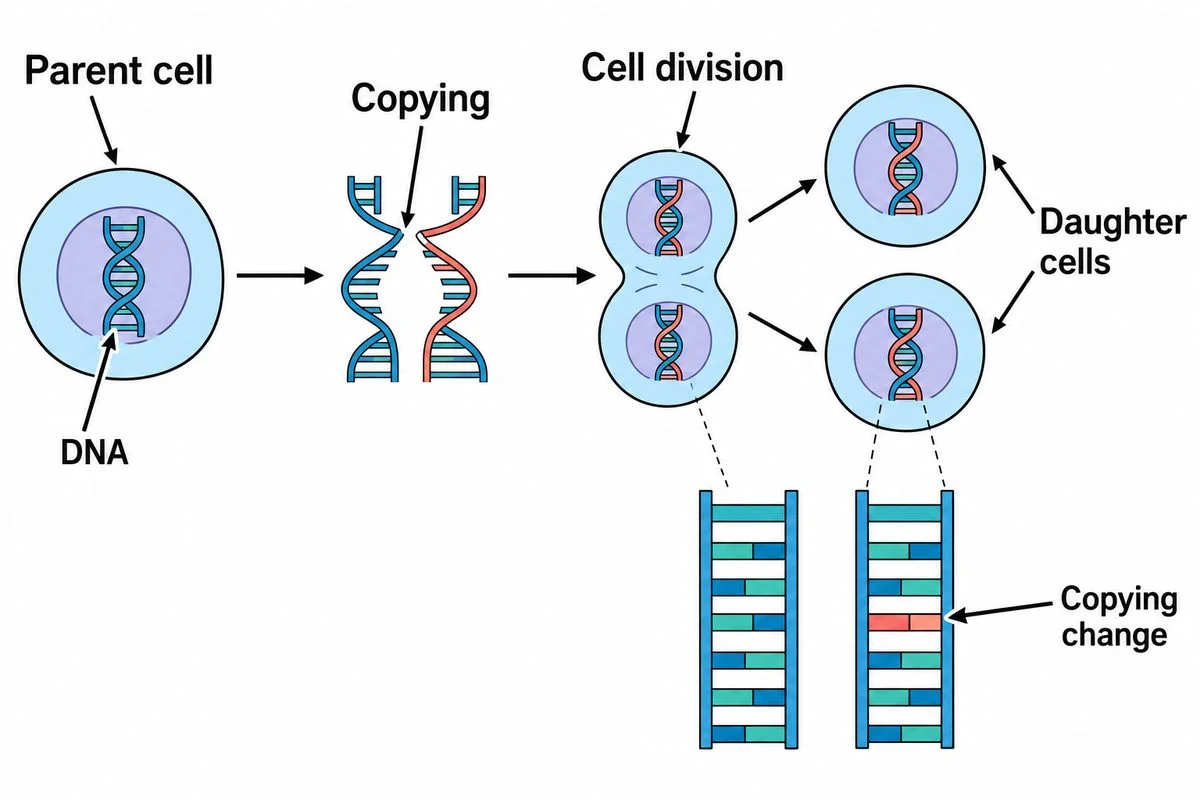
Cell division sequence with enlarged DNA sections showing a copying change.

1. DNA copying and variation

Copied instructions pass to offspring, sometimes with changes.

Show
Follow the diagram from the parent cell through DNA copying to cell division. Compare the enlarged DNA sections below.
Ask
Will this parent cell's daughter cells always receive identical DNA?
Say
DNA copies pass inherited information to new cells. Chance copying changes can produce differences.
Used in
Existing variations help some bacteria survive when their water becomes warmer.
If your child says…“Organisms make whatever changes they need.”
Ask
Would a chance copying change always give an organism something useful?
What’s true
Real DNA changes arise by chance, and some have no noticeable effect.
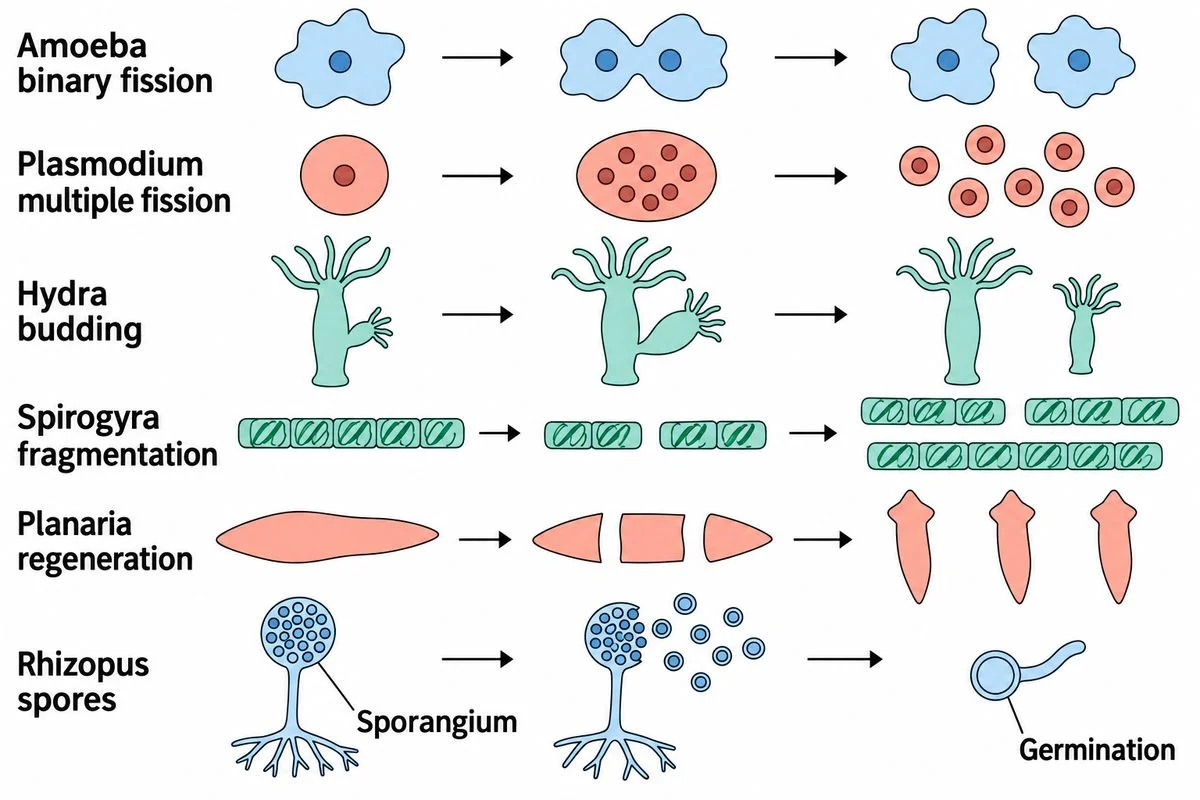
Six sequences show division, budding, fragmentation, regeneration and spore formation.

2. Fission, budding, fragmentation, regeneration and spores

New organisms arise through division, outgrowths, pieces or spores.

Show
Follow each diagram row from left to right, from one organism to new individuals.
Ask
Could most animals regrow from pieces like this Planaria?
Say
Most animals cannot regrow from pieces like this Planaria. Binary fission makes two cells; multiple fission makes many. Buds grow outwards, fragments grow, and Planaria pieces rebuild missing parts.
Used in
Protective spore walls help fungi survive dry conditions.
If your child says…“Any animal can make babies by breaking apart.”
Ask
Does a person healing a cut produce another person?
What’s true
Some simple animals, such as Planaria, can regrow whole bodies from pieces, but dogs cannot.
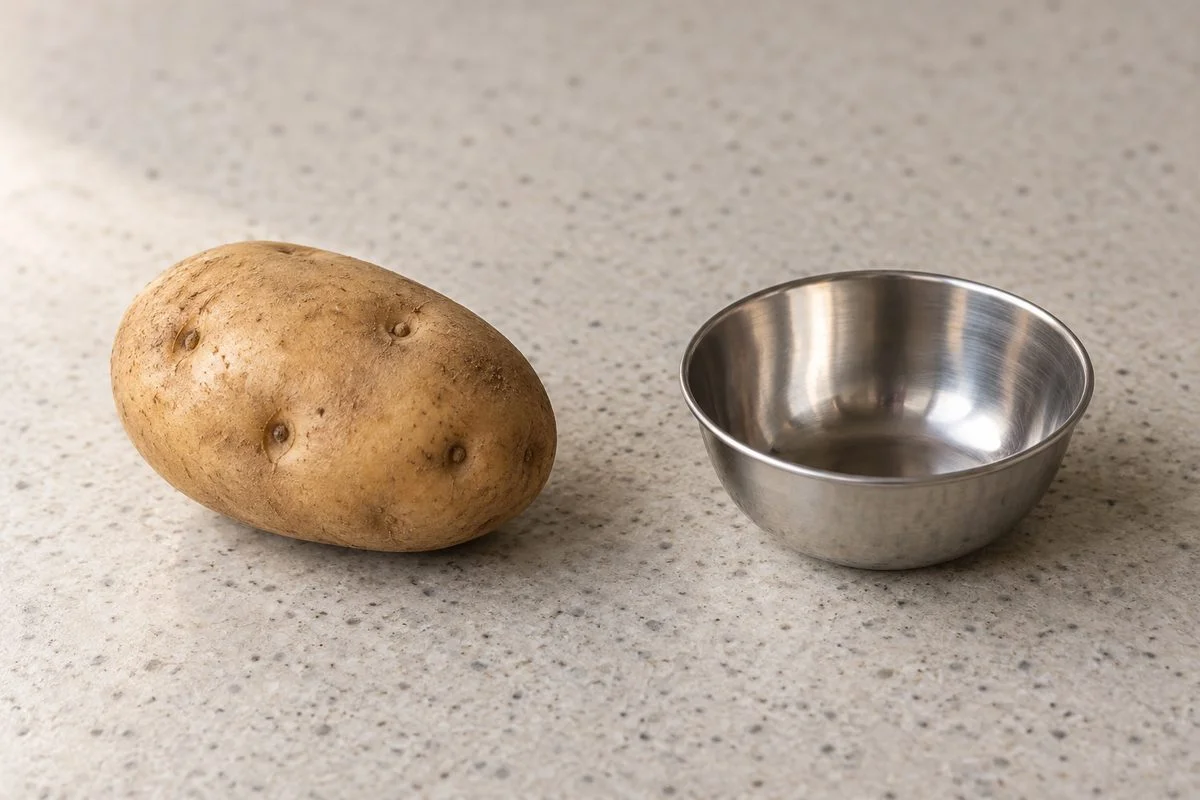
A whole potato with visible eyes beside an empty bowl.

3. Vegetative propagation

Plant parts grow into new plants without seeds.

Show
Set a whole potato beside a bowl. Look for places where shoots could emerge.
Ask
Could this potato produce a plant without making seeds first?
Say
The potato's eyes contain buds that can grow into new plants without seeds.
Used in
Vegetative propagation preserves desirable features when growers multiply plants.
If your child says…“Every new plant starts from a seed.”
Ask
If a potato grows shoots without a seed, what has supplied the new growth?
What’s true
A potato can produce a plant from buds on its stem tissue.

Reproduction in flowering plants

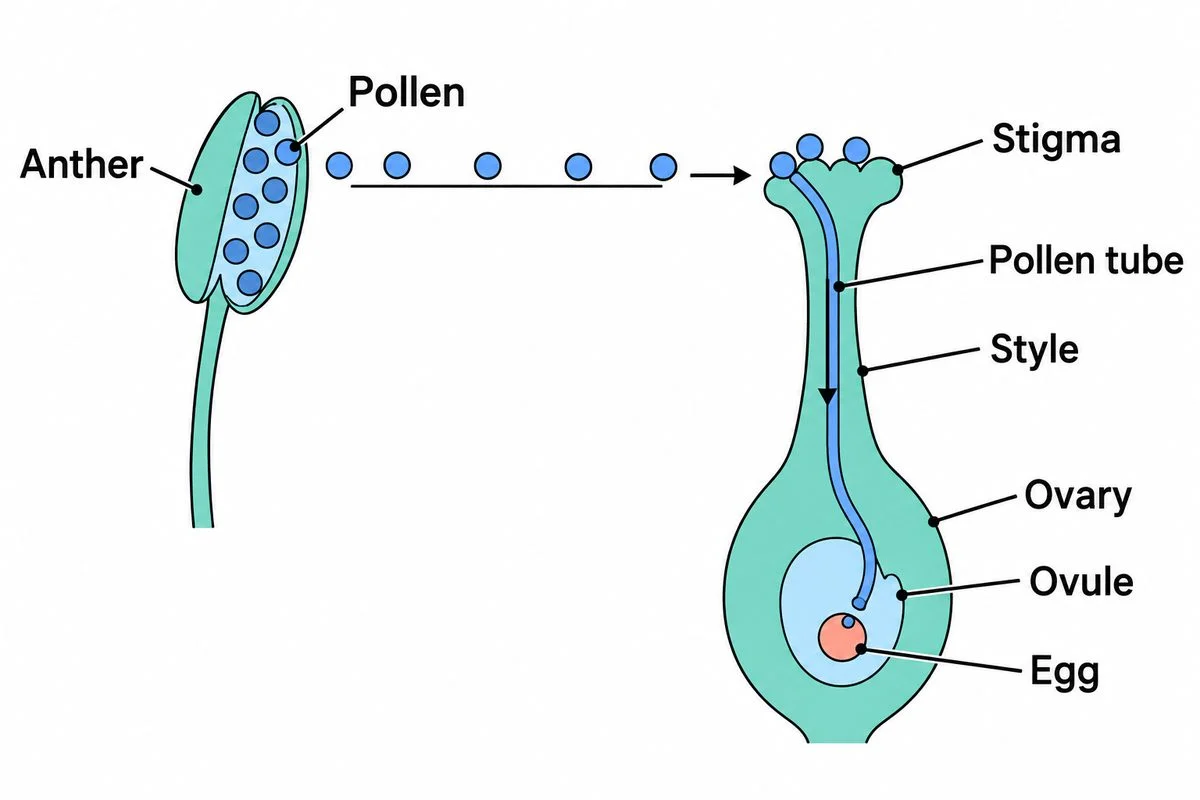
Flower section showing pollen transfer and the pollen tube reaching an ovule.

4. Pollination and fertilisation

Pollen transfer comes before male and female gametes join.

Show
In the diagram, follow pollen from the anther to the stigma. Trace the pollen tube through the style to the ovule inside the ovary.
Ask
How will a male gamete reach the egg after pollen lands on the stigma?
Say
A pollen tube carries the male gamete down the style to the egg inside an ovule.
Used in
Pollen tubes deliver male gametes to eggs, enabling seed formation.
If your child says…“Pollination and fertilisation mean the same thing.”
Ask
Has pollen reaching the stigma already reached an egg inside the ovary?
What’s true
Pollination delivers pollen to the stigma; fertilisation joins gametes inside an ovule.
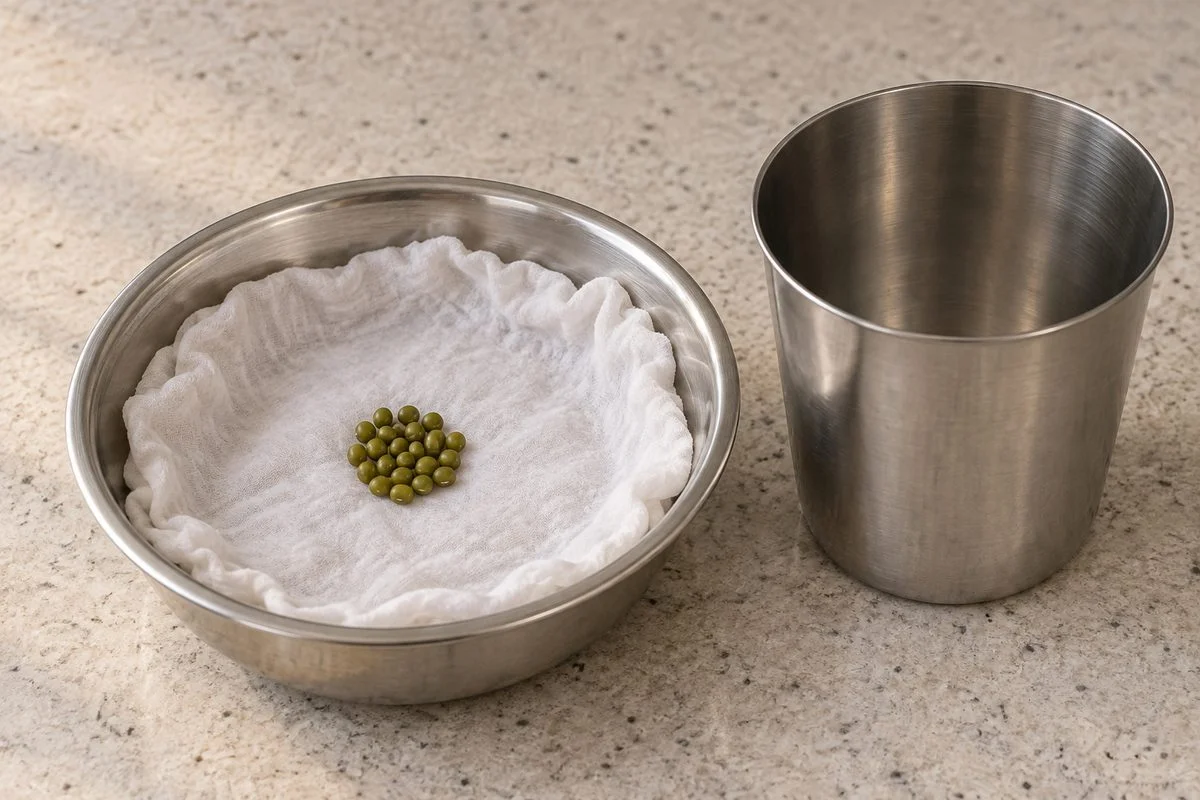
Whole moong seeds on damp cloth in a bowl beside an opaque cup.

5. Seed formation and germination

Ovules become seeds, and the ovary usually becomes fruit.

Show
Put whole moong on damp cloth in a bowl. After predicting, cover with an opaque cup, leaving an air gap. Keep damp, not flooded. Check daily for roots.
Ask
Will these moong seeds begin germinating under the opaque cup?
Say
The seed's embryo can grow in darkness with water, oxygen and suitable warmth.
Used in
Stored food inside a seed feeds its embryo as growth begins.
If your child says…“Every seed needs light to start growing.”
Ask
How could seeds begin growing beneath dark soil if all needed light?
What’s true
Light is not essential for every seed to germinate.

Human reproduction and health

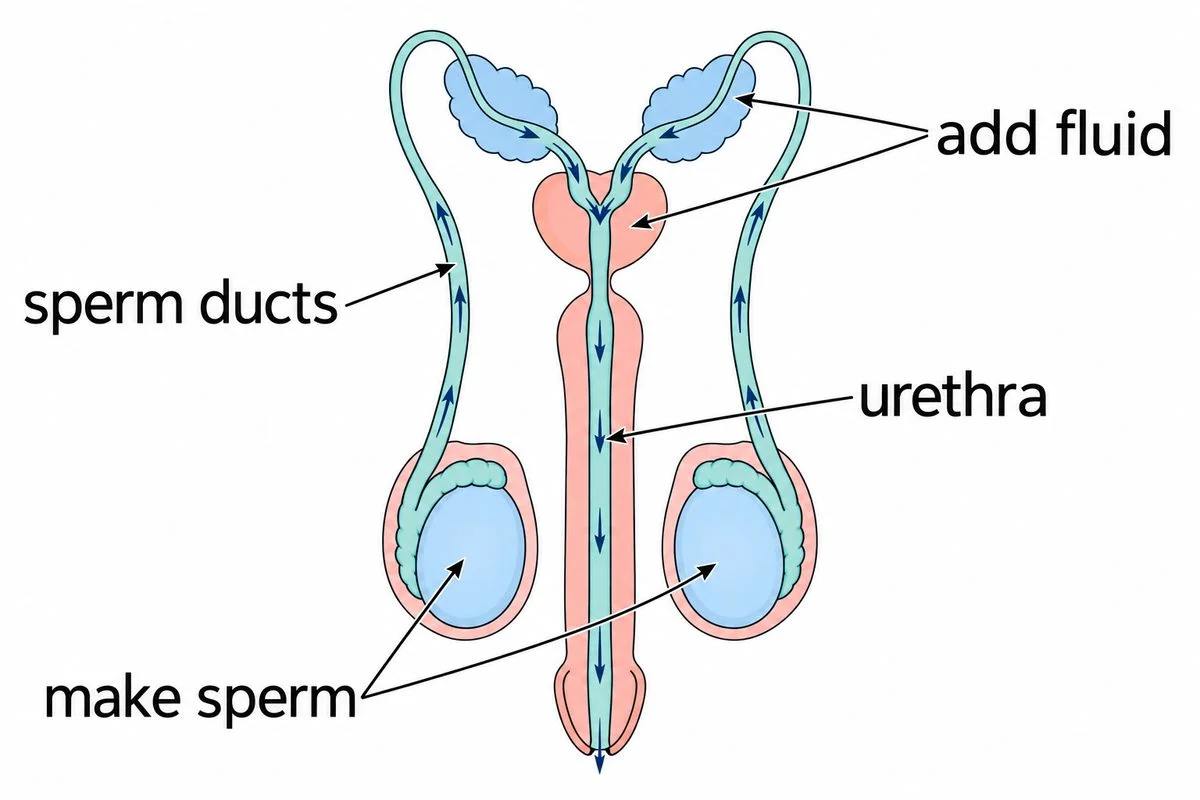
Pencil sketch showing where sperm are made and where glands add fluid.

6. Puberty and sperm production

Hormones mature reproductive organs; testes produce sperm.

Show
Find where sperm are made and where glands add fluid in the diagram. After predicting, trace the sperm route to the urethra inside the penis.
Ask
Will sperm already be present before the glands add fluid?
Say
The sketch separates sperm production from fluid addition. Testes produce sperm, and glands add fluid to form semen.
Used in
The scrotum keeps testes cooler, providing suitable conditions for sperm production.
If your child says…“The prostate makes sperm.”
Ask
If sperm arrive before the prostate adds fluid, where were they made?
What’s true
The prostate adds fluid to sperm that the testes have already produced.
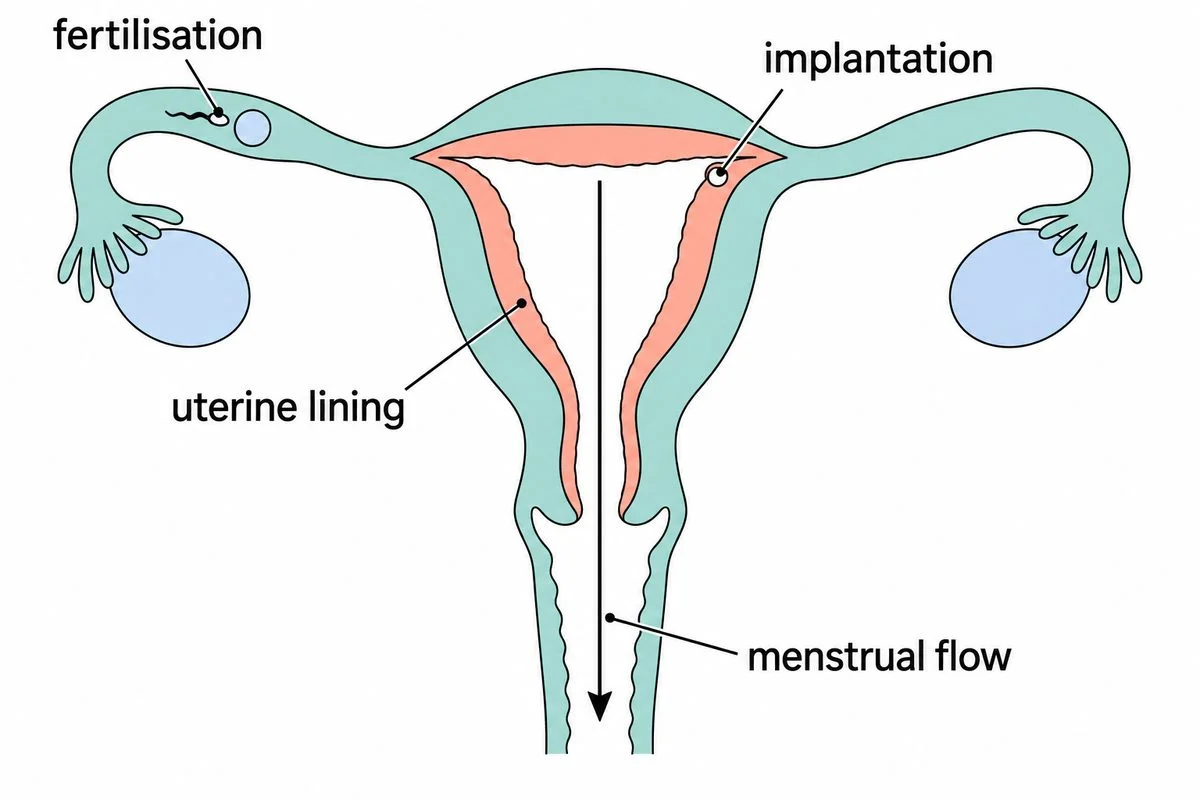
Female reproductive organs showing fertilisation and implantation sites, the uterine lining, and the route of menstrual flow.

7. Fertilisation, implantation and menstruation

An embryo may attach to the prepared uterine lining.

Show
Find the uterine lining and the marked sites of fertilisation and implantation in the diagram. After predicting, trace menstrual flow through the cervix and vagina.
Ask
Where will the shed lining leave?
Say
The shed lining will leave through the cervix and vagina.
Used in
The placenta supplies the baby with food and oxygen while keeping both blood supplies separate.
If your child says…“A period is just an egg coming out.”
Ask
If menstruation sheds the lining, is releasing an egg the same event?
What’s true
Menstruation sheds the uterine lining with blood when pregnancy has not developed.
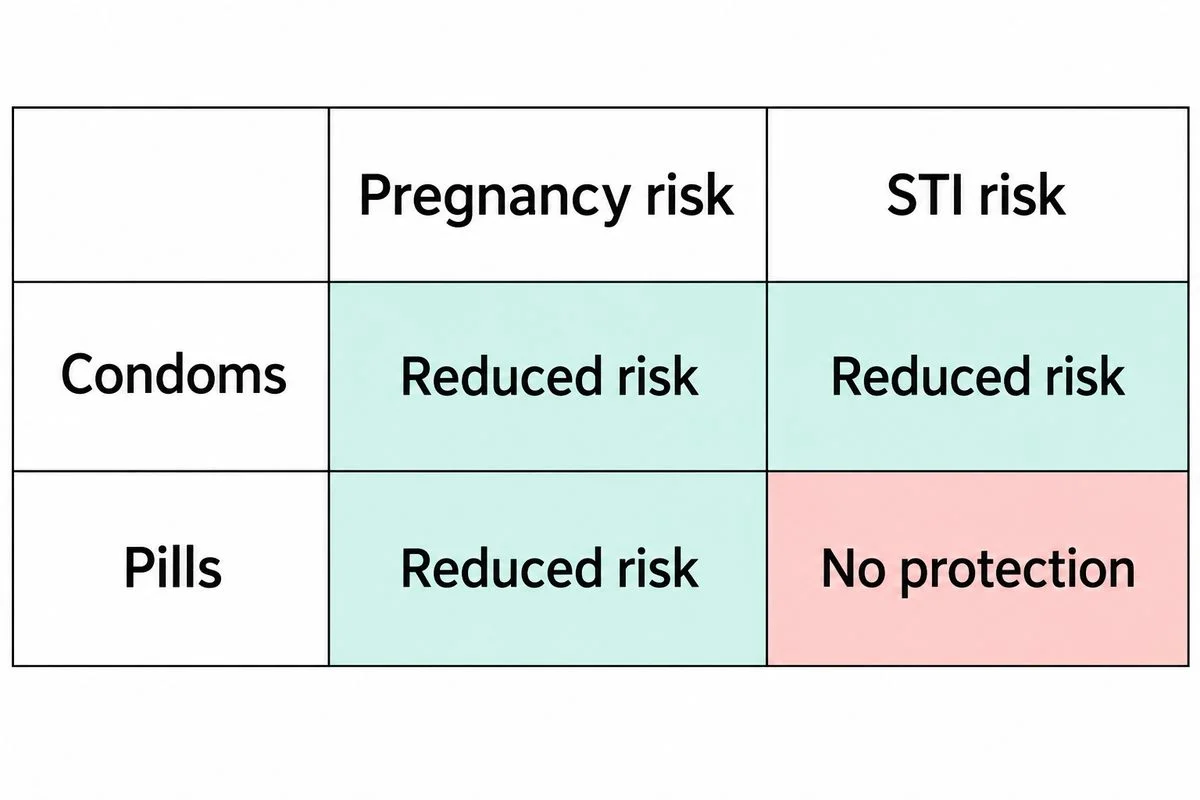
Chart comparing condoms and pills for pregnancy risk and sexually transmitted infection risk.

8. Contraception and reproductive health

Pregnancy prevention and infection protection are different needs.

Show
Look at the comparison diagram. Compare condoms and pills under pregnancy risk, then under sexually transmitted infection risk.
Ask
Will both methods shown also reduce the risk of sexually transmitted infections?
Say
Condoms form a barrier to sperm transfer and reduce pregnancy and many infection risks. Pills reduce pregnancy risk but provide no protection against sexually transmitted infections.
Used in
Hormonal contraceptive pills mainly prevent egg release, reducing the chance of pregnancy.
If your child says…“Pills protect against infections too.”
Ask
Does preventing egg release create a barrier between partners?
What’s true
Condoms reduce infection risks with correct, consistent use, while pills provide no infection protection.

A real problem

Scientists developed a non-steroidal contraceptive in India.

Researchers sought contraceptives with fewer side effects than steroidal contraceptives.

Scientists at India's Central Drug Research Institute synthesised centchroman in 1967.

It prevents a fertilised egg from implanting in the uterus.

CSIR NewsBMJ Open

An unbranded blister pack of tablets on a pale tabletop.

Concept Lab · Common misconception

The tempting mistake in How Do Organisms Reproduce?

Open standalone misconception page →

Does regrowing a body part count as reproduction?

Wrong

A lizard reproduces when it regrows a lost tail.

Why it feels right. I connect the word regeneration with making a new organism in every example.

Right

Regrowth can repair an individual. Reproduction creates a new individual.

Worked example

Lizard
One animal loses tail→Tail regrows→Still one animal
Suitable flatworm fragment
Fragment separates→Grows into complete worm→Separate individual
Count the individuals after the change. Tail regrowth leaves the count at one.
  1. After a lizard regrows part of its tail there is still one lizard.
  2. When a suitable flatworm fragment develops into a separate complete worm, the process produces another individual.

Ask your child eight quick questions.

One per step. The answer and the reason are given.

  1. Do DNA variations arise by chance, or because organisms need them?

    By chance. Copying changes do not follow an organism's needs.

  2. Which animals can regrow whole bodies from pieces: all animals or certain simple animals?

    Certain simple animals. A dog's specialised body cannot reproduce this way.

  3. Can potato plants grow from stem buds, or must they always start from seeds?

    From stem buds. Buds on the potato produce new plants without seeds.

  4. Pollen has only landed on the stigma. Has fertilisation already happened?

    No. Pollen transfer alone does not join the reproductive cells.

  5. What happens to moong seeds kept dark but given water, oxygen and suitable warmth?

    They germinate. These seeds need no light to begin growing.

  6. Where are sperm produced: in the testes or in the prostate gland?

    In the testes. Glands along the sperm's route add fluid rather than making sperm.

  7. What leaves during menstruation: uterine lining with blood, or only an egg?

    Uterine lining with blood. Egg release happens at ovulation, a different event.

  8. Which also reduces sexually transmitted infection risk: a condom or a contraceptive pill?

    A condom. Its barrier reduces exposure, while the pill provides no infection protection.

15 more questions with answers