Skip to content

Teach Our Environment in eight steps.

For each idea: show it, ask before you tell, then say one line.

Gather a potted plant, paper, a pencil, vegetable peels, clean plastic packaging, a used glass jar and fallen leaves beneath a shrub.

Common misconceptions & worked visual for this chapter · 15 practice questions with answers

How to teach it

Ecosystems and feeding relationships

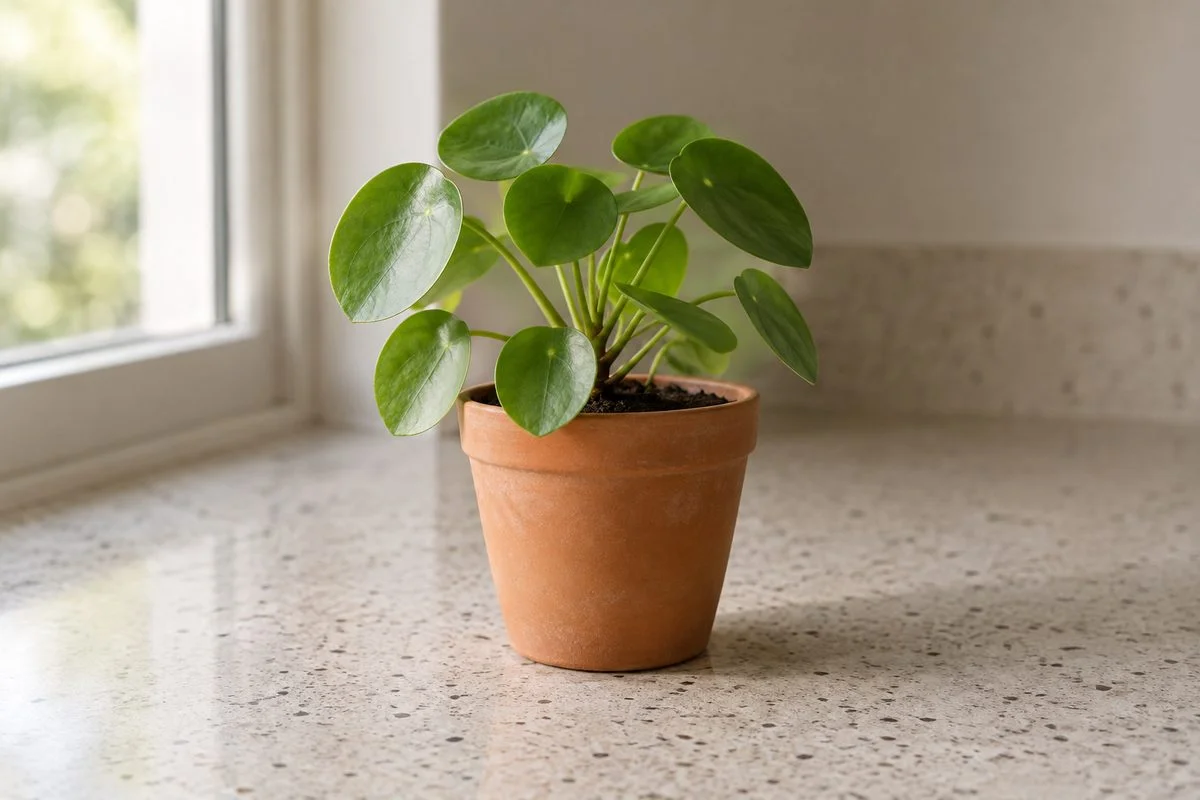
Potted plant beside a sunlit window.

1. Ecosystem

Living things interact with each other and their non-living surroundings.

Show
Place a potted plant beside a window.
Ask
What might happen if this plant received no light?
Say
The plant would lack light, a non-living thing it interacts with.
Used in
Garden plants use sunlight and water to grow.
If your child says…“Only living things count.”
Ask
Can this plant live independently of its surroundings?
What’s true
Light, water and soil also belong.
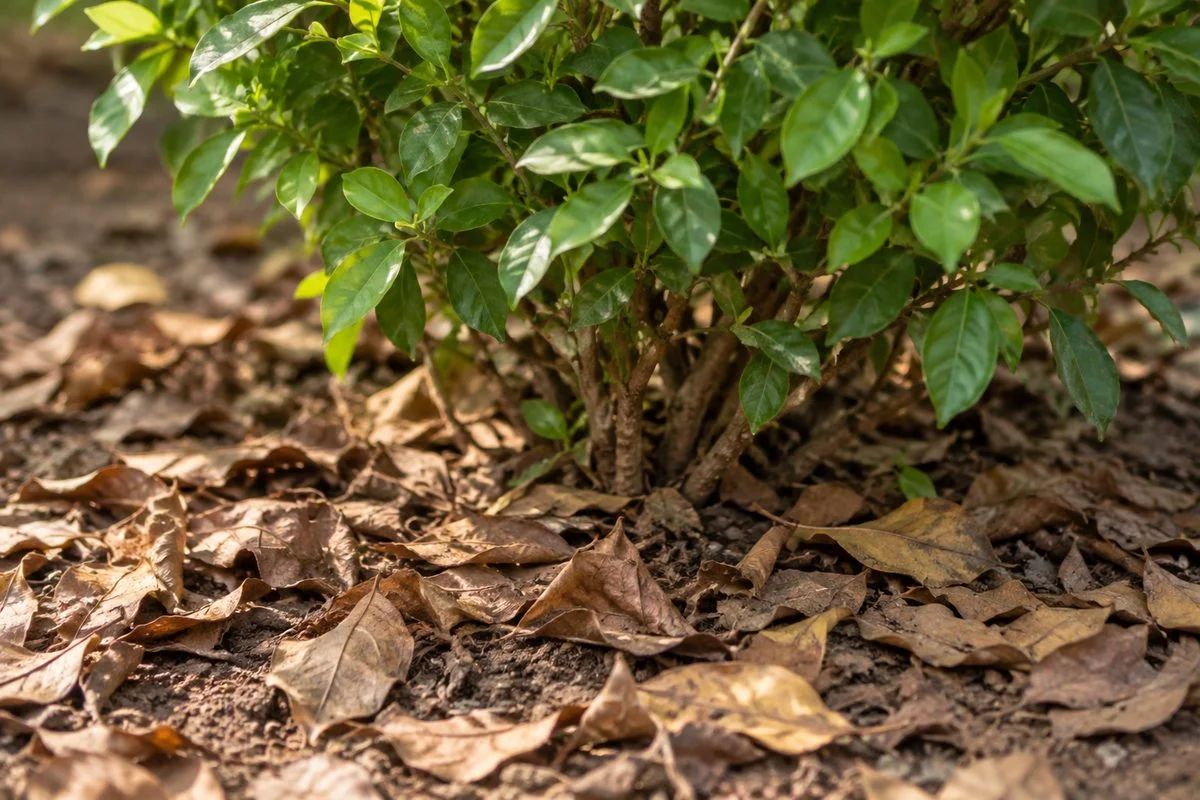
Whole fallen leaves covering the soil beneath a green shrub.

2. Producers, consumers and decomposers

Producers make food, consumers eat organisms, and decomposers break remains down.

Show
Find fallen leaves beneath a shrub. After predicting, move surface leaves aside and compare the layers.
Ask
Will leaves underneath look as whole as those above?
Say
The leaves underneath will look less whole because bacteria and fungi help break these leaves down.
Used in
Decomposition releases nutrients for plants to use again.
If your child says…“Dead leaves disappear by themselves.”
Ask
What does the work of breaking leaves down?
What’s true
Without decomposers, remains accumulate.
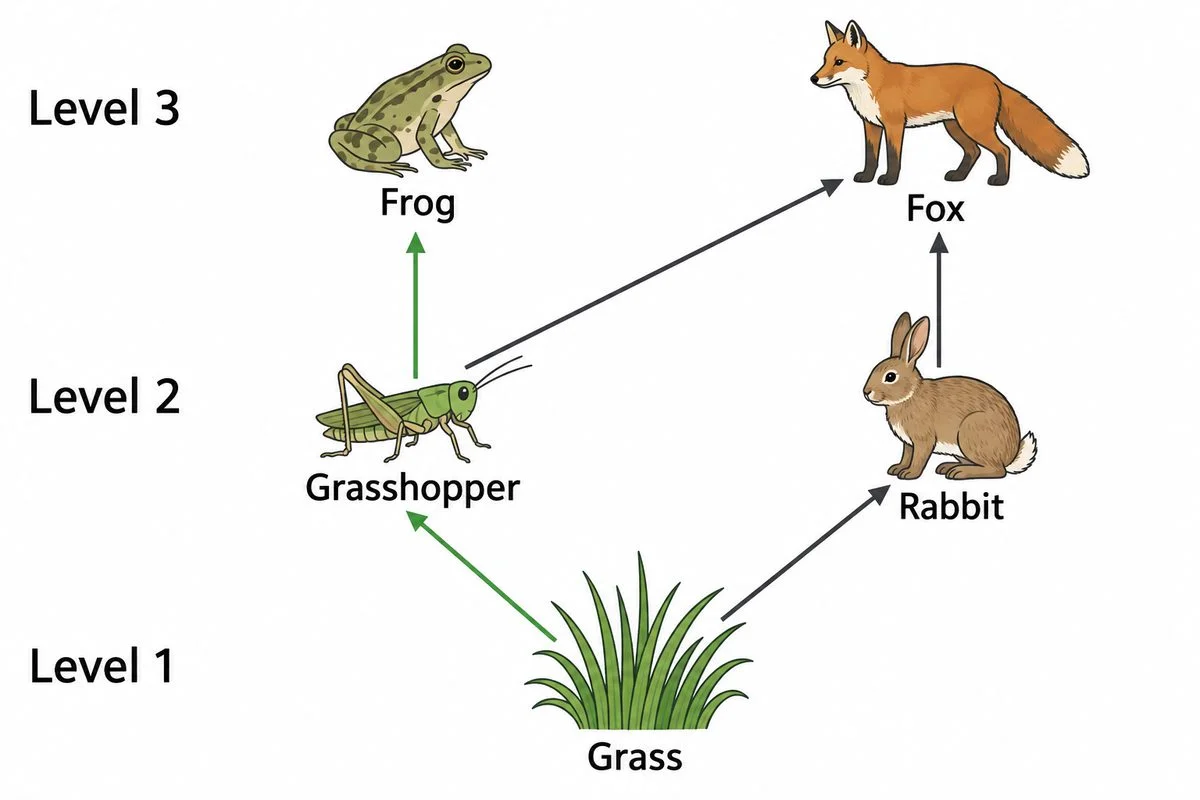
Grassland food web showing feeding arrows, alternative foods and three trophic levels.

3. Food chains, trophic levels and food webs

Linked feeding chains form a web.

Show
Trace grass, grasshopper and frog in the diagram, reading their level numbers. Then follow both arrows into the fox.
Ask
If grasshoppers became scarce, which other food could this fox eat?
Say
The fox could eat rabbits because the web connects feeding chains. Grass starts at level one, followed by grasshopper at two and frog at three. Arrows show food energy passing towards eaters.
Used in
Alternative foods usually help animals survive food shortages.
If your child says…“Arrows point towards the food.”
Ask
Which receives energy when a grasshopper eats grass?
What’s true
Arrows follow energy into eaters.
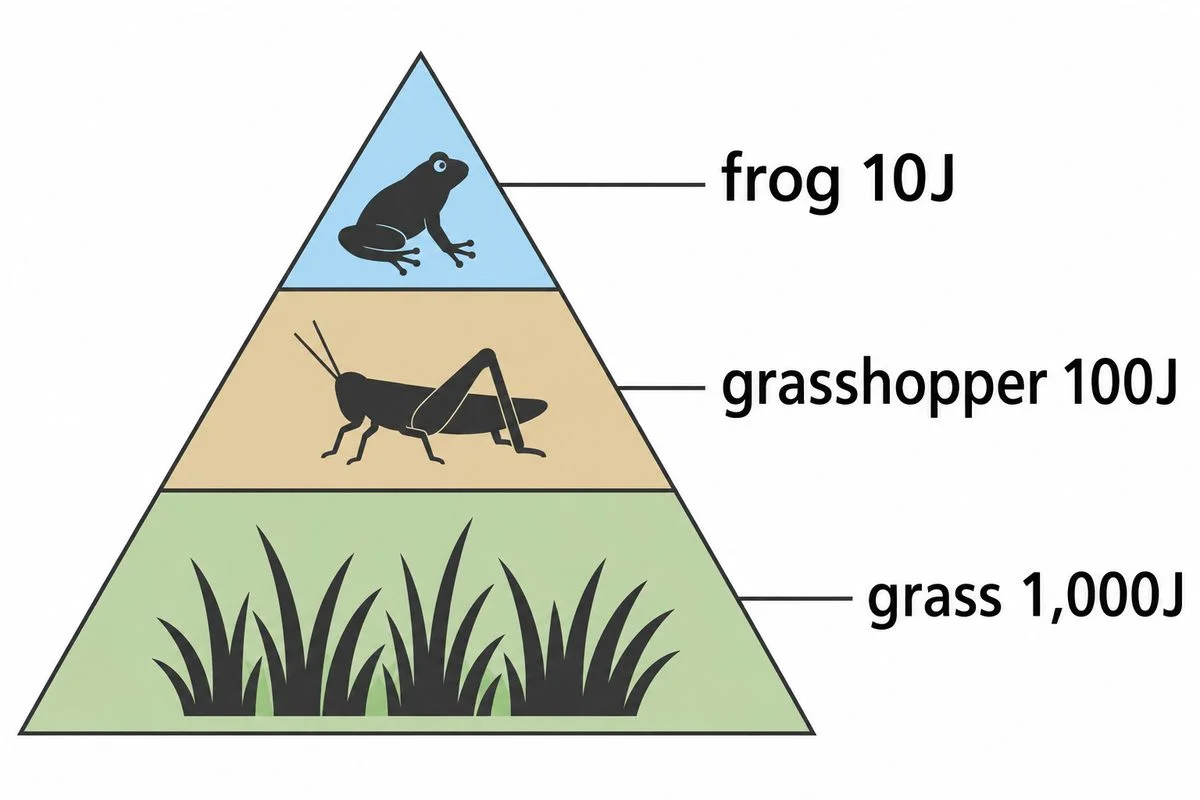
Energy pyramid with grass below grasshopper below frog and decreasing energy amounts.

4. Energy transfer and the ten percent law

About one-tenth of feeding-level energy reaches the next level.

Show
Find grass, grasshopper and frog in the energy pyramid diagram. Compare their energy amounts from bottom to top. J means joules, a unit of energy.
Ask
Would another feeding level receive all the frog's energy?
Say
No; these example amounts shrink upwards: about one-tenth passes on.
Used in
Fresh sunlight supplies plants with energy that food chains cannot recycle.
If your child says…“All the energy passes on.”
Ask
Where does energy for living processes come from?
What’s true
Each transfer leaves less available.
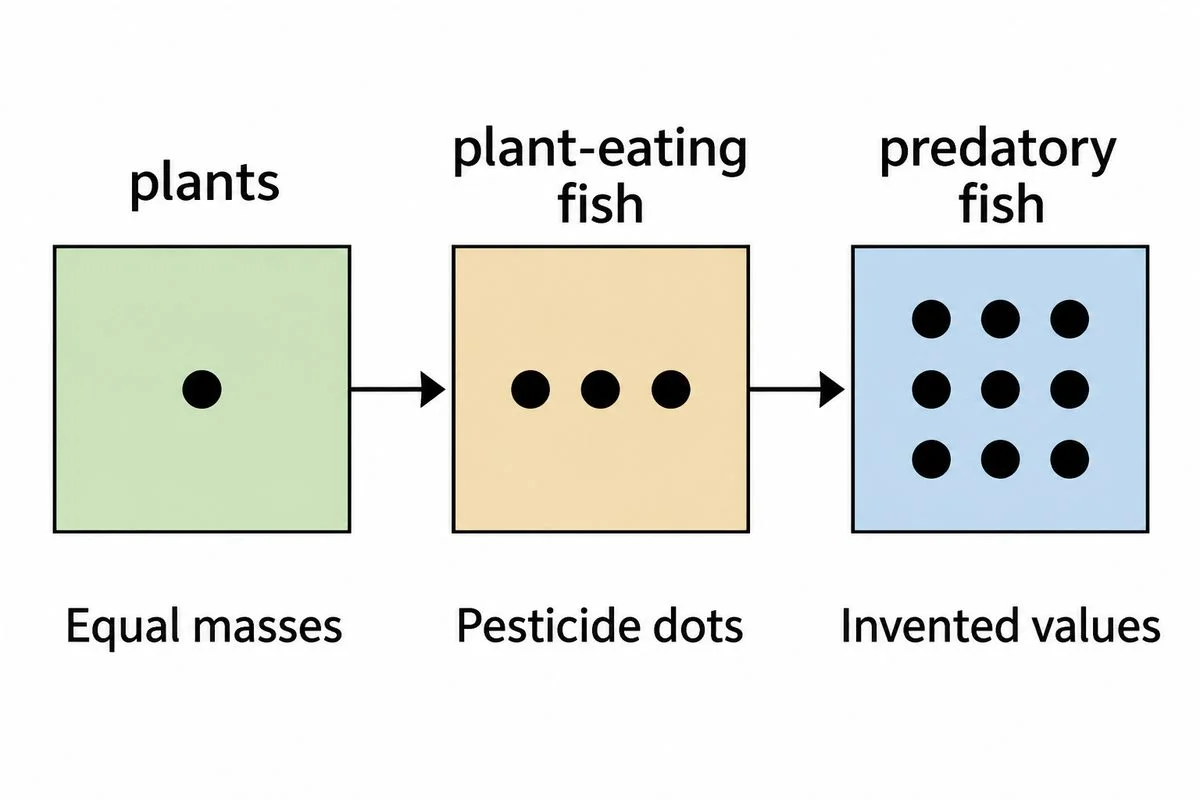
Three equal boxes show increasing pesticide dots from plants to plant-eating fish to predators.

5. Biological magnification

Some lasting chemicals become more concentrated at higher feeding levels.

Show
In the diagram, follow arrows from plants through plant-eating fish to predatory fish. Compare pesticide dots in equal masses. These counts are invented.
Ask
If these predators keep eating contaminated fish, what will happen to the pesticide they retain?
Say
More dots here mean more pesticide per gram. Predators keep some lasting chemicals from many meals.
Used in
Keeping persistent pesticides out of water reduces food-chain contamination.
If your child says…“The poison gets diluted.”
Ask
What happens when contaminated meals keep adding poison?
What’s true
Retained poison becomes more concentrated.

Ozone and ultraviolet radiation

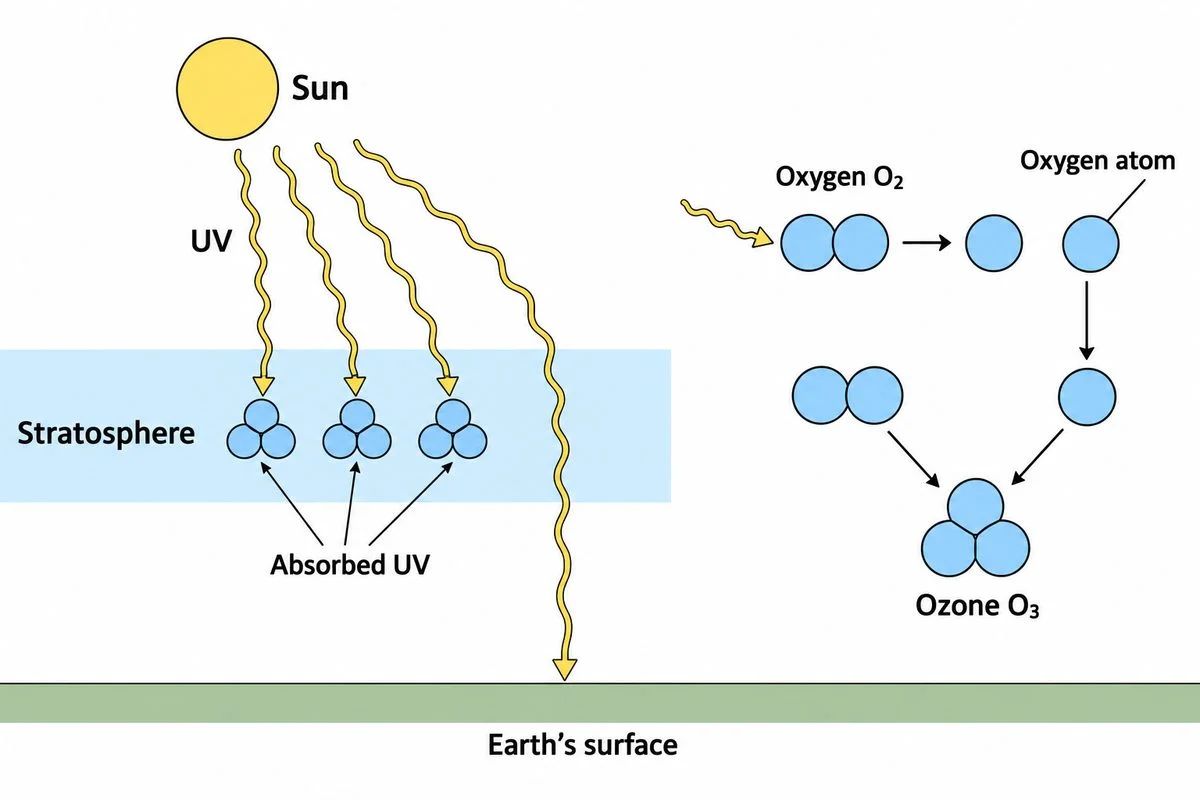
Ozone above Earth absorbs ultraviolet radiation; an inset shows ozone forming from oxygen.

6. Formation and protective role of ozone

Ozone high in the atmosphere absorbs harmful ultraviolet radiation.

Show
Find ozone above Earth in the diagram. Follow ultraviolet rays, labelled UV, then the inset's arrows.
Ask
What happens when harmful UV reaches ozone?
Say
Ozone absorbs much harmful UV. UV also splits oxygen pairs into atoms. A freed atom joins another pair, forming three-atom ozone.
Used in
High-altitude ozone reduces UV damage to skin and eyes.
If your child says…“Ozone shields us from heat rays.”
Ask
Which rays does ozone absorb to protect us: ultraviolet rays or heat rays?
What’s true
Its protective role concerns ultraviolet radiation.
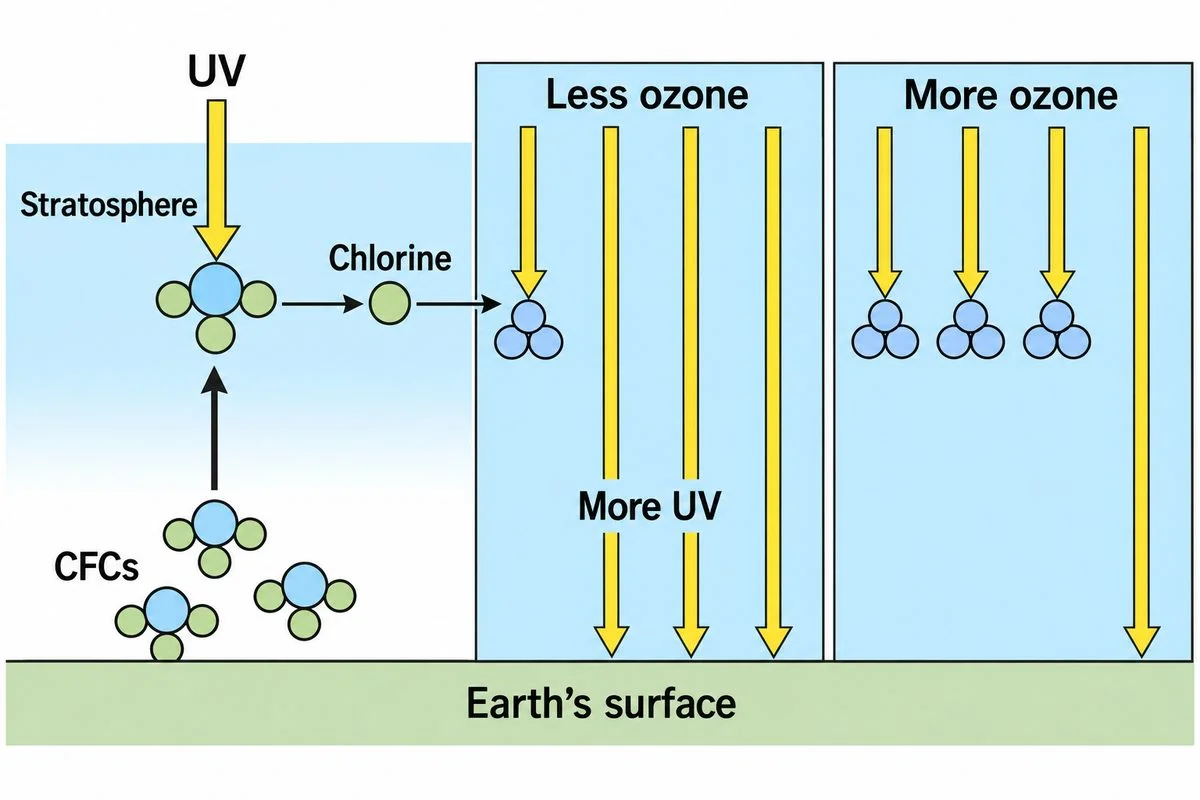
CFCs release chlorine high above Earth; reduced ozone lets more ultraviolet radiation reach the surface.

7. Ozone depletion and CFCs

Chlorofluorocarbons (CFCs) release chlorine high above Earth, causing ozone loss.

Show
Follow CFCs upwards into the stratosphere in the diagram. Trace UV breaking them down, releasing chlorine that reduces ozone. Compare UV reaching Earth beneath more ozone and less ozone.
Ask
How would CFCs reaching this upper region change the UV reaching Earth?
Say
More harmful UV can reach Earth. UV breaks down CFCs high above Earth, releasing chlorine. Chlorine repeatedly helps destroy ozone, leaving less to absorb UV.
Used in
The Montreal Protocol introduced international controls on ozone-damaging substances to protect ozone.
If your child says…“CFCs make the ozone layer thicker.”
Ask
Would destroying ozone thicken its layer?
What’s true
Chlorine released from CFCs helps destroy ozone.

Waste and its management

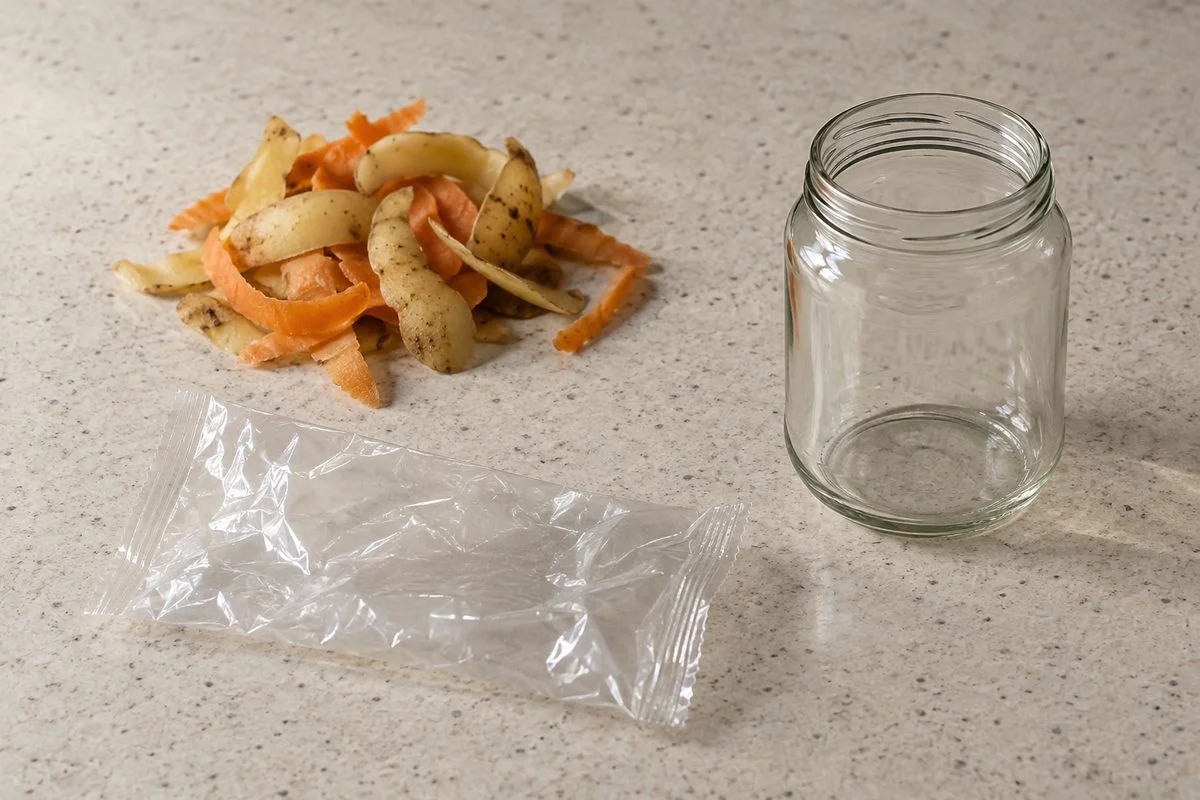
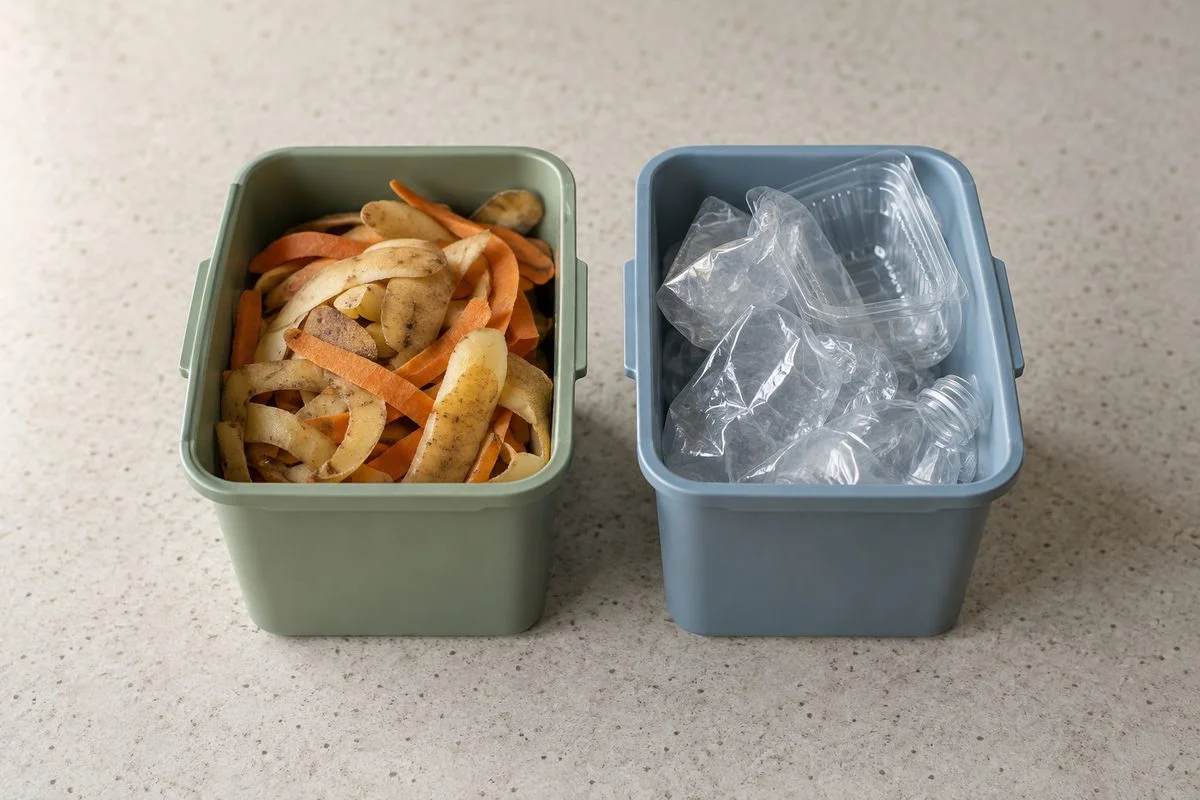
Vegetable peels, plastic packaging and an empty glass jar arranged separately.

8. Waste segregation, reuse and recycling

Separate waste by how it breaks down or can be recovered.

Show
Set out vegetable peels, clean plastic packaging and a used glass jar. After predicting, separate the peels for compost and keep the plastic and glass apart.
Ask
What would happen if these all went into compost?
Say
Peels are biodegradable; plastic and glass persist.
Used in
Separating organic waste allows composting.
If your child says…“Everything can share one bin.”
Ask
Would the packaging rot with the peels?
What’s true
Mixed waste makes recovery harder.

A real problem

Ambikapur tackled dumping by separating household waste.

Its waste-management transformation began in 2015, after overflowing bins and roadside dumping littered the city.

Residents began separating their household garbage.

Separated organic waste was made into compost.

NITI Aayog reported that Ambikapur became free of garbage dumping sites.

NITI Aayog / CSEIndia Water Portal

Vegetable peels and plastic packaging separated into two household bins.

Concept Lab · Common misconception

The tempting mistake in Our Environment

Open standalone misconception page →

Does energy increase higher up a food chain?

Wrong

Top predators receive the most energy because they eat other animals.

Why it feels right. I focus on the size or number of prey.

Right

Energy available to a trophic level is a fraction of the energy at the level below.

Worked example

Producers1000 units
Primary consumers100 units
Secondary consumers10 units
With the illustrative 10% transfer, the available energy drops by a factor of ten at each step.

With an illustrative 10% transfer, 1,000 energy units in producers support about 100 in primary consumers and 10 in secondary consumers.

Ask your child eight quick questions.

One per step. The answer and the reason are given.

  1. Does sunlight belong in this garden ecosystem?

    Yes. Plants depend on this non-living part of the ecosystem.

  2. What happens to dead remains if decomposers stop working?

    They pile up. Decomposers break remains down and release nutrients.

  3. Which way should the arrow between grass and a grass-eating insect point?

    From grass to insect. The insect receives food and energy from the grass.

  4. If one feeding level has 500 J, about how much reaches the next?

    About 50 J. Only about one-tenth transfers to the next feeding level.

  5. Why does retained pesticide become more concentrated from plants to predatory fish?

    Repeated meals add retained pesticide. Predators eat many contaminated organisms and keep pesticide that their bodies cannot easily remove.

  6. Which radiation does high-altitude ozone absorb to protect skin?

    Ultraviolet radiation. Ozone absorbs harmful UV, reducing the radiation reaching living things.

  7. What effect do released CFCs have on ozone high in the atmosphere?

    Its amount decreases. Chlorine released from CFCs destroys ozone, allowing more harmful UV through.

  8. Where should plastic packaging go when peels are collected for compost?

    Apart from the peels. Plastic does not biodegrade with food waste and needs separate handling.

15 more questions with answers