Skip to content

Teach Chemical Reactions and Equations in eight steps.

For each idea: show it, ask before you tell, then say one line.

Gather paper and a pencil, with access to an iron object showing rust.

Common misconceptions & worked visual for this chapter · 15 practice questions with answers

How to teach it

Recognise and record a reaction

A flat sheet of paper before crumpling.

1. Chemical reactions

A chemical reaction produces substances different from those you started with.

Show
Hold a flat sheet of paper ready to crumple. Crumple it after the prediction.
Ask
Will changing its shape make a different substance?
Say
Changed appearance alone does not prove that a new substance formed.
Used in
Cooking changes food chemically, making many foods easier to digest.
If your child says…“Any visible change means a reaction.”
Ask
What substance is the crumpled sheet made from?
What’s true
Changing shape need not produce another substance.

Mg(s)+O2(g)→MgO(s)\mathrm{Mg(s) + O_2(g) \rightarrow MgO(s)}

Mg(s)+O2(g)→2MgO(s)\mathrm{Mg(s) + O_2(g) \rightarrow 2MgO(s)}

2. Chemical equations and balancing

Equations record reactions; balancing preserves each element’s atom count.

Show
First say, “Magnesium reacts with oxygen to make magnesium oxide.” Write this equation. Put 2 before MgO to match oxygen atoms.
Ask
If we put 2 before magnesium, will both elements have matching atom counts?
Say
Putting 2 before magnesium balances both elements. State symbols mean solid (s) or gas (g).
Used in
Manufacturers use balanced equations to work out reactant amounts and help reduce waste.
If your child says…“I can change magnesium oxide’s small numbers.”
Ask
Would changing magnesium oxide’s formula still describe magnesium oxide?
What’s true
Change only the numbers before formulae, never the numbers inside them.

Recognise reaction patterns

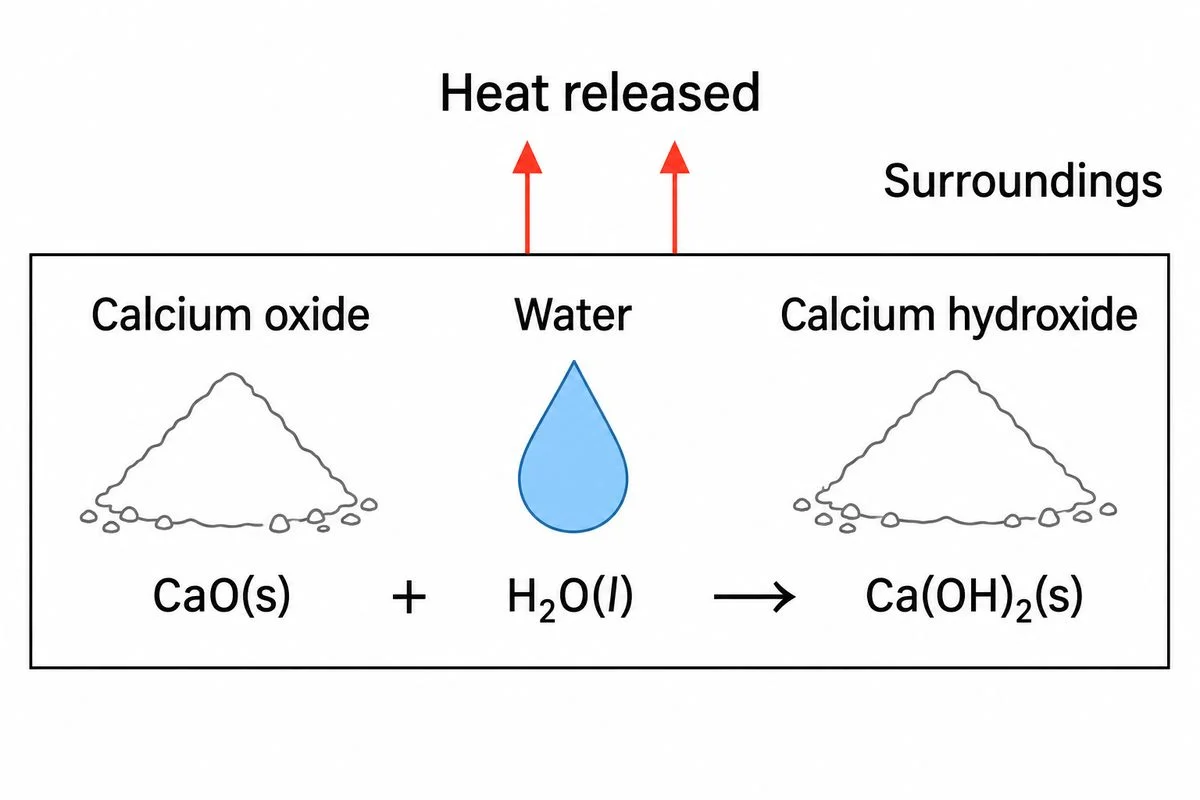
Calcium oxide and water form calcium hydroxide, with heat arrows pointing outward.

3. Combination and exothermic reactions

Combination makes one product from multiple reactants. Exothermic reactions release heat.

Show
Find calcium oxide and water in the diagram. Follow the reaction arrow, then the heat arrows.
Ask
Will adding water warm the surroundings even without a flame?
Say
These substances react and release heat without a flame. Forming one product makes this combination. Releasing heat makes the same reaction exothermic.
Used in
Respiration releases energy when glucose reacts with oxygen, supplying energy for the body's activities.
If your child says…“A reaction gets only one name.”
Ask
Does counting products tell us whether heat leaves?
What’s true
Different labels describe different features.
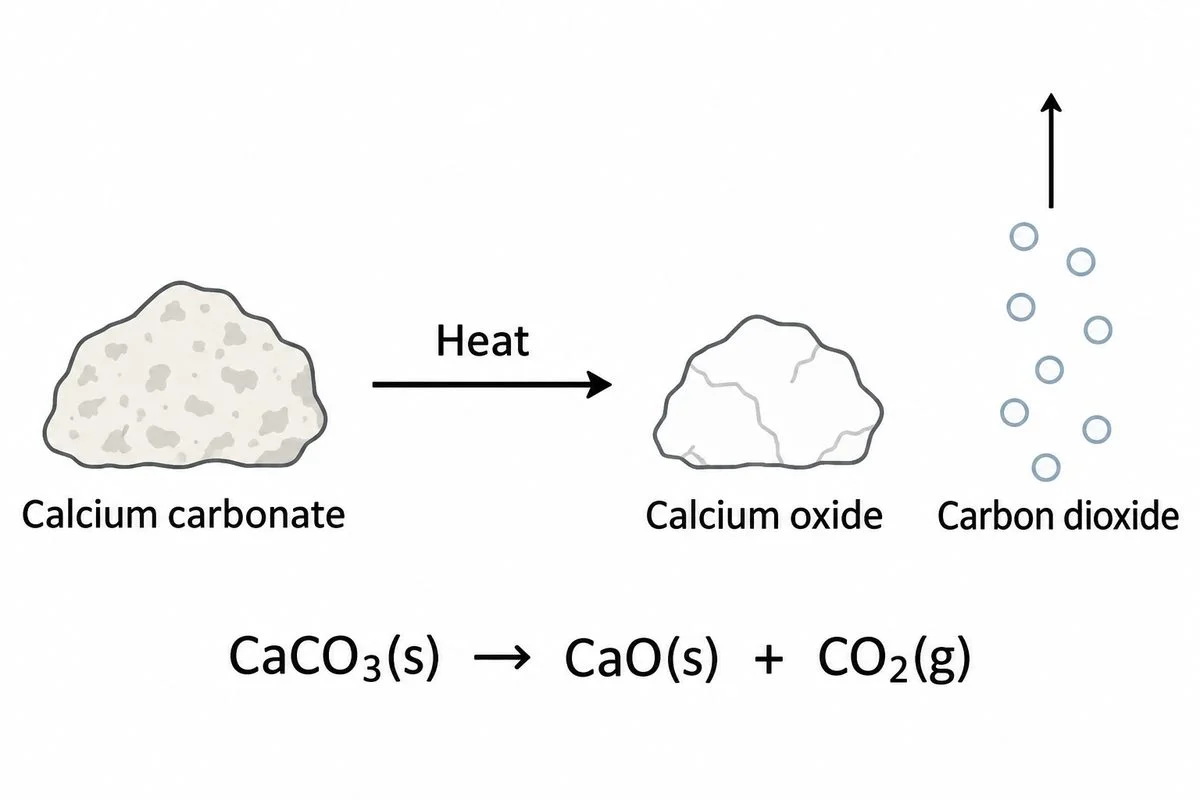
Heating calcium carbonate produces solid calcium oxide and escaping carbon dioxide.

4. Decomposition reactions

One compound splits into two or more simpler substances.

Show
Find calcium carbonate and the heating arrow in the diagram. Cover the products until after the prediction.
Ask
Will heating merely melt this solid, or can different substances form?
Say
Heating breaks calcium carbonate into calcium oxide and carbon dioxide. This is thermal decomposition.
Used in
Using electricity to extract aluminium enabled cheaper production, making the metal more affordable.
If your child says…“Only heating breaks compounds apart.”
Ask
What supplies energy when silver chloride breaks down in sunlight?
What’s true
The energy source depends on the compound.
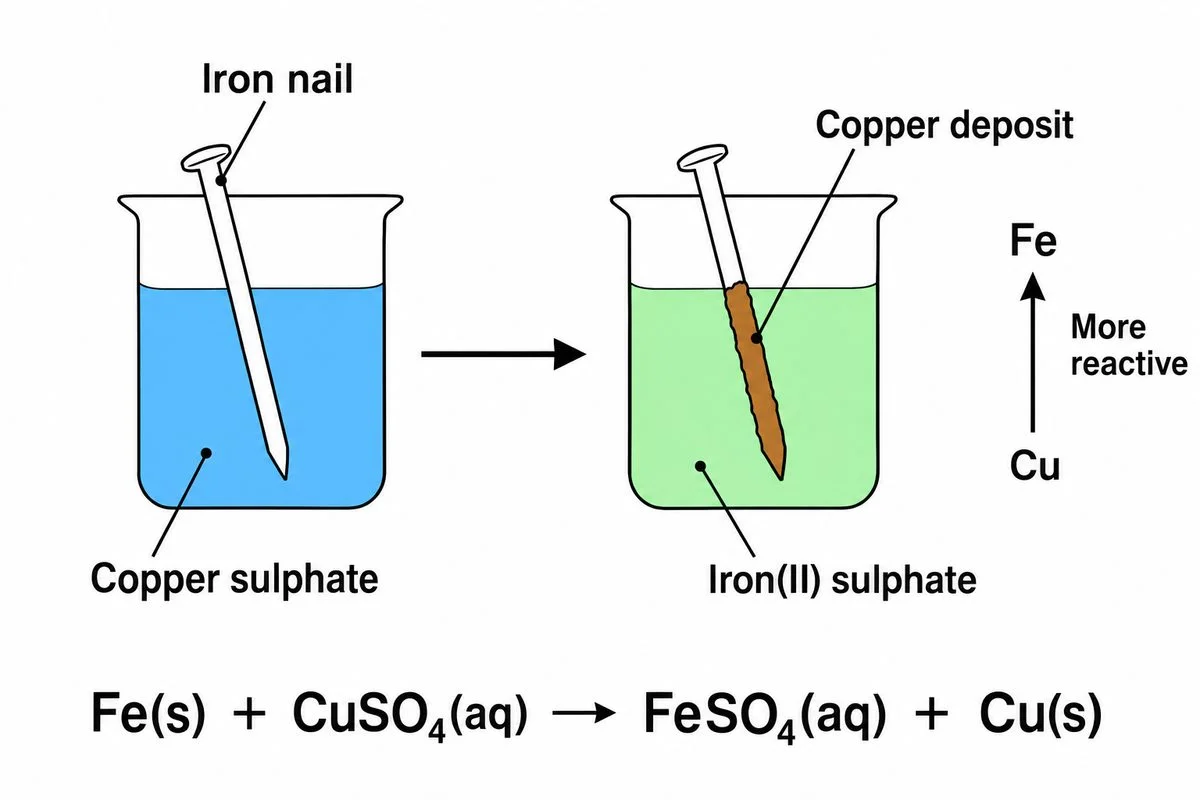
Iron displaces copper from blue solution; copper coats the nail and the solution changes.

5. Displacement reactions

One element replaces another in a compound.

Show
Cover the right beaker in the diagram. Find the iron nail, blue solution and reactivity comparison. After predicting, uncover the right beaker.
Ask
Where could a copper coating on this nail come from?
Say
Copper comes from the dissolved copper sulphate. Iron replaces copper because iron is more reactive. Iron sulphate remains in solution.
Used in
Displacement recovers dissolved copper for reuse.
If your child says…“Any metal can replace another.”
Ask
Which metal replaces the other?
What’s true
A metal can displace a less reactive metal from its salt solution.
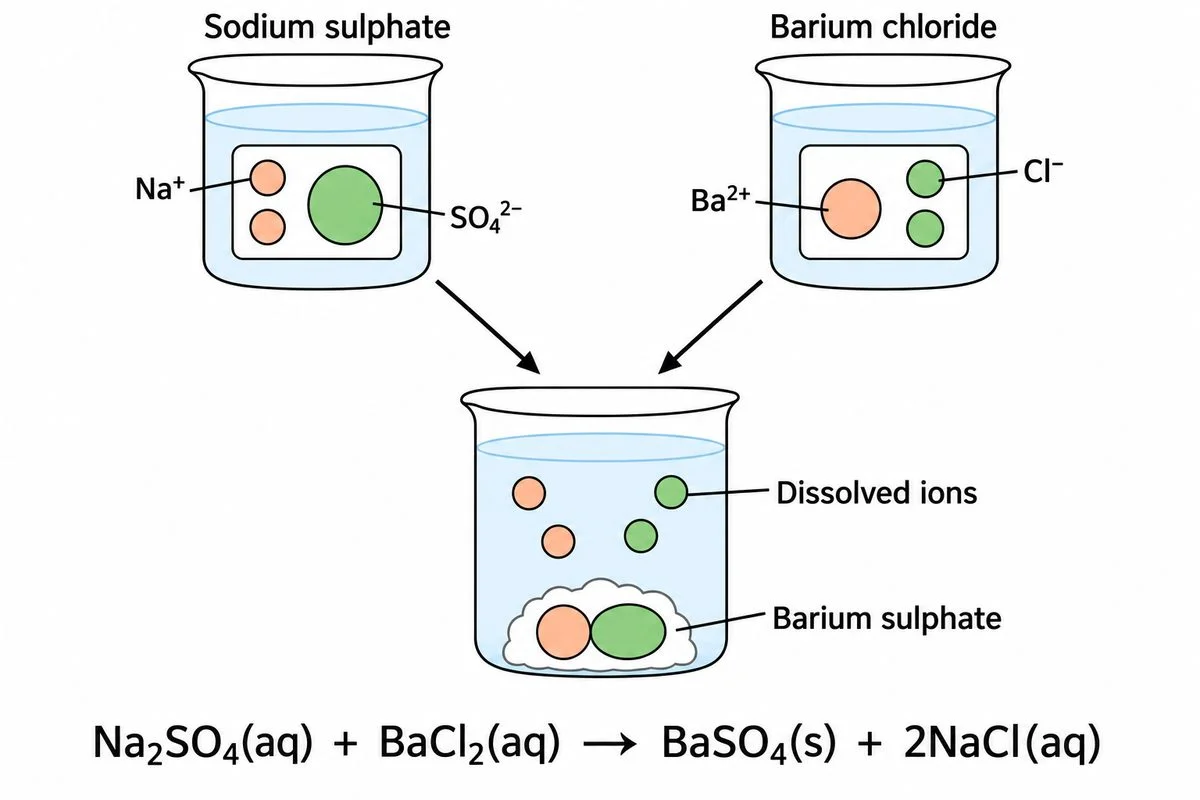
Two clear solutions form solid barium sulphate while sodium and chloride ions remain dissolved.

6. Double displacement and precipitation

Ions exchange partners; an insoluble product precipitates.

Show
Find the two clear solutions at the diagram’s top. Cover the lower beaker until after predicting. Then follow each kind of ion into the mixture.
Ask
Could mixing these clear solutions produce a solid?
Say
Charged particles, called ions, exchange partners in double displacement. Barium sulphate forms a white precipitate, while sodium and chloride ions stay dissolved.
Used in
Precipitation makes dissolved impurities removable during water treatment.
If your child says…“Only the solid forms.”
Ask
Where are sodium and chloride?
What’s true
Here, sodium chloride stays dissolved and forms no visible solid.
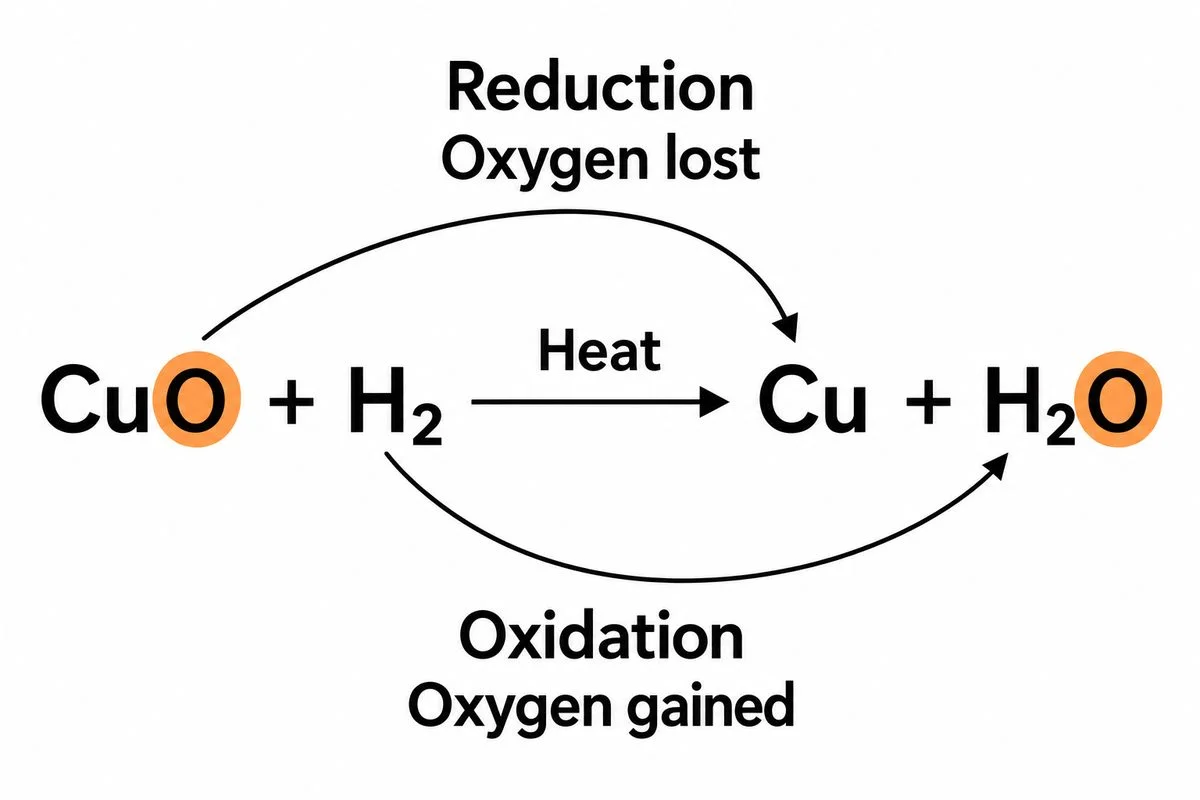
Copper oxide loses oxygen to hydrogen, showing reduction and oxidation together.

7. Oxidation and reduction

Oxidation gains oxygen or loses hydrogen; reduction loses oxygen or gains hydrogen.

Show
Find copper oxide and hydrogen on the diagram’s left. Cover the products until after predicting. Then uncover them and follow the highlighted oxygen and both curved arrows.
Ask
If copper oxide loses oxygen, which substance gains it?
Say
Copper oxide gives up oxygen, leaving copper: this is reduction. Hydrogen receives that oxygen, forming water: this is oxidation.
Used in
Airtight containers reduce oxygen contact, slowing rancidity in fats and oils.
If your child says…“Losing oxygen means oxidation.”
Ask
Where does copper oxide’s oxygen appear afterwards?
What’s true
Oxygen loss or hydrogen gain means reduction, while oxygen gain or hydrogen loss means oxidation.

Slow unwanted reactions

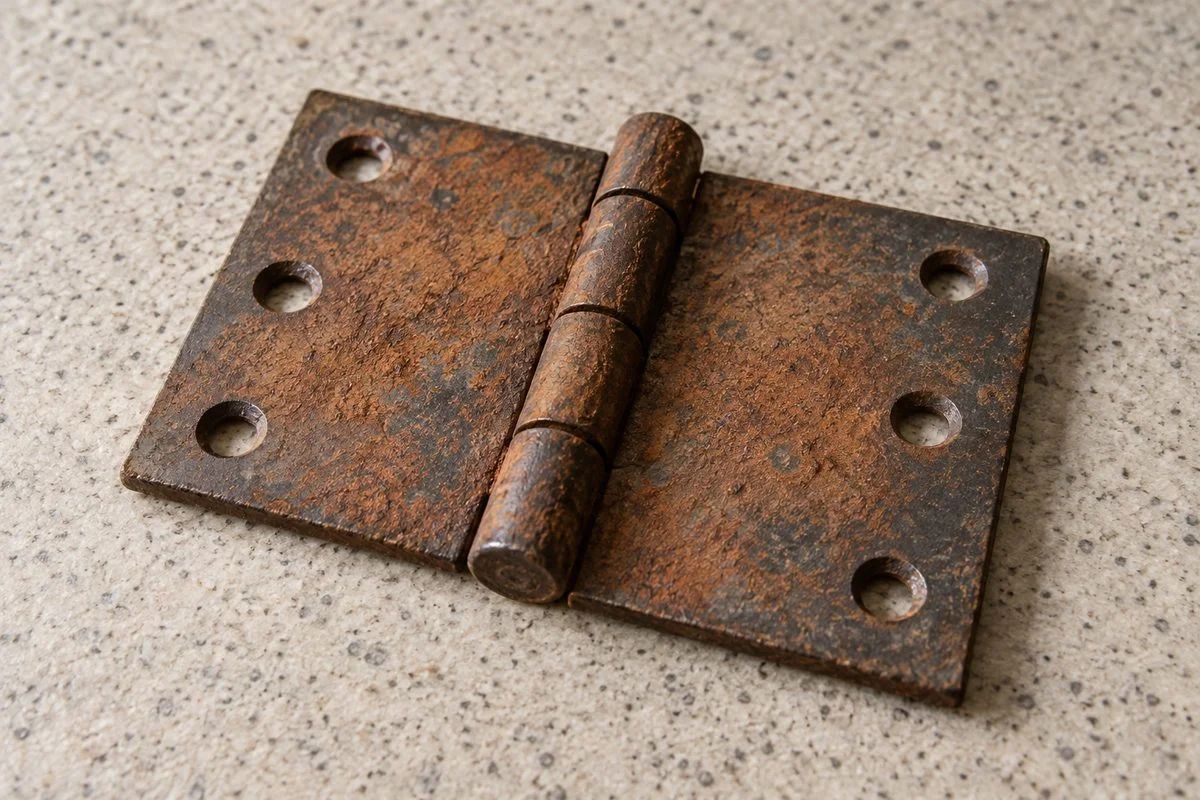
An iron object with a visible rusty patch.

8. Corrosion and rancidity

Metals corrode through reactions; oxidised fats and oils become rancid.

Show
Look together at an existing rusty patch on iron. Leave it untouched.
Ask
Would covering this rust with paint turn it back into iron?
Say
No; covering this rust with paint would not turn it back into iron.
Used in
Nitrogen-filled food packets slow fat oxidation by reducing available oxygen.
If your child says…“Paint changes rust back into iron.”
Ask
Does covering the rust remove what has already formed?
What’s true
Intact paint reduces further rusting by limiting water and oxygen contact.

A real problem

Electricity helped make aluminium cheaper.

In 1886, Charles Martin Hall invented an economical process for extracting aluminium.

His process used electrolysis to extract the metal.

Commercial production brought a dramatic drop in aluminium’s price.

American Chemical SocietyScience History InstituteScience History Institute

An unbranded aluminium cooking pot on a kitchen counter.

Concept Lab · Common misconception

The tempting mistake in Chemical Reactions and Equations

Open standalone misconception page →

Can balancing change a chemical formula?

Wrong

Write NH₃ as NH₆ to account for all six hydrogen atoms.

Why it feels right. I want more hydrogen atoms on the product side, so I change the subscript.

Right

A coefficient changes how many molecules you count. A subscript changes the formula.

Worked example

Reactants
NN
HH
HH
HH
Products
NHHH
NHHH
Two copies of NH₃ use all six hydrogen atoms without changing the ammonia formula.
  1. In N₂ + 3H₂ → 2NH₃ there are 2 nitrogen and 6 hydrogen atoms on each side.
  2. The coefficient 2 counts two ammonia molecules and keeps the formula NH₃.

Ask your child eight quick questions.

One per step. The answer and the reason are given.

  1. Did crumpling the paper make a new substance?

    No. The paper changed shape but remained the same substance.

  2. Which numbers can change when balancing: those before formulae or those inside them?

    Those before formulae. Changing numbers inside formulae changes the substances instead of balancing their amounts.

  3. Calcium oxide and water form only calcium hydroxide and release heat. Which two reaction labels apply?

    Combination and exothermic. One label describes the product pattern; the other describes heat leaving.

  4. What can make silver chloride decompose without heating it?

    Light. Decomposition can use light energy; it does not always require heating.

  5. What does iron replacing copper tell us about their relative reactivity?

    Iron is more reactive. Replacement depends on relative reactivity, so metals cannot all replace each other.

  6. Besides solid barium sulphate, what forms when these solutions react?

    Dissolved sodium chloride. The exchanged ions form two products, although only one appears as a solid.

  7. Which reaction label describes copper oxide losing oxygen to hydrogen?

    It is reduced. Copper oxide loses oxygen while hydrogen gains it.

  8. What happens to existing rust when paint simply covers it?

    It remains rust. Paint forms a protective barrier; it does not convert rust back into iron.

15 more questions with answers