Skip to content

Teach Life Processes in eight steps.

For each idea: show it, ask before you tell, then say one line.

Gather chapati, a plate, paper, a pencil, a leafy plant, a dry clear bag and string.

Common misconceptions & worked visual for this chapter · 15 practice questions with answers

How to teach it

Nutrition

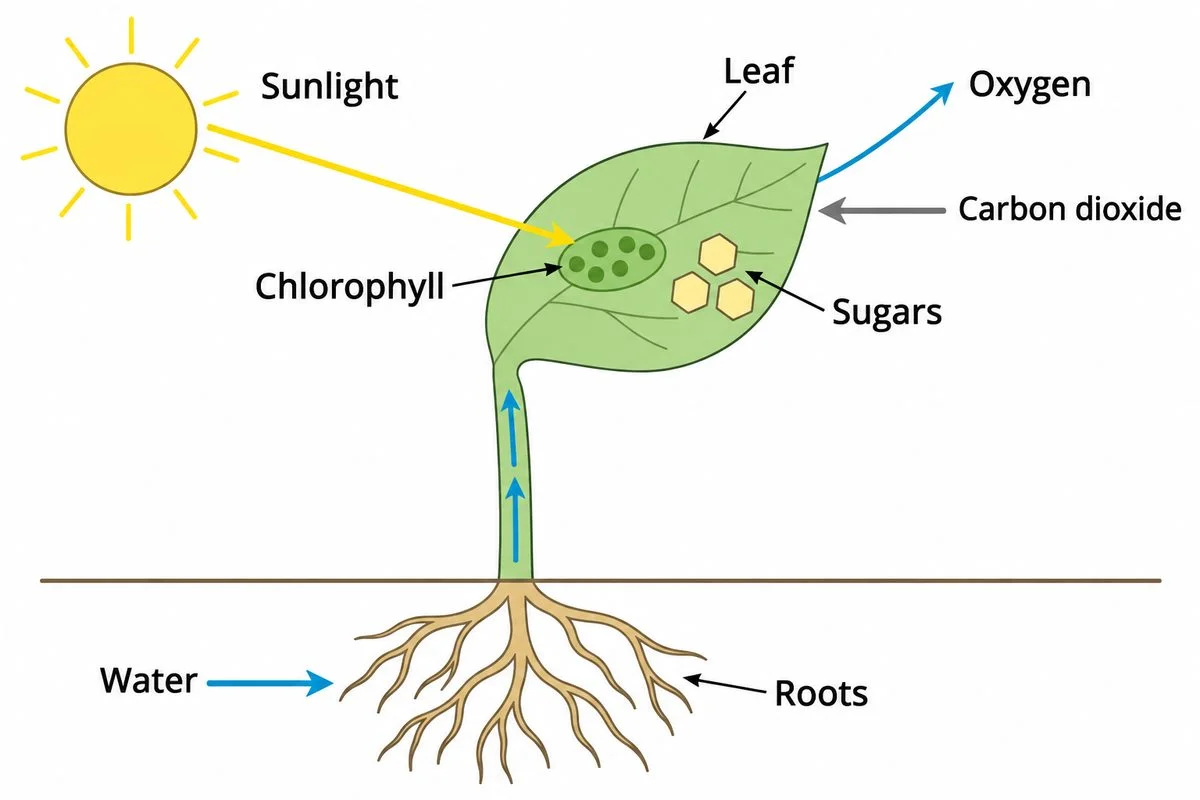
Plant diagram tracing water, carbon dioxide and sunlight towards sugar production in a leaf.

1. Photosynthesis

Plants make sugars using light, water and carbon dioxide.

Show
Look at the diagram. Follow water from roots and carbon dioxide from air into the leaf. Find chlorophyll beside the sunlight arrow.
Ask
Without eating meals, how will this plant get food?
Say
The leaf makes sugars from water and carbon dioxide. Chlorophyll captures the light energy needed.
Used in
Food made in leaves supplies growing plant parts.
If your child says…“Sunlight alone gives plants everything needed to make food.”
Ask
Which materials must enter this leaf besides sunlight?
What’s true
Light cannot replace chlorophyll, water or carbon dioxide.
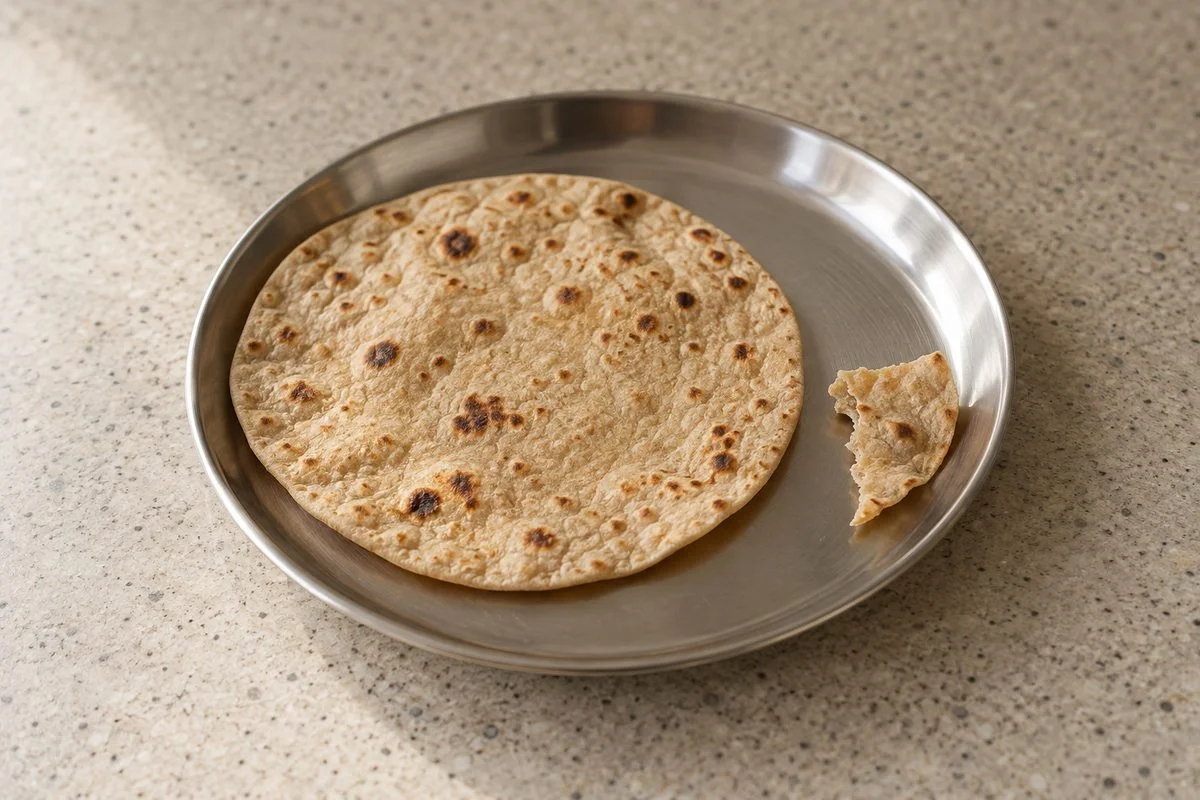
Small chapati piece beside the remaining chapati on a clean plate.

2. Digestion and absorption

Digestion makes simple, soluble nutrients. Absorption moves them through intestinal walls.

Show
Put a small chapati piece on a plate. After predicting, take a bite and notice its taste. Chew slowly and notice any sweetness.
Ask
Will this chapati taste the same after you chew it slowly?
Say
Saliva starts changing starch into sugars, which may taste sweet.
Used in
Absorption supplies the body with digested nutrients.
If your child says…“My stomach finishes all digestion.”
Ask
Why would the small intestine need digestive juices if the stomach had finished everything?
What’s true
Digestive juices in the small intestine complete the breakdown.

Respiration and transport

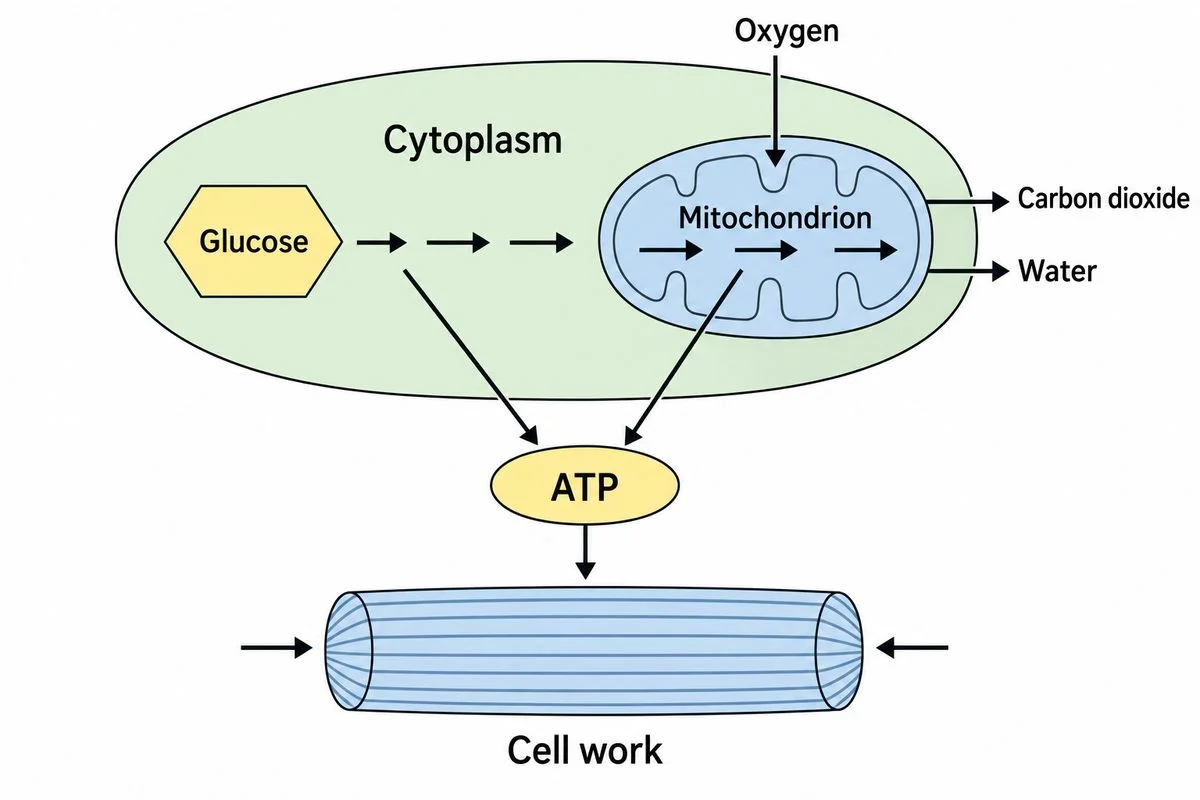
Cell diagram connecting glucose breakdown to ATP and muscle cell work.

3. Cellular respiration

Cells release usable energy as they break glucose down.

Show
Look at the diagram. Follow glucose breakdown from cytoplasm into the mitochondrion. Trace energy transfers to ATP and then cell work.
Ask
How will energy from this glucose become available for cell work?
Say
Breakdown starts in cytoplasm and continues in mitochondria. Some energy goes into ATP, which powers cell work.
Used in
Respiration supplies energy for growth and repair.
If your child says…“Only my lungs release energy from food.”
Ask
Where does glucose breakdown happen in this diagram?
What’s true
Breathing supplies oxygen, while muscle cells release energy where they need it.
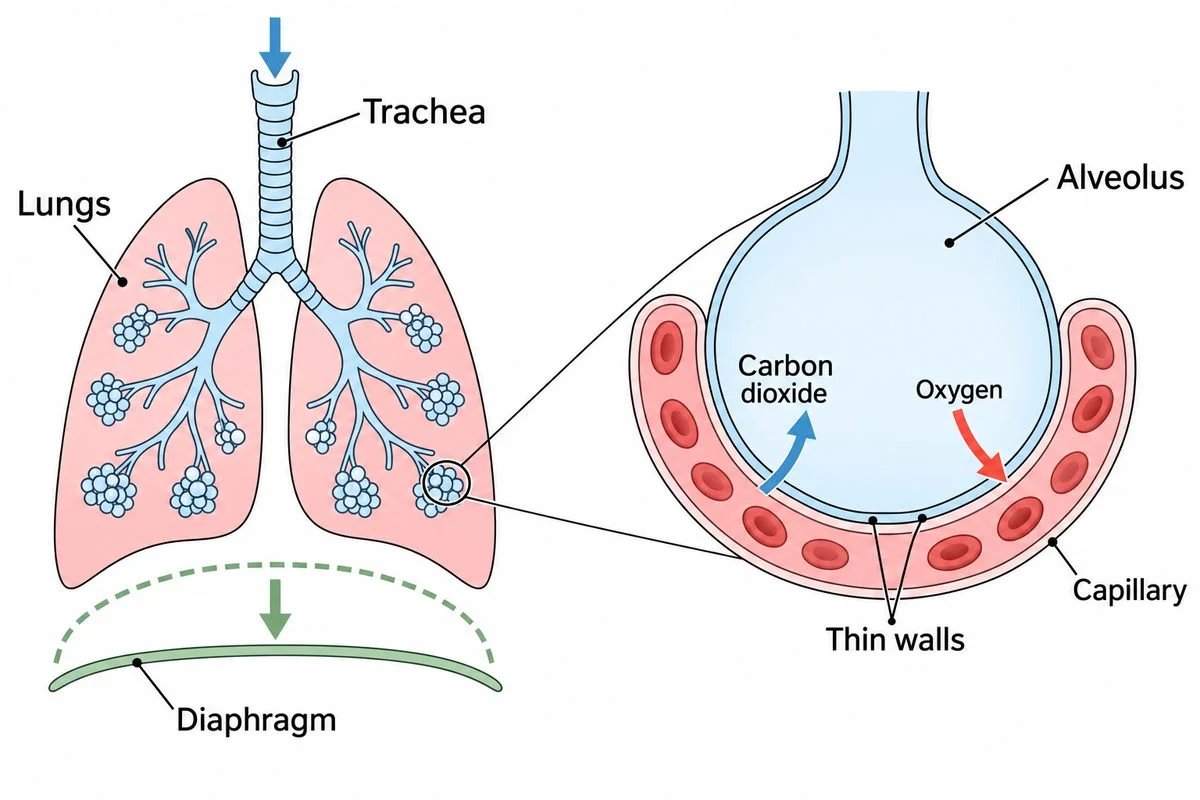
Lung diagram showing diaphragm movement and gas exchange between an alveolus and blood.

4. Breathing and gas exchange

Breathing moves air, while gases cross between air sacs and blood.

Show
Look at the diagram. Follow incoming air as the diaphragm lowers. Find the enlarged air sac and its thin wall beside the capillary.
Ask
How will oxygen reach this blood without air bubbles entering it?
Say
Oxygen diffuses into blood through thin walls. Lowering the diaphragm enlarges the chest and draws air in.
Used in
Haemoglobin transports oxygen from lungs to tissues for respiration.
If your child says…“Air sacs pump oxygen into blood.”
Ask
Where is oxygen concentration lower: in the air sacs or arriving blood?
What’s true
Oxygen diffuses into arriving blood because its oxygen concentration is lower.
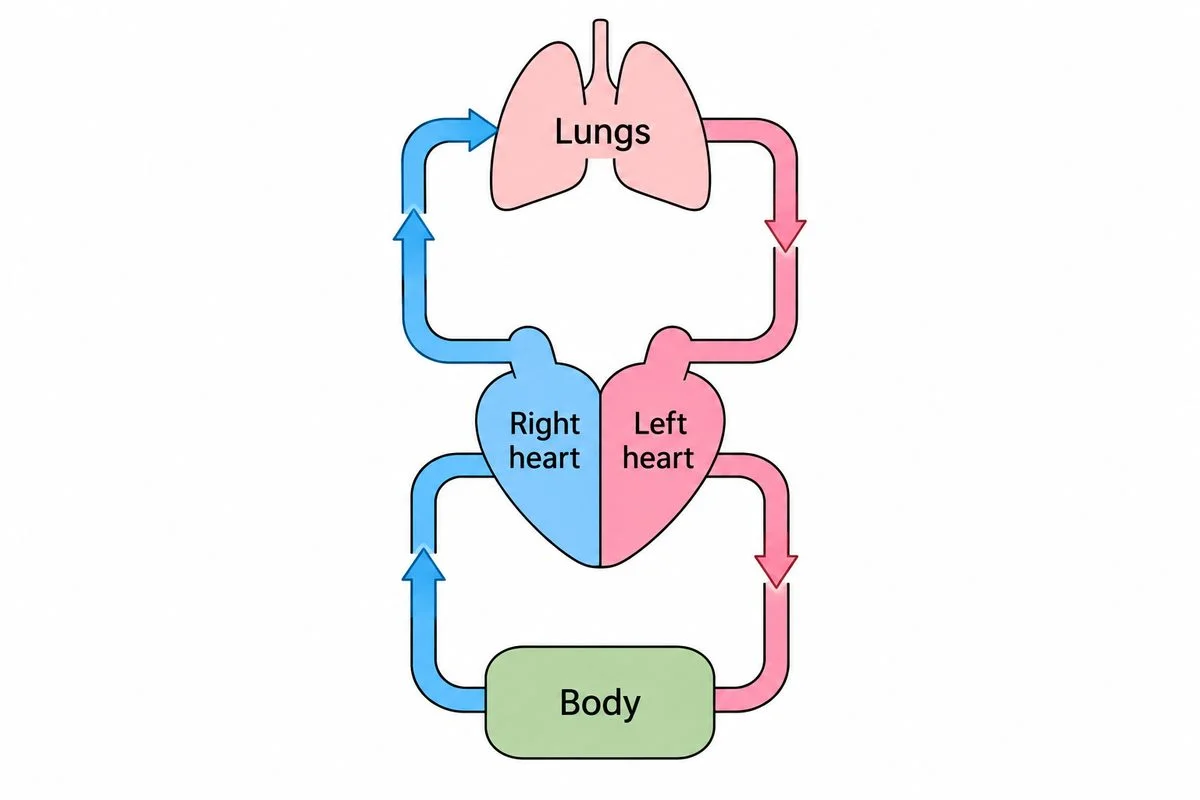
Circulation diagram connecting lungs, two halves of one heart, and body with arrows.

5. Double circulation, blood and lymph

Blood carries materials, and lymph returns excess fluid from tissues.

Show
Look at the diagram and find the two halves of one heart. After predicting, trace the arrows from the body to the heart and lungs. Continue back through the heart to the body.
Ask
After the lungs, where will blood go before reaching the body?
Say
Blood passes through this heart twice.
Used in
Lymph returns excess tissue fluid to circulation.
If your child says…“Blood visits a second heart after the lungs.”
Ask
Does your finger visit another heart, or the other half of this heart?
What’s true
Both routes use the same heart.
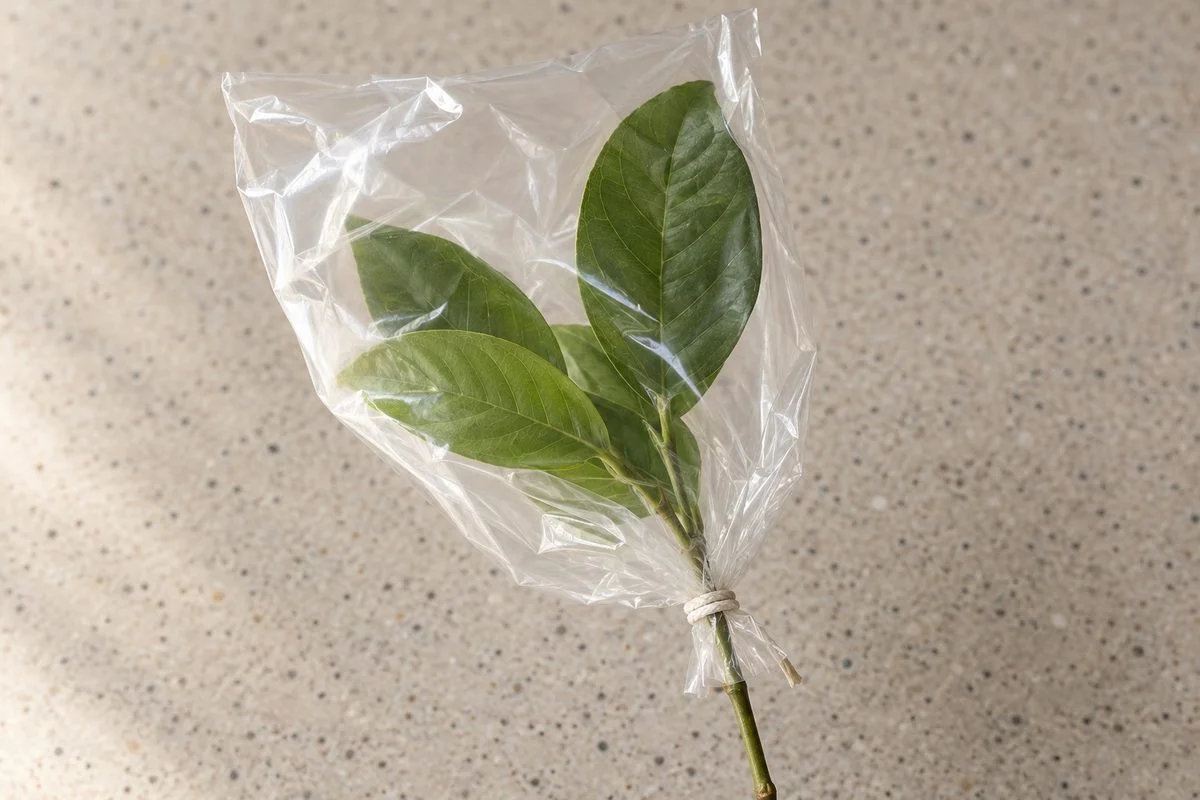
Dry clear bag tied around attached leaves, with soil outside the bag.

6. Xylem and phloem transport

Xylem supplies water and minerals, while phloem distributes sugars.

Show
Tie a dry, clear bag gently around attached, dry leaves. Keep soil outside the bag. After predicting, leave it in daylight and continue with another step. Droplets may take longer than five minutes. Check afterwards for droplets, then remove the bag.
Ask
Will droplets appear inside this dry bag?
Say
Droplets form when water vapour from leaves condenses.
Used in
Phloem supplies growing fruits with sugar.
If your child says…“Roots alone push water up tall plants.”
Ask
If roots alone drove the flow, why would leaf water loss matter?
What’s true
Leaf evaporation mainly drives daytime water flow in tall plants, though root pressure can contribute.

Excretion

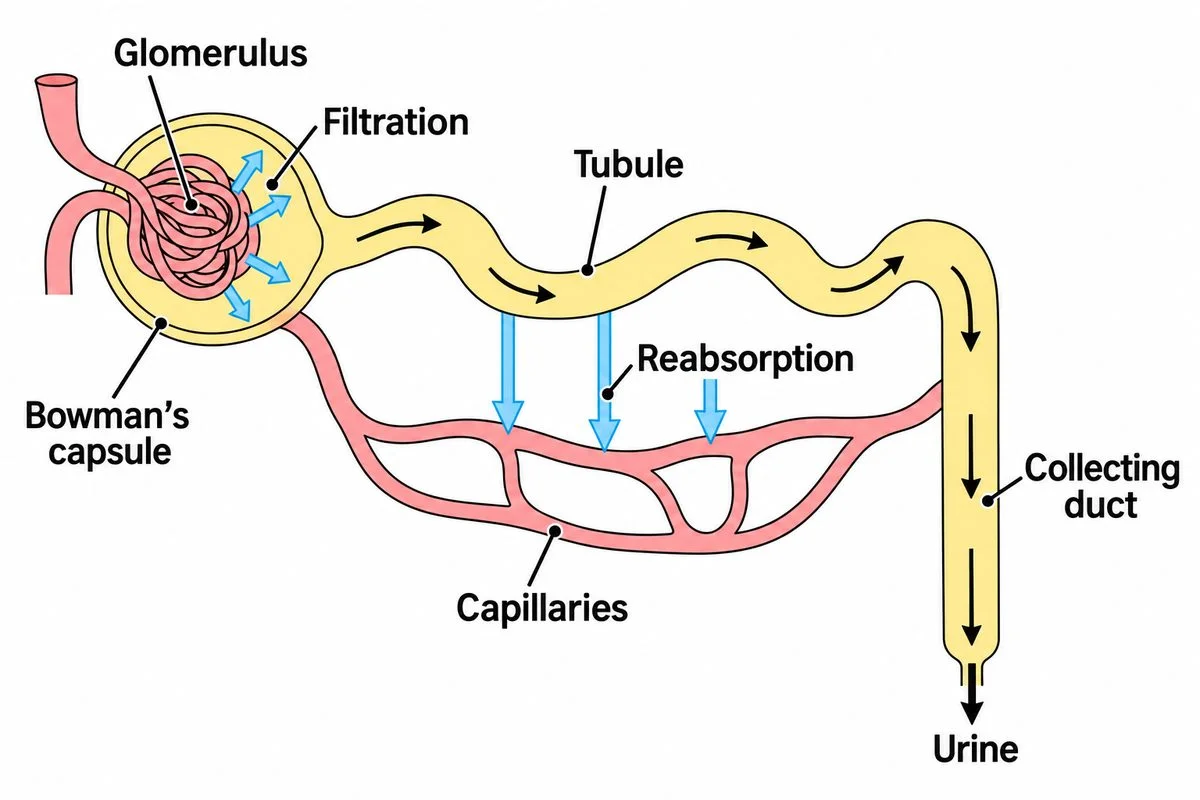
Nephron diagram showing filtration, return to blood and the separate urine route.

7. Nephrons and urine formation

Kidneys filter fluid, recover useful substances and leave urine.

Show
Look at the diagram. Follow filtration from the glomerulus into Bowman's capsule and along the tubule. Trace the return arrows into capillaries.
Ask
If glucose enters this tubule, will it all leave in urine?
Say
Water and small dissolved substances enter Bowman's capsule, leaving blood cells and most proteins behind. Glucose, needed salts and most water return to blood. The remaining fluid becomes urine.
Used in
Reabsorption saves useful materials while urine carries wastes away.
If your child says…“Everything filtered becomes urine.”
Ask
Where do the arrows leaving the tubule lead?
What’s true
Healthy kidney tubules return all filtered glucose and most filtered water to blood.
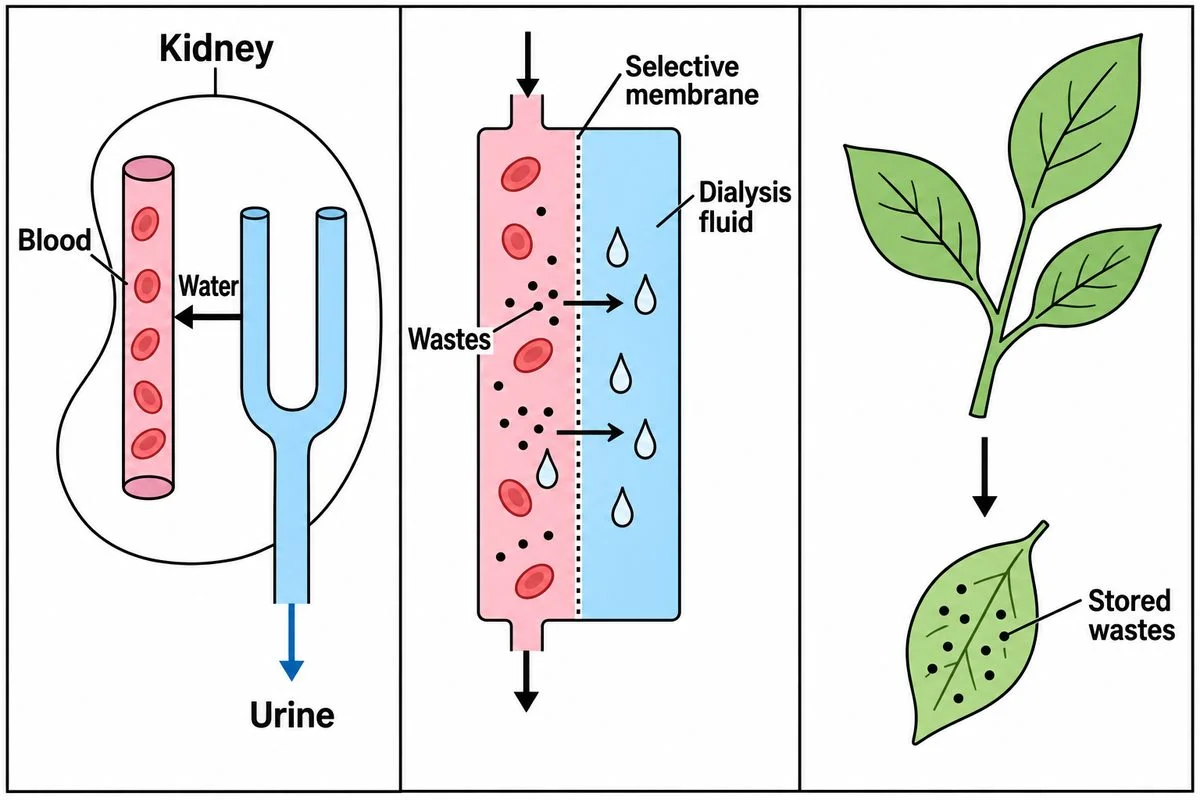
Three panels show kidney water recovery, dialysis waste removal and wastes leaving in shed leaves.

8. Water balance, dialysis and plant excretion

Kidneys regulate water and remove wastes, while plants release wastes differently.

Show
Look at the diagram's kidney and water returning to blood. Follow waste removal across the dialysis membrane. Find stored wastes inside the falling leaf.
Ask
Which route could remove wastes and excess water if the kidney stops working?
Say
Kidneys conserve needed water by returning more to blood. Dialysis removes wastes and excess water. Plants can discard stored wastes when leaves fall.
Used in
Dialysis removes blood wastes when kidneys cannot, but does not repair kidneys.
If your child says…“Plants never make waste.”
Ask
What happens to waste stored in a leaf when that leaf falls?
What’s true
Plant life processes produce unwanted substances that plants store or release.

A real problem

An artificial kidney helped treat kidney failure.

In 1945, Willem Kolff successfully treated a patient with acute kidney failure using an artificial kidney.

His machine used sausage skins, orange juice cans and parts from old washing machines.

Dialysis lets wastes diffuse from blood into dialysis fluid.

UCSFKidney Care UKNational Kidney Foundation

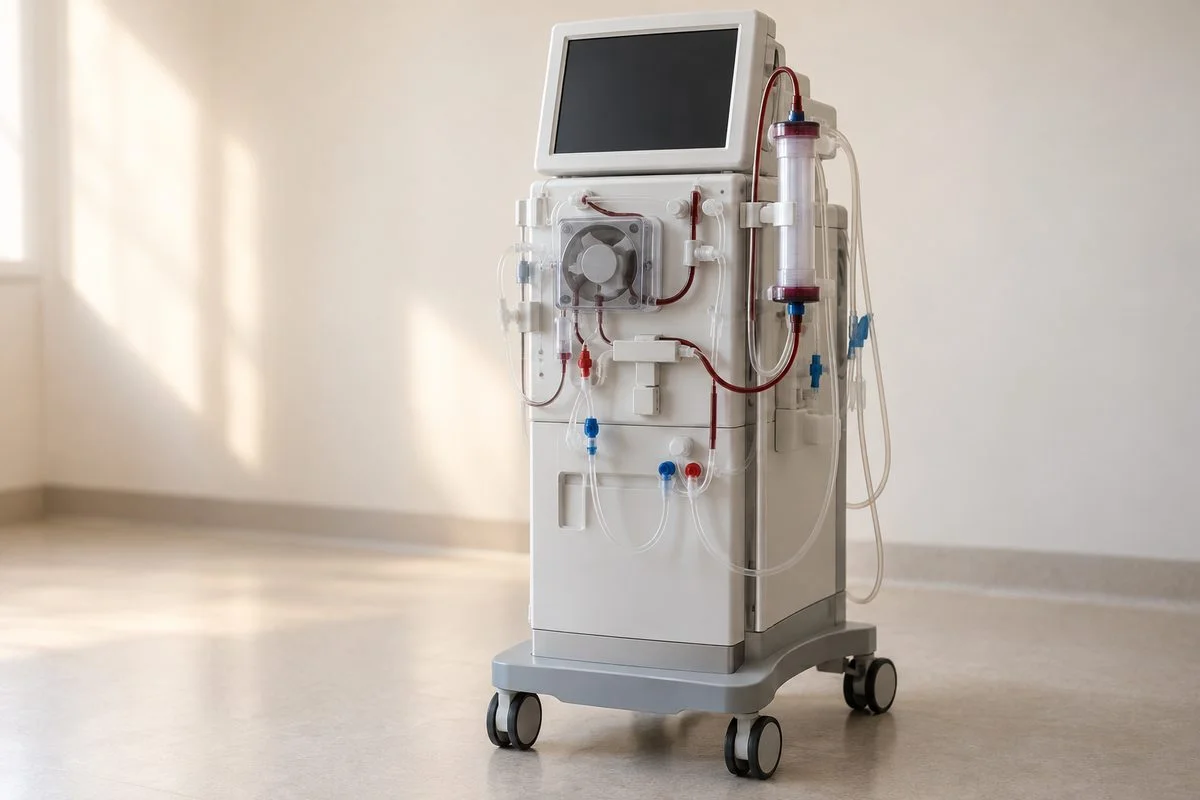
Unbranded dialysis machine in a hospital without people.

Concept Lab · Common misconception

The tempting mistake in Life Processes

Open standalone misconception page →

Does photosynthesis release oxygen taken from carbon dioxide?

Wrong

The oxygen gas comes from carbon dioxide because CO₂ contains oxygen.

Why it feels right. The oxygen atoms look available in the formula.

Right

The oxygen gas released in photosynthesis comes from water.

Worked example

Tracer path
Water with labelled oxygen→Plant in light→Label detected in oxygen gas
Tracing the labelled oxygen follows atoms from water into the released oxygen gas.
  1. In a tracing experiment, label the oxygen in the water supplied to a plant.
  2. The label appears in the released oxygen gas.

Ask your child eight quick questions.

One per step. The answer and the reason are given.

  1. Can this leaf make sugars without chlorophyll if light, water and carbon dioxide are available?

    No. Chlorophyll captures the light energy needed to make food.

  2. Where is food digestion completed?

    In the small intestine. The stomach passes food onwards before digestion is complete.

  3. Which cells break down glucose to power their contraction when you move a finger?

    Inside muscle cells. Breathing moves air, while cellular respiration releases energy.

  4. By what process does oxygen cross from an air sac into blood?

    Diffusion. Oxygen moves towards a lower concentration without an air sac pumping it.

  5. During a complete trip through lungs and body, how many separate hearts does blood visit?

    One heart, visited twice. Blood returns from the lungs before the same heart pumps it towards the body.

  6. What happens to the pull from leaves when their water loss decreases?

    It weakens. Evaporation from leaves creates the pull that draws water through xylem.

  7. Where does glucose go after healthy kidney tubules recover it from the filtered fluid?

    Back into the blood. Tubules recover glucose instead of allowing it to leave in urine.

  8. Can a plant remove stored wastes when a leaf falls?

    Yes. Some plant wastes remain in leaves until those leaves are shed.

15 more questions with answers