Skip to content

Teach Control and Coordination in eight steps.

For each idea: show it, ask before you tell, then say one line.

Gather a stable chair, an existing touch-me-not plant, a blunt pencil, a potted seedling and water.

Common misconceptions & worked visual for this chapter · 15 practice questions with answers

How to teach it

Nervous coordination

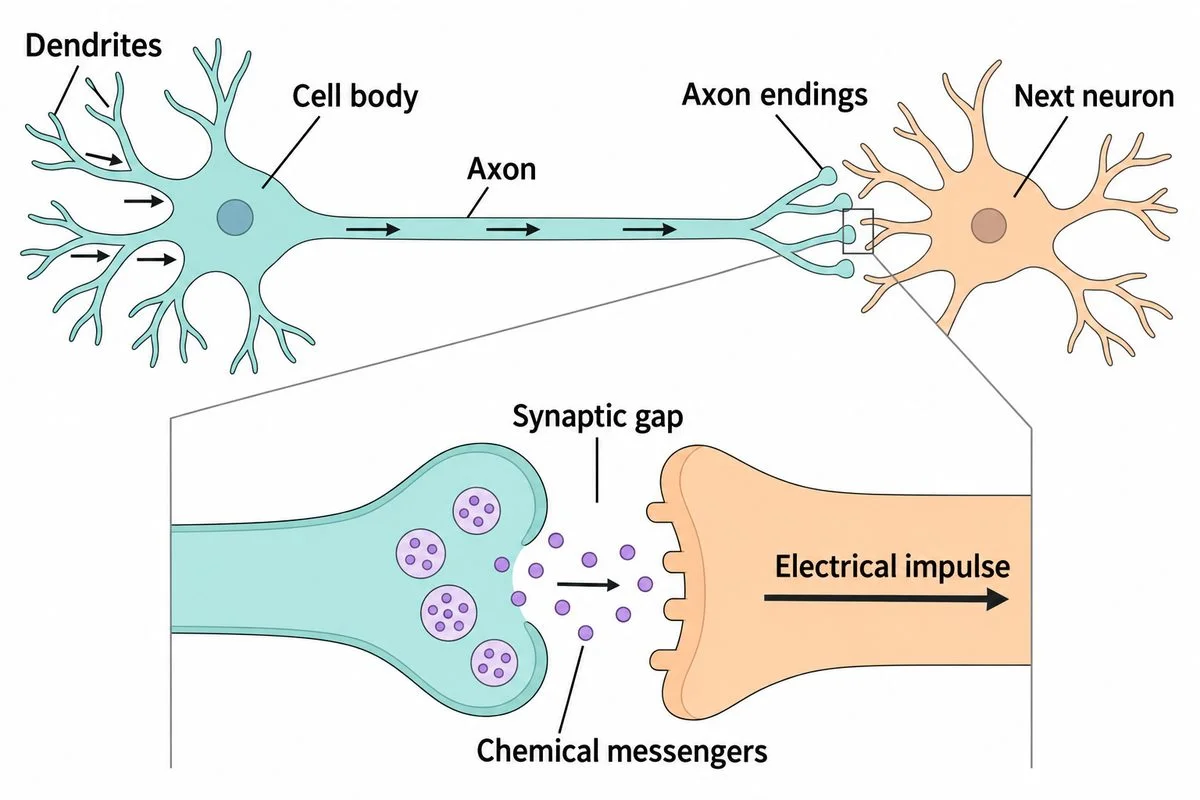
Two neurons with signal arrows and an enlarged gap showing chemical messengers.

1. Neurons and nerve impulses

Nerve cells receive signals and pass them onwards.

Show
Find the dendrites in the diagram. Follow arrows through the cell body and axon. Locate the enlarged gap below.
Ask
If no chemical messengers crossed this gap, would this signal reach the next neuron?
Say
The signal would not reach the next neuron. Chemicals cross the gap and start an electrical impulse in the next neuron.
Used in
Nerve signals carry muscle commands, allowing coordinated movement.
If your child says…“Electricity jumps straight across the gap.”
Ask
What crosses the enlarged gap before the next electrical impulse starts?
What’s true
At a chemical synapse, released chemicals trigger the next cell’s electrical impulse.

A stable chair with clear floor space in front.

2. Reflex arcs and nervous coordination

Spinal connections can trigger movement before a conscious decision.

Show
Seat your child with legs crossed and the upper foot hanging freely. After predicting, gently tap below the upper kneecap once. Keep the leg relaxed; never tap harder.
Ask
Will your relaxed leg stay still?
Say
Your relaxed leg will kick. The spinal cord can trigger this kick.
Used in
Quick withdrawal from heat helps protect the hand.
If your child says…“Pulling away uses neither my brain nor my spinal cord.”
Ask
Where can incoming sensory signals connect with outgoing muscle commands?
What’s true
This reflex uses the spinal cord, which belongs to the central nervous system alongside the brain.
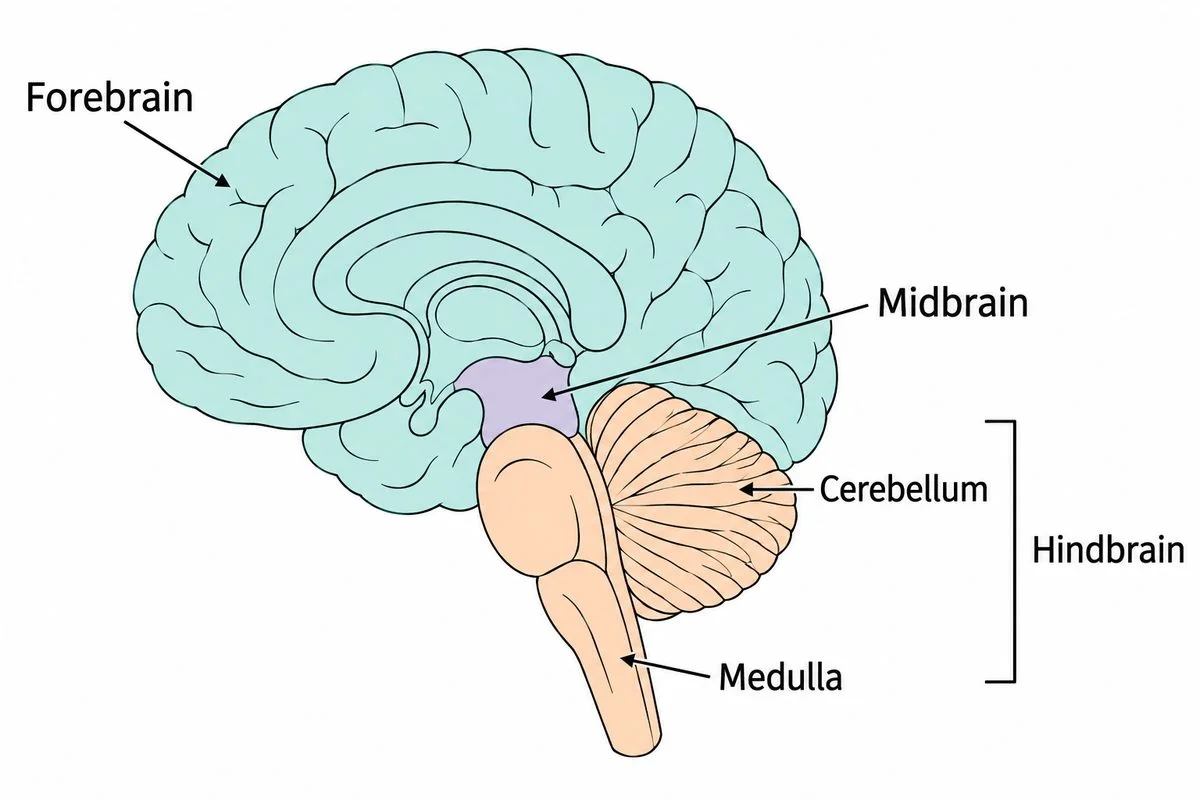
Brain side-section identifying the forebrain, midbrain, hindbrain, cerebellum and medulla.

3. Regions of the brain

Different brain regions handle thinking, balance and involuntary actions.

Show
Find the forebrain, midbrain and hindbrain in the diagram. Within the hindbrain, locate the cerebellum and medulla.
Ask
If the cerebellum stopped coordinating movement properly, what might happen to your balance while walking?
Say
Your balance while walking might be affected; the cerebellum coordinates movement.
Used in
The medulla regulates blood pressure without waiting for conscious decisions.
If your child says…“My cerebellum does the thinking.”
Ask
Which job needs the cerebellum here: choosing your destination or keeping movement steady?
What’s true
Coordinating movement and thinking are different jobs within the brain.

Plant responses

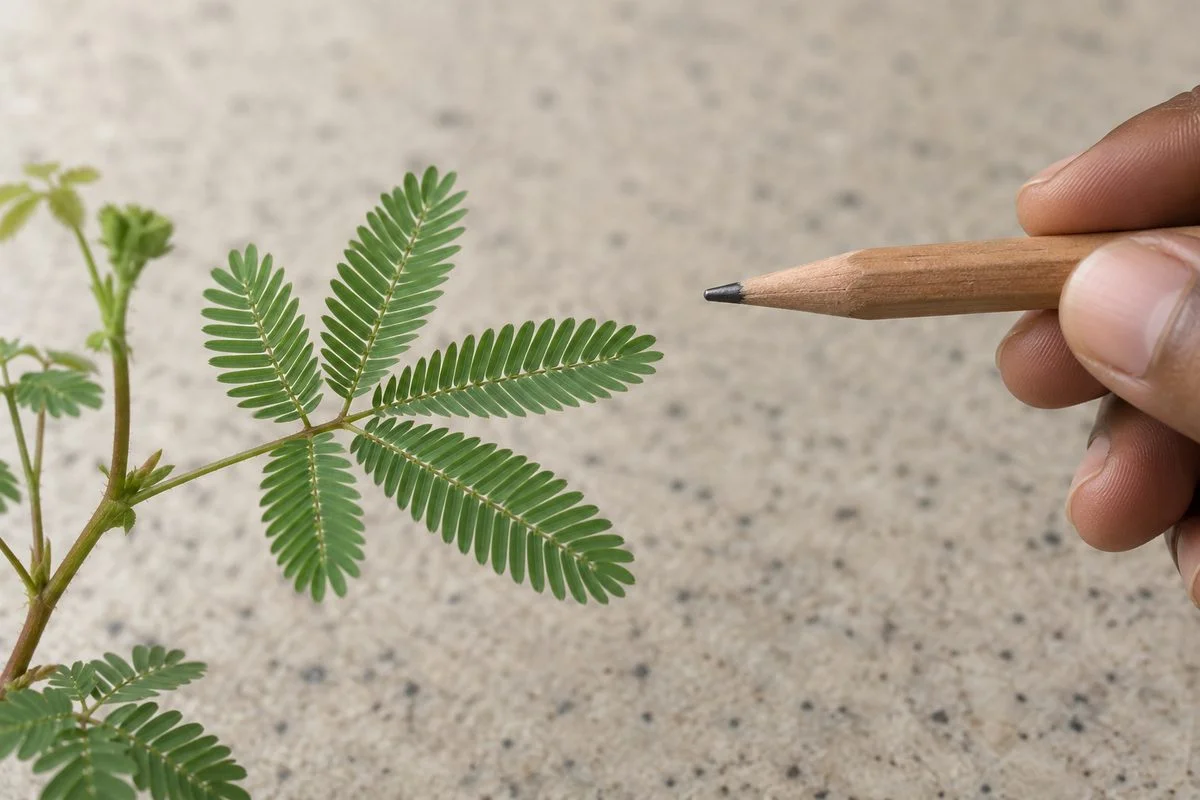
A blunt pencil approaching an open touch-me-not leaf.

4. Non-directional movement

Some plant movements use changing cell shape rather than growth.

Show
Hold a blunt pencil near an open touch-me-not leaf. Touch gently after predicting.
Ask
Will the leaf need new growth before it can respond?
Say
Changing water content reshapes cells at the leaf’s base, making it fold.
Used in
This folding uses water changes. Separately, abscisic acid can limit growth and help plants respond to stress.
If your child says…“The leaf grows closed when touched.”
Ask
Could changing existing cells explain the folding without growing new tissue?
What’s true
This folding needs no growth and does not follow the touch’s direction.
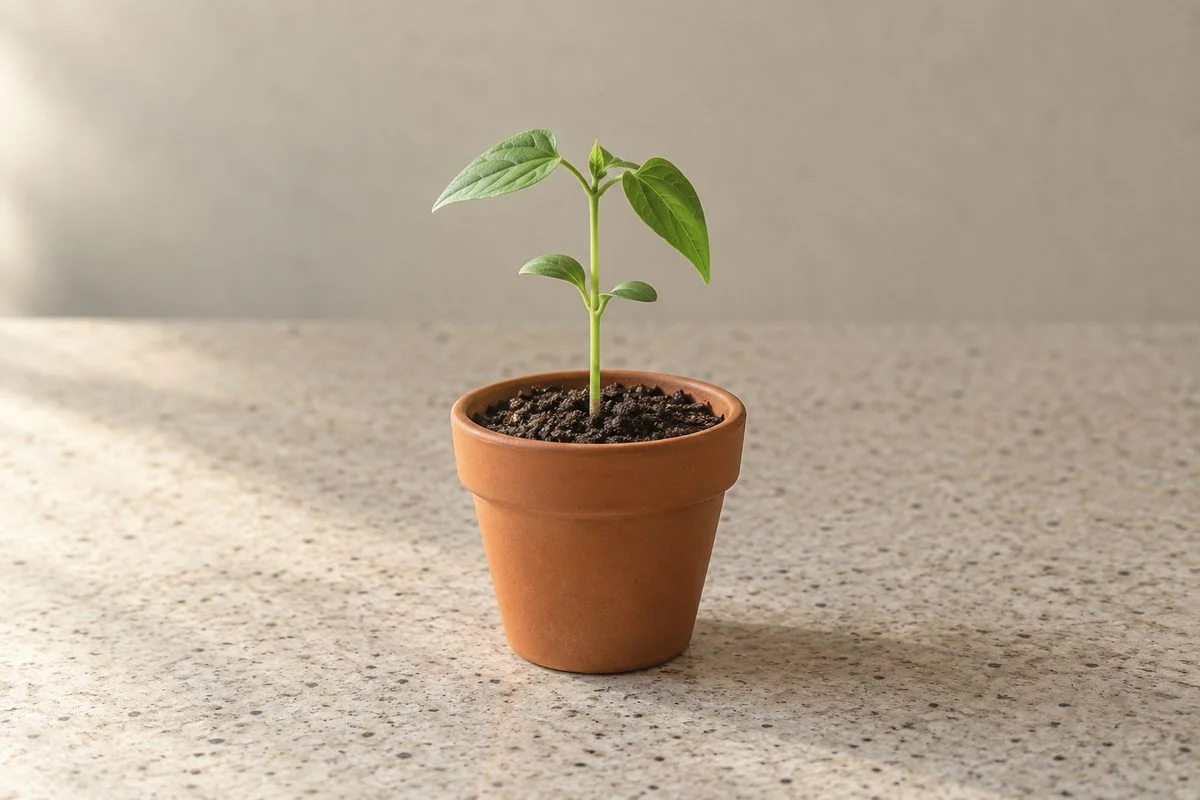
An upright potted seedling receiving daylight from the left.

5. Tropisms and plant hormones

Unequal growth bends plants towards or away from a stimulus.

Show
Place an upright seedling beside a window on its left. Water normally; watch over several days.
Ask
Which side of its shoot will lengthen more as it bends towards light?
Say
Auxin encourages greater lengthening on the shaded side.
Used in
Roots usually grow downwards in response to gravity, helping them reach soil water.
If your child says…“Auxin gathers on the bright side and slows it down.”
Ask
Which side must become longer for the shoot to bend left?
What’s true
In this shoot, auxin gathers on the shaded right side and promotes lengthening.

Hormonal coordination

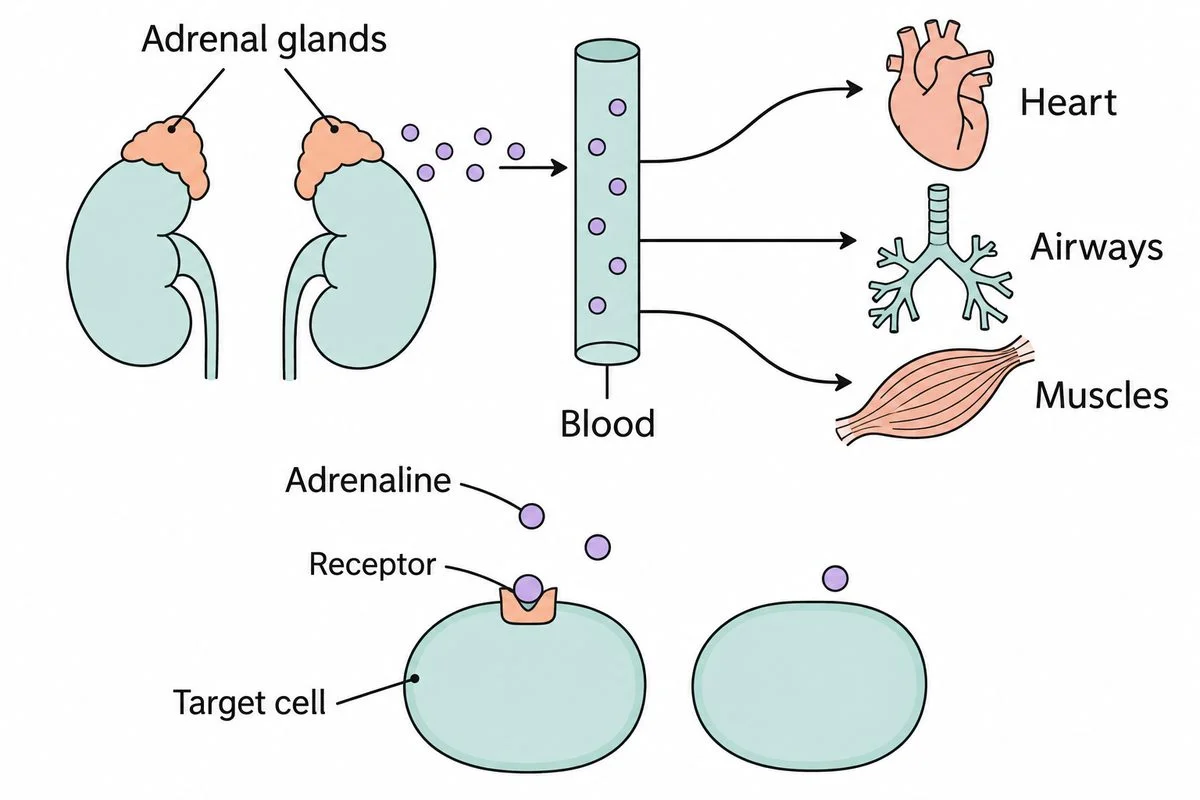
Adrenaline travels through blood to organs; an inset shows a matching cell receptor.

6. Endocrine glands and adrenaline

Blood carries gland hormones to cells with matching receptors.

Show
Find the adrenal glands in the diagram. Follow adrenaline through blood to the organs. Compare the inset cells' receptors.
Ask
Will both inset cells respond when adrenaline reaches them?
Say
Adrenaline travels in blood. Only cells with matching receptors respond directly.
Used in
Adrenaline helps deliver more oxygen to muscles for rapid action.
If your child says…“Every cell responds to every hormone.”
Ask
Which inset cell has a receptor that adrenaline can bind to?
What’s true
Only cells with matching receptors respond directly to a circulating hormone.
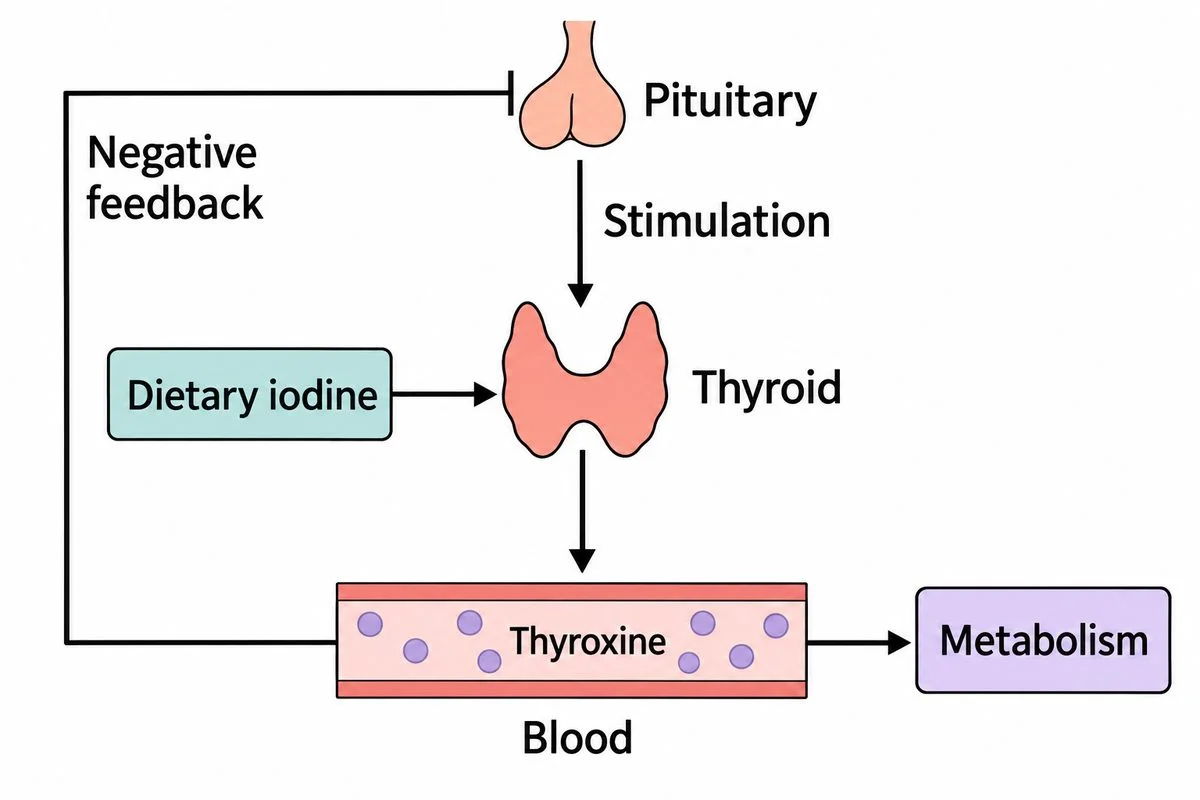
Iodine enters the thyroid; blood thyroxine feeds back to control pituitary stimulation.

7. Thyroxine, iodine and feedback

Iodine helps make thyroxine; feedback adjusts its release.

Show
Follow iodine into the thyroid in the diagram. Trace thyroxine into blood, then follow the feedback line to the pituitary.
Ask
What will happen to thyroid stimulation if blood thyroxine rises above normal?
Say
The thyroid uses iodine to make thyroxine. High thyroxine reduces pituitary stimulation of the thyroid.
Used in
Iodised salt supplies iodine, helping prevent thyroid enlargement caused by iodine deficiency.
If your child says…“Iodine is already the hormone.”
Ask
If iodine were already thyroxine, what would the thyroid need to make?
What’s true
Iodine is an ingredient used by the thyroid, rather than thyroxine itself.
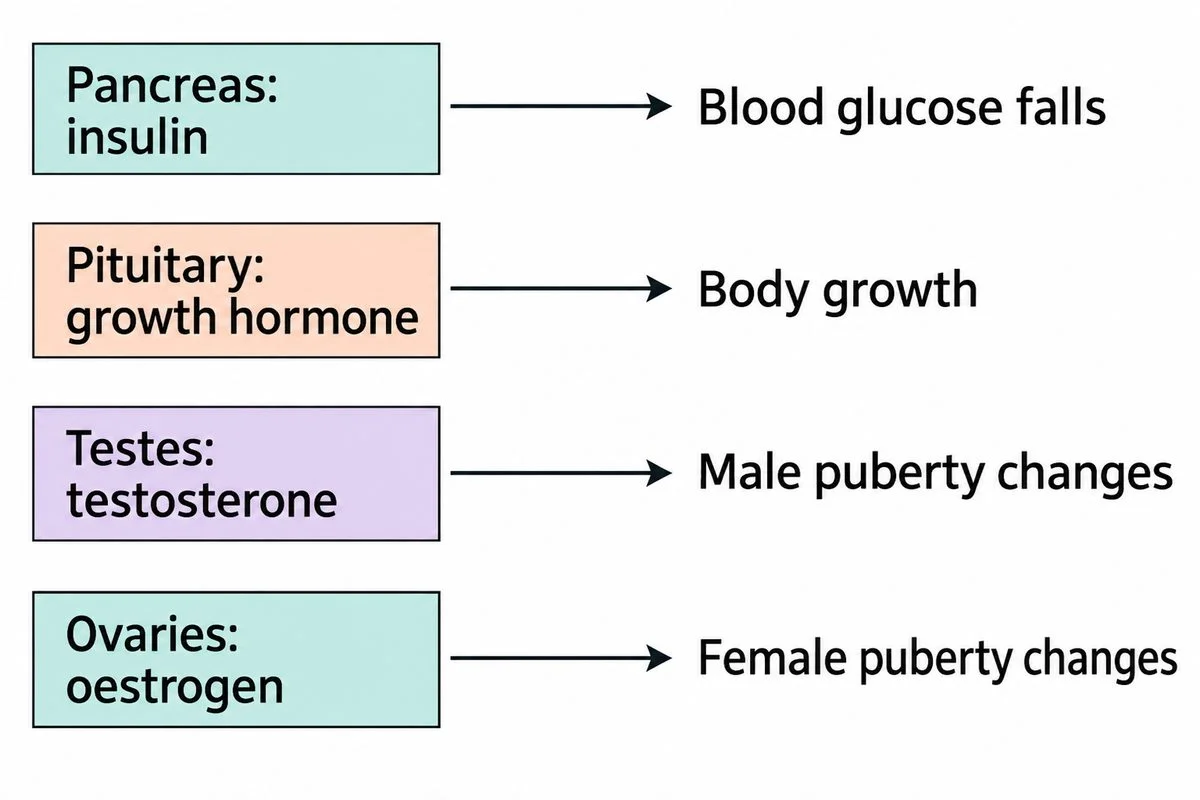
Four pathways connect hormone-producing glands with blood glucose control, growth and puberty changes.

8. Insulin, growth hormone and sex hormones

Different hormones regulate blood sugar, growth and puberty changes.

Show
Read the diagram from top to bottom. Follow each arrow from its gland and hormone to its effect.
Ask
After a meal raises blood glucose, what would insulin do along the top pathway?
Say
Insulin helps cells take in glucose and store it, lowering raised blood sugar. Pituitary growth hormone supports growth, while sex hormones help produce puberty changes.
Used in
Glucose entering cells supplies energy.
If your child says…“Insulin raises my blood sugar.”
Ask
If glucose leaves the blood for uptake and storage, what happens to its blood level?
What’s true
Insulin lowers raised blood sugar by helping cells take in and store glucose.

A real problem

Insulin treatment brought dangerously high blood sugar under control.

In January 1922, Leonard Thompson became the first person successfully treated with insulin.

The successful injection returned his blood sugar to normal.

The pancreas makes insulin, which helps glucose enter cells to supply energy.

University of Toronto, Connaught FundUniversity of TorontoNIDDK

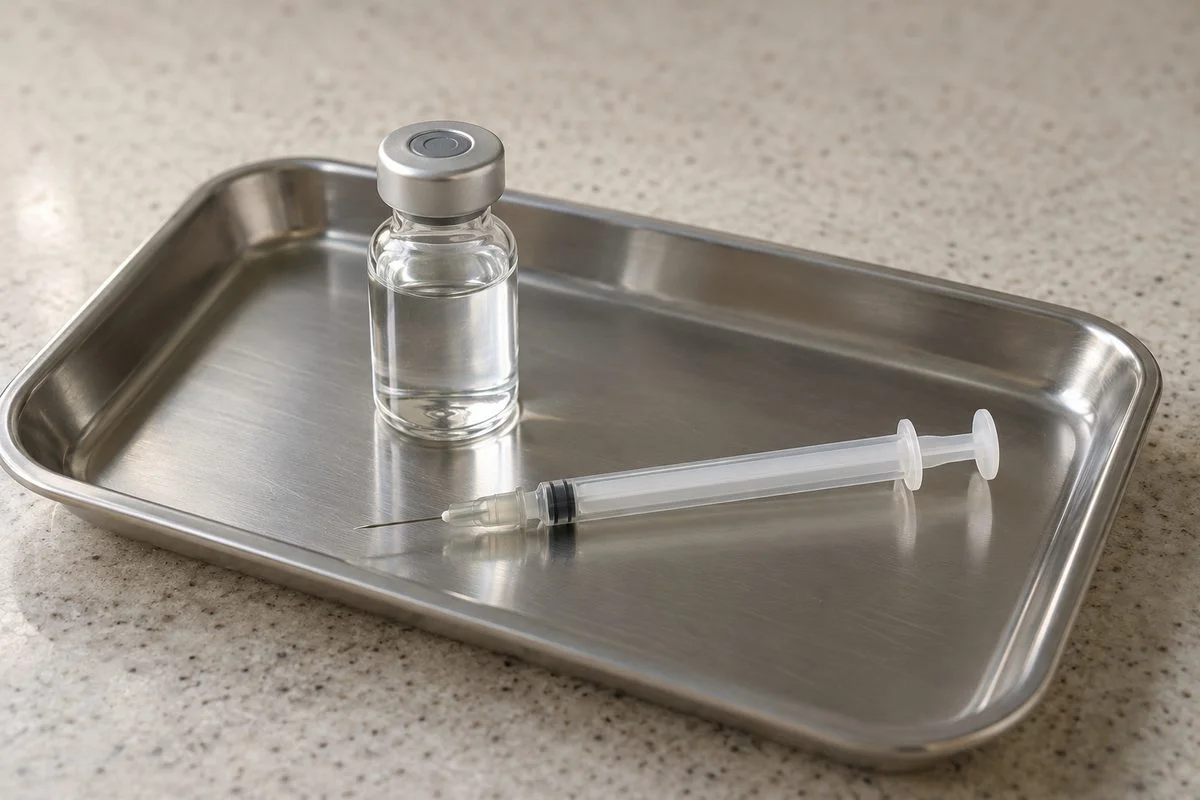
An unbranded insulin syringe and medicine vial on a clinic tray.

Concept Lab · Common misconception

The tempting mistake in Control and Coordination

Open standalone misconception page →

Is a reflex a deliberate decision?

Wrong

You think about moving your hand before a withdrawal reflex.

Why it feels right. I know the brain controls movements.

Right

A spinal reflex can initiate a response before conscious awareness.

Worked example

Reflex path
Pain receptor→Spinal cord→Motor pathway→Hand withdraws
Sensory path
Pain receptor→Spinal cord→Signal to brain
The spinal cord can trigger withdrawal while a signal also travels to the brain.
  1. A pain receptor sends a signal to the spinal cord.
  2. A motor pathway triggers withdrawal, and signals also travel to the brain.

Ask your child eight quick questions.

One per step. The answer and the reason are given.

  1. What carries a signal across the gap between neighbouring neurons?

    Chemical messengers. The electrical impulse causes chemicals to be released across the gap.

  2. Which organ links sensory and motor signals when a hand withdraws from heat before conscious thought?

    The spinal cord. Its connections link incoming sensory signals with outgoing motor commands.

  3. Which brain region mainly helps you think through a puzzle?

    The forebrain. The cerebellum mainly coordinates balance and movement.

  4. Does a touch-me-not leaf need new growth to fold after touch?

    No. Changed water content changes cell shape without requiring growth.

  5. With light arriving from the left, which shoot side does auxin make lengthen more?

    The shaded right side. Greater lengthening on that side bends the shoot towards the light.

  6. What must a cell have to respond directly to a hormone reaching it?

    A matching receptor. Reaching a cell is insufficient unless the hormone can bind to its receptor.

  7. Is iodine already thyroxine before the thyroid uses it?

    No. Iodine supplies an ingredient; the thyroid makes the hormone.

  8. What happens to raised blood sugar when enough insulin acts effectively?

    It falls. Insulin promotes glucose uptake and storage.

15 more questions with answers