Skip to content

Teach Metals and Non-metals in eight steps.

For each idea: show it, ask before you tell, then say one line.

Gather aluminium foil, a plate, oil, water and two similar, clean, uncoated iron nails.

An adult handles the nails. Leave rusty surfaces untouched.

Common misconceptions & worked visual for this chapter · 15 practice questions with answers

How to teach it

Properties and reactions

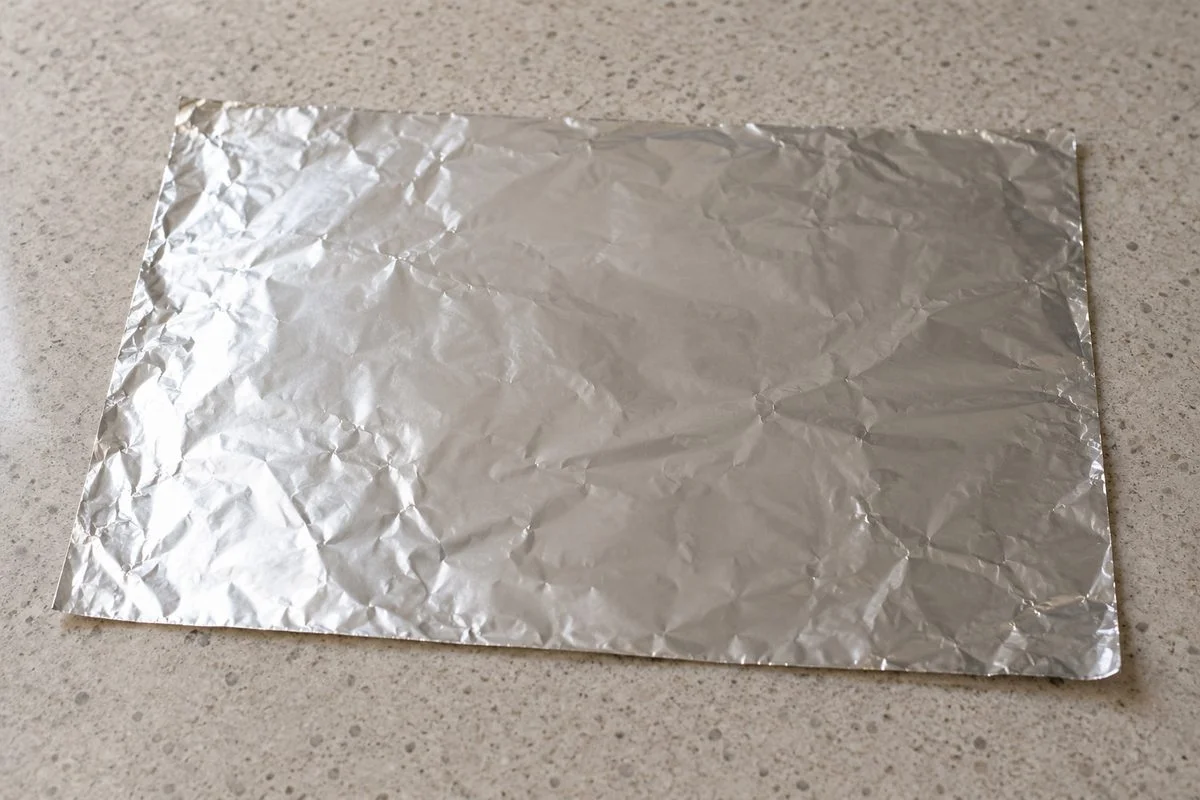
An unfolded sheet of aluminium foil.

1. Physical properties

Several properties together help distinguish metals from non-metals.

Show
Lay out aluminium foil. Fold it after your child's prediction.
Ask
Will the foil bend or crumble?
Say
The foil bends.
Used in
Copper wires conduct electricity to power household appliances.
If your child says…“Anything shiny must be a metal.”
Ask
If iodine shines, can shine alone identify a metal?
What’s true
Iodine shines even though it is a non-metal.
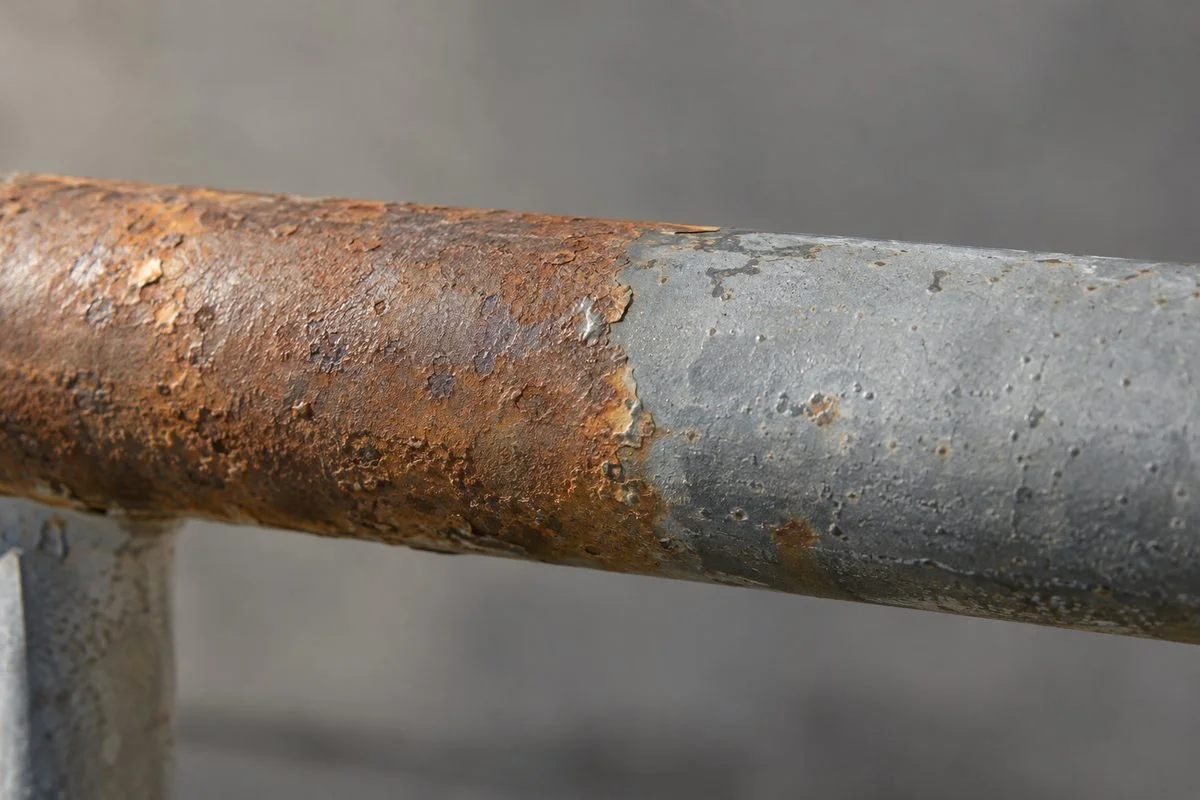
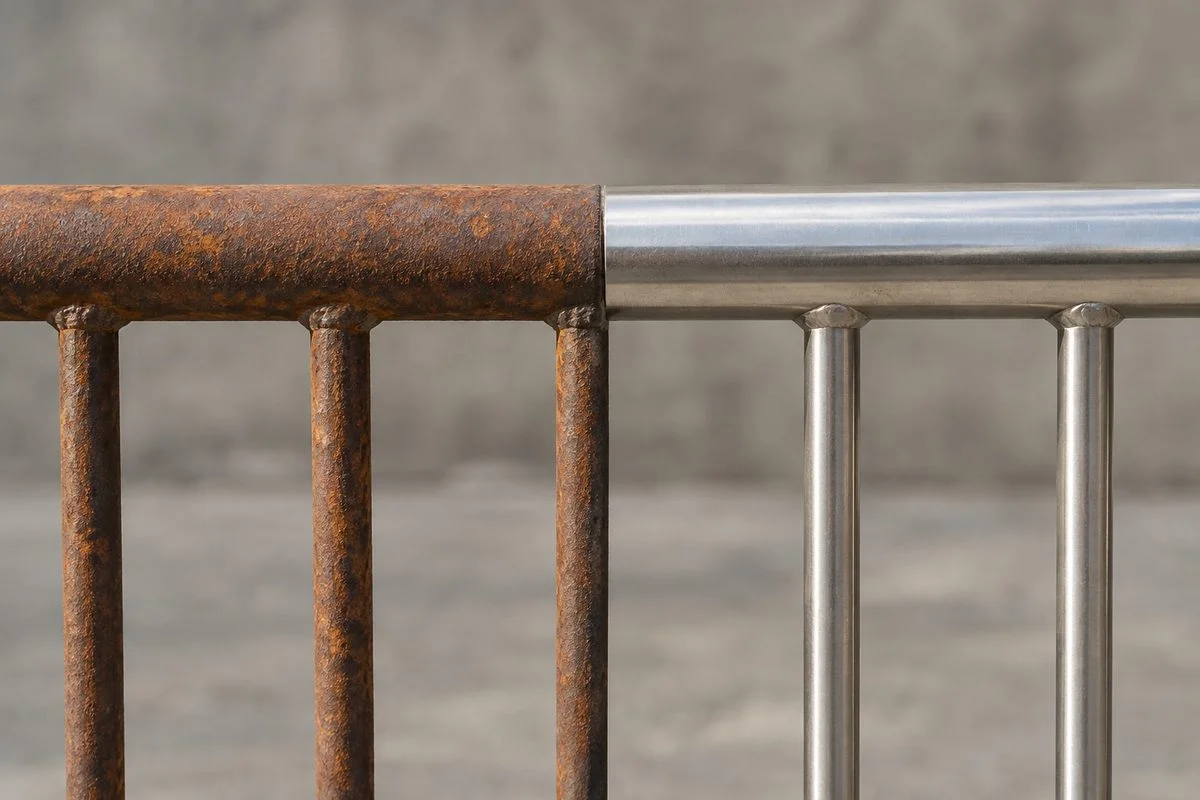
Reddish-brown rust beside exposed metal on an iron railing.

2. Reaction with oxygen

Metals react with oxygen differently, forming oxides.

Show
Find a rusty iron railing. Compare its rough, reddish-brown patch with nearby exposed metal, without scraping either.
Ask
Could this coating form without the iron burning with a bright flame?
Say
This coating is rust, which contains iron oxides. Iron forms it by reacting with oxygen and moisture.
Used in
Aluminium cookware has a protective oxide layer that reduces further corrosion.
If your child says…“All metals react with oxygen like burning magnesium.”
Ask
Does this railing need a bright flame for rust to appear?
What’s true
Iron can form an oxide-containing coating without magnesium's bright white flame.
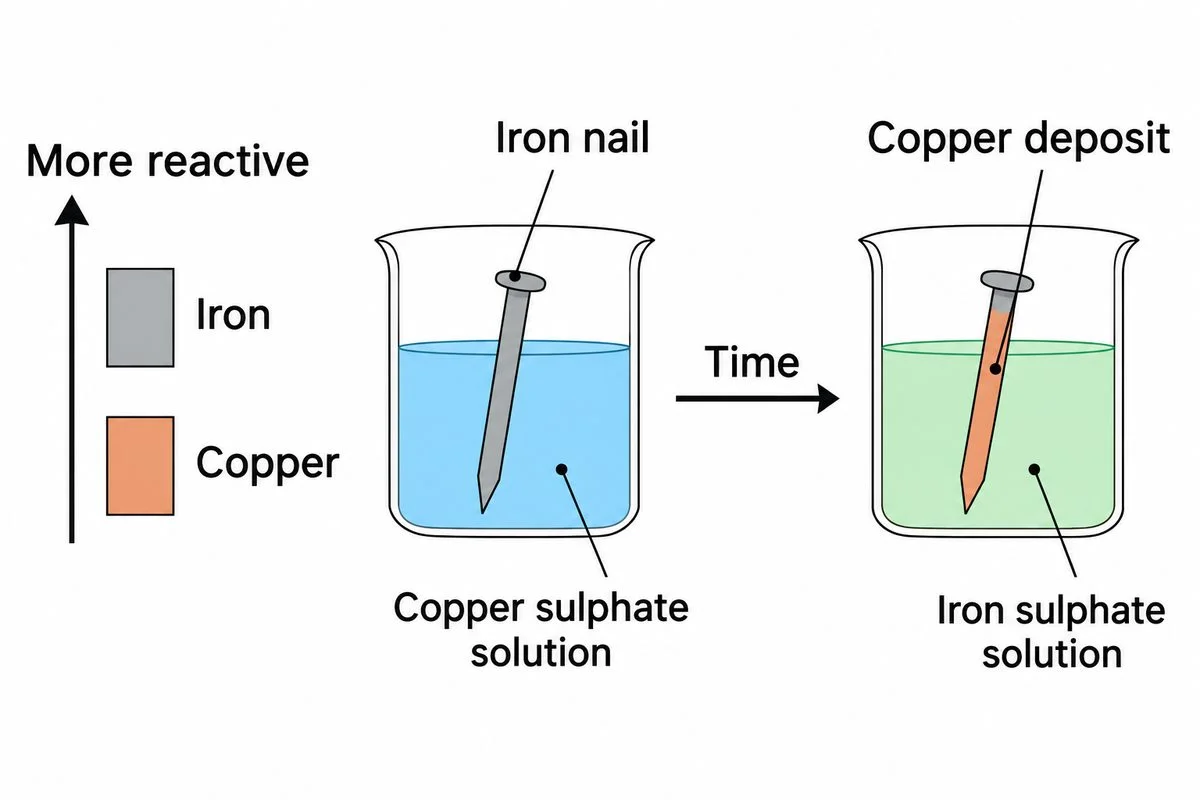
Iron above copper in reactivity, beside a nail before and after copper deposition.

3. Reactivity series

Reactivity predicts reactions with water, acids and other metals' salts.

Show
Find iron above copper in the diagram. Follow the nail from blue solution to its copper coating.
Ask
Would copper replace iron if we reversed their roles?
Say
Iron displaces copper because it is more reactive. Copper cannot displace iron.
Used in
Copper water pipes carry water without reacting with it.
If your child says…“Any metal can replace another.”
Ask
Could less reactive silver displace copper?
What’s true
Iron reacts with steam and displaces copper, but less reactive silver cannot displace copper.

Ionic compounds

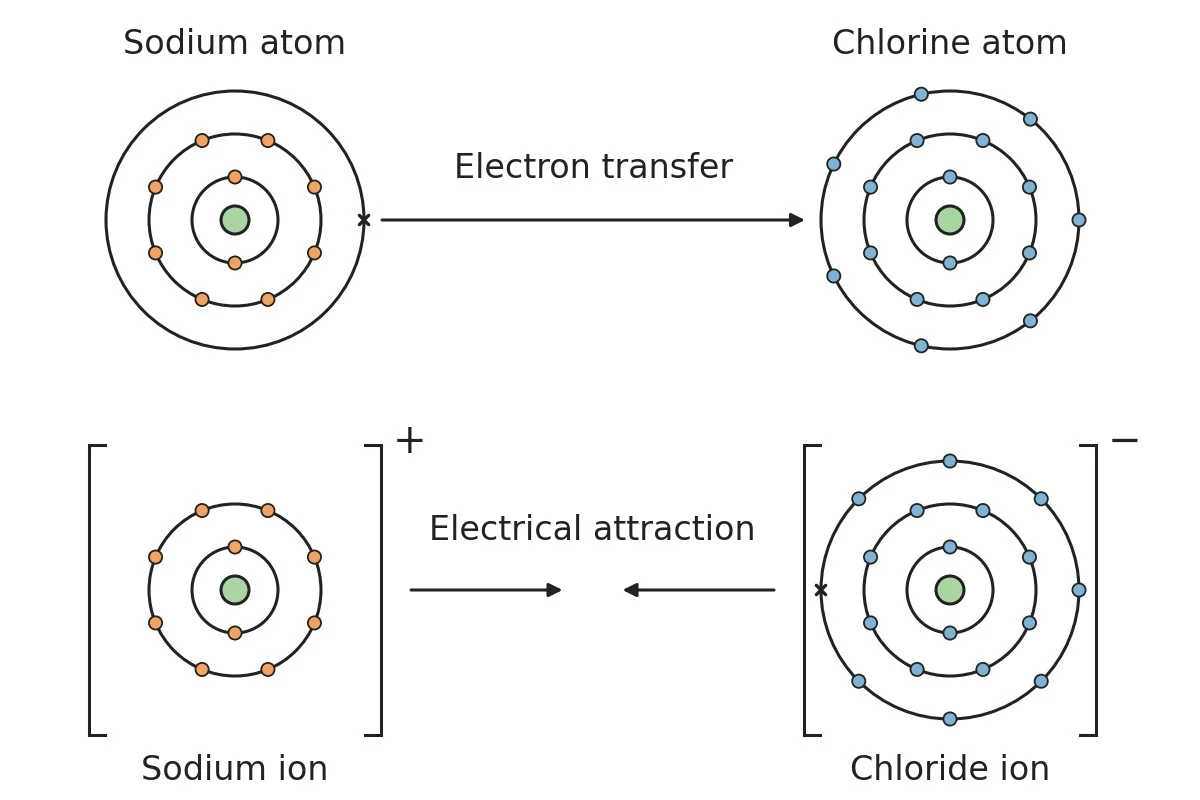
Sodium transfers an electron to chlorine, producing oppositely charged ions that attract.

4. Electron transfer

Transferred electrons create opposite charges that attract.

Show
Find sodium and chlorine in the diagram. Follow the electron arrow, then compare the resulting ion charges.
Ask
What will hold these particles together after the electron moves?
Say
Sodium loses an electron and becomes positive, while chlorine gains it and becomes negative. Their opposite charges attract, holding ions together.
Used in
Table salt's oppositely charged ions form crystals used to flavour food.
If your child says…“They share the electrons.”
Ask
Where does sodium's outer electron end up?
What’s true
The electron transfers to chlorine rather than remaining shared between the atoms.
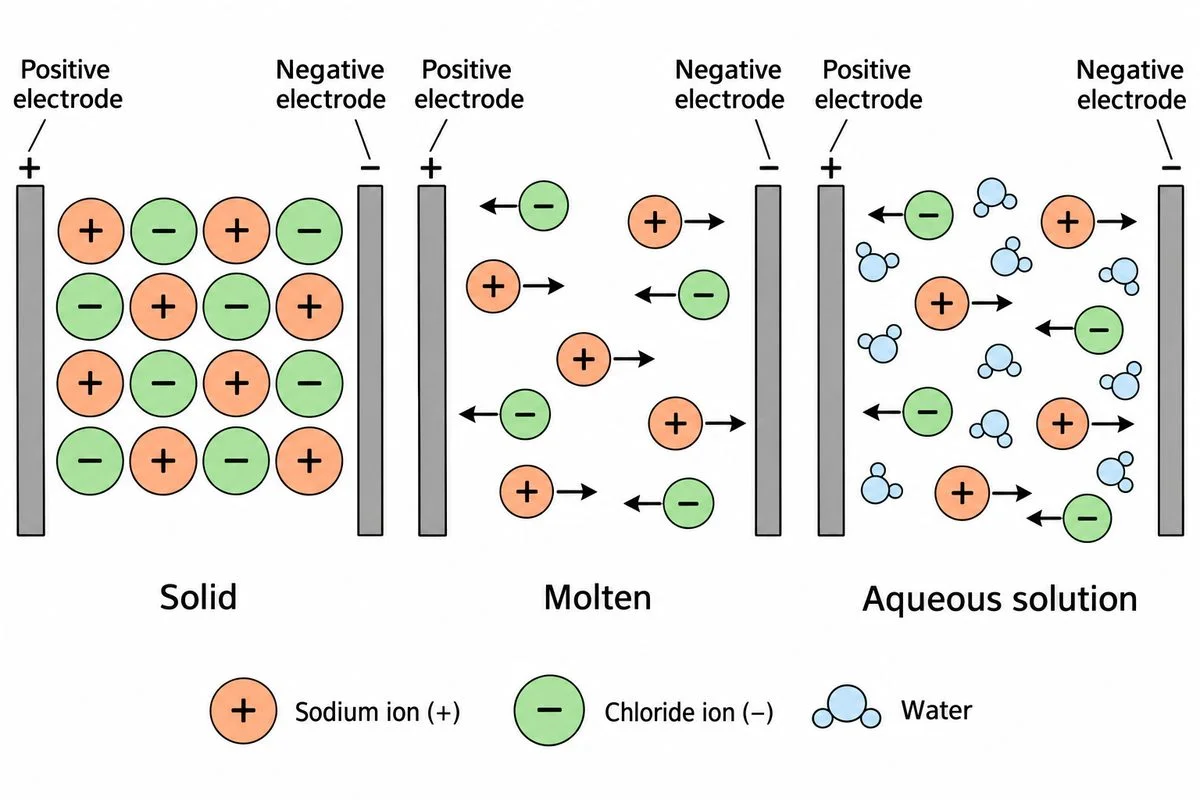
Salt ions stay in lattice positions when solid but travel when molten or dissolved.

5. Properties of ionic compounds

Moving ions carry current.

Show
Compare solid, molten and dissolved salt in the diagram. Find charged ions in every panel, then follow the movement arrows.
Ask
Which salt panels would you predict can carry current, and why?
Say
The solid's ions cannot travel through the salt. Melting or dissolving frees ions to move and carry current.
Used in
Moving ions let copper sulphate solution carry current during metal refining.
If your child says…“Salt conducts in every state.”
Ask
Can fixed ions carry current?
What’s true
Solid salt's ions cannot travel.

Obtaining and protecting metals

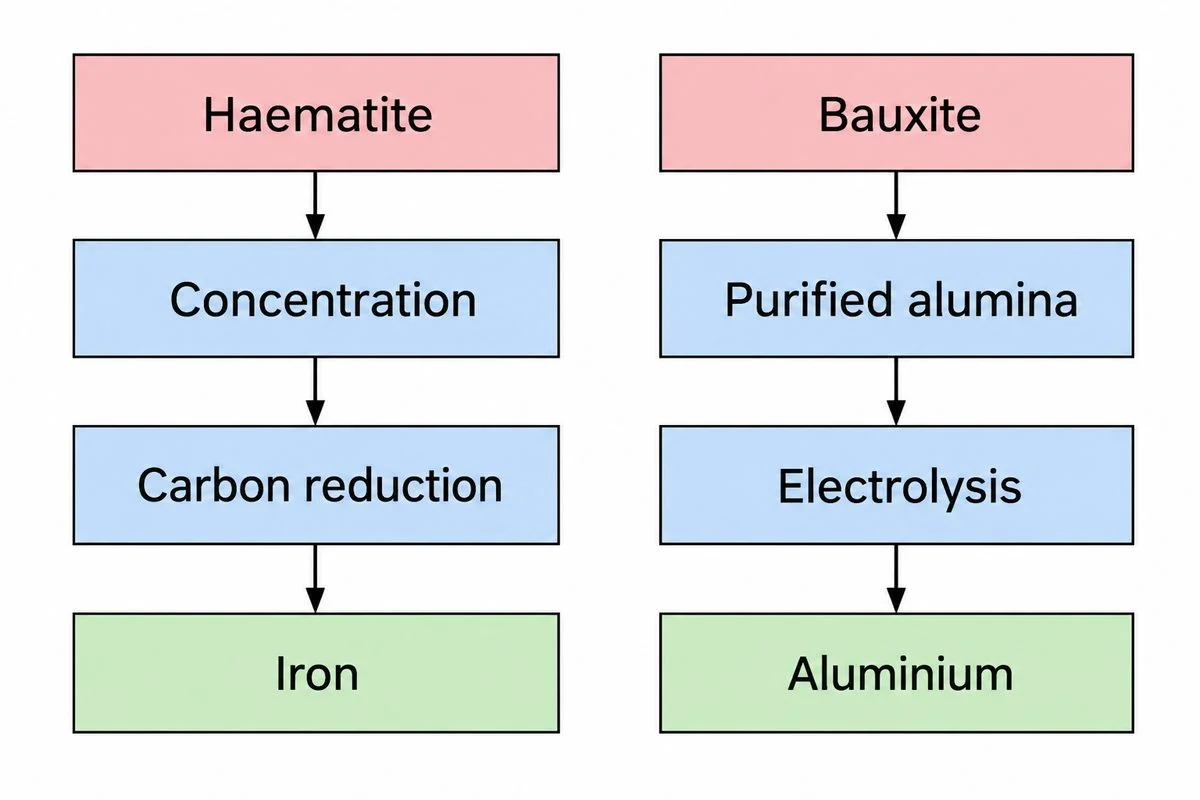
Separate ore-processing routes show carbon reduction for iron and electrolysis for aluminium.

6. Ores and extraction

Ores supply metal profitably. Extraction methods depend on the metal's reactivity.

Show
Follow each route down the diagram, from ore through preparation to metal.
Ask
Would you predict that carbon can also extract the aluminium shown here?
Say
Removing unwanted rock from these iron and aluminium ores leaves compounds, not pure metals. Carbon extracts iron, while more reactive aluminium needs electrolysis of a molten mixture containing aluminium oxide.
Used in
Electrolysis supplies aluminium for making cooking vessels.
If your child says…“One method extracts every metal.”
Ask
Would sorting alone release sodium from its compound?
What’s true
Sorting removes waste, but extracting metal from compounds needs a chemical method chosen for its reactivity.
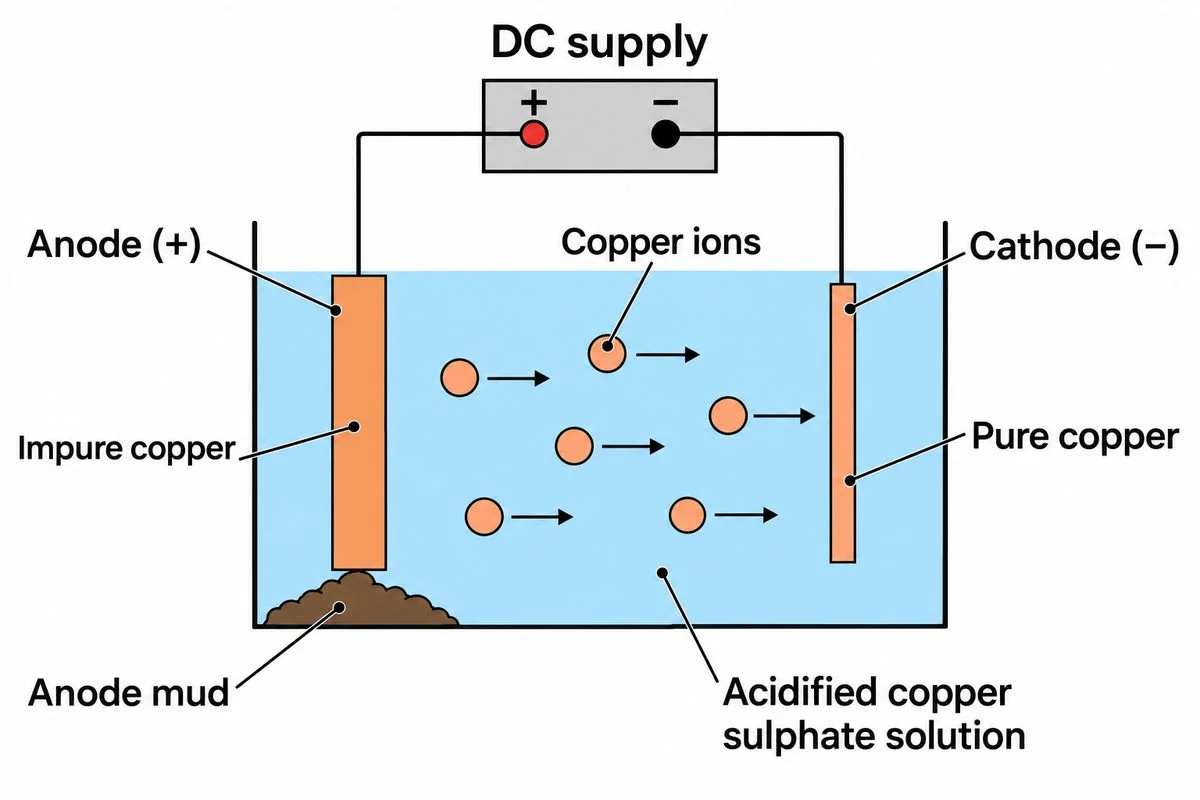
Copper-refining cell with positive impure anode, negative pure cathode and mud below the anode.

7. Electrolytic refining

Electricity purifies metals.

Show
Find impure and pure copper in the diagram. Trace their connections, then follow copper through the solution.
Ask
Which electrode will gain pure copper when electricity flows?
Say
Electricity dissolves copper from the positive anode and deposits it on the negative cathode.
Used in
Refining supplies pure copper for wires.
If your child says…“Impurities join the copper.”
Ask
Where does the diagram place the impurities that cannot dissolve?
What’s true
Insoluble impurities settle below the anode.
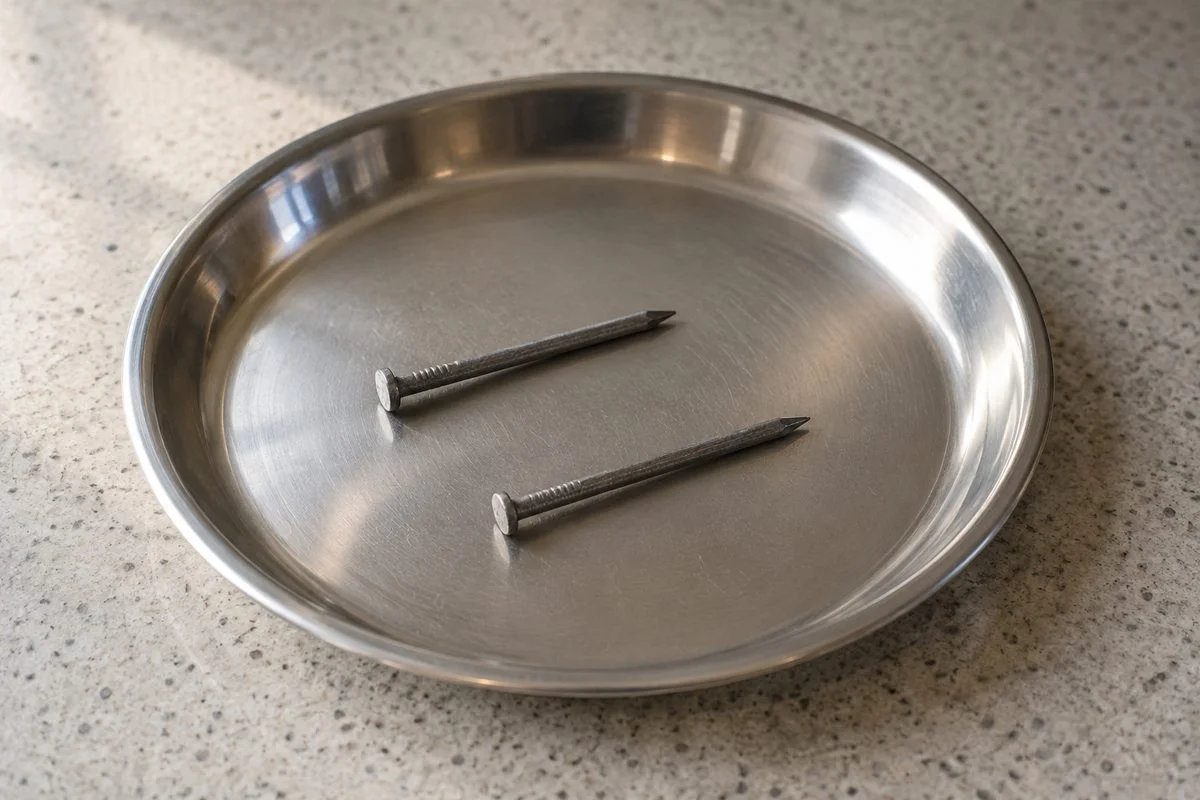
Two iron nails on a plate before treatment.

8. Corrosion and its prevention

Environmental reactions damage metals; suitable protection reduces this damage.

Show
An adult places two iron nails on a plate. After prediction, oil one and dampen both. Leave them in air. Compare them over the next few days.
Ask
Which nail will rust more easily?
Say
Rusting needs oxygen and water. Oil reduces their contact with iron.
Used in
Oil or grease protects moving machine parts where paint wears away.
If your child says…“Any coating works everywhere.”
Ask
What happens when paint wears away?
What’s true
Protection must suit the object's use.

A real problem

Replacing rusting supports helped preserve the Statue of Liberty.

Moisture and salt allowed electric currents between the copper and iron, speeding the iron's corrosion.

Workers replaced rusting iron supports with stainless steel bars.

The restoration was completed in 1986.

NISTNational Park Service

A rusty iron railing beside a stainless steel railing.

Concept Lab · Common misconception

The tempting mistake in Metals and Non-metals

Open standalone misconception page →

Do all metals react with water in the same way?

Wrong

Copper reacts with cold water like sodium because both are metals.

Why it feels right. I expect all members of the group to show the same behaviour.

Right

Metals differ in reactivity.

Worked example

Sodium
Cold water→Vigorous reaction
Copper
Cold water→No comparable reaction
The same condition gives different results for the two metals.
  1. In classroom observations, sodium reacts vigorously with cold water.
  2. Copper shows no comparable reaction with cold water.

Ask your child eight quick questions.

One per step. The answer and the reason are given.

  1. Why cannot iodine's shine establish that it is a metal?

    Non-metals can shine too. Shine has exceptions, so several properties must be checked together.

  2. What shows that iron can react with oxygen without burning brightly?

    Its rusty coating. Rust forms through reactions with oxygen and moisture without a bright flame.

  3. Which rule decides whether one metal displaces another from its salt solution?

    More reactive displaces less reactive. A metal cannot displace a more reactive metal from its salt.

  4. What happens to sodium's outer electron when sodium chloride forms?

    It transfers to chlorine. Electron transfer creates oppositely charged ions that attract.

  5. What happens to electrical conduction when molten sodium chloride becomes solid?

    It no longer conducts. In solid salt, ions cannot travel to carry current.

  6. Why must extraction methods vary between metals?

    Metals differ in reactivity. Different reactivities require different ways to release metals from their compounds.

  7. Where do insoluble impurities collect during electrolytic refining?

    Below the anode. They settle as anode mud instead of joining the pure metal.

  8. What coating suits moving machine parts where paint would wear away?

    Oil or grease. The coating must suit how the object is used.

15 more questions with answers