One per step. The answer and the reason are given.
-
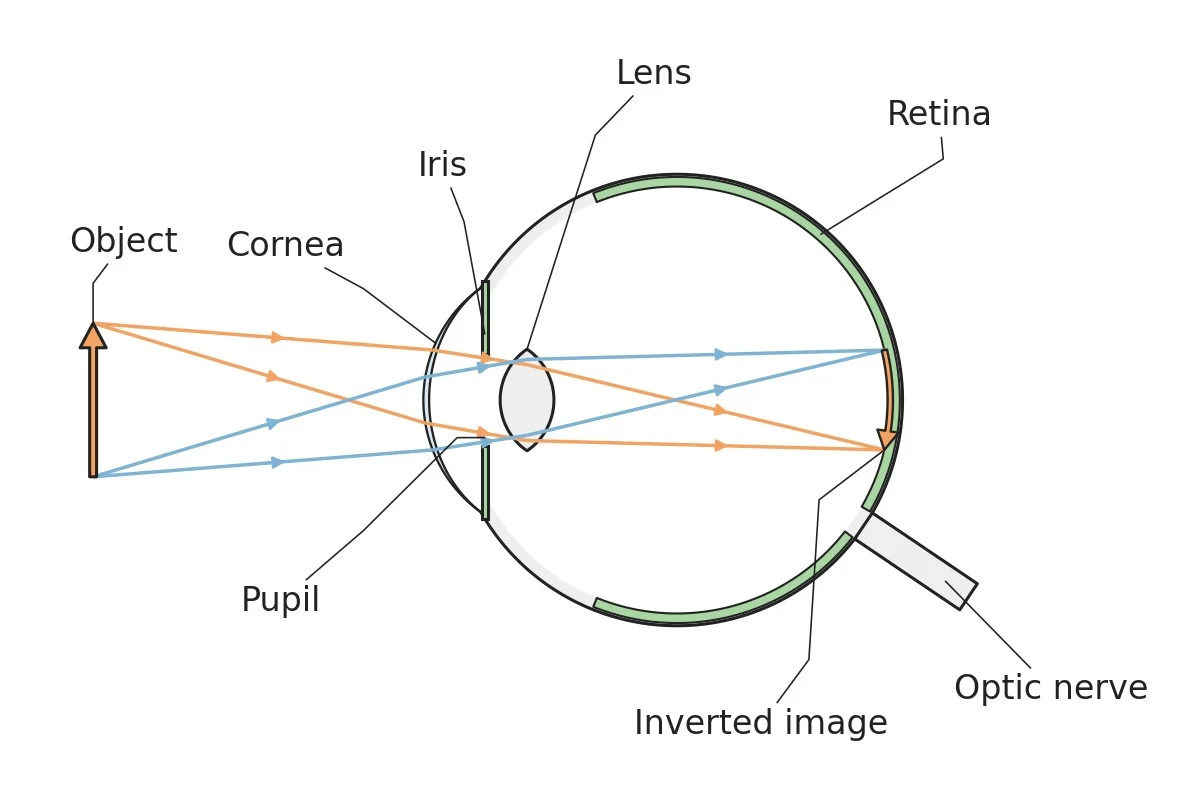
Where inside your eye must the sharp image form?
On the retina. The pupil admits light; the retina receives the image.
-
What changes during focusing: the lens’s shape or the retina’s position?
The lens’s shape. Ciliary muscles adjust the lens while the retina stays in place.
-
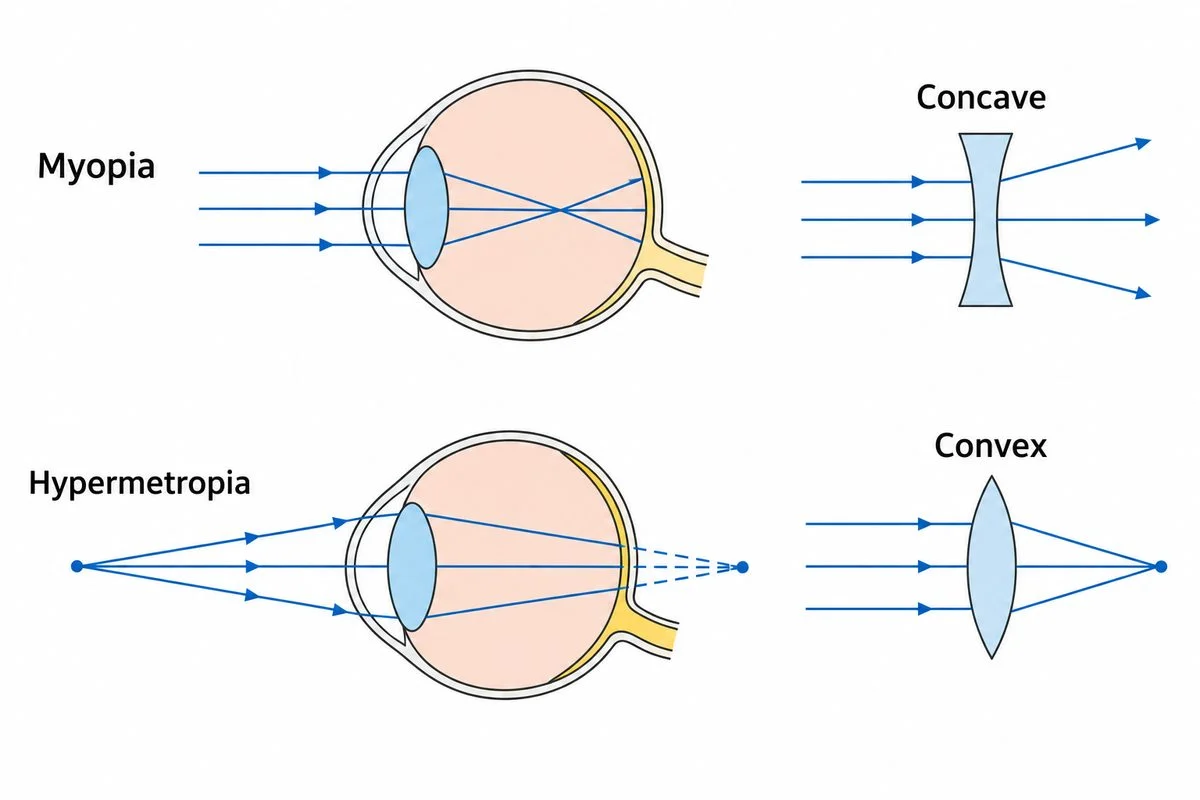
Which lens corrects a myopic eye that focuses distant light before its retina?
A concave lens. Spreading the incoming rays moves the focus back to the retina.
-
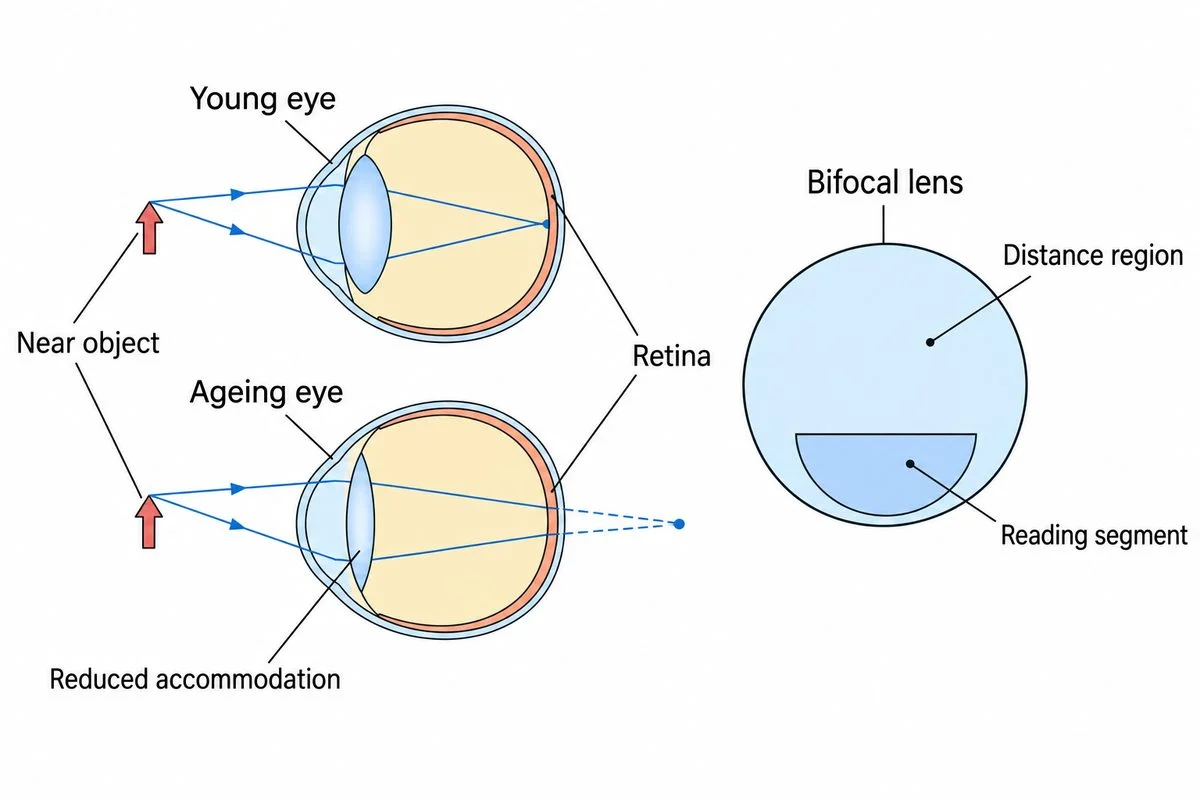
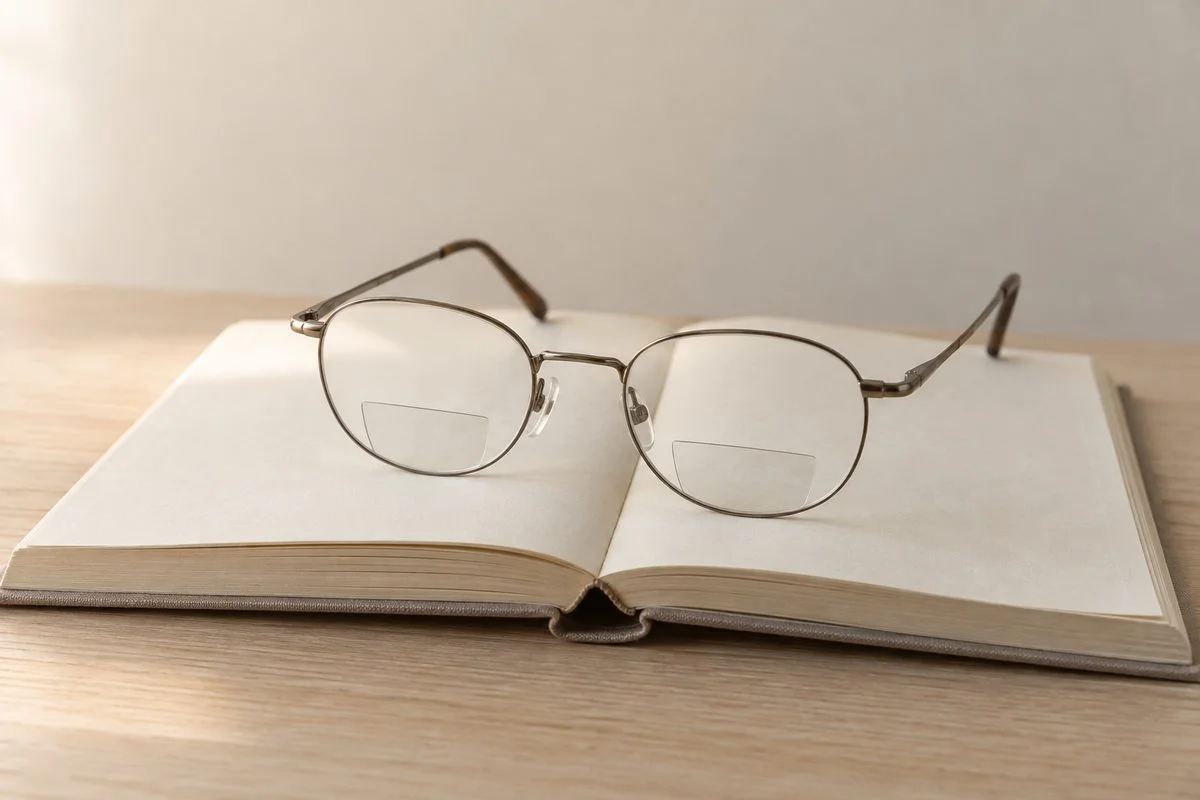
How does the lower reading segment’s power compare with the upper region’s power?
It is different. The two regions provide different corrections for reading and distance.
-
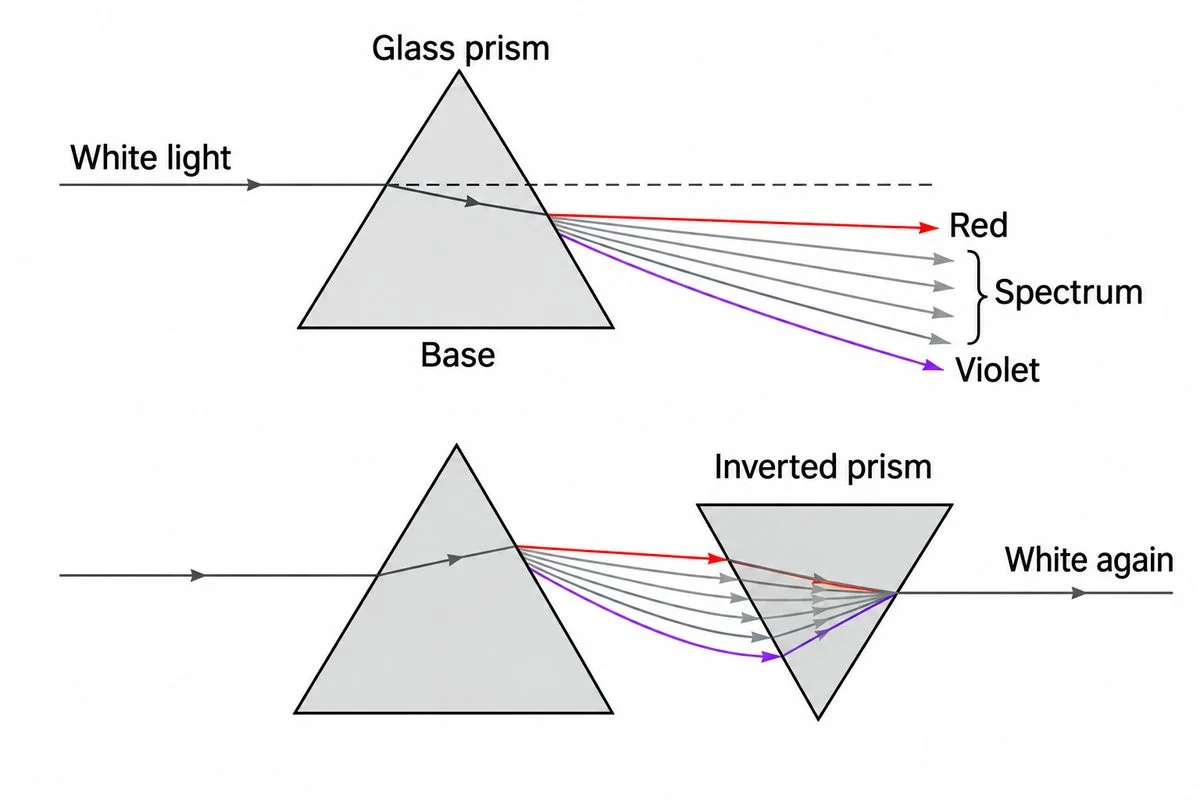
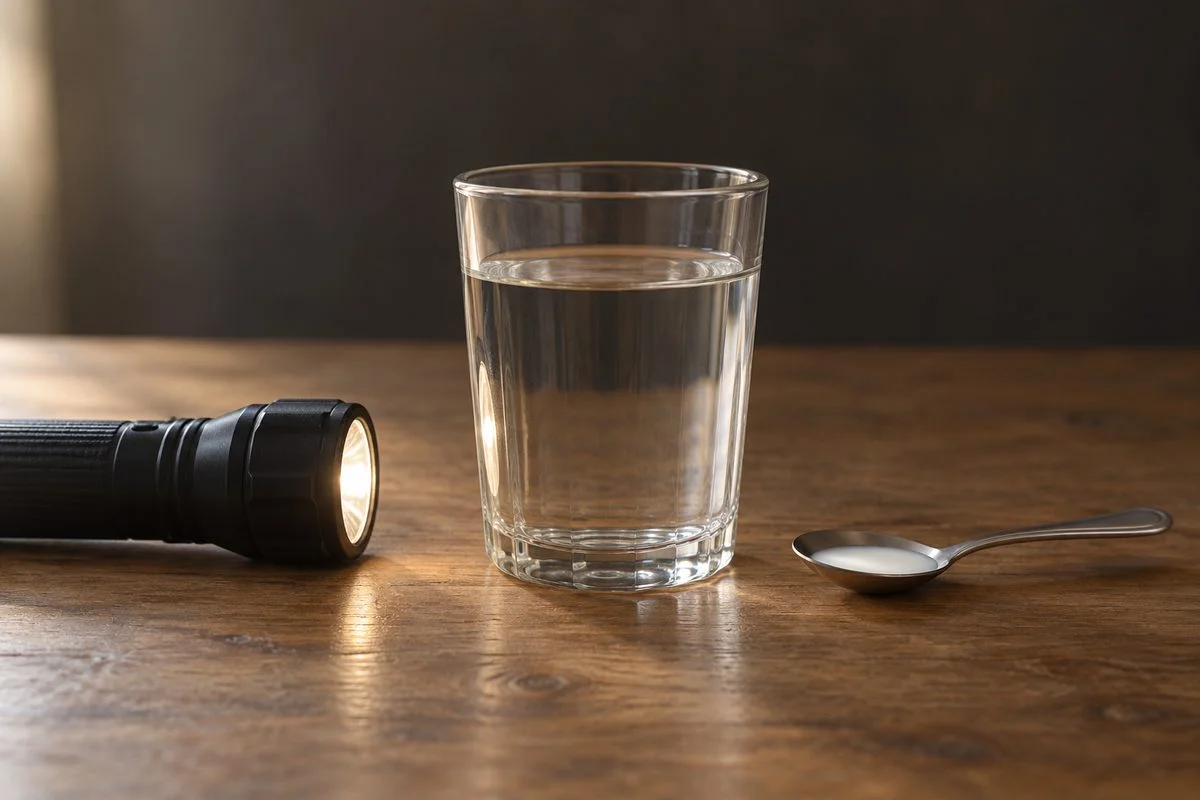
Does a prism separate colours already in white light, or create new colours?
It separates colours already present. The prism separates existing colours because each bends by a different amount.
-
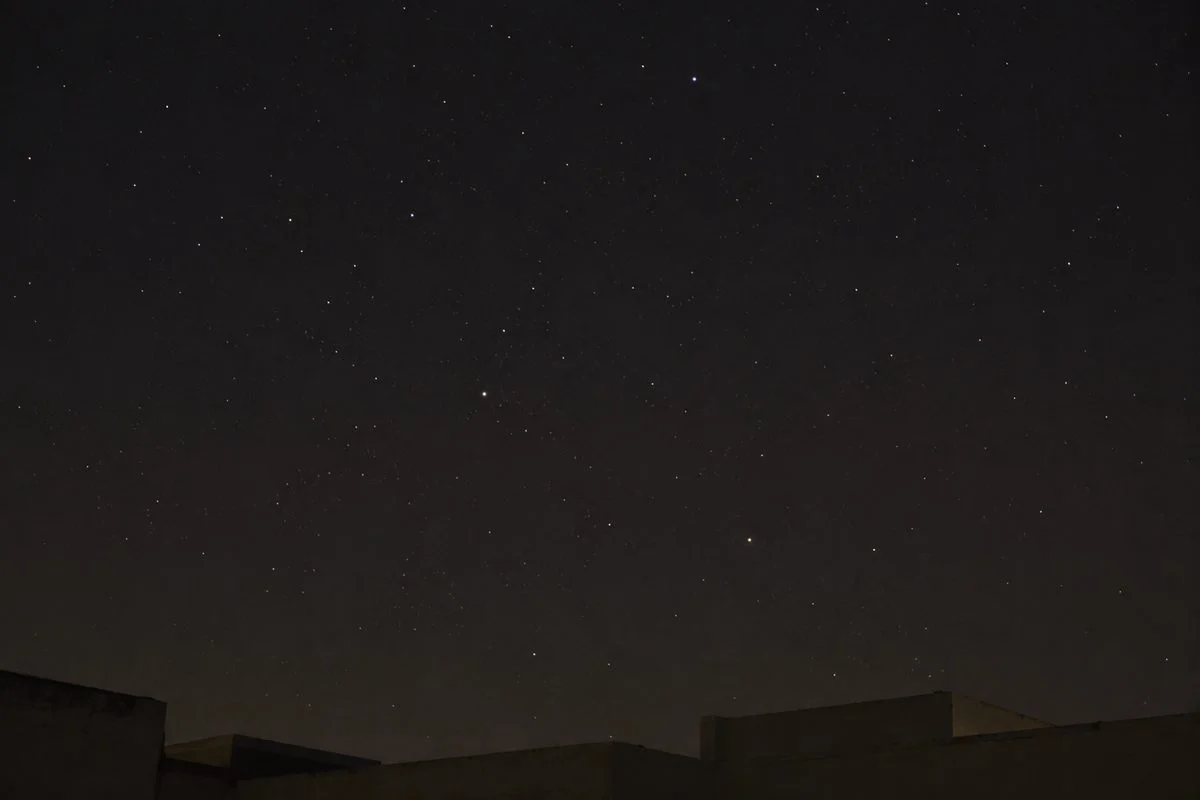
Why does a star appear to flicker when we watch it from Earth?
Refraction in Earth’s air. Changing refraction alters how much starlight reaches our eyes.
-
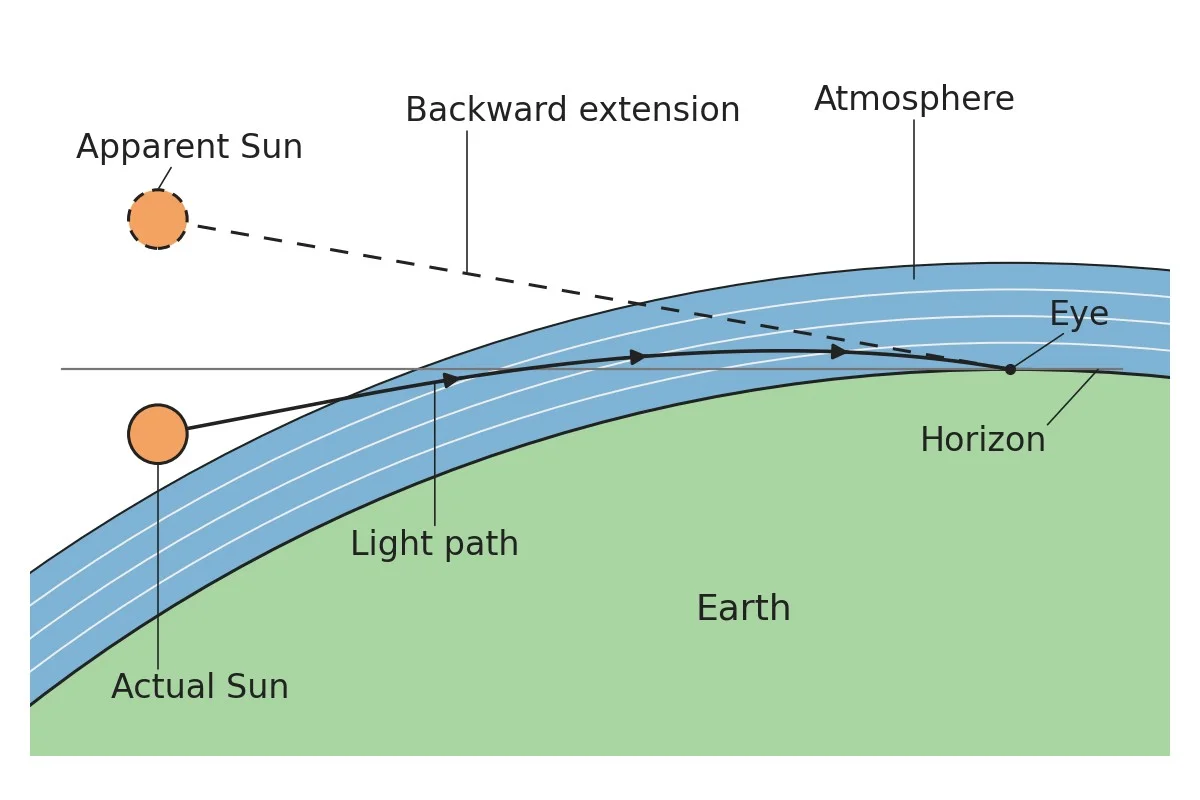
At apparent sunrise, is the Sun below the horizon or exactly where it appears?
Below the horizon. Air bends its light so the Sun appears higher.
-
Why is the sky blue: air scatters blue sunlight, or the sky reflects the ocean?
Air molecules scatter blue light. They scatter blue more strongly than red; ocean reflection is unnecessary.