One per step. The answer and the reason are given.
-
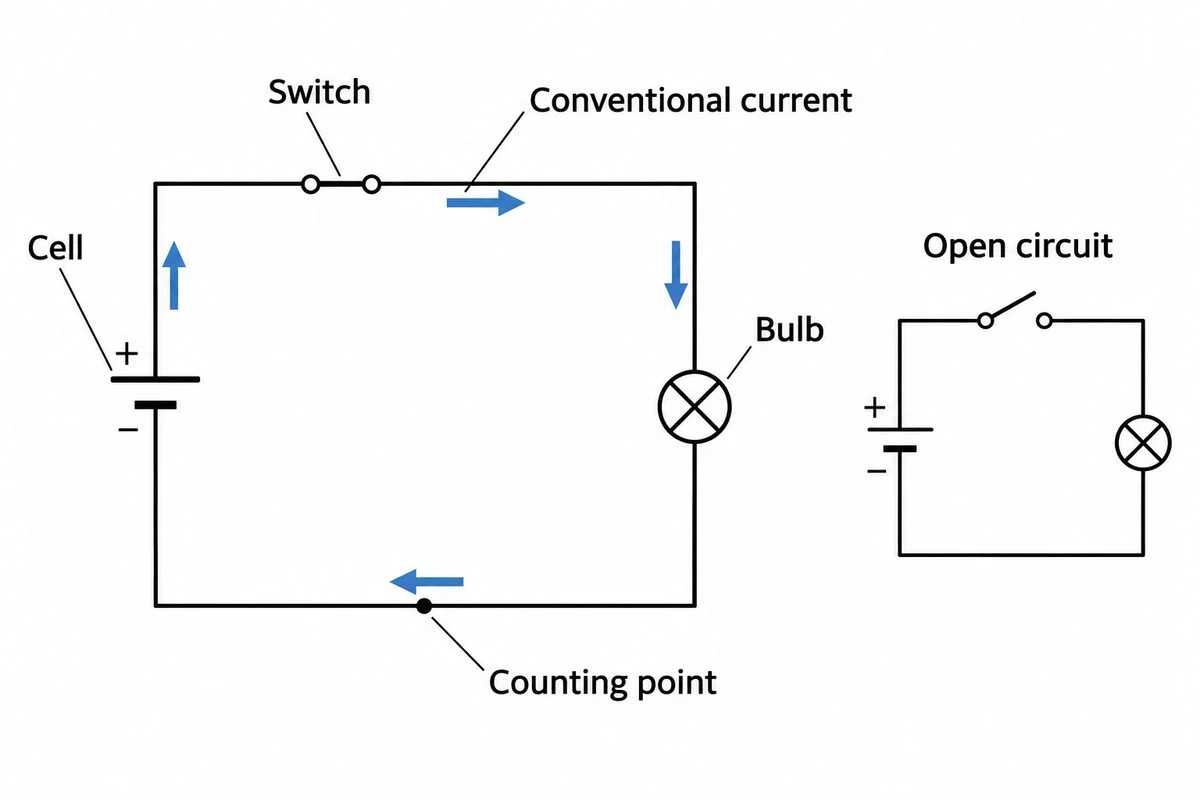
What happens to steady current when the circuit's conducting path breaks?
It stops. Sustained charge flow needs an unbroken conducting path.
-
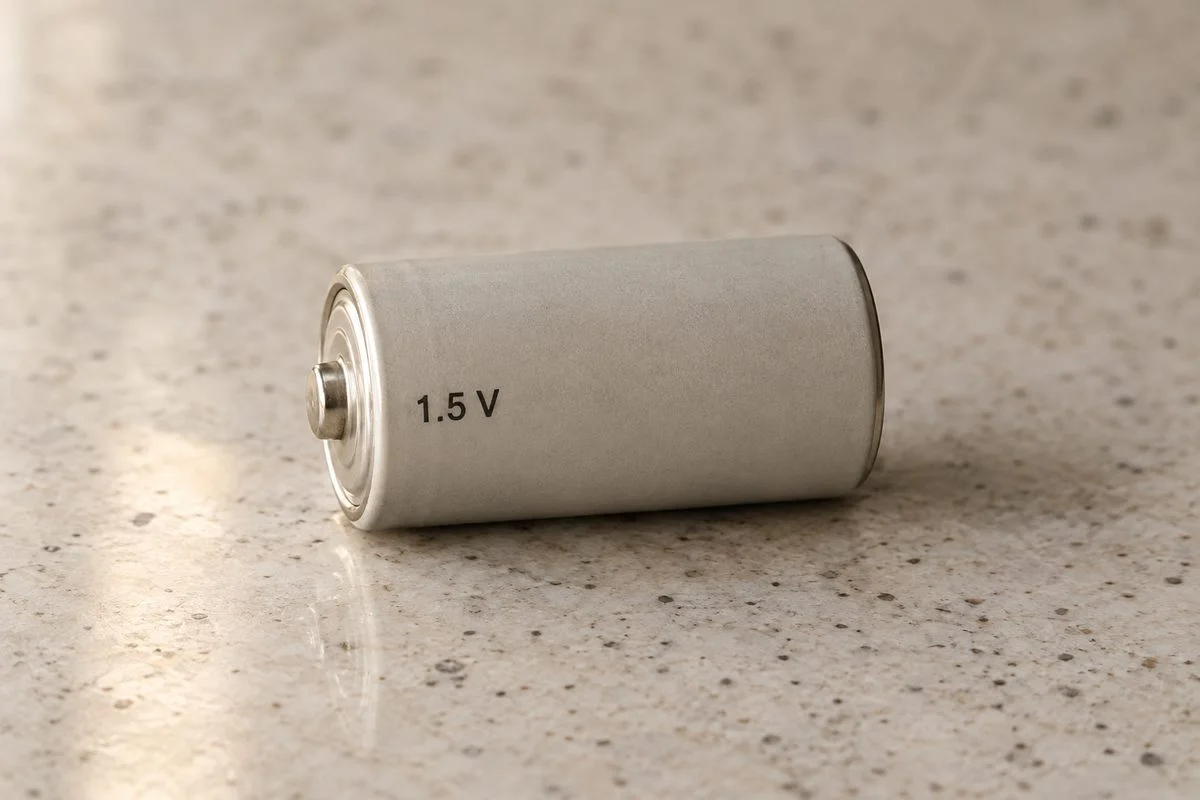
An 8 V source moves 2 C. How much energy does it supply?
16 J. Multiply energy per coulomb by the charge moved.
-
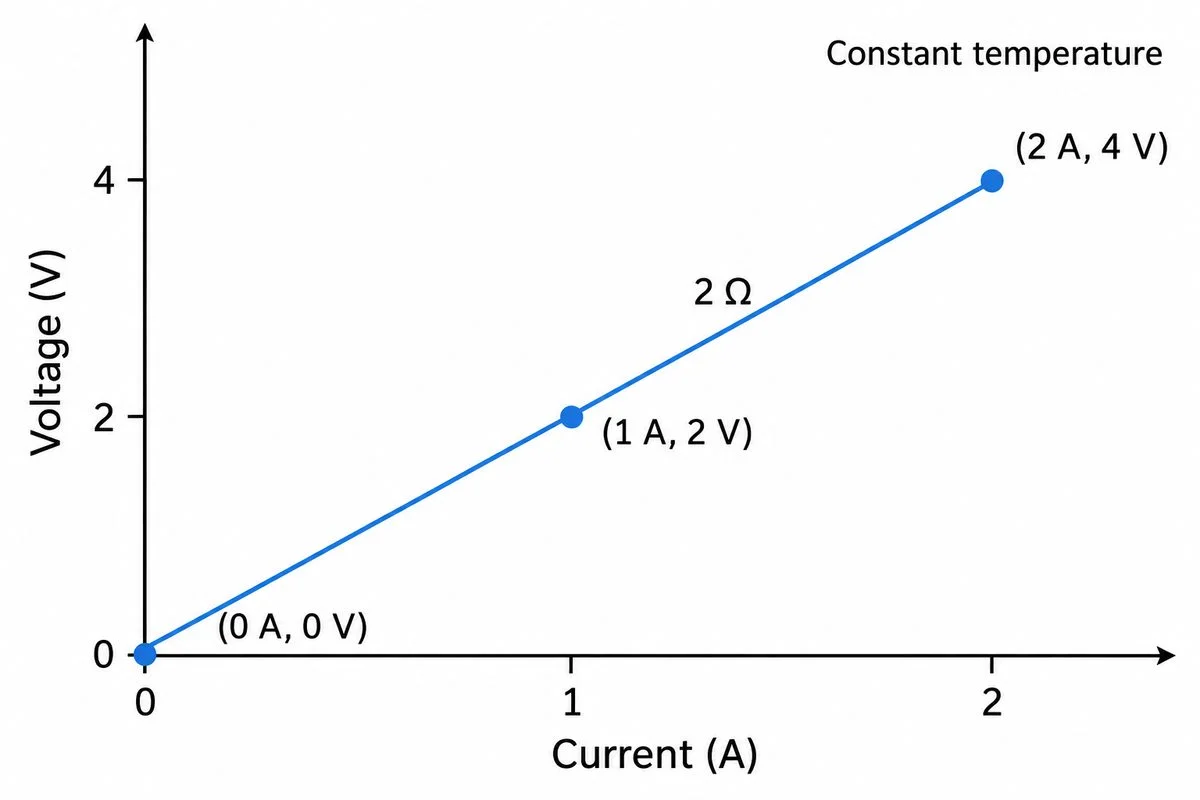
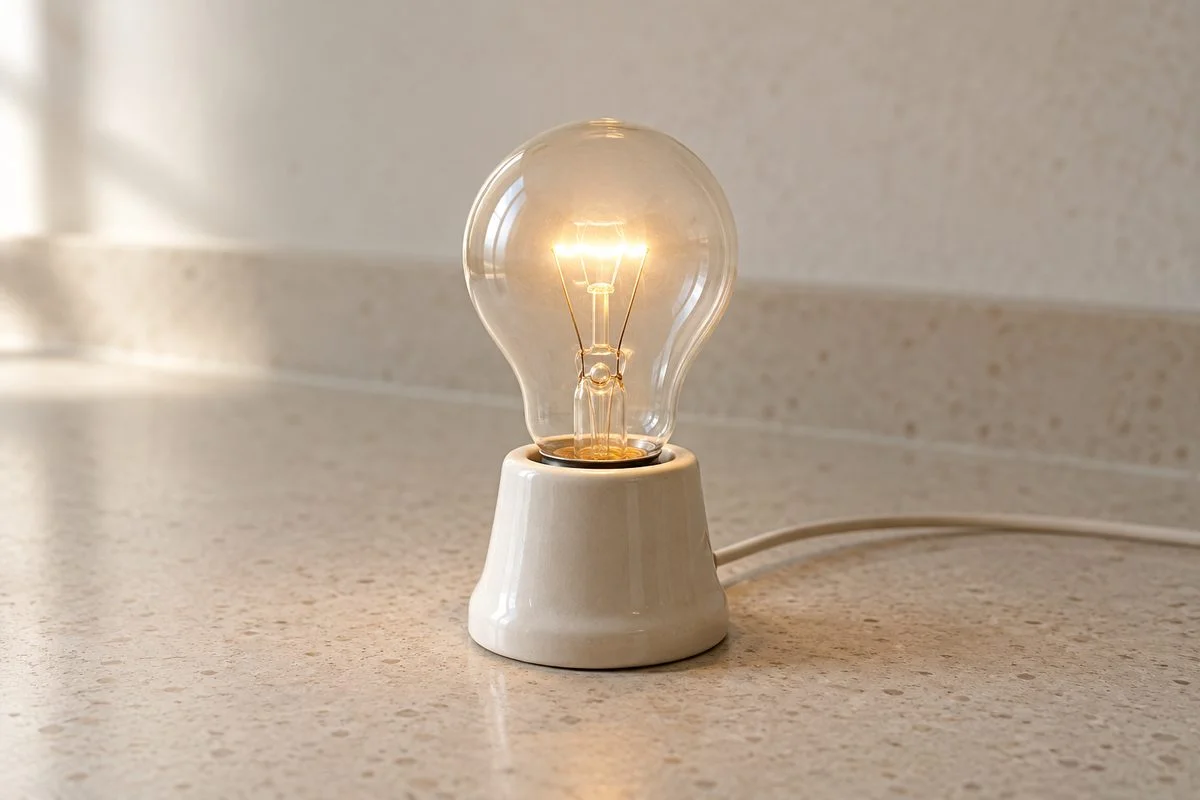
Must a filament's current double when its voltage doubles, even while it heats up?
No. Heating can change resistance, so current need not double.
-
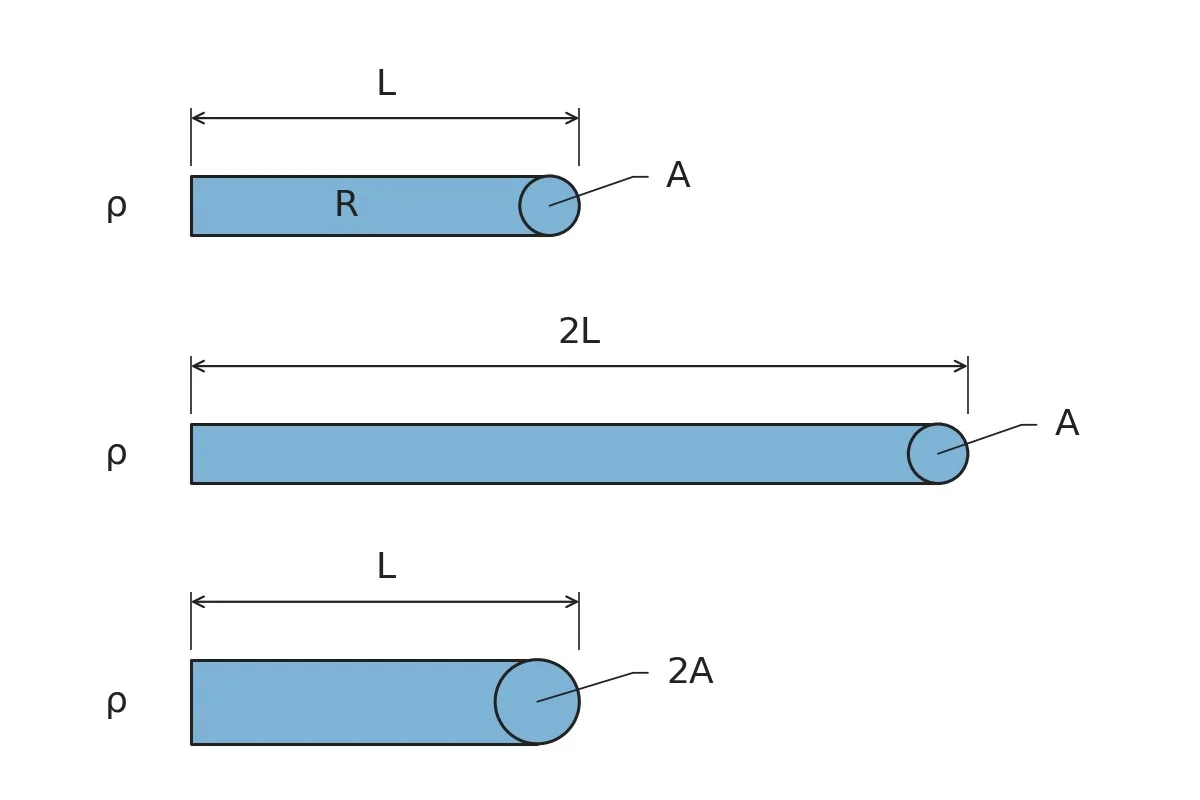
How does resistivity change when wire length doubles, with material and temperature unchanged?
It stays the same. Length changes the wire's resistance, not its material's resistivity.
-
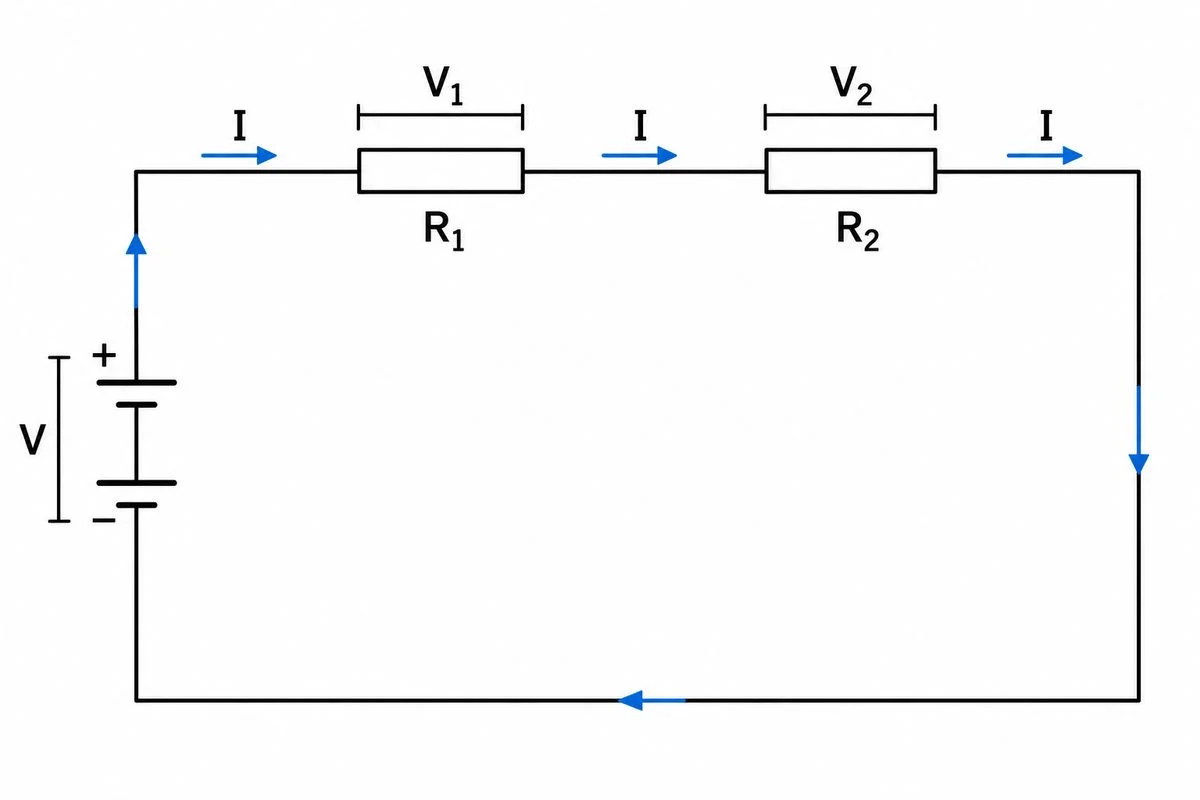
How do current readings compare before and after resistors in one steady, unbranched circuit?
They are equal. Resistors transfer energy without consuming charge.
-
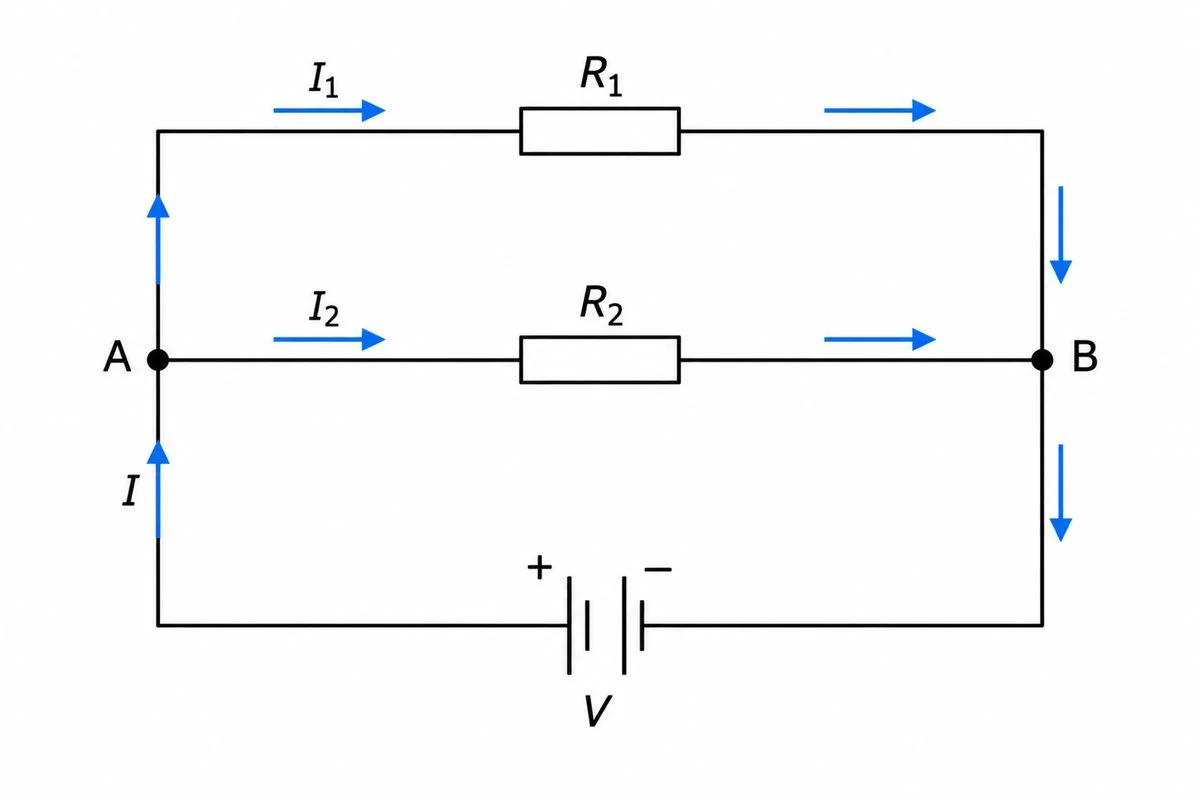
How does combined resistance compare with the smallest resistance among parallel branches?
It is smaller. Extra branches allow more total current at the same voltage.
-
Current doubles through the same resistance for the same time. How much heat results?
Four times as much. Heat depends on current squared when resistance and time stay unchanged.
-
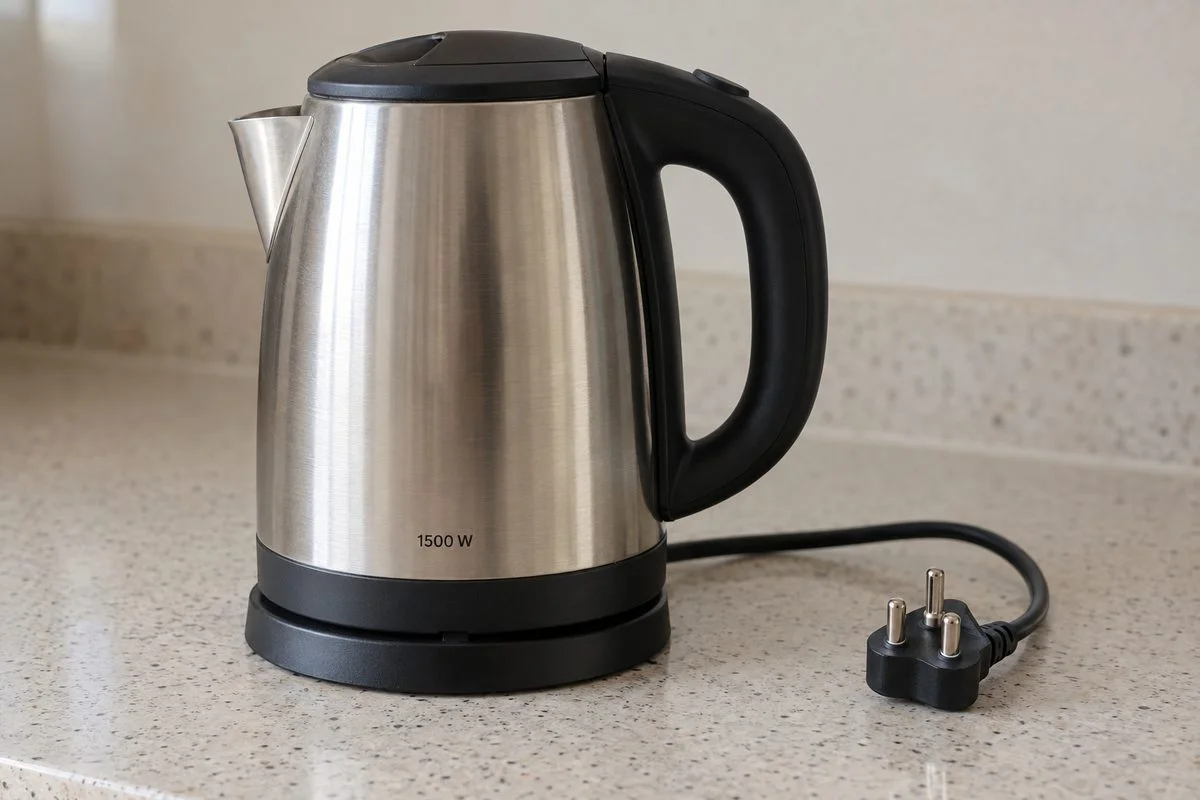
A 2 kW appliance runs for 3 hours. How much energy does it use?
6 kWh. Energy equals power multiplied by operating time.