Skip to content

Teach Ecosystem in eight steps.

For each idea: show it, ask before you tell, then say one line.

Gather paper and a pencil; visit a garden patch, fallen leaves and a fruit tree.

Common misconceptions & worked visual for this chapter · 15 practice questions with answers

How to teach it

How ecosystems work

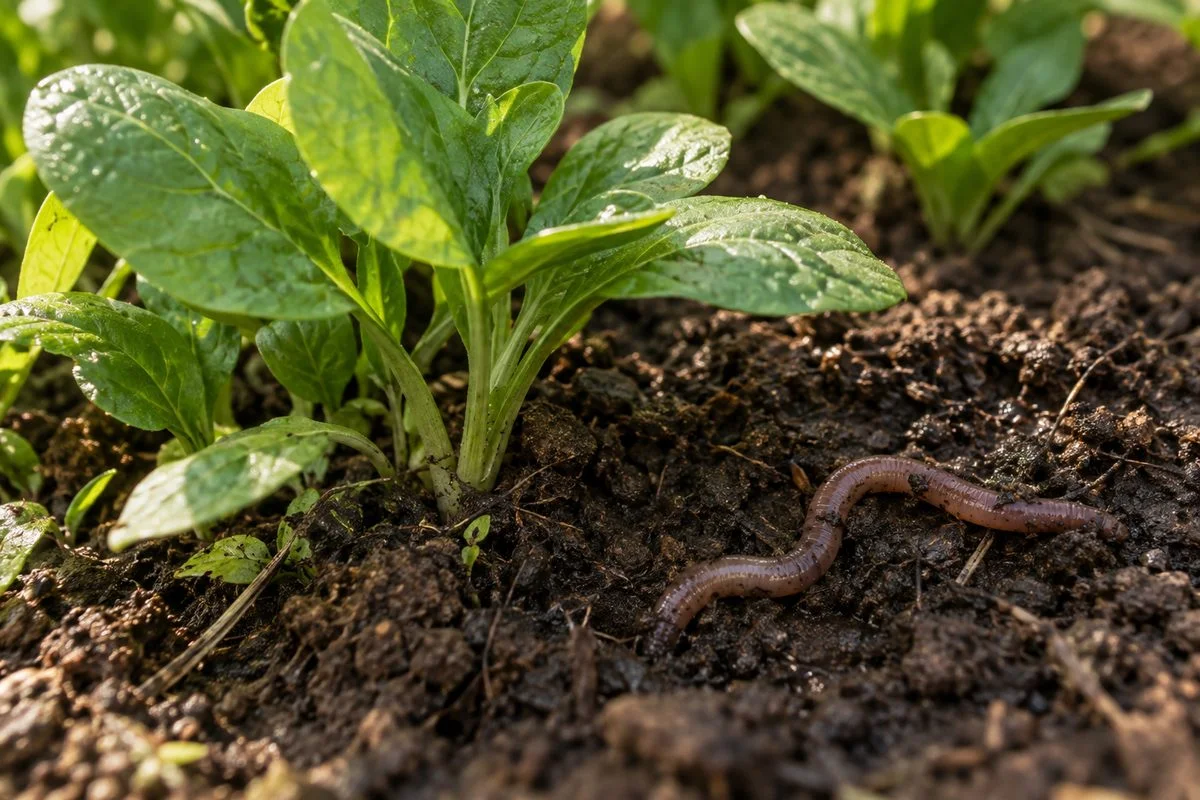
Plants grow in damp garden soil with an earthworm beside them.

1. Ecosystem—Structure and Function

Living things interact with each other and their physical surroundings.

Show
Visit a garden patch. Point out plants, visible animals, sunlight and damp soil.
Ask
What would happen to these plants if their water supply disappeared?
Say
Losing their water supply would affect these plants. Their non-living surroundings belong to the ecosystem too.
Used in
Watering garden soil supplies roots with water needed for growth.
If your child says…“Only living things belong to an ecosystem.”
Ask
Could these plants survive with all their neighbours but without water?
What’s true
Water, light, air and soil interact with organisms within an ecosystem.
NPP=GPP−R\mathrm{NPP}=\mathrm{GPP}-R

NPP=(10−4) g C m−2 yr−1\mathrm{NPP}=(10-4)\,\mathrm{g\ C\,m^{-2}\,yr^{-1}}

2. Primary Productivity

How fast producers make organic matter over a given area.

Show
Say: GPP measures total photosynthetic production per unit area per unit time. R measures plant respiration on that same basis. NPP measures the production rate remaining after respiration. Write these lines.
Ask
Plants use four of their ten production units in respiration. How many will remain?
Say
The result is 6 grams of carbon per square metre per year, after plant respiration.
Used in
Crop productivity estimates help farmers judge how much new plant material their fields produce.
If your child says…“We add respiration to find NPP.”
Ask
Does using some food leave the plant with more or less?
What’s true
Respiration uses some production, so subtract it to find NPP.
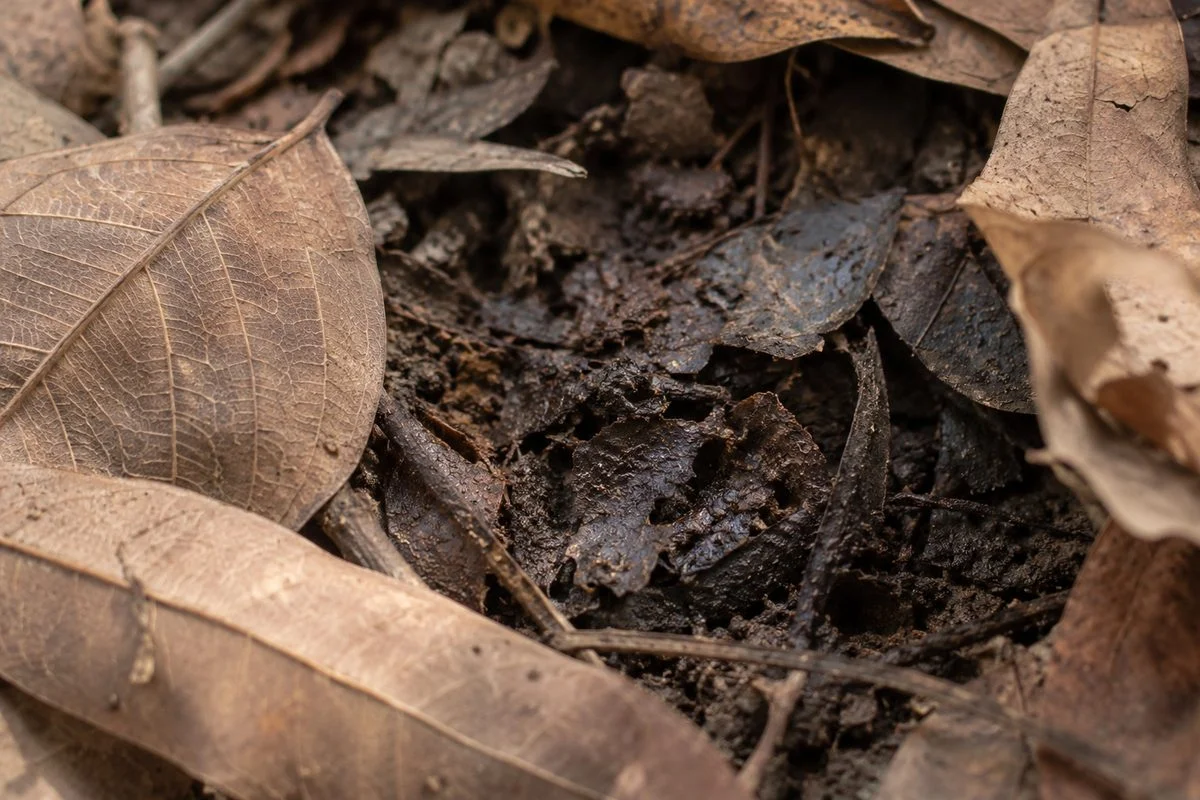
Whole fallen leaves beside softer fragments exposed beneath the surface litter.

3. Decomposition

Dead material breaks apart and decomposers chemically break it down.

Show
Find fallen leaves. Gently lift the surface layer, compare the softer fragments underneath, then replace it.
Ask
Would these leaves decay faster if their surroundings became cold and dry?
Say
No, these leaves would decay more slowly in cold and dry surroundings.
Used in
Refrigeration slows microbial decay, helping food keep longer.
If your child says…“Cold, dry places make leaves rot faster.”
Ask
Why does food keep longer in a fridge?
What’s true
Warmth, moisture and oxygen usually speed decay, while cold, dryness and lignin slow it.

Feeding and energy

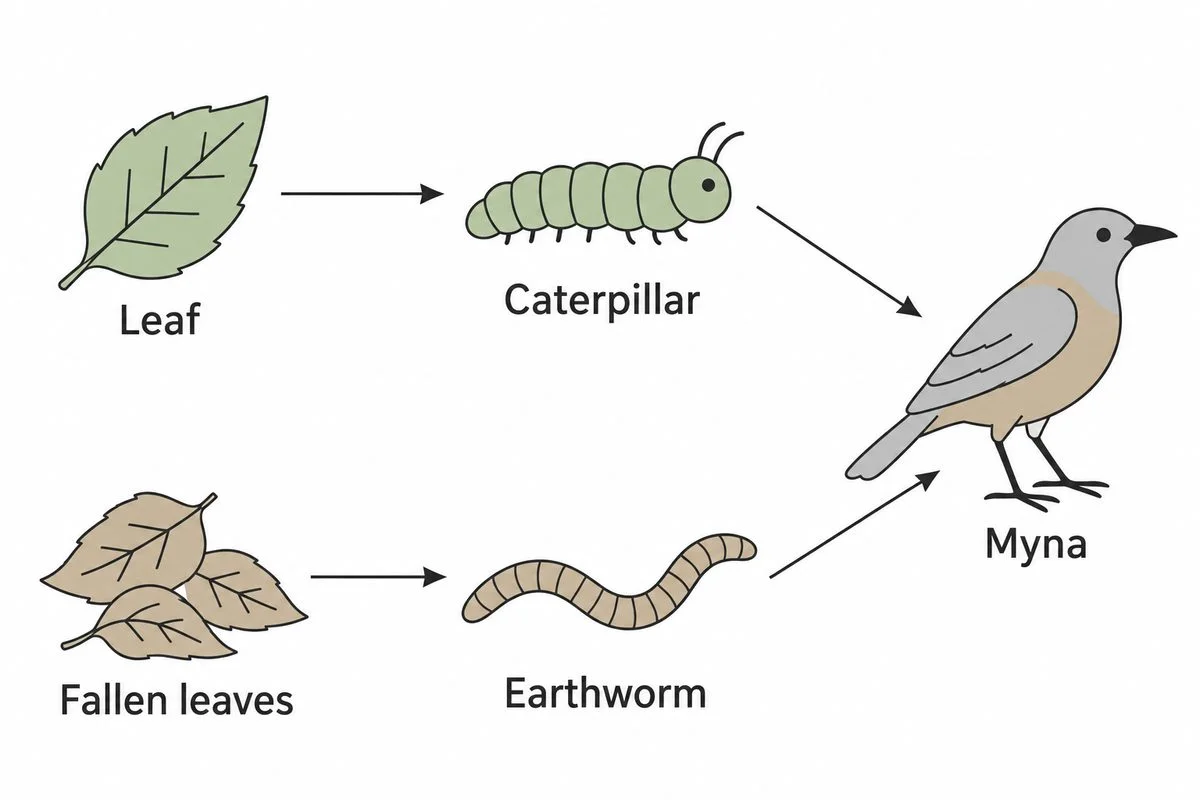
Diagram of two feeding routes meeting at one myna.

4. Food Chains and Food Webs

Connected feeding routes link living producers, dead matter and consumers.

Show
Find the living leaf and fallen leaves in the diagram. Follow their feeding arrows through the caterpillar and earthworm to the same myna.
Ask
If caterpillars disappeared, which other food in this diagram could the bird still eat?
Say
The bird could still eat the earthworm. The bird’s feeding links join chains into a web.
Used in
Protecting insect-eating birds helps gardens control plant-eating insects.
If your child says…“Each animal eats just one kind of food.”
Ask
How many food routes reach this bird?
What’s true
An animal can have several feeding links within a food web.
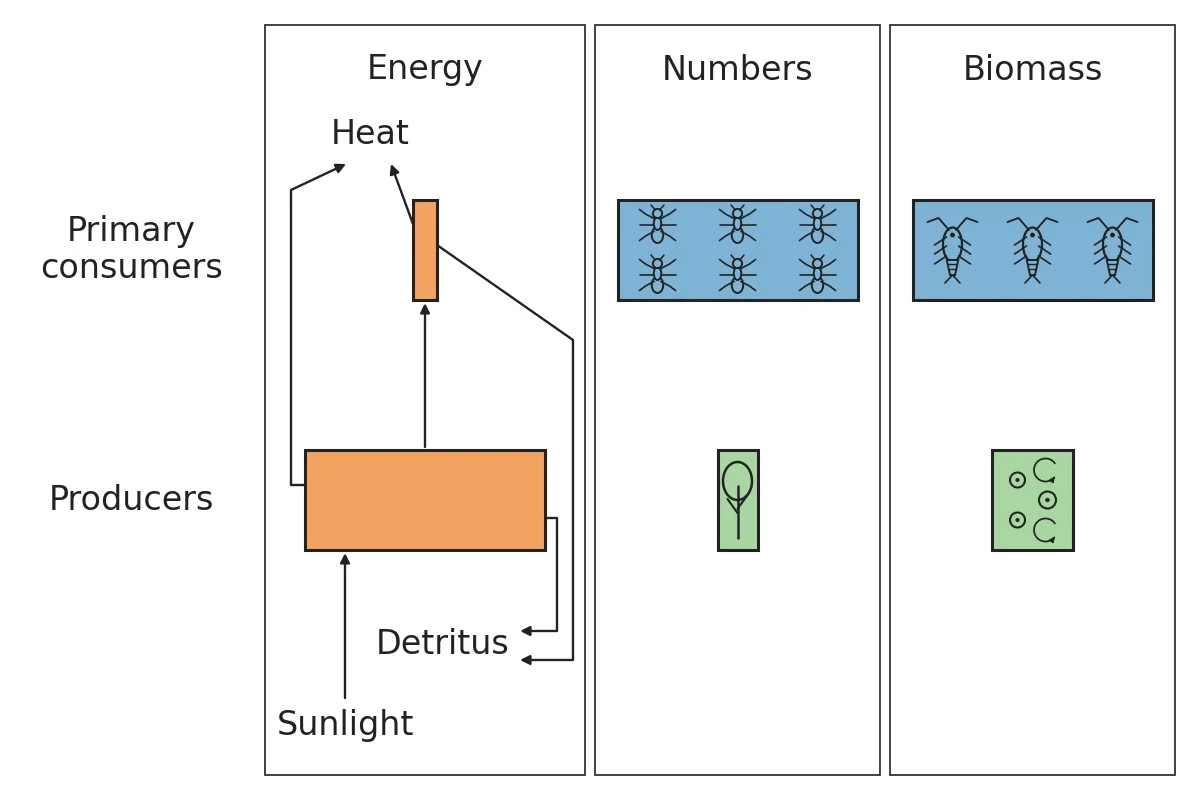
Energy decreases upwards while organism counts and standing biomass can increase.

5. Energy Flow and Ecological Pyramids

Energy decreases upwards; numbers and biomass can increase.

Show
Compare energy flow with standing numbers and biomass in the diagram. Trace heat and detritus arrows.
Ask
How can one tree support many insects despite energy losses?
Say
Many small insects can share one tree.
Used in
Food-supply planning accounts for energy losses when crops feed livestock.
If your child says…“Herbivores receive all the energy plants make.”
Ask
What happens to energy plants use before anything eats them?
What’s true
Respiration releases heat, while uneaten material and waste supply the detritus pathway.

Change, recycling and benefits

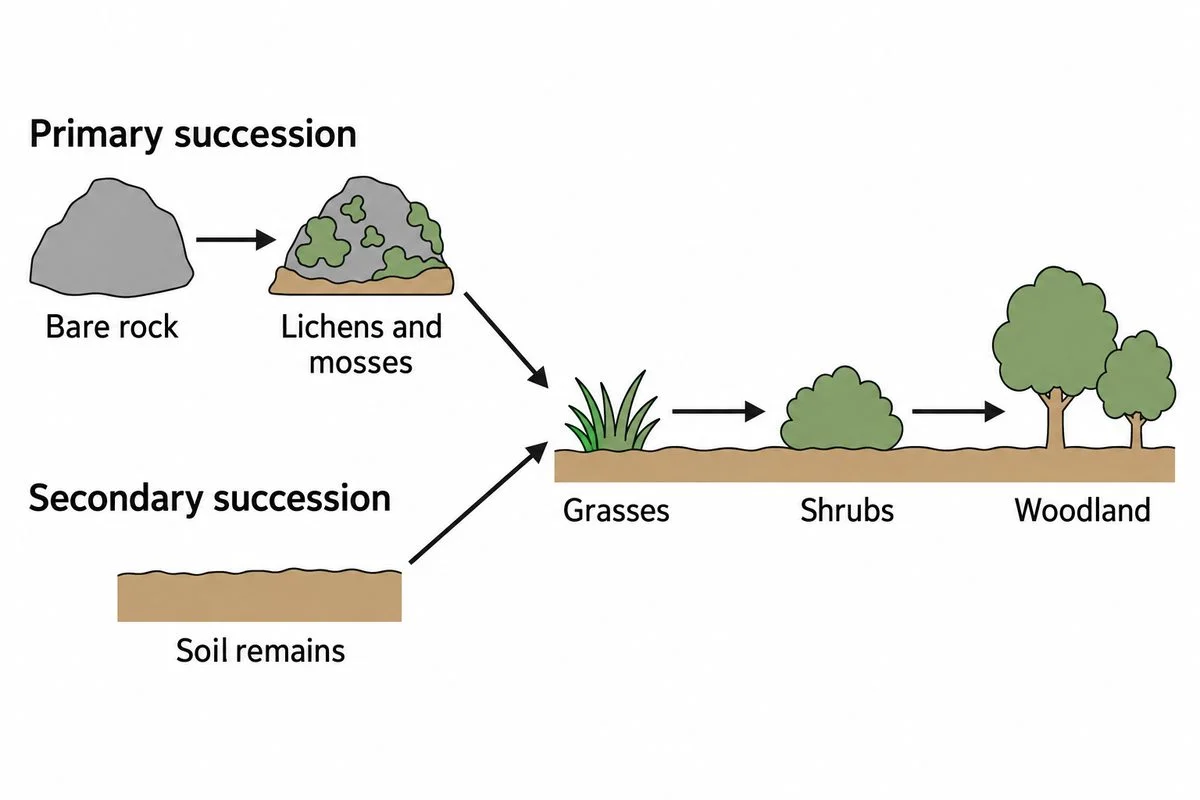
Bare rock and existing soil begin different routes towards later plant communities.

6. Ecological Succession

The community occupying a place changes over time.

Show
Find bare rock in the diagram’s upper row and remaining soil below. Follow both routes towards grasses, shrubs and woodland.
Ask
Which starting place would usually develop a grass community sooner?
Say
The lower route usually develops faster because soil already supports plants.
Used in
Keeping soil intact during land restoration helps plant communities recover.
If your child says…“Secondary succession always takes longer.”
Ask
Which starting place must first develop soil?
What’s true
Remaining soil, seeds or roots can speed recovery after disturbance.
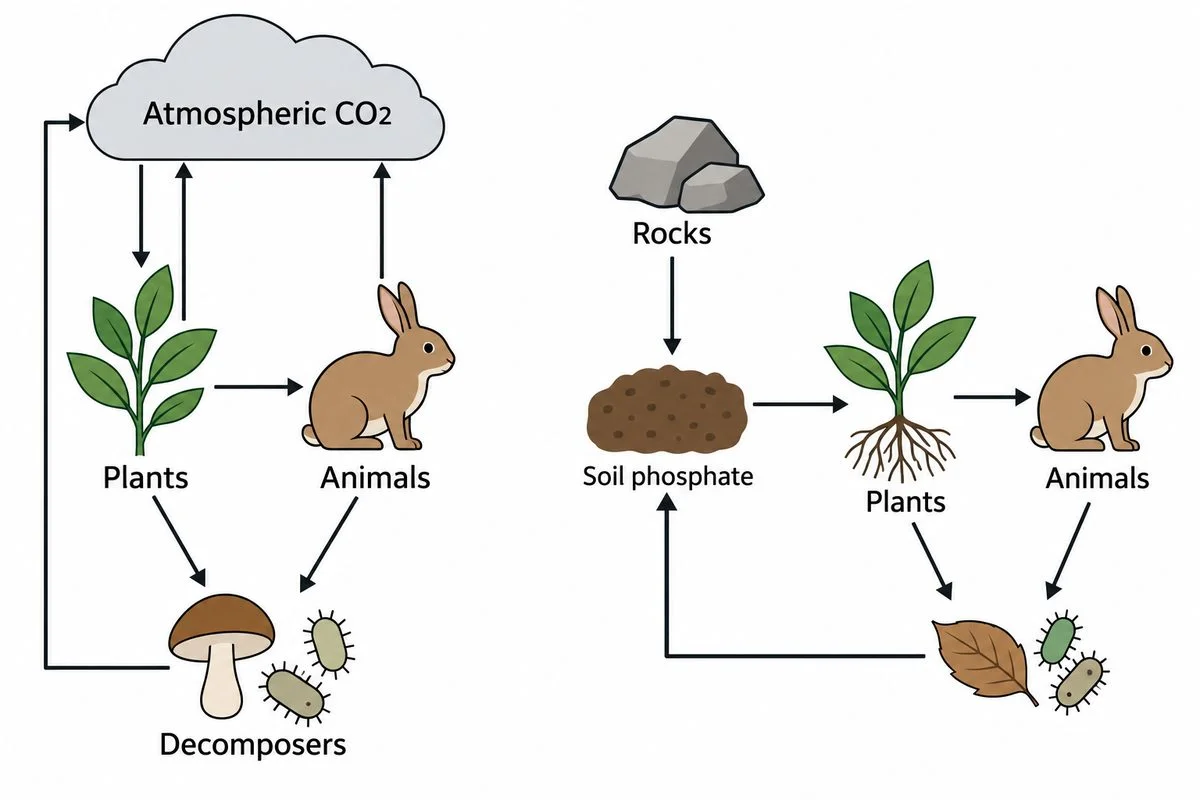
Carbon exchanges with air, while phosphorus passes from rocks through soil and organisms.

7. Nutrient Cycling—Carbon and Phosphorus

Carbon and phosphorus follow different recycling routes.

Show
Trace carbon through air and organisms in the diagram. Follow phosphate from rocks through soil and organisms.
Ask
Where will phosphate from weathering rocks go before plants absorb it?
Say
Phosphate enters soil through weathering.
Used in
Composting returns phosphorus to soil, supporting new plant growth.
If your child says…“Phosphorus mainly comes from a store in the air.”
Ask
Which route supplies phosphate to roots without passing through air?
What’s true
Phosphorus has its main store in rocks and no significant gaseous phase.
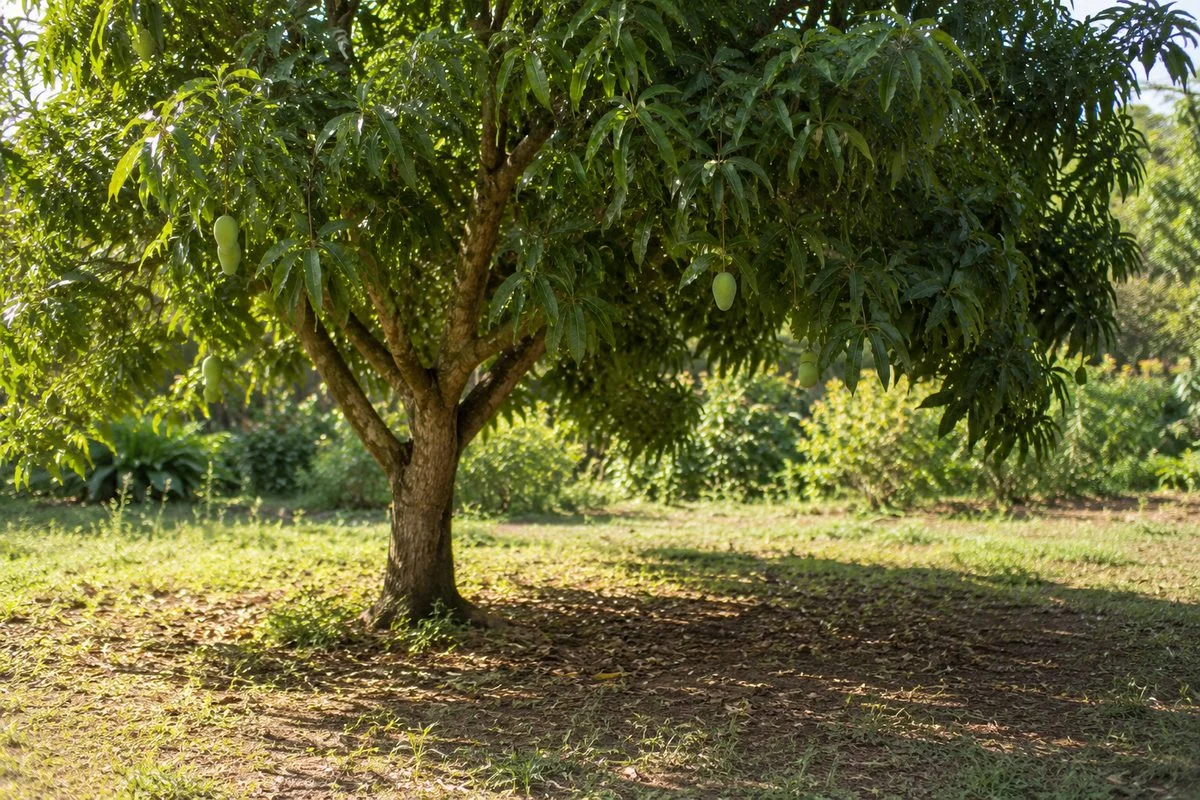
Fruit tree shading the ground beneath its canopy.

8. Ecosystem Services

Ecosystems provide useful goods and benefits that need no sale.

Show
Visit a fruit tree. Notice its shade, rooted soil, resting space and any fruit present.
Ask
If this tree disappeared, would losing its fruit be the only loss?
Say
No; food, cooling shade, soil processes and enjoyment are ecosystem services.
Used in
Trees shade outdoor resting places, making them cooler.
If your child says…“Nature’s services are only things we sell.”
Ask
Does shade become useful only when someone charges for it?
What’s true
Ecosystem services include both market goods and benefits without a sale price.

A real problem

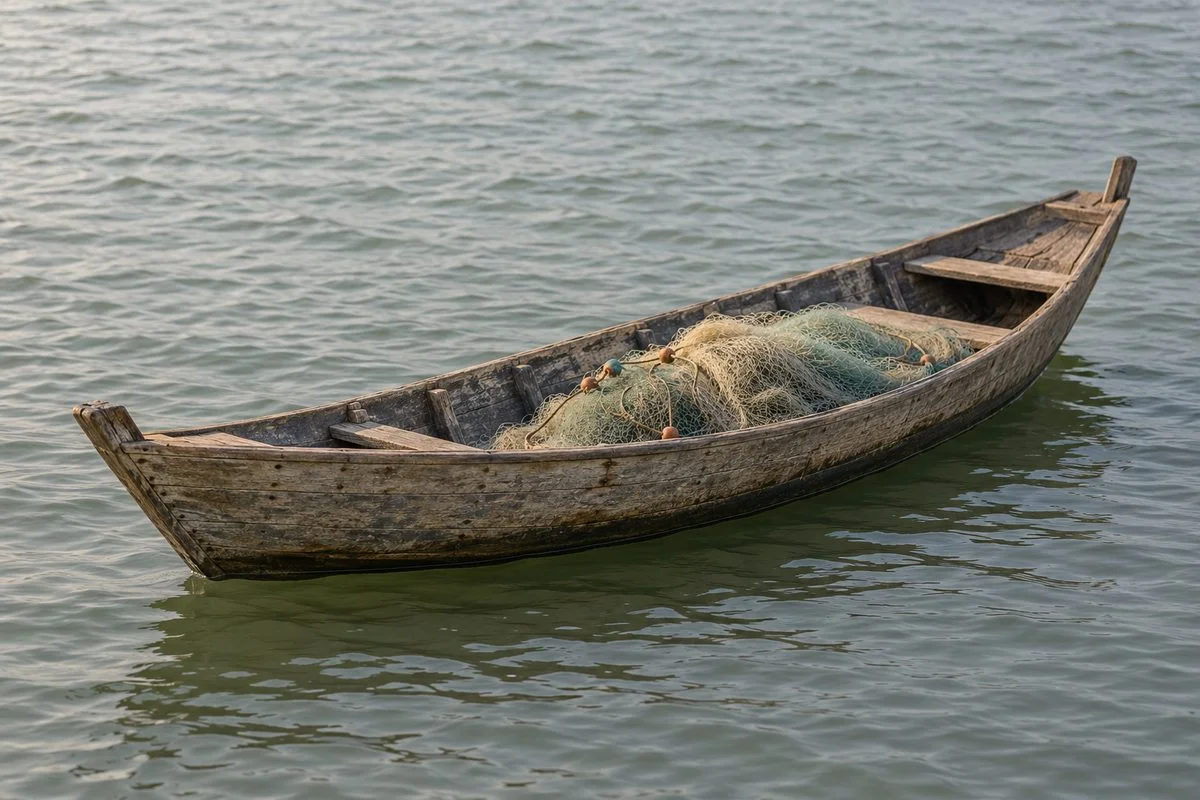
Restoring Chilika’s sea connection helped its fishery recover.

Declining salinity and fishery resources threatened Chilika’s ecosystem.

An artificial sea mouth opened on 23 September 2000.

Freshwater inflows and seawater entering the new mouth governed the lake’s salinity.

The fishery recovered rapidly after opening; its productive fisheries support local livelihoods.

WileyUNESCOChilika Development Authority

An empty fishing boat with nets on Chilika Lake.

Concept Lab · Common misconception

The tempting mistake in Ecosystem

Open standalone misconception page →

Does all the energy fixed by plants become new biomass?

Wrong

All of the energy that plants fix by photosynthesis stays in their new biomass.

Why it feels right. I count the energy coming in and overlook what plants use to stay alive.

Right

Net primary productivity is gross primary productivity minus the plants' respiration.

Worked example

Energy fixed, used in respiration and added to biomass, in kJ per square metre per year.
  1. Suppose plants fix 1,000 kJ per square metre in a year and use 400 kJ per square metre for respiration.
  2. The energy added to new biomass is 600 kJ per square metre that year.

Ask your child eight quick questions.

One per step. The answer and the reason are given.

  1. Which liquid do roots absorb from this patch?

    Water. An ecosystem includes the physical surroundings that its organisms depend on.

  2. With unchanged GPP, what happens to NPP when plant respiration increases?

    It decreases. More production is used in respiration, leaving less for growth and consumers.

  3. Which favours microbial leaf decay: warm, moist, airy conditions or cold, dry conditions?

    Warm, moist, airy conditions. Cold and dryness slow the microbes responsible for decomposition.

  4. Which two foods reach the bird directly in this web?

    The caterpillar and earthworm. Connected chains allow one consumer to have several food sources.

  5. Of 100 energy units at the producer level, about how many reach herbivores?

    About 10 units. Transfer is incomplete because organisms respire and not all material is eaten or digested.

  6. Which starting condition makes the lower route secondary succession?

    Soil remains. Primary succession begins without developed soil.

  7. Which major phosphorus store releases phosphate through weathering?

    Phosphate rocks. Weathering releases phosphate into soil and water, where plants can obtain it.

  8. Which benefit visible beneath this tree helps keep a resting place cool?

    Its shade. Cooling is an ecosystem benefit even when nothing is sold.

15 more questions with answers