Skip to content

Teach Organisms and Populations in eight steps.

For each idea: show it, ask before you tell, then say one line.

Gather moong, two dishes, cloth, water, string, ruler, paper and pencil. Locate a cactus and a plant patch.

Observe cactus spines without touching them.

Common misconceptions & worked visual for this chapter · 15 practice questions with answers

How to teach it

Organisms and their surroundings

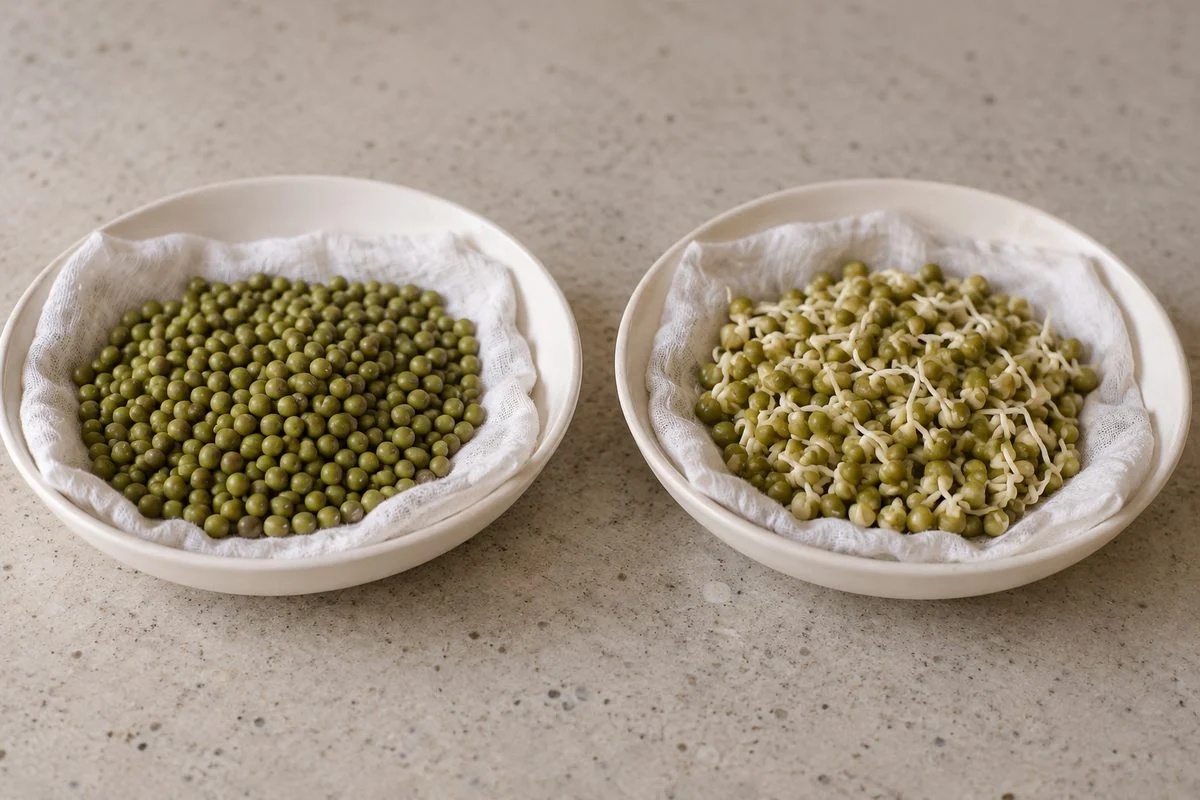
Dry moong and sprouted moong in separate cloth-lined dishes.

1. Organism and Its Environment; Responses to Abiotic Factors

Conditions affect organisms, which respond in different ways.

Show
Two to four days beforehand, put moong on cloth in two dishes somewhere warm. Keep only one cloth damp. Compare them during the session. After the prediction, dampen the dry seeds. Check for sprouting over the following days.
Ask
Could these dry seeds still sprout after watering?
Say
These seeds could still sprout; seeds can suspend growth until water returns.
Used in
Dry seed storage delays sprouting, keeping seeds available for sowing.
If your child says…“Everything keeps its internal conditions constant.”
Ask
Does this fish keep its body temperature constant as the water cools?
What’s true
Many organisms change internally when their surroundings change.
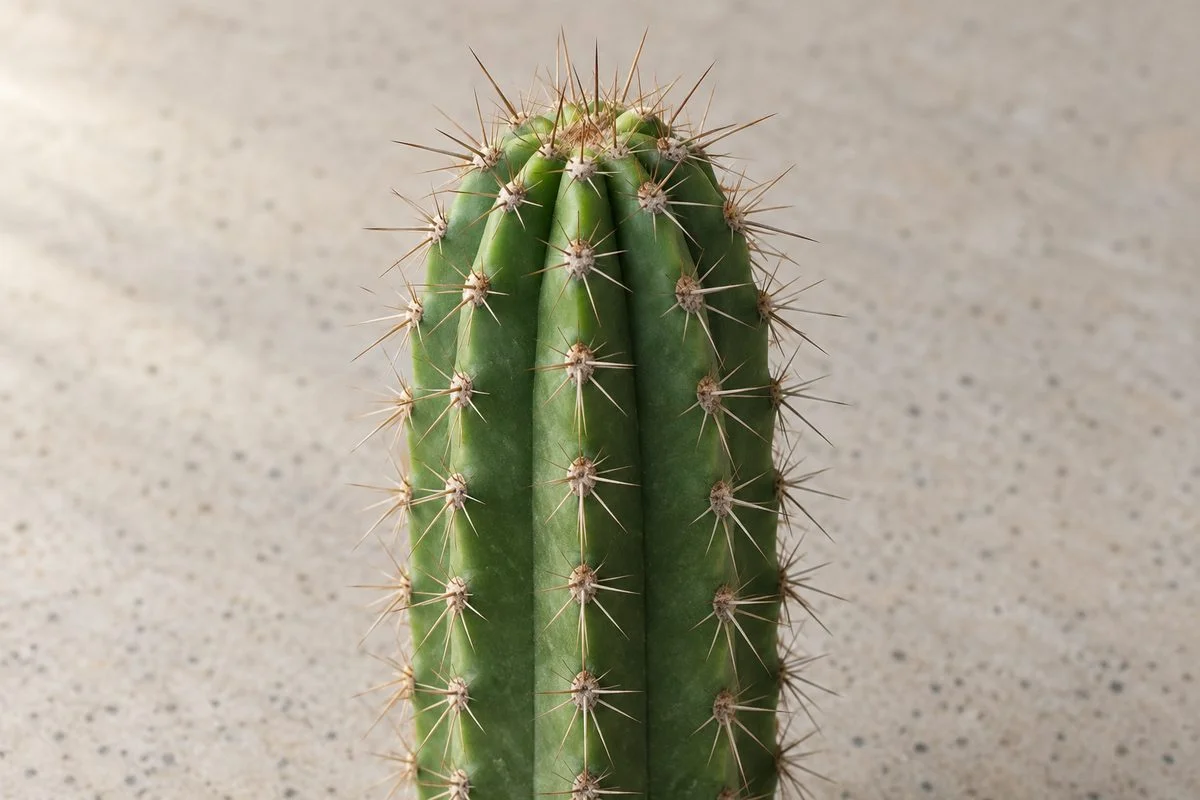
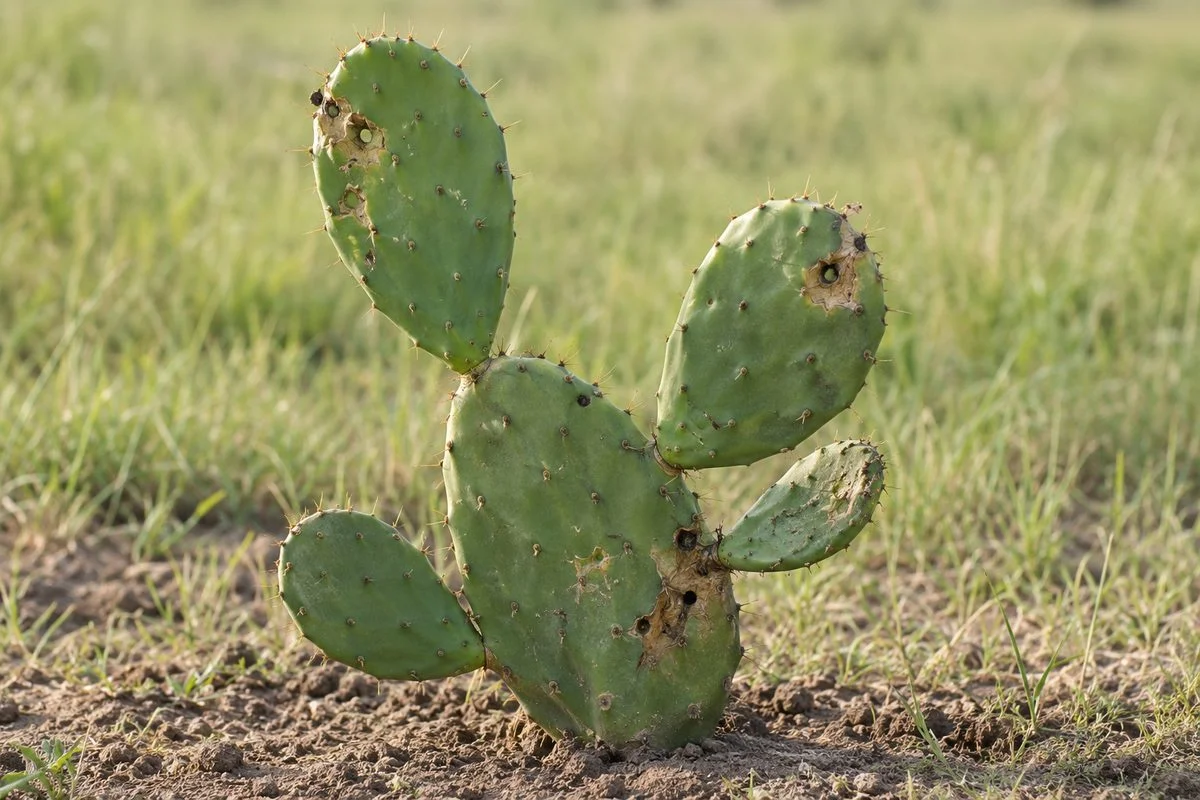
Spiny cactus with a thick green stem.

2. Adaptations

Inherited features help organisms survive particular conditions.

Show
Observe an existing spiny cactus. Point out its thick green stem and spines without touching.
Ask
Which part could supply stored water between rains?
Say
Its stem stores water.
Used in
Plants adapted to dry conditions help gardens cope with scarce water.
If your child says…“Cactus pores open widest in the midday heat.”
Ask
Would cooler nights or midday heat favour less water loss through open pores?
What’s true
Desert cactus stomata usually open at night, reducing water loss during gas exchange.

Populations

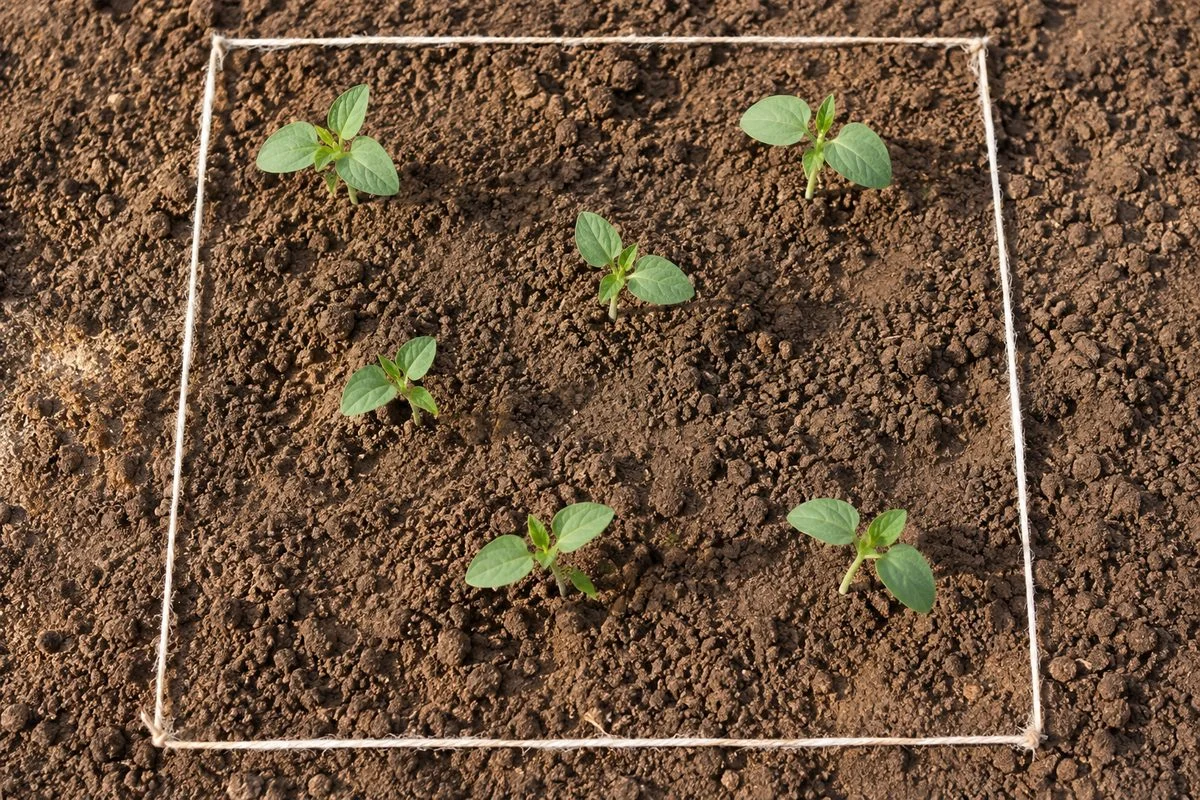
String square enclosing separate plants of the same species.

3. Population Attributes

Density, birth rates and age proportions describe groups of one species.

Show
Find separate plants of one species. Mark a square with string, each side one metre. Count the enclosed plants. Record the count per square metre.
Ask
If more plants grow inside this same square, what will happen to their density?
Say
Their density will increase. Density links the population to its area.
Used in
Plant density helps nurseries plan spacing so seedlings have room to grow.
If your child says…“Density always means counting individual plants.”
Ask
How could you measure tangled grass when separate plants are difficult to count?
What’s true
Living mass or percentage cover can also measure population density.
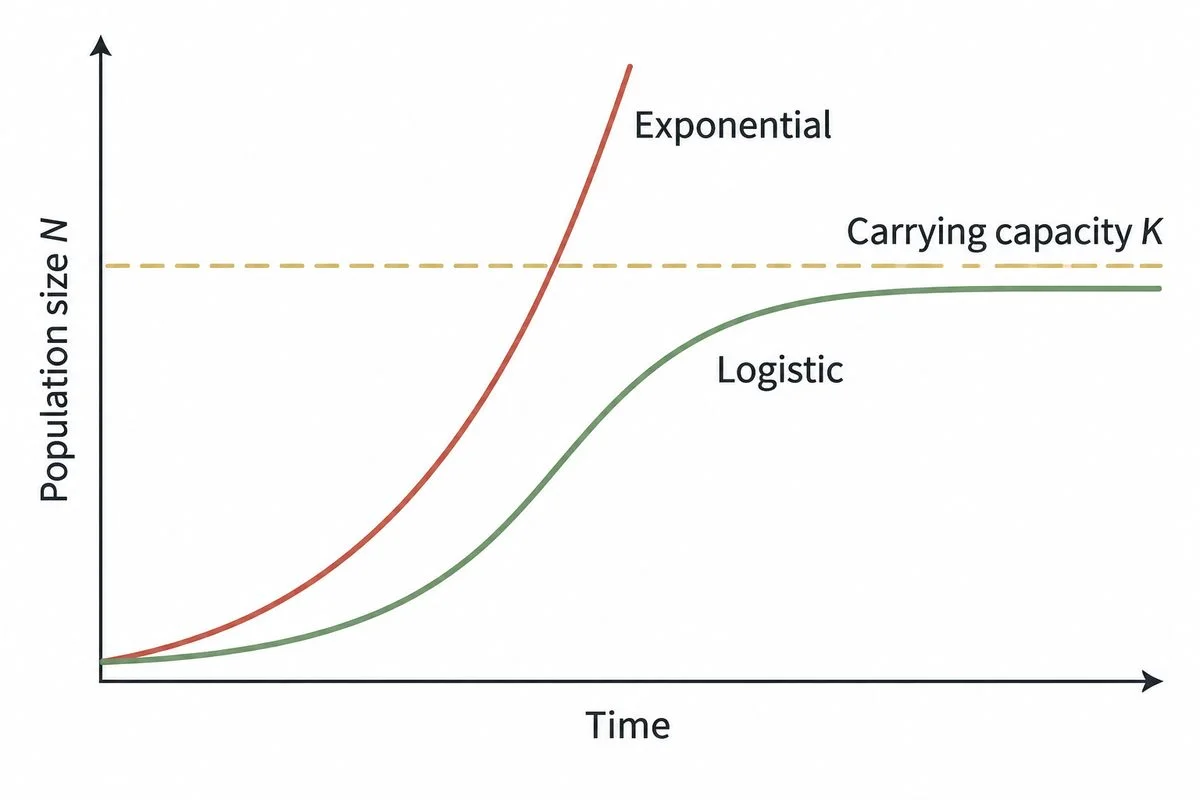
Exponential growth rises steeply while logistic growth approaches the carrying-capacity line.

4. Population Growth

Limited resources slow growth near carrying capacity.

Show
In the diagram, follow both curves towards the carrying-capacity line. N means population size, and K means carrying capacity.
Ask
Looking at these curves, how would population growth change as food becomes limiting?
Say
As population size increases, growth per individual falls with the factor 1−NK1-\frac{N}{K}. At carrying capacity, this becomes zero, giving zero net growth.
Used in
Wildlife recovery plans match animal numbers to available resources.
If your child says…“A habitat can always support the same number.”
Ask
If drought removes much of the food, can the habitat still support the same number?
What’s true
Carrying capacity can change when food, water or other limiting resources change.
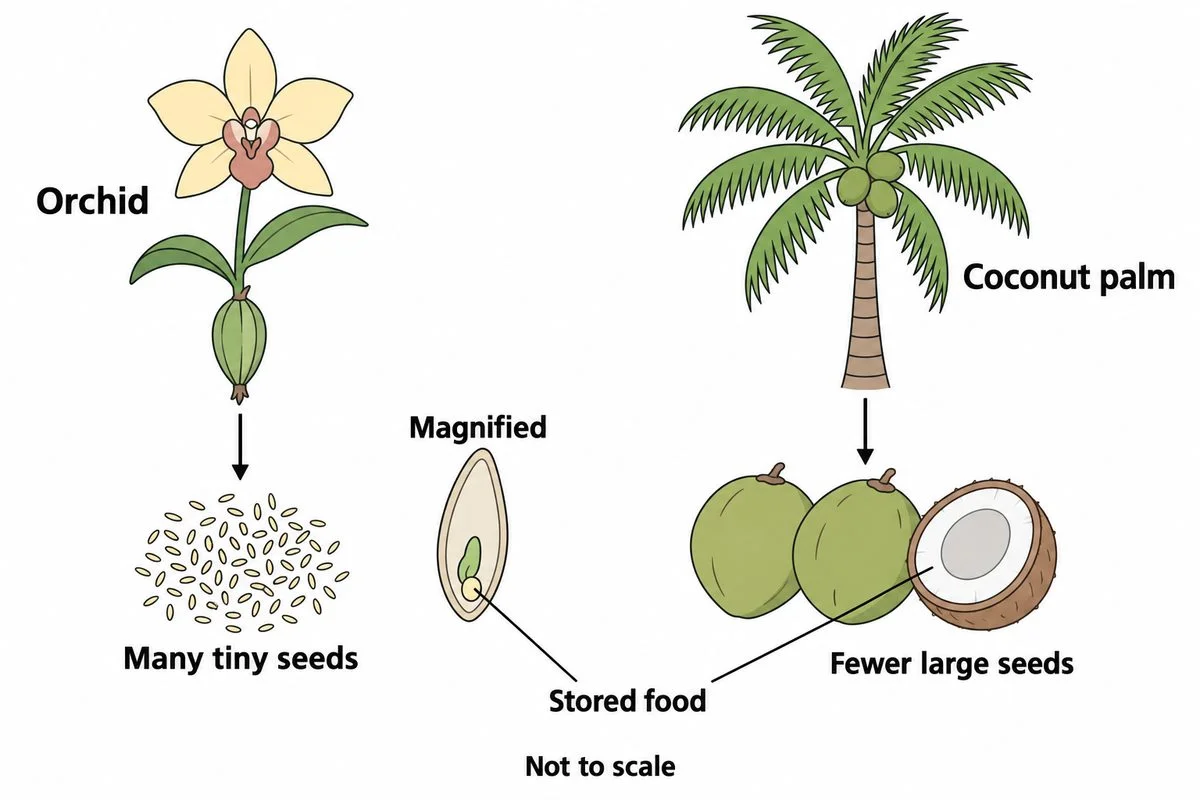
Orchid and coconut seeds contrast offspring number, size and stored food.

5. Life History Variation

Reproductive timing and investment affect how many offspring survive and reproduce.

Show
Look at the diagram's orchid seeds on the left and coconuts on the right. Compare seed size and the resources each seed receives.
Ask
With fixed resources, what would happen to seed numbers if each seed received more?
Say
Each coconut seed receives more resources than an orchid seed. With limited resources, investing more per seed usually means producing fewer seeds.
Used in
Plant propagation allows for seed losses so enough seedlings survive for planting.
If your child says…“Making the most tiny offspring is always best.”
Ask
Would extra offspring help if none survived to reproduce?
What’s true
Offspring number alone does not determine how many survive and reproduce.

Interactions between organisms

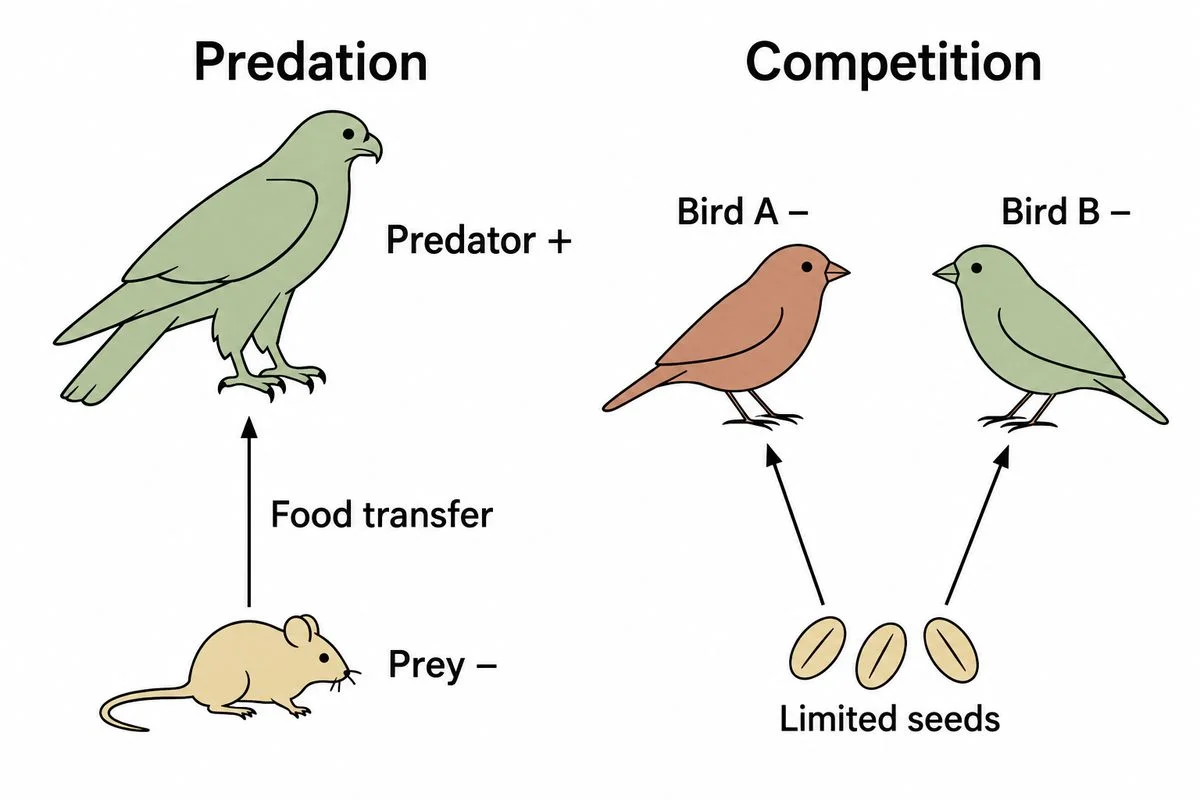
Predator and prey beside two birds sharing a limited seed supply.

6. Predation and Competition

Predation consumes organisms; competition limits access to shared resources.

Show
In the diagram, follow food from the prey to the predator on the left. Then follow the limited seeds to both birds on the right.
Ask
If one bird eats more of these limited seeds, what happens to the other's food supply?
Say
The predator gains food by consuming its prey. Each bird's feeding leaves fewer seeds for the other, so both face competition.
Used in
Plant-eating insects can control invasive weeds, allowing farmland to return to production.
If your child says…“Only different species compete.”
Ask
Does sharing a species make enough food appear for both birds?
What’s true
Members of one species can compete for the same limited food.
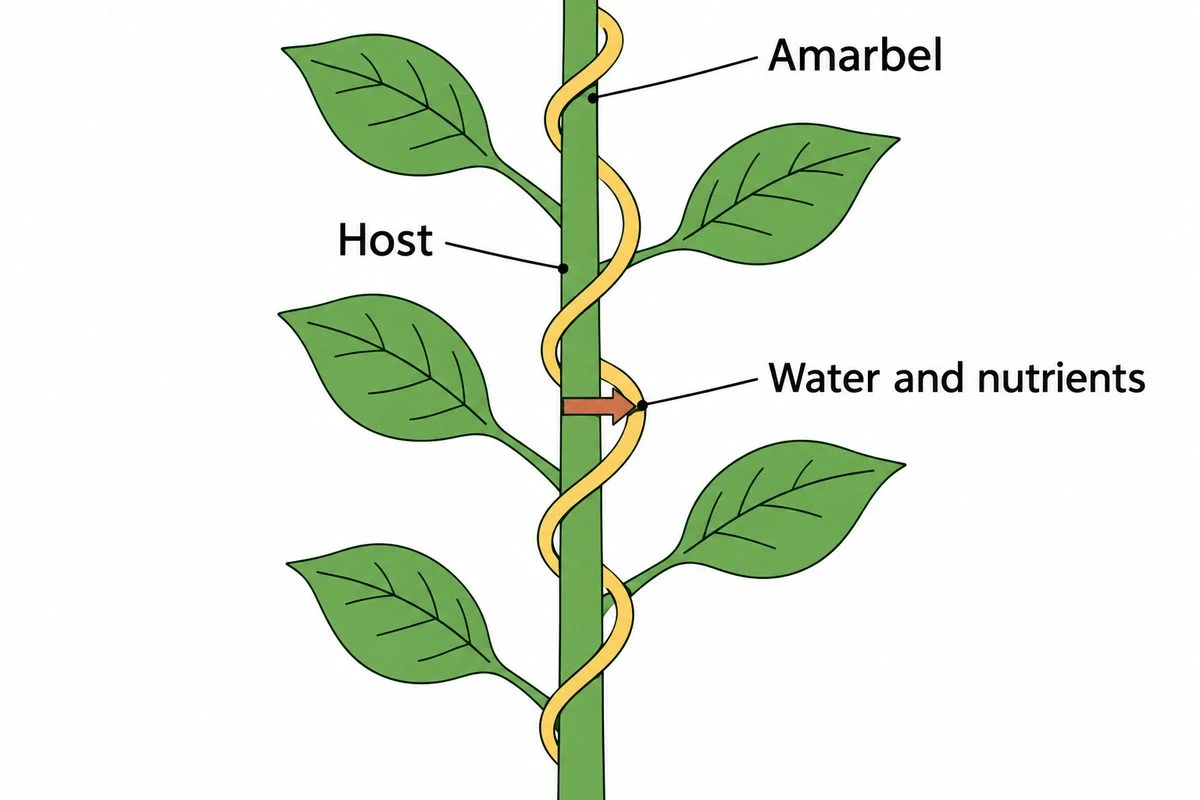
Leafless amarbel winds around a leafy host, with an arrow showing resource transfer.

7. Parasitism

A parasite gains resources while its host bears a cost.

Show
Find the leafy host and leafless amarbel in the diagram. Follow the water-and-nutrients arrow from host to amarbel.
Ask
Which plant will gain resources through the attachment?
Say
Amarbel draws resources from the living host through specialised attachments. The host loses resources.
Used in
Removing parasitic weeds protects crop resources and helps reduce harvest losses.
If your child says…“A parasite must kill its host straight away.”
Ask
Can the parasite keep feeding while its host remains alive?
What’s true
A living host can keep supplying a parasite with resources.
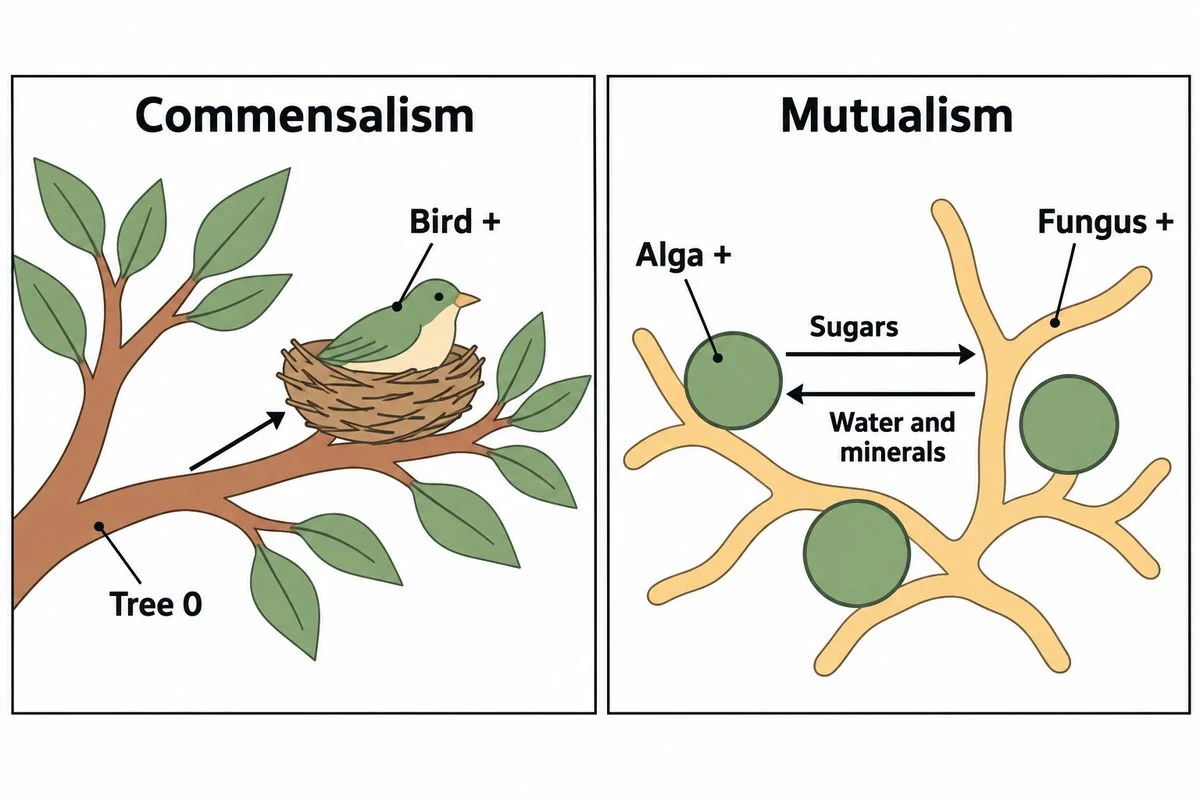
A nesting bird benefits alone; lichen partners exchange resources and both benefit.

8. Commensalism and Mutualism

Mutualism benefits both partners. Commensalism benefits one without affecting the other.

Show
Find the nest in the diagram. Follow the arrows between the lichen partners.
Ask
If exchange stopped, what would each lichen partner lose?
Say
The bird gains shelter without affecting the tree, showing commensalism. Algae supply sugars; fungi supply water and minerals. Both benefit, showing mutualism.
Used in
Pollinating insects support fruit production by carrying pollen between flowers.
If your child says…“The tree benefits just as much as the nesting bird.”
Ask
What does the tree gain merely from supporting this nest?
What’s true
In this example, the bird gains shelter while the tree remains unaffected.

A real problem

Cactus-feeding caterpillars helped reclaim Australian farmland.

Invasive prickly pear threatened Australian grazing and agricultural land.

Australia began releasing Cactoblastis moths in 1926 to control it.

Their caterpillars ate the cactus interiors, leaving hollow shells.

The campaign brought previously infested land back into production.

National Museum of AustraliaUniversity of California, RiversideWeeds Australia

Prickly-pear cactus with damaged pads beside pasture.

Concept Lab · Common misconception

The tempting mistake in Organisms and Populations

Open standalone misconception page →

Does a population grow exponentially forever?

Wrong

A population that doubles once should keep doubling indefinitely.

Why it feels right. I extend the initial pattern without accounting for available resources.

Right

Growth can slow as resources become limiting.

Worked example

This schematic population curve rises rapidly, then levels off as nutrients become limiting.
  1. A small population in a closed culture grows rapidly at first.
  2. As nutrients are used up, the number added per hour falls and the growth curve levels off.

Ask your child eight quick questions.

One per step. The answer and the reason are given.

  1. A fish cools as its water cools. Which response does this show?

    Conformity. Its internal temperature changes with its surroundings.

  2. When does a desert cactus usually take in carbon dioxide?

    At night. Opening stomata during cooler hours reduces water loss.

  3. Grass covers half the sampled ground. What is its percentage cover?

    50%. Half the sampled area is covered, so its percentage cover is 50%.

  4. Drought reduces the grass available to deer. What happens to the habitat's carrying capacity?

    It decreases. The support limit depends on available resources.

  5. With fixed resources, what happens to offspring number when investment per offspring increases?

    It decreases. Each offspring uses more of the limited resources.

  6. What interaction occurs when one bird excludes another of its species from food?

    Competition. They need the same resource, regardless of belonging to the same species.

  7. What does a host lose to a feeding parasite even while remaining alive?

    Resources. Parasitism costs the host resources without requiring immediate death.

  8. A bird nests in a tree without affecting it. Which partner benefits?

    The bird. The bird gains shelter, while the tree gains nothing and loses nothing.

15 more questions with answers