Skip to content

Teach Reproductive Health in eight steps.

For each idea: show it, ask before you tell, then say one line.

Gather paper and a pencil.

Common misconceptions & worked visual for this chapter · 15 practice questions with answers

How to teach it

Health and family planning

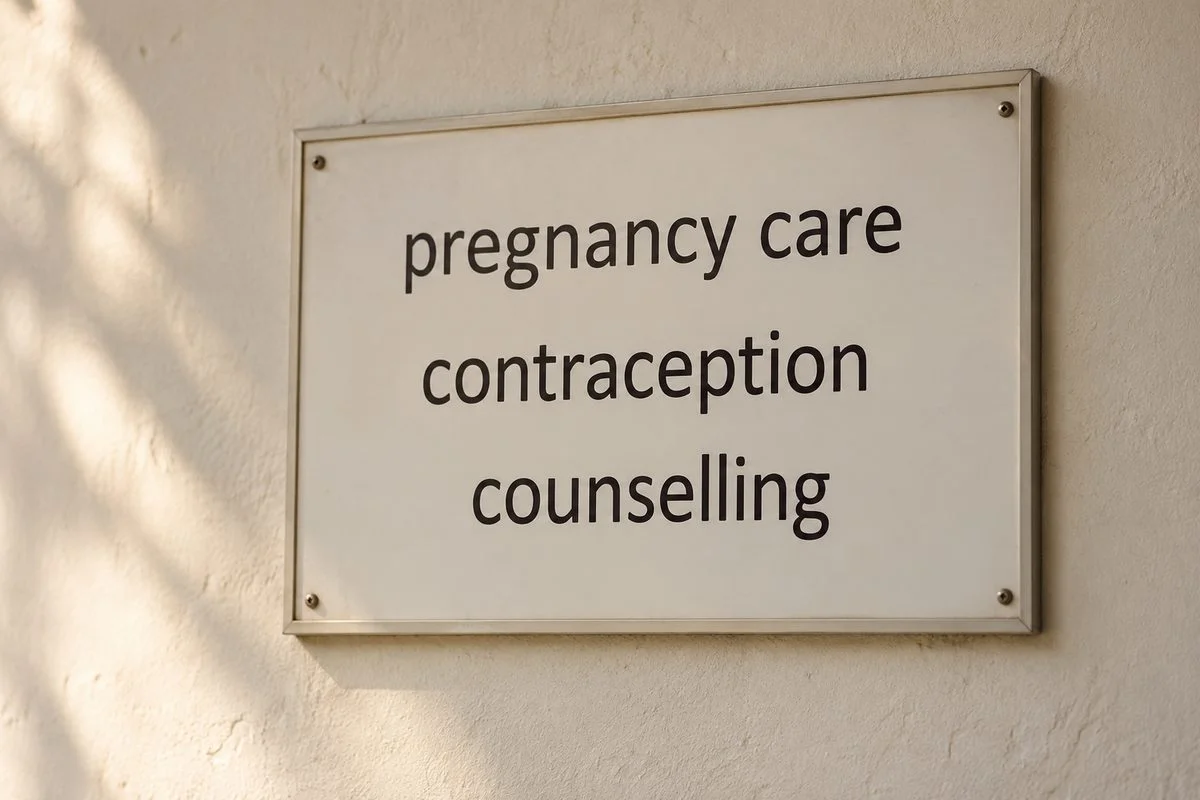
A health-centre service board listing pregnancy care, family planning and counselling.

1. Reproductive Health—Problems and Strategies

Physical, emotional, behavioural and social wellbeing in matters of reproduction.

Show
Look at the service-board photograph on this card. Find pregnancy care, family planning and counselling.
Ask
Which services could help someone who has no illness?
Say
Family planning and counselling could help.
Used in
Accurate sex education helps people recognise risks and make informed reproductive choices.
If your child says…“No disease means complete reproductive health.”
Ask
Why would a healthy person seek counselling?
What’s true
Someone without disease may still need emotional support, information or reproductive care.
Pnext=Pnow+B−DP_{\mathrm{next}}=P_{\mathrm{now}}+B-D

Pnext=10+2−1P_{\mathrm{next}}=10+2-1

Pnext=12−1P_{\mathrm{next}}=12-1

2. Population Explosion and Birth Control

Births exceeding deaths increase population when nobody moves in or out.

Show
Start with 10 people. Two are born and one dies during the year. Nobody moves in or out. P means population, B means births, and D means deaths. 'Now' means the year's start; 'next' means its end. Write these lines.
Ask
How many people will there be at the end?
Say
Births exceed deaths, so the population grows to 11.
Used in
Education, later parenthood and voluntary contraception help families plan births and slow population growth.
If your child says…“Fewer deaths automatically stop population growth.”
Ask
Would subtracting fewer deaths leave more people or fewer?
What’s true
With births unchanged, fewer deaths increase population growth.

Preventing pregnancy

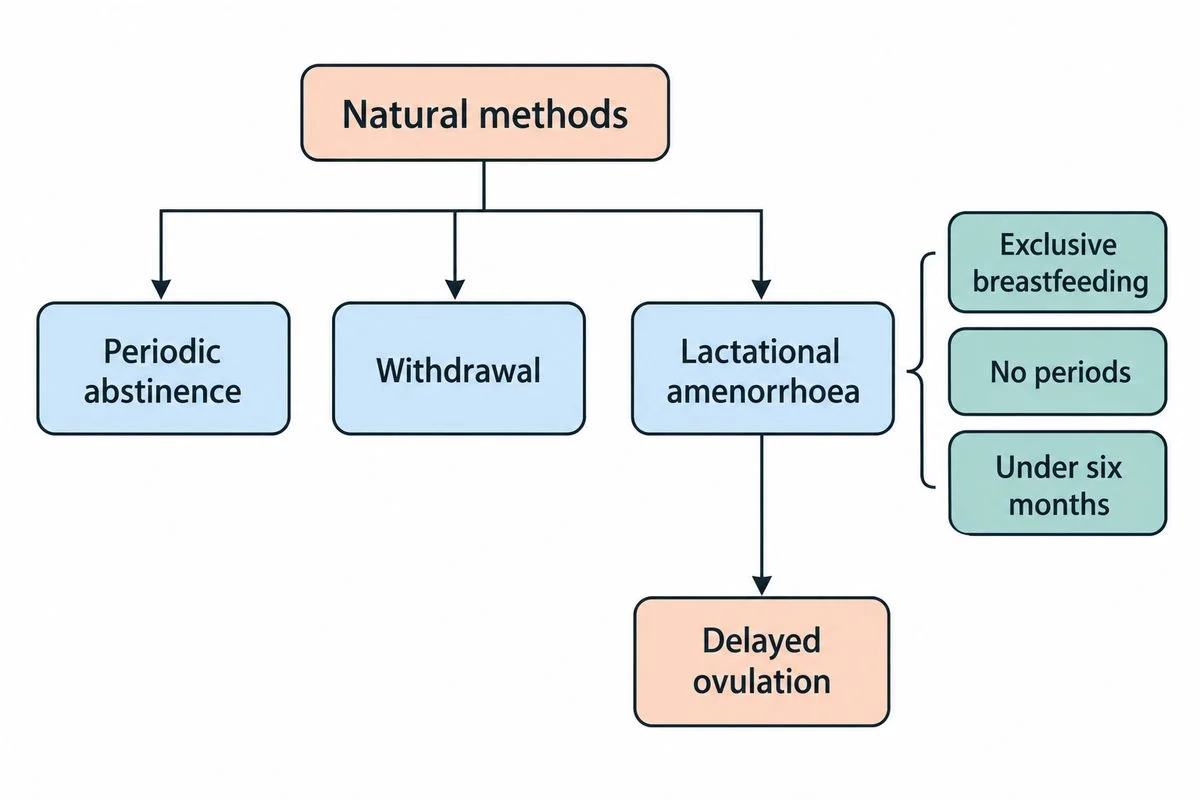
Three natural methods, with delayed ovulation and three simultaneous breastfeeding conditions.

3. Natural Methods

Methods relying on timing, withdrawal or specific breastfeeding conditions.

Show
Look at the diagram's three methods. Follow lactational amenorrhoea to delayed ovulation and the three conditions that must hold together.
Ask
If periods return while breastfeeding continues, would this method still provide reliable contraception?
Say
No. Avoiding sex near estimated ovulation or withdrawing before ejaculation can reduce pregnancy risk. Frequent, exclusive breastfeeding can delay ovulation under all three conditions shown.
Used in
Periodic abstinence avoids intercourse near expected ovulation to reduce pregnancy risk.
If your child says…“Breastfeeding prevents pregnancy even after periods return.”
Ask
Which required condition is missing once periods return?
What’s true
Breastfeeding provides contraceptive protection only temporarily, with frequent exclusive feeding and no return of periods.
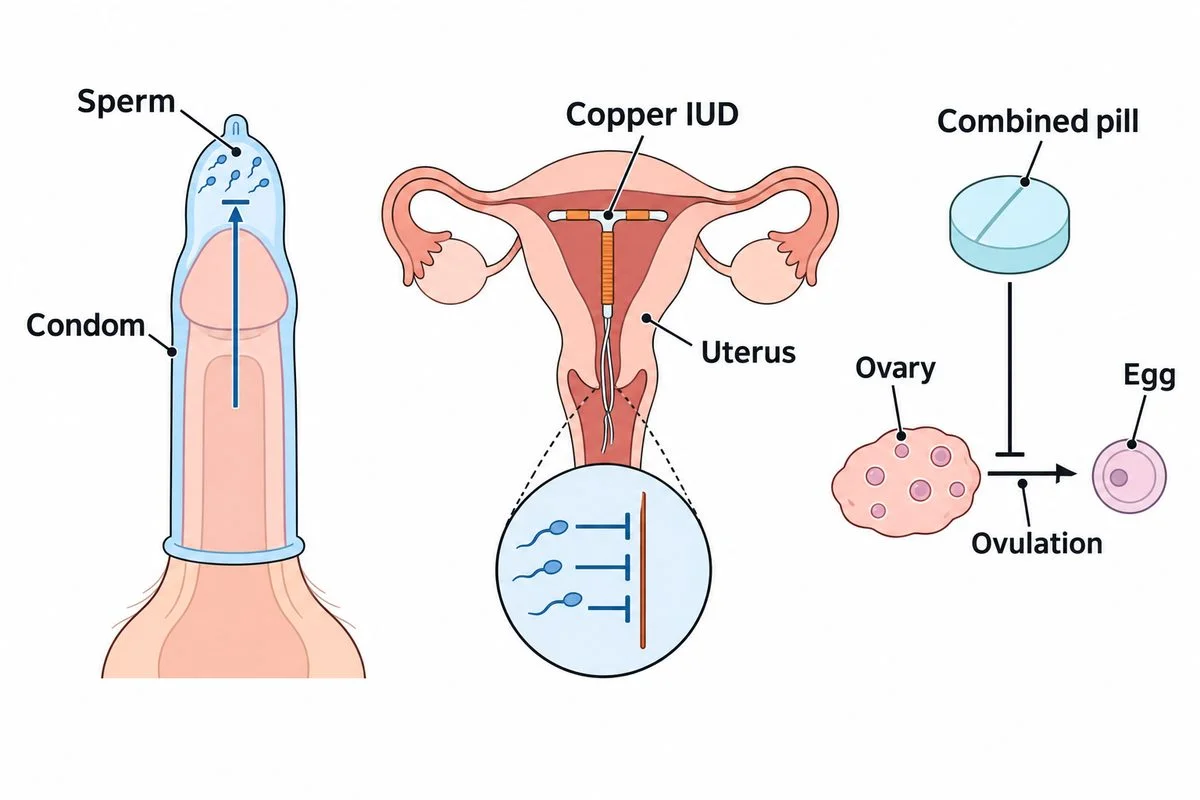
Condom, copper IUD and combined pill diagrams show three different contraceptive actions.

4. Barrier Methods, IUDs and Oral Contraceptives

Methods that restrict sperm passage, impair sperm or prevent ovulation.

Show
Look at the diagram's condom, copper IUD and combined pill examples. Trace sperm movement, then find the ovary and its egg-release arrow.
Ask
How could these three methods prevent pregnancy at different points?
Say
The condom reduces sperm entry. Copper IUDs reduce sperm movement and fertilising ability. Combined pills prevent ovulation.
Used in
Scheduled pills prevent pregnancy. Emergency pills provide prompt backup after unprotected intercourse.
If your child says…“Contraceptive pills protect against infections too.”
Ask
Does preventing egg release stop contact with infected fluids?
What’s true
Pills provide no infection barrier; condoms reduce contact with infected fluids and lower STI risk.
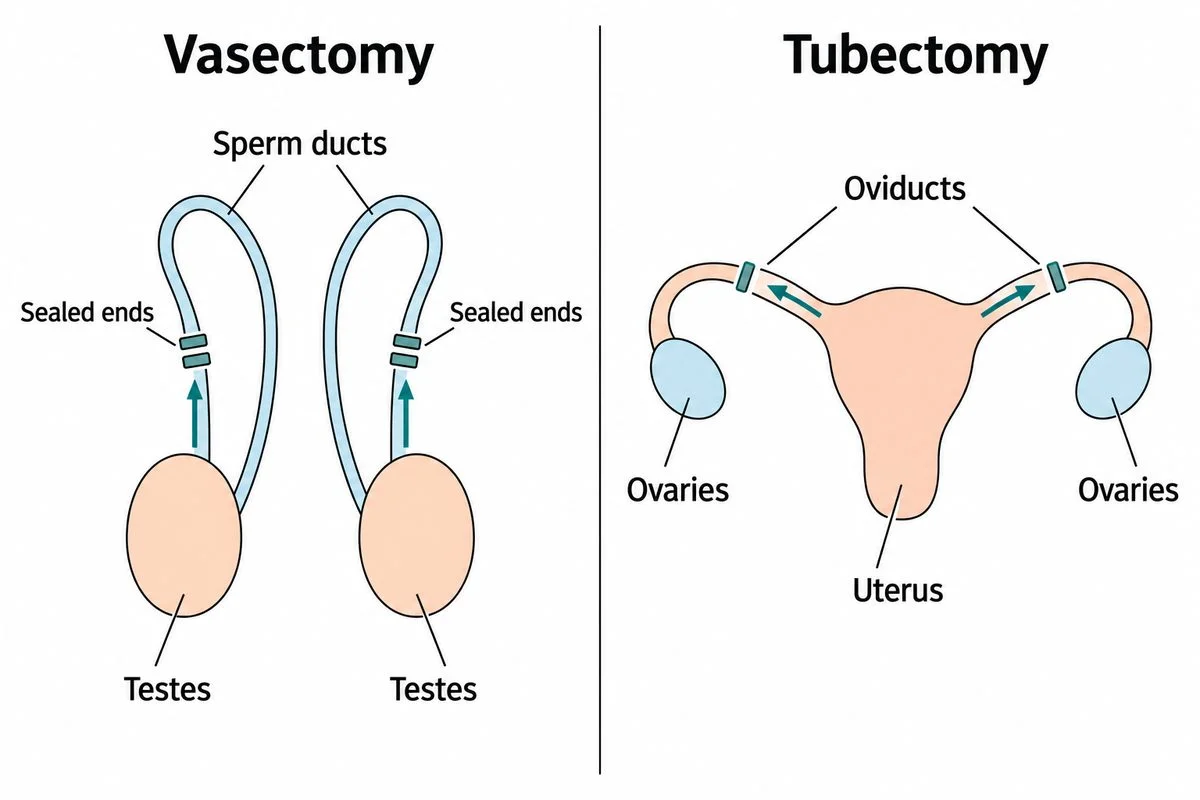
Paired surgical diagrams show interrupted ducts with testes, ovaries and uterus remaining.

5. Surgical Methods

Permanent contraception by interrupting sperm ducts or oviducts.

Show
Look at the paired diagrams. Follow sperm arrows to the sealed gaps in each set of ducts. Find the testes, ovaries and uterus that remain.
Ask
How could sealing these ducts prevent fertilisation without removing the organs?
Say
Sealed ducts prevent sperm and egg meeting. Vasectomy interrupts sperm ducts, while tubectomy interrupts oviducts. The testes, ovaries and uterus remain.
Used in
Surgical contraception provides lasting pregnancy prevention for people choosing no further pregnancies.
If your child says…“Tubectomy removes the uterus.”
Ask
Where is the uterus in the tubectomy diagram?
What’s true
The tubes are interrupted, while the uterus remains; these operations provide no STI protection.

Reproductive care

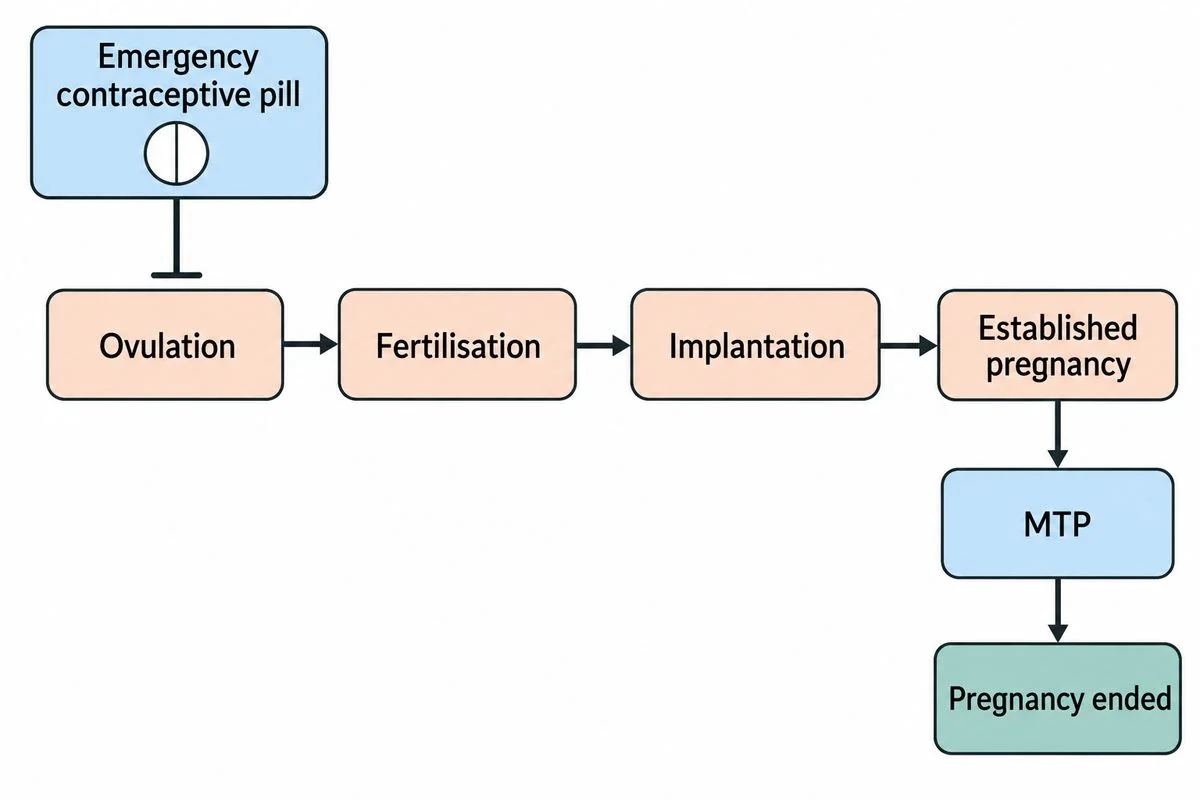
Pregnancy sequence distinguishes an emergency pill delaying ovulation from MTP after pregnancy begins.

6. Medical Termination of Pregnancy

Ending an existing pregnancy under medical care and legal safeguards.

Show
Look at the diagram from ovulation to established pregnancy. Find the emergency pill delaying ovulation and MTP after pregnancy begins. Say: 'Contraception failed, and pregnancy is confirmed.'
Ask
Would preventing ovulation now end the confirmed pregnancy?
Say
Delaying ovulation cannot end a pregnancy that already exists. MTP ends an existing pregnancy.
Used in
Medical assessment identifies appropriate care when continuing pregnancy poses serious health risks.
If your child says…“MTP prevents pregnancy from starting.”
Ask
In this case, has pregnancy already begun?
What’s true
MTP concerns an established pregnancy and must follow legal safeguards, which exclude sex selection.
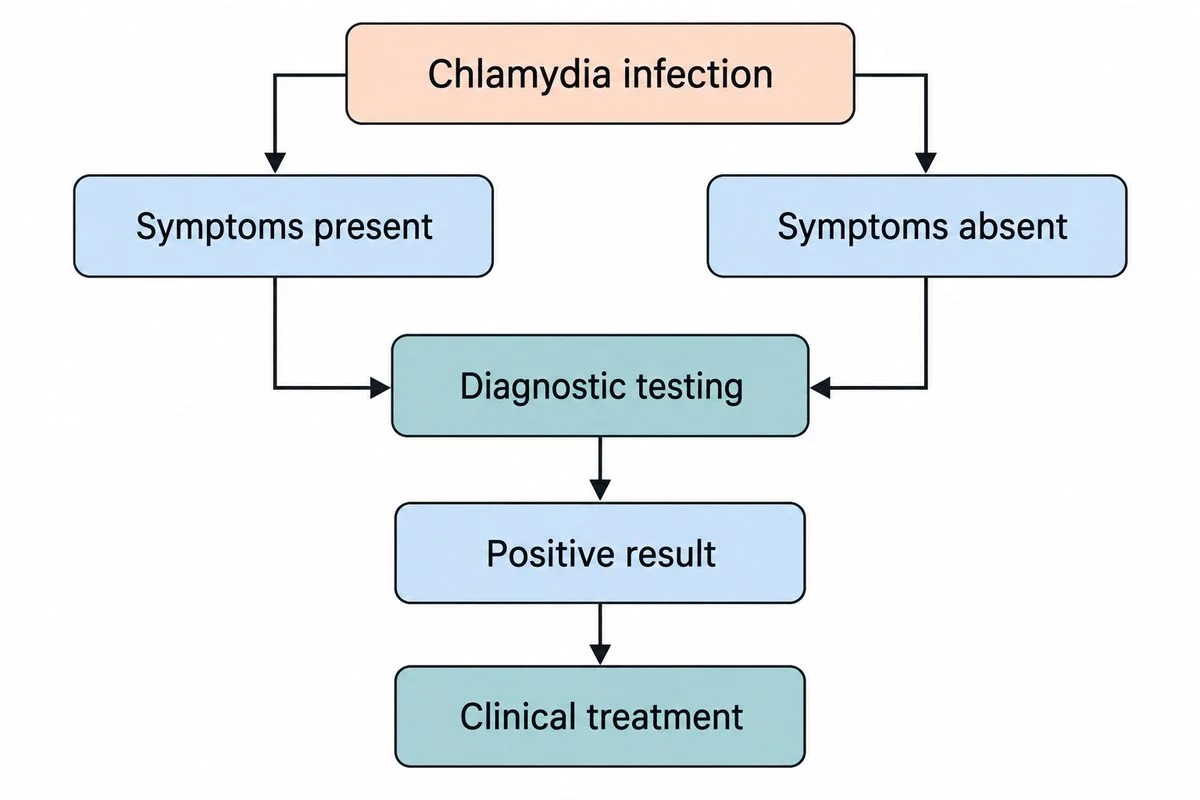
Chlamydia pathways with and without symptoms converge on testing and clinical treatment.

7. Sexually Transmitted Infections

Infections spread through sexual contact, sometimes without noticeable symptoms.

Show
Look at the diagram's two symptom paths. Follow the symptom-free path towards diagnostic testing.
Ask
What could testing reveal when someone feels healthy?
Say
Testing can reveal chlamydia even when there are no symptoms.
Used in
STI testing and prompt treatment reduce harm, including damage to fertility.
If your child says…“No symptoms means no infection.”
Ask
Which gives evidence here: feeling well or the positive test?
What’s true
An infection can spread even when it causes no noticeable symptoms.
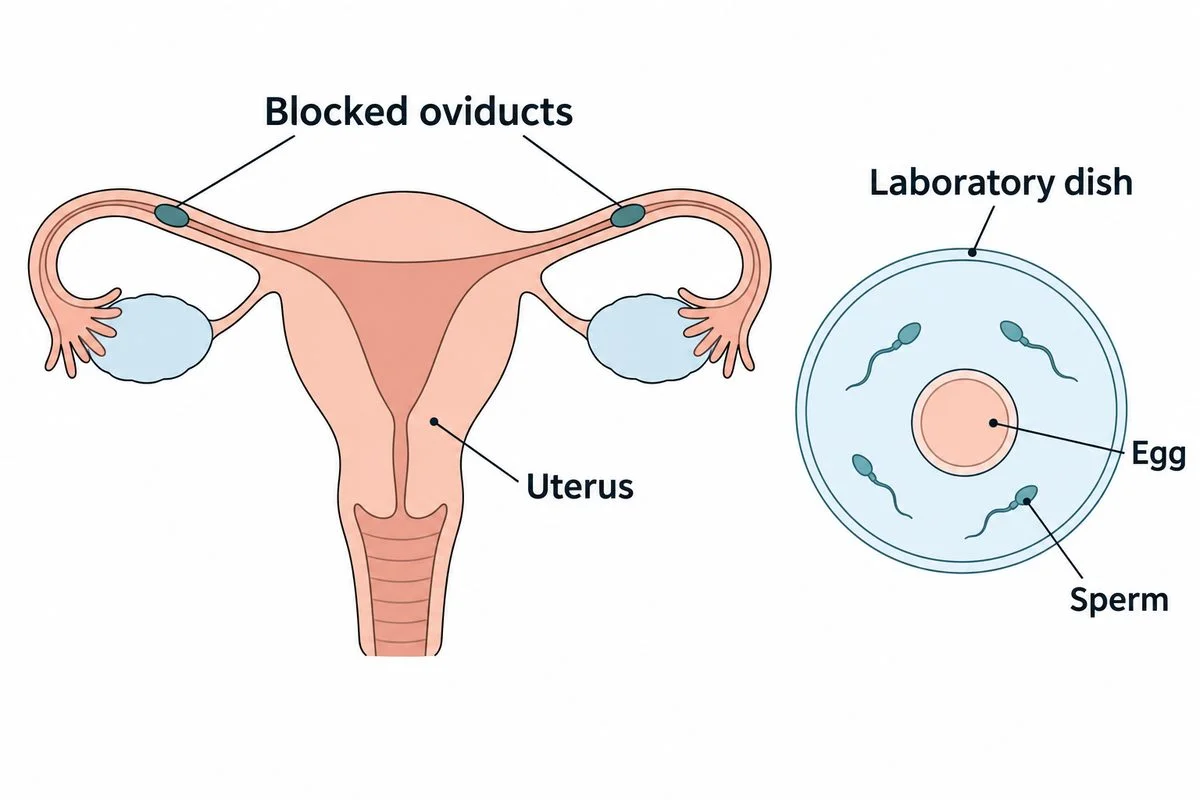
Diagram of blocked oviducts beside a laboratory dish containing egg and sperm.

8. Infertility and Assisted Reproductive Technologies

Assessment and treatments that help when conception is difficult.

Show
Say: 'Assessment found blocked oviducts.' Find the blocked oviducts and uterus in the diagram. Then find the laboratory egg and sperm.
Ask
Where could an embryo go to bypass these blocked tubes?
Say
IVF joins egg and sperm in a laboratory before uterine transfer.
Used in
IVF with uterine transfer helps bypass blocked oviducts during fertility treatment.
If your child says…“Infertility means a couple can never have children.”
Ask
Does this blockage prevent placing an embryo directly into the uterus?
What’s true
Some causes are treatable, and assisted reproduction can help some couples conceive.

A real problem

An evaluation suggests a prevention programme helped reduce HIV prevalence in some states.

Avahan began in India in 2003 to prevent HIV.

Its services combined education, condom promotion and treatment of sexually transmitted infections.

An evaluation suggested it helped reduce population HIV prevalence in some participating states.

PLOS ONEGates FoundationThe Lancet via PubMed

Unbranded condom packets beside folded leaflets on a clinic desk.

Concept Lab · Common misconception

The tempting mistake in Reproductive Health

Open standalone misconception page →

Do all contraceptive methods reduce STI transmission?

Wrong

Any method that prevents pregnancy also reduces the chance of a sexually transmitted infection.

Why it feels right. I am applying the pregnancy protection to a second outcome.

Right

Pregnancy prevention and STI risk reduction depend on different mechanisms.

Worked example

Contraceptive pill
Hormonal action→Helps prevent pregnancy
Condom
Physical barrier→Helps prevent pregnancy and reduces many STI exposures
The pill and a condom act through different mechanisms. A condom can reduce exposure to many STIs when used correctly.
  1. A contraceptive pill helps prevent pregnancy through hormonal action.
  2. A condom provides a physical barrier that reduces exposure to many infections when used correctly.

Ask your child eight quick questions.

One per step. The answer and the reason are given.

  1. Can someone without reproductive disease still need counselling about reproductive fears?

    Yes. Reproductive health includes emotional wellbeing, even when there is no disease.

  2. With births unchanged, how would fewer deaths change this population’s growth?

    Growth would increase. More people survive while births keep adding people.

  3. Which returning event means breastfeeding alone cannot be relied on for contraception?

    Menstruation. The breastfeeding method requires periods to remain absent.

  4. Which contraceptive also reduces contact with infected fluids during intercourse?

    A condom. Its barrier lowers STI risk; contraceptive pills provide no such barrier.

  5. What happens to the uterus during tubectomy?

    It stays in place. The operation interrupts the oviducts rather than removing the uterus.

  6. Could an emergency pill end a pregnancy confirmed after contraceptive failure?

    No. Delaying ovulation cannot end an existing pregnancy.

  7. What reveals infection on the symptom-free path?

    A positive chlamydia test. Symptoms are not necessary for an STI to be present.

  8. Where does fertilisation occur in IVF?

    In a laboratory. An embryo can then enter the uterus without travelling through the blocked oviducts.

15 more questions with answers