Skip to content

Teach Microbes in Human Welfare in seven steps.

For each idea: show it, ask before you tell, then say one line.

Gather milk, fresh curd, a spoon, a clean bowl and a cover.

An adult boils the milk and cools it to lukewarm.

Common misconceptions & worked visual for this chapter · 15 practice questions with answers

How to teach it

Food and medicines

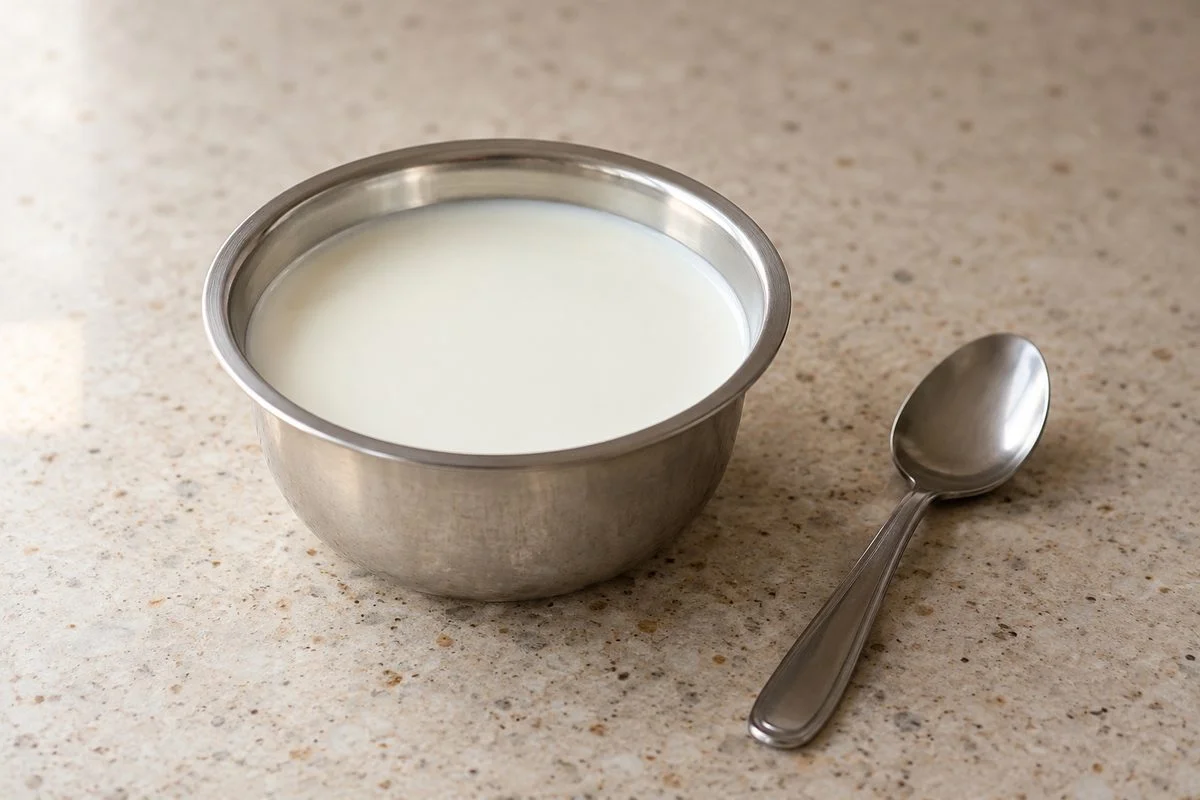
Bowl of still-liquid milk with a spoon beside it.

1. Microbes in Household Products

Microbes change food by breaking down its sugars.

Show
Set up now with boiled milk an adult has cooled to lukewarm. Stir in fresh curd and cover. After predicting, leave undisturbed for several hours. Return to check whether it has set, then tilt gently.
Ask
Will this milk stay runny as the bacteria act?
Say
Bacteria turn milk sugar into lactic acid. This acid makes milk proteins clump, setting the curd.
Used in
Yeast makes bread dough rise, giving bread a lighter texture.
If your child says…“The bacteria do nothing; milk sets by itself.”
Ask
What makes the milk proteins clump if the bacteria do nothing?
What’s true
Curd formation depends on bacteria changing milk sugar into acid.
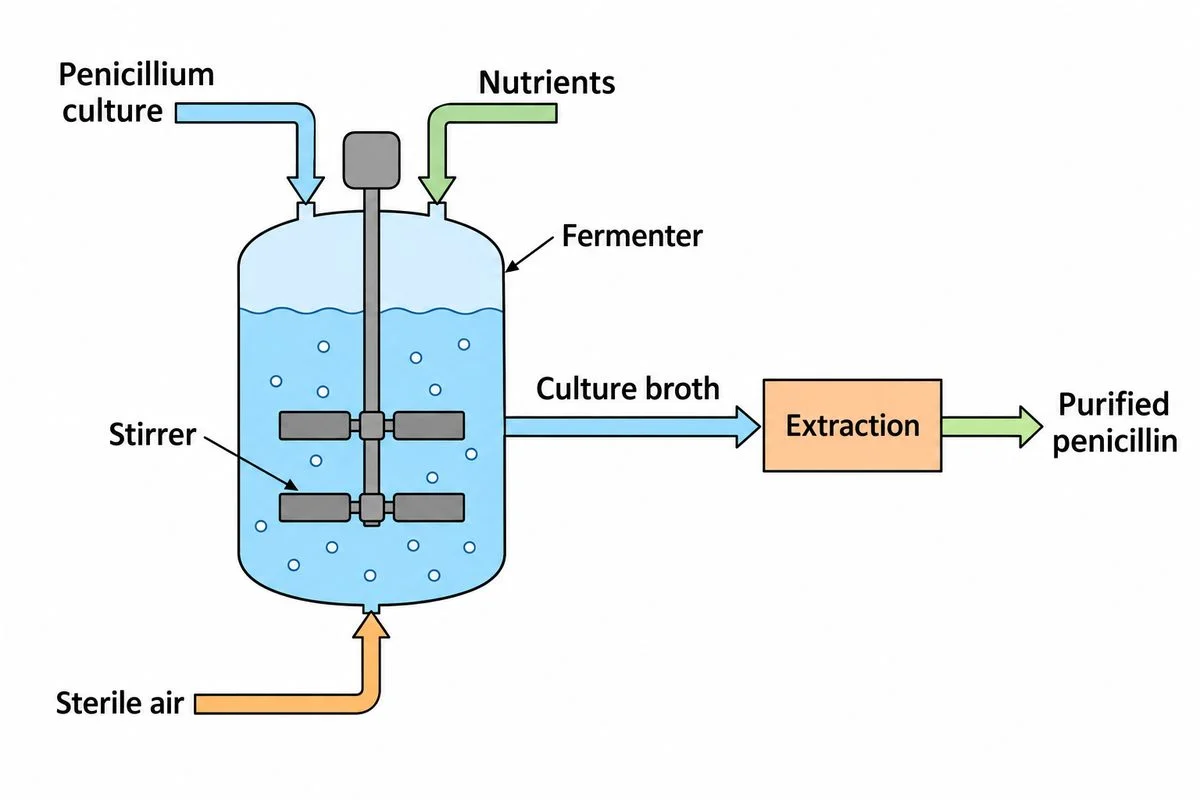
Fermenter receiving culture, nutrients and air, with broth flowing through extraction to purified penicillin.

2. Microbes in Industrial Products

Factories grow selected microbes under suitable conditions to obtain products.

Show
Look at the diagram's culture and nutrients entering the fermenter. Find the air inlet and stirrer. Follow the culture broth through extraction to purified penicillin.
Ask
Could this tank reliably produce safe penicillin if unwanted microbes entered?
Say
No. Large fermenters grow selected Penicillium with nutrients and sterile air. Factories keep unwanted microbes out. They then extract and purify penicillin from the broth.
Used in
Microbial enzymes help detergents break down stains.
If your child says…“Lots of microbial growth means the product is safe.”
Ask
Could unwanted microbes also grow strongly?
What’s true
Strong growth cannot guarantee safety, and production needs suitable food, temperature and acidity.
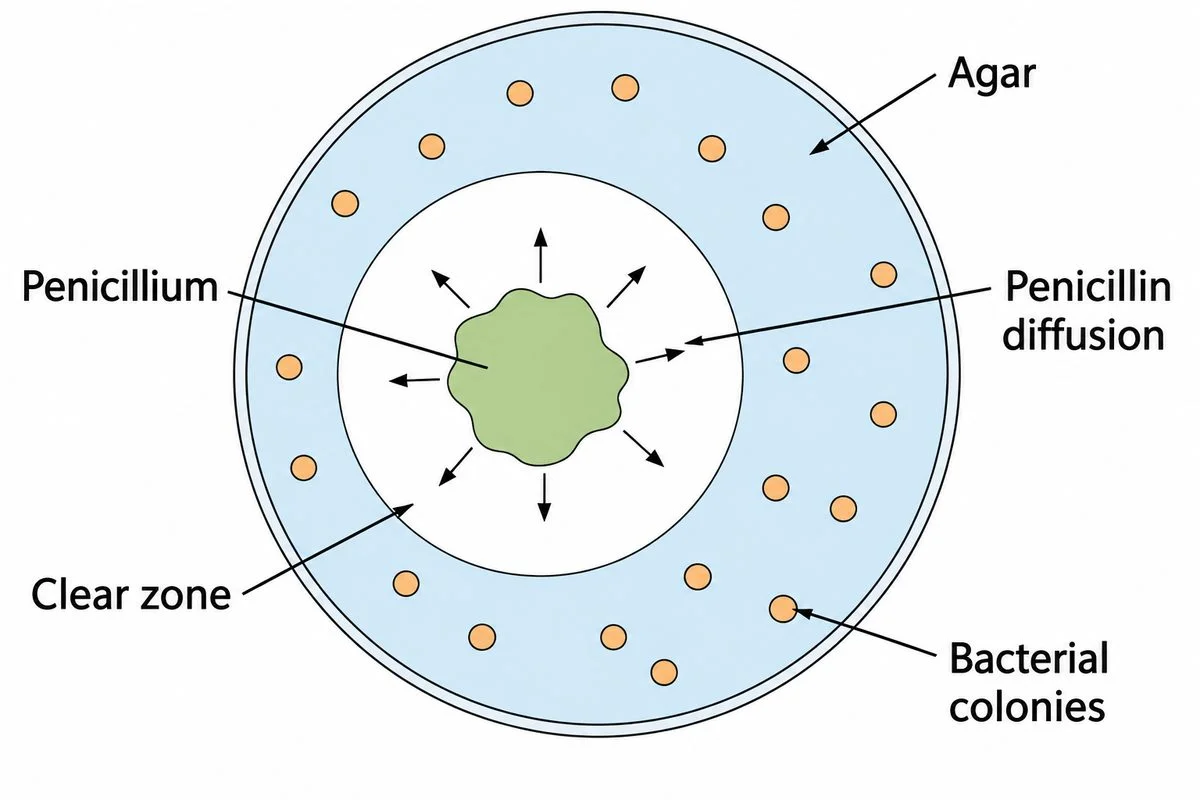
Agar plate showing mould, spreading penicillin, a clear zone and distant bacterial colonies.

3. Antibiotics

Medicines that act against susceptible bacteria, but cannot treat viruses.

Show
Look at the diagram of the agar plate. Find the mould and nearby clear zone. Follow the outward arrows towards bacterial colonies farther away.
Ask
Would susceptible bacteria grow equally well close to this mould and farther away?
Say
The mould releases penicillin, which stops susceptible bacteria growing nearby.
Used in
Antibiotics treat bacterial infections when the bacteria are susceptible.
If your child says…“Antibiotics kill cold viruses too.”
Ask
What could this medicine target if the virus lacks those bacterial features?
What’s true
Viruses lack the bacterial structures and processes these medicines target.

Waste treatment and fuel

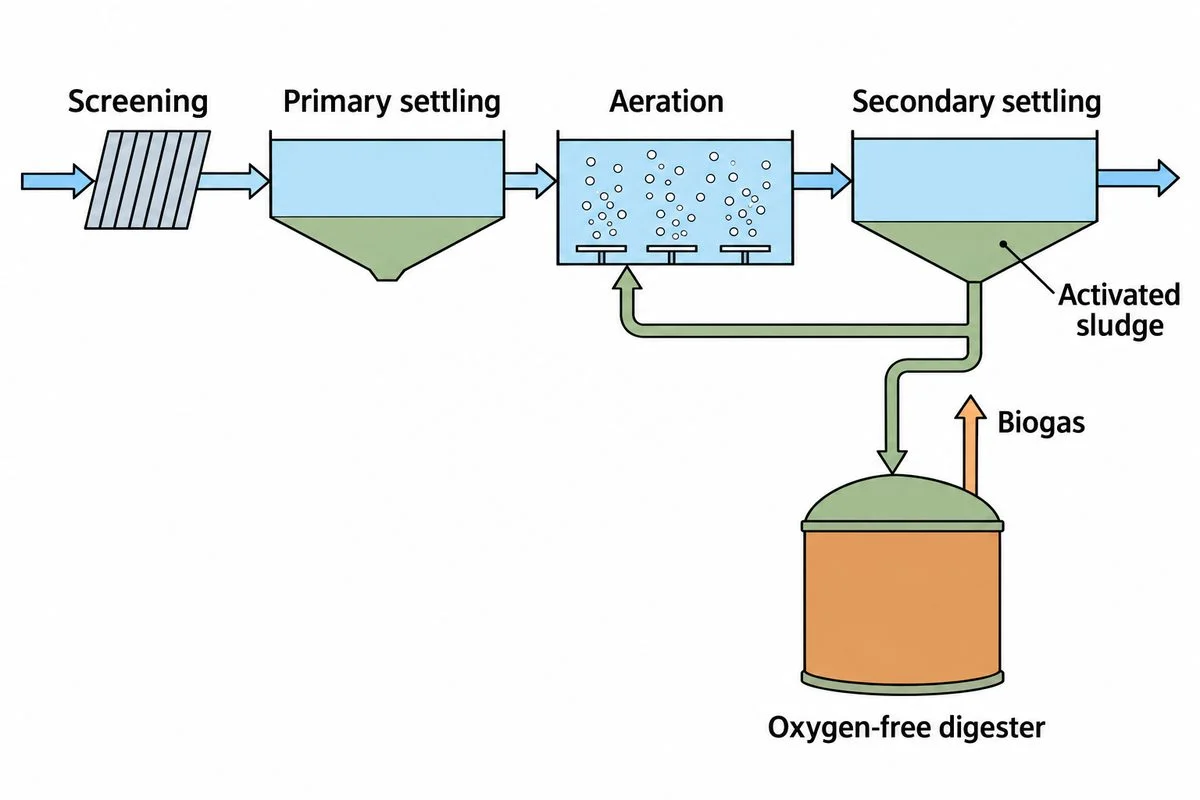
Sewage treatment stages with sludge returning to aeration or entering an oxygen-free digester.

4. Microbes in Sewage Treatment and Production of Biogas

Physical removal precedes microbial cleaning; sludge digestion can yield fuel.

Show
Find screening, primary settling, aeration and secondary settling in the diagram. Trace sludge returning to aeration and entering the digester.
Ask
Would adding air help the covered digester make methane?
Say
No. Screening and settling remove particles. Aerobic microbes reduce waste. Without oxygen, methanogens produce biogas containing mainly methane.
Used in
Sludge digestion recovers fuel from sewage waste.
If your child says…“Methane-making microbes need plenty of air.”
Ask
Why keep the digester covered if methane production needs oxygen excluded?
What’s true
Settled microbial clumps form activated sludge. Some sludge returns to supply microbes to the aeration tank. The rest is digested without oxygen.

Crop protection and nutrition

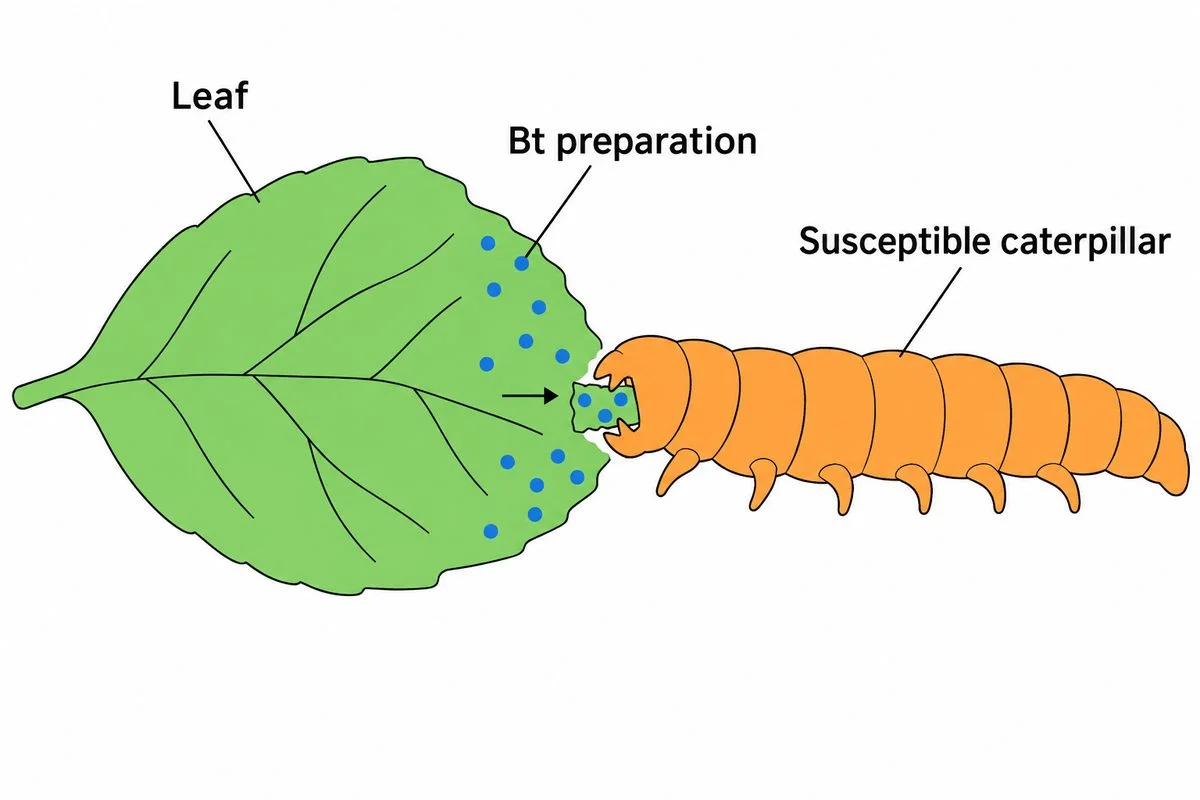
Caterpillar eating a leaf carrying dots of Bt preparation.

5. Microbes as Biocontrol Agents

Useful microbes or their products reduce harmful pests.

Show
Find the caterpillar eating the leaf in the diagram. Find the dots representing Bacillus thuringiensis (Bt) preparation.
Ask
What happens if a susceptible caterpillar eats this treated leaf?
Say
That mouthful carries bacterial proteins into the gut, where they harm susceptible caterpillars.
Used in
Microbial pest treatments reduce reliance on broad chemical spraying.
If your child says…“Pest control works only if everything dies.”
Ask
Would surviving ladybirds mean the caterpillar treatment failed?
What’s true
Successful biocontrol reduces harmful pests while conserving other organisms.
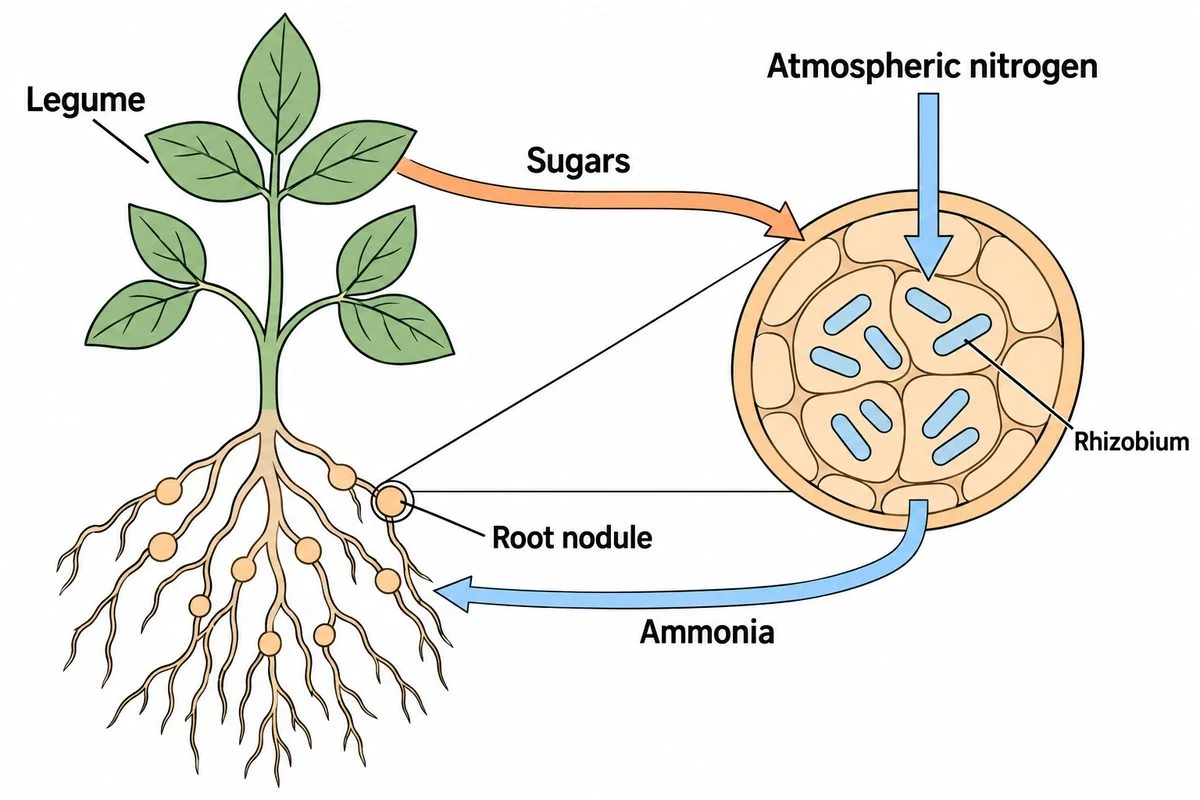
Legume root nodule showing bacterial nitrogen conversion and sugars supplied by the plant.

6. Biofertilisers

Beneficial organisms help plants obtain nutrients.

Show
Look at the diagram's legume roots and enlarged nodule containing Rhizobium. Follow atmospheric nitrogen through the bacteria to ammonia reaching the plant. Trace sugars travelling back to the bacteria.
Ask
Could this plant use atmospheric nitrogen directly if its nodule bacteria stopped working?
Say
Plants cannot use nitrogen gas directly. Rhizobium in compatible legume nodules converts it into ammonia that plants can use. The plant supplies sugars to the bacteria.
Used in
Biofertilisers improve nutrient availability, supporting crop growth.
If your child says…“Rhizobium helps every plant equally.”
Ask
Where would these bacteria get suitable conditions if no compatible nodules formed?
What’s true
Rhizobium needs a compatible legume partnership supplying food and suitable conditions for nitrogen fixation.
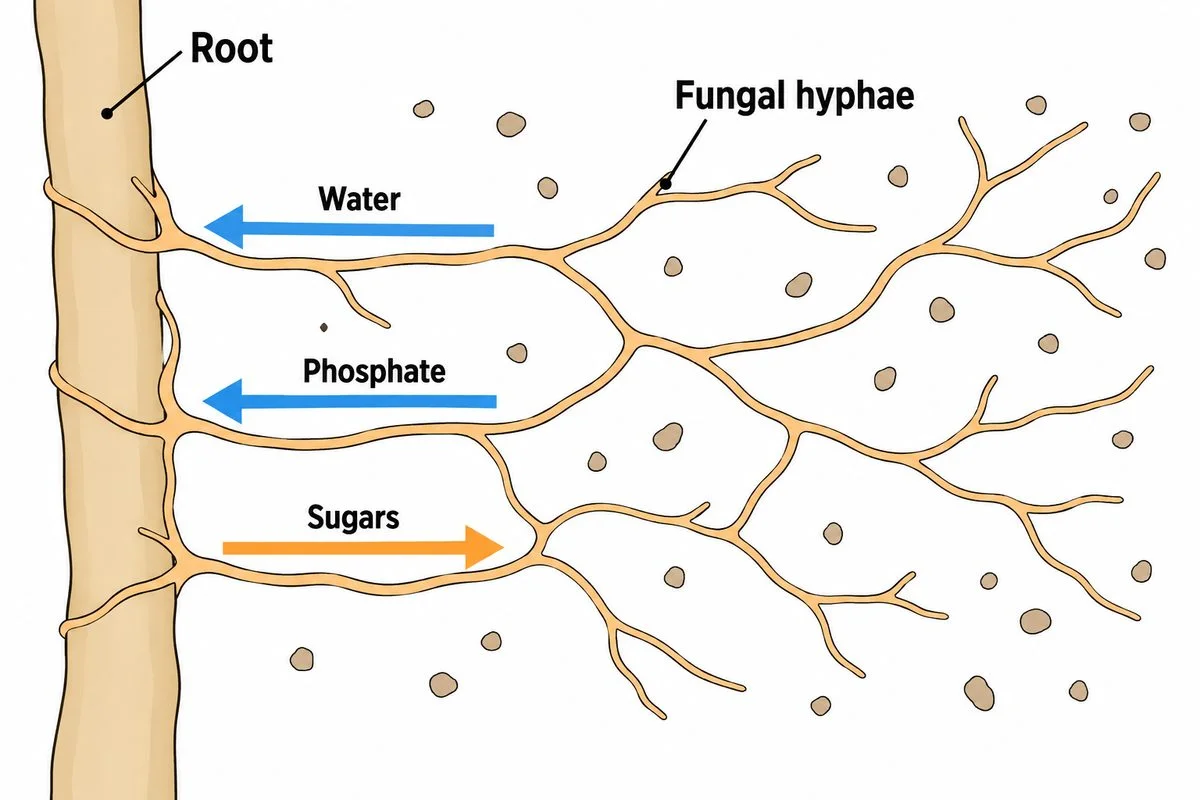
Fungal threads extend beyond a root, exchanging water and phosphate for plant sugars.

7. Mycorrhiza

Roots and fungi exchange plant sugars for help obtaining nutrients.

Show
Look at the diagram's root and fungal threads spreading into the soil. Follow water and phosphate arrows towards the root. Trace the sugar arrow from the root to the fungus.
Ask
Could these fungal threads help the plant obtain phosphorus beyond the root’s reach?
Say
Fungal threads reach beyond the root, bringing it water and phosphorus. The plant supplies sugar.
Used in
Mycorrhiza can help crops withstand drought by improving water uptake.
If your child says…“The fungus gives the plant sugar for nothing.”
Ask
Which partner can make sugar using sunlight?
What’s true
The fungus receives food because it cannot photosynthesise.

A real problem

Indore’s bio-CNG plant helps fuel city buses.

The plant opened in February 2022.

The project planned to use cow dung to supply bacteria that decompose garbage.

Microorganisms in its digesters break down organic material to produce biogas.

IEEFAThe Indian ExpressPress Information Bureau

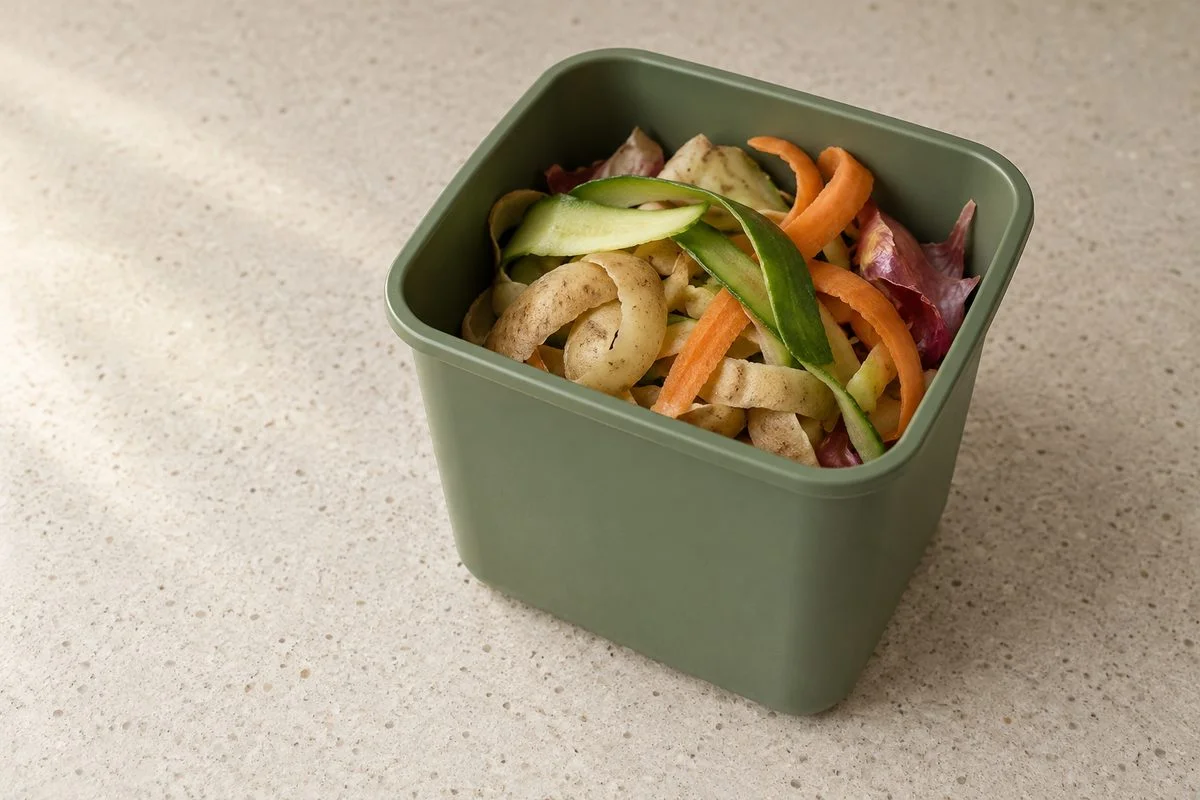
Vegetable peels collected in a household wet-waste bin.

Concept Lab · Common misconception

The tempting mistake in Microbes in Human Welfare

Open standalone misconception page →

Does fermentation always make the same product?

Wrong

Every microbe that ferments sugar produces alcohol.

Why it feels right. Alcoholic fermentation is the familiar example.

Right

Fermentation products depend on the microbe and pathway.

Worked example

Yeast
Sugar→Ethanol + CO₂
Lactic acid bacteria
Milk sugars→Lactic acid
Different microbes use different pathways and produce different products.
  1. Yeast can turn sugar into ethanol and carbon dioxide.
  2. Lactic acid bacteria in curd formation instead produce lactic acid from milk sugars.

Ask your child seven quick questions.

One per step. The answer and the reason are given.

  1. What do curd bacteria produce that makes milk proteins clump?

    Lactic acid. Bacteria change milk sugar into acid, which helps the milk set.

  2. How could contamination affect the safety of the finished product?

    It could become unsafe. Strong growth of chosen microbes does not rule out contamination.

  3. Why won’t an antibiotic treat a viral cold?

    Viruses lack its bacterial targets. Antibiotics act against susceptible bacteria, not the viruses causing the cold.

  4. Which tank must exclude oxygen for methane production?

    The sludge digester. Methanogens produce methane under conditions without oxygen.

  5. Which pests should this Bt preparation reduce?

    Susceptible caterpillars. Biocontrol targets harmful pests while conserving other organisms.

  6. Why doesn’t Rhizobium give wheat the same nitrogen benefit as peas with compatible nodules?

    Wheat lacks this compatible partnership. Compatible legume nodules provide food and suitable conditions for nitrogen fixation.

  7. Why does the fungus depend on sugars supplied by the plant?

    It cannot photosynthesise. The fungus cannot make sugars using sunlight.

15 more questions with answers