Skip to content

Teach Quadrilaterals in eight steps.

For each idea: show it, ask before you tell, then say one line.

Gather string, tape, paper, a pencil, ruler, scissors and a ruled notebook.

An adult handles scissors and cuts all paper pieces.

Common misconceptions & worked visual for this chapter · 15 practice questions with answers

How to teach it

Recognise the shapes

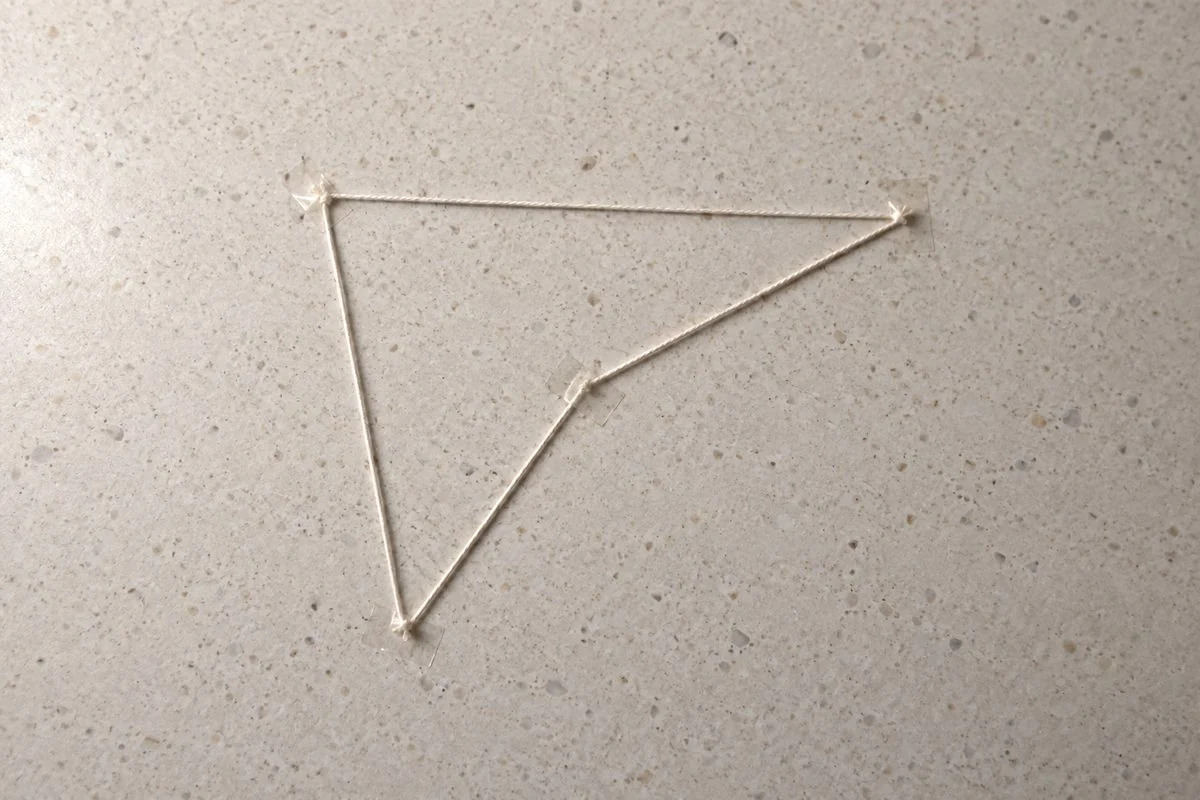
String forms a closed quadrilateral with one inward corner.

1. Quadrilateral

Four straight sides close without crossing. A corner may point inward.

Show
Arrange a string loop with four straight stretches and one inward corner. Tape the corners. Trace the boundary.
Ask
Will counting around this inward corner still give four sides?
Say
The inward corner changes the outline, but it leaves four straight edges and no gap.
Used in
Four-sided plots have boundaries that can be measured to plan fencing.
If your child says…“A corner pointing inward rules it out.”
Ask
Where does this boundary gain an extra side or lose its closure?
What’s true
An inward corner is allowed when four straight edges close without crossing.
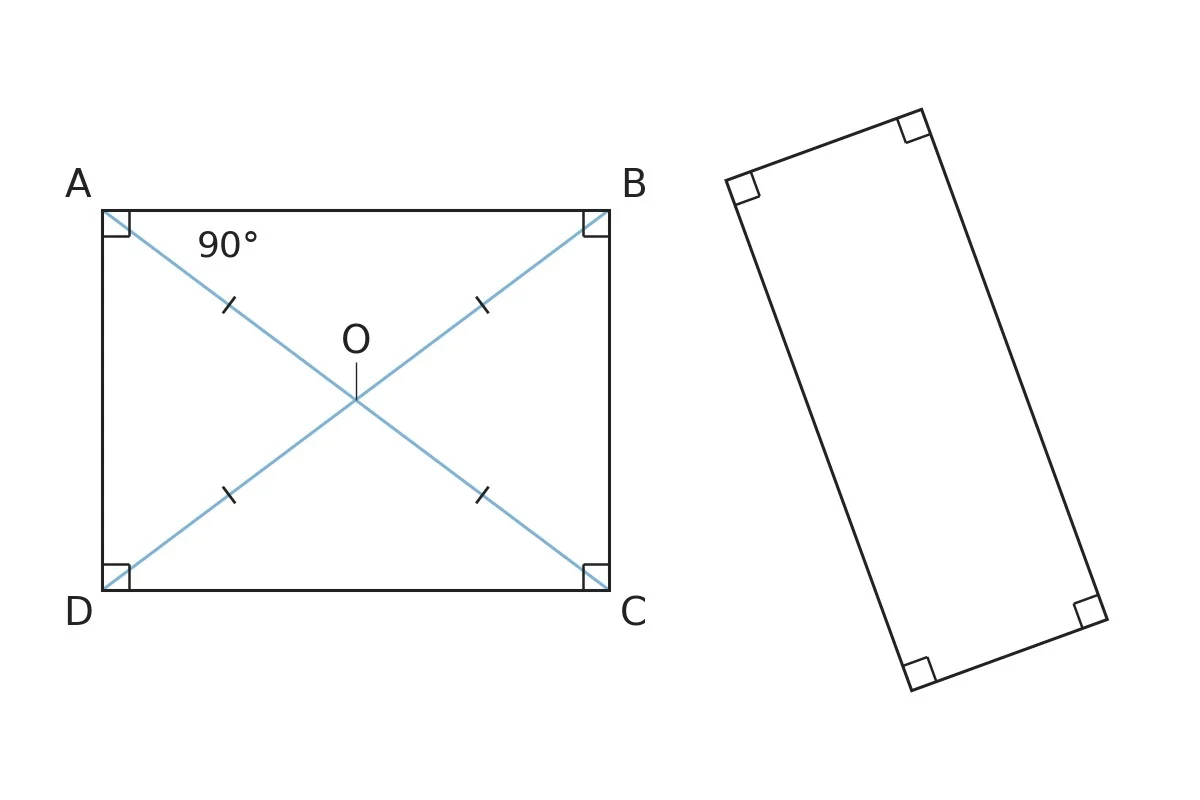
Horizontal and tilted rectangles with right-angle marks; matching ticks show equal half-diagonals.

2. Rectangle

Four right corners identify it without measuring the sides.

Show
Look at the diagram. Find the right-angle marks on both rectangles. Then compare the matching ticks on the left rectangle’s diagonals.
Ask
Looking at these corner marks, would turning either shape stop it being a rectangle?
Say
Both have four right angles, which is enough to identify rectangles. The ticks show equal diagonals, each divided into matching halves at their crossing.
Used in
Matching diagonals help carpenters check whether a frame with equal opposite sides is rectangular.
If your child says…“We must still measure the sides before naming it.”
Ask
Can opposite edges move closer together while both stay perpendicular to the same edge?
What’s true
Four right corners already guarantee the opposite sides match.
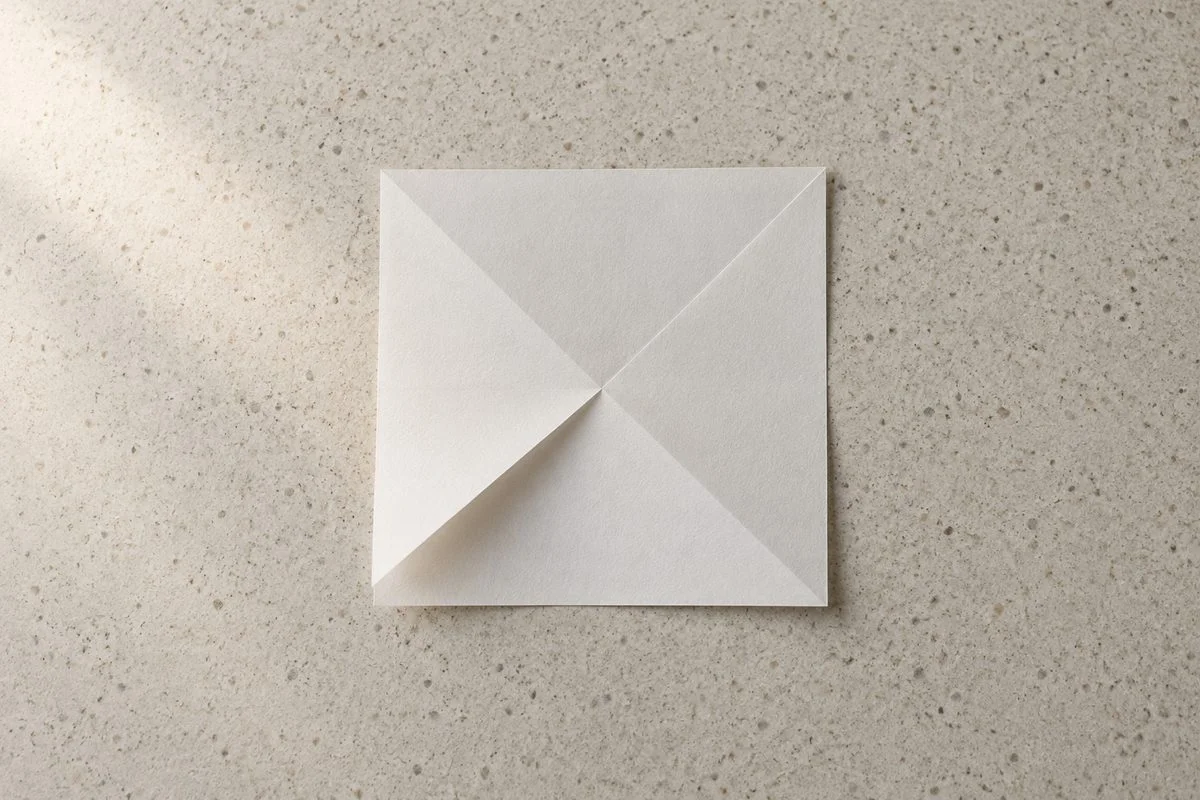
Paper square with diagonal creases and one triangular section slightly raised.

3. Square

A square is an equal-sided rectangle whose diagonals halve its corner angles.

Show
Check a paper square’s sides and corners with a ruler and notebook. Fold corner-to-corner. Match the triangle’s sharp corners with another fold, then reopen.
Ask
What angles do you predict between a side and fold, and between the two folds?
Say
Matching folds divide corners into 45° halves and meet at 90°.
Used in
Diagonal folds divide square fabric into matching triangles for patchwork.
If your child says…“The folds meet at 45°, and each corner half is 90°.”
Ask
Which fold halves an original right corner?
What’s true
A corner half measures 45°, while the central crossing measures 90°.

Explain angles and diagonals

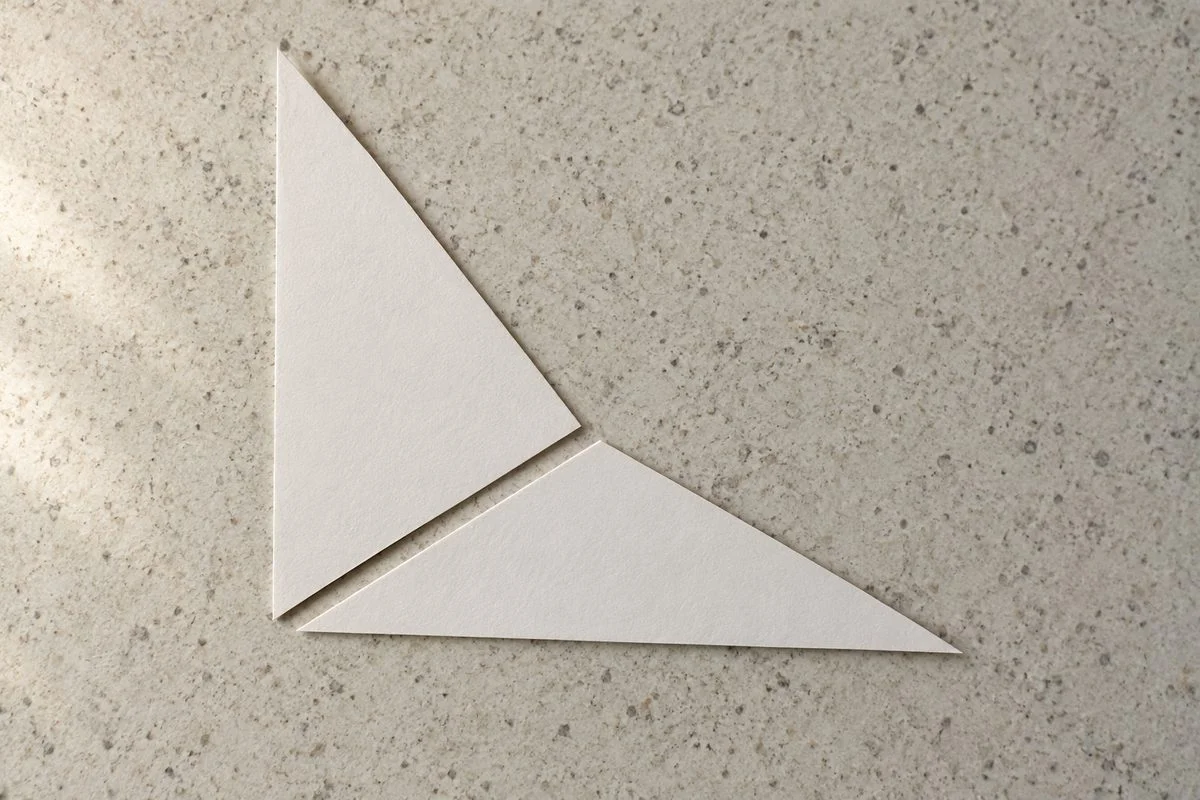
Two paper triangles ready to rejoin into a quadrilateral with an inward corner.

4. Angles in a Quadrilateral

The four inside angles share a total of 360°.

Show
An adult cuts a paper quadrilateral with an inward corner. Cut from that corner to the opposite corner. Separate the triangles slightly, ready to rejoin.
Ask
What angle total will these triangles give when joined?
Say
Each triangle contributes 180°, giving 360° altogether. Rejoining their corners includes the inward angle.
Used in
The angle total helps find a missing corner when cutting a four-sided panel.
If your child says…“The last corner can have any angle.”
Ask
After the other corners use their share, how much of 360° remains?
What’s true
Fixing three angles leaves only one possible fourth angle.
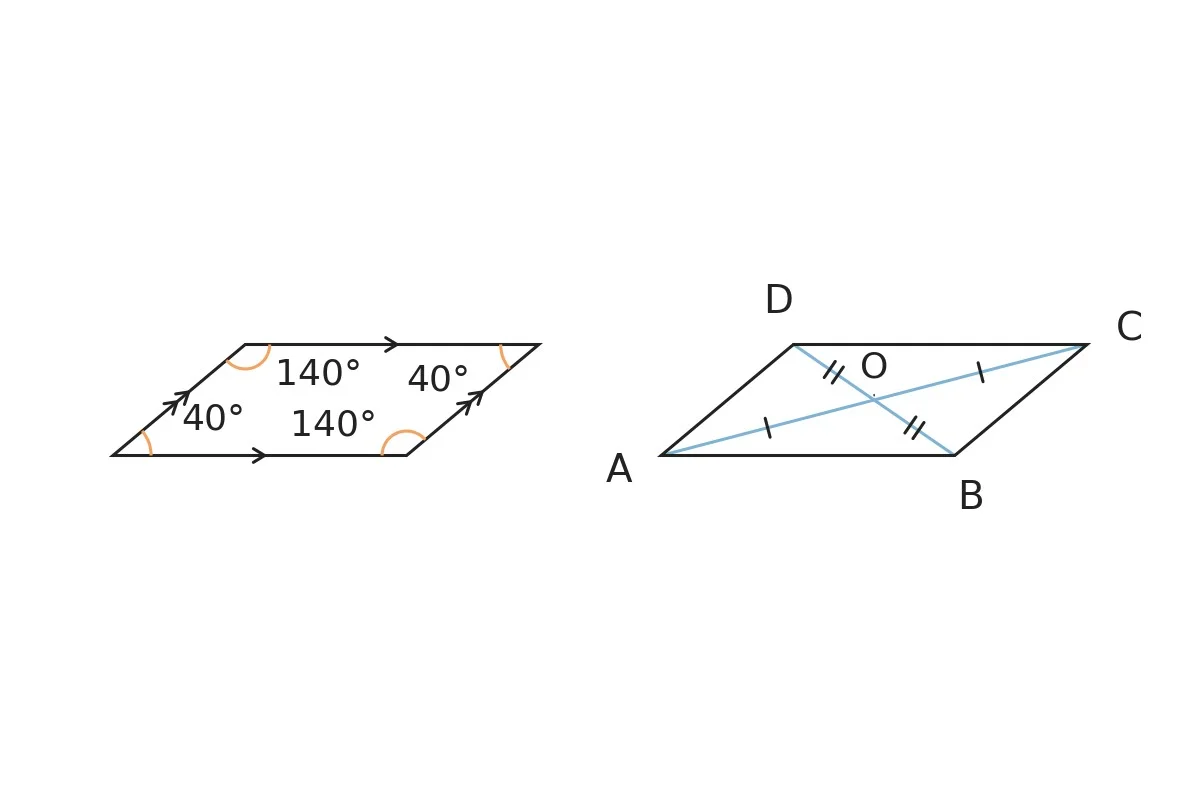
Parallel-side marks explain angle pairs; separate diagonal ticks identify matching halves.

5. Parallelogram

Both pairs of opposite edges run parallel.

Show
Look at the diagram’s left figure. Follow the parallel-side arrows, then compare neighbouring and opposite angles. On the right, compare matching ticks along each diagonal.
Ask
From these marks, what do you predict about opposite angles and each diagonal’s two halves?
Say
A side crosses parallel sides, so neighbouring angles total 180° and opposite angles match. Each diagonal cuts the other into equal halves.
Used in
Parallelogram paving blocks repeat in slanting rows without leaving gaps.
If your child says…“Halving the diagonals means they cross at 90°.”
Ask
Do the matching ticks describe lengths or the angle where the diagonals cross?
What’s true
Each diagonal has two equal halves. The diagonals can differ in length and cross without right angles.
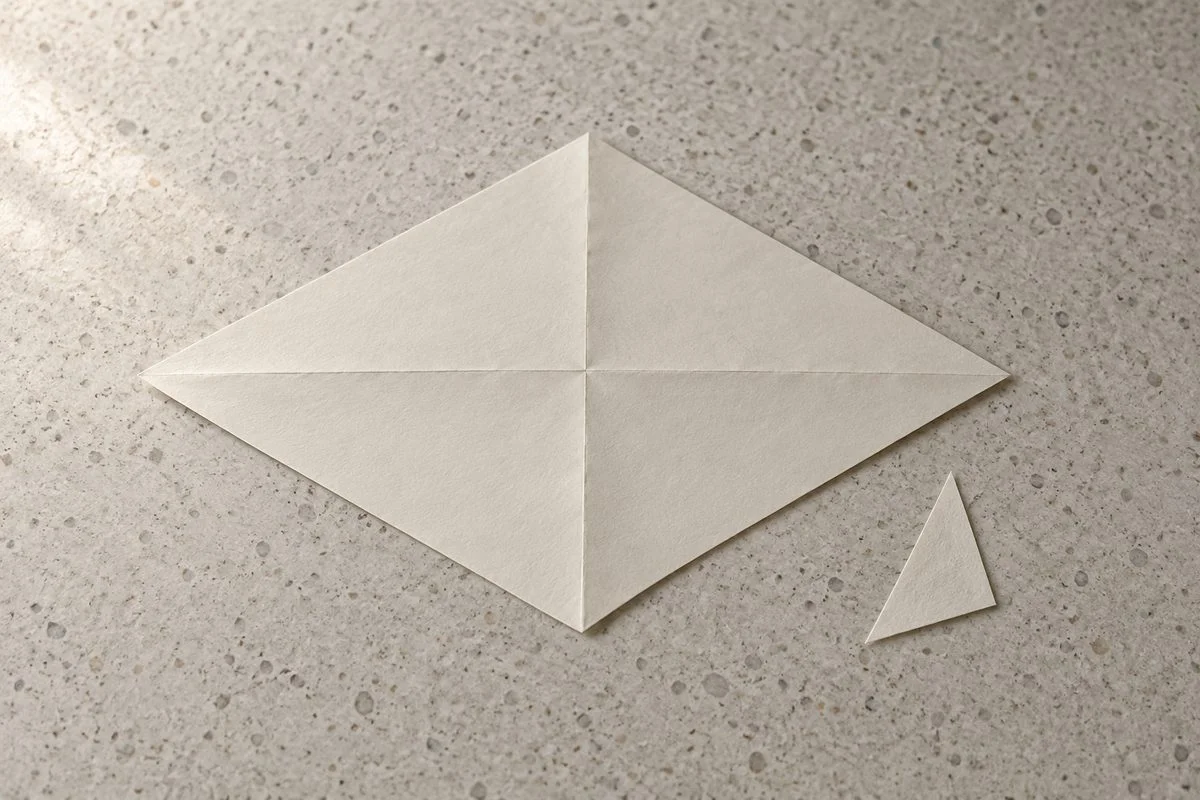
Paper rhombus with perpendicular creases of different lengths beside its offcut.

6. Rhombus

A rhombus has four equal sides. Its diagonals meet at 90°.

Show
Fold paper in half. Fold again, matching the folded edge’s ends. Mark 3 cm and 5 cm along folds from their shared corner. An adult cuts between marks. Unfold.
Ask
Will these perpendicular folds have equal lengths?
Say
Matching edges form a rhombus. Unequal diagonals halve each other and corner angles, crossing at 90°.
Used in
Hinged rhombuses let lattice gates extend without changing strip lengths.
If your child says…“Diagonals crossing at 90° must have equal lengths.”
Ask
Does the shorter fold reach as far as the longer fold?
What’s true
A rhombus can have perpendicular diagonals of different lengths.

Connect the shape families

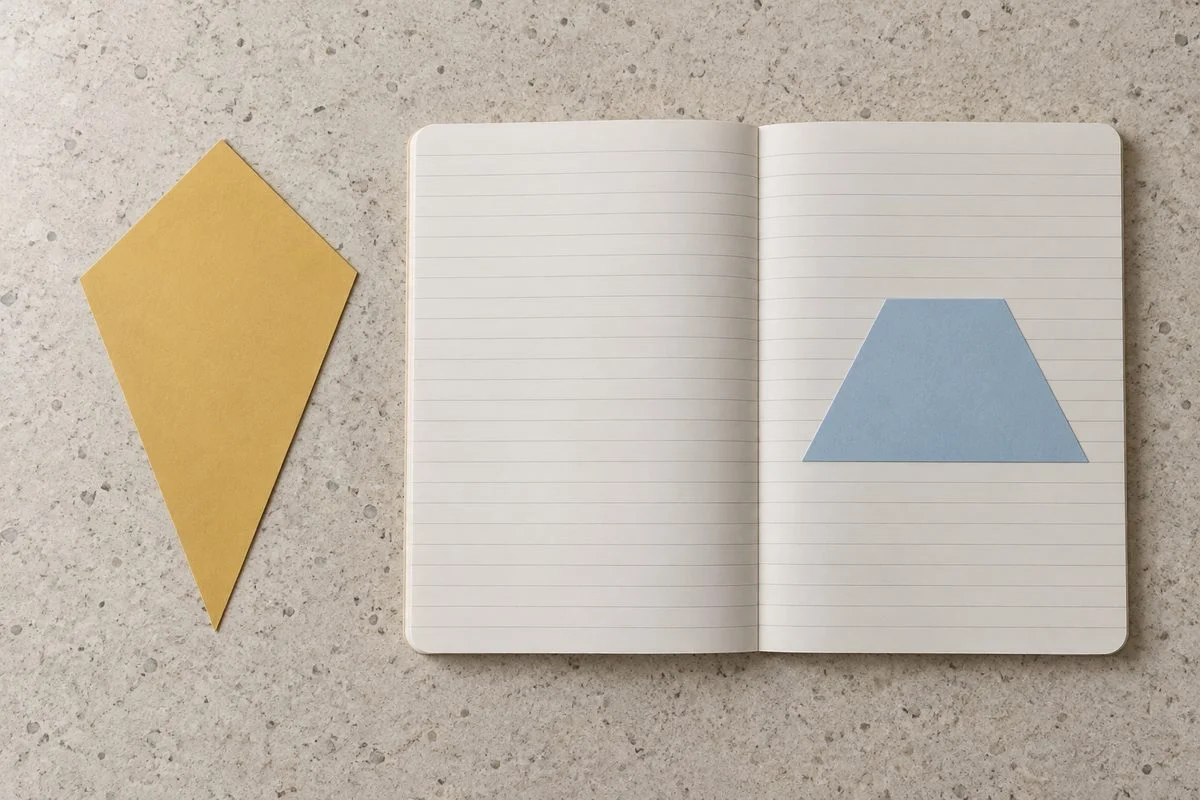
Paper kite and trapezium beside a notebook’s parallel rules.

7. Kite and Trapezium

Kites have equal neighbouring pairs; trapeziums have parallel opposite sides.

Show
An adult cuts a paper kite and trapezium. Fold the kite lengthways to match edges. Align the trapezium’s bases with notebook rules.
Ask
Which edges will match, and which will follow parallel rules?
Say
The kite’s equal edges meet in pairs at corners. The trapezium has a parallel pair.
Used in
Trapezium panels let a lampshade widen towards its opening.
If your child says…“A second parallel pair stops it being a trapezium.”
Ask
Does having two pairs include having at least one?
What’s true
Here, having extra parallel sides still meets the trapezium condition.
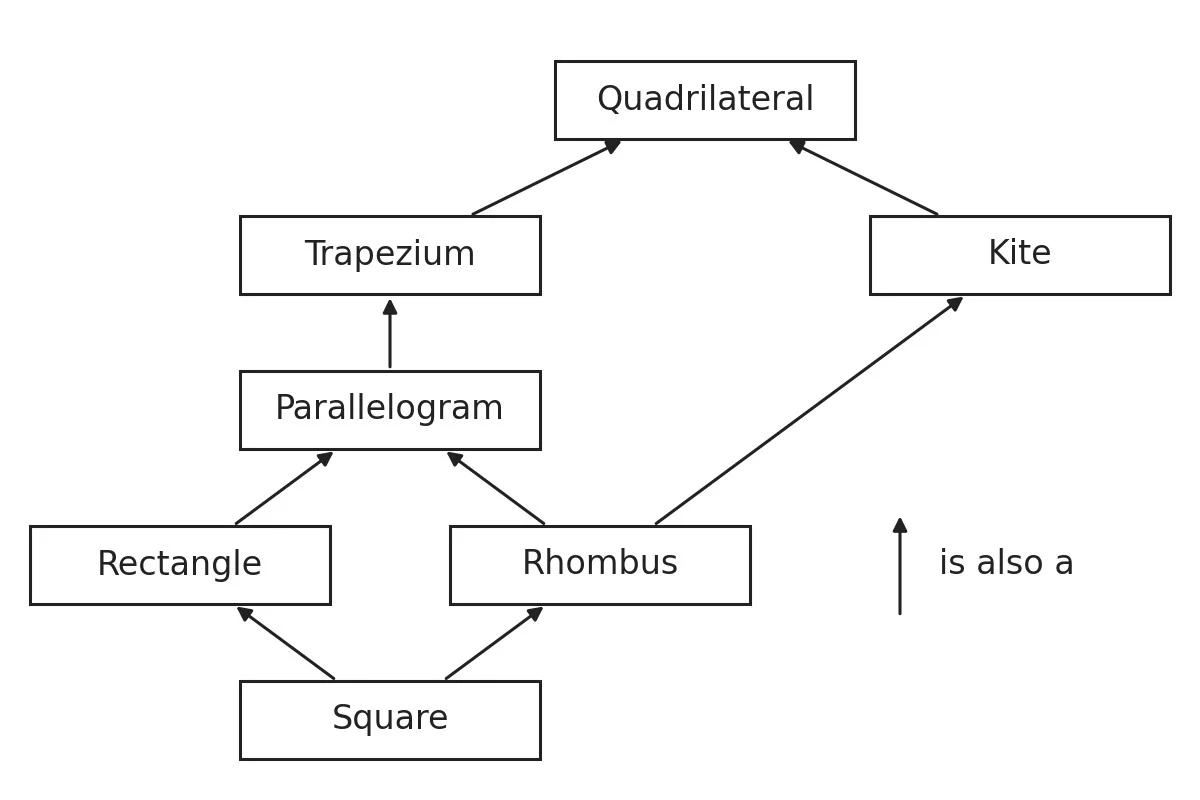
Upward arrows connect squares to all the shape families whose conditions they satisfy.

8. Relations between Special Quadrilaterals

Each shape keeps every family name whose conditions it meets.

Show
Look at the diagram. Start at Square and follow both arrows upwards. Read each arrow as ‘is also a’.
Ask
Can the square at the bottom belong to both the rectangle and rhombus families?
Say
A square has right angles and equal sides, so it is both a rectangle and rhombus.
Used in
A square frame keeps rectangle properties, so the same diagonal checks remain useful.
If your child says…“Kites and parallelograms cannot belong together.”
Ask
Which arrows show that rhombuses belong to both families?
What’s true
Rhombuses satisfy both families because their equal sides meet and their opposite sides run parallel.

A real problem

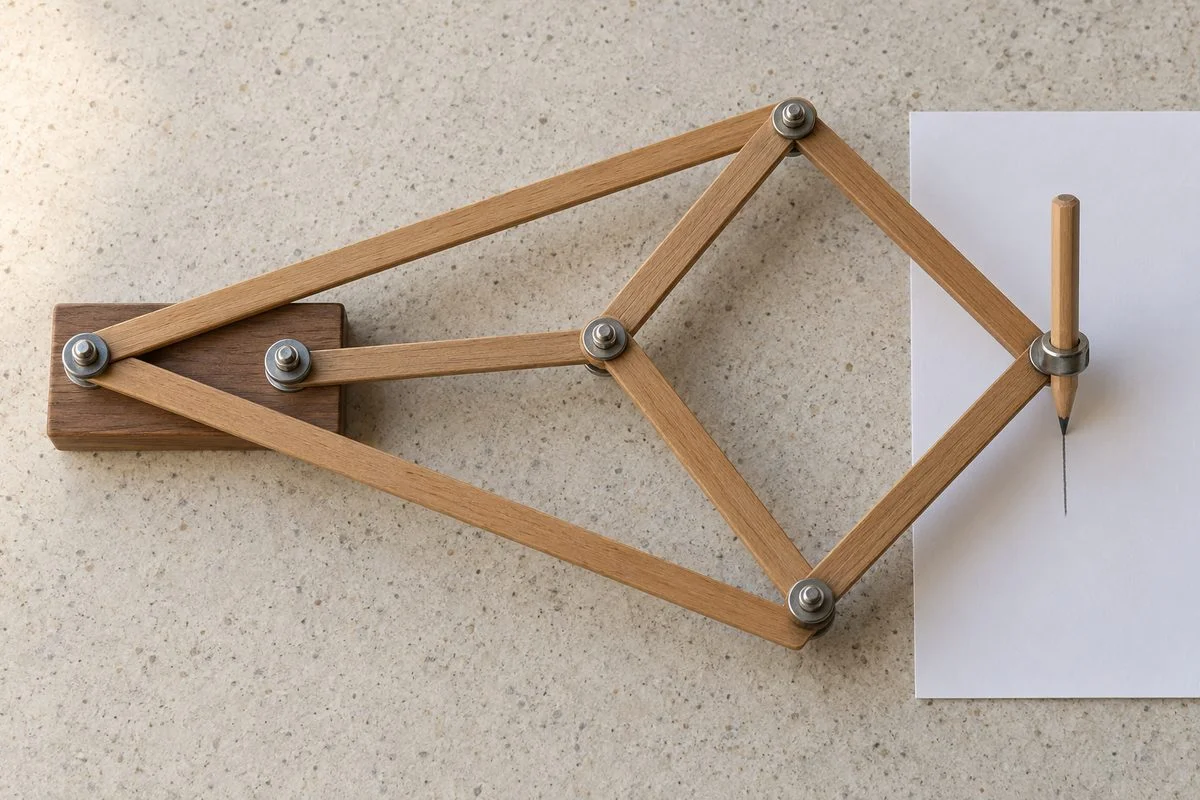
A moving rhombus helped produce an exact straight line.

Peaucellier reported his motion-converting invention in 1864.

Equal-length hinged rods form a rhombus that changes shape within the mechanism.

Its output point follows an exact straight line.

The mechanism was adapted for ventilation and air filtration at London’s Houses of Parliament.

University of St AndrewsThe Garden of ArchimedesCornell University

Wooden linkage containing a rhombus, with a pencil resting on a straight trace.

Concept Lab · Common misconception

The tempting mistake in Quadrilaterals

Open standalone misconception page →

Is one pair of parallel sides enough for a parallelogram?

Wrong

A quadrilateral with one pair of parallel sides is a parallelogram.

Why it feels right. The name reminds me to look for parallel sides.

Right

Both pairs of opposite sides must be parallel.

Worked example

The two horizontal sides are parallel. The slanted sides would meet if extended.
  1. Draw a trapezoid with horizontal bases of unequal length and sides slanting inward.
  2. The bases are parallel, and the slanted sides meet when extended.

Ask your child eight quick questions.

One per step. The answer and the reason are given.

  1. What shape is this closed string boundary, including its inward corner?

    A quadrilateral. Its four straight edges close without crossing.
  2. Four corners measure 90°. What side measurements are still needed to identify a rectangle?

    None. The right corners already force matching, parallel opposite sides.

  3. What angle lies between a square’s side and its diagonal?

    45°. The diagonal divides that right corner into matching halves.

  4. Three corners total 270°. What must the fourth measure?

    90°. All four angles must share the total of 360°.

  5. A parallelogram has a 40° corner. What angle is opposite it?

    40°. Both opposite angles total 180° with the same neighbouring angle.

  6. A rhombus has a 60° corner. At what angle do its diagonals cross?

    90°. Equal sides make matching triangles, forcing right angles at the crossing.

  7. Does a rectangle satisfy this chapter’s trapezium condition?

    Yes. Its parallel opposite edges satisfy the requirement of at least one pair.

  8. What is the most specific name guaranteed for a kite whose opposite sides are parallel?

    A rhombus. Together, these conditions force every side to match.

15 more questions with answers, 3 with pictures