Skip to content

Teach Electricity: Magnetic and Heating Effects in eight steps.

For each idea: show it, ask before you tell, then say one line.

Gather insulated copper wire with exposed ends, a compass, two matching zinc-carbon cells, an iron nail, iron clips, pencil-width cardboard tube and tape.

Adults handle nail points and cell connections. Keep each connection to a few seconds, then disconnect. Stop if wires or cells become warm. Never open cells or recharge single-use cells.

Common misconceptions & worked visual for this chapter · 15 practice questions with answers

How to teach it

Current and magnetism

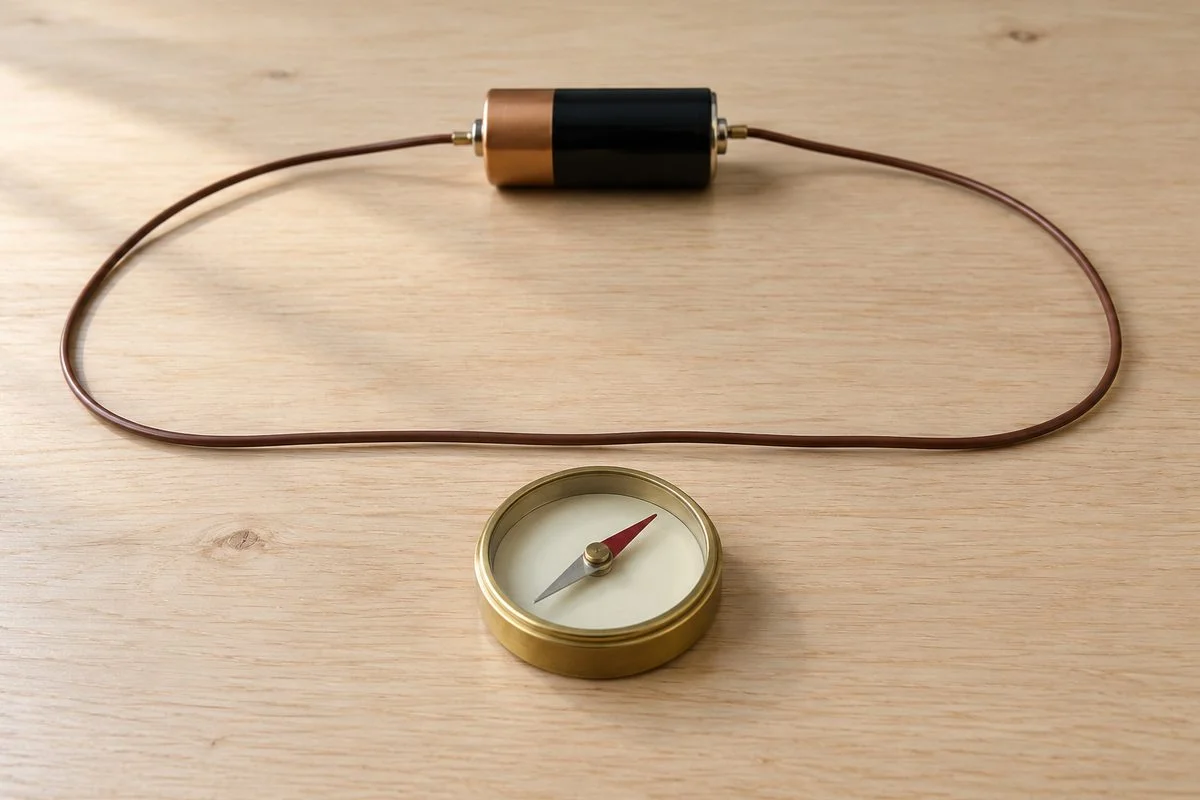
Straight insulated wire above a compass beside a disconnected cell.

1. Magnetic effect of electric current

Current produces magnetism around a wire.

Show
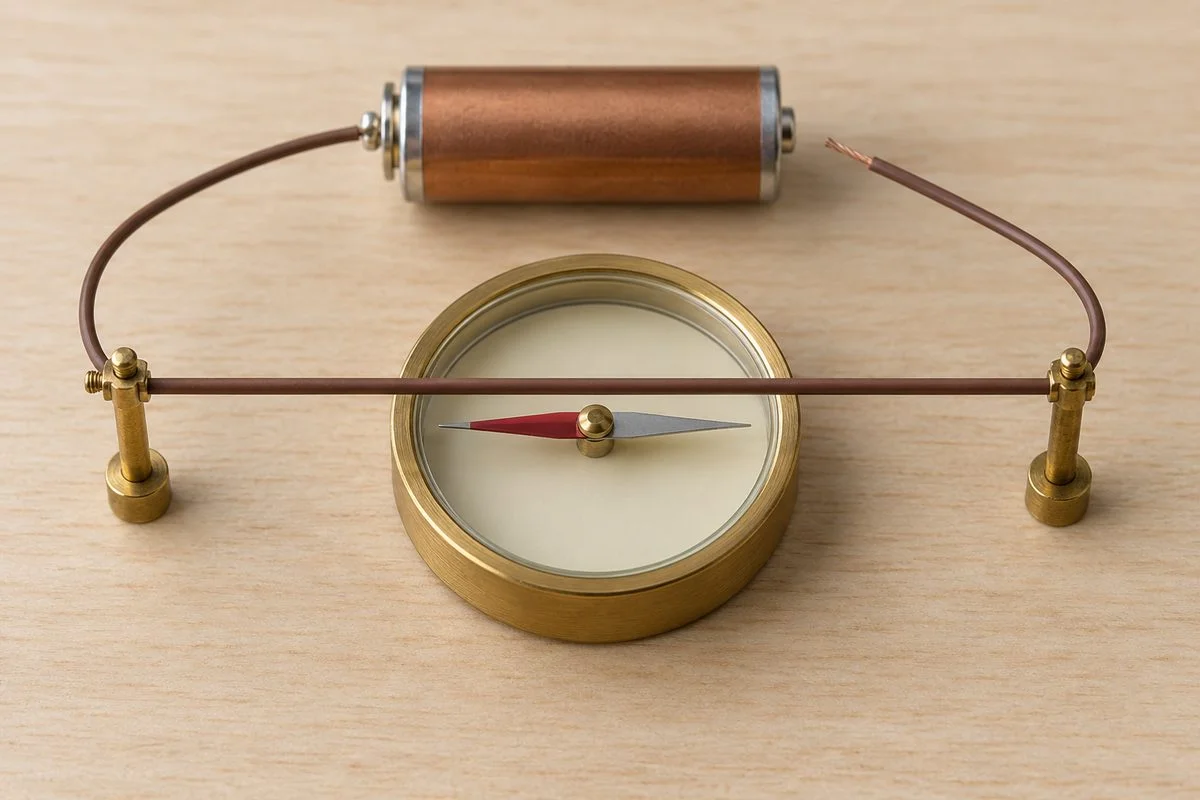
Lay insulated copper wire above a compass, parallel to its resting needle. Keep its exposed ends disconnected. After predicting, an adult briefly touches the ends to opposite cell terminals, then disconnects them.
Ask
What will the needle do when we briefly connect the wire to the cell?
Say
Current produces a magnetic field that can turn the needle.
Used in
Loudspeakers use current's magnetic effect to move their working parts.
If your child says…“The wire turns the needle even with the switch off.”
Ask
What happens when we disconnect the cell without moving the wire?
What’s true
The copper wire's magnetic effect requires current.
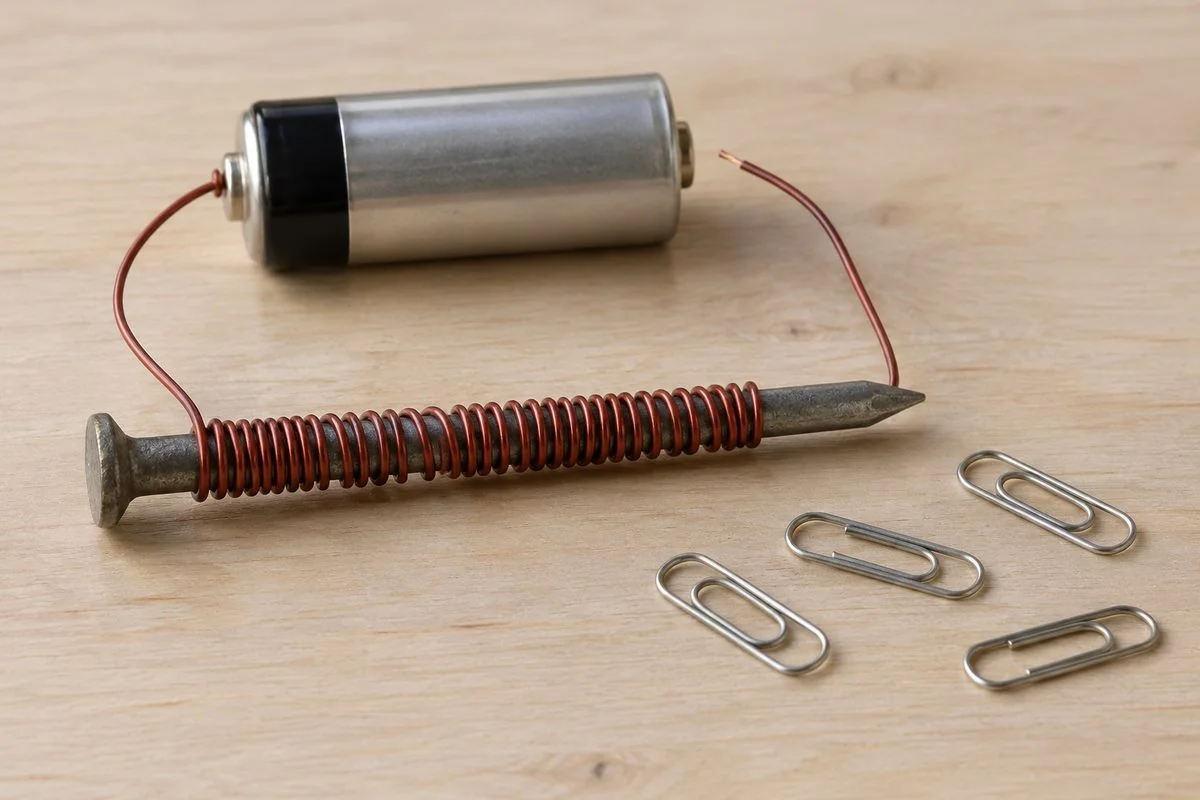
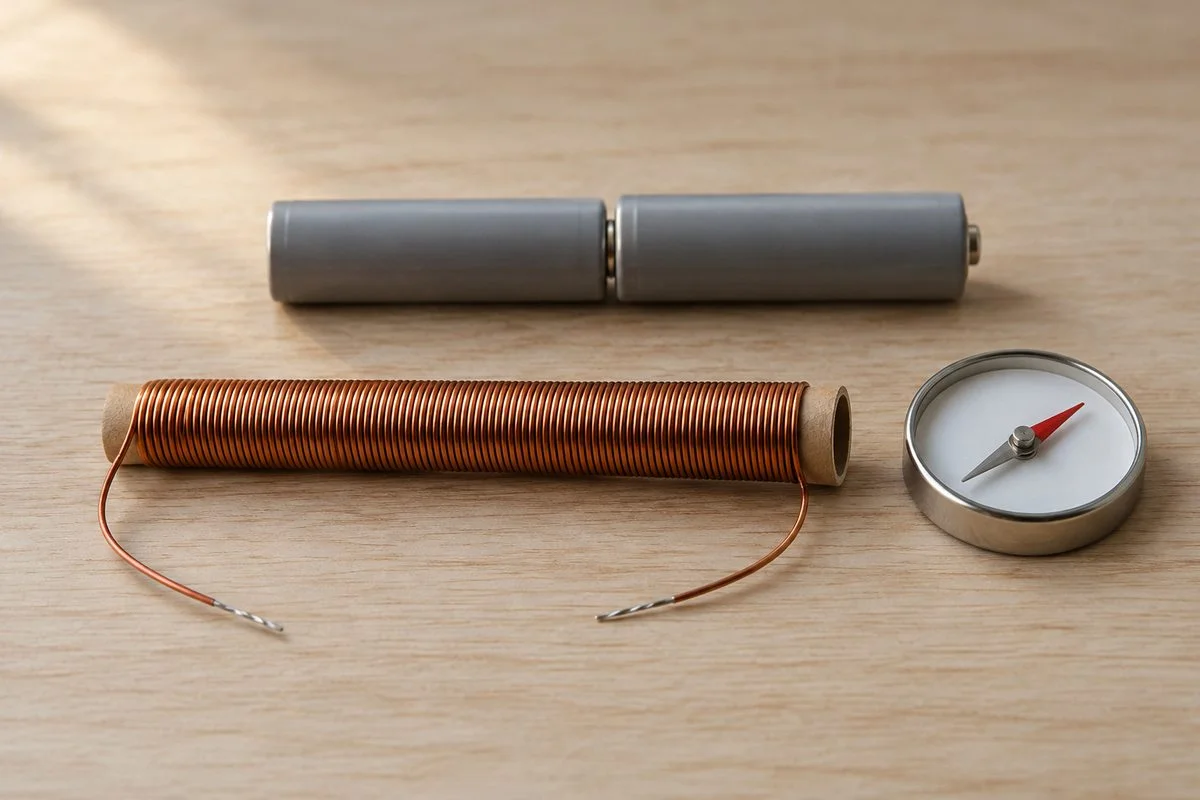
A wire-wrapped nail beside loose paper clips, with its cell circuit disconnected.

2. Electromagnet

A coil acts as a magnet while current flows.

Show
An adult winds insulated wire around an iron nail. After predicting, briefly connect, lift clips, then disconnect.
Ask
What will happen to the clips when we connect, then disconnect, the cell?
Say
Current makes the coil magnetic. A soft iron core loses most magnetism when current stops. Some nails can still hold clips.
Used in
Scrap-yard cranes switch off their electromagnets to release iron loads easily.
If your child says…“It keeps pulling because the wire is still wound up.”
Ask
When we disconnect, does the winding change or does the current stop?
What’s true
Winding copper wire alone does not make an electromagnet.
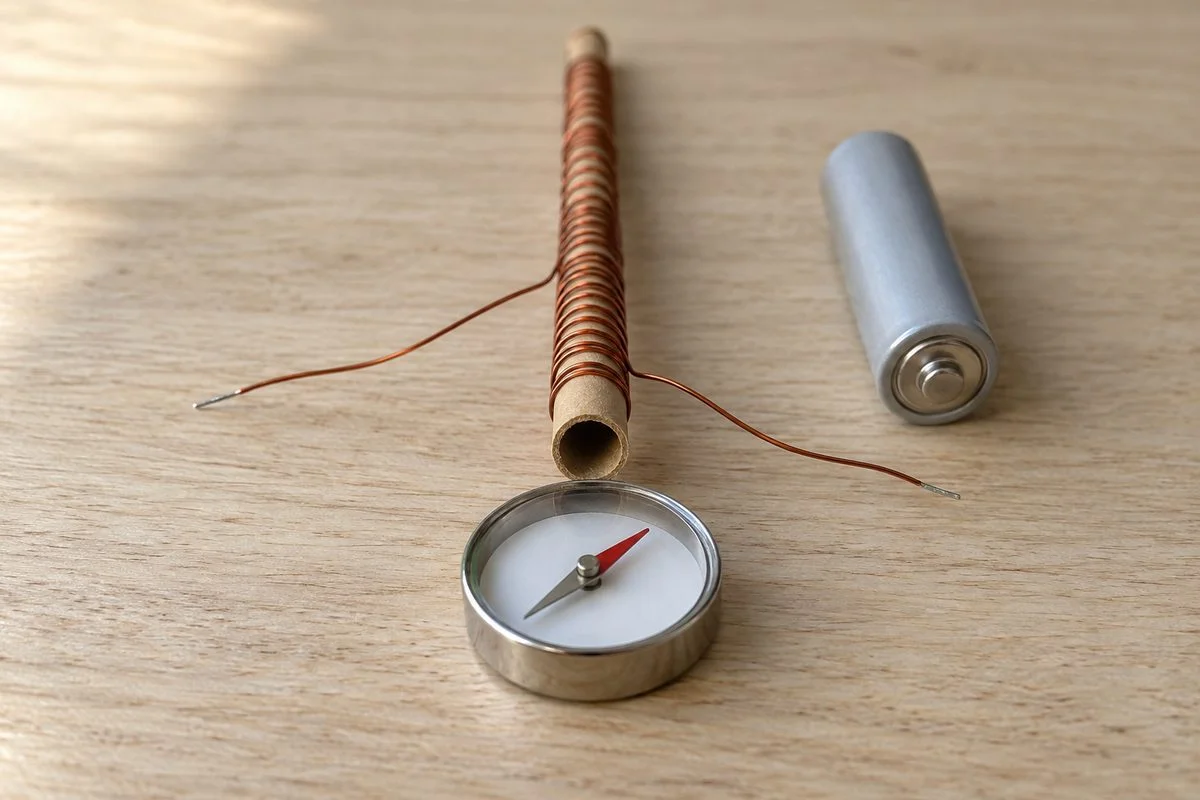
Wire coil around a cardboard tube beside a compass and cells prepared for comparison.

3. Strength of an electromagnet

Current and coil turns affect magnetic strength.

Show
Wind wire around the tube; lay it east–west beside the compass. An adult briefly connects the coil to one cell, then disconnects. Join one cell’s positive terminal to the other’s negative terminal. Briefly connect the coil ends to the two remaining terminals, then disconnect.
Ask
Will one cell or two turn the needle more?
Say
Two cells turn the needle more because more current strengthens this coil.
Used in
Workshop lifting coils have adjustable magnetic strength for lifting iron loads.
If your child says…“An electromagnet's strength cannot change.”
Ask
With the coil and compass unmoved, what changes when we increase the current?
What’s true
Changing current or coil turns can change magnetic strength.
Compass beyond the open end of a tube coil, with its cell disconnected.

4. Poles of an electromagnet

A powered coil has north and south magnetic ends.

Show
Place the compass beyond one coil end. An adult briefly connects one cell, then disconnects. Repeat at the other end, keeping the same cell connections.
Ask
Will the same needle tip face both powered ends?
Say
Opposite needle tips face the ends. The coil has north and south poles.
Used in
Fan motors use magnetic forces to move their working parts.
If your child says…“A north pole attracts another north pole.”
Ask
Which pole must face the needle's north end to attract it?
What’s true
A coil end attracting a compass's north pole is south.

Current and heating

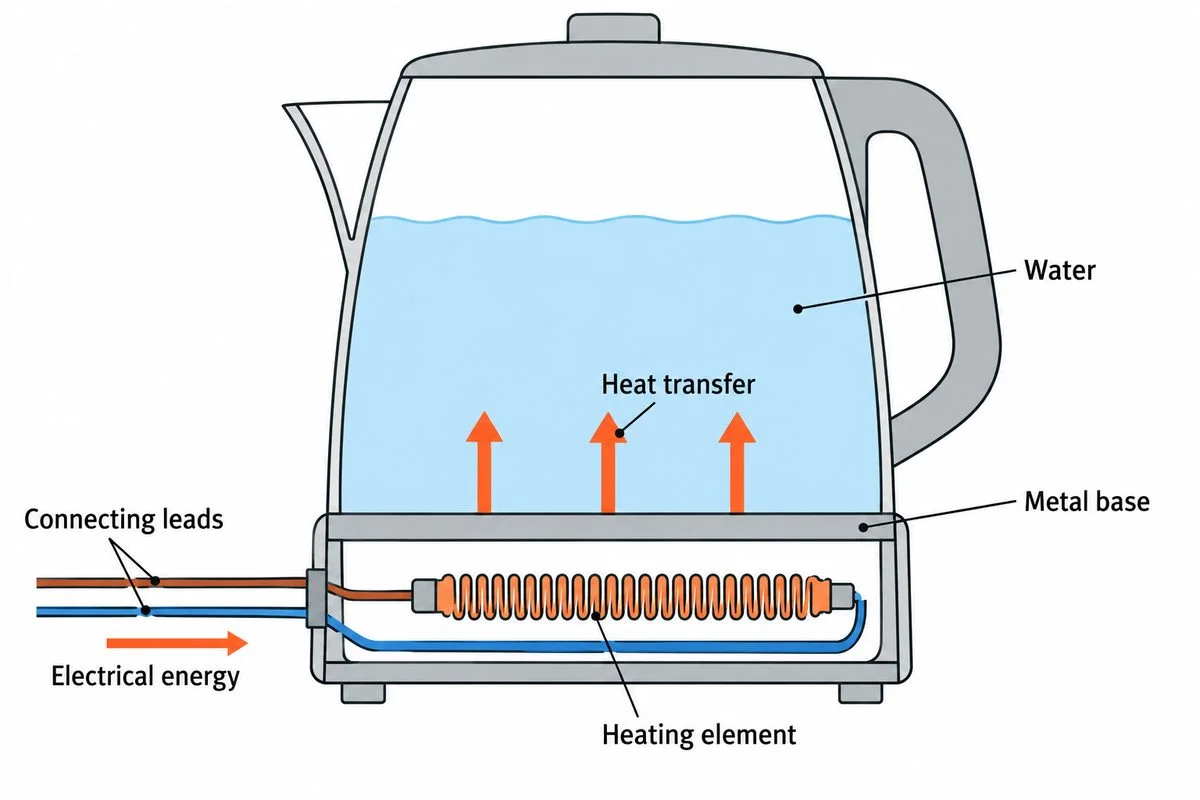
Kettle section showing electrical energy reaching the element and heat passing into water.

5. Heating effect and heating elements

Current turns electrical energy into heat in a conductor.

Show
In the diagram, follow the leads to the element, then the arrows into the water.
Ask
Which will produce more heat as current flows: the element or its connecting leads?
Say
The element offers greater resistance, or opposition to current, than the leads. More electrical energy becomes heat there. That heat warms the water through the base.
Used in
An electric iron also uses a heating element to provide useful heat.
If your child says…“Heat travels from the electricity supply through the lead.”
Ask
If heat arrived ready-made through the lead, why would the kettle need a heating element?
What’s true
Heat forms in the kettle's element as current passes through it.
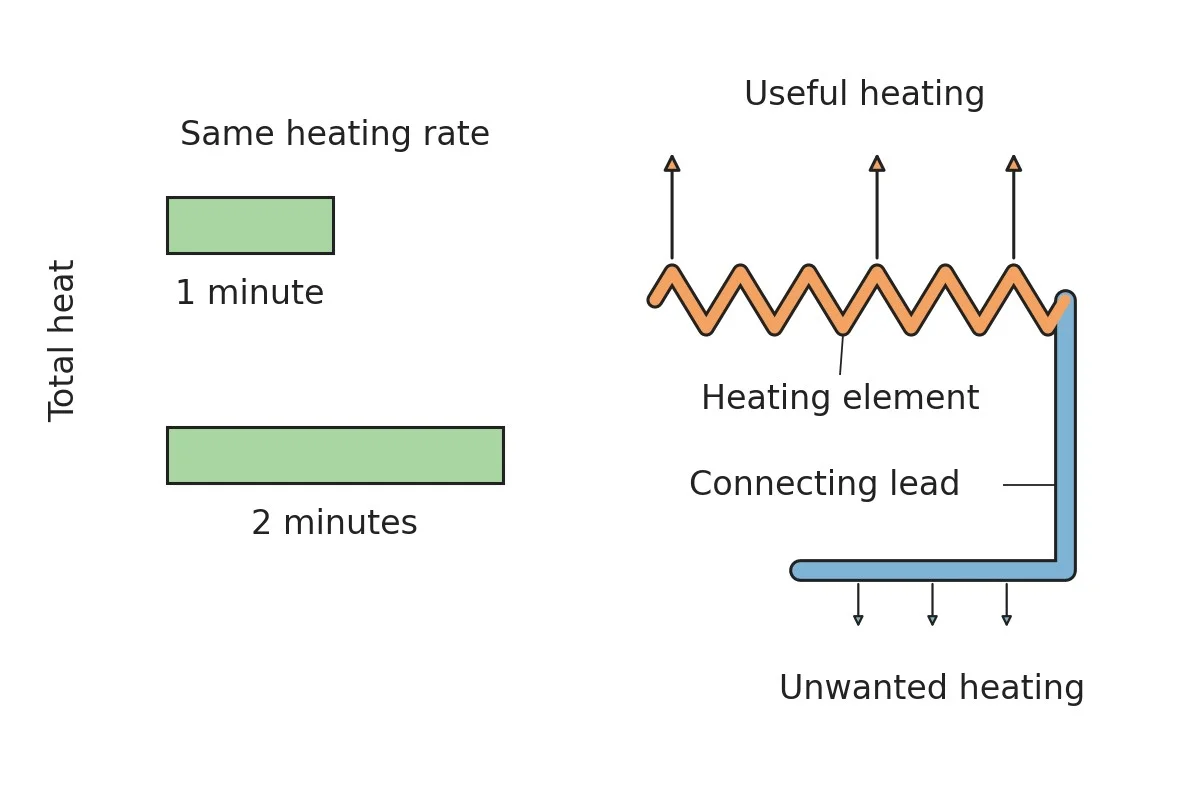
Total heat increases with time; heater element and lead release useful and unwanted heat.

6. Amount of heat and unwanted heating

Heat depends on current, time, wire material, length and thickness.

Show
In the diagram, compare the heat bars. Then find heat leaving the element and lead.
Ask
If this heater stays equally hot, will leaving it on longer use more energy?
Say
Longer running produces more total heat, even at an unchanged temperature. Heating the lead usually wastes energy.
Used in
Correctly rated plugs and wires reduce overheating risks when appliances draw current.
If your child says…“Running it longer makes no difference to the heat produced.”
Ask
While current keeps flowing, does electrical energy stop becoming heat?
What’s true
With steady current, the same wire produces more total heat over a longer time.

Cells and batteries

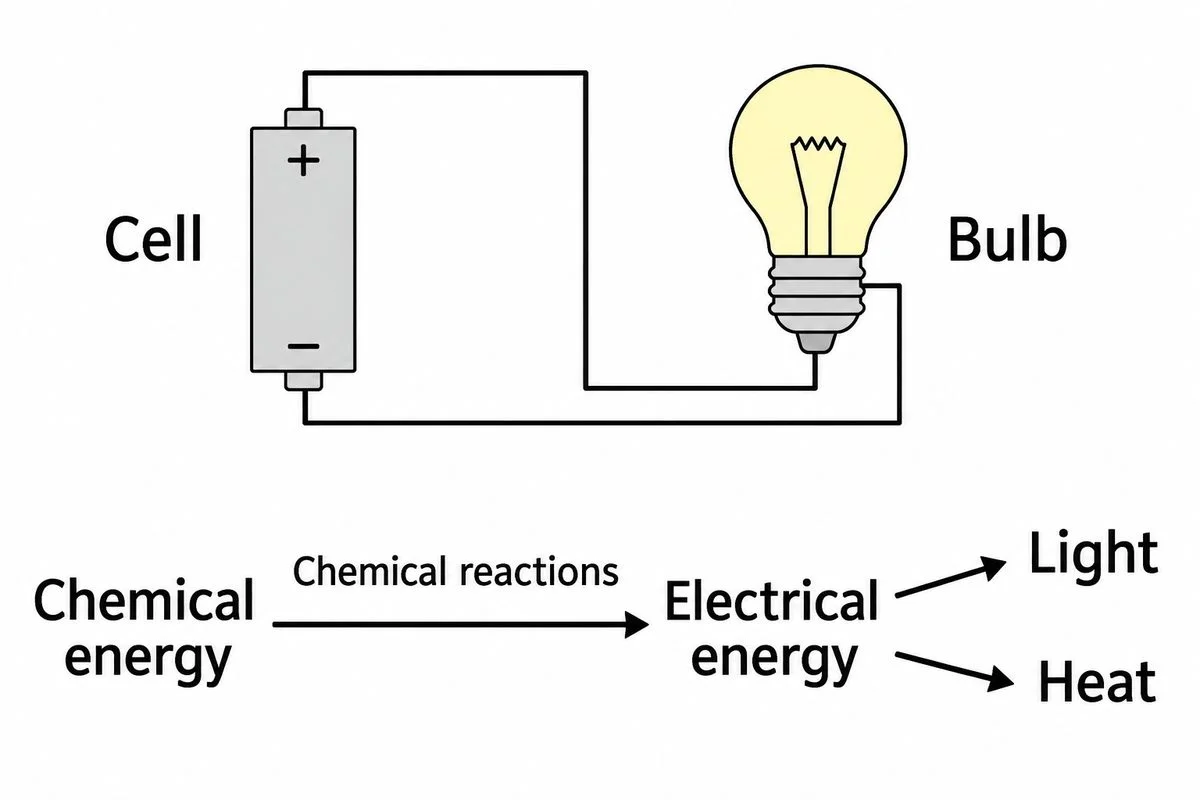
Complete cell circuit above arrows linking chemical energy to electrical energy, light and heat.

7. Electricity from chemical reactions

Chemical reactions inside a cell supply electrical energy.

Show
In the diagram, trace the complete circuit from cell to bulb and back. Follow the energy arrows below.
Ask
What will happen to this bulb when the cell’s needed chemicals are used up?
Say
Reactions inside the cell change chemical energy into electrical energy. The bulb turns this energy into light and heat. When needed chemicals run out, the cell cannot supply enough current.
Used in
Cells supply current for magnetic experiments without household electricity.
If your child says…“The cell contains ready-made electricity that pours out.”
Ask
If reactions supply energy, what happens when the chemicals they need are used up?
What’s true
The cell supplies energy through chemical reactions.
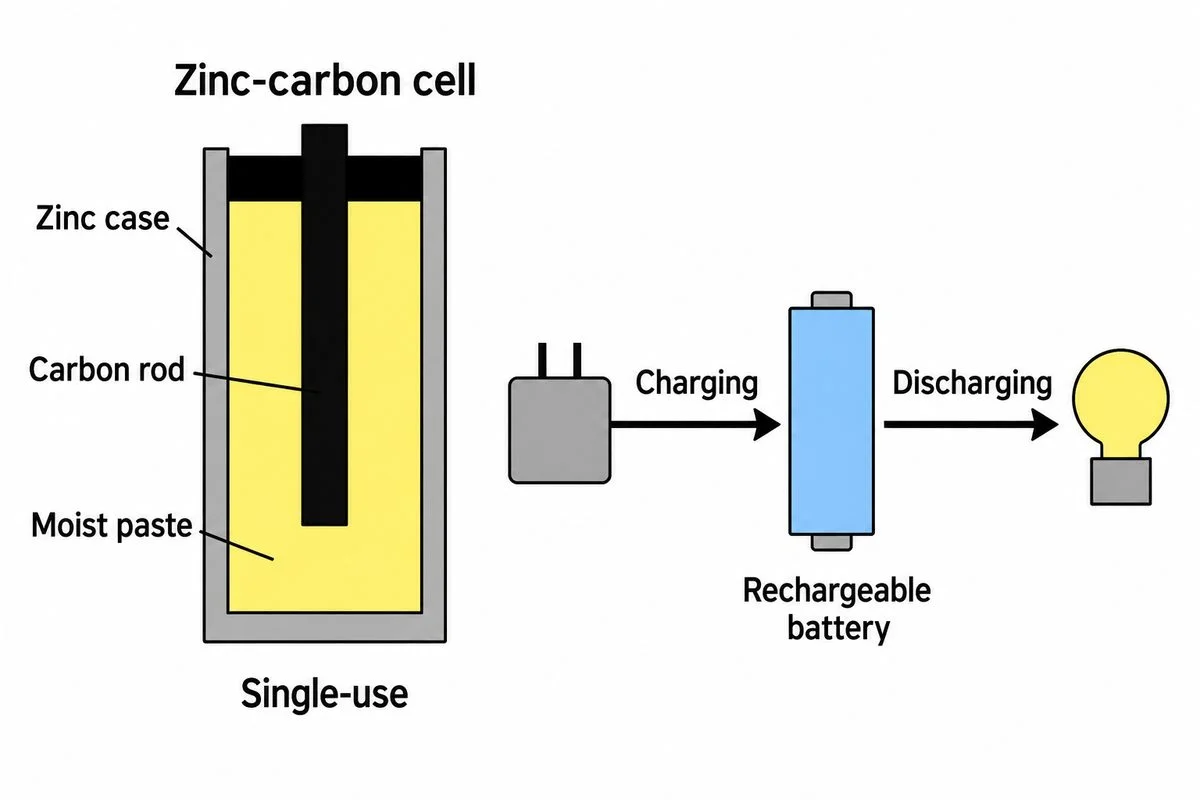
Zinc-carbon cell section beside a rechargeable battery with charging and discharging arrows.

8. Dry cells and rechargeable batteries

Dry cells contain paste. Rechargeable batteries allow repeated charging.

Show
In the diagram, find the paste inside the zinc-carbon cell. Follow the rechargeable battery's charging and discharging arrows.
Ask
Will the rechargeable battery shown always run the lamp for as long after each full charge?
Say
A dry cell contains moist paste rather than freely flowing liquid. Rechargeable batteries are designed for charging to reverse their chemical changes safely. Even these batteries gradually wear out.
Used in
Contained paste makes a dry cell convenient for carrying in a portable torch.
If your child says…“I can recharge a used-up zinc-carbon cell.”
Ask
Which of these was designed for repeated charging?
What’s true
Only batteries designed for recharging should be charged.

A real problem

The Calcutta–Diamond Harbour telegraph carried shipping information.

India's first telegraph line was laid in 1851.

The connection gave Calcutta's merchants shipping information quickly.

Its receiver was a galvanoscope designed by O’Shaughnessy and made in India.

Such instruments detect current through its magnetic effect on a needle.

Science and CultureWikipediaKenyon College

A compass beside a wire connected to a cell on a classroom desk.

Concept Lab · Common misconception

The tempting mistake in Electricity: Magnetic and Heating Effects

Open standalone misconception page →

Does insulation remove the current in a wire?

Wrong

A coated wire cannot produce a magnetic effect.

Why it feels right. The coating prevents electrical contact, so it seems to stop other effects too.

Right

Current inside an insulated wire still produces a magnetic field.

Worked example

Insulated turns carry current around the nail. The nail attracts steel clips while the coil is powered.
  1. Wind insulated wire around an iron nail and pass a suitable current briefly in a supervised demonstration.
  2. The nail attracts small steel clips.

Ask your child eight quick questions.

One per step. The answer and the reason are given.

  1. Before any current flows, does this copper wire alone turn the needle?

    No. The copper wire produces this magnetic effect only while current flows.

  2. What maintains the magnetic pull: continuing current, or winding alone after current stops?

    Continuing current. Its strong magnetic pull depends on continuing current.

  3. What happens to this coil's strength when its current increases, and why?

    It becomes stronger. More current produces a stronger magnetic effect.

  4. A coil end attracts a compass's north pole. Is that end south or north?

    South. Opposite magnetic poles attract.

  5. Where does electrical energy become the heat that warms the water in this kettle?

    Its heating element. The element's resistance converts electrical energy into heat.

  6. At the same heating rate, which produces more total heat: one minute or two minutes?

    Two minutes. Energy keeps becoming heat even when the heater's temperature stays unchanged.

  7. What supplies this cell's electrical energy: chemical reactions or a store of ready-made electricity?

    Chemical reactions. The cell generates electrical energy through chemical reactions.

  8. Can a used-up zinc-carbon torch cell safely be charged again?

    No. A zinc-carbon cell's chemistry is unsuitable for safe repeated charging.

15 more questions with answers