Matter consists of tiny units, far smaller than visible dust.
Show
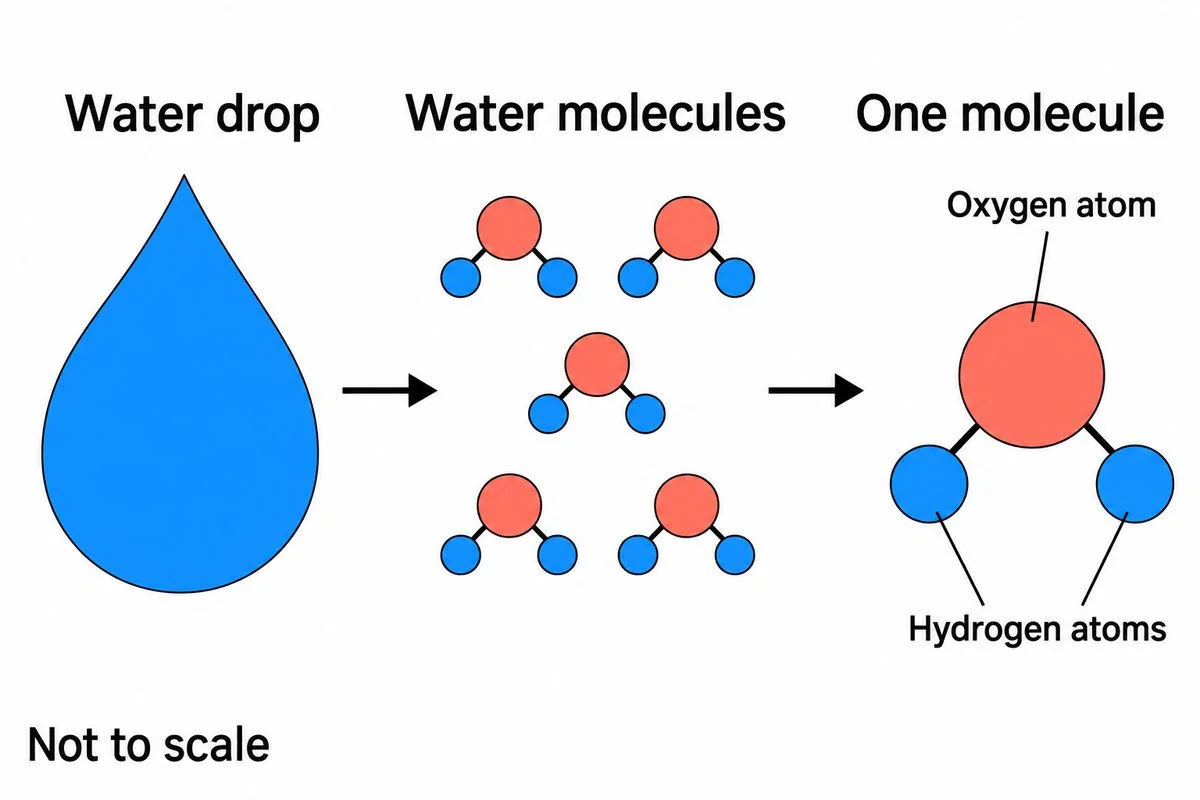
Look at the diagram’s water drop. Follow the enlargements to the molecules, then the atoms within one molecule.
Ask
What would you find inside this drop at a scale too small to see?
Say
This drop contains countless water molecules, too small to see individually. Molecules contain joined atoms. Each water molecule contains two hydrogen atoms and one oxygen atom.
Used in
Air pollution reports track floating dust so people can judge how dusty the air is.
If your child says…“One visible dust speck is one constituent particle.”
Ask
If this tiny drop contains countless particles, could a visible speck also contain many?
What’s true
Even a dust speck contains many constituent particles, although both are called particles.
2. Dissolving and interparticle spaces
Sugar remains between water particles and still occupies space.
Show
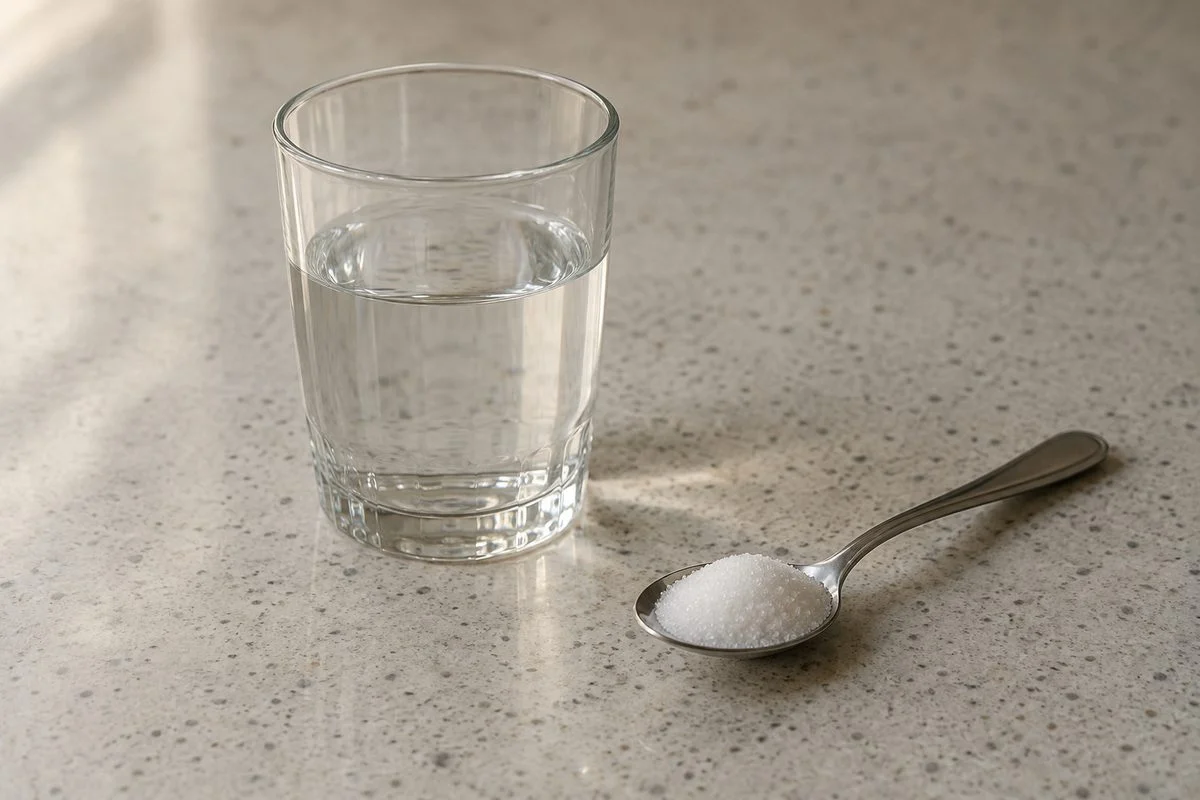
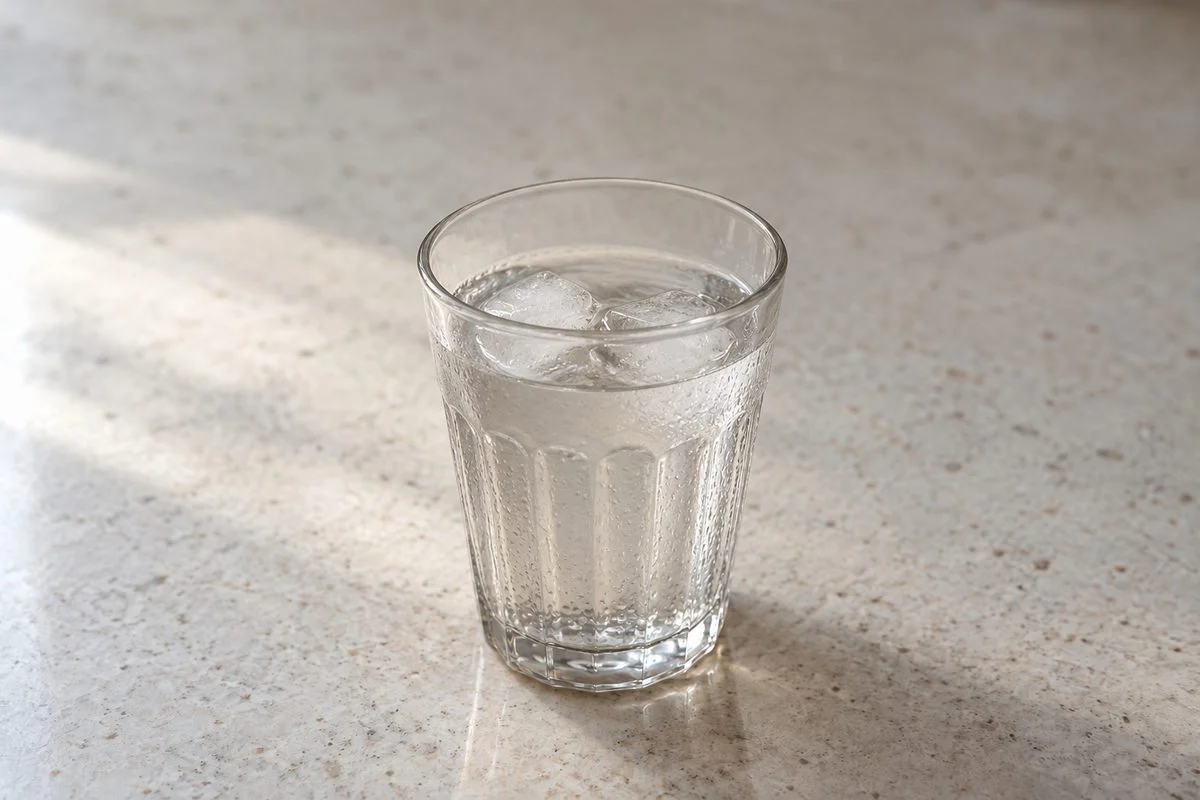
Set sugar beside drinking water in a clean glass. After predicting, stir in a teaspoonful until dissolved. Taste a sip.
Ask
Will the sweetness disappear when the grains disappear?
Say
Sugar remains among the water particles. Tasting shows sugar remains.
Used in
Salt dissolves in soup, spreading its flavour throughout the liquid.
If your child says…“The sugar has vanished.”
Ask
What makes the clear water taste sweet?
What’s true
The sugar remains, spread among the water particles.
3. Particle movement in liquids and gases
Moving particles spread substances through liquids and gases.
Show
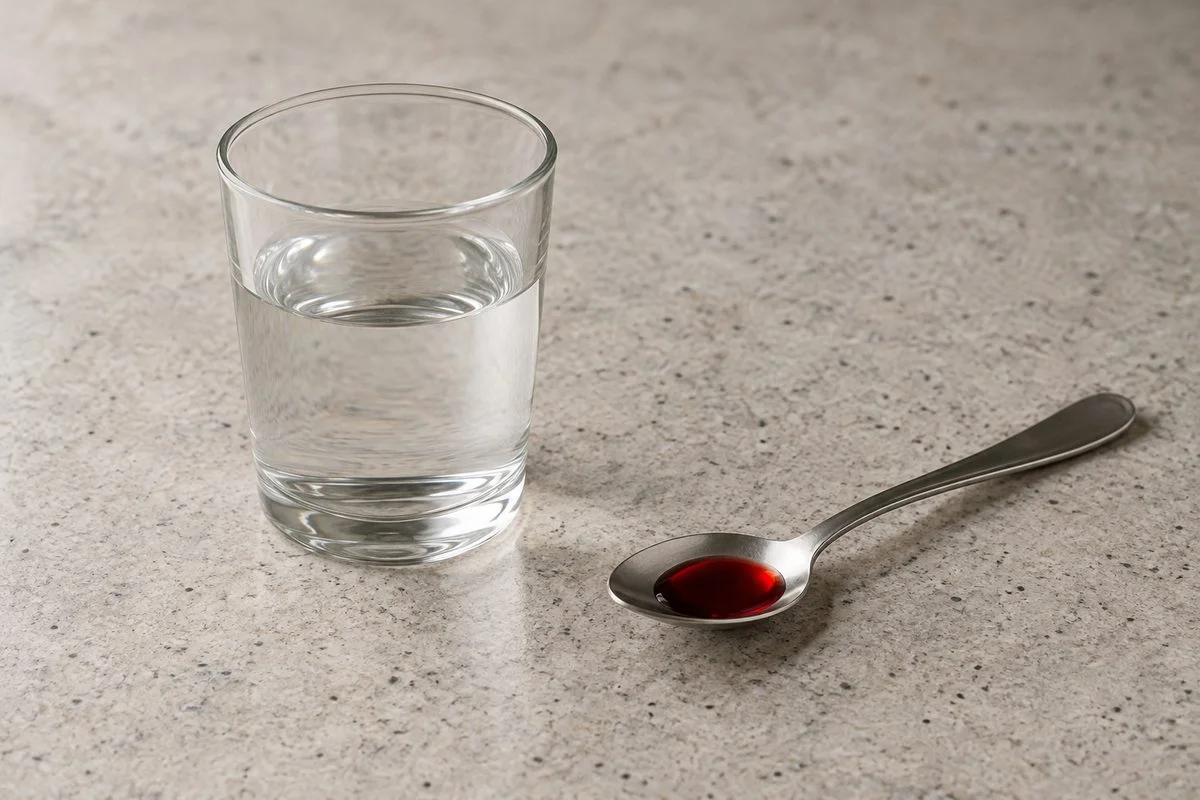
Let a glass of room-temperature water settle. After predicting, add a drop of food colouring. Watch without stirring for several minutes.
Ask
Will the colour spread if we leave the water unstirred?
Say
Colour spreads as particles move, helped by small water currents.
Used in
Perfume scents a room as its particles spread through the air.
If your child says…“Colour spreads only when someone stirs.”
Ask
What could spread the colour when no spoon moves?
What’s true
Water particles move even when nobody stirs the water.
Solids, liquids and gases
4. The solid state and interparticle attraction
Strong attraction holds solid particles close while they jiggle.
Show
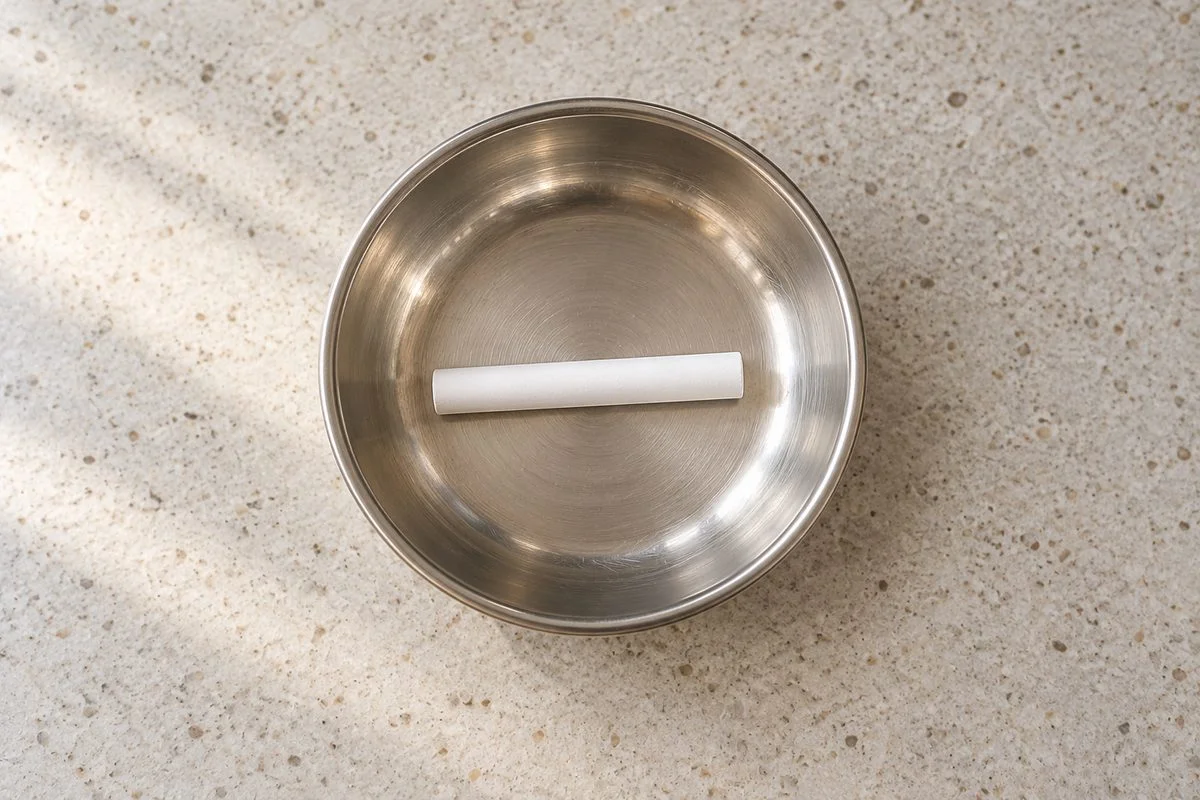
Place a chalk stick in a broad bowl. After predicting, tilt the bowl gently.
Ask
Will the chalk spread into the bowl's shape?
Say
Solids keep their shape and volume. Strong attraction holds their particles near set positions, where they jiggle.
Used in
A chair keeps its shape because its solid particles cannot slide past each other.
If your child says…“The particles push each other apart.”
Ask
Would pushing the particles apart help hold the chalk together?
What’s true
Attraction depends on the substance and becomes weaker as its particles move farther apart.
5. The liquid state
A liquid changes shape while keeping its volume.
Show
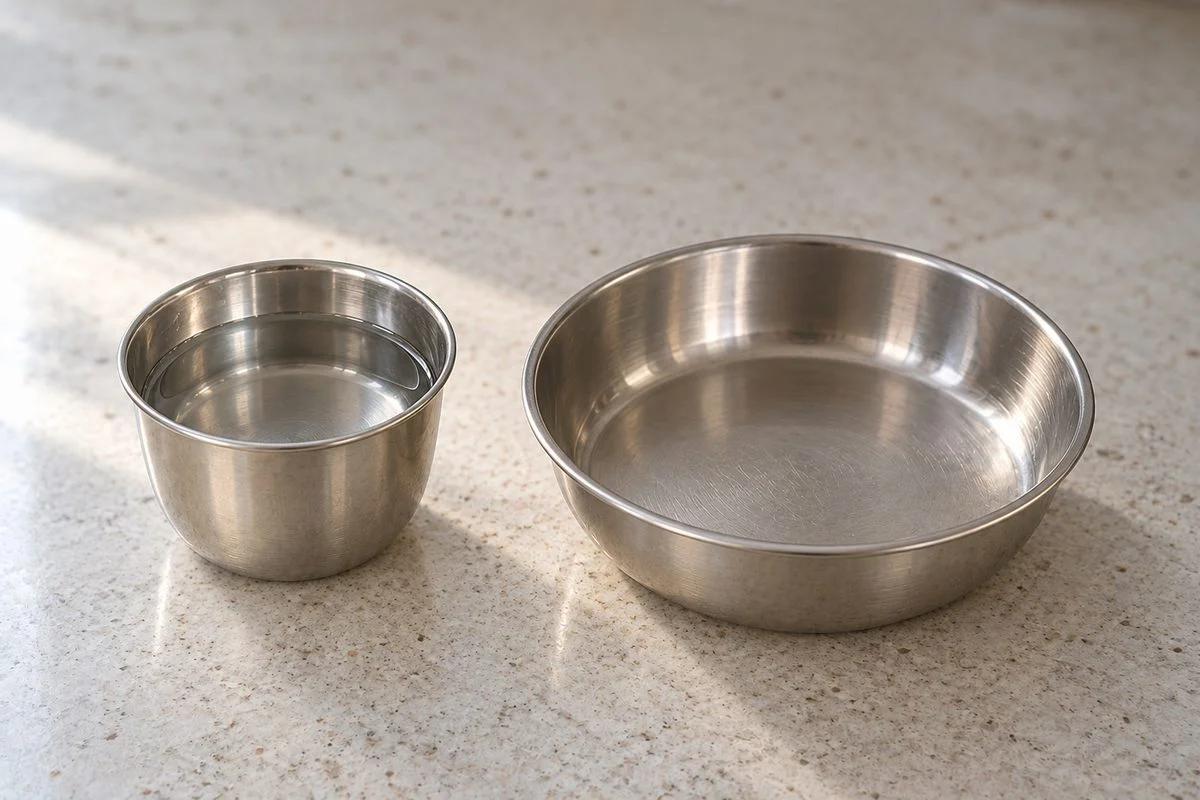
Set a narrow bowl of water beside an empty wide bowl. After predicting, pour without spilling.
Ask
Will the water occupy a different volume in the wider bowl?
Say
Water particles slide past one another but remain close. Pouring changes the water's shape, while its volume stays unchanged.
Used in
Measured cooking oil keeps its volume when poured into a pan, helping cooks follow recipes.
If your child says…“A lower water level means less water.”
Ask
If we pour it all back, where should the level reach?
What’s true
The same water can stand at different heights in differently shaped containers.
6. Gases, fluids and interparticle spaces
Particle gaps usually increase from solids through liquids to gases.
Show
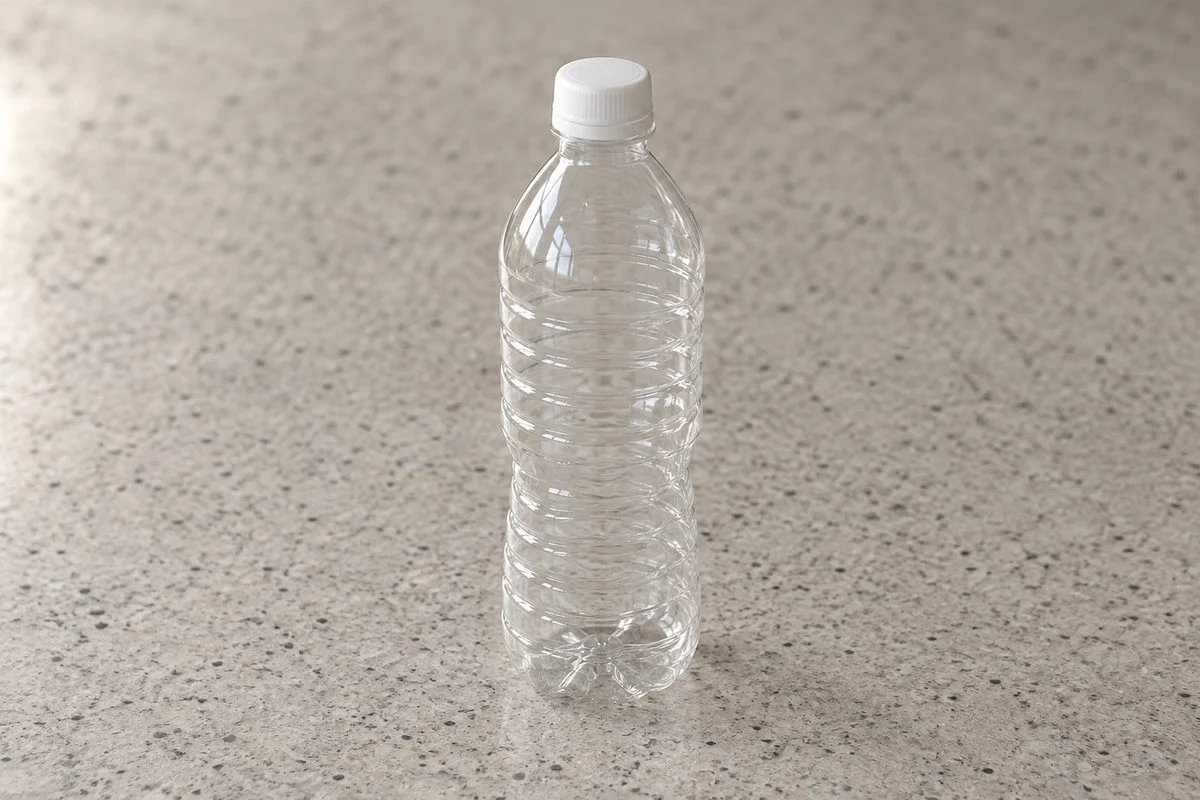
Cap a flexible plastic bottle containing air. After predicting, squeeze gently and release. Fill it completely with water and recap it. Try the same gentle squeeze.
Ask
Which squeezes more easily: trapped air or water?
Say
Air compresses as gaps shrink, while water barely compresses.
Used in
Air inside bicycle tyres compresses over bumps, cushioning the ride.
If your child says…“Pushing makes each air particle smaller.”
Ask
Could the same particles fit closer together without becoming smaller?
What’s true
Compression brings particles closer without shrinking them, and the gaps themselves contain no air.
Energy and changes of state
7. Melting point and thermal energy
Pure ice melts at a definite temperature while taking in energy.
Show
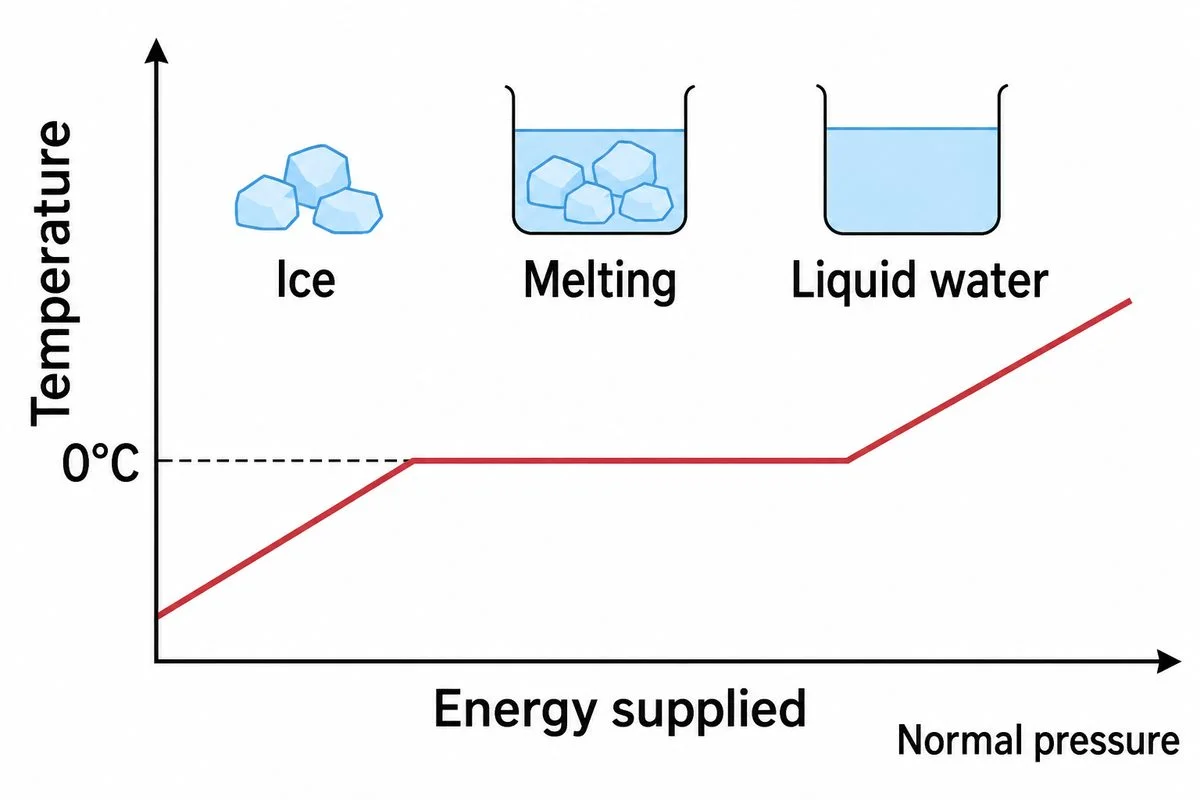
Look at the diagram’s graph for pure ice. Follow the line to 0°C, across the flat section, then upwards.
Ask
Will the melting ice get hotter as more energy enters along the flat section?
Say
At normal atmospheric pressure, pure ice stays at 0°C until melting finishes. The incoming energy frees particles from their fixed arrangement, while they remain close.
Used in
Cooling rocket propellants into liquids allows smaller storage tanks, reducing their cost.
If your child says…“Adding heat must make the melting ice hotter.”
Ask
Along the flat section, which increases: energy supplied or temperature?
What’s true
During melting, pure ice takes in energy while staying at its melting point.
8. Boiling point and evaporation
Evaporation forms surface vapour, while boiling also forms vapour inside.
Show
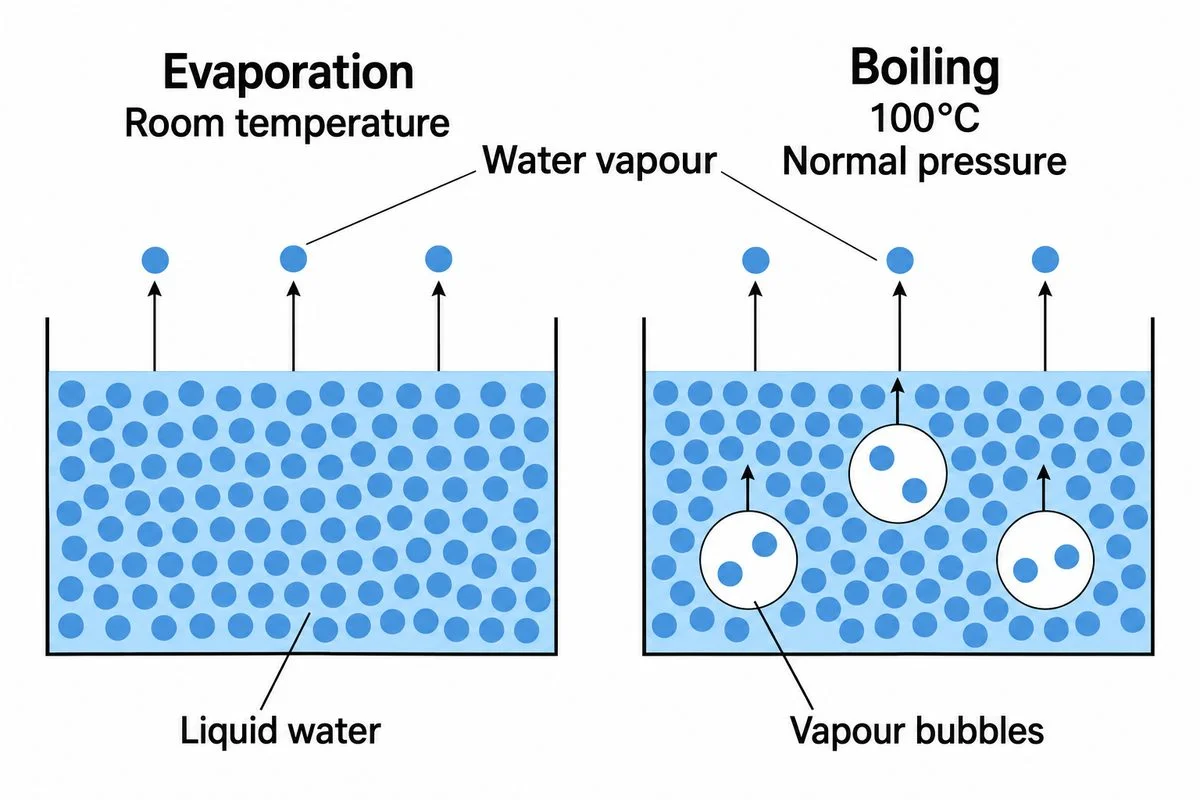
Look at the diagram. Follow particles leaving the left surface, then find vapour bubbles inside the right vessel.
Ask
Will the water level in the left vessel fall even without boiling?
Say
Evaporation lets water escape from the surface. Water boils, forming vapour bubbles inside too. The drawn vapour particles represent invisible water gas.
Used in
Spilled water evaporates, leaving the floor dry without heating.
If your child says…“Water becomes vapour only when it boils.”
Ask
Does spilled water need to boil before the floor dries?
What’s true
Water can evaporate at room temperature without forming bubbles inside the liquid.
We use cookies, including Meta’s and, if a ChatGPT advert brought
you, OpenAI’s, to see how visitors find us.
They are never used on your child’s screens in the app. You can turn them
off here, and change your mind any time.
Privacy policy