Skip to content

Teach Health: The Ultimate Treasure in eight steps.

For each idea: show it, ask before you tell, then say one line.

Gather a phone, pillow, empty reused container, digital thermometer, soap and a long-sleeved shirt.

Common misconceptions & worked visual for this chapter · 15 practice questions with answers

How to teach it

Health and everyday life

Phone with its screen off beside a pillow.

1. Health and healthy habits

Health involves the body, feelings and relationships; everyday habits affect it.

Show
Place a phone beside a pillow. Point to where the phone lies within reach at bedtime.
Ask
What might change besides how your eyes feel?
Say
Too much screen time can displace sleep, movement and company.
Used in
Regular, balanced meals provide energy and nutrients for growth.
If your child says…“Screens only affect my eyes.”
Ask
If phone use keeps you awake, which need is being missed?
What’s true
Excessive screen use can affect sleep and emotional well-being even when eyes feel comfortable.
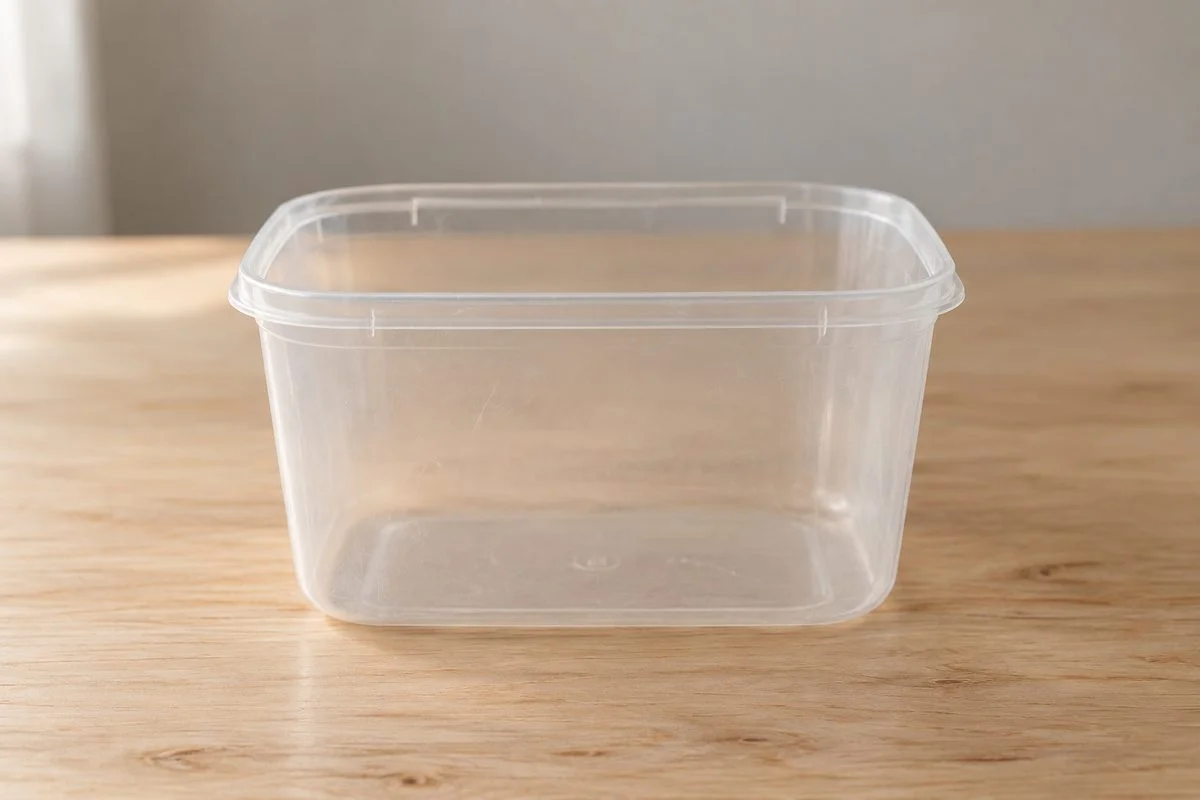
Empty plastic container standing upright.

2. Surroundings and health

The places around us can increase or reduce illness risks.

Show
Set an empty, reused container upright. Point to its open top and the bottom where rainwater could collect.
Ask
What could breed there if the water remained?
Say
Standing water can provide mosquito breeding places.
Used in
Removing trapped water from discarded containers reduces places where mosquitoes can breed.
If your child says…“Cleaning rubbish only makes places look nicer.”
Ask
What happens to that breeding place when the trapped water is removed?
What’s true
Clearing containers that collect water can reduce mosquito breeding.

Understanding illness

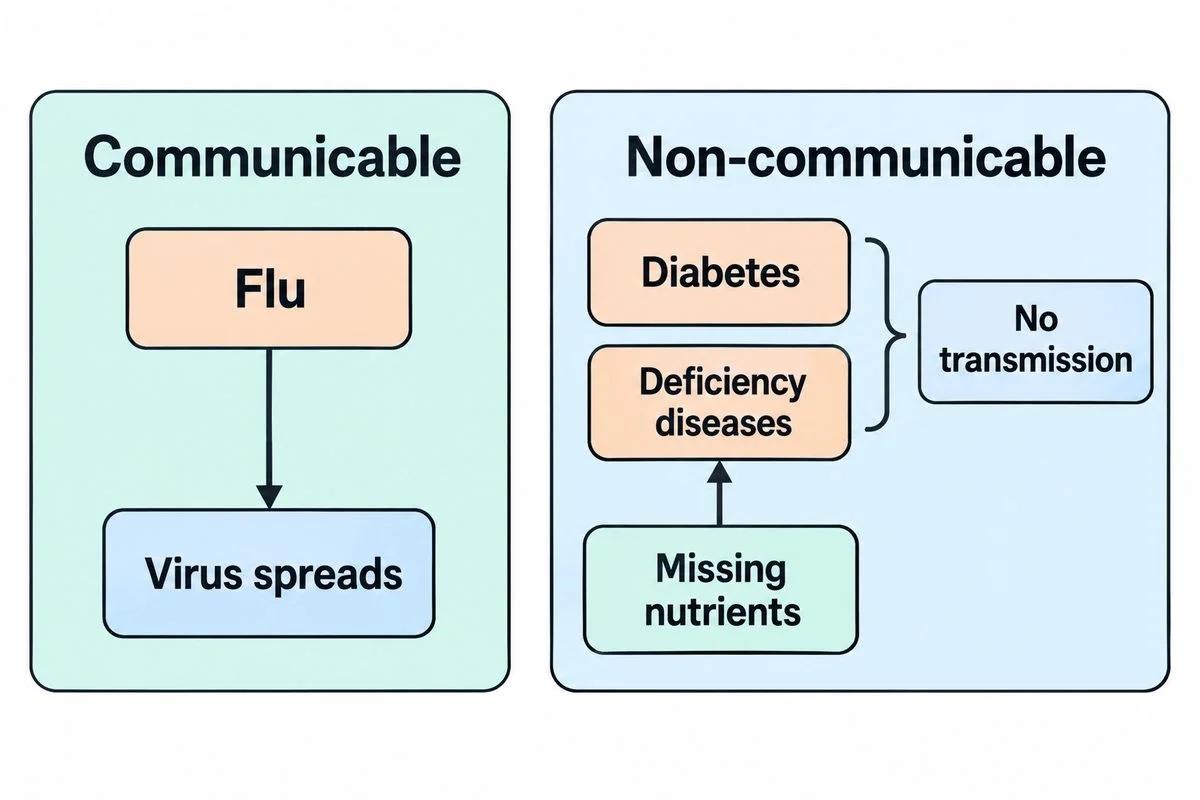
Diagram comparing spreading flu with diabetes and diseases caused by missing nutrients.

3. Communicable and non-communicable diseases

Some diseases can spread between people; others cannot.

Show
Look at the diagram. Find flu on the left, then diabetes on the right. Follow the missing nutrients arrow to deficiency diseases.
Ask
Which could you catch from someone nearby: flu or diabetes?
Say
Flu can spread through its virus, but diabetes cannot pass between people. Deficiency diseases develop when the body gets too little of particular nutrients.
Used in
Treatment and suitable lifestyle changes can help manage diabetes.
If your child says…“Every disease comes from someone else.”
Ask
How would avoiding people supply a missing nutrient?
What’s true
Scurvy develops from too little vitamin C, without being caught from anyone.
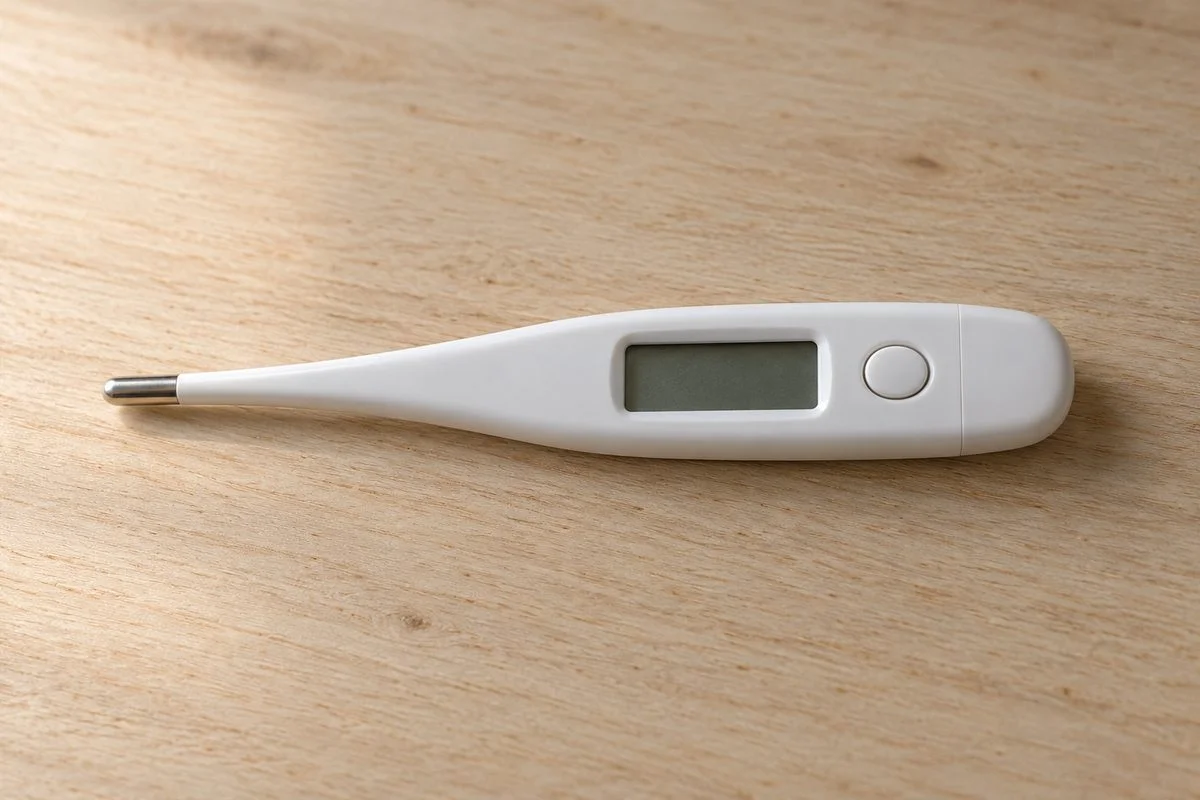
Digital thermometer lying flat with its display switched off.

4. Signs and symptoms

Symptoms are felt; signs can be observed or measured.

Show
Set out a thermometer. Describe someone feeling dizzy before their temperature is measured.
Ask
Could someone who feels dizzy still have a normal temperature?
Say
Yes; dizziness is a symptom.
Used in
Doctors consider signs and symptoms together to help identify illness.
If your child says…“A normal reading means nothing is wrong.”
Ask
Does a normal temperature make the person's dizziness disappear?
What’s true
Someone's felt symptoms remain useful evidence even when measurements are normal.
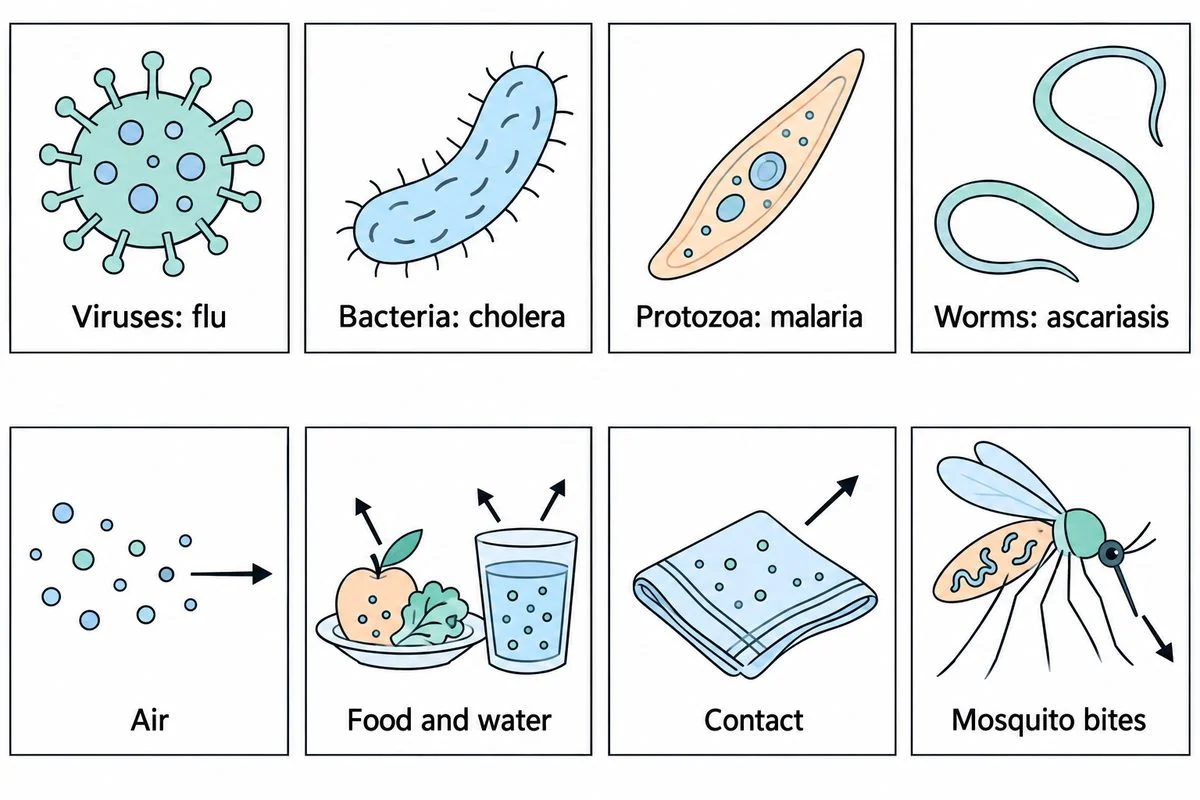
Four pathogen examples above routes through air, food, water, contact and mosquito bites.

5. Pathogens and routes of spread

Different disease-causing agents reach people through different routes.

Show
Read the diagram's four pathogen examples across the top. Below, trace the routes through air, food or water, contact and mosquito bites.
Ask
How could these pathogens reach you without directly touching someone who is ill?
Say
Pathogens can travel through air, contaminated food or water, shared objects, or bites. Their type and their route are different things.
Used in
Boiling drinking water kills germs, reducing the risk from contaminated water.
If your child says…“The mosquito itself causes malaria.”
Ask
Which enters during the bite: the whole mosquito or the parasite it carries?
What’s true
An infected mosquito carries the parasite that causes malaria.

Prevention and treatment

Long-sleeved shirt with sleeves extended beside a bar of soap.

6. Preventing communicable diseases

Precautions must match the route through which an infection spreads.

Show
Place soap beside a long-sleeved shirt. Leave the sleeves spread out.
Ask
Which would reduce bites on your arms: washing them or covering them?
Say
Handwashing removes pathogens. Long sleeves reduce exposed skin where mosquitoes can bite.
Used in
Safe toilets contain faeces, reducing germs reaching hands, food and drinking water.
If your child says…“Handwashing protects me from every infection.”
Ask
What would keep a mosquito from biting a freshly washed arm?
What’s true
A useful precaution against one route may leave another route open.
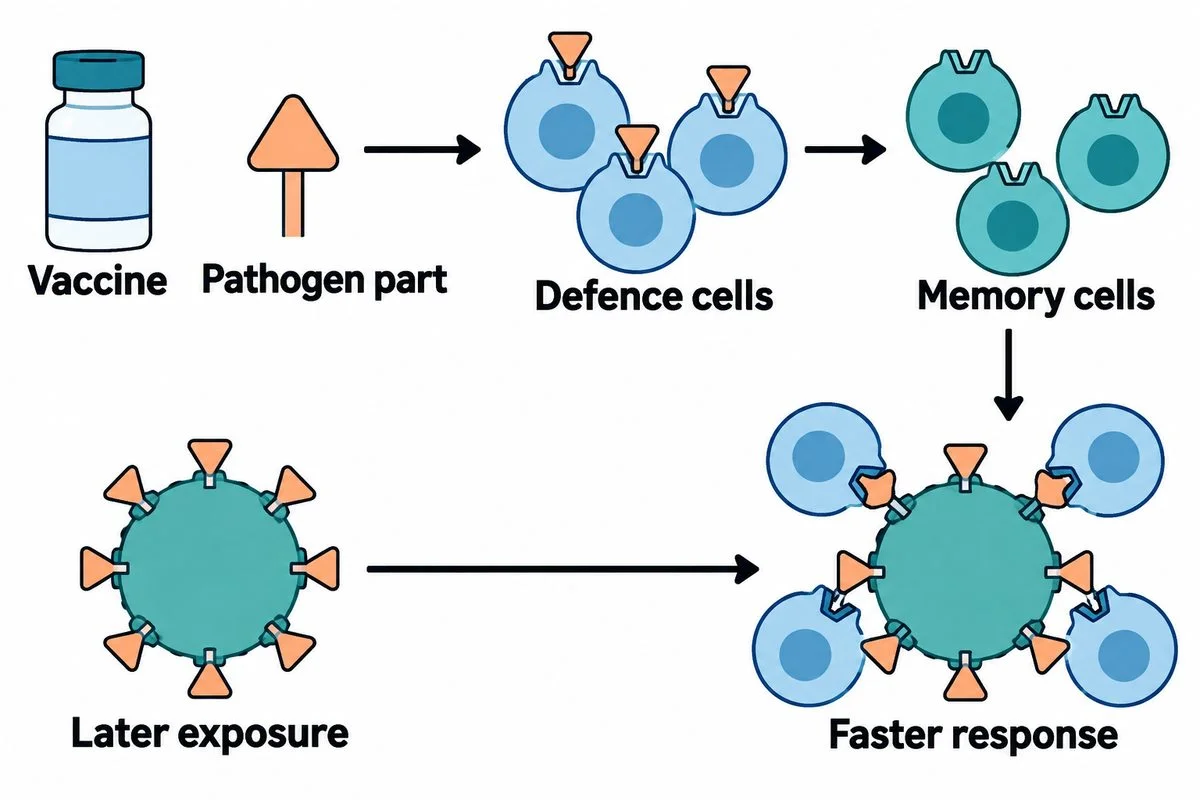
Vaccination creates memory cells that help defences respond faster after later exposure.

7. Immunity and vaccination

Vaccines prepare defence cells, but cannot guarantee complete protection.

Show
Follow the diagram from the vaccine's pathogen part to defence cells and memory cells. Trace the later exposure arrow towards the faster response.
Ask
How could this vaccine help when the matching pathogen arrives later?
Say
Vaccines train defences and leave memory cells, helping them respond faster later.
Used in
Recommended vaccines help prevent illness in people of different ages.
If your child says…“Cowpox is just smallpox in cows.”
Ask
Does recognising similarities between two viruses make them the same virus?
What’s true
Cowpox and smallpox have different, related viruses whose shared features can be recognised by defences.
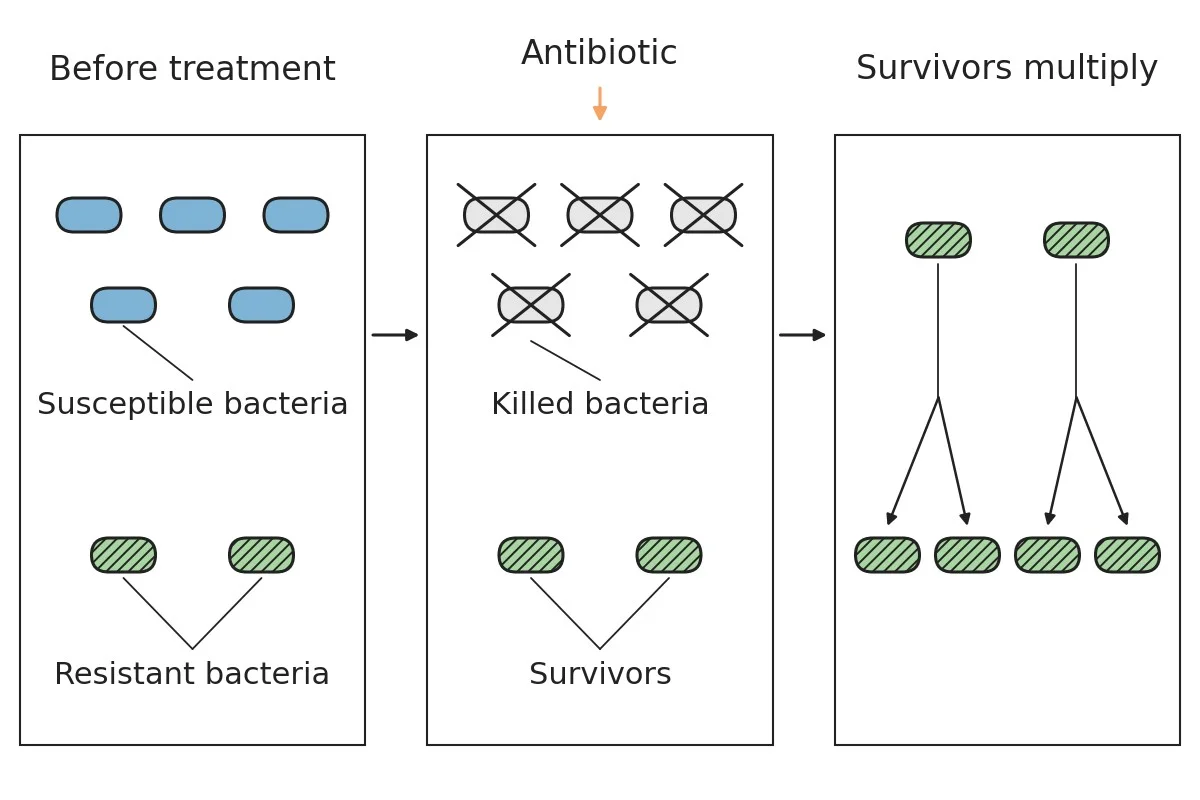
Antibiotic kills susceptible bacteria while resistant survivors remain and multiply.

8. Antibiotics and antibiotic resistance

Antibiotics treat some bacterial infections, but resistant bacteria can survive treatment.

Show
Find the bacteria before treatment in the diagram. Follow which bacteria are killed, then trace the surviving bacteria multiplying.
Ask
Why might this antibiotic fail to clear the infection?
Say
Resistant bacteria survive this antibiotic and multiply, making the infection harder to treat. Resistance belongs to bacteria, not the patient's body.
Used in
Suitable antibiotics treat bacterial infections, helping people recover.
If your child says…“Antibiotics cure every infection.”
Ask
What can the medicine target if the virus lacks those bacterial parts?
What’s true
Antibacterial antibiotics cannot treat flu because its virus lacks the bacterial targets they act on.

A real problem

Vaccination helped end polio in India.

Polio is caused by a virus and can paralyse children.

Vaccines reached remote communities and vulnerable groups, helping make elimination possible.

India was certified polio-free in 2014.

WHOUNICEFUNICEF India

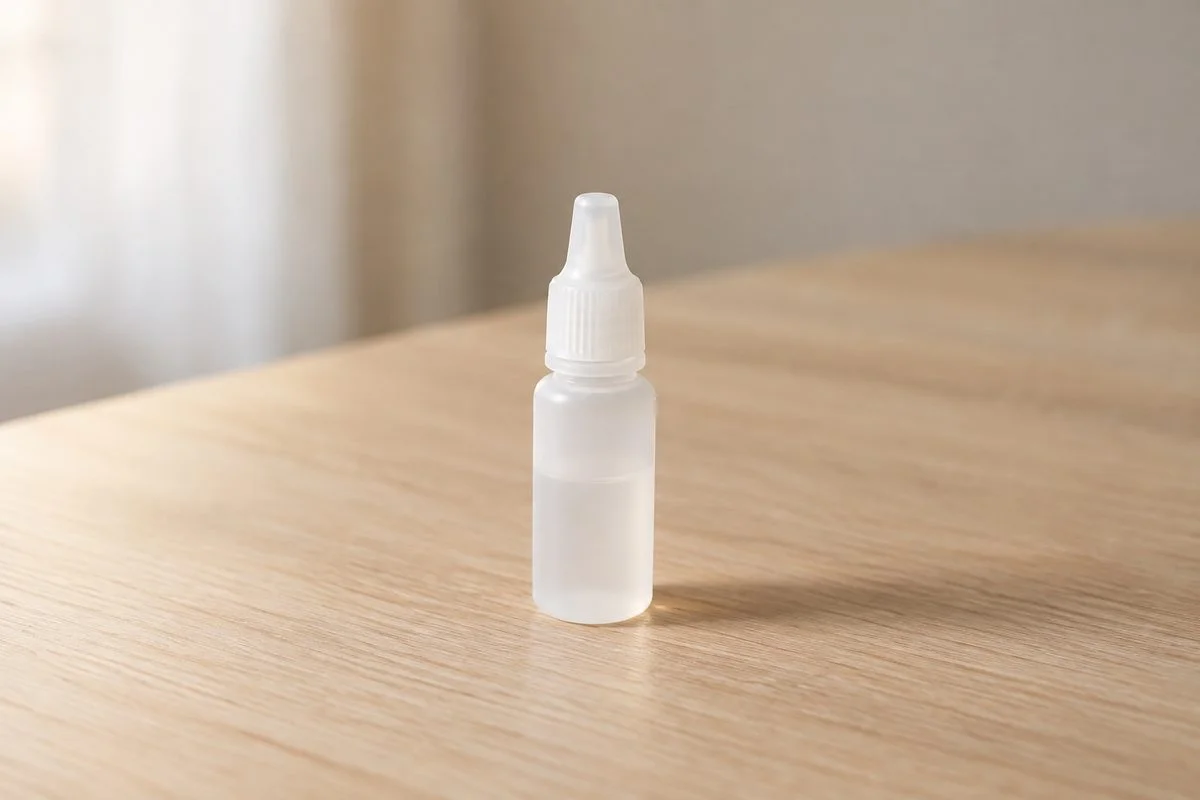
A small dropper vial of oral vaccine on a table.

Concept Lab · Common misconception

The tempting mistake in Health: The Ultimate Treasure

Open standalone misconception page →

Do antibiotics treat viral infections?

Wrong

An antibiotic kills the virus that causes a cold.

Why it feels right. A medicine for one infection seems useful for every infection.

Right

Antibiotics act on bacteria. Viral infections involve different targets.

Worked example

Example bacterial target
Bacterial cell wall→Some antibiotics block its formation
Cold virus
No bacterial cell wall→Same target is absent
The antibiotic's bacterial target is absent in a cold virus.
  1. A common cold is caused by viruses.
  2. Its virus lacks the bacterial structures that many antibiotics target.

Ask your child eight quick questions.

One per step. The answer and the reason are given.

  1. Can late phone use affect sleep even when someone's eyes feel comfortable?

    Yes. Comfortable eyes do not mean screen use leaves sleep unaffected.

  2. How can emptying rain-filled rubbish containers reduce the risk of dengue?

    It removes mosquito breeding places. Standing water provides places for mosquitoes to breed.

  3. What causes scurvy even when nobody nearby has it?

    Too little vitamin C. This deficiency disease comes from a nutrient shortage and does not spread.

  4. Does a normal temperature prove that someone who feels dizzy is well?

    No. A normal measurement does not erase a symptom.

  5. What does an infected mosquito carry that causes malaria?

    A single-celled parasite. The mosquito carries the parasite; the parasite causes malaria.

  6. What can still spread malaria to someone who washes their hands carefully?

    Infected mosquito bites. Malaria usually spreads through infected mosquitoes, so handwashing alone cannot block that route.

  7. Why could cowpox help protect against smallpox?

    Related viruses shared recognisable features. Defences responding to cowpox could recognise similarities in the smallpox virus.

  8. Why would an antibacterial antibiotic fail against flu?

    Viruses lack its bacterial targets. The medicine needs particular bacterial targets, which flu viruses do not have.

15 more questions with answers