Skip to content

Teach The Invisible Living World: Beyond Our Naked Eye in eight steps.

For each idea: show it, ask before you tell, then say one line.

Gather a rounded clear bottle, water, printed page, flour, instant baking yeast, two bowls, spoon, damp cloths and soap.

Do not taste raw dough. Wash hands with soap after handling flour, dough or fallen leaves. Wash bowls, utensils and surfaces after contact with raw flour or dough.

Common misconceptions & worked visual for this chapter · 15 practice questions with answers

How to teach it

Seeing and understanding cells

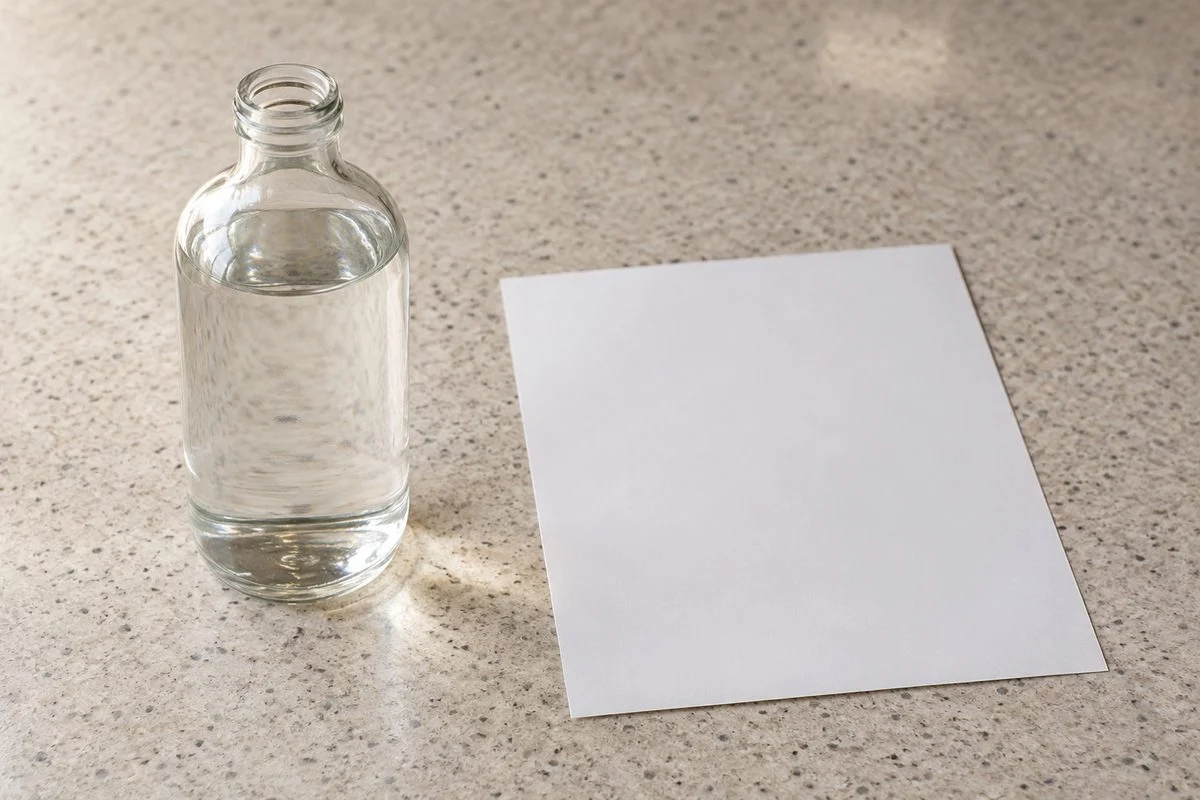
Water-filled rounded bottle beside a page with its blank side facing up.

1. Lenses and microscopes

Magnification reveals small things already present.

Show
Set a rounded, water-filled glass bottle beside a face-down page. After predicting, turn the page face up, with nearby print behind the bottle's curved side.
Ask
When we turn the page over, will nearby print look larger through the curved bottle?
Say
The curved bottle bends light and can enlarge nearby print.
Used in
A folding paper microscope makes onion cells visible without a costly laboratory microscope.
If your child says…“There must be a proper lens hidden inside.”
Ask
What did we put inside the bottle besides water?
What’s true
The curved bottle and water can magnify without a separate glass lens.
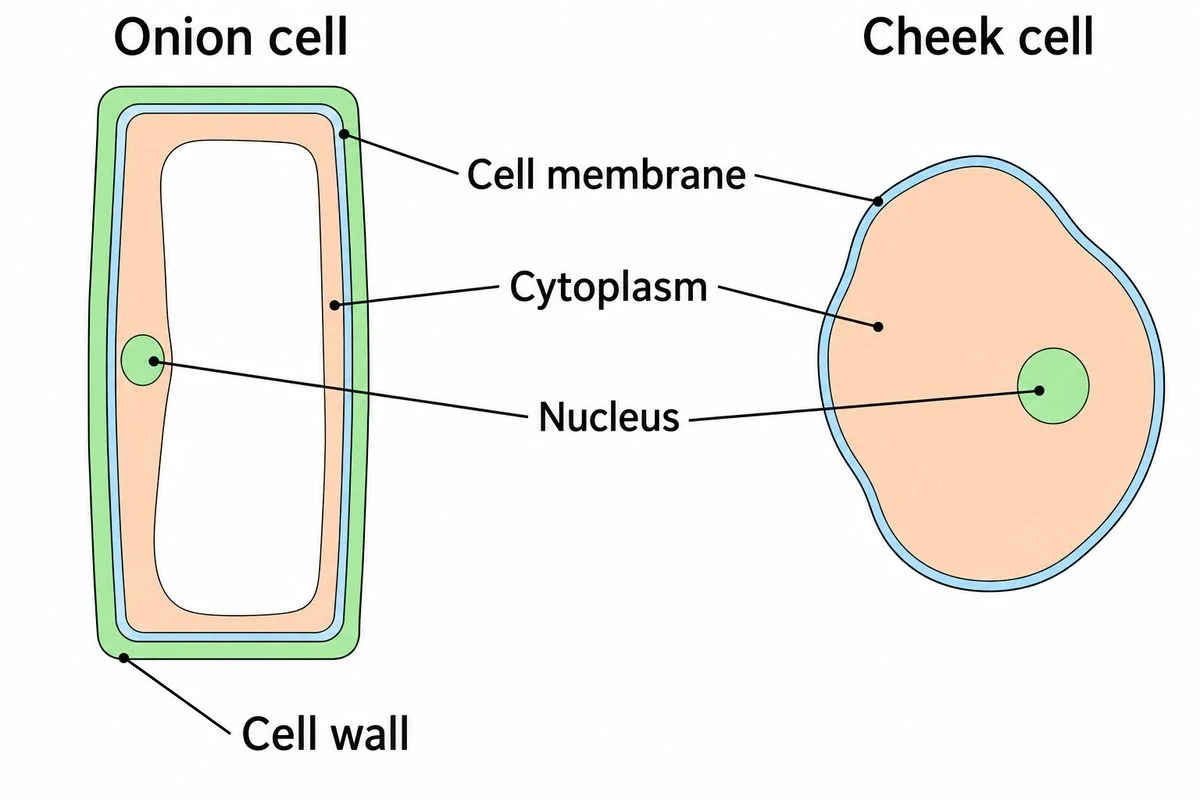
Onion and cheek cells share basic parts; the onion cell has an additional wall.

2. Cell membrane, cytoplasm, nucleus and cell wall

Cytoplasm does cell work; the nucleus directs it.

Show
Find the onion and cheek cells in the diagram. Locate each membrane, cytoplasm and nucleus. Trace the onion cell's wall outside its membrane.
Ask
Which covering could control what enters each cell?
Say
The membrane controls entry and exit; most cell work happens in the cytoplasm. The nucleus directs activities. The onion cell's wall supports it outside its membrane.
Used in
Cell walls give plants strength and help them stay firm.
If your child says…“The wall takes the membrane's place.”
Ask
What covering can you trace just inside the onion cell's wall?
What’s true
The plant cell has a membrane just inside its supporting wall.
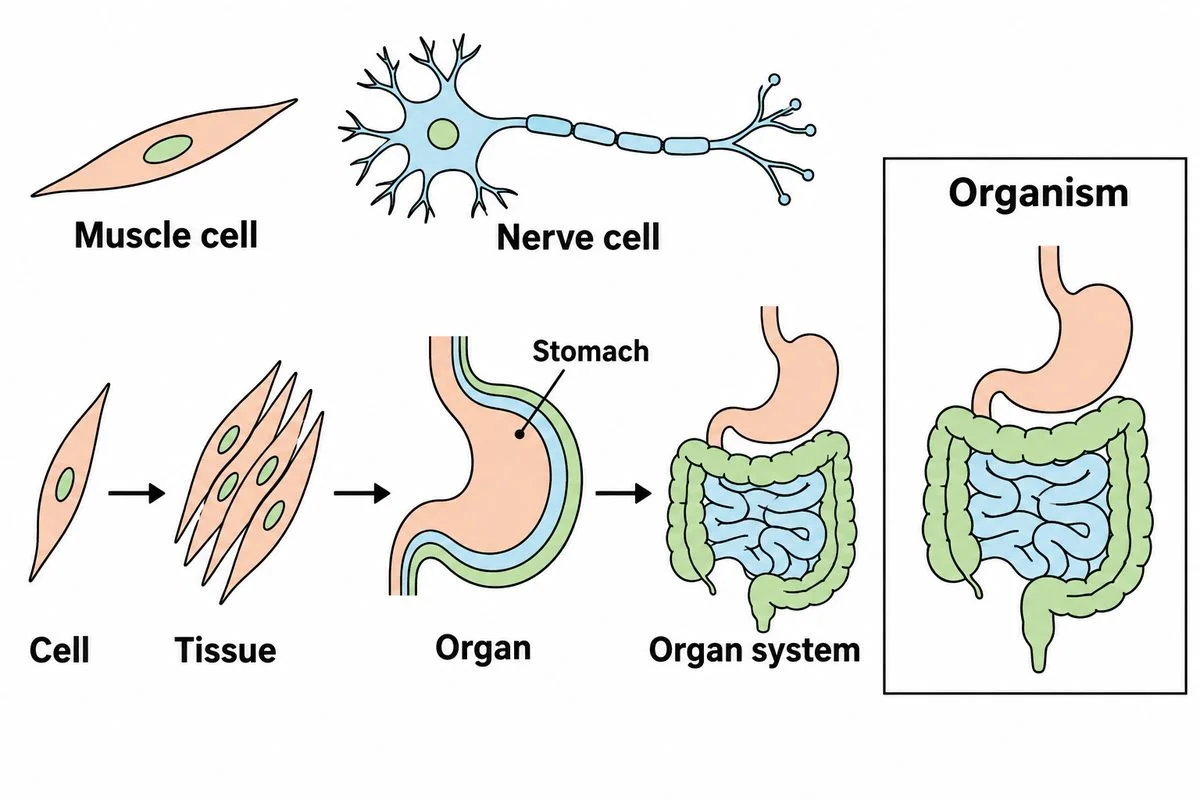
Different cell shapes beside a connected sequence from cell to organism.

3. Cell shapes, tissues, organs and organ systems

Specialised cells form tissues, organs, systems and a whole organism.

Show
Compare the muscle and nerve cells in the diagram. Follow muscle cells into tissue, the stomach, an organ system and the organism.
Ask
How could these differently shaped cells help the same organism work?
Say
Muscle cells shorten, while long, branched nerve cells carry messages. Similar cells form tissues, and different tissues form an organ. Organs cooperate in systems that work together within the organism.
Used in
Long, branched nerve cells carry messages over long distances.
If your child says…“Cells join straight into organs.”
Ask
What comes between the muscle cell and the stomach along these arrows?
What’s true
Tissues are the level between cells and organs.

Microorganisms and food

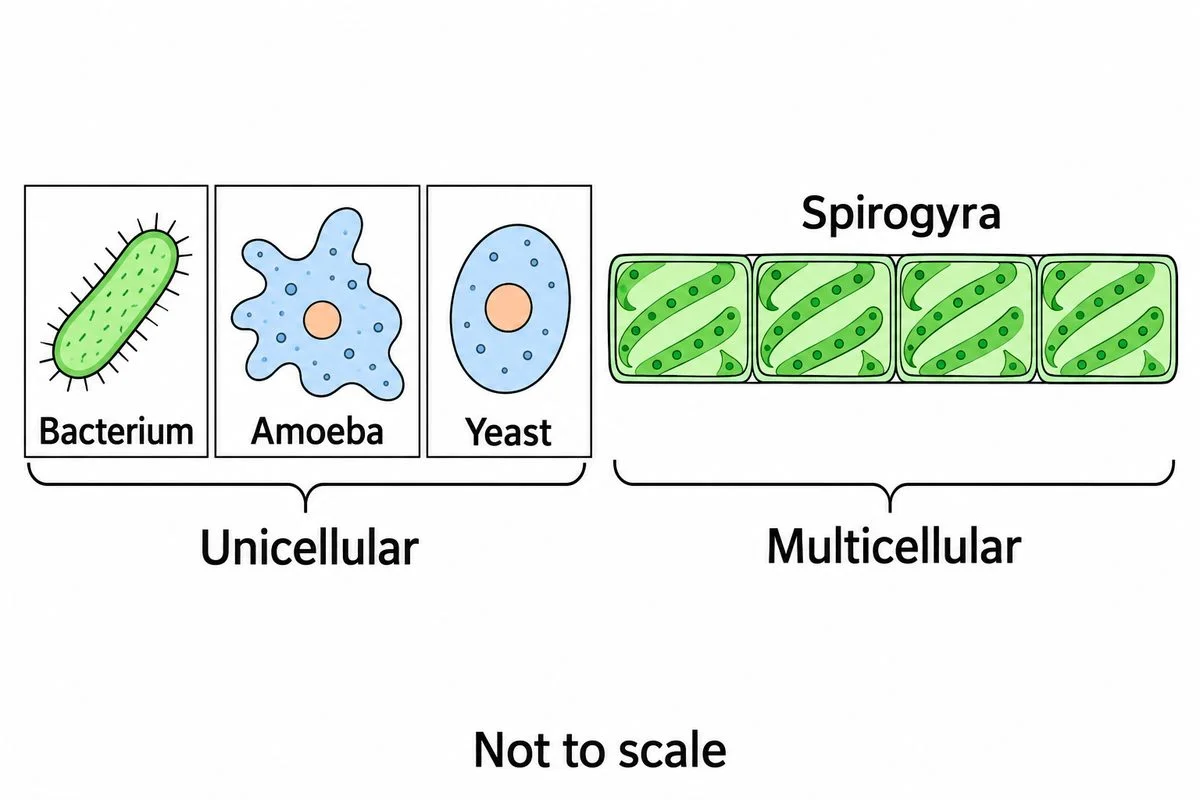
Single bacterium, Amoeba and yeast cells beside a Spirogyra filament containing several cells.

4. Microorganisms, unicellular and multicellular organisms

Tiny organisms can have one cell or many.

Show
Find the bacterium, Amoeba, yeast and Spirogyra in the diagram. Trace their cell boundaries; the drawings use different enlargements.
Ask
Which organism shown would contain several cells if we examined it through a microscope?
Say
The bacterium, Amoeba and yeast each live as a single cell. Spirogyra is an alga with many connected cells.
Used in
Lactobacillus bacteria turn milk into curd.
If your child says…“Every microbe is one cell.”
Ask
Do the yeast cell and the Spirogyra filament have the same number of cells?
What’s true
Microbes vary in cell number; viruses lack cells and multiply only inside living host cells.
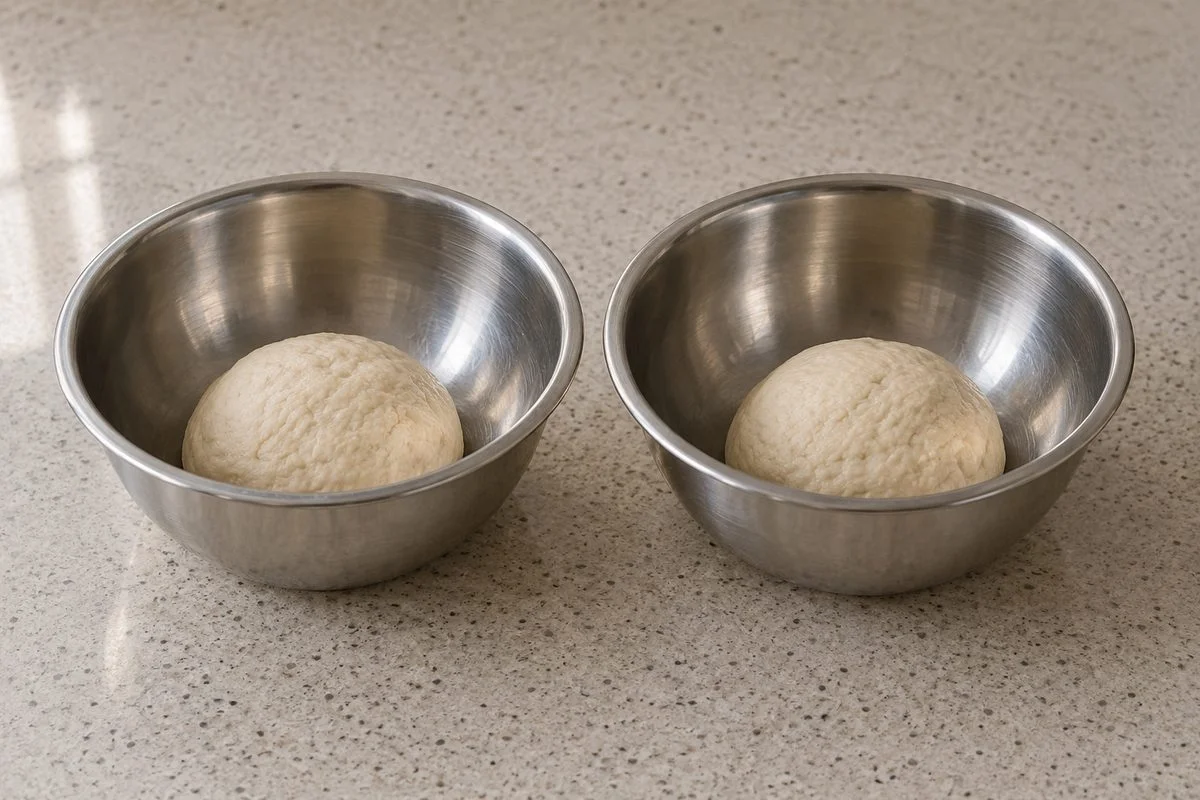
Two matching steel bowls holding equal dough portions before rising.

5. Fermentation and food preservation

Microbes change food; limiting their growth helps preserve it.

Show
Put equal portions of flour-and-water dough, without yeast or baking powder, in two bowls. Mix a small spoonful of instant baking yeast into only one portion. Cover both bowls with damp cloths and leave them together somewhere warm. Compare the bowls regularly, as risen dough can later sink.
Ask
Which dough will rise?
Say
Yeast releases carbon dioxide; its trapped bubbles make dough rise.
Used in
Plenty of salt in pickles reduces microbial growth, helping them keep longer.
If your child says…“Warmth alone makes dough rise.”
Ask
Both bowls were equally warm; what was different?
What’s true
Warmth helps yeast grow; yeast supplies the gas that raises this dough.
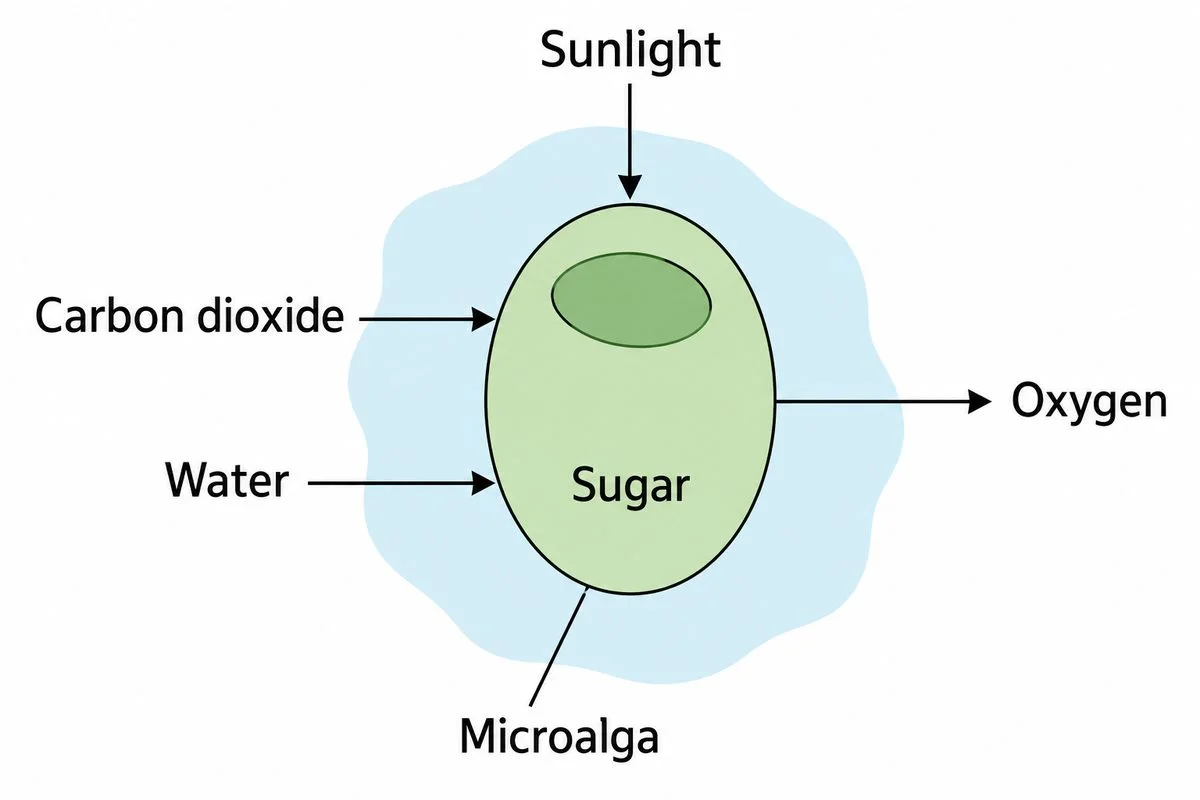
Microalga uses sunlight, carbon dioxide and water to make sugar and release oxygen.

6. Microalgae

Microscopic algae make food using sunlight and release oxygen.

Show
Find the enlarged microalga in the diagram. Follow sunlight, carbon dioxide and water towards it. Locate sugar inside and follow oxygen outwards.
Ask
Could this tiny alga help supply oxygen for breathing?
Say
This tiny alga releases oxygen as it makes food. Sunlight lets it make sugar from carbon dioxide and water.
Used in
Dried Spirulina provides protein with little fat or sugar.
If your child says…“Algae take ready-made food from water.”
Ask
Why would microalgae need sunlight if water already supplied their food?
What’s true
Microalgae use sunlight to make their food rather than absorb it ready-made.

Microorganisms and soil

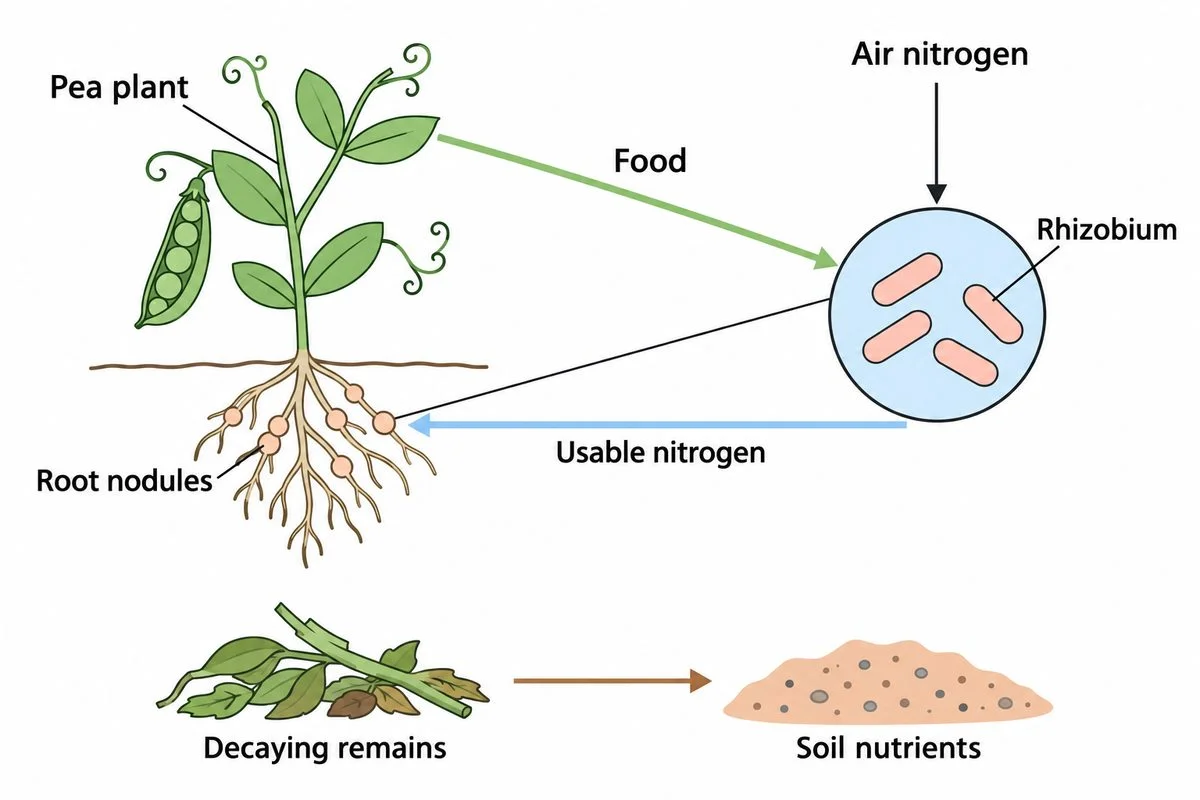
Pea root nodules exchange food and usable nitrogen; decaying remains return nutrients to soil.

7. Rhizobium and root nodules

Bacteria in legume root nodules make air's nitrogen usable.

Show
Find the pea roots and enlarged nodule in the diagram. Follow the nitrogen and food arrows. Then follow decaying remains towards soil nutrients.
Ask
Can this pea plant use air's nitrogen without help from its nodule bacteria?
Say
Pea plants cannot use nitrogen gas directly. Rhizobium changes it into usable nitrogen, while the plant supplies food. Decaying pea remains return nitrogen to soil.
Used in
Decaying legume remains can add nitrogen to soil, helping the following crop grow.
If your child says…“Those lumps mean the roots are damaged.”
Ask
If these bacteria supply usable nitrogen, what do the swellings offer the plant?
What’s true
Rhizobium nodules help plants get nitrogen, but other root swellings may not.
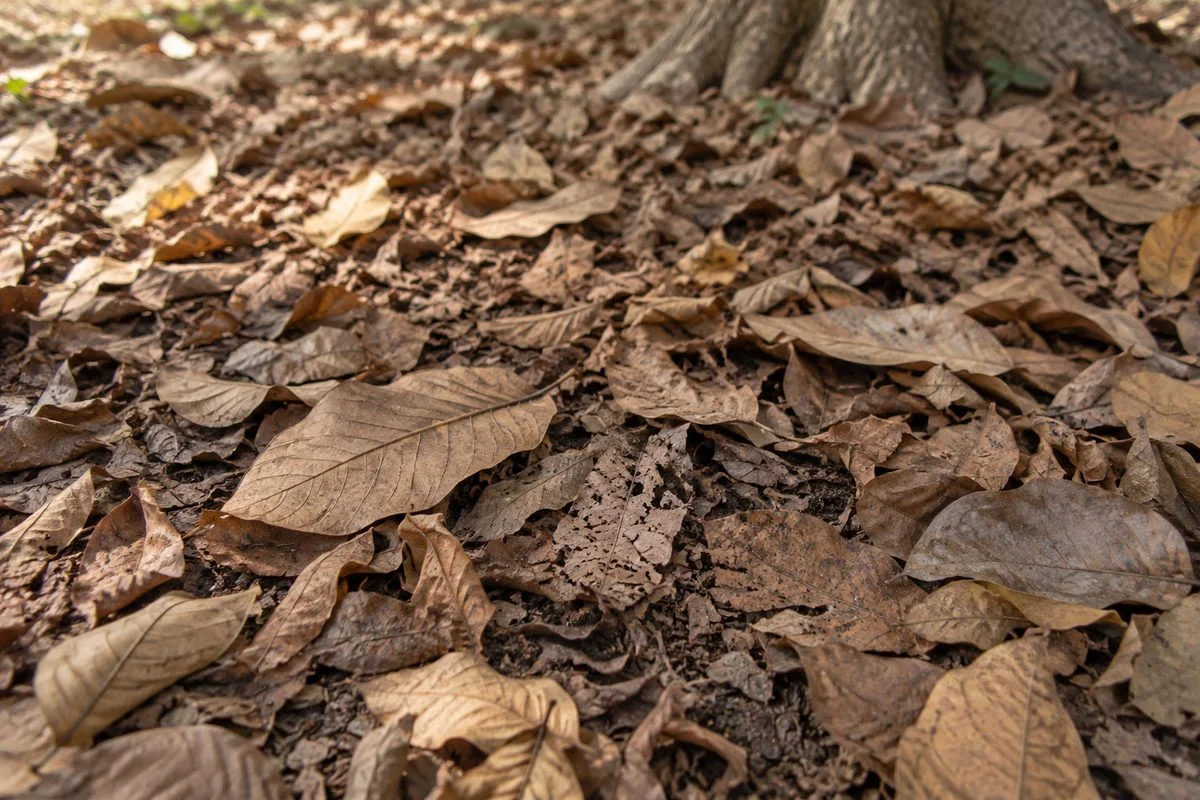
Whole and ragged fallen leaves with darker fragments visible through gaps.

8. Decomposition

Microbes break waste down and return nutrients to soil.

Show
Find fallen leaves beneath a tree. After predicting, lift the surface leaves to compare them with the darker fragments underneath. Replace the leaves and wash your hands.
Ask
What might the older leaves underneath look like?
Say
The fragments underneath show leaves breaking down. Microbes and small soil animals break leaves down, returning nutrients to the soil.
Used in
Decomposed animal dung supplies manure that helps plants grow.
If your child says…“Rotting destroys waste and leaves nothing useful.”
Ask
If nothing useful remained, how could the resulting manure help plants?
What’s true
Decomposition returns nutrients to soil instead of simply making waste disappear.

A real problem

Pasteur developed a heating process to prevent wine spoilage.

He showed that contaminating microbes made wine spoil.

Heating the wine destroyed the unwanted microbes.

He patented the process in 1865.

Science History InstituteInstitut Pasteur

Unlabelled glass bottle of wine on a kitchen counter.

Concept Lab · Common misconception

The tempting mistake in The Invisible Living World: Beyond Our Naked Eye

Open standalone misconception page →

Are all microbes harmful?

Wrong

All bacteria make people ill.

Why it feels right. Disease is the situation where I hear about bacteria.

Right

Different bacteria have different effects.

Worked example

Curd making
Milk sugars→Lactic acid bacteria produce acid→Milk sets into curd
This bacterial activity makes curd. Bacteria can play useful roles.
  1. Bacteria used to make curd produce acid from sugars in milk.
  2. This is a useful role, distinct from bacteria that cause disease.

Ask your child eight quick questions.

One per step. The answer and the reason are given.

  1. What makes nearby print look larger through our bottle?

    Its curved shape bends light. Water inside the curved bottle helps it act like a magnifying lens.

  2. Does a plant cell's wall replace its membrane?

    No. The wall surrounds the membrane.

  3. What level comes between cells and organs?

    Tissues. Similar cells form tissues; different tissues combine into organs.

  4. Which organism shown has many connected cells?

    Spirogyra. The cross walls divide its filament into separate cells.

  5. What makes the yeast dough rise when both bowls are equally warm?

    Carbon dioxide from yeast. Yeast supplies gas bubbles; warmth alone does not raise the comparison dough.

  6. How do microalgae get their food?

    They make it using sunlight. They make food instead of taking ready-made food from water.

  7. Are confirmed Rhizobium nodules harmful root damage?

    No. They house bacteria that supply usable nitrogen.

  8. What happens to nutrients in fallen leaves as they decompose?

    They return to soil. Decomposition returns nutrients that plants can use.

15 more questions with answers