Skip to content

Teach Nature of Matter: Elements, Compounds, and Mixtures in eight steps.

For each idea: show it, ask before you tell, then say one line.

Gather sugar, water, glasses, bowls, a stainless-steel spoon, sprout salad, a speckled rock, ice, a steel tumbler and cloth.

Common misconceptions & worked visual for this chapter · 15 practice questions with answers

How to teach it

Substances and mixtures

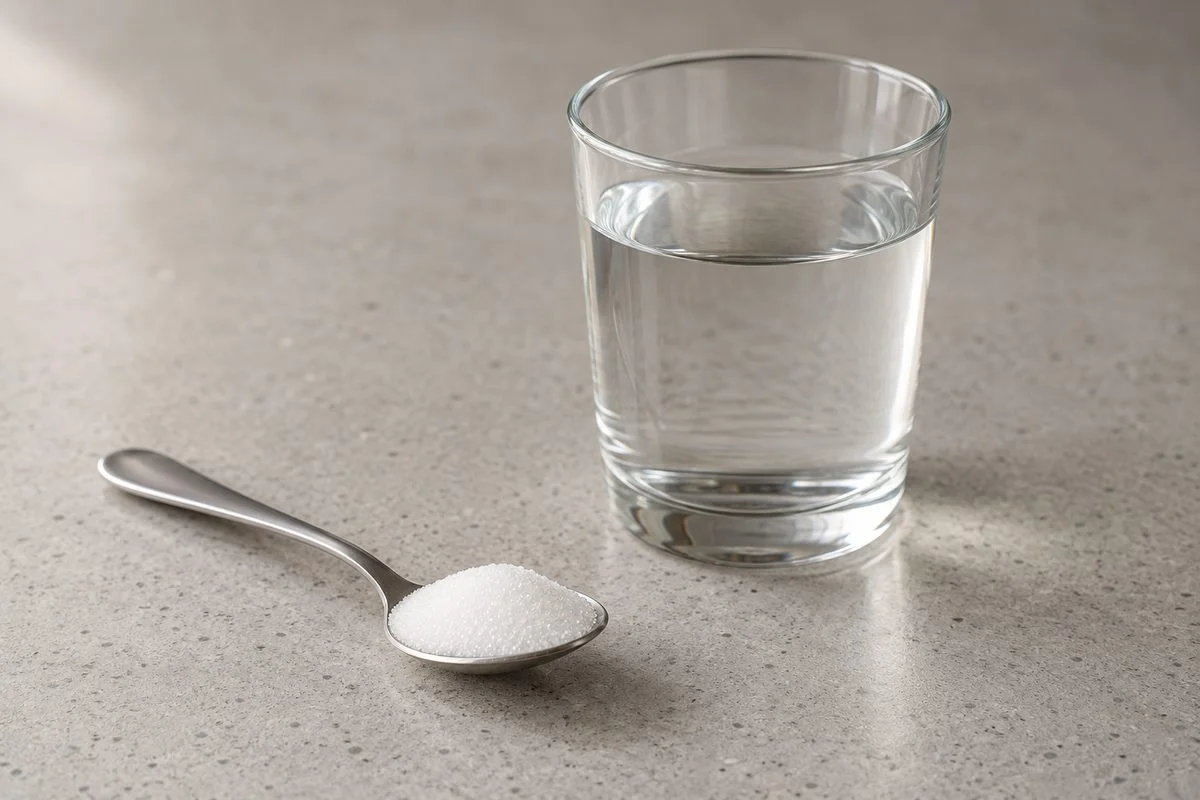
Sugar on a spoon beside a glass of water before mixing.

1. Pure substances and mixtures

Pure means one substance. Mixtures contain two or more unreacted substances.

Show
Place sugar beside water in a glass. After the prediction, stir the sugar into the water.
Ask
After stirring, will this contain one substance or more than one?
Say
Sugar remains present, making this a solid-and-liquid mixture. Each component is a pure substance.
Used in
Evaporating salt water recovers salt as a separate substance.
If your child says…“The sugar vanished, so there's only water.”
Ask
Does becoming invisible mean the sugar has stopped being there?
What’s true
Dissolved sugar remains a component even when you cannot see it.
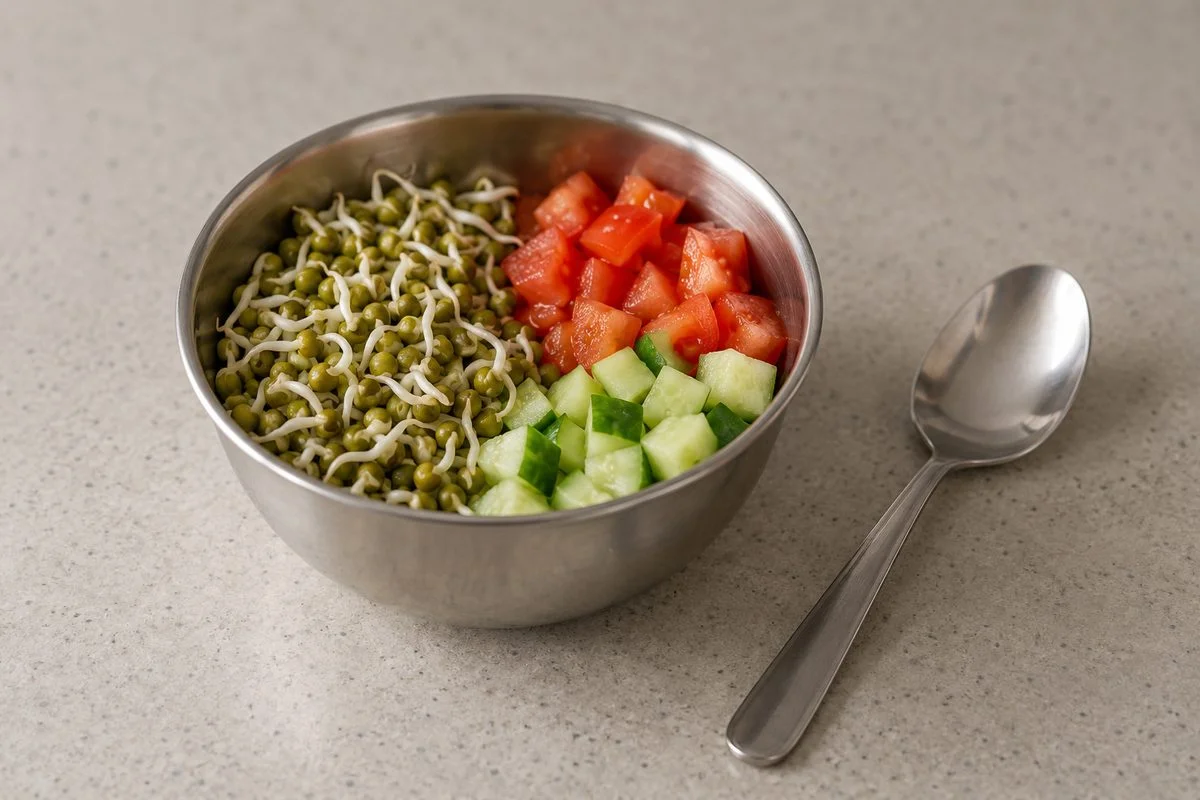
Stainless-steel spoon beside a bowl of sprout salad.

2. Uniform mixtures, non-uniform mixtures and alloys

Uniform mixtures have evenly spread components that cannot be distinguished separately.

Show
Place a stainless-steel spoon beside sprout salad. Stir the salad after the prediction.
Ask
Will stirring make the salad uniform like the stainless steel?
Say
The salad's visible pieces make it non-uniform. Stainless steel is an alloy, a uniform mixture.
Used in
Steel and concrete are useful mixtures that provide building materials.
If your child says…“Any mixture becomes uniform if I stir enough.”
Ask
Can you still distinguish the pieces after stirring?
What’s true
Stirring does not make the salad's separate pieces disappear.
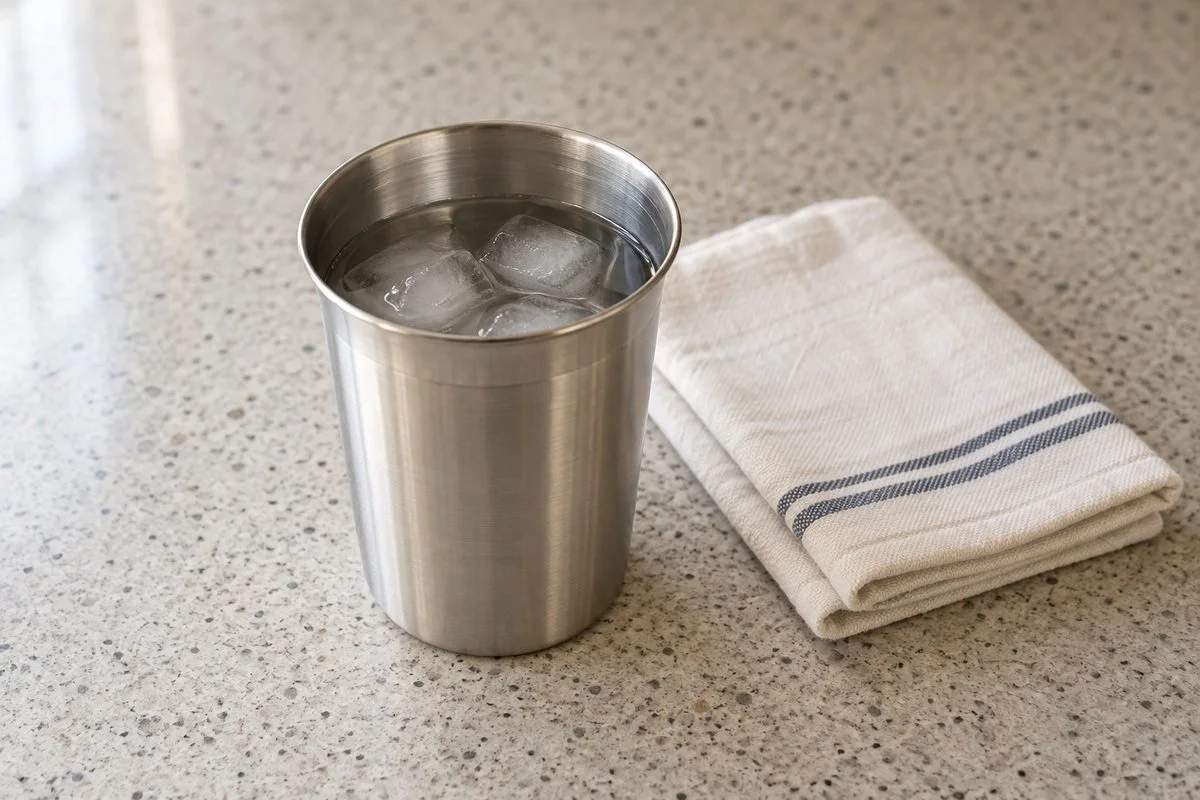
Freshly dried steel tumbler of ice water beside a dry cloth.

3. Air and its components

Air mixes gases uniformly, while dust hangs among them as pollution.

Show
Put ice water in a steel tumbler below its rim. Wipe the outside dry. After the prediction, watch for drops.
Ask
Will the outside stay dry as the tumbler gets cold?
Say
The drops come from water vapour in the surrounding air.
Used in
Lime water detects carbon dioxide in ordinary air by slowly turning milky.
If your child says…“The water leaked through the steel.”
Ask
Would leaking through steel require the tumbler to be cold?
What’s true
Water vapour in air becomes liquid on the cold outside surface.

Elements and compounds

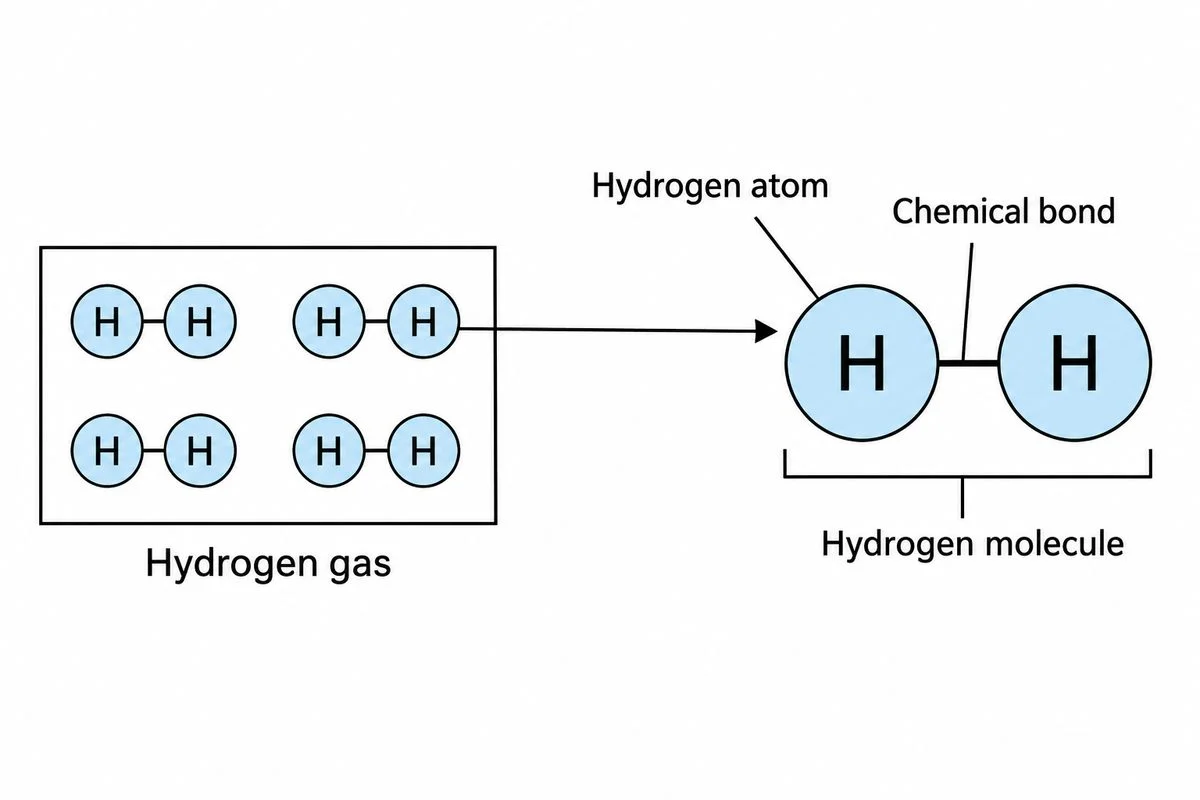
Hydrogen molecules shown as identical atom pairs, with one pair enlarged and labelled.

4. Elements and atoms

An element contains just one kind of atom.

Show
Find hydrogen gas on the diagram's left. Follow one pair to the enlarged molecule. Point to each hydrogen atom, marked H, and the bond joining them.
Ask
Would joining these hydrogen atoms in pairs make hydrogen a compound?
Say
Each pair is a molecule containing only hydrogen atoms, so hydrogen remains an element.
Used in
Hydrogen serves as a fuel because it burns.
If your child says…“Two joined atoms always make a compound.”
Ask
Has joining the pair introduced a different kind of atom?
What’s true
A hydrogen molecule contains only hydrogen atoms, so hydrogen remains an element.
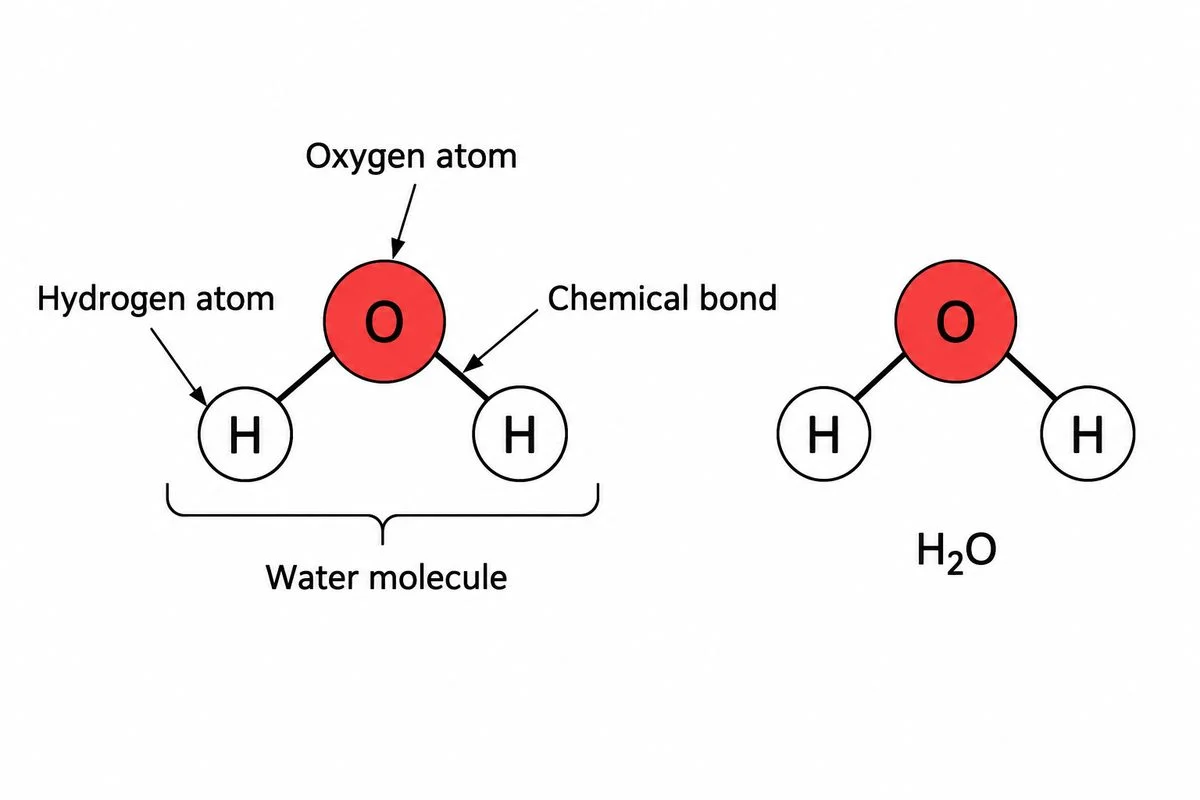
Two water molecules, each showing two hydrogen atoms bonded to one oxygen atom.

5. Compounds

A compound contains different elements chemically joined in a fixed ratio.

Show
Find both water molecules in the diagram. Count hydrogen atoms, H, then oxygen atoms, O.
Ask
Would removing one hydrogen atom leave that molecule as water?
Say
Each water molecule has two hydrogen atoms chemically joined to one oxygen atom: H2O\mathrm{H_2O}.
Used in
Water can put out fires despite containing hydrogen, which burns.
If your child says…“Water can have any ratio of hydrogen to oxygen.”
Ask
What atom counts repeat in both water molecules?
What’s true
Every water molecule has the same numbers of hydrogen and oxygen atoms.
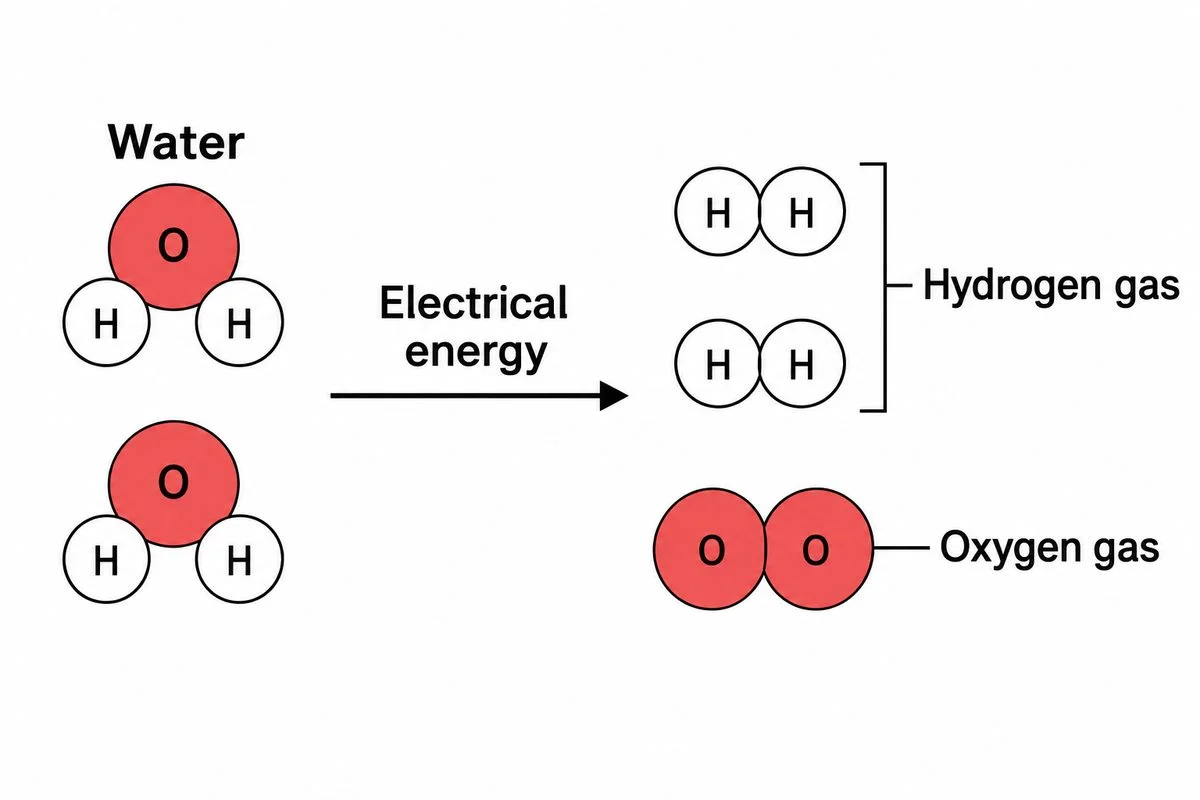
Electrical energy changes water molecules into hydrogen and oxygen molecules, conserving every atom.

6. Breaking down compounds

Chemical changes can turn compounds into different substances.

Show
Find the water molecules on the diagram's left. After the prediction, follow the arrow to the gases. Count hydrogen and oxygen atoms before and after.
Ask
What could electrical energy turn these water molecules into?
Say
Electrical energy splits water into hydrogen and oxygen gases. The atoms remain, but join differently to make new substances.
Used in
Electricity can split water to produce hydrogen for use as a fuel.
If your child says…“Only electricity can break down a compound.”
Ask
If heated sugar forms carbon and water, has heat broken a compound down?
What’s true
Heating sugar produces carbon and water, so heat can also break down a compound.

Classifying the world around us

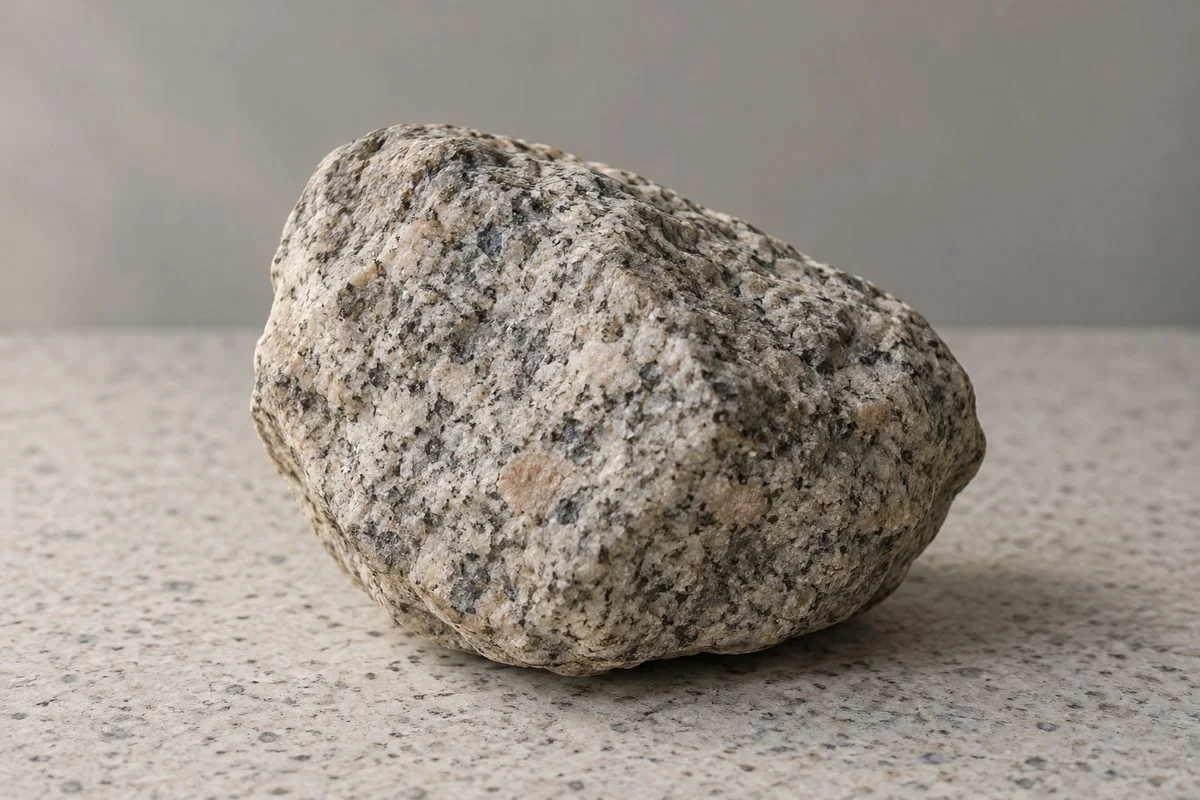
A whole speckled rock with visibly different grains.

7. Minerals

Minerals are naturally occurring solids with a particular chemical make-up.

Show
Set out a speckled rock. After the prediction, look closely at its different grains.
Ask
Will this rock contain just one mineral?
Say
Most rocks contain several minerals.
Used in
Minerals supply metals used to make durable tools and utensils.
If your child says…“A rock is one big mineral.”
Ask
Could the different grains belong to different minerals?
What’s true
A rock usually contains a mixture of minerals.
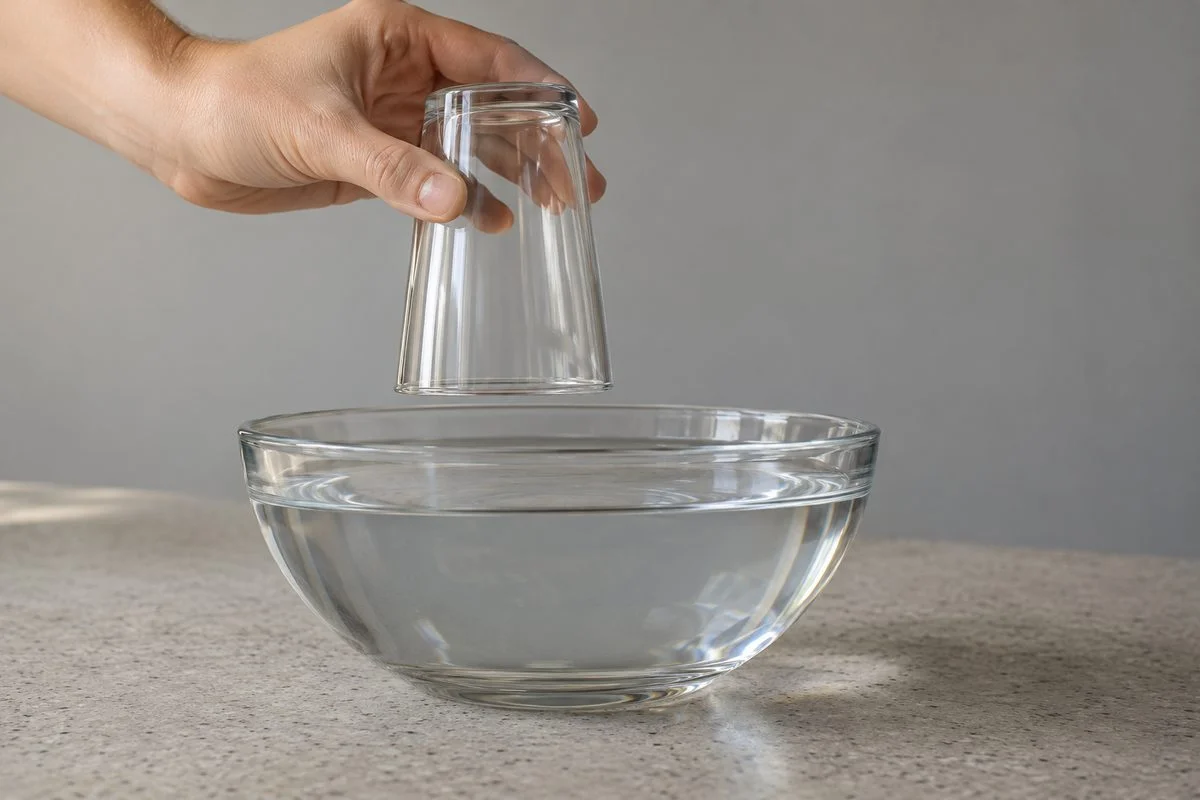
One hand holds an inverted glass above a bowl of water.

8. Matter

Anything with mass that occupies space.

Show
Hold an upside-down glass above a deep bowl of water. After the prediction, lower it straight down without tilting. Keep its mouth underwater.
Ask
Will water immediately fill the glass completely?
Say
Air has mass and occupies space, so it is matter.
Used in
Air occupies space inside balloons, keeping them inflated.
If your child says…“Invisible air takes up no space.”
Ask
What occupies the part of the glass that water has not entered?
What’s true
Trapped air occupies space inside the glass even though you cannot see it.

A real problem

A treatment mixture helped during a cholera emergency.

In 1971, the Bongaon trial treated refugees during a cholera outbreak.

Supplies of intravenous fluids could not meet the need for dehydration treatment.

Oral rehydration therapy uses a mixture of salt, water and sugar.

Mahalanabis and colleagues showed that the treatment worked in large emergencies.

Johns Hopkins UniversityU.S. National Library of Medicine

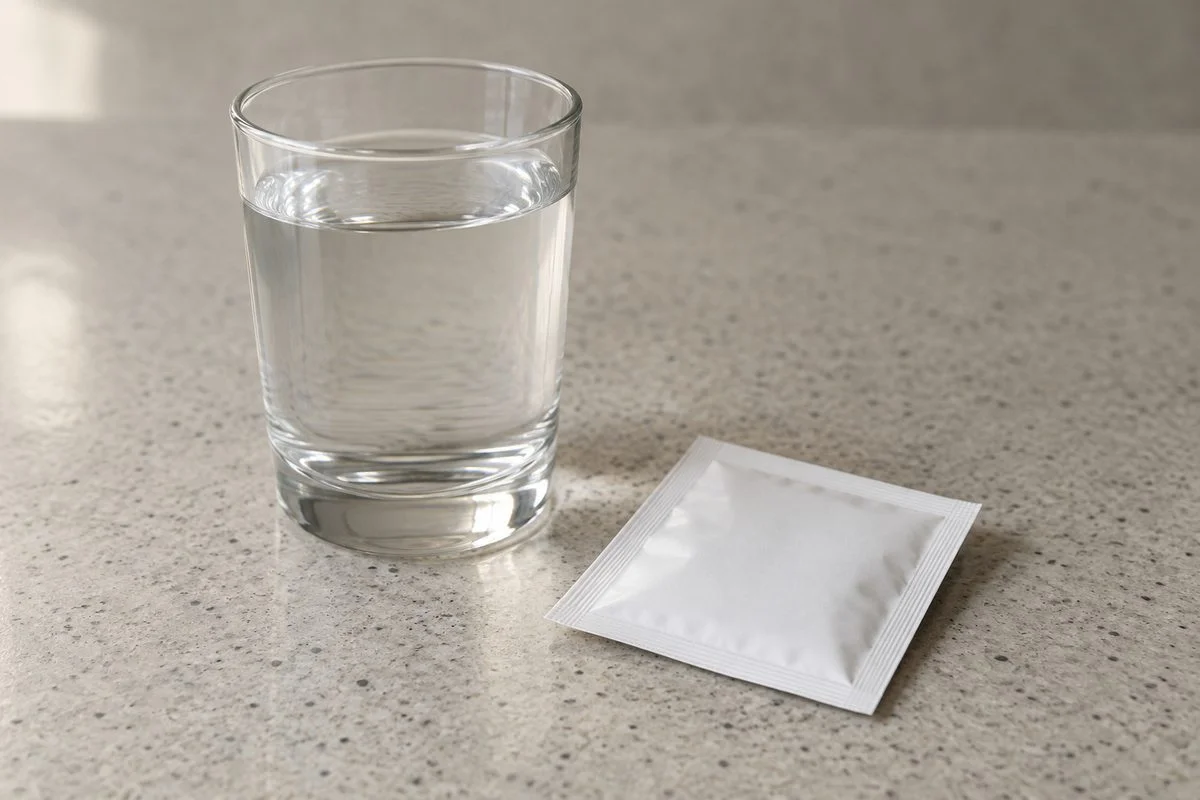
Glass of oral rehydration solution beside a plain salts packet.

Concept Lab · Common misconception

The tempting mistake in Nature of Matter: Elements, Compounds, and Mixtures

Open standalone misconception page →

Is a uniform mixture a compound?

Wrong

Salt water is a compound because it looks uniform.

Why it feels right. I cannot see separate ingredients.

Right

A solution is a mixture with variable composition. A compound has a fixed composition.

Worked example

Glass A
Water1 spoon salt
Glass B
Water2 spoons salt
The water portions are equal. Both solutions look uniform even with different amounts of dissolved salt.
  1. Dissolve 1 spoon of salt in one glass of water and 2 in another equal glass.
  2. Both solutions look uniform, yet their different salt-to-water ratios show why uniformity alone does not make a compound.

Ask your child eight quick questions.

One per step. The answer and the reason are given.

  1. What substances remain after sugar dissolves in water?

    Sugar and water. Dissolving hides the sugar from sight but does not remove it.

  2. After thorough stirring, which kind of mixture is sprout salad?

    A non-uniform mixture. Its separate pieces remain distinguishable, however thoroughly they are mixed.

  3. Where does the water outside the cold tumbler come from?

    Water vapour in the air. Water vapour becomes liquid on the cold surface without passing through the steel.

  4. Hydrogen gas contains pairs of hydrogen atoms. Is it an element or a compound?

    An element. Both atoms are hydrogen, so their joining does not create a compound.

  5. How many hydrogen atoms must each water molecule contain?

    Two. Water has a fixed composition, with two hydrogen atoms for each oxygen atom.

  6. How does heated sugar show that electricity isn't always needed to break down compounds?

    Heat forms new substances. Heating forms carbon and water, so electricity is not the only way.

  7. What does a rock usually contain?

    Several minerals. Most rocks contain different minerals together, even when they form one solid piece.

  8. What prevents water from immediately filling the inverted glass completely?

    The trapped air. Air occupies space even though it is invisible.

15 more questions with answers, 1 with pictures