Skip to content

Teach The Amazing World of Solutes, Solvents, and Solutions in eight steps.

For each idea: show it, ask before you tell, then say one line.

Gather salt, sugar, sand, water, glasses, a jar, bowls, spoons, a marker, an open freezer-safe container, paper and a pencil.

An adult handles warm water. Keep the freezing container open and leave room for expansion. Taste nothing.

Common misconceptions & worked visual for this chapter · 15 practice questions with answers

How to teach it

Making and changing solutions

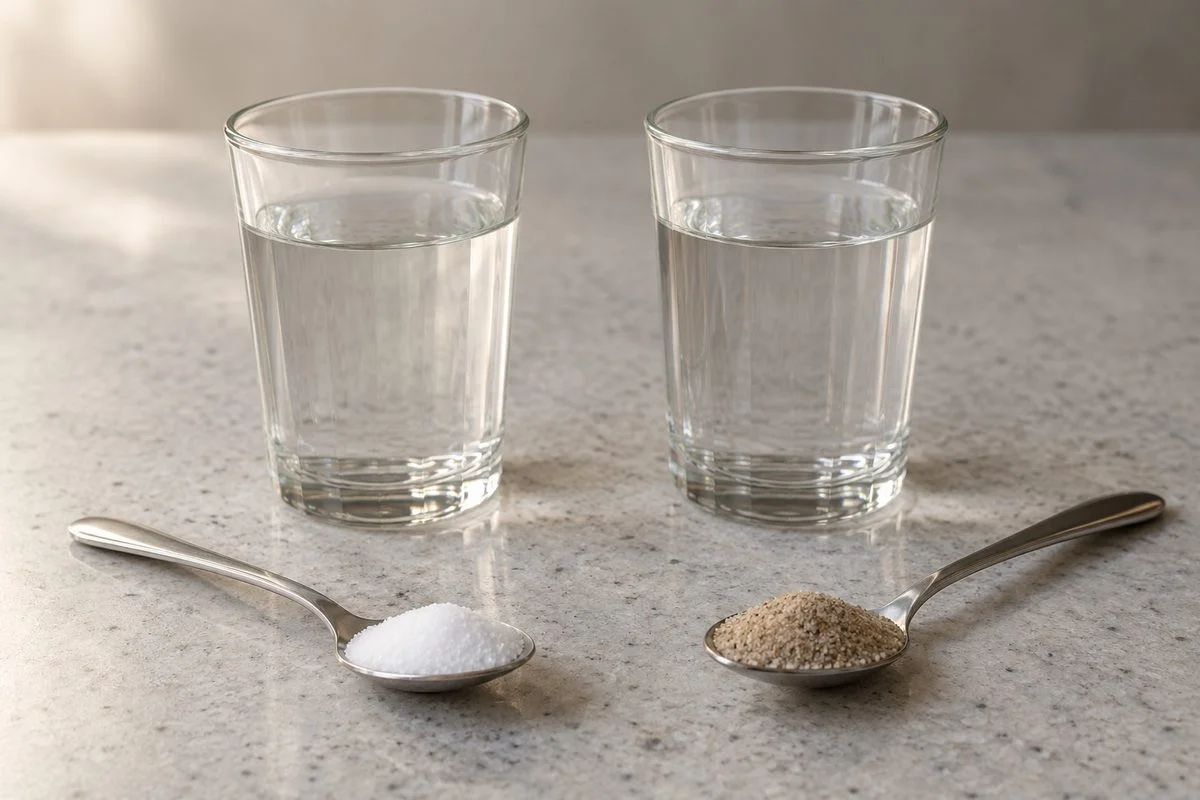
Salt and sand beside separate glasses of water before mixing.

1. Mixtures, solute and solvent

A solution contains a solute spread evenly through its solvent.

Show
Set salt and sand beside separate water glasses. After predicting, stir each into its glass.
Ask
Will both solids spread evenly through the water?
Say
Salt makes a uniform solution, with salt as solute and water as solvent. Sand stays separate, making a non-uniform mixture.
Used in
Water remains syrup’s solvent even when sugar has greater mass. Dissolved sugar gives the syrup its sweetness.
If your child says…“The bigger amount is always the solvent.”
Ask
In syrup, which ingredient was the liquid that dissolved the solid sugar?
What’s true
For two liquids forming a solution, the larger amount is called the solvent.
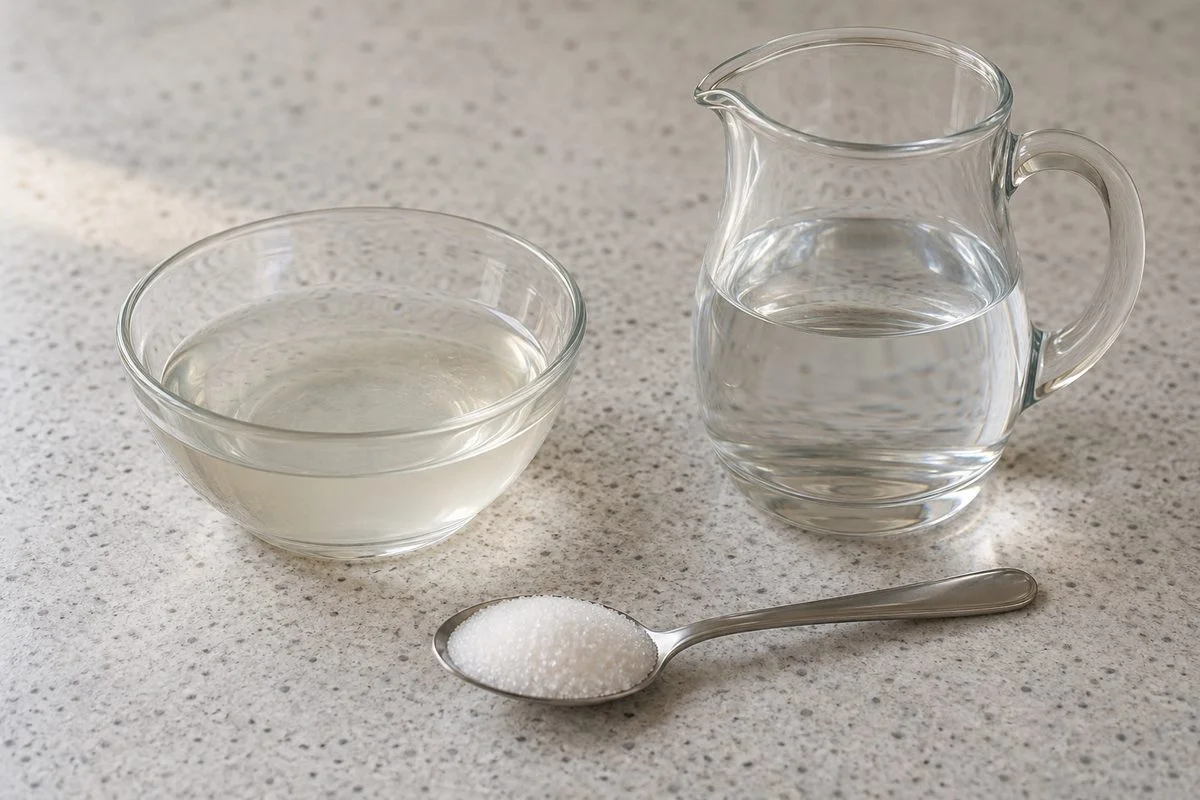
Sugar water beside extra water and sugar before either is added.

2. Concentration, saturation and solubility

Concentration tells how much solute a fixed amount of solvent contains.

Show
In a bowl, dissolve a small pinch of sugar in one teaspoon of water. After predicting, add another teaspoon of water. Stir in sugar until some remains despite thorough stirring.
Ask
Will adding water change the sugar amount in each spoonful?
Say
Water dilutes the solution; adding sugar eventually reaches saturation.
Used in
Sugar dissolved throughout syrup gives sweetness throughout it.
If your child says…“A concentrated solution cannot dissolve any more.”
Ask
If another pinch dissolves, has this solution reached its limit?
What’s true
Even concentrated sugar water is unsaturated if it can dissolve more sugar at that temperature.
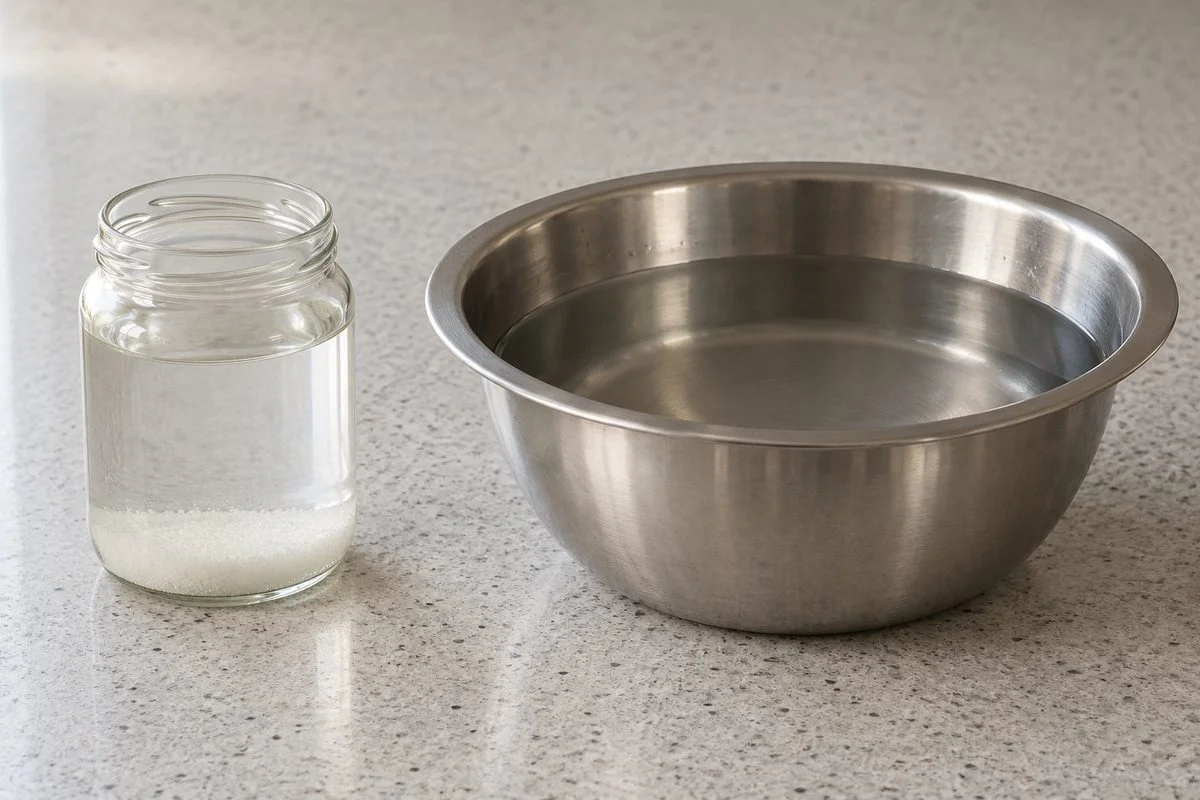
Jar of sugar water beside a warm-water bowl before immersion.

3. Temperature and solubility

Temperature changes how much solid or gas water can dissolve.

Show
Put saturated sugar water with a little undissolved sugar in a jar. After predicting, an adult stands it in warm water and stirs.
Ask
Will warming let more sugar dissolve, and will oxygen behave the same way?
Say
Warming helped more sugar dissolve. Oxygen behaves differently: warmer water holds less dissolved oxygen at the same air pressure.
Used in
Dissolved oxygen keeps fish alive, so warming lake water can make survival harder.
If your child says…“Warm water holds more oxygen too.”
Ask
If warming lowers oxygen’s solubility, which water can hold more?
What’s true
At equal air pressure, cold water can hold more dissolved oxygen than warm water.

Measuring matter and space

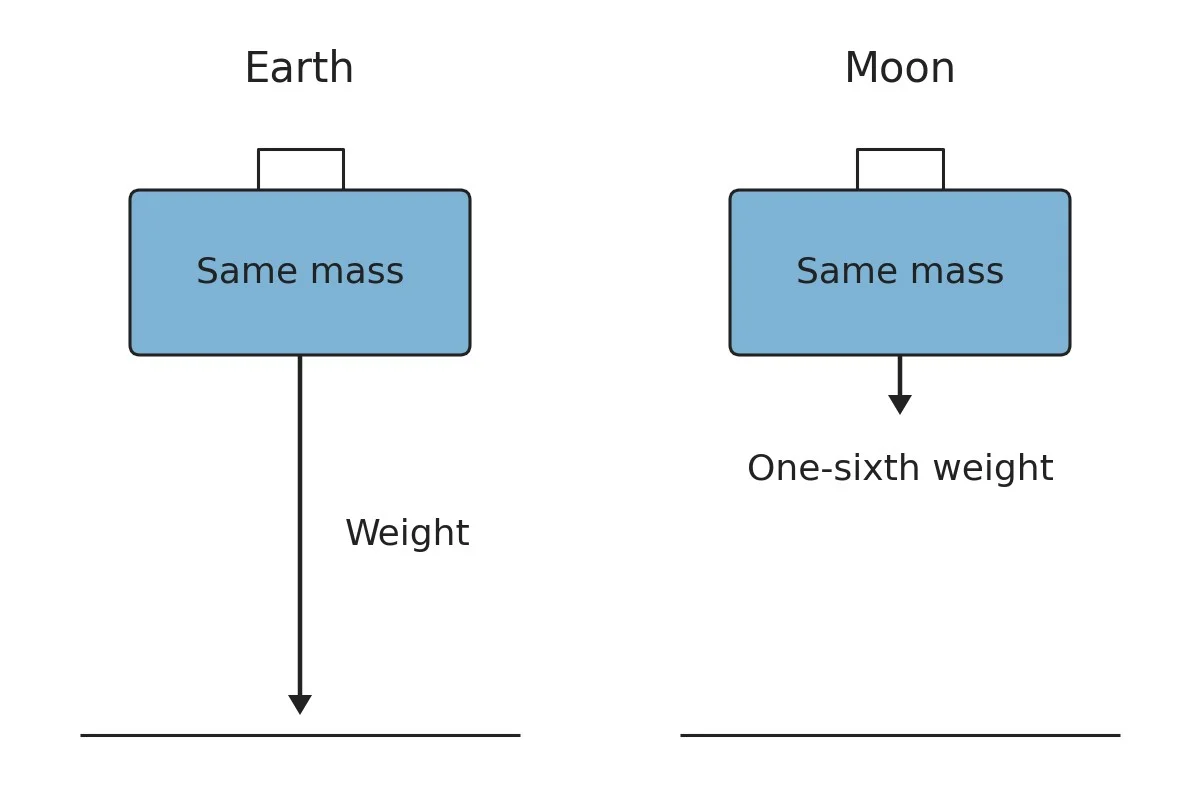
Identical suitcases have equal mass but different downward weight arrows on Earth and Moon.

4. Mass and weight

Mass measures matter, while weight measures gravity’s pull.

Show
Look at the diagram’s matching suitcases on Earth and the Moon. Compare their mass labels, then their downward weight arrows.
Ask
Would this suitcase contain less matter because it is easier to lift on the Moon?
Say
The suitcase keeps its matter, so its mass in kilograms stays unchanged. The Moon’s weaker pull makes its weight in newtons about one-sixth as large.
Used in
Two-pan balances compare masses directly, allowing samples to be matched against known masses.
If your child says…“Mass and weight are the same.”
Ask
What changed on the Moon: the suitcase’s contents or the pull on them?
What’s true
Mass uses grams or kilograms, while weight uses newtons.
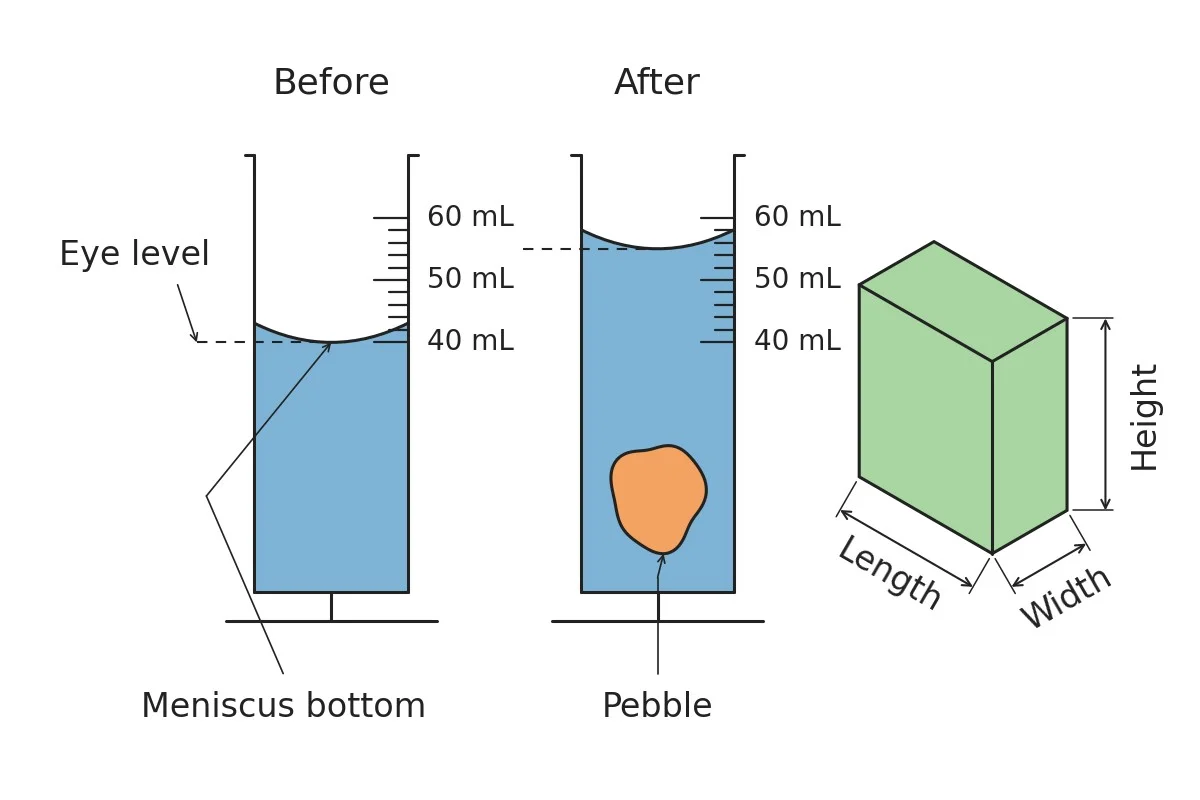
Water readings before and after pebble submersion beside a block with labelled dimensions.

5. Measuring volume

Volume is the space something occupies.

Show
Read the diagram’s meniscus bottoms at eye level. Count its 2 mL intervals, then find the block.
Ask
How much space does this pebble occupy?
Say
The pebble occupies 55 minus 40: 15 mL, or 15 cm³. Multiply the block’s length, width and height for its volume.
Used in
Converting between litres and cubic centimetres lets container capacities be compared.
If your child says…“The final reading is the pebble’s volume.”
Ask
How much of that final reading was water already there?
What’s true
Subtract the starting reading from the final reading to find the pebble’s volume.

Density and floating

Density=60 g100 cm3\text{Density}=\frac{60\,\mathrm{g}}{100\,\mathrm{cm}^{3}}

Density=0.60 g/cm3\text{Density}=0.60\,\mathrm{g/cm}^{3}

6. Density, relative density and floating

Density is mass for each unit volume. Relative density compares densities.

Show
Write these lines for the wooden block. Say, “Divide mass by volume, then compare the answer with water’s density.”
Ask
Will this block float in water?
Say
The block floats because its density is below water’s. Water’s density is approximately 1.00 g/cm³, so the block’s relative density is 0.60 without units.
Used in
Bamboo rafts carry loads because their overall density, including trapped air, is below water’s.
If your child says…“Relative density needs g/cm³ too.”
Ask
What happens to matching units when you divide one density by another?
What’s true
Relative density compares densities in matching units, usually against water, so the units cancel.
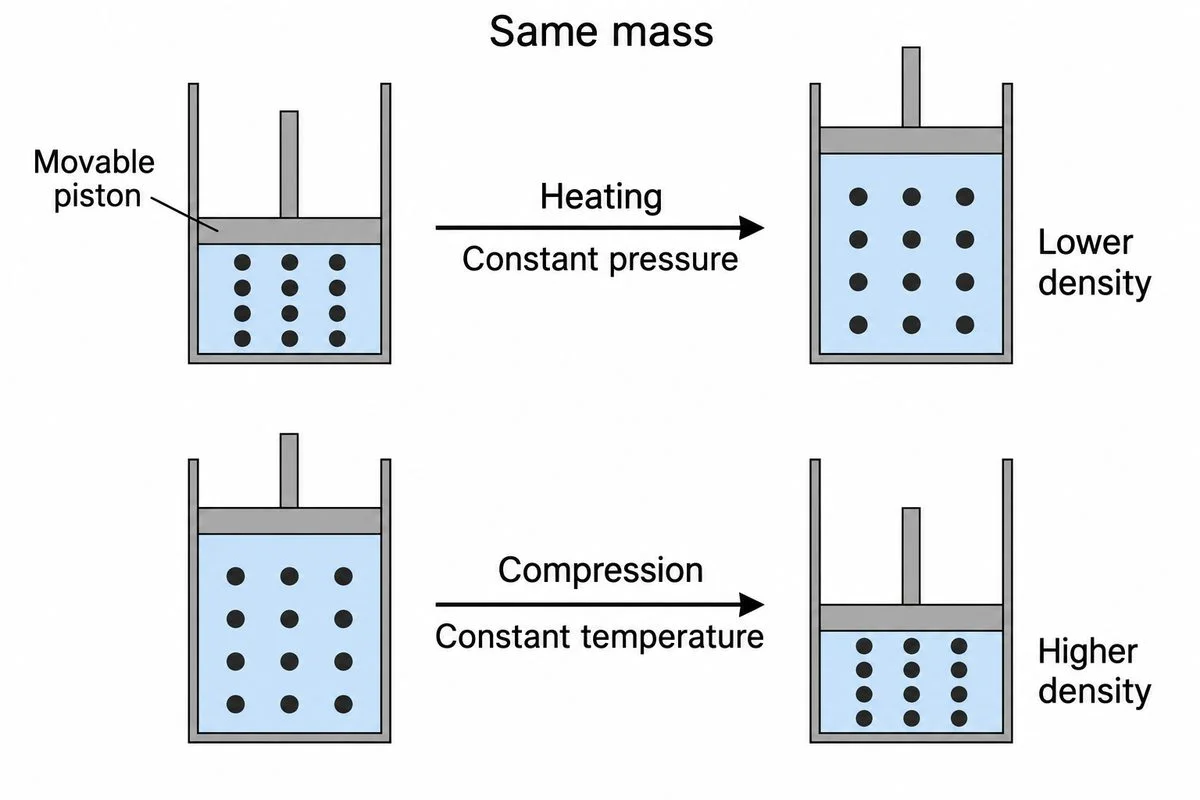
Sealed gas expands during heating and occupies less space during compression, with unchanged particle counts.

7. Temperature, pressure and density

Changing volume changes density when the amount of matter stays unchanged.

Show
Follow the diagram’s heating and compression arrows. Compare particle counts and occupied space.
Ask
Can this gas become denser without gaining matter?
Say
Compression at steady temperature raises density. Heating at steady pressure lowers density as gas expands. Mass stays unchanged.
Used in
Hot-air balloons rise because their heated air is less dense than the surrounding cooler air.
If your child says…“Heating adds mass.”
Ask
Do the sealed cylinders gain any particles when the gas expands?
What’s true
Heating adds no matter, so expansion changes volume while mass stays unchanged.
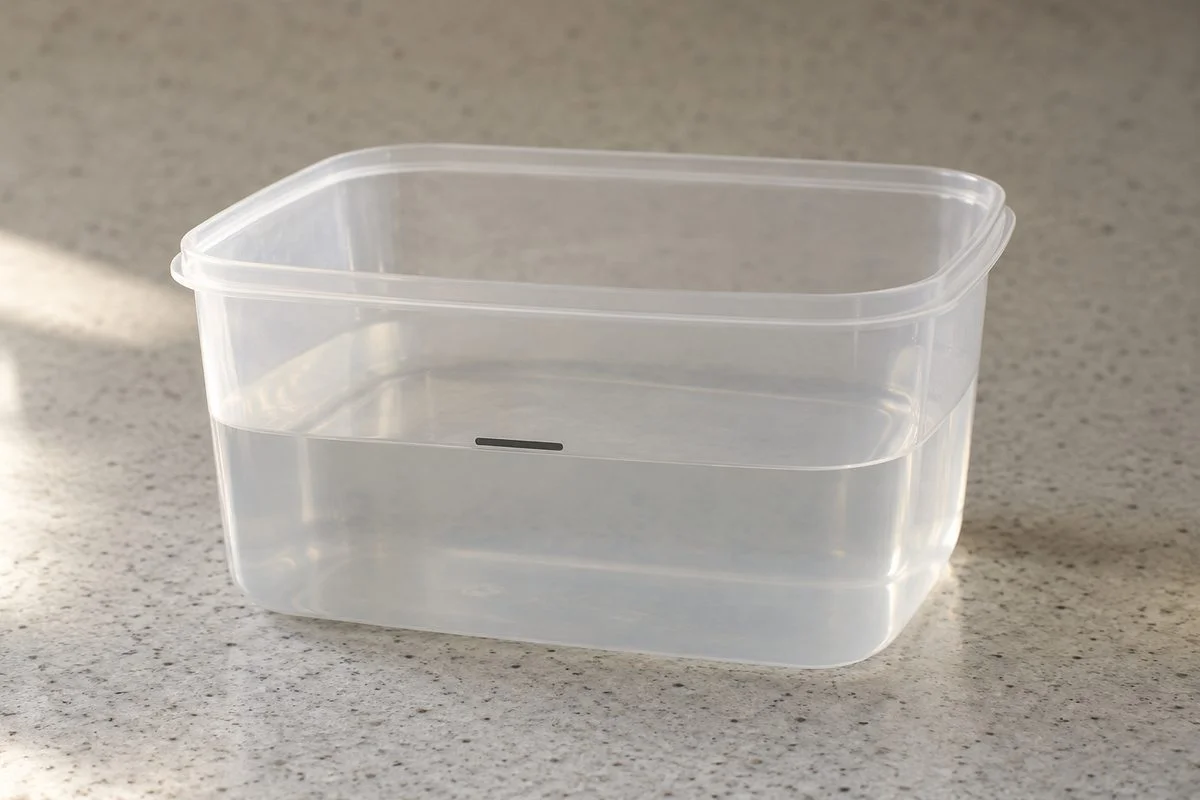
Open plastic container partly filled with water before freezing.

8. Why ice floats on water

Ice floats because freezing expands water and lowers its density.

Show
Partly fill an open freezer-safe plastic container with water. Mark its level and predict before putting the container in the freezer. Allow several hours for freezing, then return to compare levels.
Ask
Will freezing make this water occupy more space or less?
Say
Freezing spreads the same mass over more space, making ice less dense than liquid water.
Used in
Floating lake ice slows heat loss, helping water below stay liquid so fish can survive.
If your child says…“Water shrinks when it freezes.”
Ask
Where is the frozen surface compared with the starting water level?
What’s true
The same mass takes up more space as ice than as liquid water.

A real problem

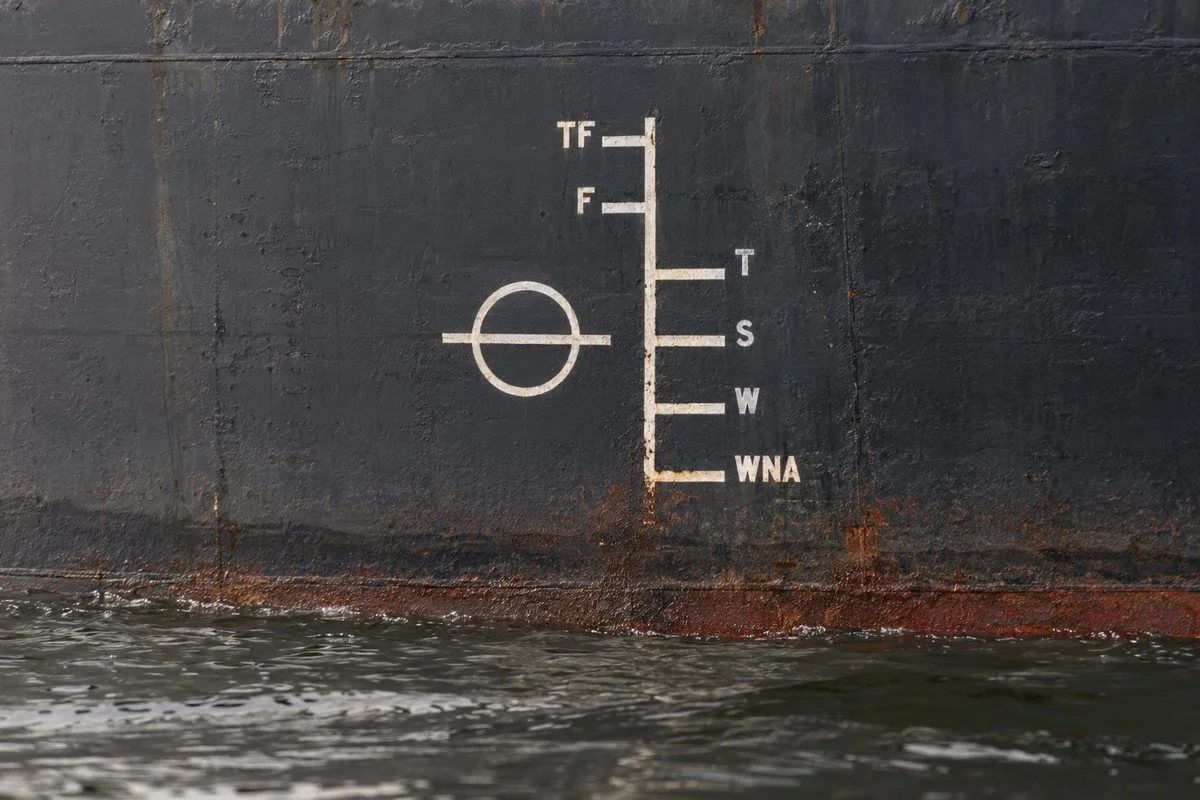
The Plimsoll line shows a ship’s safe loading depth.

Overloaded ships were unsafe for their crews.

Independent authorities fixed the load-line rules in 1890.

The line indicates how deeply a loaded ship can safely sit in water.

The safe depth accounts for different water densities along the voyage.

Lloyd’s RegisterNOAA

Cargo ship’s hull at the waterline with painted Plimsoll load marks.

Concept Lab · Common misconception

The tempting mistake in The Amazing World of Solutes, Solvents, and Solutions

Open standalone misconception page →

Does a dissolved solid disappear from the mass?

Wrong

When sugar dissolves, it stops adding to the mass.

Why it feels right. The sugar grains are gone from view.

Right

Dissolving spreads sugar through the water and preserves mass in a closed system.

Worked example

On the scale
Water and sugar separate→Stir in closed setup→Water and sugar mixed
Mass reading
Measure before→Same total after
The closed setup contains the same water and sugar before and after mixing.
  1. Place water and still-unmixed sugar in separate cups inside a closed setup.
  2. Weigh the full setup.
  3. Mix the sugar into the water and weigh the full setup again.
  4. The mass stays the same.

Ask your child eight quick questions.

One per step. The answer and the reason are given.

  1. How do you identify syrup’s solvent when sugar has greater mass than water?

    Water dissolves the solid sugar. For sugar dissolved in water, the liquid remains the solvent.

  2. Water is added to saturated sugar water at the same temperature. Can more sugar now dissolve?

    Yes. Added water lets more sugar dissolve before the solution reaches saturation again.

  3. At equal air pressure, which can dissolve more oxygen: equal amounts of cold or warm water?

    Cold water. Oxygen’s solubility falls as water warms.

  4. What units would you use for the suitcase’s mass and its weight?

    Mass: grams/kilograms. Weight: newtons. Mass measures matter, while weight measures gravity’s pull.

  5. A submerged pebble raises water from 40 mL to 55 mL. What is its volume?

    15 cm³. The rise is 15 mL, equivalent to 15 cm³.

  6. A metal’s density is eight times water’s. What is its relative density, including any unit?

    8, with no unit. Dividing densities expressed in matching units cancels those units.

  7. When sealed air warms and expands, does its mass stay unchanged or increase?

    It stays unchanged. Heating adds no matter.

  8. What happens to water’s volume when it freezes without losing any material?

    It increases. Freezing makes the same mass occupy more space.

15 more questions with answers, 6 with pictures