Skip to content

Teach Pressure, Winds, Storms, and Cyclones in eight steps.

For each idea: show it, ask before you tell, then say one line.

Gather dough, a rectangular eraser, paper, a pencil, a plastic bottle, water, tape and a pin.

An adult makes the bottle hole with the pin, keeping fingers clear.

Common misconceptions & worked visual for this chapter · 15 practice questions with answers

How to teach it

Force, area and pressure

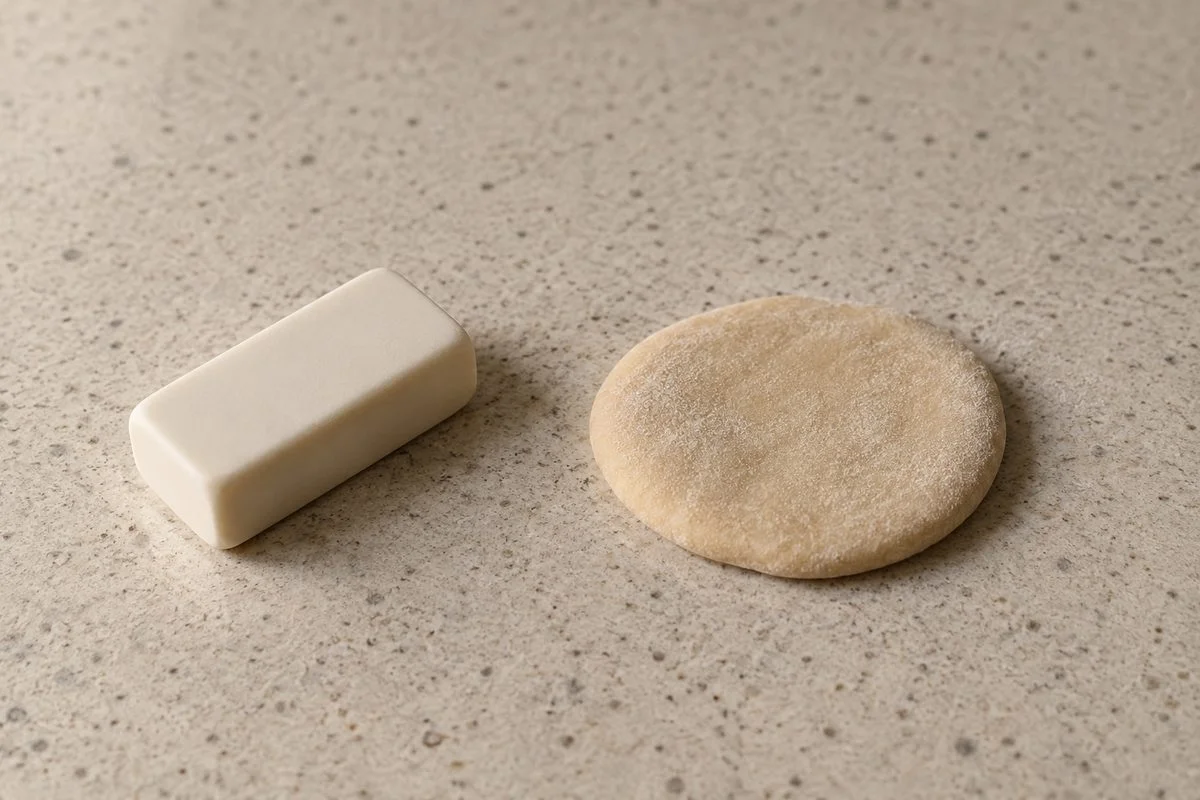
Rectangular eraser beside flattened dough, ready for pressing.

1. Pressure

Pressure measures how concentrated a push is over its contact area.

Show
Place a rectangular eraser beside dough. After predicting, press the broad face and then the narrow end into fresh dough. Use the same gentle push each time.
Ask
Which will sink deeper: the broad face or the narrow end?
Say
The narrow end sinks deeper. The same push gives greater pressure over less area.
Used in
A nail's pointed tip concentrates a push, making wood easier to pierce.
If your child says…“The narrow end adds extra force.”
Ask
Did turning the eraser make your push stronger?
What’s true
A smaller contact area increases pressure without adding force.

Pencil beside blank paper, ready for a pressure calculation.

2. Calculating pressure and force

Pressure tells us the force on each square metre.

Show
Write the force as 100 N and the area as 2 m². After predicting, write the calculation explained below.
Ask
What pressure will that give?
Say
Sharing 100 newtons across two square metres gives 100 ÷ 2 = 50 pascals (Pa).
Used in
Broad bag straps spread the load, reducing pressure on shoulders.
If your child says…“I divide the area by the force.”
Ask
Should spreading the same force over more area make pressure larger or smaller?
What’s true
The force goes above the area when calculating pressure.

Water and air push

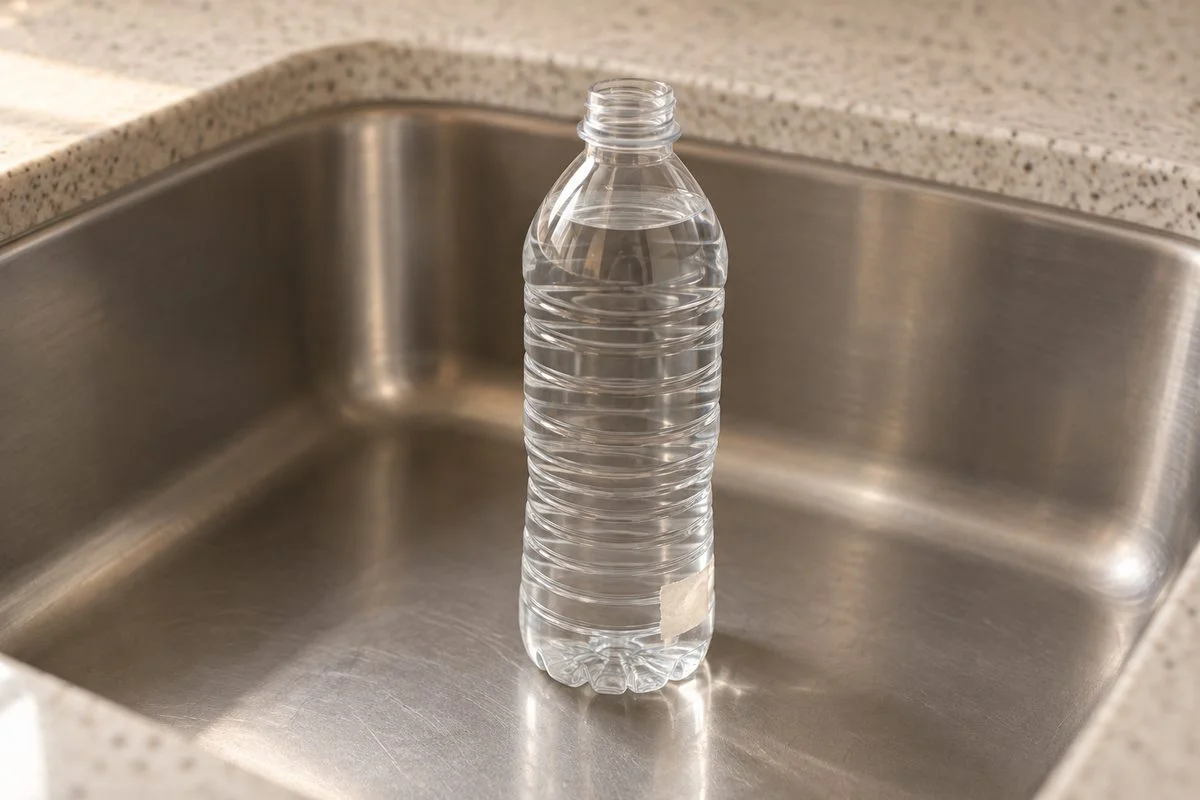
Uncapped bottle of water in a sink, with tape covering a hole near its base.

3. Liquid pressure

Water pushes every way, with greater pressure deeper down.

Show
An adult makes and tapes a small hole near a plastic bottle's base. Fill the uncapped bottle with water. After predicting, remove the tape over a sink. Watch the jet as the water level falls.
Ask
As the water level falls, will the stream reach farther or less far?
Say
The sideways stream weakens as the water level falls. Water pushes sideways, with greater pressure at greater depths.
Used in
Dams have broad bases to withstand greater water pressure near the bottom.
If your child says…“Water pushes hardest near the surface.”
Ask
When did the stream reach farther: with more water above the hole, or less?
What’s true
Water pressure increases with depth below the surface.
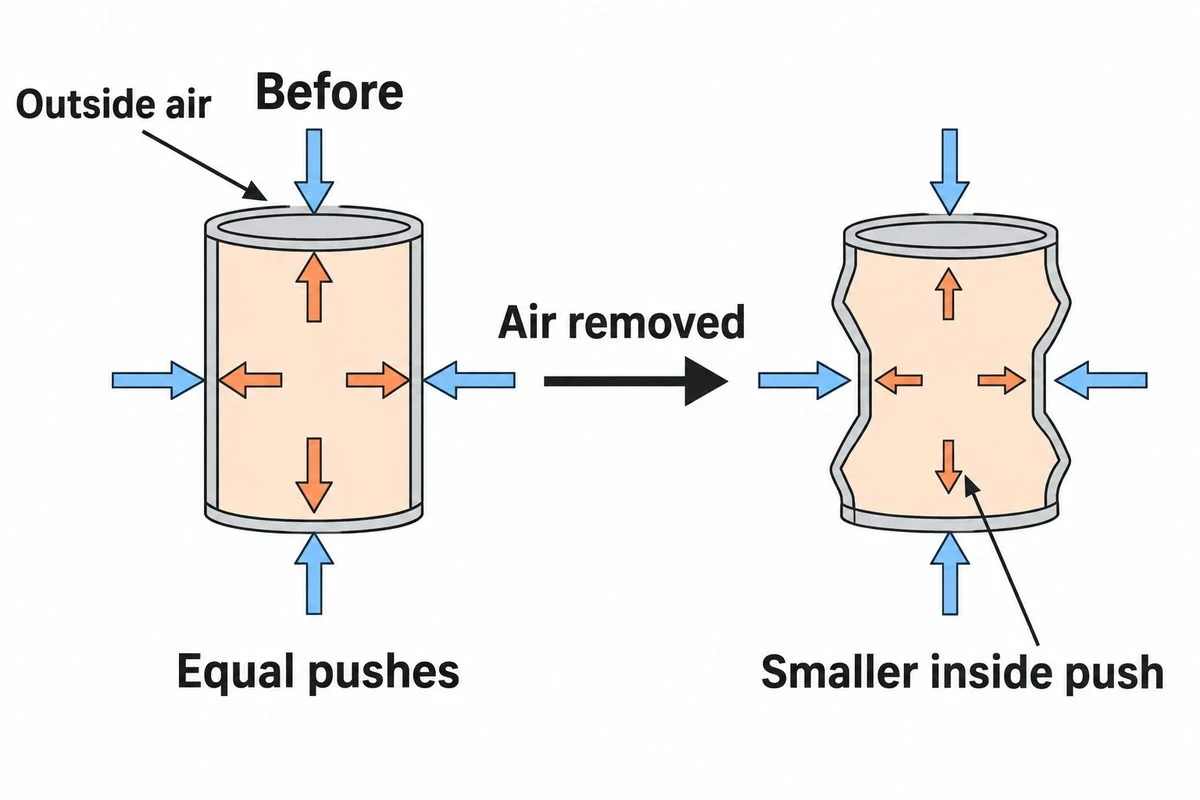
Can diagrams compare balanced air pushes with inward crushing after air removal.

4. Atmospheric pressure

Air pushes strongly in every direction.

Show
Look at the diagram's intact can and compare the inward and outward arrows. Follow air removal to the buckled can. Compare its arrows.
Ask
What will happen to this intact can if the inside push becomes smaller?
Say
Surrounding air presses on every side of the can. Removing air reduces the inside push, so the stronger outside push buckles the walls.
Used in
Outside air pressure holds rubber suckers firmly against smooth surfaces.
If your child says…“Air only pushes down.”
Ask
What pushes the can's side walls inwards?
What’s true
Air pushes upwards, downwards and sideways.
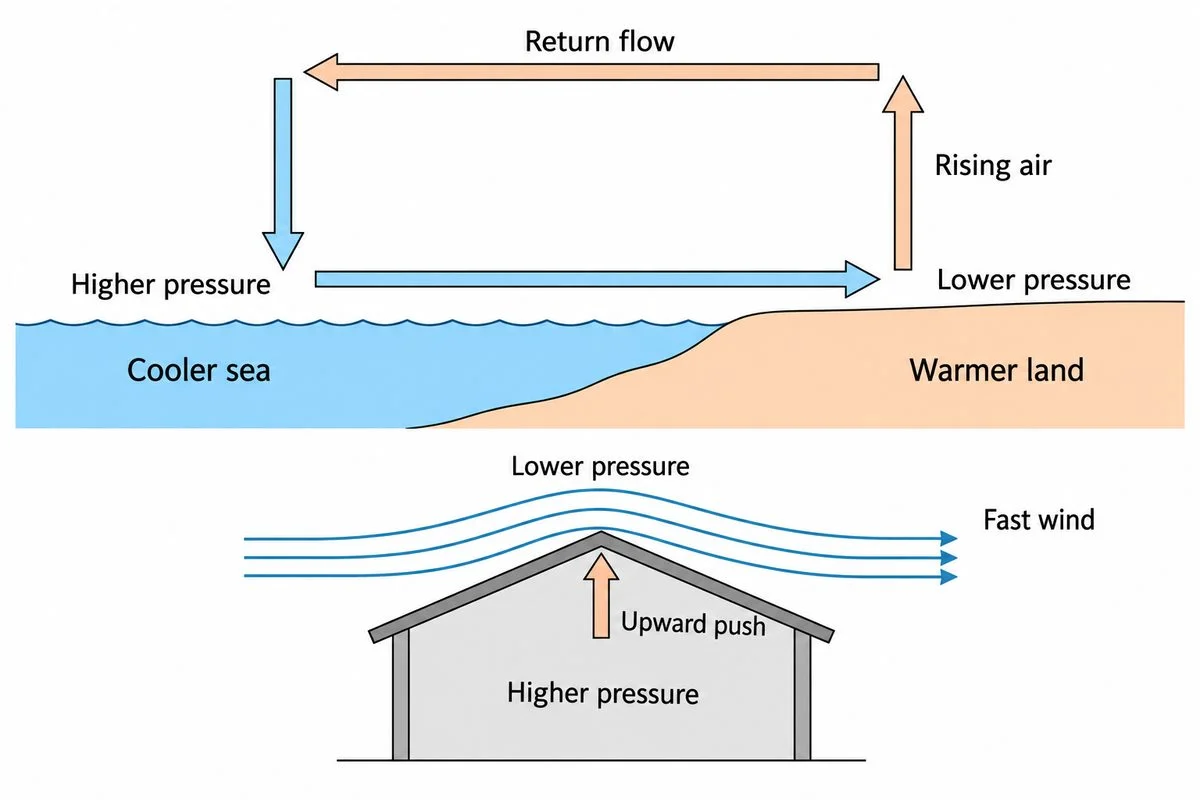
Sea breeze circulation beside a roof inset showing an upward pressure force.

5. Wind and pressure differences

Pressure differences drive air movement and push on nearby objects.

Show
Trace the diagram's coastal airflow. Compare pressures above and below the roof.
Ask
Which way will surface air move here?
Say
Air moves inland towards lower pressure where warmed air rises. Fast wind lowers pressure above this roof, allowing higher inside pressure to lift it.
Used in
Daytime sea breezes usually bring cooler air inland towards lower pressure over warmer land.
If your child says…“Faster air must have higher pressure.”
Ask
Which side must press harder to push the roof upwards?
What’s true
Fast wind over this roof lowers pressure above it.

Storms and safety

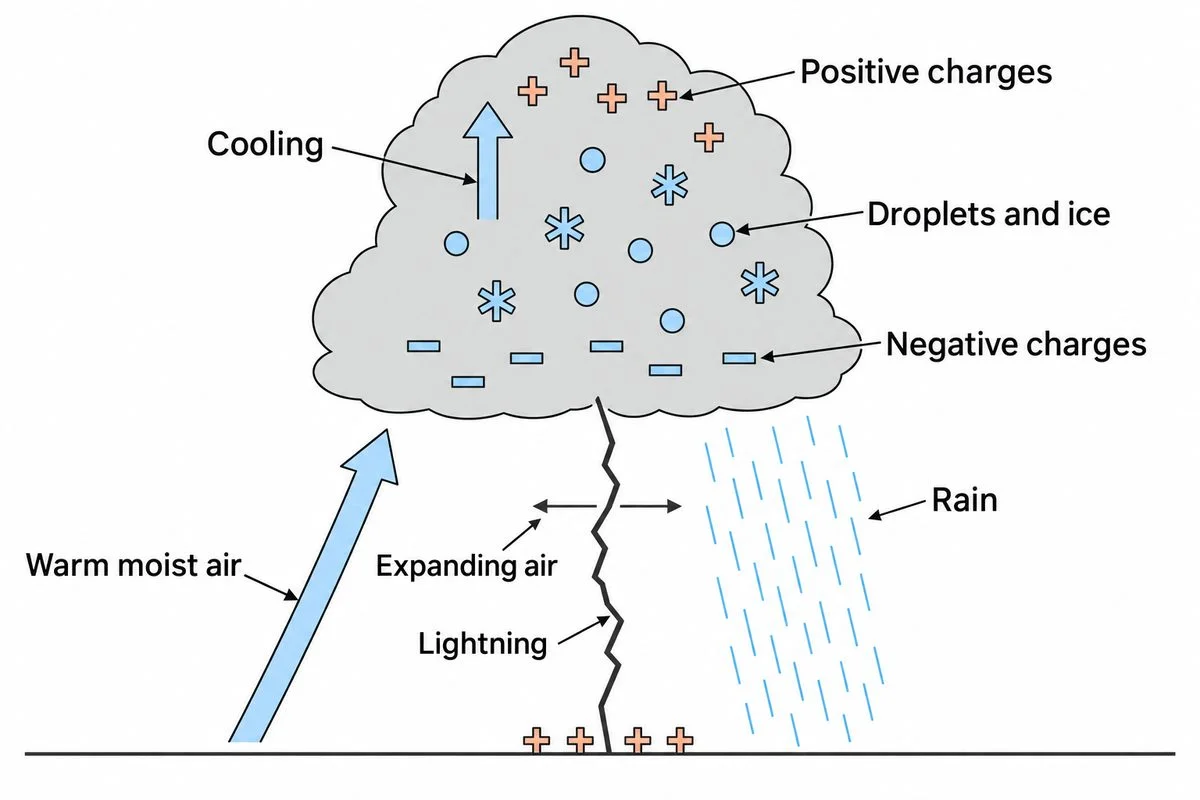
Storm cloud diagram connects rising moist air, separated charges, lightning and expanding air.

6. Thunderstorms and lightning

Rapidly rising warm, moist air can build clouds producing lightning and thunder.

Show
Trace rising air, separated charges and lightning in the diagram.
Ask
What will lightning do to nearby air?
Say
Lightning heats air, whose sudden expansion makes thunder.
Used in
A grounded lightning conductor carries charge into the earth, reducing damage to a building.
If your child says…“Thunder is clouds banging together.”
Ask
What happens to the air along the lightning path?
What’s true
Thunder comes from air expanding suddenly after lightning heats it.
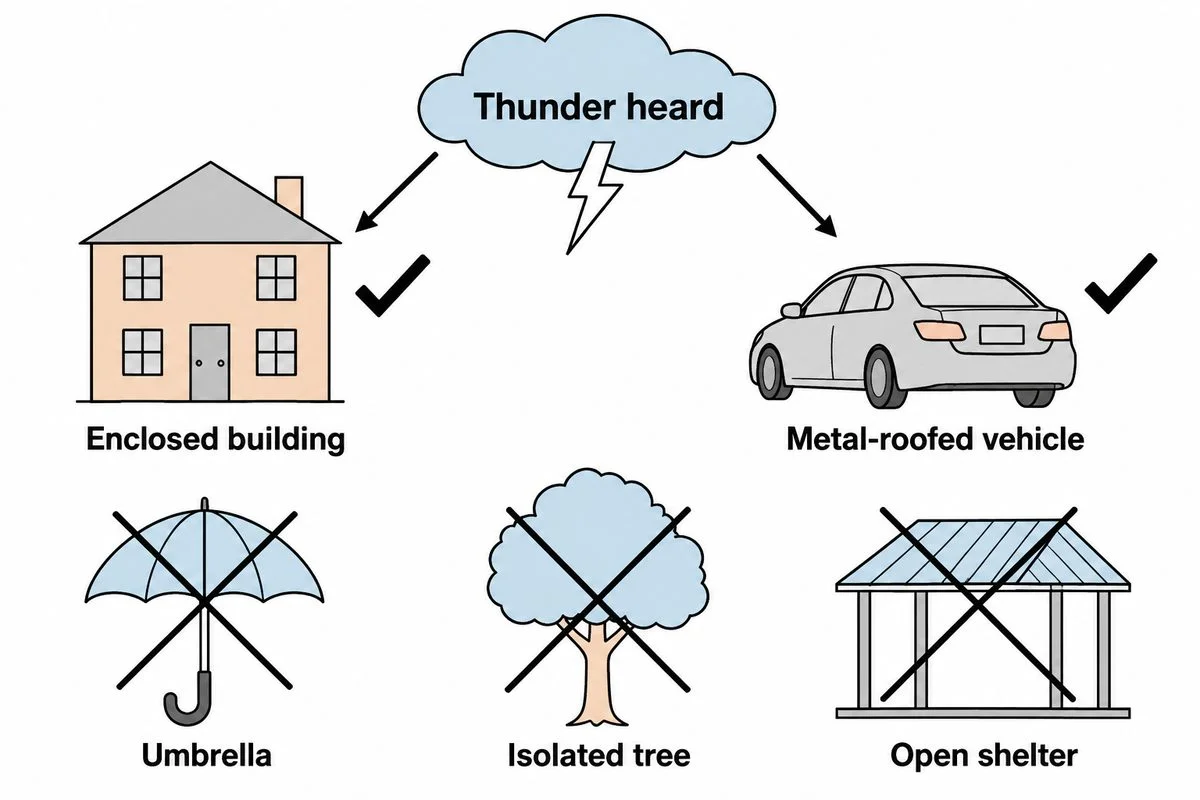
Enclosed building and metal-roofed vehicle marked as shelters, with unsafe outdoor choices crossed out.

7. Lightning safety

Choose a substantial, fully enclosed building or an enclosed, metal-roofed vehicle.

Show
Find the enclosed building and closed vehicle in the diagram. Compare them with the umbrella, isolated tree and open shelter.
Ask
Which shelters would you choose if thunder started while you were outdoors?
Say
Enter a substantial, fully enclosed building or an enclosed, metal-roofed vehicle immediately. Keep vehicle windows closed.
Used in
An enclosed, metal-roofed vehicle's shell carries lightning current around occupants, making shelter safer than standing outside.
If your child says…“My umbrella protects me from lightning.”
Ask
Does opening an umbrella put you inside an enclosed shelter?
What’s true
Keeping rain off does not make an umbrella a safe lightning shelter.
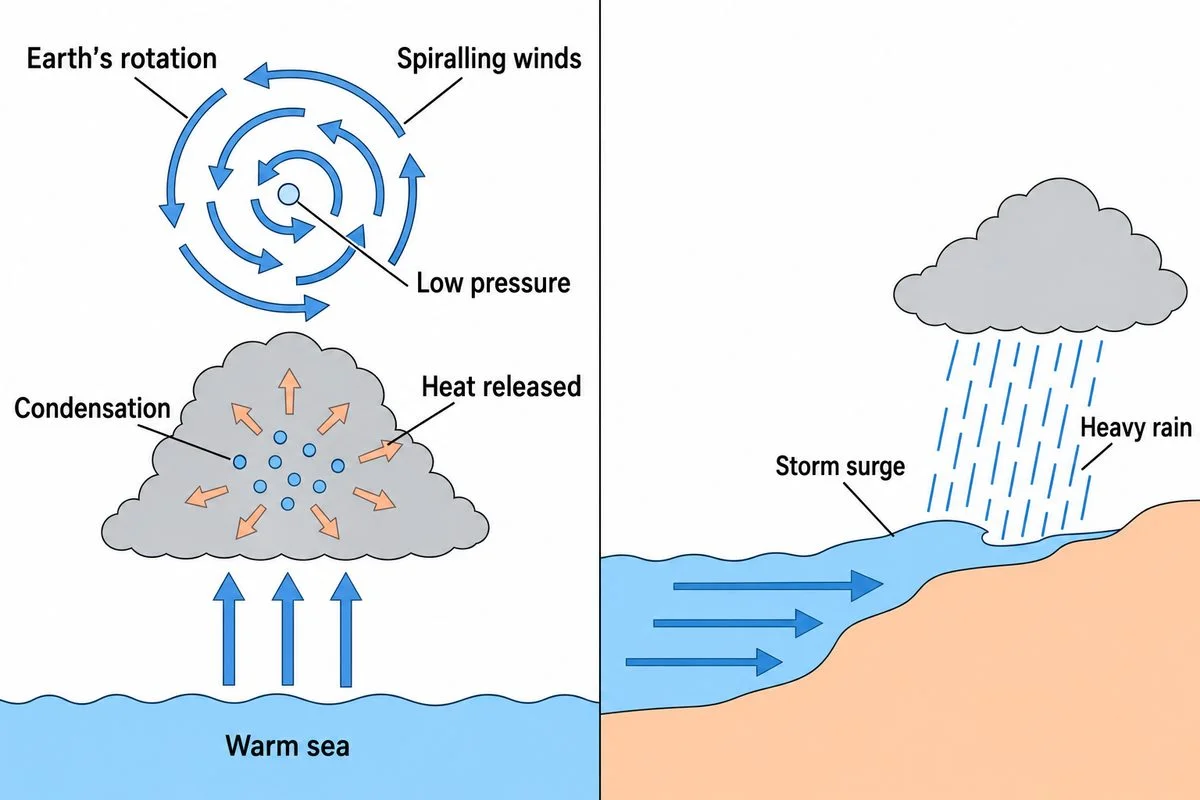
Warm sea feeds a spiralling storm, while seawater and rain flood coastal land.

8. Cyclones

Warm seas feed rotating storms with strong winds.

Show
Trace rising moisture and spiralling winds in the diagram. Find seawater crossing the shore.
Ask
How could this warm sea feed the storm?
Say
Rising sea vapour condenses, releasing heat that feeds the storm. Winds push seawater ashore.
Used in
Cyclone warnings help people reach shelters before dangerous winds and rising water arrive.
If your child says…“Only the wind causes damage.”
Ask
Where could seawater go after crossing the beach?
What’s true
Seawater flooding and heavy rain can damage places far inland.

A real problem

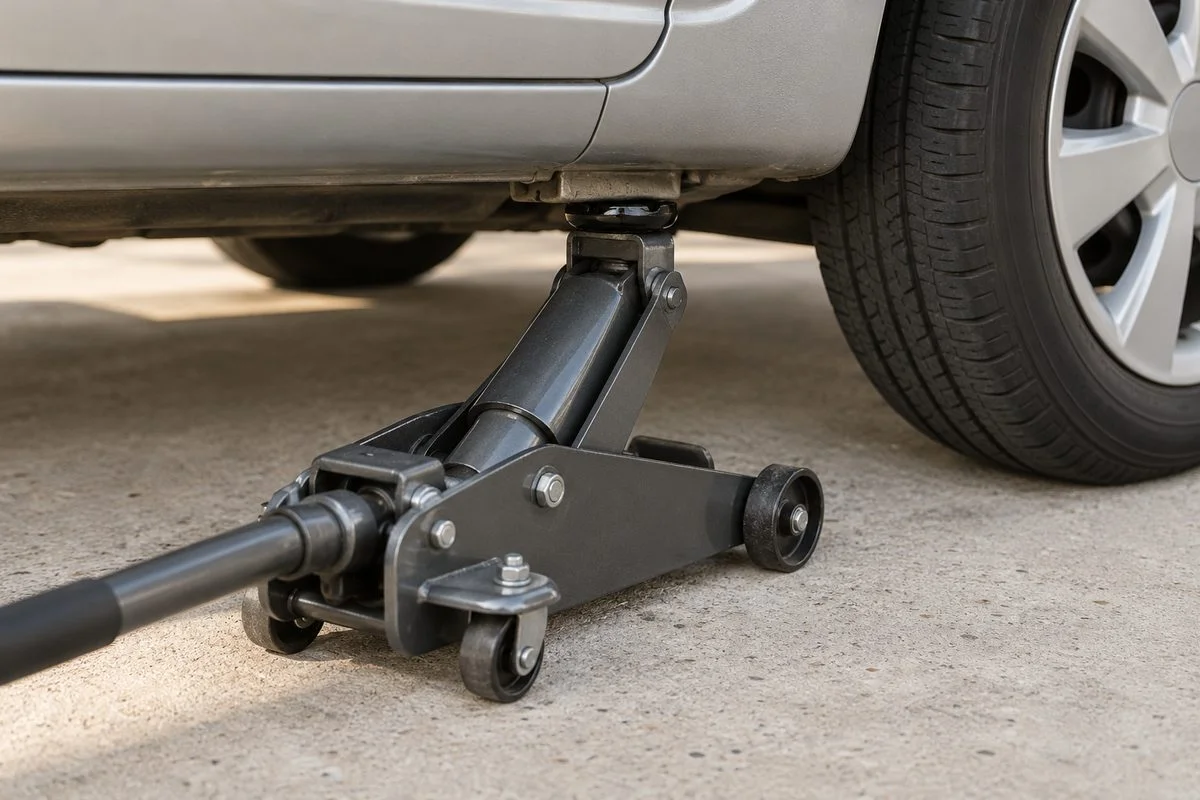
A hydraulic press helped lift bridge tubes.

In 1795, Joseph Bramah received a patent for his hydraulic press.

A hydraulic press can turn a small applied force into a large force.

Engineers used Bramah's invention to lift the Britannia Bridge's tubes.

Sheffield MuseumsRoyal Academy of EngineeringMenai Heritage

Hydraulic jack positioned beneath a parked car.

Concept Lab · Common misconception

The tempting mistake in Pressure, Winds, Storms, and Cyclones

Open standalone misconception page →

Does the same force always create the same pressure?

Wrong

A sharp and blunt end press equally because I use the same force.

Why it feels right. I compare only the effort of pushing.

Right

Pressure increases when the same force acts over a smaller area.

Worked example

Both presses use the same force. The narrow edge applies it over less clay surface.
  1. Press the broad face and the narrow edge of the same block into soft clay with similar force.
  2. The narrow edge concentrates the force on less area.

Ask your child eight quick questions.

One per step. The answer and the reason are given.

  1. What extra force does the narrow end add when it sinks deeper?

    None. The same push acts over less area, increasing pressure.

  2. Which calculation gives pressure for 100 N acting over 2 m²?

    100÷2 = 50 Pa. Divide force by area, not area by force.

  3. When does the same side hole give a stronger jet: bottle full or nearly empty?

    When the bottle is full. More water above the hole means greater pressure there.

  4. Which walls of a sealed box feel pressure from the air inside?

    Every wall. Air presses in every direction, including upwards and sideways.

  5. Which pressure must be greater for air to push this roof upwards?

    The pressure inside. The stronger inside push acts against lower pressure above the roof.

  6. What causes thunder?

    Sudden expansion of heated air. Lightning heats air rapidly, causing expansion that produces thunder.

  7. Does an umbrella make staying outdoors safe during lightning?

    No. An umbrella provides no lightning protection.

  8. Besides wind, which two sources of floodwater does this diagram show?

    Seawater and rain. Winds push seawater ashore, while heavy rain adds floodwater.

15 more questions with answers, 2 with pictures