1. Day, month and year
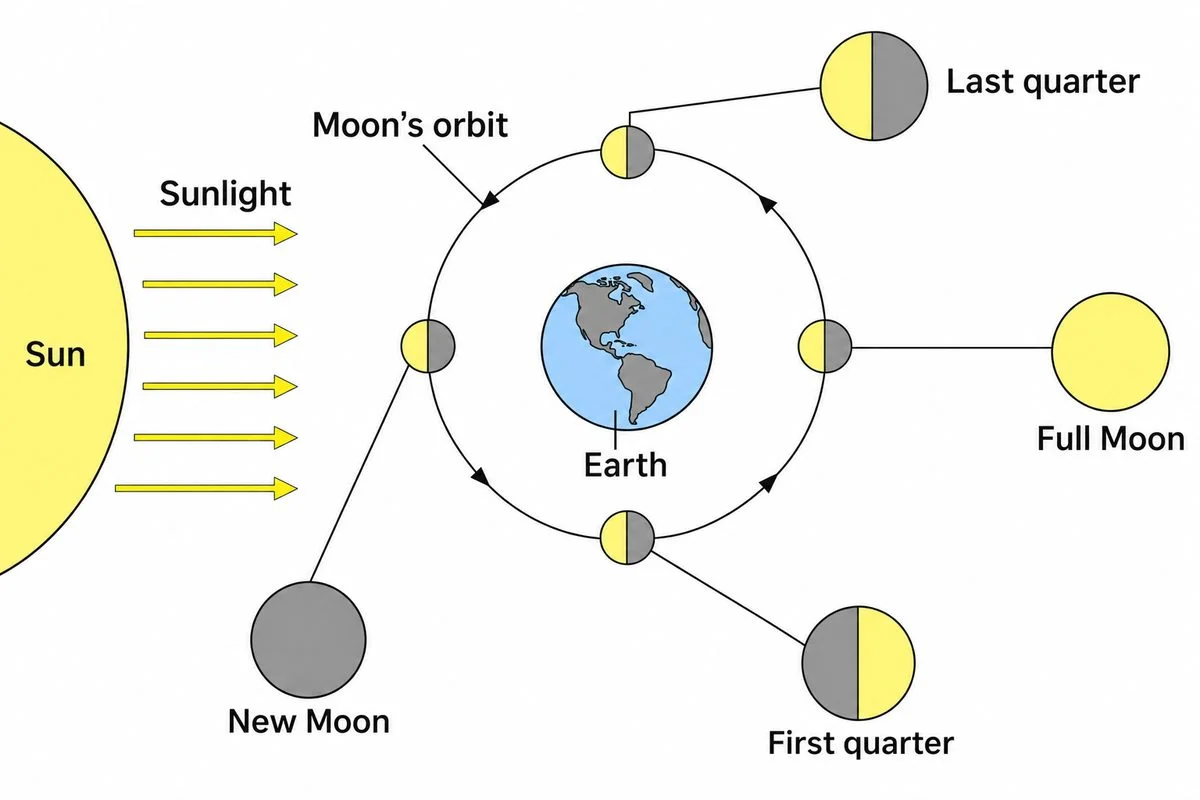
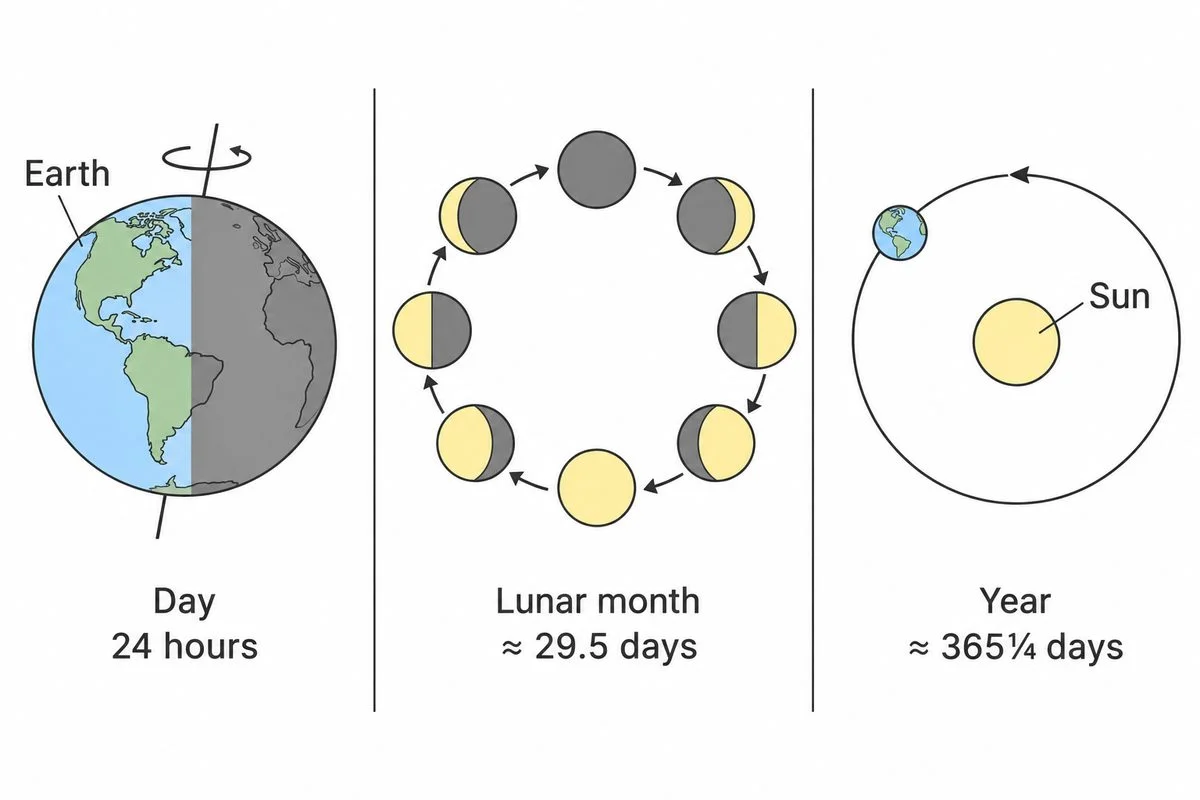
Different repeating movements in the sky give us different time units.
- Show
- Look at the diagram from left to right. Follow Earth's turning, the repeating Moon shapes, then Earth's path around the Sun.
- Ask
- As Earth turns in this panel, will a place move from daylight into darkness?
- Say
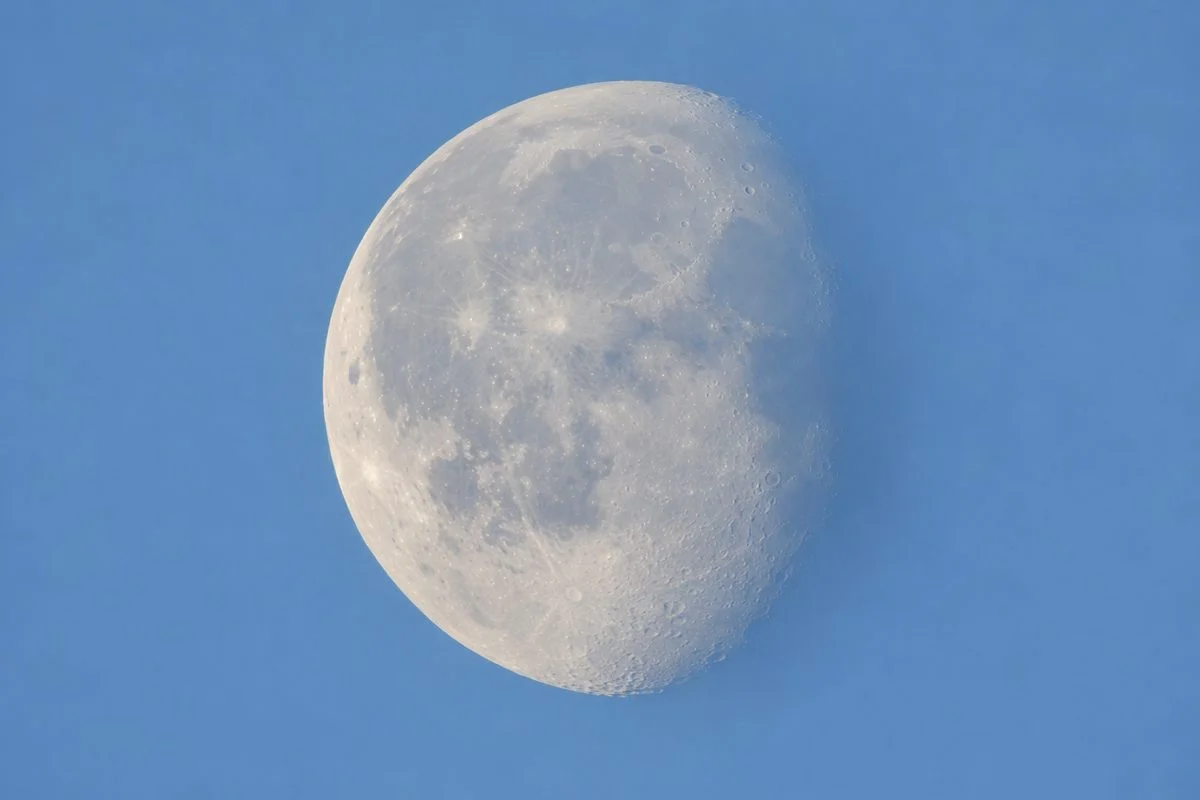
- Yes; Earth's spin gives days, and its orbit around the Sun gives years. Repeating Moon phases give lunar months.
- Used in
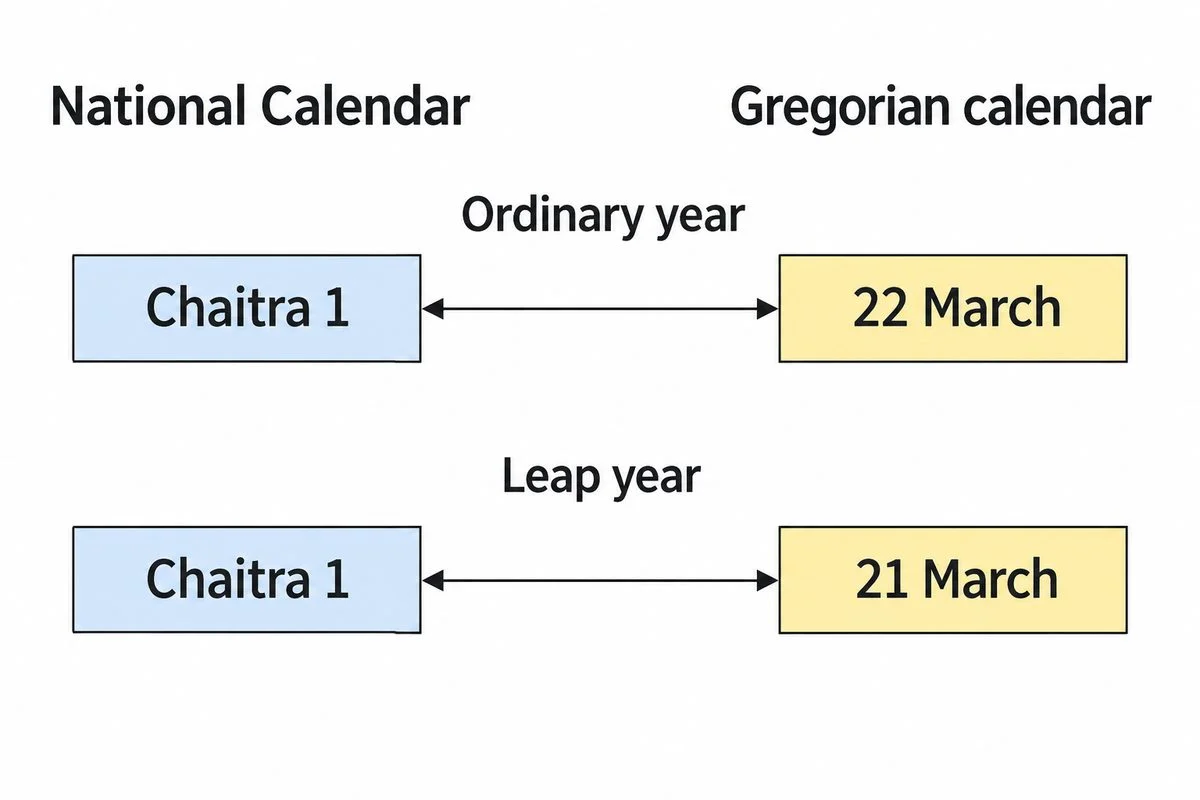
- Calendars use these repeating events to organise dates.
If your child says…“Earth must go around the Sun before another day begins.”
- Ask
- Which arrow shows Earth turning without completing its path around the Sun?
- What’s true
- The solar day averages 24 hours between the Sun's successive highest positions.