Skip to content

Teach Our Home: Earth, a Unique Life Sustaining Planet in eight steps.

For each idea: show it, ask before you tell, then say one line.

Gather a potted plant, a tumbler of water, a sprouting potato and an open hibiscus flower.

Do not eat the sprouted potato or its sprouts. Keep it away from cooking supplies.

Common misconceptions & worked visual for this chapter · 15 practice questions with answers

How to teach it

Conditions that support life

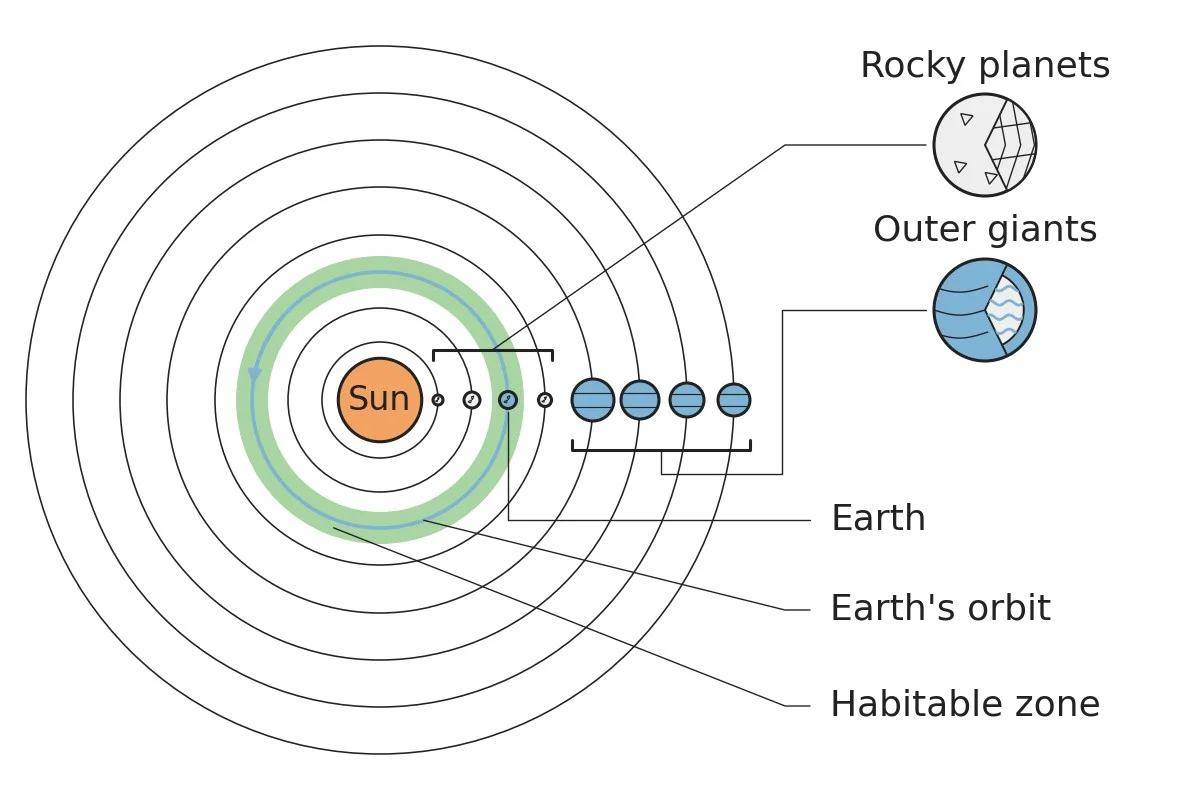
Planet groups and Earth's nearly circular orbit within the Sun's habitable zone.

1. Planets, orbits and the habitable zone

Inner planets are rocky; outer giants contain gases and liquids.

Show
Look at the diagram's rocky planets and outer giants. Follow Earth's orbit through the shaded band.
Ask
With a similar atmosphere, what might happen to surface water far beyond this shaded band?
Say
Liquid water might not be possible there; the habitable zone is a band where liquid water is possible.
Used in
Earth's orbit limits changes in sunlight from changing distance.
If your child says…“Earth follows a long, narrow loop.”
Ask
How would stretching Earth's orbit change its nearest and farthest distances from the Sun?
What’s true
Earth travels in a near-circle; its tilted axis mainly explains seasons.
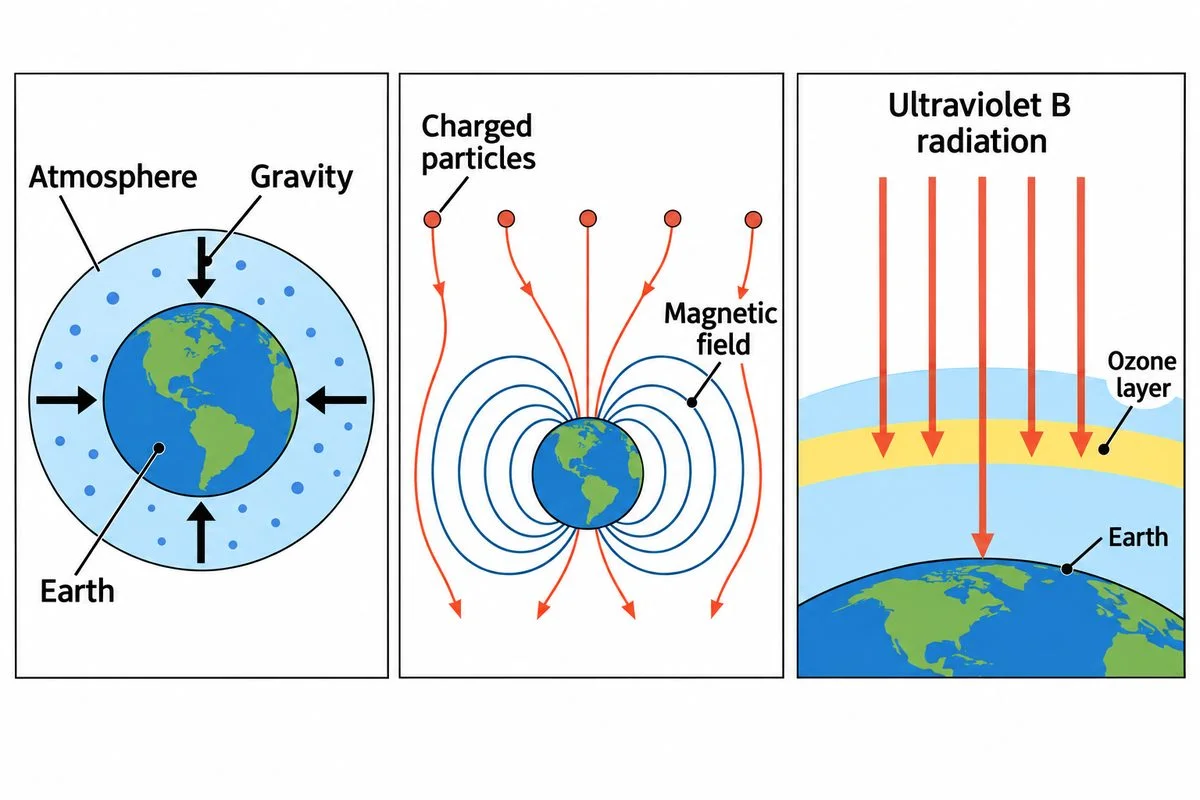
Separate panels show gravity retaining air, magnetic deflection and ozone absorbing ultraviolet radiation.

2. Gravity, the magnetic field and the ozone layer

Gravity holds air, while magnetic fields and ozone protect living things.

Show
Read the diagram from left to right. Follow the inward arrows, bending particle paths and ultraviolet arrows.
Ask
Without the magnetic field, which force would still hold air near Earth?
Say
Gravity holds Earth's air nearby. The magnetic field turns away many charged particles. Ozone absorbs much harmful ultraviolet radiation.
Used in
These protections help preserve the atmosphere and protect living cells.
If your child says…“Earth's magnetic field holds the air down.”
Ask
Which panel shows a pull towards Earth rather than paths bending around it?
What’s true
Gravity retains air, while the magnetic field redirects many incoming charged particles.
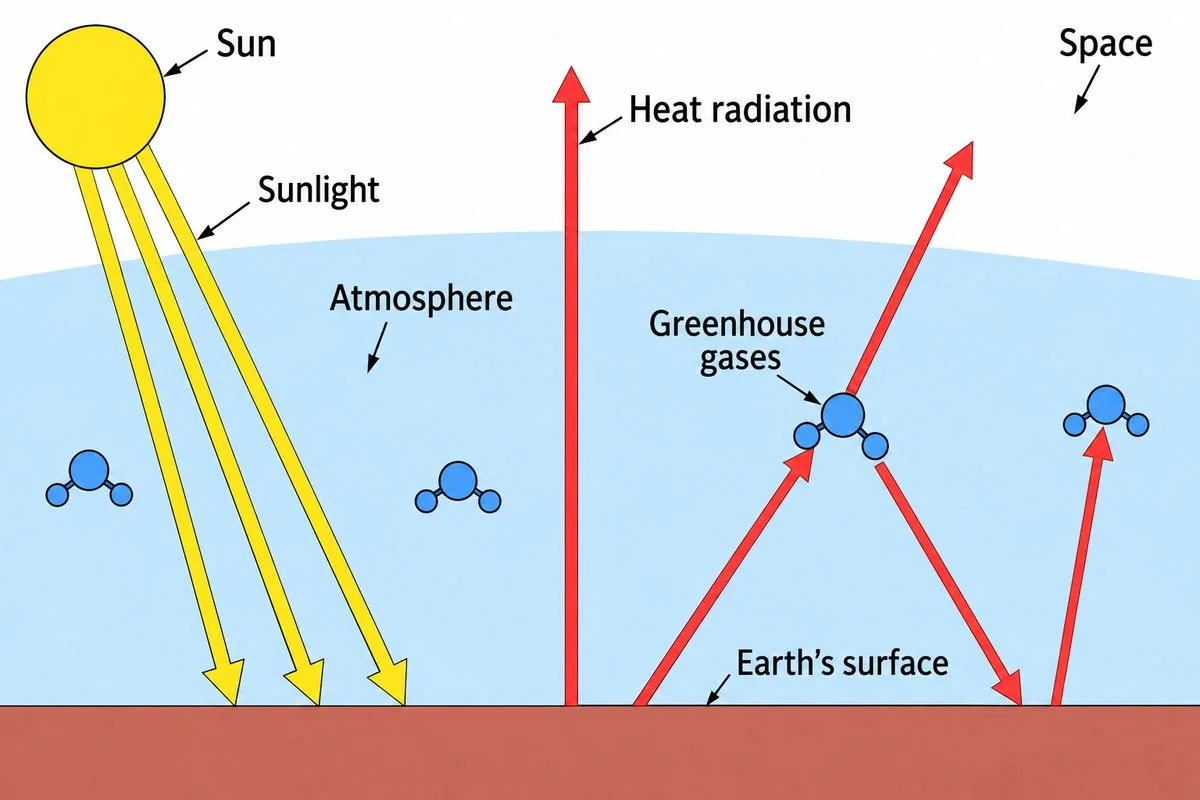
Sunlight warms the ground; greenhouse gases absorb and emit some outgoing heat radiation.

3. The greenhouse effect and Earth's habitability

Several conditions together keep Earth suitable for life.

Show
Look at the diagram. Follow sunlight to the ground, then heat radiation upwards and back down.
Ask
What might happen to this surface's warmth if fewer greenhouse gases absorbed its outgoing heat?
Say
This surface might be less warm. Sunlight warms the ground, which gives off heat radiation. Greenhouse gases absorb and emit some, warming Earth.
Used in
The natural greenhouse effect keeps Earth warm enough for life.
If your child says…“Greenhouse gases keep sunlight off the ground.”
Ask
Where does the sunlight arrow end before the heat radiation arrows begin?
What’s true
Sunlight warms the ground before greenhouse gases absorb some outgoing heat.

Earth's connected systems

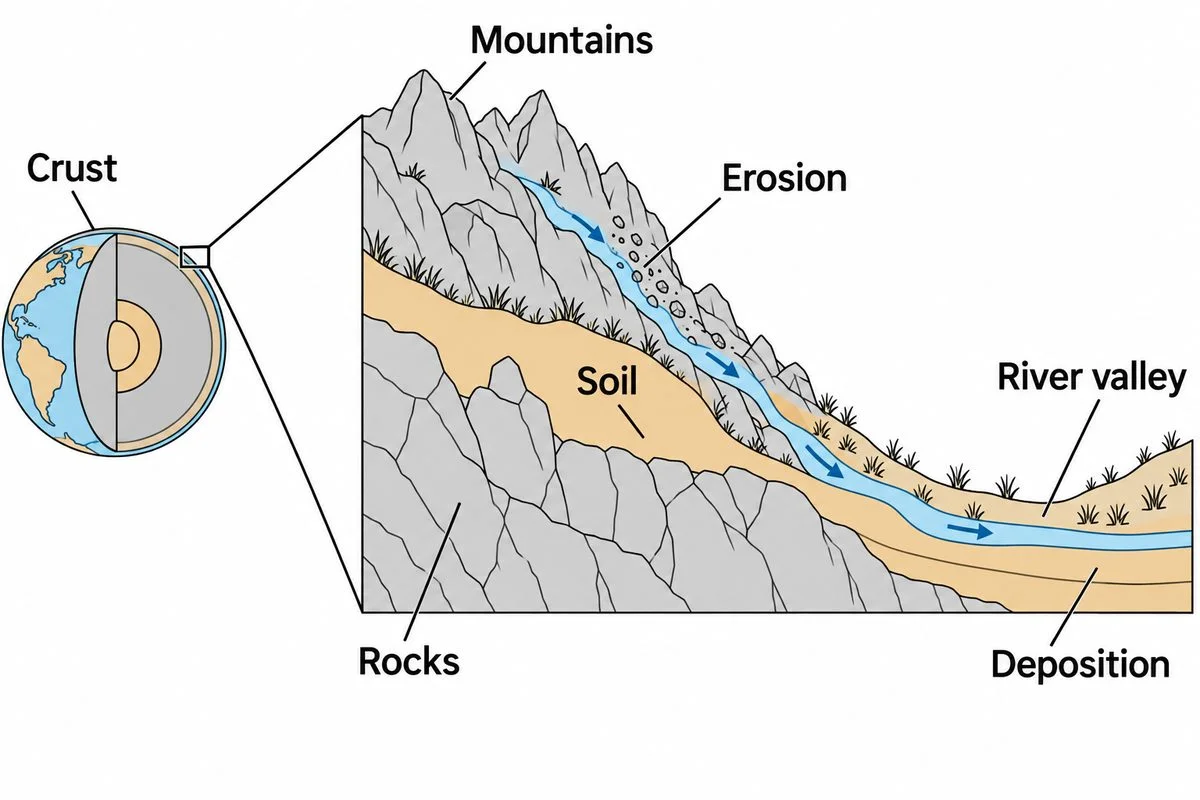
Earth's thin crust enlarged into rocky slopes, soil and a river-shaped valley.

4. Earth's crust and geodiversity

Earth's thin outer layer has varied landforms, rocks, soils and habitats.

Show
Find the thin crust in the diagram's cutaway. Follow the enlarged landscape's river from rocky slopes into the soil-covered valley.
Ask
Which area would better support plants needing deep soil: these rocky slopes or this valley?
Say
This valley would better support them. Moving water wears away rock and deposits material downstream. Earth's thin crust has varied rocks, soils and landforms shaped by such processes.
Used in
Soil provides nutrients for plants, while varied landforms provide different habitats.
If your child says…“The crust reaches almost to Earth's centre.”
Ask
How much of the cutaway lies beneath its thin outer rim?
What’s true
The crust is a thin outer layer above the mantle and core.
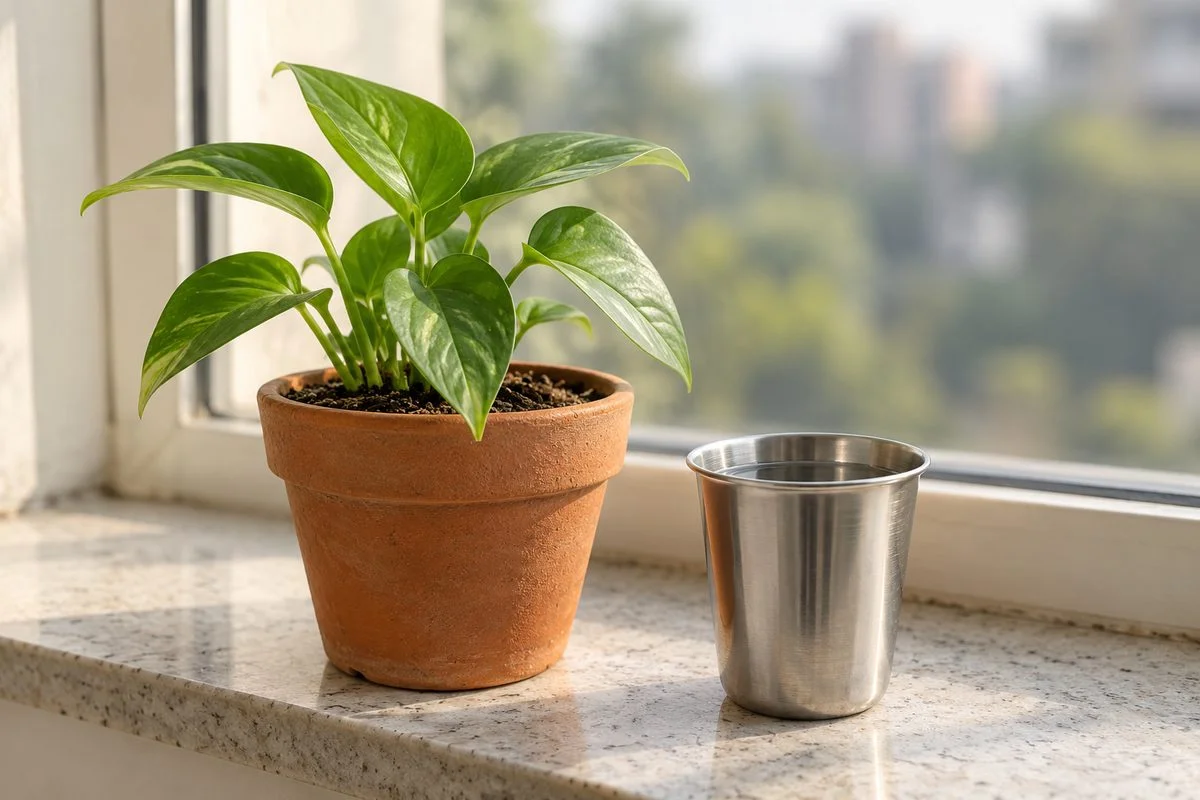
Potted plant beside a steel tumbler of water on a windowsill.

5. Atmosphere, hydrosphere, geosphere and biosphere

Air, water, solid Earth and life form four connected systems.

Show
Set a potted plant beside a window, with water ready.
Ask
If its water supply disappeared, could sunlight and air replace it?
Say
No; sunlight and air could not replace water. Sunlit plants make food using carbon dioxide and water, releasing oxygen.
Used in
Plants supply food and oxygen through exchanges connecting living things, air, water and soil.
If your child says…“Plants only release oxygen; they never use it.”
Ask
How does a plant release energy from its food?
What’s true
Plants also use oxygen in respiration to release energy from food.

Continuing and protecting life

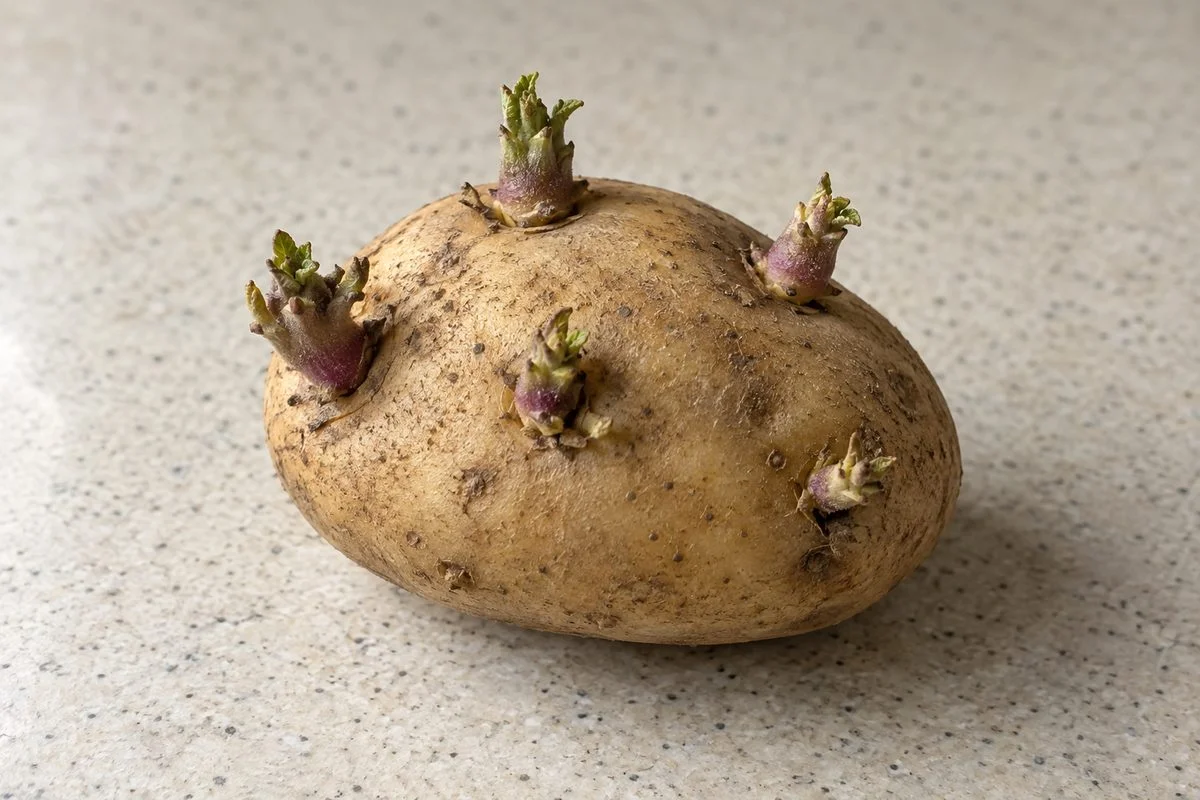
A whole potato with large sprouts growing from its surface.

6. Asexual reproduction and inherited instructions

One parent can pass inherited instructions into new individuals.

Show
Use a potato already sprouting in the kitchen. Follow a large sprout back to where it grows from the potato.
Ask
Could this sprout grow into a new plant without a seed?
Say
Yes; this sprout grows from a potato, which is a swollen stem.
Used in
Sugarcane stem pieces produce new plants carrying their parent's inherited instructions.
If your child says…“Every new plant must start from a seed.”
Ask
Is this sprout attached to a seed or to the potato?
What’s true
A new plant can develop from a parent's stem without any seed.
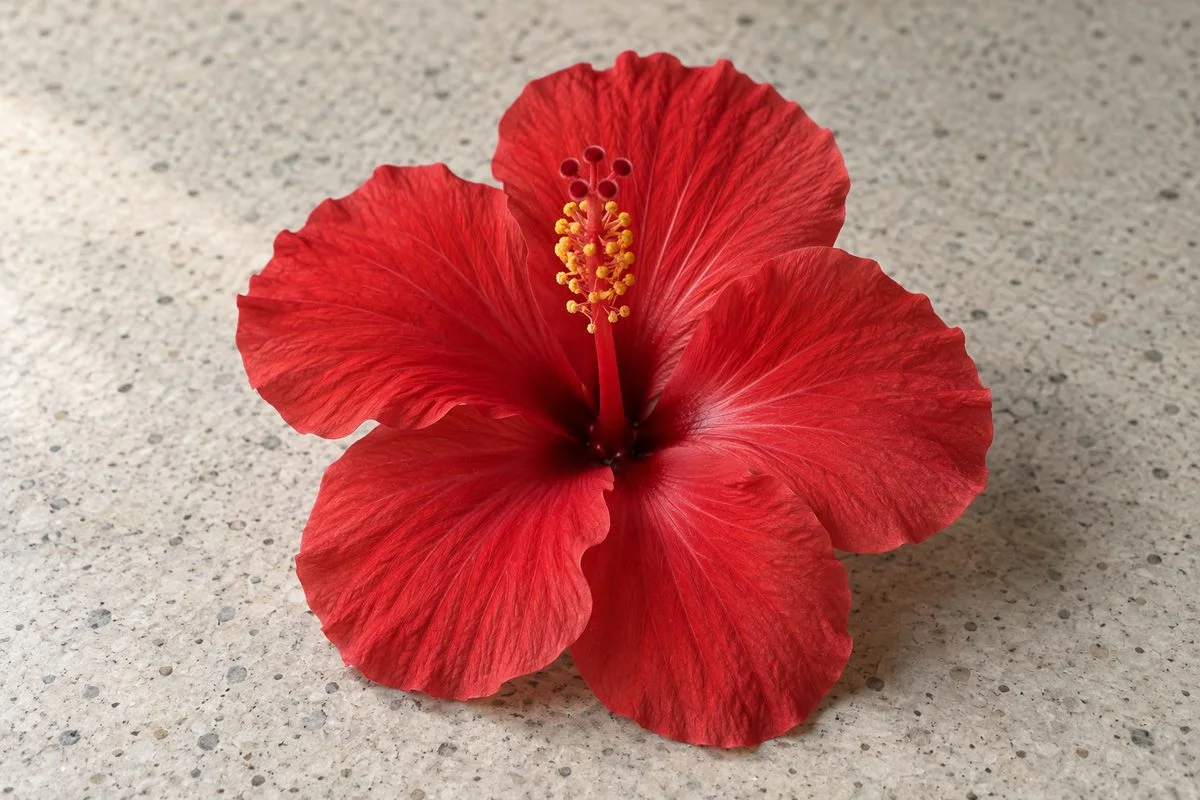
An open hibiscus flower with yellow anthers and rounded stigma tips clearly visible.

7. Sexual reproduction and gametes

Different combinations of parental instructions pass through gametes into offspring.

Show
Find an open hibiscus. Locate its yellow anthers and rounded stigma tips.
Ask
Could this flower provide both kinds of reproductive cell?
Say
Yes; pollen carries male gametes, and ovules contain eggs.
Used in
A fertilised hen's egg stores food that feeds its growing embryo.
If your child says…“A flower must be either male or female.”
Ask
Can you find both kinds of reproductive part in this flower?
What’s true
Many flowers contain both stamens and carpels, providing male and female reproductive cells.
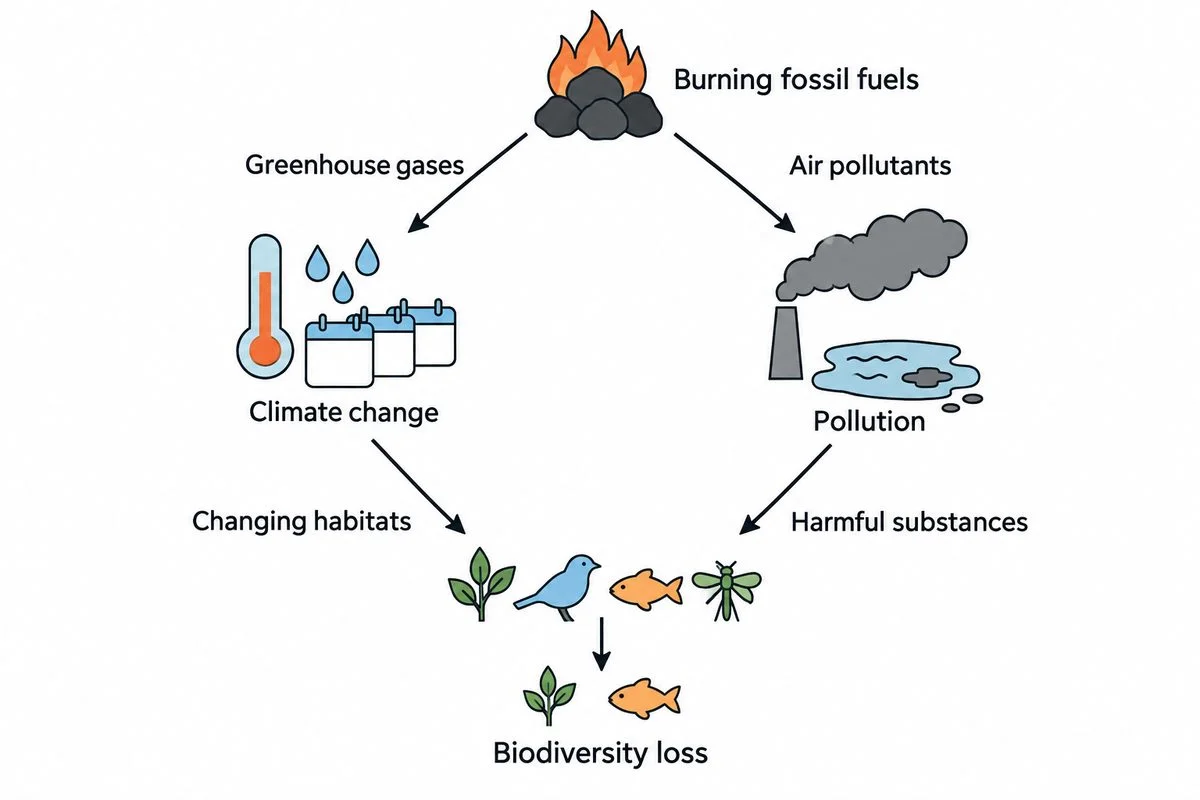
Burning fossil fuels contributes to climate change and pollution, both threatening biodiversity.

8. Climate change and the triple planetary crisis

Climate change, pollution and biodiversity loss threaten life.

Show
Follow the diagram's branches from burning fossil fuels to biodiversity loss.
Ask
How could both branches harm wildlife?
Say
Burning fossil fuels releases greenhouse gases and pollutants. Both problems harm habitats, reducing life's variety.
Used in
Reusing, repairing and saving water and energy help protect Earth's living systems.
If your child says…“The three crises are all names for warming.”
Ask
Is polluted water the same problem as disappearing wildlife?
What’s true
Climate change, pollution and biodiversity loss are distinct problems that affect one another.

A real problem

India phased out CFCs while retaining medical supplies.

The ozone layer shields Earth from most ultraviolet B radiation from the Sun.

CFCs damage ozone after reaching the upper atmosphere.

India ended CFC production and consumption from 1 August 2008, retaining supplies for medical use.

Domestic and international action to phase out these substances is helping the ozone layer heal.

Press Information BureauUS EPAUS EPA

An unbranded refrigerator in an Indian kitchen.

Concept Lab · Common misconception

The tempting mistake in Our Home: Earth, a Unique Life Sustaining Planet

Open standalone misconception page →

Does being closer to the Sun always make a planet hotter at its surface?

Wrong

Mercury must have a hotter average surface than Venus because it is closer to the Sun.

Why it feels right. I use distance from the Sun as the only factor.

Right

An atmosphere can change how easily a planet loses heat to space.

Worked example

Mercury
Nearer the Sun→Almost no atmosphere→Cooler average surface
Venus
Farther from the Sun→Thick CO₂-rich atmosphere→Hotter average surface
Mercury is nearer the Sun. Venus still has a hotter average surface because its atmosphere strongly limits heat loss.
  1. Mercury is closer to the Sun and has almost no atmosphere.
  2. Venus has a thick atmosphere rich in carbon dioxide and a higher average surface temperature.
  3. Distance alone misses the role of the atmosphere.

Ask your child eight quick questions.

One per step. The answer and the reason are given.

  1. How does Earth's orbit limit changes in sunlight caused by changing distance?

    Its distance changes little. Its path is nearly circular, rather than a long, narrow loop.

  2. What holds Earth's air around the planet?

    Gravity. Gravity pulls atmospheric gases towards Earth.

  3. What do greenhouse gases absorb after sunlight warms the ground?

    Heat radiation from the ground. Sunlight first warms the surface, which then emits heat radiation.

  4. Which part of the Earth cutaway is its crust?

    The thin outer rim. Most of Earth's interior lies beneath this thin layer.

  5. Does this plant use oxygen for respiration, or release oxygen without ever using it?

    It uses oxygen for respiration. Plants respire as well as make food by photosynthesis.

  6. Can this sprouting potato produce a new plant without a seed?

    Yes. A new plant can grow from its bud.

  7. Can one flower contain both stamens and carpels, or must it have only one kind?

    It can contain both. Many flowers contain both male and female reproductive parts.

  8. Which three problems do these branches connect?

    Climate change, pollution, biodiversity loss. Climate change and pollution harm habitats and wildlife.

15 more questions with answers