Skip to content

Teach Describing Motion Around Us in eight steps.

For each idea: show it, ask before you tell, then say one line.

Gather a flat tray, coin, ruler, round plate, paper and pencil.

Common misconceptions & worked visual for this chapter · 15 practice questions with answers

How to teach it

Describing movement

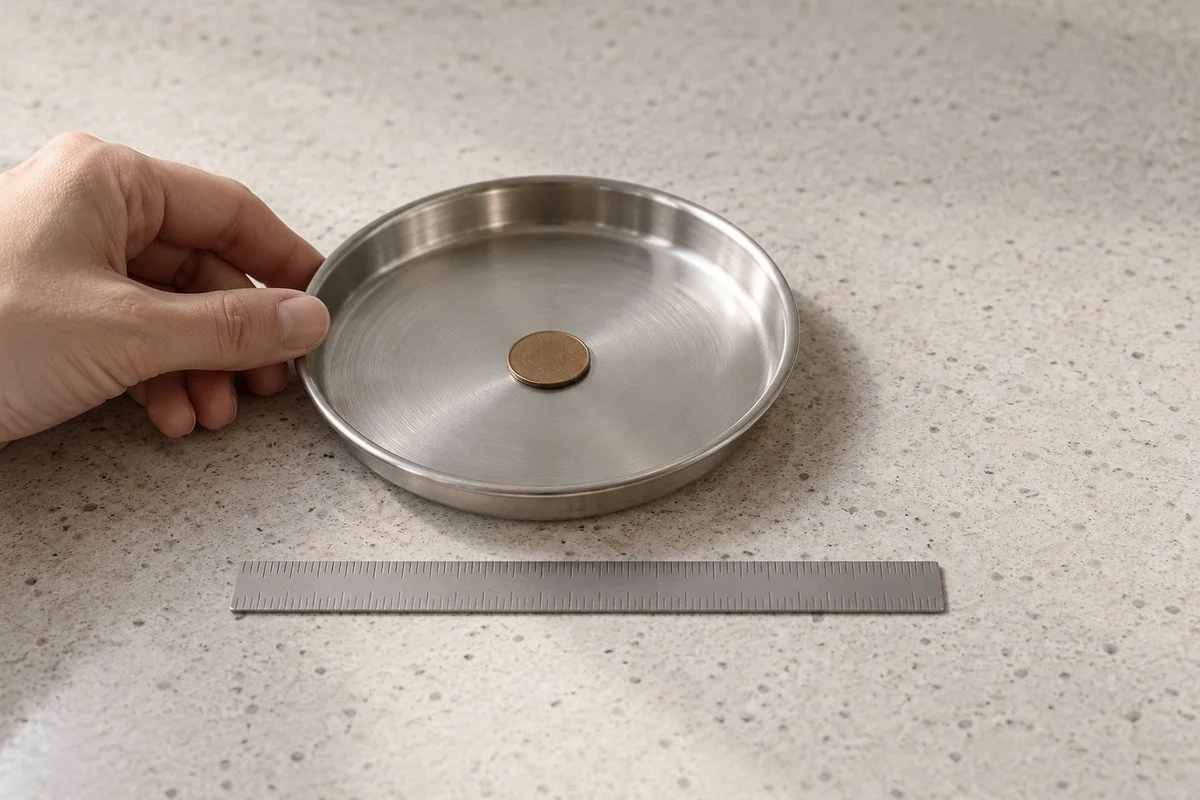
Coin on a steel tray beside a ruler, ready to slide right.

1. Position, rest and motion

Position needs a reference point, distance and direction.

Show
Set a coin on a tray. Leave the ruler on the table beside it. After your child predicts, slide the tray right without letting the coin slip. Then read Say.
Ask
Will the coin move relative to the ruler, the tray, or both?
Say
The coin changes position relative to the ruler but stays still relative to the tray.
Used in
Spacecraft docking uses relative position and velocity to help moving spacecraft join.
If your child says…“If something moves, it moves relative to everything.”
Ask
Does the coin change its place on the tray?
What’s true
The same object can move relative to one reference and remain still relative to another.
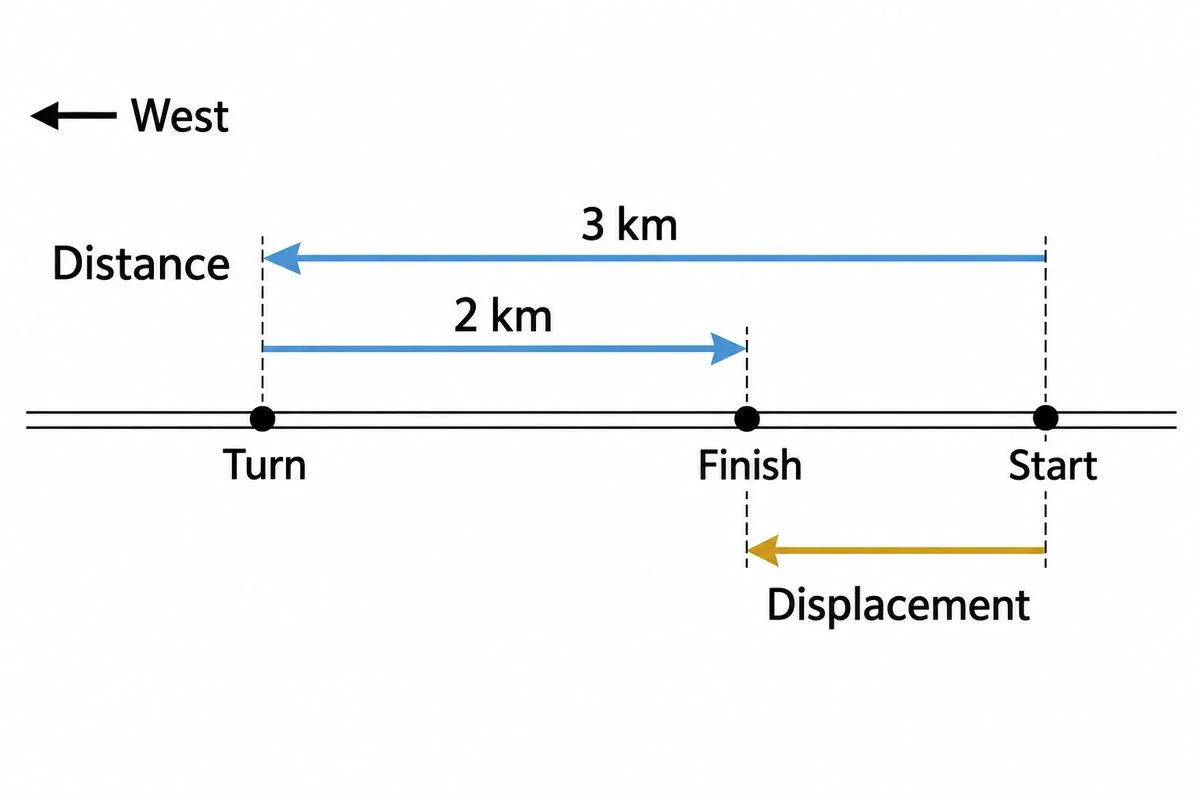
Road diagram separating outward and returning travel from the direct start-to-finish displacement.

2. Distance and displacement

Distance follows the route; displacement connects start to finish directly.

Show
Look at the diagram. Follow the road arrows from Start to Turn, then Finish. Find the separate arrow joining Start directly to Finish.
Ask
Following these arrows, what distance and displacement will you have when you reach Finish?
Say
You travelled 5 km because both parts of the route count. Your displacement is 1 km west because that is where you finish relative to Start.
Used in
A runner’s distance includes returning steps, so the total records the whole run.
If your child says…“Displacement counts every part of my route.”
Ask
Does the Start-to-Finish arrow include the extra distance travelled to Turn?
What’s true
Only start and finish determine displacement, whose size cannot exceed the distance travelled.

d=30+30=60 md=30+30=60\,\mathrm{m}

Δx=30−30=0 m\Delta x=30-30=0\,\mathrm{m}

Average speed=6060=1 m/s\text{Average speed}=\frac{60}{60}=1\,\mathrm{m/s}

3. Average speed, average velocity and uniform motion

Average speed uses distance, while average velocity uses displacement and direction.

Show
Write these lines: walk 30 m east and back in 60 s. Say: “d means distance; Δx means displacement.”
Ask
What will average velocity be?
Say
It is zero because displacement is zero.
Used in
Average speed describes travel rate on round trips, despite zero average velocity.
If your child says…“Returning makes my average speed zero.”
Ask
Did the walk cover any distance before returning to the start?
What’s true
Returning cancels displacement, but the distance travelled remains positive.

Changes in motion and graphs

Δv=−6−(−2)=−4 m/s\Delta v=-6-(-2)=-4\,\mathrm{m/s}

aavg=ΔvΔta_{\mathrm{avg}}=\frac{\Delta v}{\Delta t}

4. Acceleration

Acceleration measures how quickly velocity changes, including changes in direction.

Show
Write these lines. Say: “Right is positive. Velocity changes from −2 to −6 m/s in 2 s. Δv means velocity change; Δt means elapsed time.”
Ask
What acceleration will you calculate?
Say
It is −2 m/s², directed leftwards. Speed increases because velocity and acceleration both point left.
Used in
A braking car reduces speed through acceleration opposite to its motion.
If your child says…“Negative acceleration always means slowing down.”
Ask
Does changing from 2 m/s to 6 m/s make the cyclist slower?
What’s true
Speed increases when velocity and acceleration point the same way, even when both are negative.
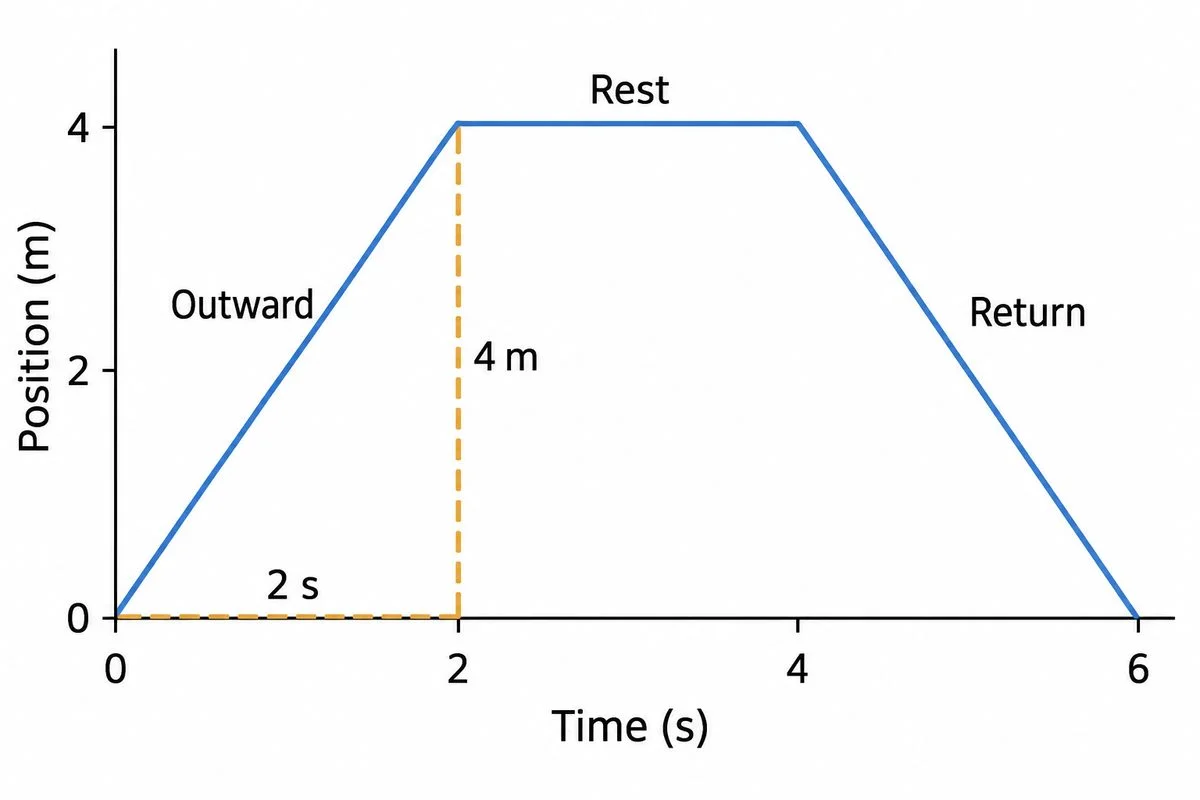
Position-time graph showing outward movement, a pause, and return to the starting point.

5. Position-time graphs

The slope shows velocity, while height shows position.

Show
Look at the diagram’s axes. Follow the rising, flat and falling sections.
Ask
What velocity will each section give?
Say
Outward velocity is 2 m/s: position increases 4 m in 2 s. Unchanged position means rest. Returning velocity is −2 m/s because position decreases equally quickly.
Used in
A runner’s position-time graph distinguishes stops from movement, helping explain changes during the run.
If your child says…“A flat line means steady movement.”
Ask
During the flat section, does the position change as time passes?
What’s true
A horizontal position-time line records an unchanged position as time passes.
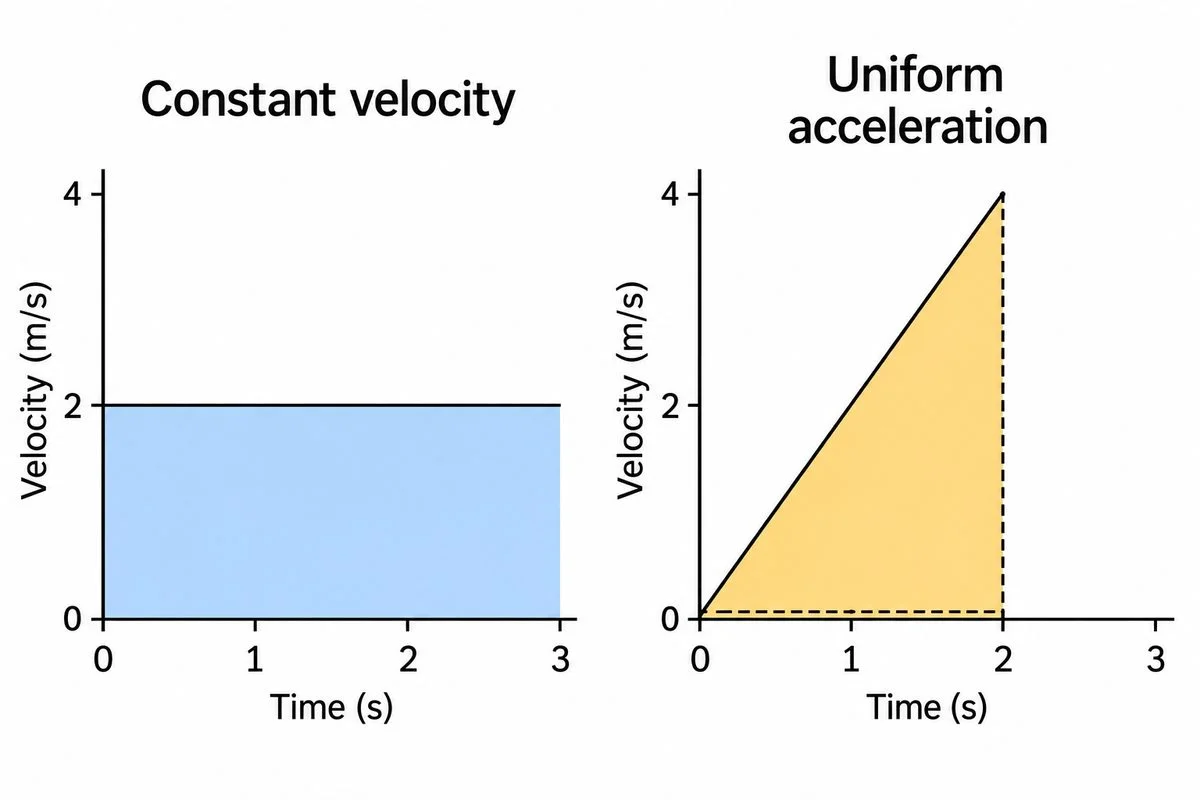
Velocity-time graphs with a shaded rectangle under constant velocity and triangle under increasing velocity.

6. Velocity-time graphs

Slope gives acceleration, while signed area gives displacement.

Show
Compare the diagram’s lines, then its shaded rectangle and triangle.
Ask
What acceleration and displacement will each graph give?
Say
Velocity change divided by time gives accelerations of zero and 2 m/s². Rectangle and triangle areas give displacements of 6 m and 4 m.
Used in
A braking car’s velocity-time graph gives displacement, helping calculate how far it travels.
If your child says…“The area gives acceleration.”
Ask
What unit comes from multiplying m/s by seconds?
What’s true
Areas above the time axis add displacement, while areas below subtract from it.

Calculating and describing further motion

v2=u2+2asv^2=u^2+2as

v2=0+2(2)(9)v^2=0+2(2)(9)

7. Kinematic equations for constant acceleration

Constant acceleration links starting velocity, ending velocity, displacement and time.

Show
Write these lines. Say: “Starting velocity u is zero, acceleration a is constant at 2 m/s². Displacement s is 9 m; v means final velocity.”
Ask
What squared final velocity follows?
Say
It is 36 m²/s², giving 6 m/s.
Used in
Braking calculations predict stopping distance, helping allow enough space.
If your child says…“These equations work even when acceleration keeps changing.”
Ask
If acceleration changes during these 3 s, which single value could these equations use?
What’s true
These equations apply to straight-line motion only when acceleration stays constant throughout the interval.
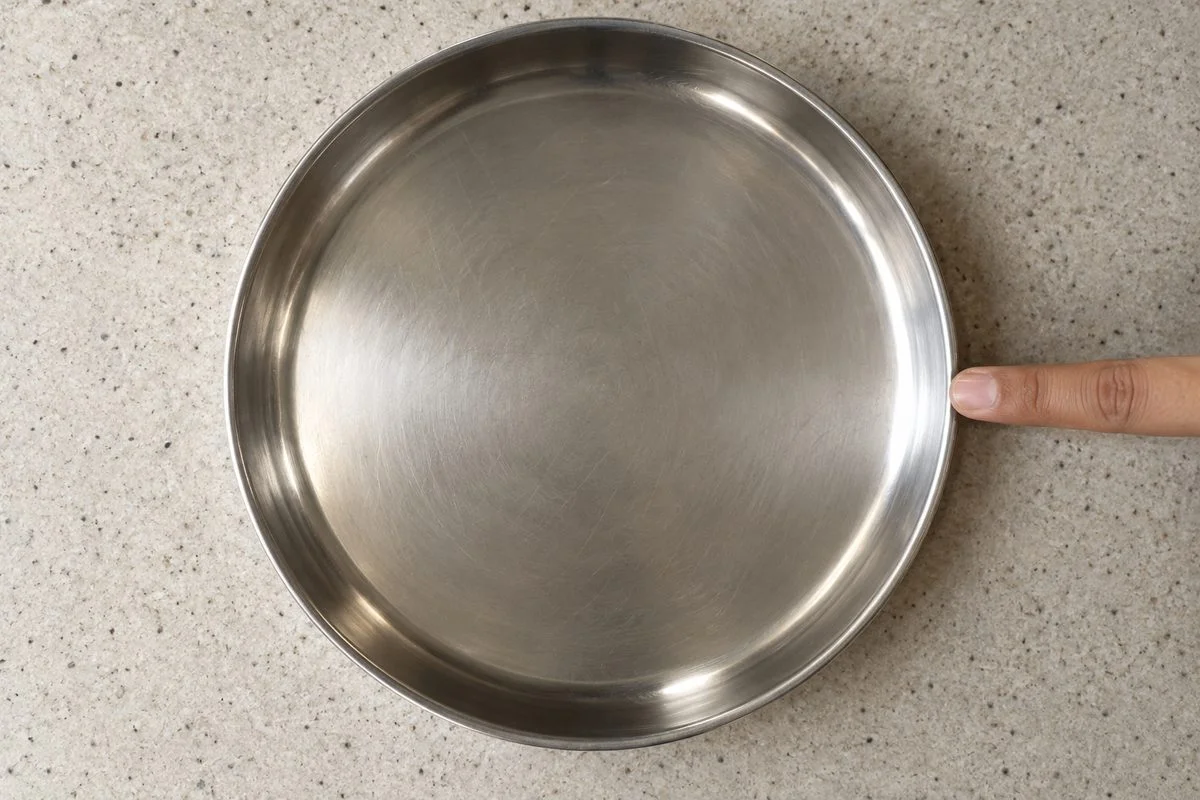
One fingertip resting at the right edge of a steel plate.

8. Motion in a plane and uniform circular motion

Motion in two dimensions includes circles, where velocity keeps changing.

Show
Rest one fingertip at the plate’s right edge. After your child predicts, trace its rim at steady speed. Then read Say.
Ask
Will your velocity stay unchanged as your finger turns?
Say
During uniform circular motion, speed stays constant but direction changes, so acceleration is nonzero.
Used in
A runner’s turning counts as acceleration, helping describe motion that speed alone misses.
If your child says…“Steady speed means there is no acceleration.”
Ask
Does your fingertip keep moving in the same direction as it traces the rim?
What’s true
Changing direction changes velocity even when speed stays the same.

A real problem

SpaDeX joined moving spacecraft in space.

The satellites docked on 16 January 2025.

The experiment determined the chaser’s position and velocity relative to its target.

Docking allows separately launched parts to join when building a space station.

ISROISROReuters via VOA

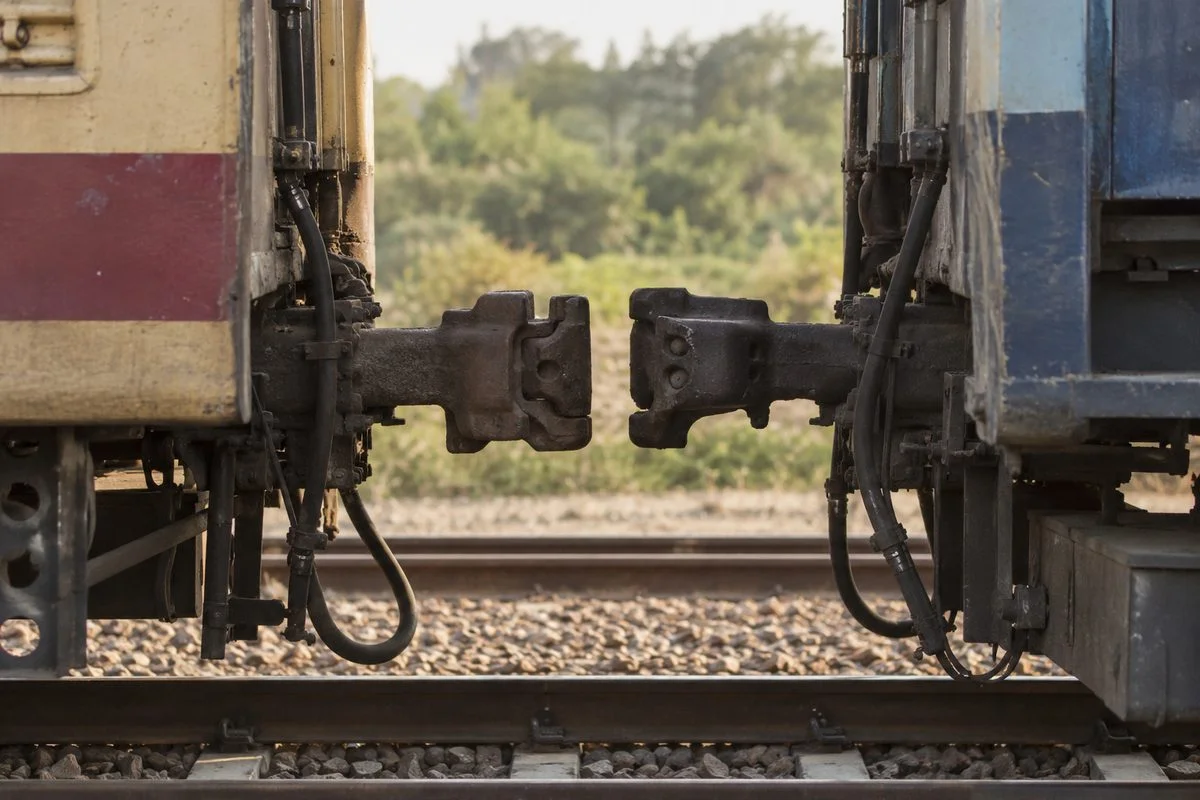
Railway carriage ends aligned with a gap between their couplers.

Concept Lab · Common misconception

The tempting mistake in Describing Motion Around Us

Open standalone misconception page →

Can displacement be zero after travelling?

Wrong

A runner who travels 400 m must be 400 m from the start.

Why it feels right. The path length and change in position sound alike.

Right

Distance counts the path. Displacement compares start and finish.

Worked example

One full lap covers 400 m and returns to the starting position. The displacement is zero.
  1. Run one full 400 m lap and stop at the start.
  2. Distance is 400 m and displacement is zero.

Ask your child eight quick questions.

One per step. The answer and the reason are given.

  1. A passenger stays seated in a moving train. What is the passenger doing relative to the seat?

    Remaining at rest. The passenger’s position relative to the seat stays unchanged.

  2. You run 100 m forward, then 60 m back. What is your displacement?

    40 m forward. Displacement compares your final position with your starting position.

  3. You walk 30 m out and return in 60 s altogether. What is your average speed?

    1 m/s. Both parts count towards the 60 m travelled in 60 s.

  4. Take right as positive. Velocity and acceleration both point left. What happens to speed?

    It increases. Acceleration in the direction of motion increases speed.

  5. A position-time line stays flat at 40 m. What is the object doing?

    Remaining at rest. The height gives position, which does not change as time passes.

  6. What is the displacement during the left graph’s three seconds?

    6 m. Multiply 2 m/s by 3 s.

  7. A ball gains unequal amounts of velocity in equal times. Can these equations describe that interval?

    No. These equations require constant acceleration throughout the interval.

  8. A runner circles a track at steady speed. Is the runner accelerating?

    Yes. Velocity changes whenever its direction changes, even with constant speed.

15 more questions with answers