Skip to content

Teach Exploration: Entering the World of Secondary Science in seven steps.

For each idea: show it, ask before you tell, then say one line.

Gather a coin, folded cloth, book, pencil, ruler, cup, bowl and room-temperature water.

Common misconceptions & worked visual for this chapter · 15 practice questions with answers

How to teach it

Building and testing ideas

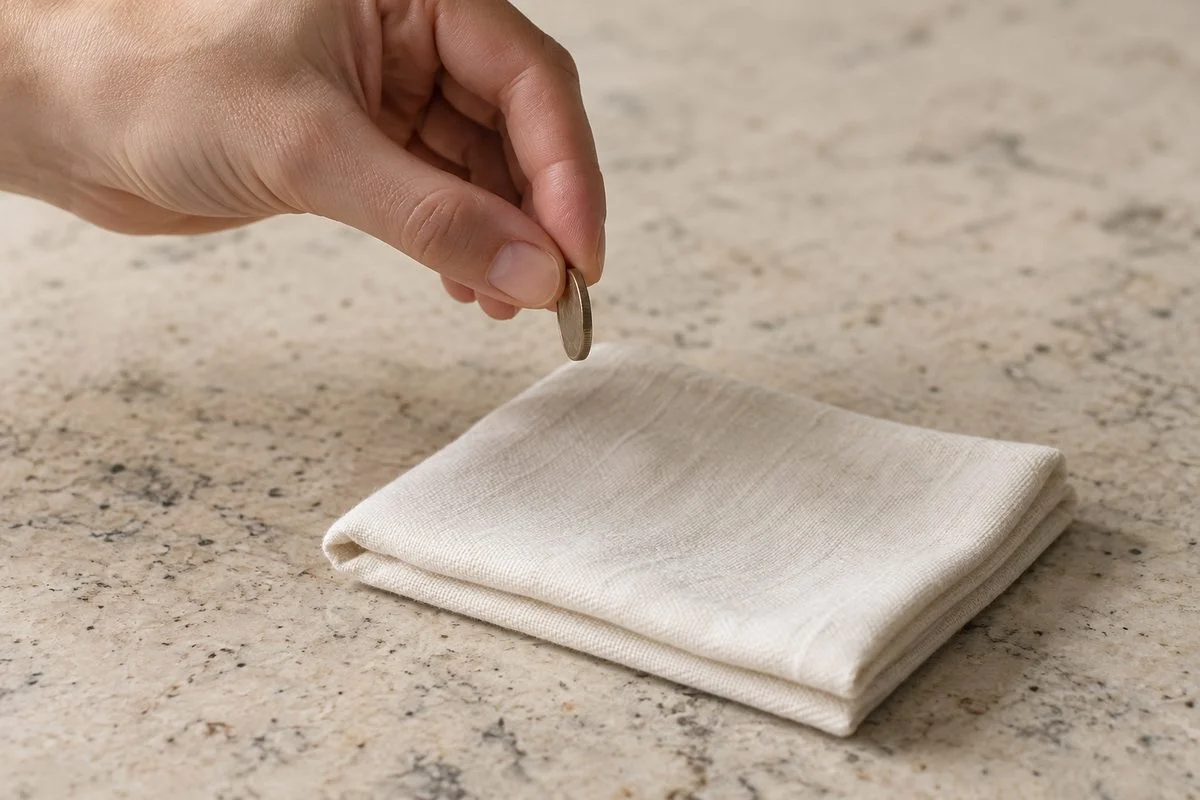
One hand holds a coin above a folded cloth.

1. Evidence, scientific ideas, and testable predictions

Use evidence to predict something you can check.

Show
Hold a coin just above a folded cloth. Release it after the prediction.
Ask
Where will the coin go when released?
Say
The coin will fall onto the cloth. Check what happens.
Used in
Checking evidence behind online claims helps people judge what to believe.
If your child says…“Feeling certain makes my prediction scientific.”
Ask
What observation supports your prediction?
What’s true
Confidence alone supplies no evidence.
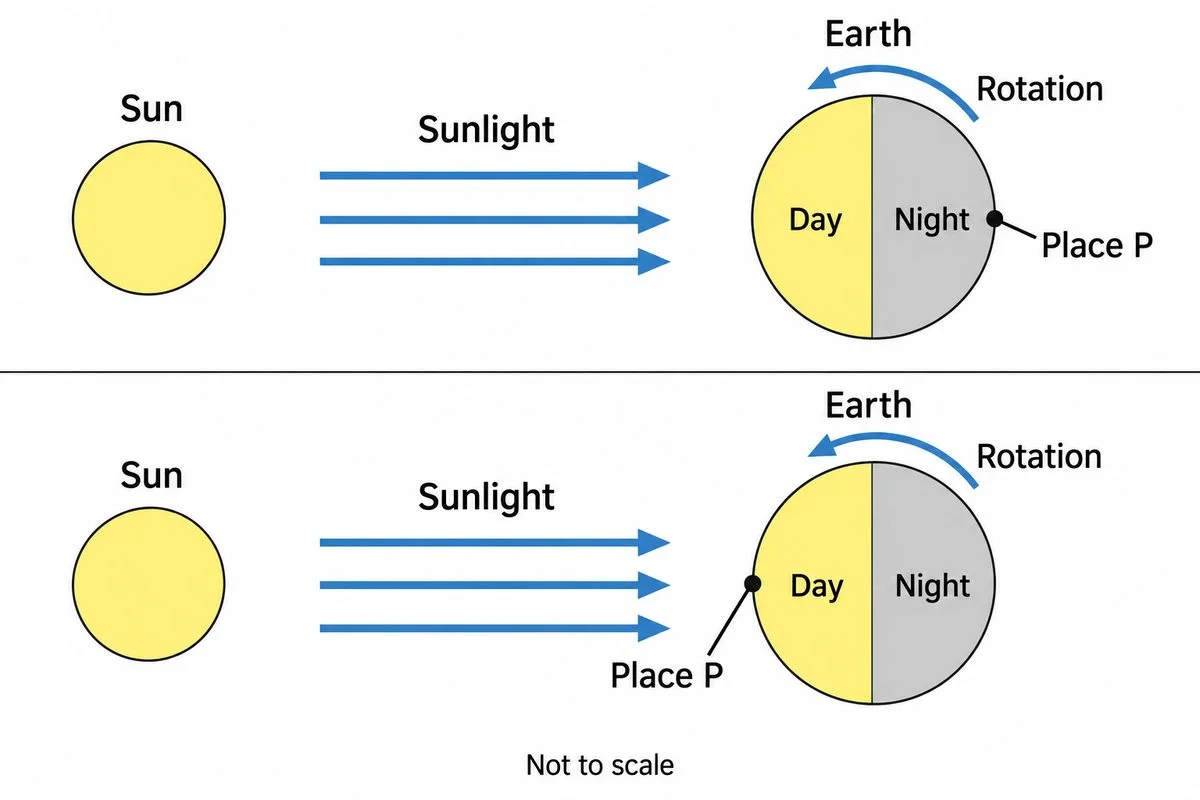
Earth's rotation moves Place P from the dark side into sunlight.

2. Scientific models and relevant details

Simplify something while keeping details needed for your question.

Show
Look at the diagram. Follow Place P from darkness above to sunlight below.
Ask
Will Place P still move into sunlight if we leave continents out of this model?
Say
A round Earth, sunlight from one side and rotation explain this place's day and night. This needs no continents.
Used in
Cricket models use ball speed to assess whether a shot crosses the boundary.
If your child says…“A model must include everything.”
Ask
Does leaving out continents prevent us from following this place into sunlight?
What’s true
The question decides which details matter.
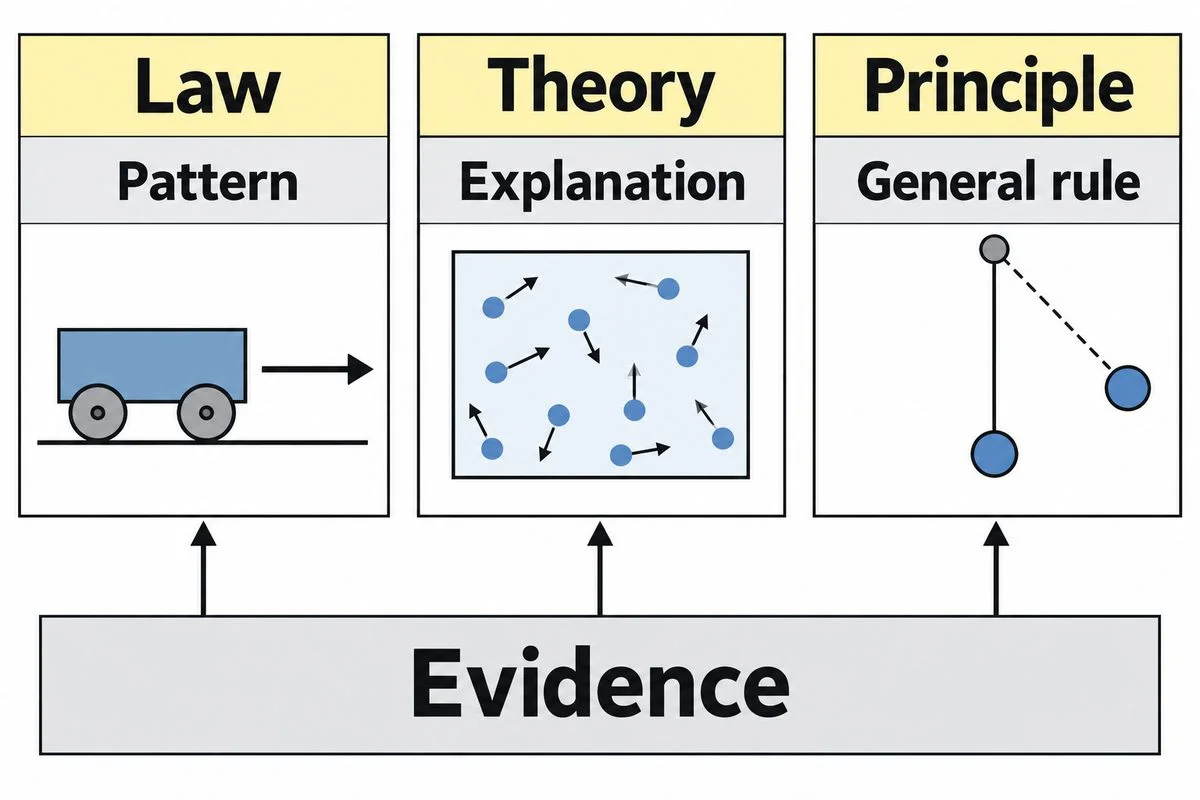
Parallel panels connect laws, theories and principles to shared evidence.

3. Law, theory and principle

Laws describe patterns. Theories explain them. Principles help us reason about situations.

Show
Look at the diagram's trolley, gas particles and pendulum. Follow their connections to evidence.
Ask
Will more supporting evidence turn the gas-particle theory shown here into a law?
Say
Laws describe patterns, while theories explain them. Principles guide reasoning. Evidence strengthens theories without turning them into laws.
Used in
Weather observations test explanations, helping scientists improve their predictions.
If your child says…“A scientific theory is just a guess.”
Ask
Why does the diagram connect Theory to Evidence?
What’s true
A scientific theory is an explanation supported by careful tests and evidence gathered so far.

Describing and calculating

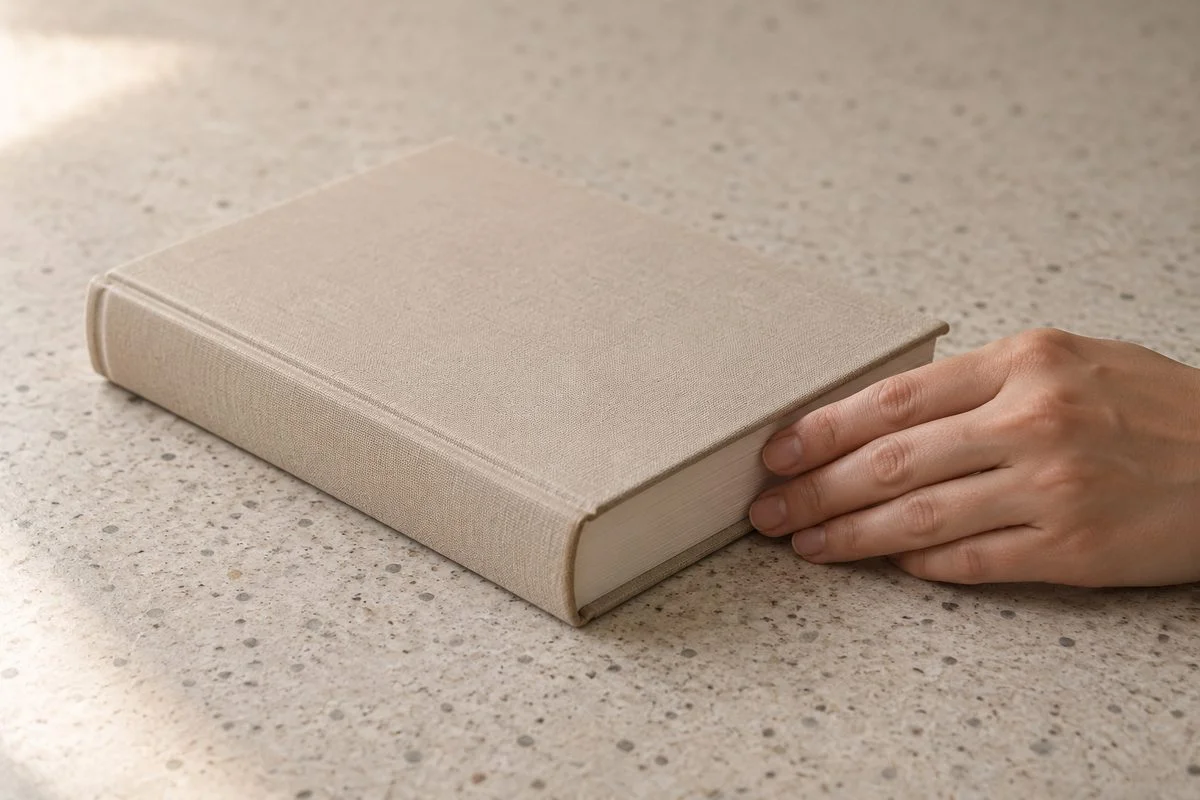
One hand rests against the side of a closed book.

4. Precise scientific language and symbols

Use agreed meanings and symbols so descriptions stay clear.

Show
Rest a closed book on the table. After predicting, press gently without moving it.
Ask
If the book stays still, will your push do physics work on it?
Say
No; physics work depends on force and movement along that force.
Used in
Precise terms help scientists describe the same situation consistently.
If your child says…“Work means the same thing everywhere.”
Ask
Where did the book move?
What’s true
Everyday effort and physics work can differ.
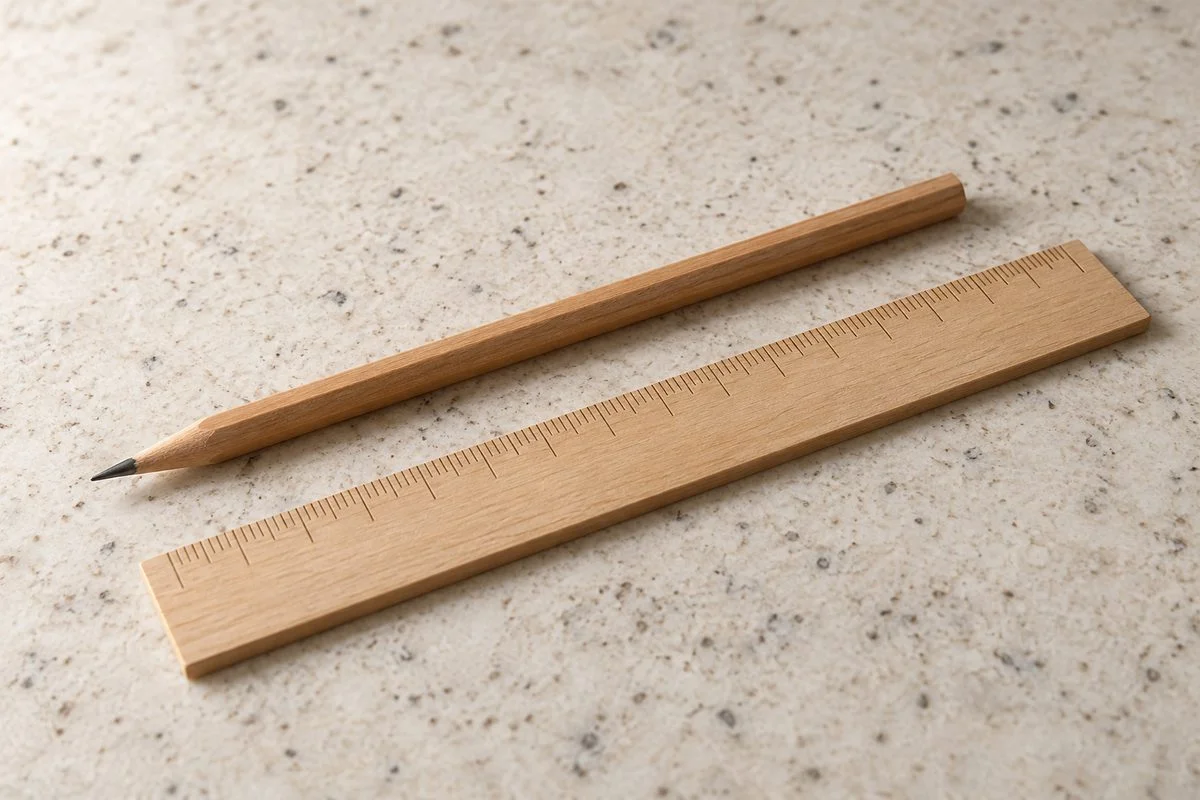
A pencil lies beside a ruler before measurement.

5. Units and mathematics

Units specify amounts; equations express relationships between quantities.

Show
Place a pencil beside a ruler. Measure after predicting.
Ask
Will measuring this pencil in centimetres and millimetres give the same number?
Say
The pencil stays the same length, but centimetres and millimetres give different numbers. Report the unit with the number. Here, we measured length.
Used in
Correct unit conversions help prevent badly wrong aircraft fuel calculations.
If your child says…“I can swap units without changing the number.”
Ask
Do pounds and kilograms represent equal amounts?
What’s true
Changing units can change the number describing an amount.
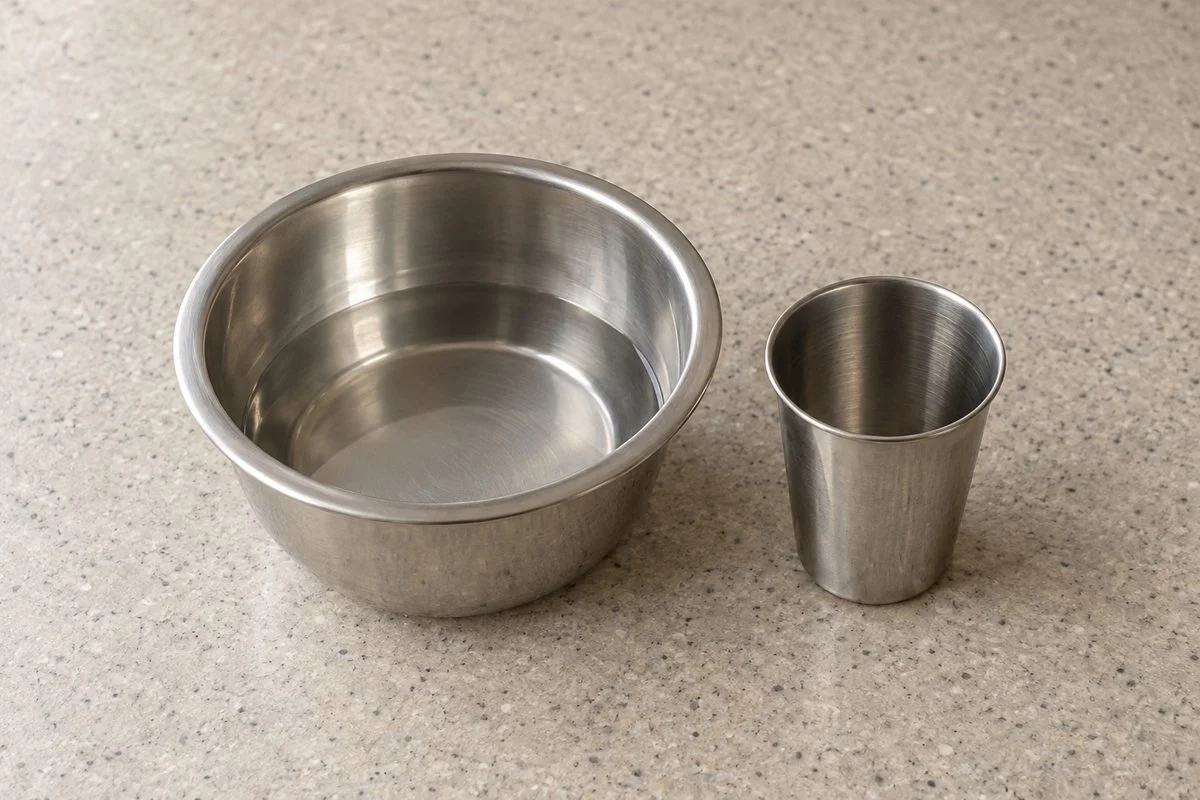
A steel bowl holds one cupful of water beside an empty cup.

6. Estimation and checking reasonableness

Build a rough answer from sensible amounts, then check it.

Show
Pour a cupful of water into a bowl that holds several cupfuls. After predicting, fill it, counting the first cupful and any partly filled last cup. Compare with your estimate.
Ask
How many cupfuls will fill this bowl altogether?
Say
The first cupful gives you a starting amount. Filling the bowl checks your estimate.
Used in
Breathing estimates combine breathing rate, air per breath and time to check daily totals.
If your child says…“Any rough number counts.”
Ask
What did you use to choose that amount?
What’s true
An estimate needs reasons for the amounts used.

Connecting the sciences

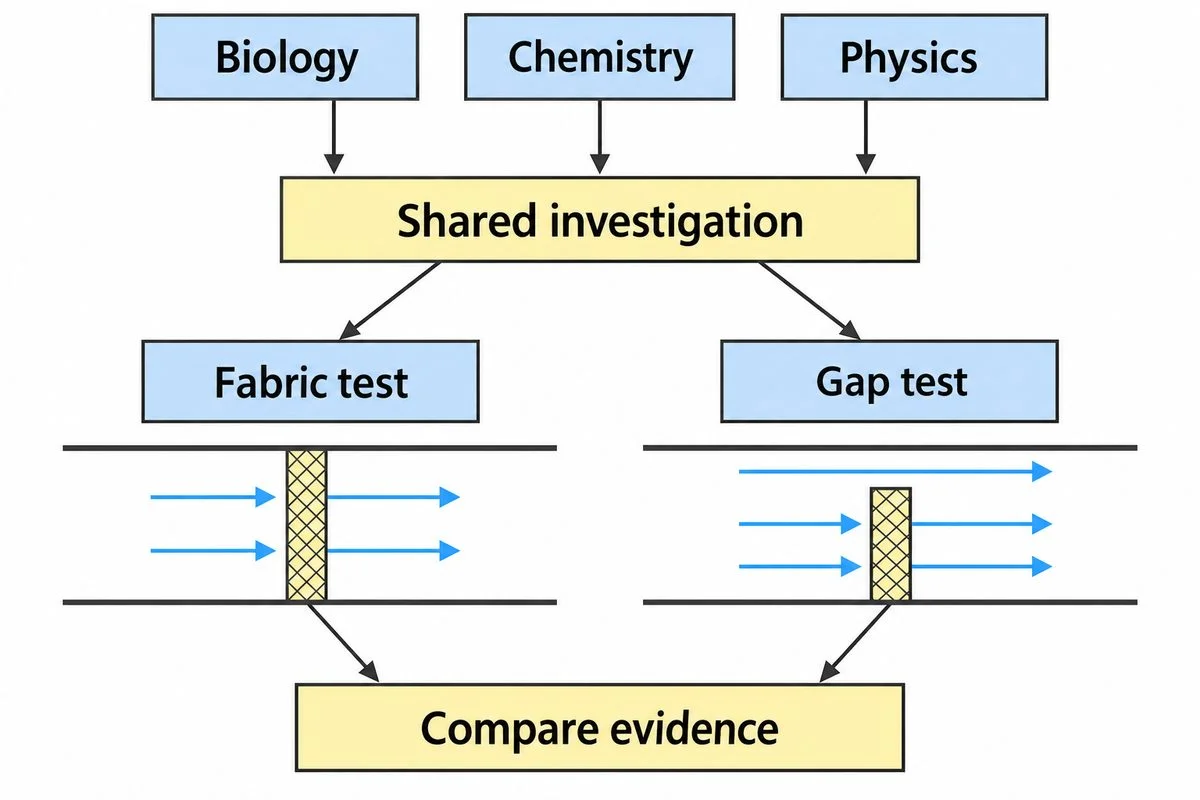
Three sciences share fabric tests comparing airflow through fabric and around an edge gap.

7. Science as connected, human, and critical inquiry

People connect sciences, question claims and improve shared explanations.

Show
Look at the diagram. Follow the sciences into the shared investigation, then compare the fabric tests.
Ask
Will all the air pass through the fabric when there is a gap beside it?
Say
No; air can pass around the fabric through the gap. Biology, chemistry and physics contribute different knowledge.
Used in
Medicine draws on several sciences to address health problems.
If your child says…“Each problem belongs to one science.”
Ask
Which subject alone covers fabric, airflow and germs?
What’s true
Testing masks connects knowledge about germs, materials and airflow.

A real problem

Haffkine's plague vaccine was tested with human volunteers.

Haffkine developed a promising plague vaccine in Bombay in January 1897.

Volunteers at Byculla jail took part in human testing.

Early reports suggested substantial protection, but its strength and duration remained uncertain.

Field use began immediately.

National Army MuseumHaffkine InstituteUK Parliament

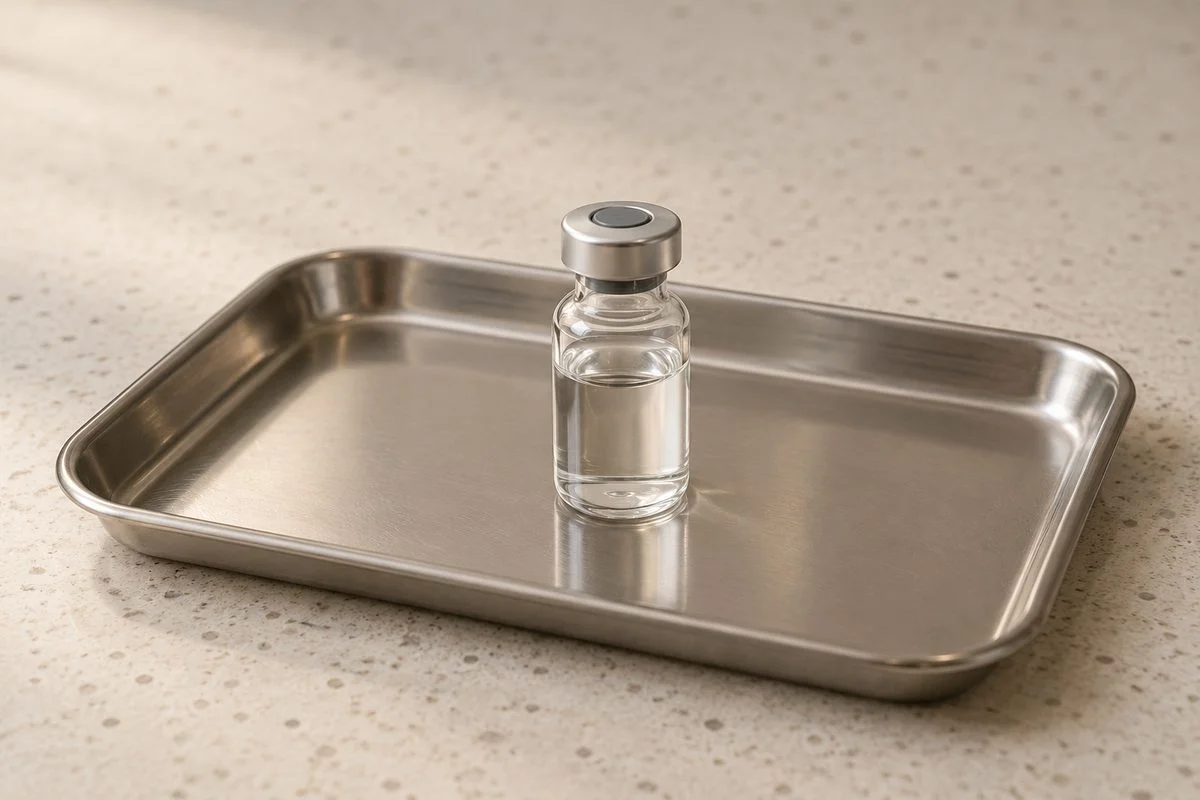
An unbranded vaccine vial stands on a clinic tray.

Concept Lab · Common misconception

The tempting mistake in Exploration: Entering the World of Secondary Science

Open standalone misconception page →

Can one seedling per group settle an experiment?

Wrong

Fertiliser makes seedlings grow faster because my one fertilised seedling grew more than my one untreated seedling.

Why it feels right. I attribute the whole difference to the treatment.

Right

Compare multiple seedlings in each group to account for differences between individuals.

Worked example

40 similar seedlings
Randomly split into two groups
Group A · 20
Same light, soil and water→Add fertiliser→Measure growth
Group B · 20
Same light, soil and water→No fertiliser→Measure growth
The treatment is assigned to groups. Comparing variation within groups helps separate the treatment from individual differences.
  1. Randomly assign 40 similar seedlings to two groups of 20.
  2. Keep light, soil and watering comparable and give fertiliser to one group.
  3. Compare the typical growth and the spread within each group.

Ask your child seven quick questions.

One per step. The answer and the reason are given.

  1. Does confidence alone make a rain prediction scientific?

    No. Feeling certain does not supply measurements or observations.

  2. Can this model explain Place P's day and night without showing continents?

    Yes. The round shape and turning explain changing light without a map.

  3. What must support the gas-particle explanation before scientists accept it as a theory?

    Careful tests and supporting evidence. Careful testing and supporting evidence distinguish it from a mere guess.

  4. You push a book, but it stays still. How much physics work does your push do?

    None. The book does not move, even though pushing takes effort.

  5. A fuel calculation treats pounds as kilograms. What needs correcting?

    The unit conversion. These units represent different amounts, so their values cannot simply be exchanged.

  6. Why use the first cupful to estimate how many cupfuls will fill the bowl?

    It gives a measured amount. Its share of the bowl's space gives a reason for your estimate.

  7. Which sciences explain a mask's material, airflow and germs?

    Chemistry, physics and biology. Different branches explain different parts of the same object.

15 more questions with answers